![Shortcuts & Secrets of Negative Harmony | [using INTERVAL THEORY]](https://i.ytimg.com/vi/M9FY7OrxGdQ/maxresdefault.jpg)










![3 POWERFUL Negative Improvisation Exercises To Solo Over CHORDS Better [Lead Guitar]](https://i.ytimg.com/vi/FHHqB86kLCw/maxresdefault.jpg)






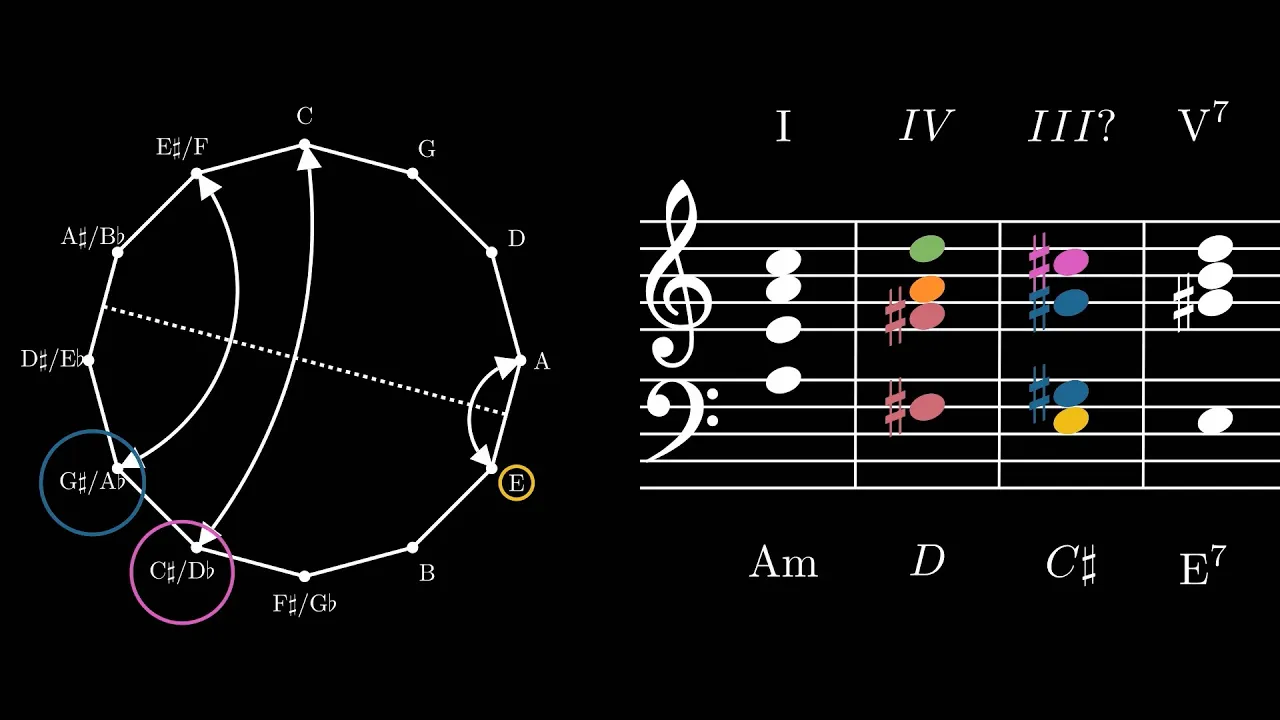
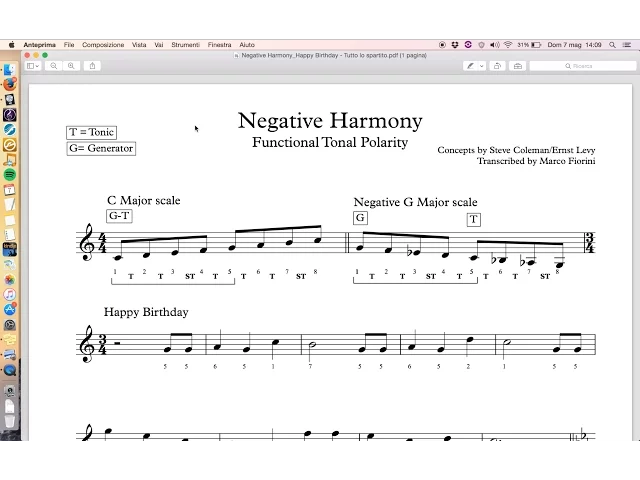
Negative harmony is a jazz theory concept where chords are constructed by inverting intervals from a major scale, creating mirror-image progressions. The key principle is that the root movement must be inverted (e.g., a descending fifth becomes an ascending fourth), and the root is always a fifth below the generator. When analyzing negative harmony, musicians must identify the correct root by considering the generator (the fifth above), not just the chord quality. For example, what appears to be a B♭m7 chord in negative harmony is actually a C minor chord with a different root perspective. This understanding prevents common mistakes where analysts incorrectly identify roots and create non-functional progressions. The voice leading follows the same chromatic patterns as positive harmony but in inverted directions, maintaining the same melodic feel while creating harmonic tension from a different perspective.
Negative Harmony Lesson 2: Voice Leading and Harmonic Analysis
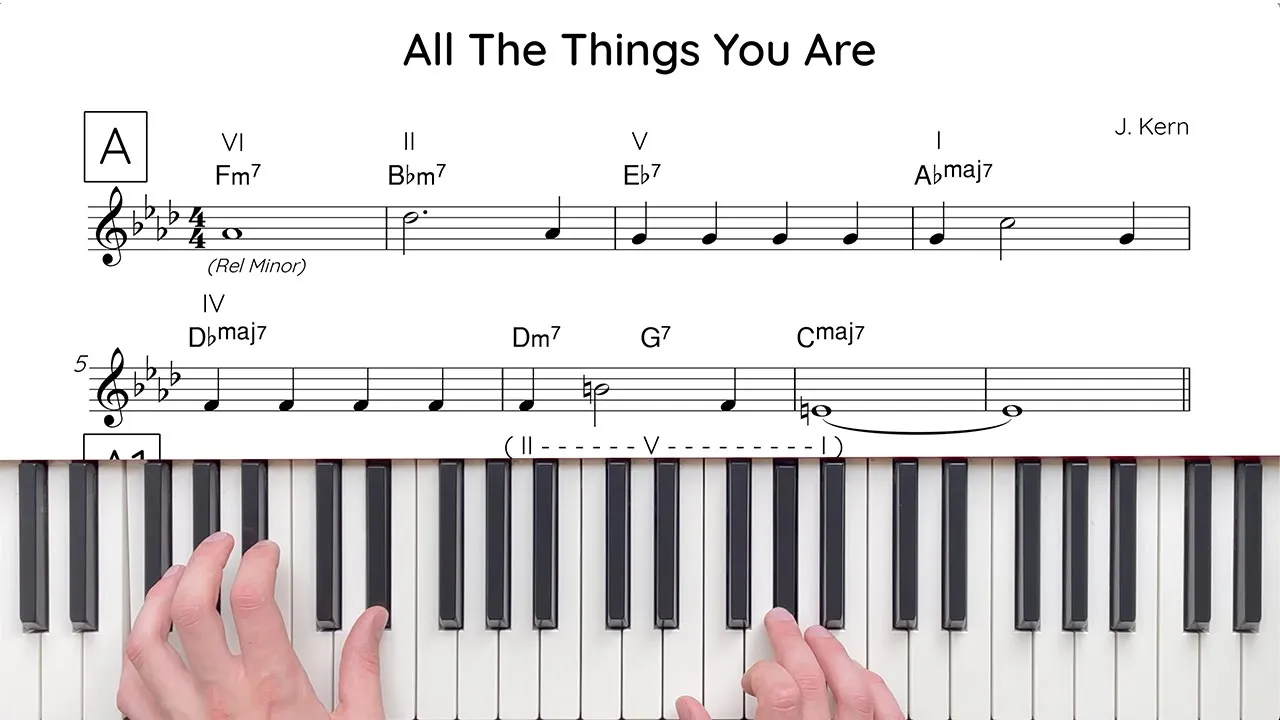
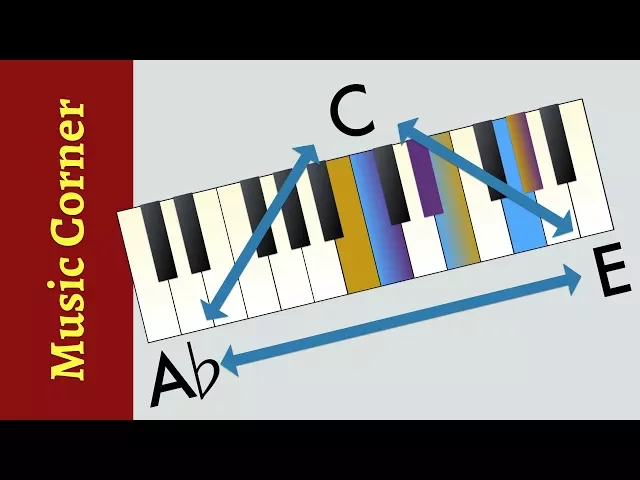
Added:hi guys i'm marco Fiorini and welcome to lesson number two about negative garbage first of all let me say thank you for the great interaction on my previous video a lot of comments a lot of interests and questions and even steve coleman commanded it so this really means a lot to me since he's the guy who taught me this stuff and i want to talk about negative Cadence's and voice leading today because after my video I've seen that some new videos have introduced the concepts but they get wrong because they talk about four-note chords without talking about triads and scales properly and what they do is they confuse the root movement okay this is something really important because the the whole theory is based on that okay so starting from a g7 chord which is the five of the a major scale okay if we want to have a negative version of this in C major scale we have to find a negative scale which is negative G Major scale okay it is the the chord the scale that is built from v going down with the same intervals and C major so we have 1 1 and you have the 5 chord we go to the 5 okay which is C 1 5 and descending third using same intervals as a 7 chord so those guys say that this core is a d half diminished ok but they they lose this thing that in the negative where we have a root and the generator which is a 5th the core it's actually at minor 6 ok this is very important to you to understand cuz if you lose the root movement you get whole wrong ok if you think about perfect cadence we have okay it's a perfect ascending or a perfect five descending okay so what they do is they think of this chord this F minor six three they called it it's D half diminished and the one instead of thinking about a C minor they talks in terms of a flat major seven it was the one you go down from and you could only keep third and it comes from top to bottom our G flat a flat and so they think okay that's a flat major seven but that's not true because if you think of an generator which is generated so the core is actually minor yo Liam Casey minor flat 6 and if you think about the root movement in the in deposited cadence you added C so perfect fourth up or perfect fifth down if you think about those guys they have B to a flat okay it's a minor six about if it doesn't have the same function okay the same function of this you see is f - C okay because you have to remember this thing about root and generator and you have to invert the intervals okay so I have an ascending for it becomes D standing for okay after C or ascending v f c okay we'll see it later first of all I want to say that about these perfect cadence that I've learned these things also from very Harris here's the PDF you can find in the description as well as some other material okay the thing is that very harris ends up with the same concepts but starting from the diminished okay and this also my sock exactly guitarist of sit condom does this okay you have the half diminished chord which is AB flat okay you know that diminished chords are symmetrical the their composure for tones both on minor every note is a minor third apart from each other okay - third minor third minor color so every node can be considered the root of the score we talk about F diminished and in this case what you you notice is that if you lower any of those notes okay or by a semitone you ended up having those four dominant chords okay for instance if I lower a flat to G I end up having yes which is G seven okay if I lower start again from that half diminished chord I lower be to be fair I have me flat seven okay again other word to D flat E flat seven okay hello we have two e I have each seven okay there are these four chords and you can notice that everyone is dominant of these total centers okay G is the dominant of C B flat is dominant of T flat D flat is dominant of G flat and E is dominant of a but they are if you consider G for instance and D flat they are Triton's as well as B flat and E once you study voice leading around those chords you you end up considering every one of those scores as dominant to any one of those key Center it mean it means that you can go to see from g7 as well as D flat seven okay it's tritone substitution in jazz is very common but you can go even from B flat seven okay B flat seven to see it's very common as well as be seven see so what I want you to understand is that if you take the same diminish core okay so that means instead of lowering I know it's you raise a note from by the same interval okay you go for instance the B goes to C okay you have F minor six very same chord which often before okay and if you notice every one of those minor six are the relative negative of this considered C major this is five one okay this is 4 - 6 to 1 and XT negative version of g7 it's the same speaking here ok e flat this is 5 1 this is for minor one G flat five one four minor one a flat 5 XR 8 five one four minor one this means that you can use those chords as substitutions ok and they all can go to all those key centers ok very Harry's cause this thing playing with your brothers and sisters cause all those chords share the same family which is derived from the diminished chord and if you'll notice the interesting thing is that those four chords okay their roots form a diminished chord as well as those key centers as well as those minor 6 and if you combine all together you have all the 12 points the chromatic scale okay this is a very philosophical concepts which leads all very Harris and harmonic theory and it's the same thing you end up with talking about negative karma ok so after this I want to talk about the cadence ok the perfect cadence and why you can't talk about those four note chords those guys said ok like you have if you have two five one okay they are all if I want instead that they consider the negative as the half diminished to a flat okay but first of all let's think about this okay let's go back to our g7 core a g7 chord it's a four note chord okay but it's based on the major triad okay adding seven words that you consider a major triad key major and then at the seven okay and I think this cell is seven it doesn't change the root the root of the chord we're talking about positive harmony okay g7 in the root is G as well as G major the root is major is G talking about a try okay so adding the seven doesn't change the quality the quality of the triad that's below the seven and the same has to be true in negative Carmen okay if we talk about triads as in the previous my previous video and we talked about the relative trial of G major we have F minor because you go to the five okay one two five five go down in thirds we have a flat map is clearly an F minor triad okay so why I am at the seven which is D below and you should consider the at the root the root is still F ok the chord is the same it doesn't change the quality the quality is a minor triad and now you add D which is the major 6a you end up with this Dorian sound the same is true about every other degree so if the one chord is C minor in the negative world as we sit before you add the seven which is a flat but this chord actually okay it's C minor G Olien okay you don't have to think about changing the route and now we're going to see how the route movement is important as well as voice leading the correct guidance Guidestones okay we have positive 2 Phi 1 and the negative 2 Phi 1 which you can call it the luery B flat F sorry flat 7 to 4 to 1 okay because the positive 2 Phi 1 okay you have D minor 7 to g7 to see okay and you can look how the items from E minor 7 to g71 stay still f stay still and speed comes down to being in a half step and from 7 to see those guide them close up in semitones okay ad goes to E and B goes to C in the negative world we have the same movement but rivers so we're talking about 251 so the 2 becomes B flat 6 okay to Phi is 5 is 9 and minor 6 and the 1 is C okay listen only to the root movement this is 2 5 1 positive ok this is 2 5 1 negative you can hear that the root movement is kind of the same it leads you to see but from another perspective ok but the intervals considering are the mirrors okay you have two five one and positive it's always like a descending form okay and here you have descending fifth so sorry for sending fifth here we have the setting for okay let's look at the the items you have B flat six guy comes out to you and D notice how in the same way as in the positive G goes to a flat a half step above okay and now the same exact movement okay you see that here one note stay still and the other goes down semitone hear one note stays still and the other goes up a semitone okay D stay still MZ goes up send it in to a flat from g7 to see they closed in semitones here from F minor to C they open in semitones okay okay you can hear how only using guidance you can hear the movement listen and you can go this is the real to phi1 in negative but you can go to C major okay okay just by using E instead of E flat so another used cadence ingests actually hits the cycle movement of dominance okay like in the B section of rhythm changes so if we talk about staying always in yeah going to see c7 in this case because of their old dominant chords we have this C okay so you don't have this is a tricky thing this is always okay uh five down or four up okay let's say four four four four okay a to d eq c am talking about root movement the root movement here is inverted and goes to C so we have like here is four up then here should be fourth down and we want to go to UC so this first movement is the one we've seen before instead of having G to C and then we have F to C but here every course you'd have the same root movement so we start from a flat because we have okay it's a descending fork let's listen to this positive this is negative okay and look how the items have the same and same movement okay in in the positive dominant cycle you have that the items send chromatically parallel way okay listen to this in the next word is the very same thing but they ascend in the same chromatic way you listen okay and the other interesting thing is when you use tritone substitution okay you know I hope you know that tritone substitution is based on the same guidance okay let's say we want to go from d7 to c7 using instead of g7 it's Triton which is D flat seven okay you see if guide zones are still be and the app okay this should be C flat but I'm using a header monocle a notation here a normal conversation so we have the very same chords as before which is seven to g7 to c7 but instead of doing okay and changing the rules [Music] and sends chromatically and K using d-flat as a route the same thing is true in the negative or if you want to go from B flat 6 and -6 to C minor 6 I'm using the same very same guide tones okay okay but instead of using F as the root I'm using B the movement is the same here is descending semitones here is ascending semitones listen it has the very same weight so that's why you should think about those root movements and consider the root always a fifth below the generator because if you think about the very same notes but with another root you end up having a long functional progression okay so you can find this PDF in the description and I make things clearly as clear as possible okay but I want to show you this apply to a standard so let's take all the things you are I'm looking at only the first eight measures okay and these also it's in the in the download info box okay and I'm talking about the root movement and why considering the root movement of those guys is wrong okay we have all the things you are and all the things you are it's in a key of a-flat it is very important okay and it features a six two five one four here from F minor to D flat then okay it goes to a 5-1 in C major but let's look at the first five bars we have [Music] okay it's a cycle movement as one we've seen before because we have half then a for Allah and a for Allah or four okay simply roots in a low register I end up with this so those guys get things wrong because they talk about those cords and they consider the wrong roots like for this one okay which is the sixth chord and they go of course the the positive scale here is a flat major so okay so the negative starts from the fifth left and goes down with the same interval so why okay if you want to have the six core I have to go to the sixth degree one two three four five which is G flap or F sharp and go down okay using the same interval so one [Music] okay court at lows from top to bottom our F sharp a sharp B G sharp this is a beat six as I've noted here okay because the root is a fifth below the generator generator is f sharp and root is free but those guys considered it as an a-flat minor seven chord okay and the same they do the same thing for the other core so they have here they have a flat minor seven to a flat minor 7 to B flat half diminished to a major okay to be major to D half diminished to a flat major okay they caused a reverse roots also in the one course which has to be the same root okay you have two eight to go to a flat here while they go to T okay so let's listen at the original root movement [Music] okay the negative movement is this one [Music] okay you can listen that the root movement is kind of the same okay leads you towards a flat okay but from another point of view so original okay and then modulates okay negative is as the the inverted intervals and then modulate okay you see that the modulation always happens in a Triton root movement we have lambda G and then cadence here we have E flat G a Triton and then cadence or minor for one while the root movement of those V is completely wrong because it's a flat to D flat to E - a - E - B D supplements a flat so listen here they have this instead of five one or four one they have this eight some minor six below and the same is true here okay they have B half diminished E flat and most important here instead of this Triton they have B to D which is a minor third okay and then they try to resolve you a flat major it's completely wrong so let's listen at the melody together with root movement so original one okay negative one can you listen that the movement of the melody together with the root course it's kind of the same okay you can still hear all the things you are because instead of being so here Triton yes [Music] Triton okay it's in the other direction but he features the same intervals and the resolution together with the the root is kind of the same listen Triton okay now let's listen to the melody together with the wrong course of those guys they have this the one is already wrong to me listen this doesn't have resolution okay so be very careful and spend a lot of time into this okay you have to start with melodic concepts and triads and only when you have a certain skills and have learned two new chords you go to for load chords and you have to consider rude movements okay so this chart is available for downloading in the info box and I hope in my next video to play this okay with the couple of friends of mine so let's you listen also the improvisational concept skills these two videos have been very didactic oh okay there are lessons but I want to show you how to use these things in circles of improvisation okay so as always if you don't know Steve : you should check out his stuff and go to M Bay's website register for free there are a lot of videos and a blog where you can talk also about these things okay and he uses these concepts for more than 30 years and in a sort of way Jack Collier has said some things which are true but people misunderstood them I guess and try to have their own theory without reading lady's book or exploring this stuff correctly and in a deep way okay so thank you again very much I'm always here for questions and comments and spread the word thank you
Up Next

Negative Harmony Explained: Music Theory Guide
@DavidBennettPiano
96.2K views•2025-09-25

Mozart's Musical Dice Game Explained: History, Rules, & Fun
@webpianoacademy
5K views•2023-03-13

Understanding Diatonic 7th Chords in Major Keys | Music Theory Tutorial
@GracieTerzian
54.7K views•2022-03-02
Understanding John Coltrane's Giant Steps: A Music Theory Analysis
@Vox
10.4M views•2018-11-12
Related Study Plans & Knowledge Roadmaps
Structured learning paths in Music Theory