Tintinnabuli: Pärt's Counterpoint & Composition
Learning Goal: Mastering Arvo Pärt's Tintinnabuli System: Utilizing Stepwise Melodic Voices and Triadic Counterpoint to Compose Minimalist and Meditative Instrumental Works.
This curriculum provides a structured, academic journey from basic music theory to the complex, spiritually resonant compositional techniques of Estonian composer Arvo Pärt. By the end of this course, you will understand the mathematical and aesthetic mechanics behind "Holy Minimalism" and be equipped to compose, structure, and orchestrate your own meditative instrumental works.
- Prerequisites: None. Basic familiarity with a keyboard or musical staff is helpful but not required.
- Estimated Total Study Time: 16 Hours
Module 1: Music Theory Foundations: Intervals and Triads
To master Tintinnabuli, you must first master the building blocks of Western harmony. This module introduces musical intervals (the linear distances between pitches) and diatonic scales, culminating in the construction of three-note chords (triads) which form the harmonic foundation of Arvo Pärt’s system.
Core Learning Materials
![Explaining Musical Intervals As CLEARLY As I Possibly Can [MUSIC THEORY FUNDAMENTALS]](https://i.ytimg.com/vi_webp/m9GlB8tanNE/maxresdefault.webp)
Why this video is valuable: This tutorial provides a highly visual and systematic explanation of musical intervals. For Tintinnabuli, identifying both the step-wise distance of major/minor seconds (used in the M-voice) and larger leaps like thirds, fifths, and octaves (used in the T-voice) is critical. This video demystifies semitones, whole steps, and interval qualities (perfect vs. major/minor).
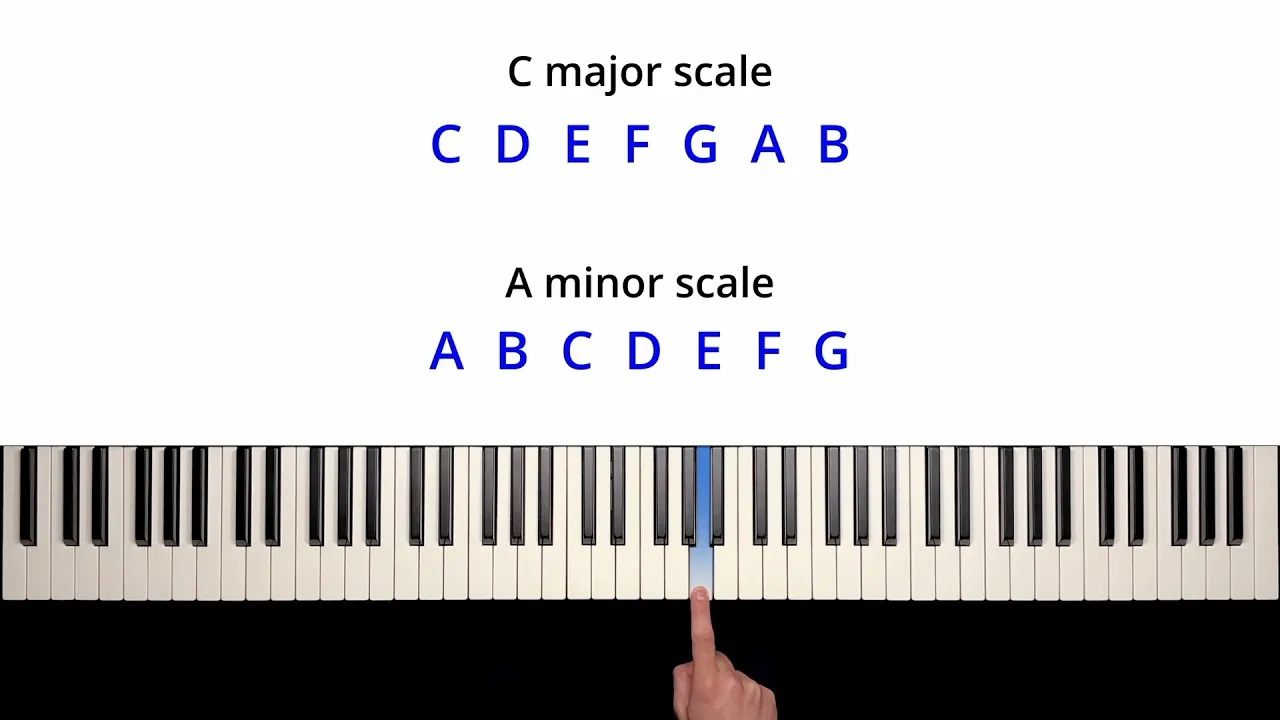
Why this video is valuable: Tintinnabuli functions within strict diatonic spaces. You must understand how major and minor scales are constructed step-by-step. This video illustrates scale structures on the staff, helping you visualize the natural step-wise pathways your melodic lines will take.
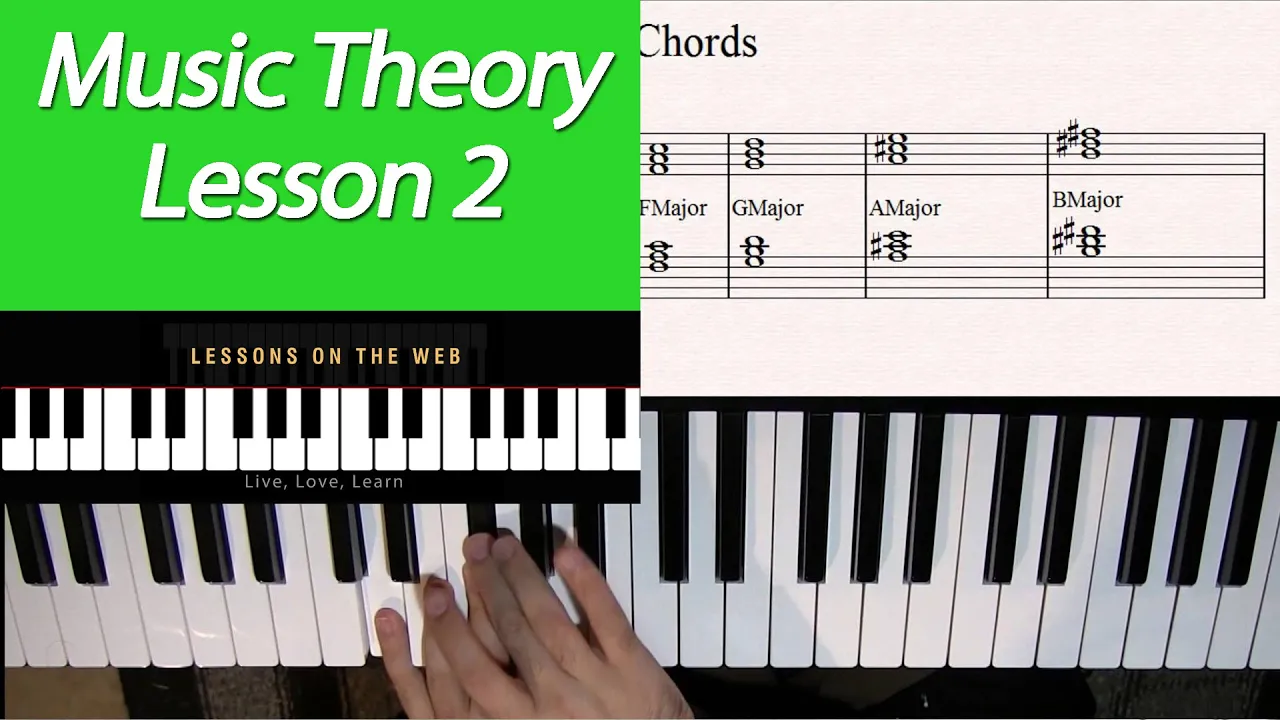
Why this video is valuable: Arvo Pärt's T-voice (Tintinnabulating voice) is entirely bound to the notes of a single tonic triad. This lesson shows you exactly how to build major and minor triads by stacking thirds, and introduces inversions. Understanding inversions is crucial because the T-voice must constantly shift positions to frame the melody.
Module 1 Knowledge Checkpoint
- Define the difference between a half step (semitone) and a whole step (whole tone).
- Construct a natural minor scale starting on A (A minor) and a major scale starting on C (C major).
- Build a minor triad (Root, Minor 3rd, Perfect 5th) and identify its root position, first inversion, and second inversion.
Module 2: Arvo Pärt and the Spirit of Holy Minimalism
Before diving into the mechanical rules of counterpoint, you must understand the artistic and spiritual context from which Tintinnabuli emerged. This module covers "Holy Minimalism" (or Sacred Minimalism) as a historical movement, exploring how Arvo Pärt turned away from Soviet-approved complex serialism to find refuge in early medieval church music, silence, and acoustic resonance.
Core Learning Materials
Why this video is valuable: This documentary is the definitive historical resource for this curriculum. It covers Arvo Pärt's life in Estonia, his years of creative silence, and his discovery of the "bell-like" Tintinnabuli system. It frames his music not just as a music-theoretic curiosity, but as an deeply spiritual expression born out of meditation and monastic simplicity.

Why this video is valuable: To write authentic minimalist music, you must understand what modern classical composers were reacting against. This video traces the evolution of 20th-century music, highlighting how Holy Minimalism rejected the dense, secular intellectualism of serialism in the 1970s, opting instead for consonant, liturgical, and meditative soundscapes.
Why this video is valuable: This short segment provides invaluable context on how Arvo Pärt's music migrated to Western audiences via Manfred Eicher and the ECM record label. It details his struggles under Soviet censorship and how his spiritual convictions directly dictated his acoustic choices.
Module 2 Knowledge Checkpoint
- What is "Holy Minimalism," and how did it react against early 20th-century avant-garde serialism?
- Describe the meaning of the Latin word tintinnabulum and how it relates to Pärt's sonic goals.
- What role did early Christian liturgical chant and medieval organum play in Pärt's compositional shift in the mid-1970s?
Module 3: Fundamentals of Counterpoint and Voice Leading
Tintinnabuli is fundamentally a two-voice contrapuntal system. Before learning Pärt’s specific rules, you must master classical voice-leading guidelines. This module covers First Species Counterpoint (note-against-note) and explains how independent melodic lines can move together without creating muddy, unstable textures.
Core Learning Materials
Why this video is valuable: First Species Counterpoint is the academic ancestor of Tintinnabuli. This video breaks down how to construct a counterpoint line against a fixed melody (cantus firmus) using a strict 1:1 rhythmic ratio. It sets up the rules of consonant intervals (octaves, fifths, thirds, and sixths) that directly influence Pärt's system.
Why this video is valuable: Good voice leading ensures that vocal or instrumental lines move smoothly rather than making awkward, erratic leaps. This quick lesson demonstrates the key rules of smooth connection: keeping common notes stationary and moving other voices by the smallest step possible.

Why this video is valuable: This lesson covers common voice-leading pitfalls, such as "voice crossing" (where a lower voice moves above a higher voice) and voice overlapping. In Tintinnabuli, while voice crossing is sometimes used intentionally to create beautiful bell-like interferences, understanding the rules of traditional part-writing helps you control these tension points with precision.
Module 3 Knowledge Checkpoint
- What is First Species Counterpoint, and what is its rhythmic ratio?
- Why is step-wise motion (conjunct motion) generally preferred in classical voice leading?
- Explain what "voice crossing" is and why traditional composers avoided it to preserve vocal clarity.
Module 4: The Tintinnabuli System: M-Voice and T-Voice Rules
This is the core of the curriculum. You will master the exact mechanical and mathematical rules of Tintinnabuli. The system pairs a step-wise Melodic Voice (M-voice) with a triadic, mathematical Tintinnabulating Voice (T-voice). You will dissect these rules through deep visual analyses of iconic works like Für Alina.
Core Learning Materials

Why this video is valuable: This is the most comprehensive step-by-step composition tutorial available on the Tintinnabuli system. It details the relationship between the step-wise M-voice and the triadic T-voice. It explains the four key positions of the T-voice relative to the M-voice:
- Superior (above the M-voice)
- Inferior (below the M-voice)
- Alternating
- Close position (first triadic note below/above the melody)
It also details the mathematical system of counting steps away from a central pitch.
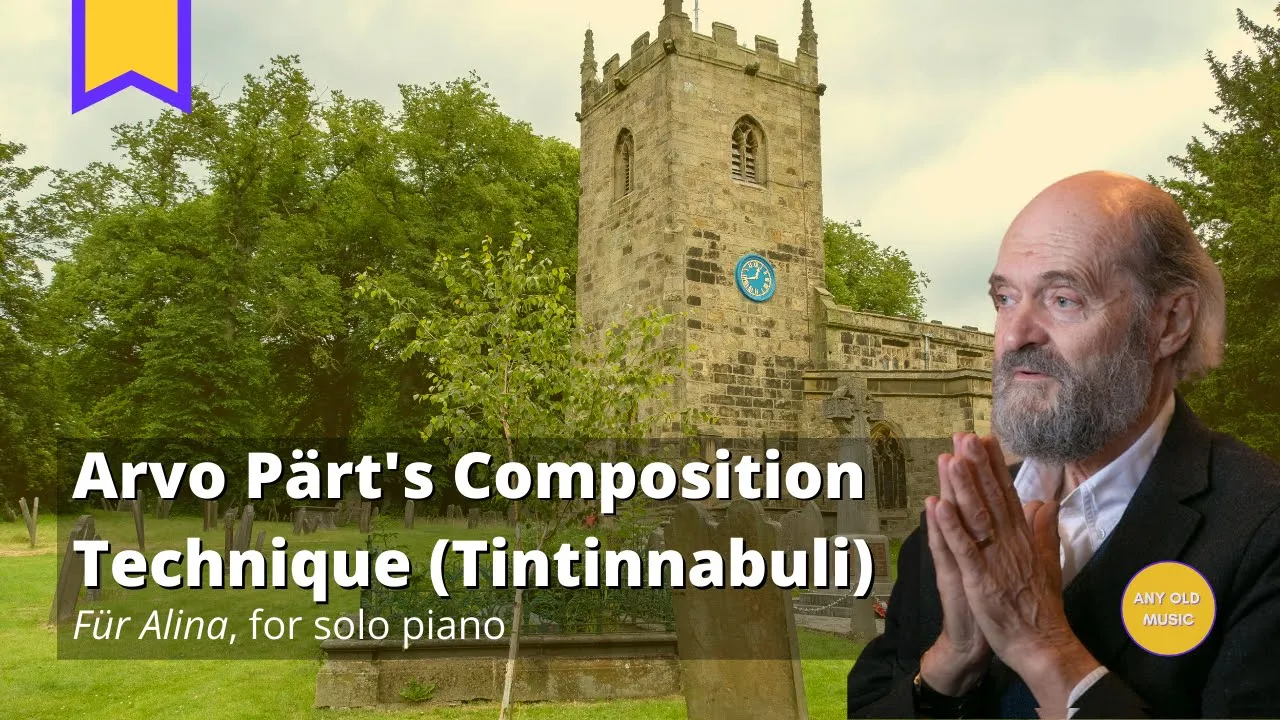
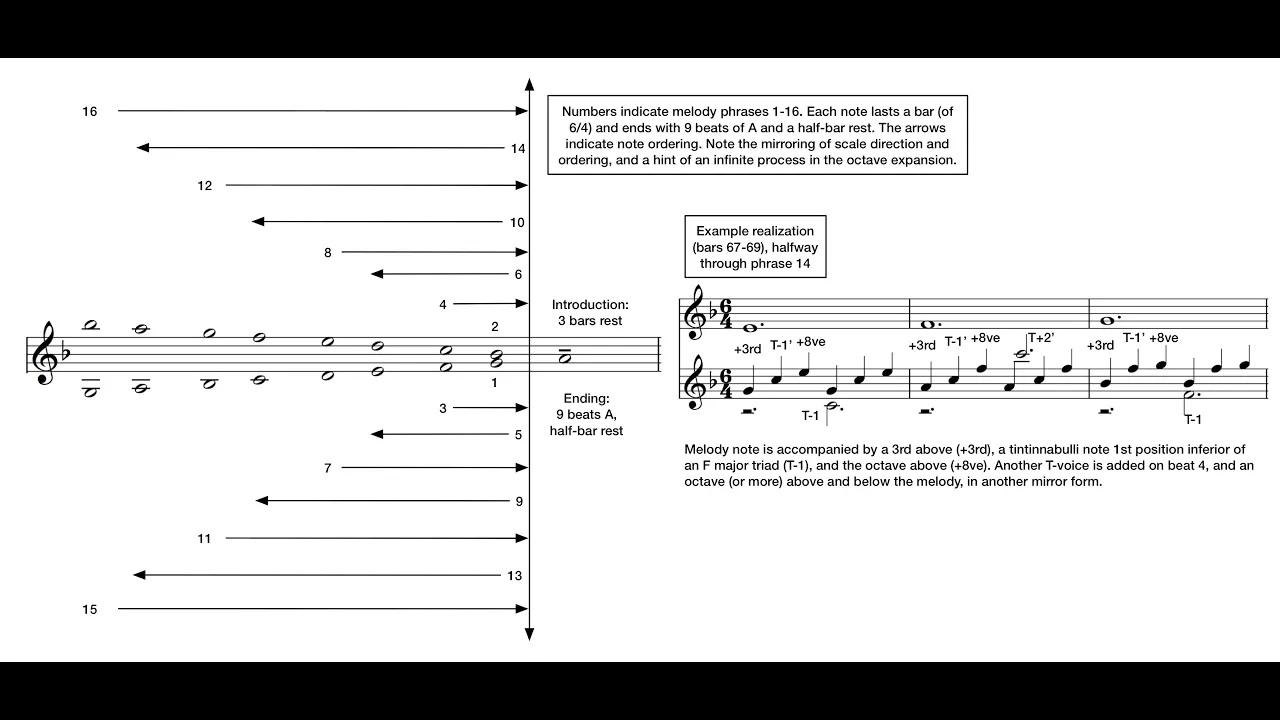
Why this video is valuable: Für Alina (1976) was the debut piano piece of the Tintinnabuli system. This score analysis maps out how Pärt applied his rules in real-time. It highlights the piece’s rhythmic freedom (where bar lines are abandoned and replaced with a system of notes expanding symmetrically outward from a central pitch) and explains how the T-voice perfectly mirrors the movement of the M-voice in a pitch-paired structure.
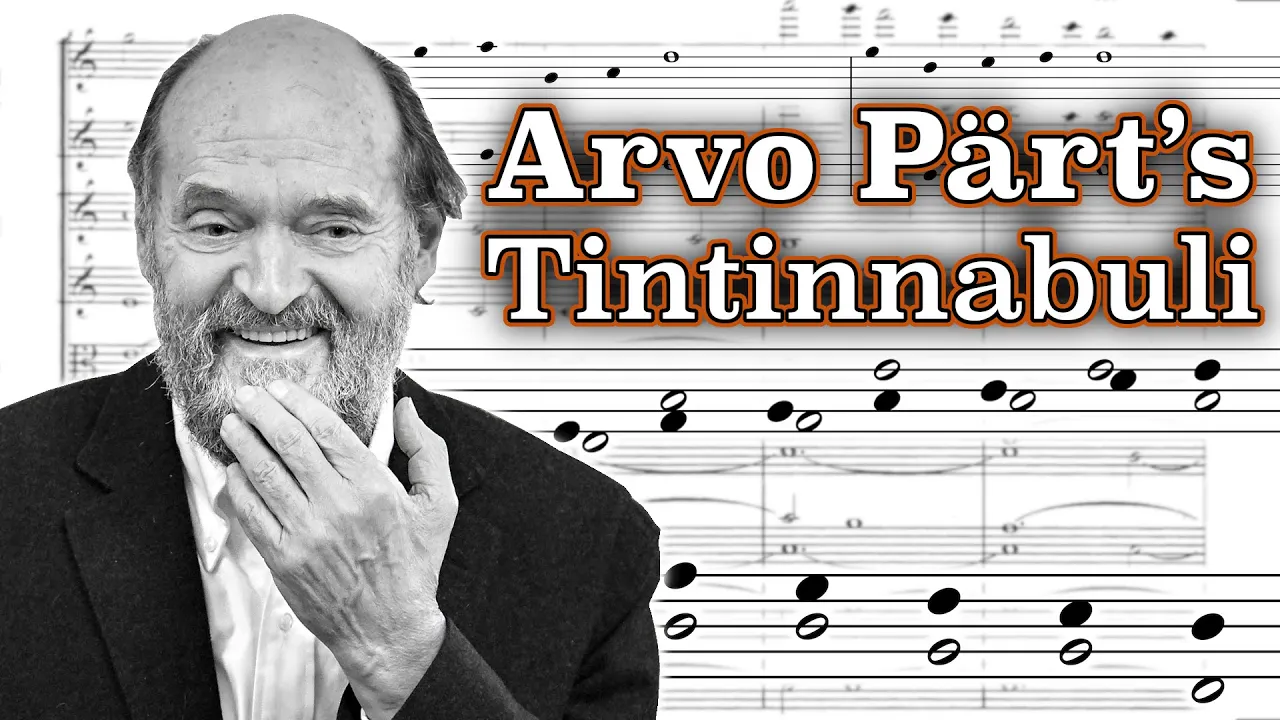
Why this video is valuable: This lesson explores the conceptual philosophy of the system: the M-voice represents subjective human experience (wandering, step-wise, unstable), while the T-voice represents an objective, unchanging spiritual reality (static, triadic, eternal). This video shows how these two voices interlock to create a unified texture.
Module 4 Knowledge Checkpoint
- What is the difference between the M-voice and the T-voice?
- Write down the note names for a T-voice restricted to an A minor triad (). If the M-voice plays a , what is the closest inferior T-voice note?
- In Für Alina, how does the numeric phrase structure expand (describe the additive note rule)?
Module 5: Composing and Orchestrating Meditative Instrumental Works
In this final module, you will translate raw Tintinnabuli theory into full instrumental orchestrations. You will study how Pärt scales his system from solo piano to rich, soaring string ensembles using iconic masterpieces like Cantus in Memoriam Benjamin Britten and Fratres as reference models.
Core Learning Materials
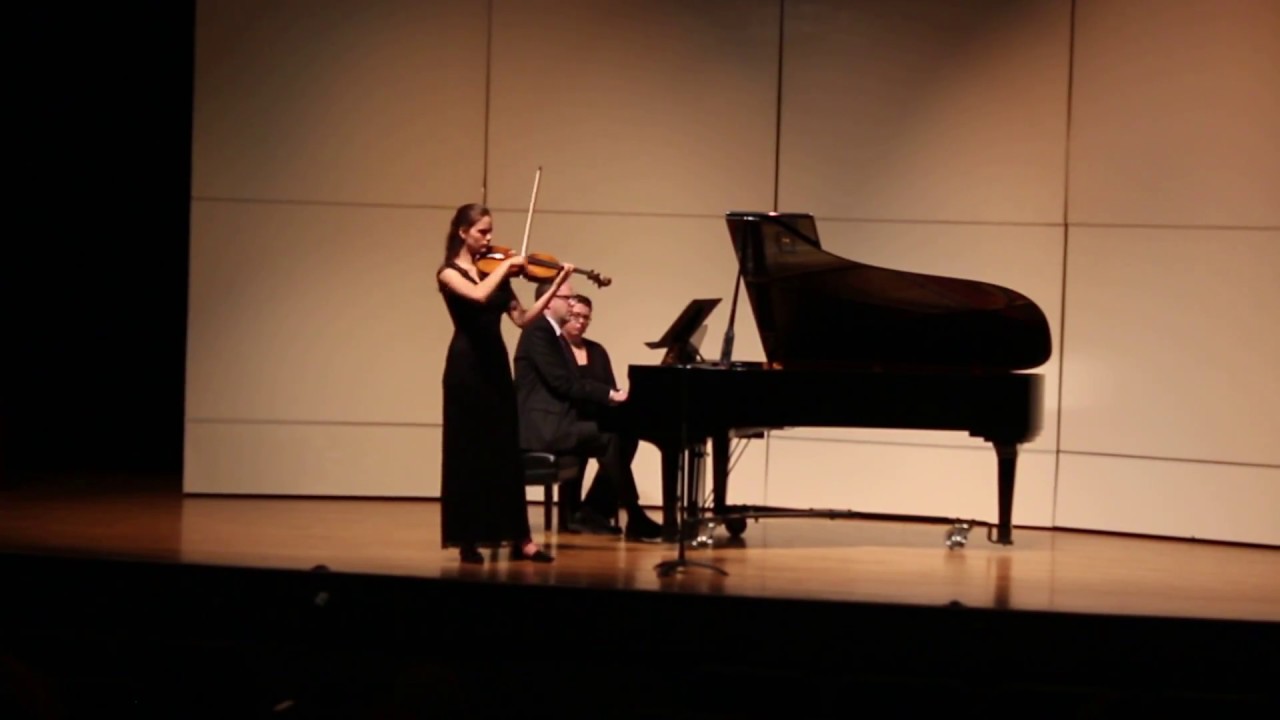
Why this video is valuable: Fratres is a masterclass in minimalist string writing. This video demonstrates how a simple three-note motif is developed across strings. It details how Pärt uses open string drones, harmonics, and pizzicato elements to ornament the core Tintinnabuli movement, showing you how to translate mechanical formulas into rich, evocative performance techniques.

Why this video is valuable: Cantus illustrates how Tintinnabuli works at a massive scale. This analysis breaks down how a simple descending A-minor scale in the violins is layered using a prolation canon (where different string sections descend at different, proportional speeds: half-time, quarter-time, etc.). It shows how a single tubular bell note anchor acts as a emotional gravity point, proving that complexity can emerge from absolute simplicity.

Why this video is valuable: To write for string orchestras (Violin I, Violin II, Viola, Cello, Double Bass), you must know the ranges and acoustic roles of each instrument. This video shows you how to allocate voices smoothly. In Tintinnabuli, you will learn to assign the M-voice to one section (e.g., Violins) and the T-voice to another (e.g., Violas and Cellos) to prevent mud and preserve acoustic separation.

Why this video is valuable: This tutorial focuses on structural development. It teaches a "pyramid composition structure"—starting with a simple, repeating ostinato motif, gradually layering in secondary lines to build dynamic and emotional climaxes, and then subtracting elements to leave a clean, quiet resolution.
Independent Study & Software Setup Gap: Note that while these videos cover orchestration, they do not show you step-by-step how to program these mathematical rules into modern software. You are strongly encouraged to independently search for:
- "How to set up Tintinnabuli rules in MuseScore or Dorico"
- "Using midi modifiers to lock counterpoint to a specific triad in [Your DAW of choice, e.g., Logic, Cubase, or Ableton Live]"
Module 5 Knowledge Checkpoint
- How does Cantus in Memoriam Benjamin Britten create rhythmic layers out of a single descending A minor scale?
- Describe how to voice a string section so that the high M-voice melody is clearly separated from a lower T-voice accompaniment.
- What is a "prolation canon," and how does it apply to minimalist string orchestration?
Course Map
This flowchart maps out the optimal sequence of study, indicating prerequisite dependencies.
Key People Index
- Arvo Pärt (1935–Present): Estonian composer who developed the Tintinnabuli system in 1976 after years of creative block and self-imposed exile from the Soviet music establishment. Inspired by early Gregorian chant and Renaissance polyphony.
- Manfred Eicher: Founder of ECM Records. He heard Pärt’s music on a car radio and was so moved that he tracked Pärt down, introducing his music to the global Western public.
- Benjamin Britten (1913–1976): English composer. Pärt felt a profound spiritual kinship with Britten’s music. Upon Britten's death in 1976, Pärt was devastated and composed Cantus in Memoriam Benjamin Britten as an elegiac tribute.
- Johann Joseph Fux (1660–1741): Author of Gradus ad Parnassum (1725), the manual that formalized Species Counterpoint rules used by classical masters and adapted by Pärt in his 1:1 voice pairing frameworks.
Final Self-Assessment
Complete this comprehensive checklist to verify your mastery of the Tintinnabuli compositional system:
- I can explain the artistic philosophies behind the "Holy Minimalism" movement of the late 20th century.
- I can build any major or minor triad and write down its inversions.
- I can define the core roles of the stepwise M-voice (Melody) and the triadic T-voice (Tintinnabuli counterpoint).
- I can calculate and write down the four distinct T-voice placements relative to an M-voice: Superior 1, Superior 2, Inferior 1, and Inferior 2.
- I can analyze a page of Arvo Pärt's Für Alina and point out how the mathematical structure governs the phrase length.
- I understand the structure of a prolation canon and how it is utilized in Cantus in Memoriam Benjamin Britten.
- I can compose a basic, short 8-bar duet for keyboard using strict Tintinnabuli 1:1 rules.
- I can orchestrate a Tintinnabuli duet across a string ensemble, assigning roles to Violins, Violas, and Cellos to preserve acoustic balance and prevent mud.