













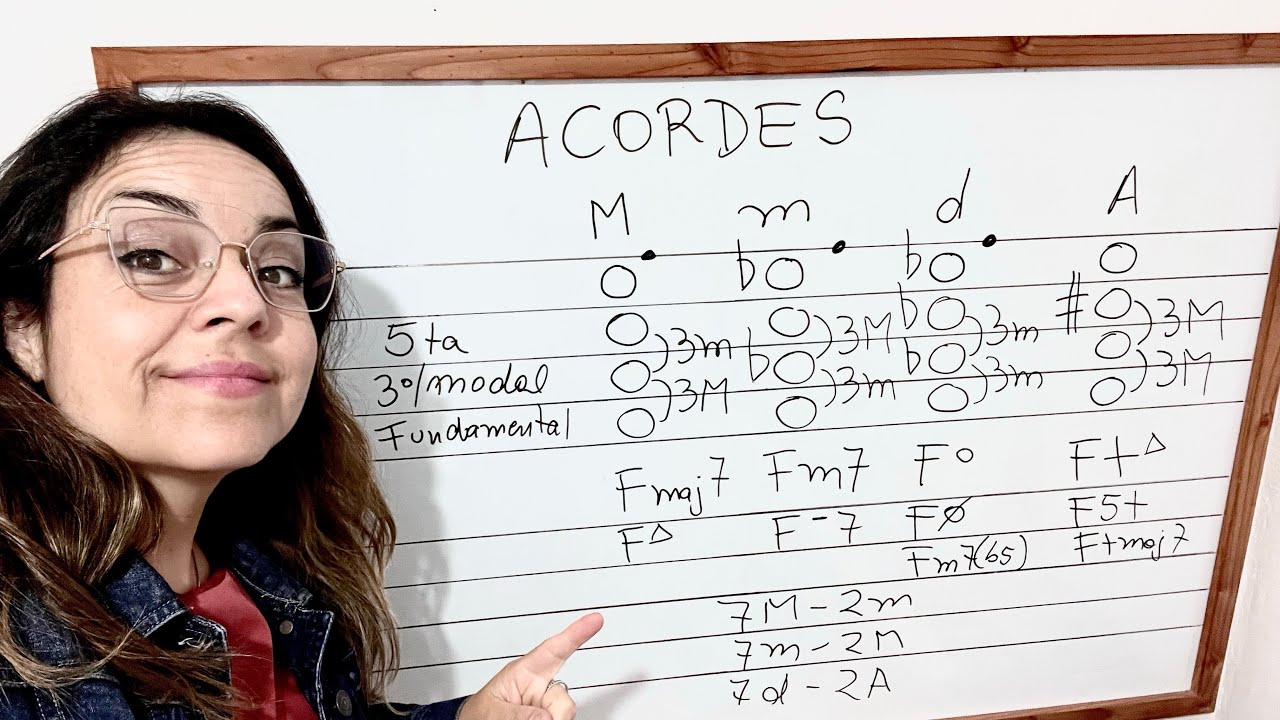


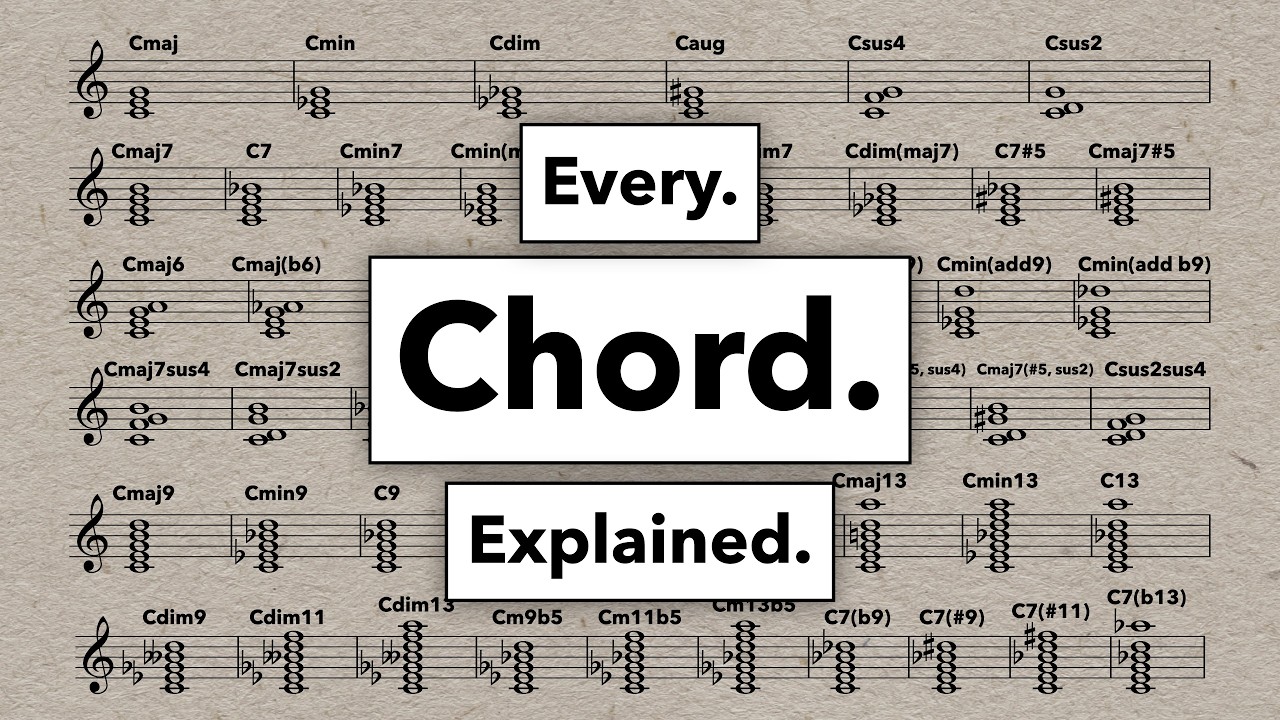







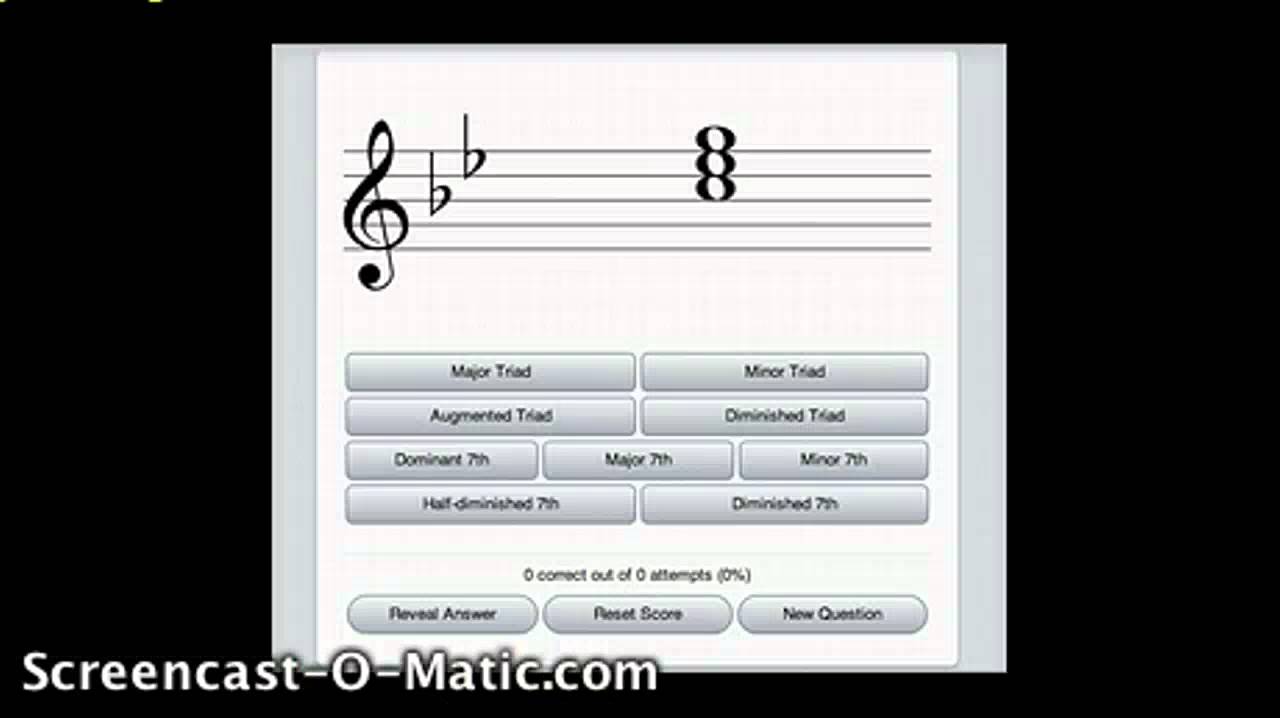




Triads are three-note chords constructed from the root, third, and fifth notes of a scale, where major triads have four half-steps between the root and third (bright/happy sound), minor triads have three half-steps (dark/sad sound), and diminished triads have both the third and fifth lowered by half-steps (tense sound); chord inversions rearrange these notes by moving the root to different positions (first inversion moves root to top, second inversion moves the middle note to top), while chord progressions like the common I-IV-V-I pattern provide directional movement in music by connecting chords based on their scale degrees.
Understanding Triads, Chord Construction, and Progressions in Music Theory
Added:Understanding basic musical intervals, specifically major and minor thirds, which are the fundamental building blocks of triad construction.
Familiarity with the major scale structure (whole and half step patterns) and scale degree numbers.
Basic knowledge of key signatures and how to identify pitch names on the musical staff.
An understanding of the chromatic scale and how accidentals (sharps, flats, and naturals) alter pitches.
Introduction to seventh chords (major, minor, dominant, half-diminished, and diminished 7ths) by adding a fourth voice to the triad.
Principles of voice leading and smooth part-writing, demonstrating how to transition between chord inversions efficiently.
Exploring more advanced diatonic chord progressions, such as the ubiquitous ii-V-I progression in jazz and classical music.
Applying Roman Numeral Analysis to analyze the harmonic structure of existing musical scores and classical compositions.
Introduction to chord extensions (9ths, 11ths, and 13ths) and suspended chords (sus2, sus4) to enrich harmonic texture.
80.1K views1.8Klikes16:37Original Release: 2013-06-25
[Music] hi welcome out to lesson two in the music theory course that I've been putting together uh today we're quite simply going to be talking about uh different kinds of chords different kinds of Triads that's a kind of chord which I'll explain a little bit uh and that's pretty much it so I hope you enjoy and I'll see you in a minute okay so now time to talk about uh different kinds of chords there are many different kinds of chords but one type that I want you to be familiar with in the beginning uh is known as the Triad so a Triad is made up of three notes kind of like a Triceratops has three horns anything with tri triangle has three of something um so let's play a C Triad shall we pretty easy um um so we're going to find C and then we're going to skip a white note and play e and then we're going to skip another note and we're going to play G so you're playing every other white note at least in this case with with c and I'll explain uh here in a minute so this is actually what's known as the c major Triad and with Triads there's actually many different kinds uh there's a major Triad uh A Minor triad uh a diminished Triad and an augmented Triad uh so for now we're going to talk about major and minor um so here we have major now I want you uh actually let me explain this so every Triad has what's called a root which is uh the Basse note there or the the most bottom note in this case um then we have the third and we have the fifth so root third fifth you can also call the root the first because it's the first note uh here at the bottom um the root can be on top or in the middle and I'll explain that uh in a little bit but remember just root third fifth and that's a c Triad um now in a major Triad um let's count the distance between the first and the third an a major Triad there's 1 2 3 4 there are four half steps between the root or first and the third in A Minor triad there are only three half steps between the first and the third so 1 two 3 um also h actually let so let me explain it this way so we have a C major Triad um the only difference between a major Triad and A Minor triad is that middle note there that middle note uh the third will tell you uh whether it's major or minor so if you have a major chord and you want to get to minor quickly without counting the half steps in between you just lower that third by a half step down that way and that will decrease the amount of half steps between the first and the third from four to three so there we have it um C major Triad C Minor triad and now if you want to get to diminished uh first you want to get into minor so here we're already in minor and you just want to lower your fifth by another half debt there we go so that is diminished um another thing I want to point out is that major chords are nice and happy minor chords have a sad feel to them and diminished chords uh have a very tense sound to them so happy sad and [Music] tense uh now we'll talk about inversions so we have a C major Triad and to invert it to put it what's called first inversion we take the root note and and we move it to the top so so we take the root note or the bottom note excuse me um we're taking the bottom note and we're moving it to the top so we're taking C from the bottom and putting it on top so now we have a first inversion C major chord or C major Triad um so like I explained before the root of the chord isn't always at the bottom when you're in an inversion if you're in an inversion the uh the root of the chord can be on top or it can be in the middle as well and I'll explain that in a second so let's put this first inversion Triad into a second inversion Triad well we're going to take our e here our bottom note and we're going to move it to the top right there so now we have a C major chord in second inversion now let's put it in third inversion shall we well let's take this G move it up here well there is no third inversion with a Triad chord because when you put it in third inversion you're back to root position with C at the bottom e in the middle and G up top now let's play another uh let's play a D major chord shall we D major Triad so let's let's figure this out and you can follow along with me if you'd like um so you're going to root of the chord will be D and then to make remember order to make it a major chord the distance between the first and the third has to be four half steps so you take your root note and you hold it down and then you count one 2 3 four four half steps there you go um and then the fifth um in a major chord is 1 two 3 half steps away from the third like that um now let's make this D major chord A D minor chord so think about what we need to do to do that uh so we're going to take our third and we're going to lower at a half step we got a D minor chord what about a d diminish chord what are we going to do with that think about it for a minute so we're going to take the fifth this time and we are going to lower it a half step very tense sound uh so say you have a major chord let's go back to the major part of it um and you want to go to finished well if you're not in minor already you have to lower the third and the fifth like so but if in your but if you're in minor already you only need to lower the fifth because the third is already lowered for you like so and you can uh I really highly suggest you get on your own keyboard uh and you play around playing Major chords on different kinds of notes um knowing that the distance between the first and third for major chord uh should be four half steps for minor chord should be uh only three uh and then uh with a diminished you want uh take a major chord and lower the third and the fifth uh now I should probably mention on how to figure out the fifth um the fifth is always going to be so let's take our C major chord the fifth is going to be let's count them 1 2 3 4 5 6 7 let me double check 1 2 3 4 5 6 7 um there's going to be seven half steps between the first and the fifth so remember major chord four half steps between the first and the third and seven half steps between the first and the fifth same thing goes with minor there are seven half steps between the first and the fifth but remember there's only three h steps between the first and the third um with a diminished chord how many half steps are going to be between the first and the fifth well let's take a look here here's our major chord here's our minor chord and here's our diminished chord remembering that we lower the fifth by half step to get into diminish from minor to diminished um we can deduct that there are only going to be six half steps between the first and the fifth so let's count them let's leave the third out for a second so 1 two 3 4 five six so there you have it um so that's a general way of how to figure out um different major and minor chords um let's do one last one to wrap it up to make sure we got all the concepts uh correctly so let's play an F major chord so I'm just going to give you a second to kind of try to figure that out on your own uh feel free to pause the video if you need more time uh so I'll get started here we have our first so anytime we're we're trying to find a specific chord like let's say we have F chord the first note you want to play is f will be the bottom of the chord at least if you're in root position uh and then let's say we have an F major so we want our third so where's our third going to be how many half steps away was that again hopefully you said four four there you go and how many half steps between the first and the fifth remember that in it's seven so right there so there you have it an F major chord now how do we make that an F minor chord if we have the major chord already well we lower the third and then we have an F minor chord and then an F diminish chord you're going to lower your fifth as well so there you go so like I said I highly recommend you go on your own keyboard and you play around with different uh kinds of chords starting on different notes try starting on different black white Keyes notes and try starting on different black Keynotes uh that'll give you a lot of experience on how to play these different kinds of chords U remember if you're playing you're trying to play a major chord and it sounds sad then you're you don't have it quite right because if it sounds sad then it's a minor chord um so feel free to rewind any part of this video or leave me any comments or questions about how to uh make Triads and uh we'll go from there um so anyway there you have it Triads at the keyboard so remember we talked about uh different kinds of chords uh major chord minor chord diminished chord uh before going to this lesson I highly suggest you rewatch that part and make sure you have that uh 100% uh because we're going to move kind of fast here um so say we have a major chord like so um so a song generally won't have a single chord the whole song if it did it would sound kind of boring so what we have instead is what's called a chord progression so um all you really need to know about a chord progression is that it's a set of chords that makes up a song um so we this is a very common chord progression we have a C major chord an F major chord and a G major chord and then we go back to C that's a very common chord progression in music um so again a chord progression is just a progression of chord it's very simple um so so so why is c f g back to C um how can we explain that and how can we move that to different keys because if we play CFG um that only works for the key of C that chord progression um so let me put it this way so first we're going to play What's called a first chord it's based off the first note of the c major scale I suggest you look at the C major Maj scale video as well uh before watching this one so we're going to take the first note of the c major scale and build a a major chord on and then we're going to take the fourth note of the scale 1 2 3 4 and we're going to build a major chord on it and then we're going to take the fifth note of a the scale the major scale and we're going to build a major chord on it and then we're going to go back to the first so uh the most major the most common chord progression in music is one a one chord a four chord a five chord back to the one chord so 1 4 5 1 and you can build a chord on any note of a major or minor scale um so let's take that chord progression to the next uh next note over so let's say we have a D um we're going to have the 145 chord progression in D well first we need to build uh a a major Triad on D so we have the first or the root our third remember for major is going to be four half steps away from the the root so the third is four half steps away then we have the fifth which is s half steps away from the root so here we go this is the first chord and then um our D scale we'll go over the D scale more depth later so if you get a little lost here don't worry just remember the most important thing is that um the chord progression is one and then we're going to go to the chord that's on the fourth note of the scale so D scale goes like this 1 2 3 4 this is our fourth uh chord uh and our fifth chord here and back to 1 so 1 4 5 1 and by the way at least at this this point um these are all going to be major chords we will play around with minor chords and minor scales later on um but basically what I wanted to get out of this video is that the most common chord progression is 1451 and that a chord progression is simply a progression of chords that kind of gives direction to a song okay so that concludes lesson two in the uh music theory course um today we talked about different kinds of chords we talked about uh Triads and that there are quite a few different kinds of Triads there's a major Triad A Minor triad and a diminished Triad uh remember that in a major Triad the distance in half steps between the first and the third is four four half steps and the distance between the first and the fifth is seven half steps um with a minor chord distance between the first and the third is only three half steps but the distance between the first and the fifth is still seven with a diminished chord the distance between the first and the third uh is three the distance between the first and the fifth is only six because we're lowering both the third and the fifth um so only six half steps between the first and the fifth we also briefly talked about inversions we'll probably talk more about this later and I'll probably throw this material into another lesson to kind of make it concrete but I I suggest you look over this video quite a few times make sure you got the idea like any of the other videos I do um but anyway if you have any comments or questions let me know and I'll talk through with hopefully I can help you out um like I said I can't get to everybody I'll try my best uh if I can point you in the right direction I'll do that if I if I can write something out real quick I can do that as well kind of a busy guy right now and trying to put out more and more of these videos all the time I know that that might not work out every week uh so bear with me uh but anyway I hope you enjoyed the second lesson and uh I'll see you guys guys and girls next time
Up Next
27:16
Music Theory Q&A: Species Counterpoint Rules Explained
@ChristopherBrellochs
15.4K views•2017-08-02

51:08
Simon Rattle on Early 20th-Century Music: Tonality's Decline
@theclandestinum
18.3K views•2012-06-16

47:36
Understanding Diatonic 7th Chords in Major Keys | Music Theory Tutorial
@GracieTerzian
54.7K views•2022-03-02
10:49
Understanding John Coltrane's Giant Steps: A Music Theory Analysis
@Vox
10.4M views•2018-11-12
Related Study Plans & Knowledge Roadmaps
Structured learning paths in Music Theory
music-theory
Tintinnabuli: Pärt's Counterpoint & Composition
01Music Theory Foundations: Intervals and Triads
02Fundamentals of Counterpoint and Voice Leading
03Arvo Pärt and the Spirit of Holy Minimalism
+ 2 more learning modules
16h5 modules
Explore Roadmap
music-theory
Composing Galant Music: Partimento & Schemata
01Foundations of Figured Bass and Keyboard Harmony
02The Rule of the Octave (Regola dell'Ottava)
03Galant Schemata: The Building Blocks of Form
+ 2 more learning modules
30h5 modules
Explore Roadmap
music-theory
Decoding Overtone Series: Tuning & Drone Music
01Acoustic Foundations: The Physics of the Overtone Series
02Tuning Systems: Equal Temperament vs. Just Intonation
03Microtonality and Spectralism: Beyond Standard Pitches
+ 2 more learning modules
24h5 modules
Explore Roadmap
music-theory
Impressionist Harmony: Scales, Planing & RPGs
01Foundational Music Theory: Keys, Intervals, and Seventh Chords
02Impressionist Color: Chord Planing and Parallel Harmony
03Whimsical Textures: Pentatonic Cascades and Whole-Tone Scales
+ 1 more learning modules
14h4 modules
Explore Roadmap