





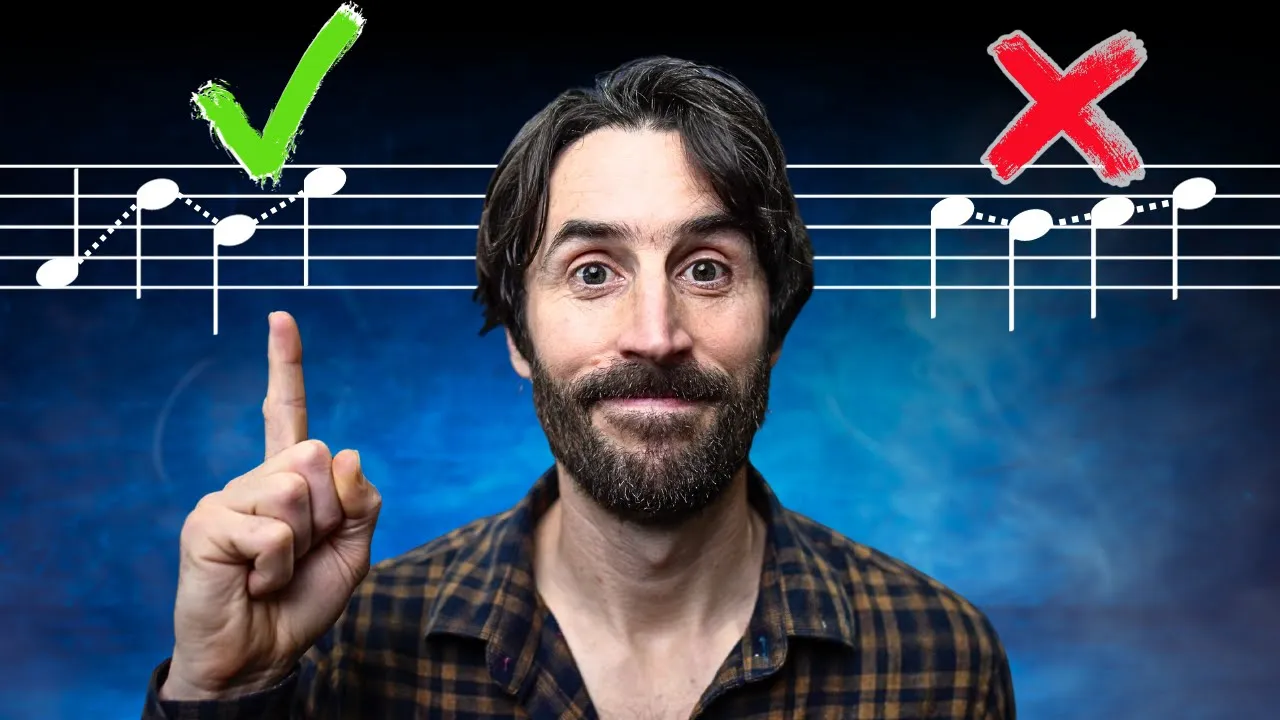


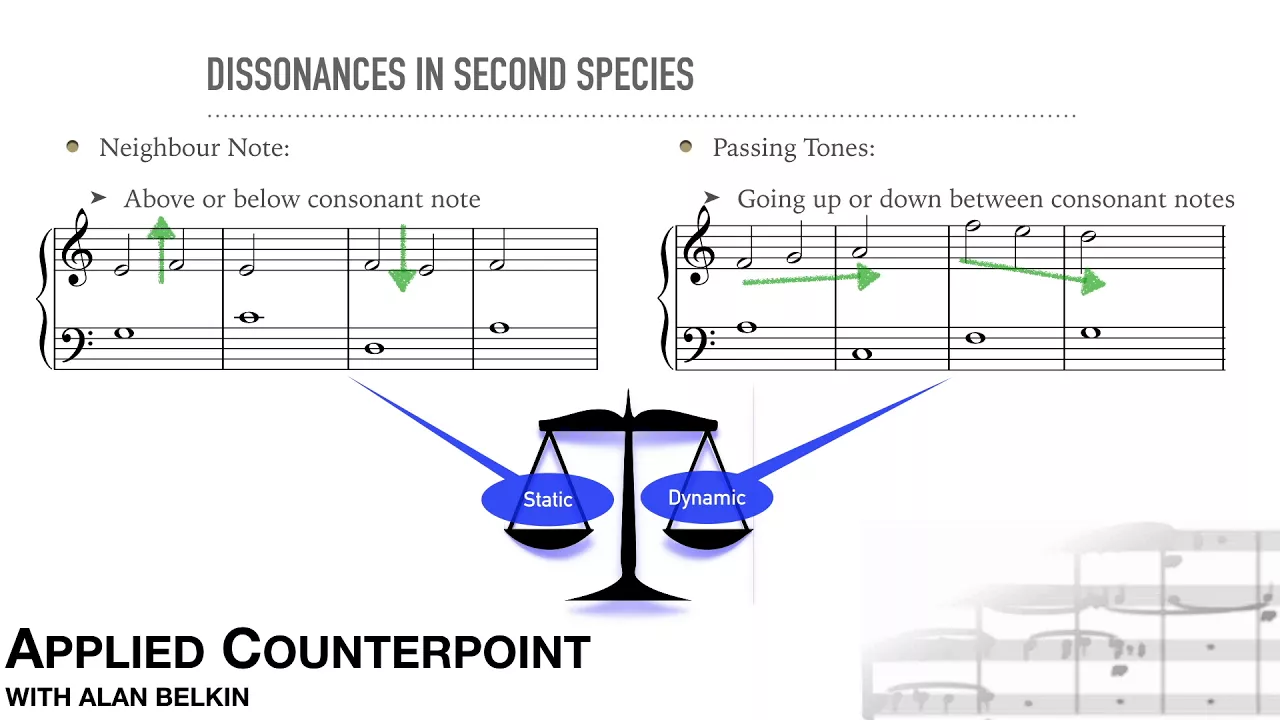




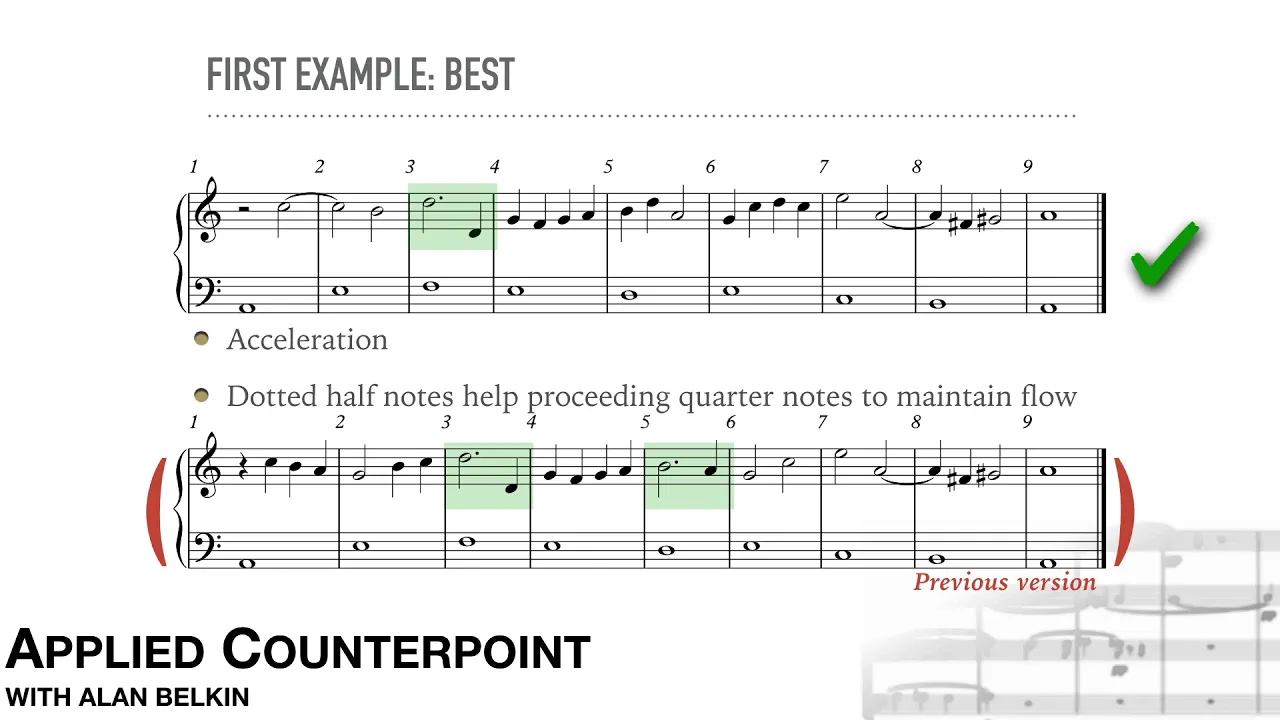






First species counterpoint is a foundational music theory technique where a counterpoint line is written note against note above or below a cantus firmus (a fixed melody), following specific rules: only consonances (unisons, perfect fifths, octaves, major thirds, and minor sixths) are used with more imperfect consonances than perfect ones; the piece must begin with a unison, fifth, or octave and end on a perfect consonance; the penultimate measure must contain a sixth; melodic movement restricts leaps to no larger than a perfect fifth (except octave and ascending minor sixth), prohibits augmented, diminished, or chromatic intervals, and requires stepping back after skips of a fourth or more; voice crossing is allowed; and motion types include direct (same direction), contrary (opposite directions), and oblique (one voice stationary). This technique, developed from Renaissance music and formalized in Fux's 'Gradus ad Parnassum' (1725), trains students to create independent melodic lines that harmonize beautifully together.
Music Theory Q&A: Species Counterpoint Rules Explained
Added:welcome back everyone this is going to be a new video series I'm starting this is my very first one I'm calling it ask dr. bee about music theory and the reason I started this is because I've gotten so many great comments from you all who watched my lessons my music theory lessons and left comments asked great questions and I'm sure there's other people who have the exact same questions as some of those if you guys post it so I have three questions I'm going to start with this this week and and this comes from protein virus thank you for scaring me just a little bit when I first read that one Trojan virus asked anything in this mix about counterpoint well the answer is here it is it's coming belajar guitar wrote great lecture you are a great lecturer thanks for uploading these videos you are the best I always wait the new lecture from you especially harmony and maybe counterpoint but before thank you these videos are very helpful well I appreciate it that's exactly what I wanted I wanted these videos to be useful to be helpful and you asked about harmony and maybe counterpoint you're another person one in counterpoint finally William a PM writes would you consider doing something on advanced counterpoint not species one through five but definitely larger forms well William I'm not we're going to hold off on those larger contrapuntal forms things like few we might get around to covering those but since you mentioned species counterpoint that's where I'm going to start and the reason we're going to start there is because this is such a foundational topic of study it's often covered in collegiate music theory programs some colleges do it others do not but it is foundational for par training and a lot of that information the idea started I guess really the music of Palestrina and the Renaissance but in 1725 there was a book and I have that book was called gratis ad pardon awesome it was by folks and this book is written and this is a translation in English and it covers species counterpoint so species counterpoint has five different species and we're going to cover first species right now and we're only going to do part of first species because this is a pretty complicated subject so this is first species it's called note against note and let me start giving you some of that information so the idea is you have a Kansas firmus now a Kansas firmus was something that was used throughout the Middle Ages and Renaissance and the idea was this was a melody that was was used as a foundation for adding other melodies and counterpoint on top or below often it was a Gregorian chant that that then would be used in expanded upon to make to voice thirty four three or four words five voice contrapuntal structures so for our purposes this candace firmest is what we're we're given and what we're going to do is write note against note first species kind of bargain we're going to do that first CDs above the kansas firms you can also do it below the campus furnace it has very similar rules but there are a few exceptions but right now we're just going to focus on writing above to that end in note against note first species you're only going to use consonances we only use consonances so let's review what our continent is well there are perfect consciousness competences and imperfect conferences so a perfect continent is your unison one your fifth in your octave or the eighth your imperfect consonances are your thirds and sixes so we're only going to use one three five six and eight so no no seconds no fourth no seventh only consonances now there's the Lord be considered we're going to use more imperfect consonances than perfect consonants so then when we look when we're all done writing our counterpoint above this Kansas firmest there should be more thirds and sixes than one fives or eights we will begin you are allowed to begin when you're writing a species counterpoint above a campus firmness on either the unison the fifth or the octave you have that choice the unison can only be used at the very beginning and at the very end you can't write a unison in the middle so you don't have to start with a unison you don't have to you know have to use it at those beginning or ending points but your but you can't use it in the middle so that's another rule to keep in mind then the penultimate mutt measure must be a six or the in harmonic equipment which would be a minor third so we're writing specie time where I'm going to write that in right now so our ultimate measure is means second to last so pedals with a measure right here we have a pitch it is a D that means I need a six I'm going to write that in right now so I don't forget that letter is a B now knowing that that I need to end on a perfect confidence I know I'm going to have to end on this C so that's the other thing your ear you're almost always going to end on a loading not almost always you always will end on the perfect consonants in this case when you have this B you're almost always either going if it's a be below it will go to the C use it if it's a be above it will go to the octave so again rule five penultimate measure must be a six or it's inversion now some of the rules and I want to go over this before we start trying to write our counterpoint is the whole log movement because this is what's so important you're not allowed to use any augmented diminished or chromatic intervals so first off it's going to be entirely diatonic but we're going to make sure not to have any augmented or diminished intervals now where would you find diminish intervals if you're going diatonically well you have the tritone what do we deal with species counterpoint it was often done in a modal context so what we're using right now is Cantus firmus based in c so for for those of you familiar with major minor tonality this is going to be like a C major scale but this was an Ionian mode and we can talk about and very often when you do see this kind of point you'll do a canvas firmness based on a which would be a Olien or D which would be Dorian or E which would be Phrygian or F which would be Lydian or G which would be mixolydian those aren't important for you to necessarily memorize right now I just want you to be aware that that depending on what mode you're Kansas premises in will you'll have to be aware of where you might find augmented or diminished general intervals and you take a nice chromatic alteration the that tritone which is the kind of biggest culprit of where things can go wrong for you you can't even outline it and when you're earning your counterpoint counter puntal line meaning which would mean like you couldn't say have an start on an F go up to a B and then come back down to an F because F to B in that one direction would outline a tritone so this base F to B would be an Augmented fourth so you have to be very careful on where you change direction in your contrapuntal line such that the peaks and the valleys don't emphasize the tritone that interval is is too dissonant to the ear it makes it stand out in a way that's a bit jar now if you're going for something that's jarring by all means write a title but that's not the base for contrapuntal writing your base is usually something that flows and it's smooth so you don't want the jarring effect of the tritone our next aspect of melodic movement we don't want to have any leaps larger than a perfect fit no leaks larger than a perfect fit there's two exceptions one is you can jump the octave and the other is the ascending which means going up jumping up ascending minor six those intervals will work one of the reasons it's so great to work on species counterpoint is because your as you try to do this and and I urge you to play this at the piano at the keyboard hear what it sounds like you'll hear when you do it following these rules how everything just flows and sounds rich and full and your your ear starts to become really sensitive to the finer aspects of harmony and melody and it's it's kind of like you know a if you don't have that experience you sometimes can't tell the difference between those subtleties that really become apparent when you work on species counterpoint our next melodic movement rule is that you can only repeat a note once which means that you're writing your counterpart a line and it should be in motion it should be moving up by step down by step a leap up or down they can repeat but it should only do once you know words you can't just go see ZZ ZZ a bunch of C's in a row it would be boring it wouldn't be a melody even though you can repeat a note once you just you don't want to have to met too many repeated notes even if you start moving then you repeat again you don't want to do that too many times maybe two times max when you're writing a short excerpt like what we're doing right here if you do have a leak or it of a fourth or more you want to step back in the opposite direction right away so if you jump up from C to G your next note should probably be an F back in the other direction so skips must be filled in by stepping backwards you can go jump a third and then another third in the same direction the third is an interesting interval it's it sometimes functions like a leap but sometimes it functions like a step because it kind of outlines a triad and it's small early it's have that flexibility so you can leave two thirds and in a row in the same direction you don't have to step back but if you leave a fourth or more you definitely need to step back then finally if you're going to move into a harmonic unison or octave you can't skip into it you can't jump into that that has to be done by stepwise motion because the octave and the unison are so consonant there so grounding you want to be a lot smoother to keep that flow going and if you make a leap it further emphasizes that grounding continents then finally voice crossing is allowed now this is not the case when we do four part traditional writing Bach chorale style writing but for these purposes for species counterpoint you are allowed to cross voices for voice leading purposes so the next thing we have to talk about and we mentioned it briefly here is the different kinds of motion okay we have direct motion so direct motion is where both voices move in the same direction whether that is up or down now when we deal with four-part writing we usually break direct motion into two categories one is similar motion which means where it goes in the same direction but by different intervals and the other is parallel motion so we have we split through that category but back here back 1725 we just really talked about direct motion and the rule is you can't have direct motion into a perfect countenance this is tricky this is hard because you can under certain circumstances and for part writing have similar motion into perfe constants you'll remember that you can't have parallel motion into a parallel fist or parallel octaves but here it's even more restrictive you cannot have direct motion which would be similar and parallel into a perfect countenance you have contrary motion contrary motion is great any contrary motion is acceptable oblique any oblique motion so contrary motion is where one voice goes up and the other goes down or vice versa top voice goes down bottom voice goes up oblique motion is where one voice stays the same and the other voice moves up or down so with that with all those rules we're going to see if we can come up with our first species counterpoint I'm going to I recommend for those of you who have a piece of staff paper at home you might want to write down this Kansas firmness we start on a c e f g e a g e f e d c so 12 measures I would recommend you write that out that you have access to the pen and paper and we're going to write something above and so there's more than one solution to this I'm just going to give you one and so by writing this down you can try your hand and see if you can come up with some other options that work that follow all these rules that sounds great when you get done so step one I can begin with either a unison 1/5 or an octave well I just look at this one and I see that it starts by going up so I don't want to go with a units and I'm going to try to avoid voice crossing even though it's a lot I'm going to try to avoid it so since this Kansas firmer starts by going up I want to have a little room so I think either start on the G v or the seat I I'm just going to pick the seat so I'm going to pick the seed so we start with an octave and what I recommend doing is that you write the interval harmonic interval between your Kansas farmers and your note just so you're keeping track of stuff so this is an octave so I write it eight right here in between the two states I then move up to a to an e well I know contrary motion I can't go wrong so let me see if I can come up with something if I go here and I just let's say go down to set I then go into a fifth well is that okay well the only thing I really have to be careful of with a fifth is that I don't move in direct motion into the fifth and this is actually contrary so going to the B so I have C C octave going to e be a fifth approach by contrary motion I'm fine I'm doing great well now in the Kansas it moves up to an F what if I continue down the scale here C B and I go to an a because I do want more imperfect consonances and I just had to perfect consonances in a row so this is a great opportunity I have in the third measure and f2 in a that in the third there's my imperfect consonants wonderful well at this point I could go down to the G and then have another another octave and or actually I don't have a unison but I can't rule for I don't want to use an only maybe at the beginning in the end so at this point I don't want to do that I could do some voice crossing and make a leap down to maybe an E but in this case I'm going to move with direct motion I'm going to have a move to G B which would be parallel third parallel thirds sound great so I'm going to do that and my next measure here I have a e in the Cantus firmus so in the spirit of keeping some contrary motion and having as many thirds and sixes as possible if I stay well what would be a third and six well of G or a seat I don't want to have three thirds in a row it would be two too much the same I want to have some independence in my different melodic lines so to do that I can just keep going up the scale here and I'll get my sip let me say that part again because that's important you don't want to have too many of the same interval in a row even though parallel cluttered sound great 3 3 3 3 3 3 it's going to get more you want to have some more independence of melodic line with your with your counterpoint that you're adding now here my next measure I have an A in my Cantus firmus and again I'm looking to have as many thirds and sixes so I just think about well what would be the third and sets well the third would be a see the six would be an app I could keep the seat like a common tone I'd allowed to repeat notes as it says in rule 6 D here but I don't want to do it too much so but I'm halfway through I haven't done it yet that's an option or I could go to an F I can jump down to the app I could jump up to the F but then I'm kind of maintaining that same interval would be another six in a row and I'd rather have a little bit more independence of melodic line and vary the intervals so for me I'm going to repeat the C so then I have the interval of a third a to see my next note is AG in the Kansas here I've now have four thirds in perfect consonances and two perfect compasses so here's a great opportunity to go and use my perfect confidence again because I can use contrary motion AC can go too Gidi and there I have a fit and I double check myself I say did I use direct motion to get into that fifth I did not I used contrary motion you just can't go wrong with contrary motion so you'll see that from the beginning we have contrary motion contrary motion direct contrary oblique contrary so we've used all three of the different types of motion that can be used again what that does is it really establishes two independent melodic lines and historically what this is coming from is this would have been sung by a bunch of monks this Cantus firmus and you may have another bunch of monks that would sing this line note against no counterpoint to the kansas firmers and you have these honorees and so this is really in the spirit of where this music comes from we then get to our next note in the campus service which is an e now one thing that I haven't talked about yet but it's actually really important in the to a certain extent deserves the entire own video is that when you're writing a Cantus firmus you usually want to have a climax a height one now you can have a climax being the highest note in your Cantus firmus or the lowest note in your Cantus firmus so if we look at our Cantus firmus c EF g e-- jump up to the a that a is the highest milk in our Cantus firmus and it is further emphasized by leaping into that so right there that's our climax of our Kansas firmness there should only be one when you're writing in Kansas firms if you were to write one yourself I'm going to try to keep that same spirit when I'm writing my contrapuntal one so I would like to have a high point in my contrapuntal one and this is a great opportunity to write here to keep stepping up to the and I'll make my tea the highest note is my counterpoint and that makes it an octave in two octaves I approached it with contrary motion so I know I'm okay now our next note is an F here I'm going to want to leap because if you'll notice I've just been going up and down the scale c b a b c c d e to our scale can get boring you want to have a leap or two whenever possible so I'm here I'm going to make a dramatic leap I'm going to leap down 1/5 so 1/5 is the largest leap I can make if you if you remember back you can leap down an octave you can do an ascending minor 6 but for most purposes v is going to be the biggest leap you make so I do that and I leave it to 1/3 which again I want more than perfect consonances I just had to perfect consonances in a row so it's time to mix it up try to go try to give us some that variety so here after I've done that bleep I need to follow the other rule which is after I'm making a leap of a 4th or more I need to step back so step back would be a B creates a v with the e in the campus I'm going to repeat that because that's what I had to do if you remember from all the way back we know that the pedals of that measure must be a 6 so we have that repeated note again that creates our 6 and results or our octave so what that will mean is we have perfect confidence is one two three four five six so six perfect consonances and one two three four five six in perfect consonances yeah we want more imperfect constants that are perfect so that's not quite ideal but it's acceptable it works and it works in part because they're mixed in there with the perfect consonants it's not a bunch of perfect consonances in a row we only have that most to perfect in a row so as I said before what you always want to do is start to train your ear along to combine it with your zero you want to connect your ear with your theory so you should play this on a piano or put into a computer program and have it play it for you just a bunch of whole notes note against notes first species Cantus firmus in the lower voice the counterpoint in the upper voice so I'm going to go over and I'm going to play this for you I'm going to start by playing the Kansas alone so if you take a listen this is the campus alone here we go [Music] now with our counterpoint above and that works that really works it has that all the quality we were looking for it has independence it's an independent melodic line it sounds like a melody so don't be naughty dogs already lot easy dog it works harmonically with this it sounds good if you if you had this two people singing it it would sound great if you had two instruments playing it let's say two different saxophones or two clarinets this would work beautifully everyone would enjoy it it follows all of our rules I urge you to go take this Cantus firmus see if you can come up with some other options other counterpoint start with the v do some voice crossing and just see what you can do in terms of developing this and again who knows you might see this on some kind of examination because some colleges some conservatories like to go back to that this foundational music theory information that came out of the the music of the Renaissance of Palestrina and was very common in the Baroque era and gives you a good example of what to expect if anyone asks you about species counterpoint thanks so much you
Up Next

Composing with Arvo Pärt's Tintinnabuli Technique: A Practical Guide
@GalenDeGraf
80K views•2023-11-18

Simon Rattle on Early 20th-Century Music: Tonality's Decline
@theclandestinum
18.3K views•2012-06-16

Music Theory Lesson 13: Part Writing/Voice Leading
@ChristopherBrellochs
48.8K views•2016-10-16
Understanding John Coltrane's Giant Steps: A Music Theory Analysis
@Vox
10.4M views•2018-11-12
Related Study Plans & Knowledge Roadmaps
Structured learning paths in Music Theory