








![How to WRITE Harmonies! [Vocal Harmony Tutorial]](https://i.ytimg.com/vi_webp/5Q0nOTqDxkE/maxresdefault.webp)
















When part writing root position triads in four-part harmony, always double the root note; however, there are two important exceptions: (1) in the final chord of a piece, you may triple the root and omit the fifth for a more relaxed, restful sound, and (2) during a deceptive resolution (V to vi), you should double the third of the vi chord instead of the root. Additionally, when moving from one root position triad to another, use contrary motion where the bass moves up by step and all upper voices move down, which helps avoid parallel fifths and other unacceptable intervals.
Music Theory Lesson 13: Part Writing/Voice Leading
Added:Familiarity with SATB (Soprano, Alto, Tenor, Bass) vocal ranges and layout on a grand staff.
Ability to build and identify major and minor triads in root position.
Understanding of Roman numeral analysis and basic diatonic chord functions within a key.
Basic knowledge of melodic motion types, including parallel, similar, contrary, and oblique motion.
Part-writing triads in first inversion (6 chords) and second inversion (6/4 chords), including their specific doubling guidelines.
Mastery of voice-leading rules to strictly avoid errors like parallel fifths, parallel octaves, and voice crossing.
Introduction to part-writing dominant seventh chords and their standard resolutions.
Analyzing and harmonizing chorales in the style of J.S. Bach using standard four-part voice-leading principles.
48.8K views736likes37:28Original Release: 2016-10-16
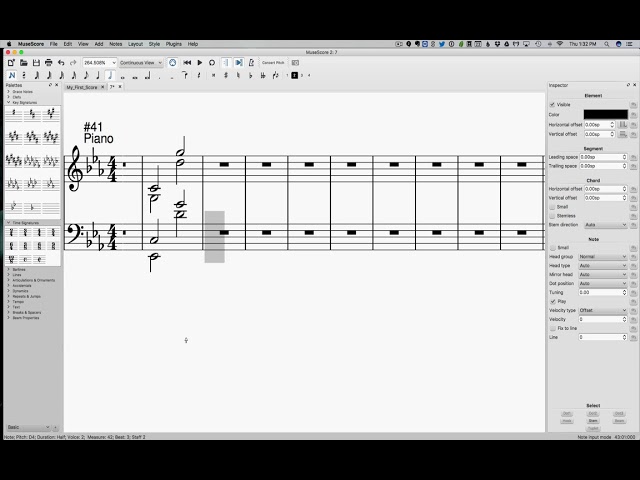
today we are talking about writing root position Triads and how we would part write from one root position Triad to another we're going to focus in on four-part writing soprano Alto tener based we talk a little bit about three-part writing but we're not going to not going to go too much into that just because that is not anywhere near as common as forart so when writing a four-part Triad keep in mind that Triad means that there's only three notes yet we have four voices singing so obviously something needs to happen first off this is your first choice First Choice is you're going to write a complete chord meaning you're going to write a root a third and a fifth and make sure you have all of those and then you're going to double the root and that's a rule in a root position Triad double the root say that in say that to ourselves again in a root position triy double the root now that now that we've done that now let's start talking about exceptions that's how quick the exceptions happen there's two ways that we can have an exception actually write it like this so and our exceptions one two so in the very final chord of a piece or maybe even a larger section you can have three roots in 1/3 tripled root and a third the reason that works is that it's a final Cadance and having lots of the root of lot is makes it sound really relaxed and and and restful and when you're leaving out the fifth which is what you're omitting why why leave that out as opposed to the third well the third is going to tell you whether a cord is major or minor the fifth is not needed to tell you whether our cord is major or minor it's still a perfect fifth regardless so the perfect fifth is not critical in determining major or minor therefore it's easier to be left out there's other reasons as well that have to do with where it is in the overtone series because it is it occurs so early on in the overtone series the human ear supplies a perfect fit automatically when you listen to music and you hear a note if you're going to assume something you're going to assume a perfect fifth if it's an augmented or a diminished fifth you have to hear that otherwise you it wouldn't come across the ear assumes the perfect fifth without more information so when you write a complete chord and have the fifth you're giving your ear what it's already expect if you leave out the fifth and just have three roots and a third the ear kind of assumes that there's a perfect fifth in there so that's why why you can leave it out your second exception deals with a deceptive resolution a deceptive resolution is when you have a five chord that goes to a six chord this is not what the human ear expects the human ear expects a five chord to go to a one chord and we're going to start talking about harmonic progression later so we're a little bit ahead of ourselves right now let me say that again the human ear expects the five chord to go to the one one chord one place that it will go to kind of be deceitful is to a six chord and when it does go to a six chord instead of doubling the root of the six chord like what we say here is our rule instead you double the third of the six chord let's think about why that would be so let's take uh we'll stay here in this example E flat major let's say we have a five chord B flat B flat d f and we're going to a six chord which would be C we would write it like this all right so this is our five chord this is our six chord so here we have have B flat we we have the notes right we WR B flat DF we have a B flat we have a d we have a f we need to double the root so that means we want two B Flats so B flat B flat DF we've written that chord correctly and as you're writing things you might want to just list the notes you're looking to get and usually it's a doubled root a thir and a fifth however when we go to our six chord here this is 5 to six that's a deceptive resolution if we have just a six chord that's not preceded by five it is not a deceptive resolution so sometimes for your six chords you're going to write root root3 5th and sometimes for your six chords you're going to go root 33 F it's when it's 5 to six that you do that second one this applies for both major and minor which is why here I write an uppercase Roman numeral six to indicate that it could be either major or minor so in this case E flat major a six chord deceptive resolution I need a c an E flat a g that's my complete chord and I double the third of the chord so here I have my C my E flat two of them and a g so that is my how you would part write a deceptive resolution now why double the third well go back to what I just said a second ago we expect five chords to go to a one chord so A B flat major Triad five chord would normally go to an EF flat major Triad which is the one chord in an E flat major Tri one chord what note would you double the root which is the E flat hey look even though we're going to an unexpected chord we're still doubling the expected note let me demonstrate on what that sounds like so we're in E Flat Major our first chord we have is a five chord [Music] we would expect to go to [Music] instead so you can hear how the one the first one I played sounds everything's normal everything's doing what it's expected the other one doesn't sound bad it's just unexpected it's deceptive so that gives us our rules and we start off with two exceptions right off the bat but you'll notice that exceptions occur for specific reasons it's not like we just randomly say oh and here we're going to leave out the fifth and here we're going to double the third there's very specific reasons on why we have those exceptions so this is going to be important for you to remember as we start trying out some of these exercises before we go there in three part textures soprano Alto base first thing you should try to do is write a complete chord root 3D fth however if it would make sense you could omit the fifth that's allowed and now when I say if it makes sense what is a valid reason what counts is making sense and the answer to that when we're talking about this is the part writing the voice leading if the Integrity of the melody which is something we've talked about previously to create a good melodic line with a focus point and and a nice variety of conjunct and disjunct motion if the voice leading is much better by omitting the fifth that's a good reason if it isn't then that's not a good reason so so your first go-to thing step rather would be to write a complete chord and then if your Melody would be better improved if you left off the fifth and went to having two roots and a third go ahead and do so when we omit the fifth then the question is what do you double and you it would be you would have root plus root plus the thir you wouldn't have 2/3 you'd have two Roots all right here's some options because the reason we're starting to get more complicated is you have more options now when I say earlier on when I say write out a D major scale there's no creativity there's no options there's only one right answer here if I were to say write a five going to a one chord in the key of C major four parts you have many options just how you write the five chord alone you have numerous options here's one example g d GB do we have the complete chord GDB yes did we double the root yes so g g b and d we have all those notes those look like sixes they're not sixes those are G's we have all those notes accounted for so we wrote our five chord correctly other things we have to be careful about are they in the appropriate range yes is there any voice Crossing no do we have appropriate spacing yes so there's all these things that we've talked about before that you need to make sure are happening but you can see all those things are correct here we look over here here we have from bottom to top g b d g we have our notes again but you can see that it's a different voicing but it is also correct and we'll go over here from bottom to top g b g d yet another voicing that's correct so right there is just three possible voicings for a G major Tri now how do we resolve this chord five going to one how do we get our voices to move in such a way that we don't break any of the rules and again what we talked about previously no parallel fists no parallel octaves no parallel Unison no leaps that are unacceptable like augmented and diminished uh mainly augmented leaps and certain other types of leaps like of a seventh there's a bunch of things that we have to avoid and remember to avoid so in this example it's a five chord root position going to a one chord so we know that the base is going to do that g to see you could say well could it jump up to the C yeah it could that's in the that's at the very top end of the base range but let's give ourself a little little room here we know that the notes we want are c e G that's our Triad and we're doubling the root so two C's an e and a g c c e g so it's We spelled the chord correctly spelling the chord correctly is step one now let's see how the voices move the soprano voice moves up by step we had no choice in this if you look and remember the B natural is a tendency tone it is scale degree 7 in the key of C major scale degree 7 is called the leading tone the leading tone wants to go to time which is what we call scale degree one so scale degree one uh scale degree one equals tonic scale degree 7 is the leading tone when you have ATT the seventh scale degree in one of the outer voices outer voices meaning the soprano or the bass it must resolve toonic so since this B natural is our leading tone it must resolve up to the C so it goes up by step our Alto stays the saying it maintains the common tone so common tone is saying well what notes are in common well both of these chords have a g in them that is the common tone some chords will have one common tone some will have zero some will have two I will let you know right now a little hint common tones are your friend they will make your life easy keep your common tone I mean friends close if you have an opportunity to maintain a common tone you should try to do that that should be your first instinct because if you remember the type of motion where you can never have problems is oblique so if you have a common tone being maintained and other voices are moving you know you'll never have a problem it'll be what we call smooth voice leading because the notes being kept the same yes you run the risk of being boring I know but right now we're not trying to be exciting we're trying to do is understand how to do something that is smooth voice leading that follows all the rules sounds like good full harmonies after we've mastered that then we will sink our teeth into how to be creative and exciting and interesting don't worry you won't lose those things the alto maintains the common tone the tenor moves up by step well as a word of warning we have a voice moving up and another voice moving up we better make sure that this is not one of those unacceptable parallel intervals right we don't want parallel fifths we don't want parallel o d to B is an interval of a six well sixes are great parallel sixes are even better just ask John dunable back in the back in the day parallel sixes sounded wonderful so we have the upper voices moving by common tone step and step and that's how we resolve this and it's a great way to resolve the core let's listen to it I will pegate so you you can hear all those individual [Music] [Applause] [Music] voices that is a satisfying resolution now let's take a look at our next example here's another voicing of the five chord so you'll notice that here the G was maintained as compone but here we don't but Dr Brock you said maintain the common tone whenever really whenever possible yeah if you want to make your life really easy you should there are options and sometimes for voice leading purposes you might have to explore those so it is possible here that that fifth the root rather the root of the five cord can go down a third what you will notice and the reason I use the word similar here is that all of the upper voices move in similar motion you'll notice that they soprano Alto and tenor all move down well we better hope there's no parallels in there right B to d That's a third so we're fine B to G that's a sixth we're going to be fine notice that they all the upper voices move down down and the base goes up contrary motion this is actually very critical if you you'll solve a lot of problems by having contrary motion with the base so that's another one of those kind of tips that will be helpful we have step down here and a a leap of a third down there but none of those leaps create parallel unaccepted parallel motion so we have another example again we have our g g b d so we spelled the chord correctly here we have our c c e g so we have that both our spelling and our doubling are correct let's compare and listen we have [Music] so sounds perfectly fine it doesn't sound the same as this this one would work very well at the very end of a phrase because we have 71 scale degree 71 makes it sound very fine this doesn't this this would sound good in the middle of a phrase keep in mind that as you're writing you want to have options in the middle of a phrase you don't want things to come to a complete stop at the end of the phrase you do here's another option here we have stepwise Motion in one voice we maintain our common tone here and we make a leap in another voice all right so this one had common tone two steps this had everything moving in similar motion this one has a leap a common tone and a step so you can see that there's so many options let's take a listen to this one we [Music] have going [Music] to so these are different methods different techniques that can be used to to part right so let's actually do some of this here's our an example we have a a figured Baseline written out and a voicing to start off step one step one a Roman numeral analysis we are in the key of A minor how do I know well I see these Sharps here which indicate the third of the Bas is being raised right now we're only dealing with dionic harmonies so we can't be in C major we're going to have to be an A minor also it starts on an A and it ends on an A so when you're looking to determine the key look at the first note look at the last note usually it'll start with a one chord maybe a five chord what'll almost invariably end on a one chord maybe a five chord but those are your two options usually it starts on one or five not always there's exceptions and if you see any that looks like a raised leading tone in the middle then you definitely know that you're in a minor key so with that a nothing under that that's a one chord five chord one chord six chord four four chord five chord one chord these are all root position Triads so I just look at the note a that's one in the key of A minor e that's five in the key of A minor we did that already and F is a six chord and I'm writing the appropriate upper or lowercase R numeral because I've memorized that so I know all six chords are major in a minor cu and four chords are minor in a minor key so keep in mind what we've talked about before and make sure you have memorize the different sori so you can write the appropriate upper or lowercase Roman numeral after you I've done that I have my first voicing I then need to come up with what I'm going to do for my five qu so I've done my Roman numeral analysis step two is I want to write letter names for the chord that's coming up so here n the chord would be e g Shar B and since it's a root position Triad I need two e's I've already have one it's in the base so I'm going to go like this and I'm going to cross it off after you write as you start to put it on the staff cross off the note you have now next step that I'm going to do is I'm going to look for common tone look for common tone well there's e in both chords so I could keep this e right here and maintain it let me do that let me maintain the common tone cuz I said common tone is your friend let's try to make our lives easy then I cross it off now I knew I now I need a g Shar and a b so step four I look and see what can I move to by step and I have to look at both voices and say how can I make the least amount of leaps okay move by step least number of leaves so it doesn't matter if one voice can move by step if the other voice has to make a big leap I want the the the least amount of leaps between the two voices well this C can either go to a gsh or a B well a G sharp would be a leap a b would be a step well that's that seems reasonable this a has to go to either a g or a B gar is a step B is a step well what am I going to do well obviously I'm going to move this to the G Shar and this to the B because I can move this this one has the option of step to either one but this one could only go to the V by step other than that I would have to leap and I want want the least number of leaps so that is how I'm going to choose to do that now it goes back to a one chord you know I'm going to be boring if it worked before it'll probably work again I'm just going to move it right back to where we started I mean that's a big I'm going to double check is that more than a compound perfect fifth it's not it's a compound perfect fifth so that's the biggest distance we can have it works if it works I'm moving forward here six chord the notes in my six chord in the key of A minor are f a c it's not a deceptive resolution 1 to six is not deceptive therefore I'm going to double the f I already have one so I cross it off can I maintain common tone well interestingly enough both the A and the C are common tones so if I can maintain those C A and then move this to an F does that work do I have any parallels that are problematic well these are staying the same so this is a fifth going to uh to an octave that's okay that's a pro that's fine so you see how I use common tones and it's just making everything go very very smoothly I now have my four chord I need figure out I need a d f a i need two D's I cross one off because I already got it common tones well that's not a common tone that is that is so if I maintain the f I maintain I cross it off I maintain the a cross that off then I need a d look I can step up to a d right there in the soprano I did it once again common tones making my life so easy and then finally I get to a five chord we knew e e g Shar B we have one of those E I can cross it off well here there are zero notes in common zero notes in common but I want to say move by step well let's see this D can move up to the e that's by step the a can move up to the B that's by step the F could move up to the G that's by step you'll notice I'm not writing these the D could go up by step so everything could move by step right Dr Rox that's great that's perfect we want to do the least number of leaves yes but we can't break the rules and if I were to have an e here let me just that's a d That's a d that's an e that's an e that would be parallel octaves that is unacceptable so we know we cannot go to this e this D cannot go to that e unacceptable well how about this D to a a and going to the B by step right d to a is a fifth e to B would also be a fifth parallel fists are unacceptable well we can't do that this F to the G well it's going to be a g Shar F to G sharp wait a minute that's an augmented second that's unacceptable so you did that you would break so many rules very commonly when you have a a root position Triad that moves the base moves up by step this is where all you rookies will make your mistake let me tell you the the trick that will help you if you remember this you will always be good when the base moves up by step root position up bystep root position take all the upper voices and move them down in contrary motion so this idea that we had right here base goes up everything else goes down in similar motion so we need this D what's the next thing it could go the closest thing because we don't want big leaves we have to do some leaves here we have no choice so the D can go down to our B the a can go to our G sharp and I don't forget to put the sharp in there because indicated in the figure base and this F can go down to an E and now I've written this perfectly I've got e e g Shar B with no parallels no augmented seconds and I told you the Special Rule when the we have two root positions whether it's 4 to 5 1 to 2 3 to four any of those chord progressions upper voices down in contrary motion with the base problem solve piece of cake just like that so don't forget that that there right there that's that advice is like gold then finally our final chord a a c e we have the a uh common tone right there and here I could go back to the the C and the a here I could but this time I'm going to try to do something a little different I'm going to put the a here oh actually no this is not what I'm going to do I'm going to do something a bit different I'm not going to do the commat tone because I want to end here I'm going to do use this other option that I mentioned where um it's it's similar to this where one voice actually I'm sorry it's similar to this where things move in contrary motion I'm going to do that so that I can end on tonic and have a nicer shape to My Melody I'm sorry I was a little creative I couldn't resist but Dr Brock here's a leading tone and you said leading tones they got to go to Tonic the answer is they do if they're in an outer voice but that is an inner voice so I may make an exception let's listen to how this sounds right and slow we [Music] have four-part Harmony that sounds great four-part Harmony that sounds great let's take a look at our next example here I'm giving you the soprano and the base Bo our method is very much the same Roman numeral analysis is first one chord six chord five chord 1 4 1 4 five it's a five chord so I'm going to go I'm going to put a dash which means it's the same as the chord before to the one chord I need two e Flats a g and a B flat so E flat E flat G B flat here Crossing off the notes is even more valuable CU we got two we got an E flat we've got a g that means we need an E flat and a B flat to go what you choose for your very very first voicing is very critical if you make things hard for yourself like you could double the E flat here and put a B flat here you could do that you could do this but I like to make my life easier and I recommend this for you as well give yourself a little space to work with when you have the bass and ten are singing the same pitch then they got to they don't have much room to move around so instead of that I like to put my VF flat here and my E flat here so I then can cross off my B flat my E flat then when I move on to my next chord I know I need c c e flat G I've got C I've got G I need E flat and I need c so I look for my common tone well there's an E flat common so I can keep do that and I can move by step in the ten Boom I love that that's smooth right there there least number of leaps I did a common tone and a step I then go to my five pord which is B flat another B flat cuz I'm doubling the root D and F I've got B flat I've got B flat I now need D and I need F Well I could put the F here and the D here why would I not want to switch those two around well because for C goes to the F that's a leap so by putting them like this I can have them both move by step here I'm going back to my one cord I need an E flat another E flat a g and a B flat so I could put the E flat here or I could put a B flat that's a big leap probably don't want to do that so I probably want to put the E flat here and this D to a B flat so F to E flat that's a step D to B flat that's a leap of a third that's pretty good that's pretty smooth the other option would be have this leap a fifth that's that's too much that alone it also presents a problem that we haven't really talked about yet and that's called overlapping uh and so overlapping is a concept that we should probably talk about beginning with our next our next lesson okay but the short and I'll review next time in this chord coming up what you want to have is you don't want your Alto to go higher this Alto and this we have a question mark where is it going to be you don't want it higher than the soprano was or lower than the tener was these are kind of like the exterior limits of where you want to go CU once you start going over those limits it kind of feels almost like voice Crossing something called overlapping and we will talk about that next time overlapping thank you folks I'm
Up Next

14:29
Arvo Pärt 'Cantus in Memoriam Benjamin Britten': Musical Analysis
@StrateleStudios
1.6K views•2024-02-25

51:08
Simon Rattle on Early 20th-Century Music: Tonality's Decline
@theclandestinum
18.3K views•2012-06-16
27:16
Music Theory Q&A: Species Counterpoint Rules Explained
@ChristopherBrellochs
15.4K views•2017-08-02
10:49
Understanding John Coltrane's Giant Steps: A Music Theory Analysis
@Vox
10.4M views•2018-11-12
Related Study Plans & Knowledge Roadmaps
Structured learning paths in Music Theory
music-theory
Tintinnabuli: Pärt's Counterpoint & Composition
01Music Theory Foundations: Intervals and Triads
02Fundamentals of Counterpoint and Voice Leading
03Arvo Pärt and the Spirit of Holy Minimalism
+ 2 more learning modules
16h5 modules
Explore Roadmap
music-theory
Composing Galant Music: Partimento & Schemata
01Foundations of Figured Bass and Keyboard Harmony
02The Rule of the Octave (Regola dell'Ottava)
03Galant Schemata: The Building Blocks of Form
+ 2 more learning modules
30h5 modules
Explore Roadmap
music-theory
Decoding Overtone Series: Tuning & Drone Music
01Acoustic Foundations: The Physics of the Overtone Series
02Tuning Systems: Equal Temperament vs. Just Intonation
03Microtonality and Spectralism: Beyond Standard Pitches
+ 2 more learning modules
24h5 modules
Explore Roadmap
music-theory
Impressionist Harmony: Scales, Planing & RPGs
01Foundational Music Theory: Keys, Intervals, and Seventh Chords
02Impressionist Color: Chord Planing and Parallel Harmony
03Whimsical Textures: Pentatonic Cascades and Whole-Tone Scales
+ 1 more learning modules
14h4 modules
Explore Roadmap