












![#2 [PDF] Read Mensural Notation - Ockeghem Missa Prolationum Kyrie 1 - Tempus imp. Prolatio Imp.](https://i.ytimg.com/vi/cl_jknUq1MA/maxresdefault.jpg)







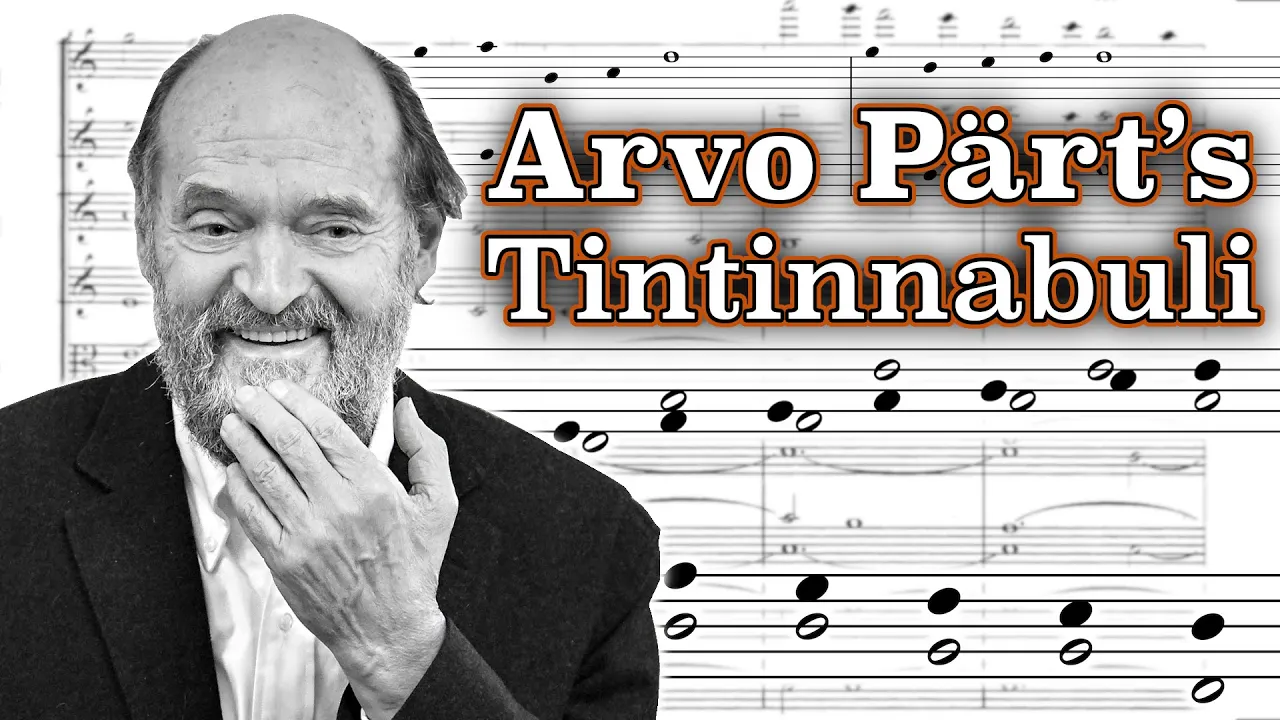
Arvo Pärt's 'Cantus in memoriam Benjamin Britten' (1977) is a minimalist orchestral work that uses a single tubular chime note as a temporal anchor, surrounded by string canons that create a paradoxical crescendo of increasingly lower notes, symbolizing the passage of time and the inescapable confrontation with mortality; the piece's repetitive yet evolving structure mirrors the human experience of struggle, uncertainty, and the tension between light and heavy moments in life, ultimately expressing profound feelings of guilt and remorse over lost connection with a beloved composer.
Arvo Pärt 'Cantus in Memoriam Benjamin Britten': Musical Analysis
Added:Understanding of basic contrapuntal forms, specifically the structure of a canon and how multiple voices imitate a leading melody.
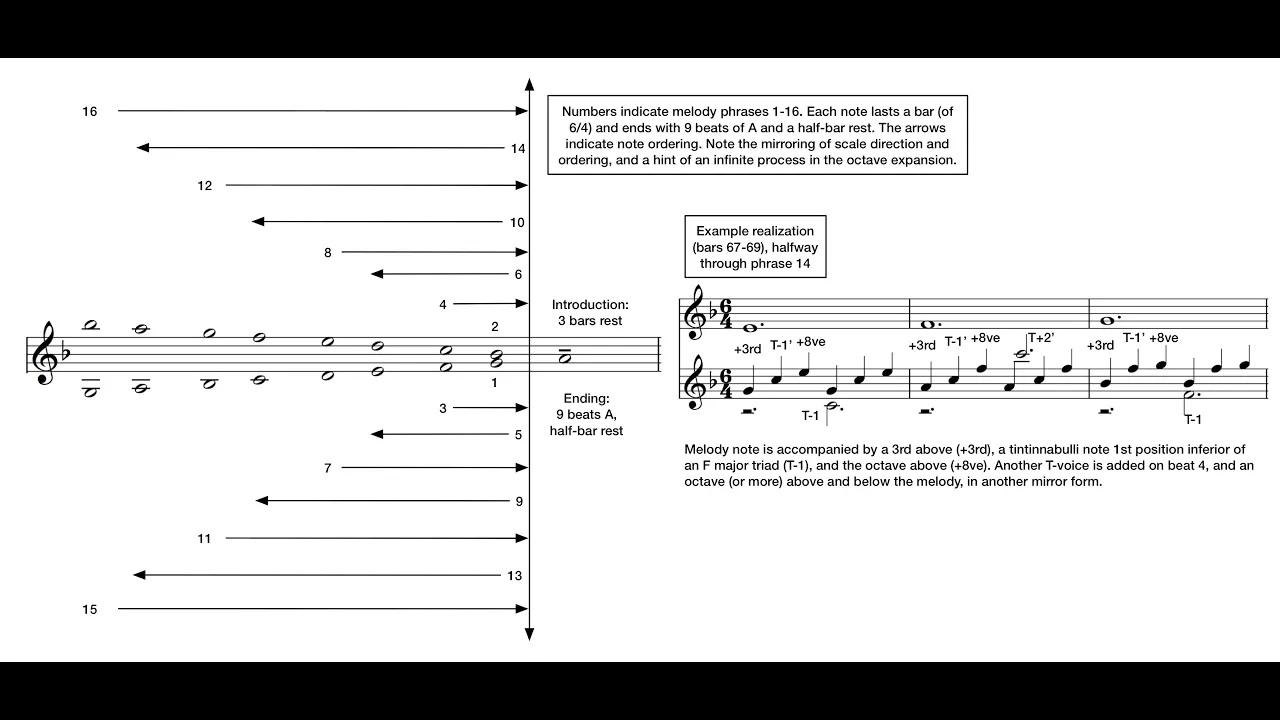
Familiarity with Arvo Pärt's signature 'tintinnabuli' composition style, characterized by the interplay between a step-wise melodic voice and a arpeggiated harmonic voice.
Knowledge of 20th-century minimalism and 'holy minimalism,' providing historical and aesthetic context for Pärt's departure from complex serialism.
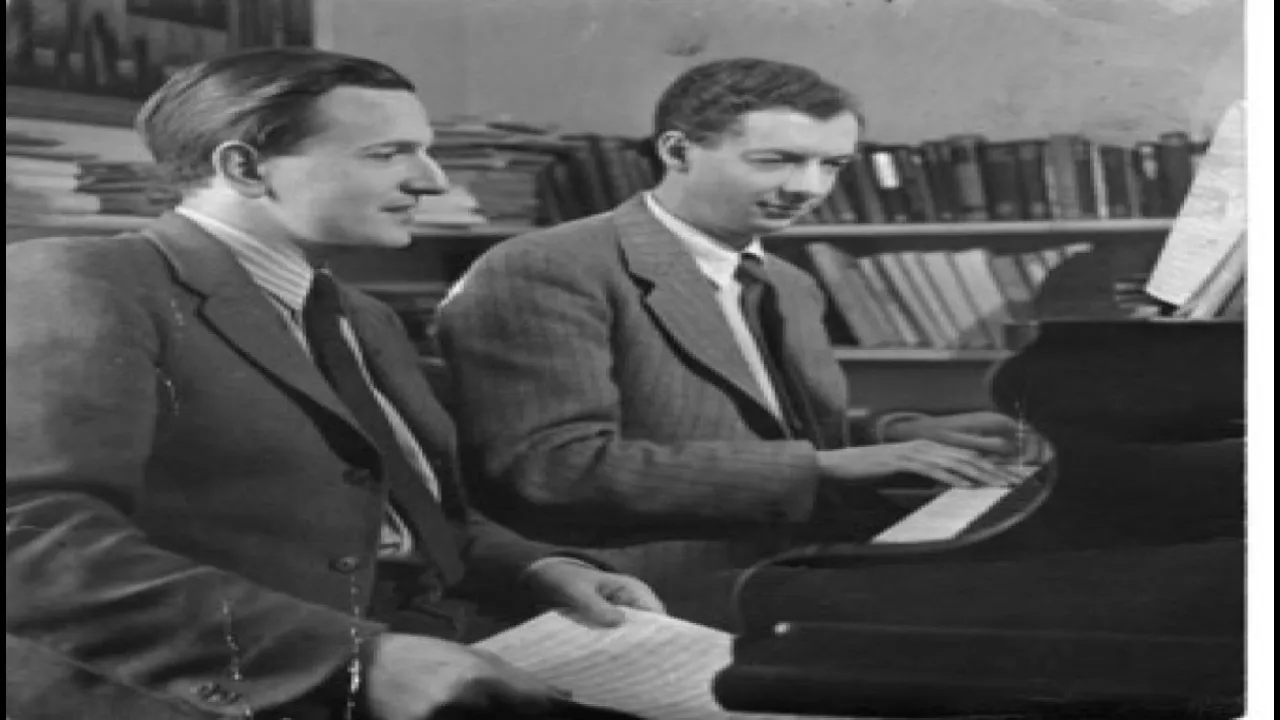
Basic awareness of Benjamin Britten's life and musical legacy, which establishes the emotional and historical context for this elegiac tribute.
Detailed structural analysis of other seminal works by Arvo Pärt, such as 'Fratres' or 'Spiegel im Spiegel', to observe how the tintinnabuli method scales across different ensembles.
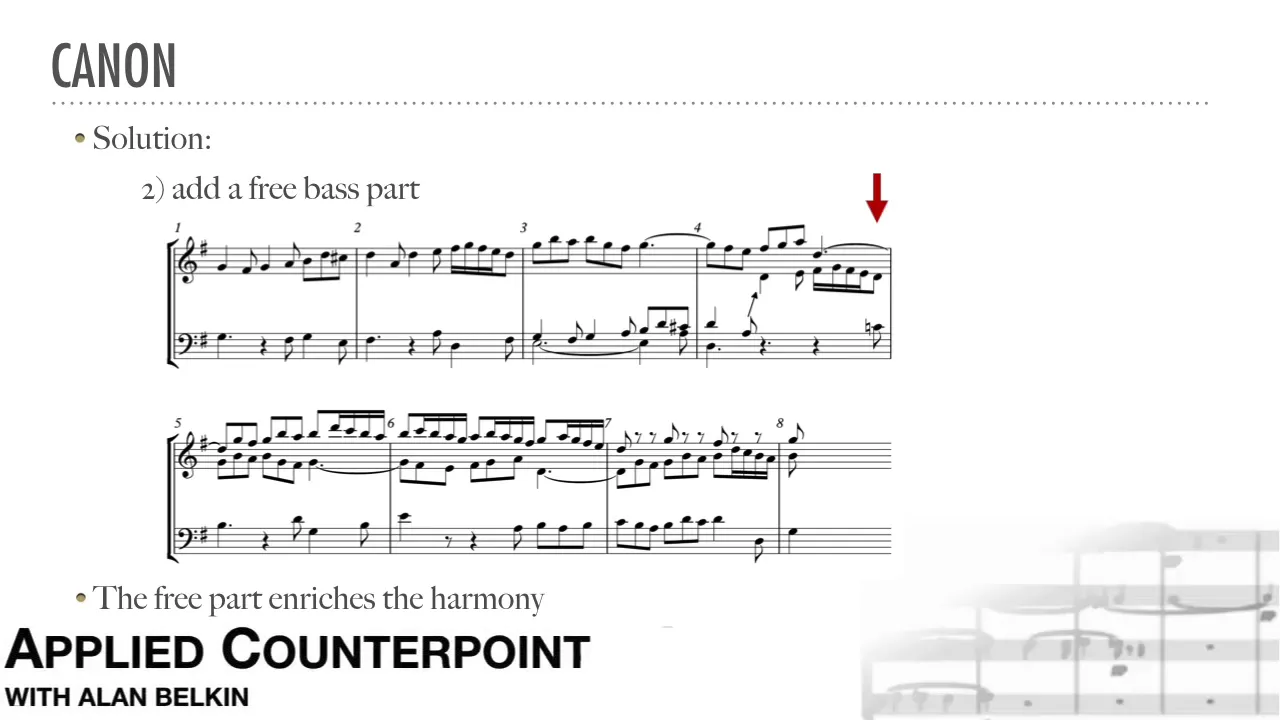
Advanced study of mensuration canons (prolation canons) throughout music history, comparing Pärt's modern approach to Renaissance masters like Johannes Ockeghem.
Exploration of the psychoacoustics of grief and the phenomenological perception of time in music, analyzing how repetition and slow tempos alter emotional processing.
Practical composition exercises applying tintinnabular constraints, such as writing a short piece that strictly pairs a scalar melody with a tonic triad accompaniment.
1.6K views68likes14:29Original Release: 2024-02-25
[Music] hey everyone welcome to Mr Studios I'm Jeff castanon welcome to another no paa video reaction and Analysis today I have a request from my wonderful Patron Phil he wanted me to take a look at a piece from arvo per this is K in memorium Benjamin Britain and I wanted to read you a little something that Phil sent me regarding this piece of music and I I just I just really really love what he wrote so let me let me read this it says it's impossible to listen to this music without bursting into tears composed in 1977 a year after the death of the British composer he was particularly fond of the Estonian musician powerfully expressed the tragedy of existence the suffering in the face of death a single note played on a tubular chime opens accompanies and concludes the piece on its first occurrence a short pattern appears in Canon it repeats itself tirelessly from one string stand to another any sort of paradoxical Crescendo the duration of its increasingly lower notes stretching out conspicuously as it progresses silence then suddenly arises when at last the tub Chime sounds beautiful description and something to look forward to as we experience this together um I love reading these setups uh because it really helps me to ready my mind for what I'm about to see so let's get into this let's hit that play button here we go [Music] for [Music] [Applause] [Music] [Applause] [Music] [Applause] [Music] [Applause] [Applause] [Music] all [Music] [Applause] [Music] w [Music] wow boy that was powerful um you know I'm listening to this and as I think I do with a lot of my listening experience with a lot of music that I am experiencing is that I am processing it in a way and how it applies to me personally um and to my own experiences in my own life which I think is Not Unusual I think we all that to a certain extent what I kept thinking about as I listened to this and what it meant to me was it seemed to me like this was like the life experience that that we have the beginning and the middle and the end and I say that because the tubular chime that is being hit is like marking time this is this is our time that we have to be alive and it's clicking off every single day getting us closer to the end you know so throughout what the strings are doing you hear that in the background continuously so that to me marks time and what the strings are doing to me is very reminiscent of the challenges that we have in our lives and the difficulties and the heaviness and there are Parts where the strings are lighter and the lines overlap each other the lines just they overlap each other and when those low strings come in with those violins doing that activity that heaviness that seriousness of of those low strings it's so profound with our attention being those higher strings but then those low strings come in and it's just like it just got serious and it to me reflects my life experience and how it can be a constant struggle um in one way or another and sure there's lighter parts of your life and times that are less difficult but I think that there's a lot of struggle in the human existence and The Human Experience and and this piece of music reflects that so accurately for me um that is that is just amazing I I've never heard anything like this before um and I was struggling to look for a definition or a hook or something that I could anchor into that was repeating you know cuz there there's this repeating thing going on but there's other voices going on top and and it's like um it felt like it's forever changing its its um definition as I'm listening to it and um much like life when you wake up every morning you don't get the same day even though we think oh it's just another day it's not it's a completely different day with different different things happening that you don't expect that you can't possibly know what going to happen every morning that you wake up and this gives me that same kind of feeling that I don't know what's coming even though you think and you feel that you got it you understand how this works and and you could expect what your day is going to be like and that reminds me of the repetitive lines that I hear in the strings but then there are these turns and these other things that I didn't expect and that's very much like life um boy Phil that was that was amazing um yeah I really connected with that that was so cool well I'm going to put the information um about this piece in the description as always and um yeah I suggest that you go to the original video and spend some time by yourself some headphones on and listen to this in solitude and see how that makes you feel um um wow amazing all right well um come back for some more awesome music and we will see you next time [Music] bye-bye
Up Next

51:08
Simon Rattle on Early 20th-Century Music: Tonality's Decline
@theclandestinum
18.3K views•2012-06-16

37:28
Music Theory Lesson 13: Part Writing/Voice Leading
@ChristopherBrellochs
48.8K views•2016-10-16

47:36
Understanding Diatonic 7th Chords in Major Keys | Music Theory Tutorial
@GracieTerzian
54.7K views•2022-03-02
10:49
Understanding John Coltrane's Giant Steps: A Music Theory Analysis
@Vox
10.4M views•2018-11-12
Related Study Plans & Knowledge Roadmaps
Structured learning paths in Music Theory
music-theory
Tintinnabuli: Pärt's Counterpoint & Composition
01Music Theory Foundations: Intervals and Triads
02Fundamentals of Counterpoint and Voice Leading
03Arvo Pärt and the Spirit of Holy Minimalism
+ 2 more learning modules
16h5 modules
Explore Roadmap
music-theory
Composing Galant Music: Partimento & Schemata
01Foundations of Figured Bass and Keyboard Harmony
02The Rule of the Octave (Regola dell'Ottava)
03Galant Schemata: The Building Blocks of Form
+ 2 more learning modules
30h5 modules
Explore Roadmap
music-theory
Decoding Overtone Series: Tuning & Drone Music
01Acoustic Foundations: The Physics of the Overtone Series
02Tuning Systems: Equal Temperament vs. Just Intonation
03Microtonality and Spectralism: Beyond Standard Pitches
+ 2 more learning modules
24h5 modules
Explore Roadmap
music-theory
Impressionist Harmony: Scales, Planing & RPGs
01Foundational Music Theory: Keys, Intervals, and Seventh Chords
02Impressionist Color: Chord Planing and Parallel Harmony
03Whimsical Textures: Pentatonic Cascades and Whole-Tone Scales
+ 1 more learning modules
14h4 modules
Explore Roadmap