












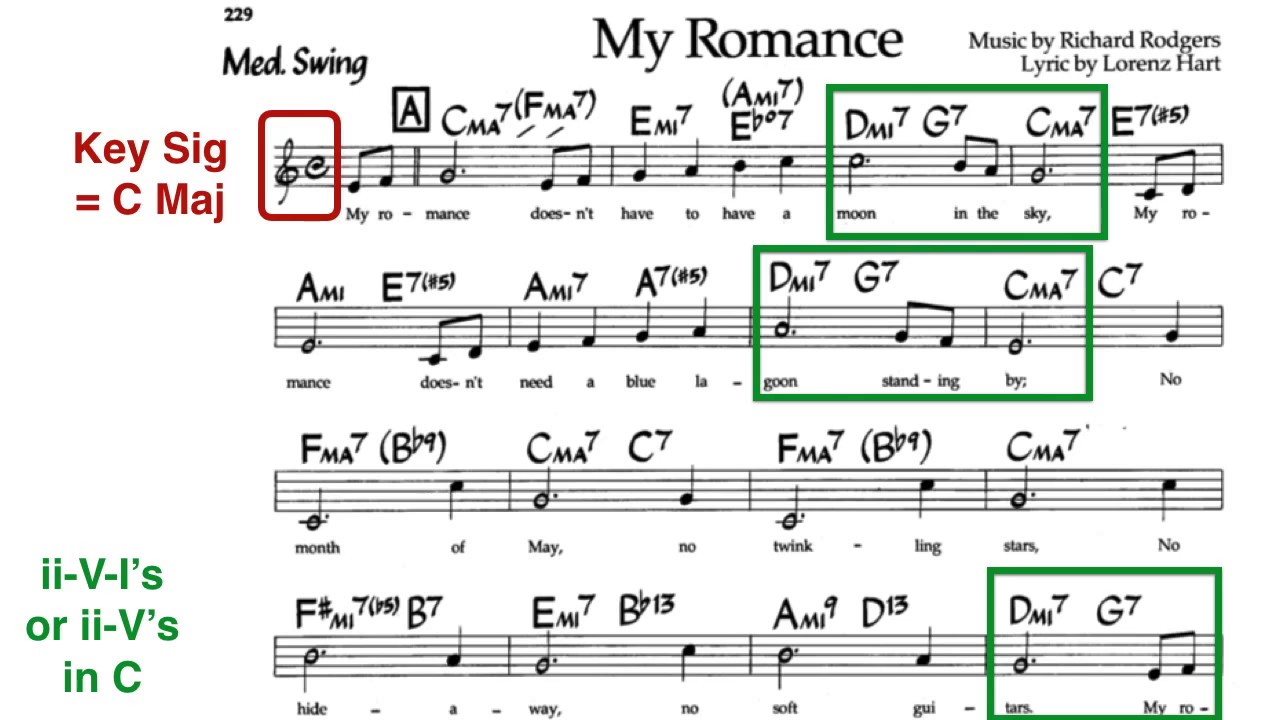






Diatonic 7th chords are built exclusively from notes within a specific major key's scale, following a consistent pattern: the first chord is always a major 7th, the second and third are minor 7ths, the fourth is a major 7th, the fifth is a dominant 7th, the sixth is a minor 7th, and the seventh is a half-diminished 7th. This pattern can be expressed using Roman numerals as I7, ii7, iii7, IV7, V7, vi7, and viiø7, allowing musicians to analyze chord progressions by their harmonic function rather than specific notes, which facilitates ear training and transposition across different keys.
Understanding Diatonic 7th Chords in Major Keys | Music Theory Tutorial
Added:Understanding of major scale construction, including the pattern of whole and half steps, and key signatures.
Knowledge of basic triad construction, specifically how to build major, minor, and diminished triads using root, third, and fifth scale degrees.
Familiarity with basic musical intervals, particularly major thirds, minor thirds, perfect fifths, and major/minor sevenths.
Basic understanding of Roman numeral analysis as it applies to standard major key triads (I, ii, iii, IV, V, vi, vii°).
Constructing and identifying diatonic seventh chords in minor keys (natural, harmonic, and melodic minor scales).
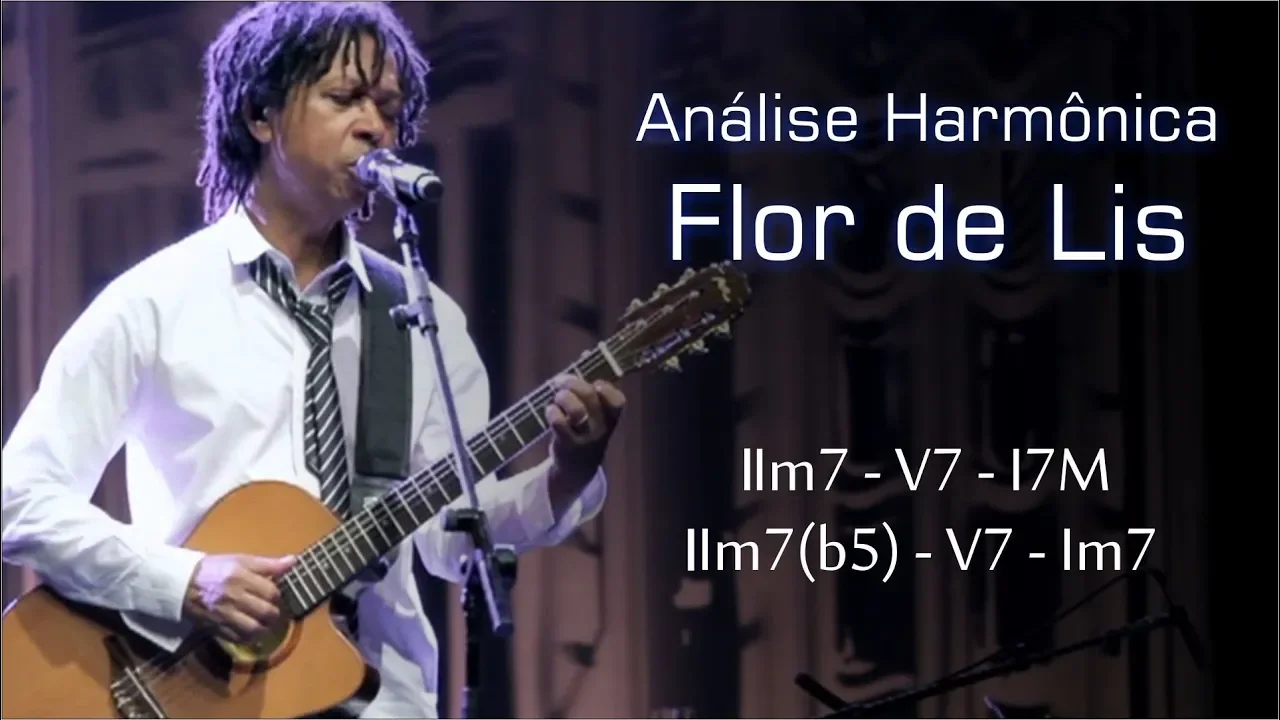
Applying seventh chords to functional harmony, including analyzing and playing common progressions like the ii-V-I in jazz and classical contexts.
Learning seventh chord inversions (first, second, and third inversions) and their standard figured bass symbols.
Exploring extended harmony (9th, 11th, and 13th chords) and non-diatonic chords such as secondary dominants.
54.7K views2.8Klikes47:36Original Release: 2022-03-02
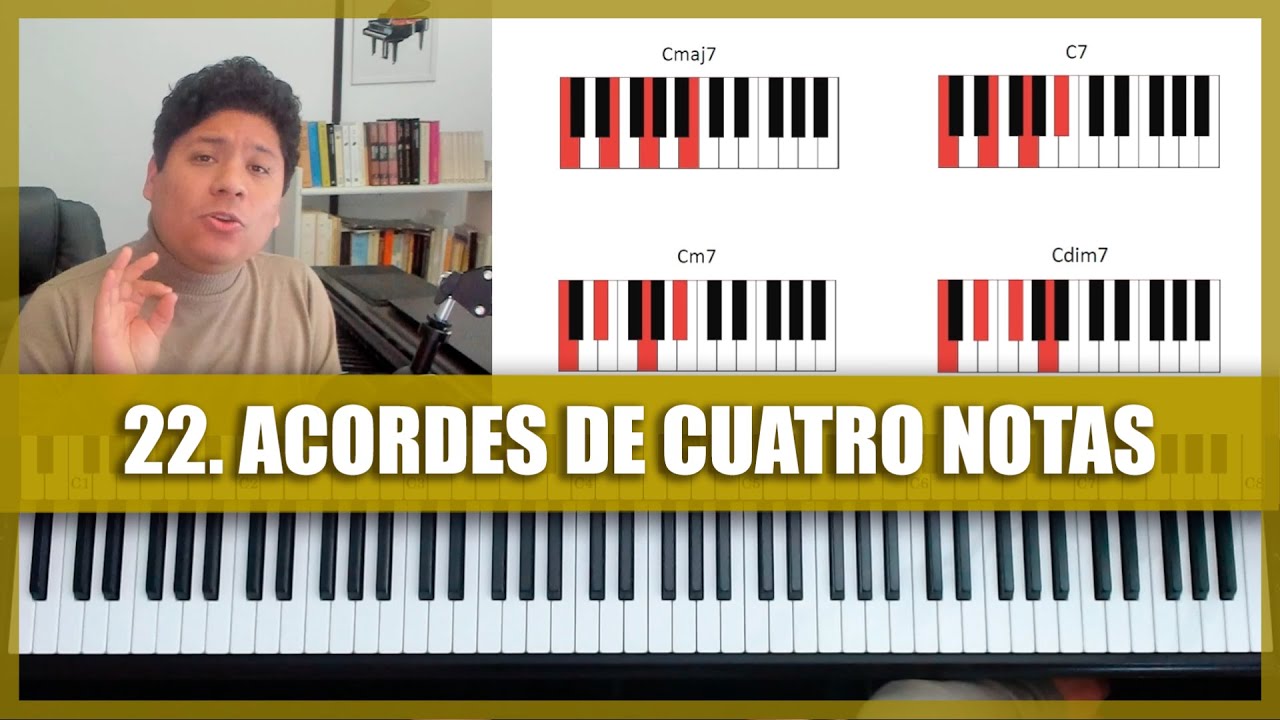
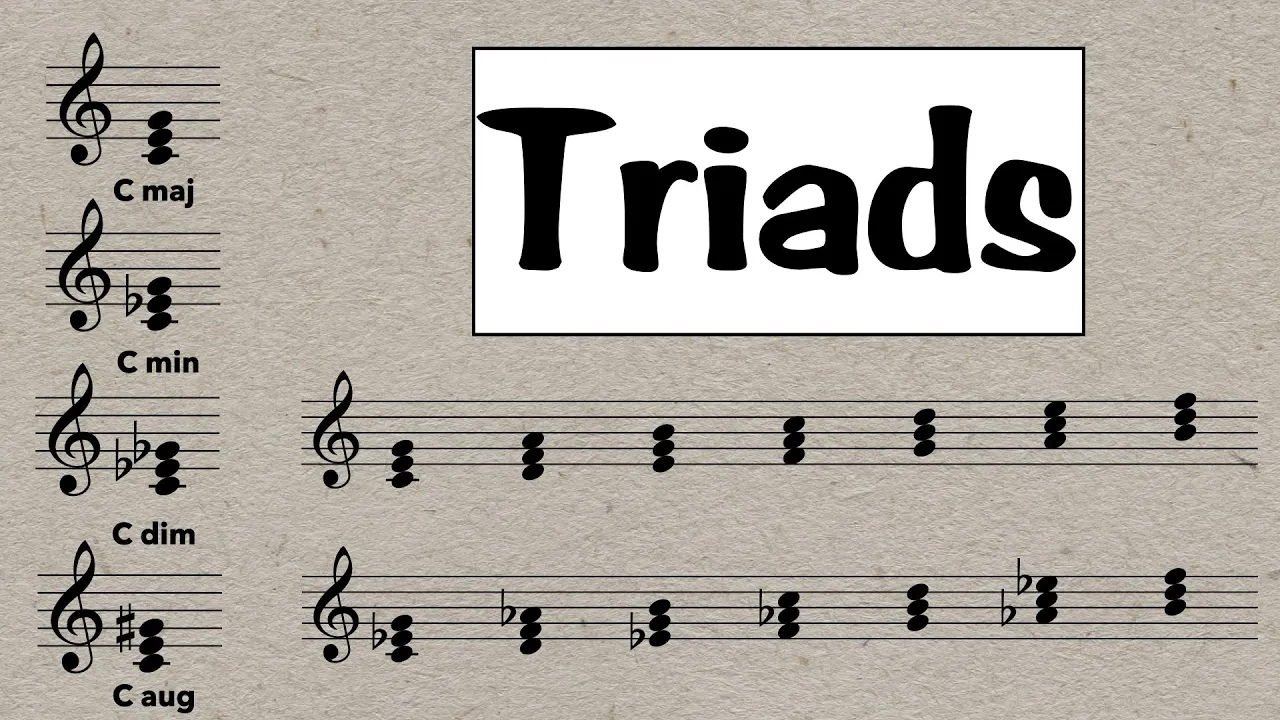
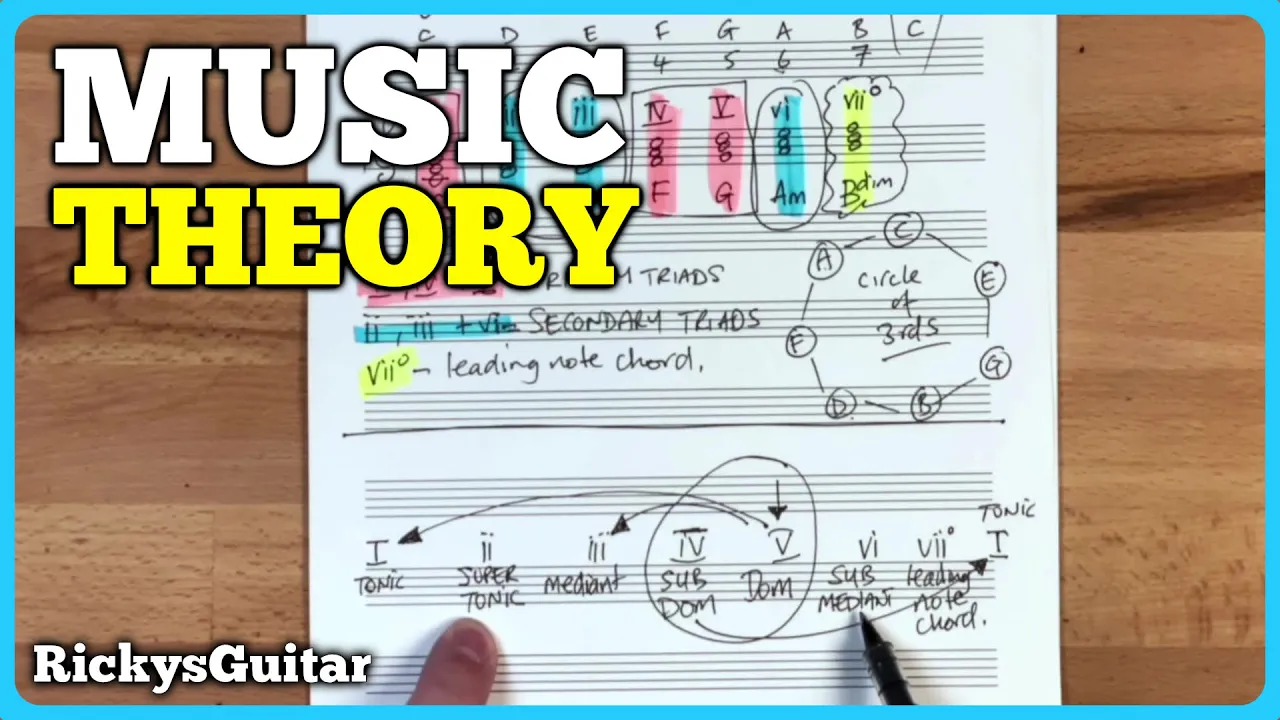
how come some people are able to listen to music and just instantly be able to play the chords back by ear without reading any sheet music or chord chart are they just geniuses well maybe some of them are but most people who can do this simply have trained their ears to recognize different chord progressions and they have a strong understanding of something called diatonic chords so the good news is you don't have to be some sort of genius to be able to train your ear you just have to put the time and practice in and the best place to start this process is to learn about diatonic chords later in this video i'll show you how you can apply your knowledge of diatonic chords to figuring out chord progressions by ear now i already made a video about diatonic chords of major keys where we analyze the diatonic chords as triads but in today's lesson we are going to analyze the diatonic chords of major keys as seventh chords instead of triads if you're new to this topic i do recommend you watch that video first and i've linked it in the description below i'll still give a brief overview in this video so if you get bored or if you just want to jump ahead to the quick and easy pattern i show you later in the video you can skip ahead to any other section using the timestamps in the description below let's first quickly discuss what diatonic chords are the term might sound fancy but really you can just think of diatonic chords as a close knit family of chords connected to a key so for example in the key of g major we have a group of diatonic chords which are these right here and in the key of c major we have another group of diatonic chords which are these right here and so forth in every key just as a very quick side note many chords will pop up as being diatonic chords of multiple different keys for instance you can see here that e minor 7 and a minor 7 can both be seen in the keys of g major and c major right we see them in both of these groups however they serve different harmonic functions depending on which key we're in we can get into this more another day i'm only pointing it out to you now so that you understand it's okay for a chord to be a diatonic chord of multiple different keys i don't want you to be confused if you see the same chords popping up in different sets of diatonic chords anyway back to our question what are diatonic chords so we already said they're a close-knit family of chords connected to a specific key so what does that mean that means that if you play a song in the key of g major okay there's a very good chance that you're going to see some of these chords in the song that's because these chords are the diatonic chords of g major now you might see other chords in the song as well songs can have any chords they want in them not just the diatonic chords but there's a good chance they will have a lot of these diatonic chords in them now why are these chords connected to the key of g major well the reason is because the notes that make up these chords are only notes that are in a g major scale let me show you what i mean if that doesn't make any sense so first let's write out a g major scale now the notes in our g major scale are g a b c d e f sharp but the scale can keep repeating infinitely in either direction so after this f sharp i could just keep writing the notes in the scale so after f sharp we go back to g again and after g we have a after a we have b c and so on and so forth now to create the first diatonic chord in our key we are going to start on the root note of the scale which is g and we are going to move up in thirds or if it's easier to think of it this way we're just going to hop over one note to get to the next let me show you so we start with the note g then we hop over a and we get to b then we hop over c and we get to d then we hop over e and we get to f sharp and voila these notes g b d and f sharp are the notes in our first diatonic seventh chord for the key of g major and when i play these four notes together g b d f sharp the chord i'm playing is called a g major seven chord and therefore g major seven is our first diatonic chord in the key of g major so we will write its name right underneath there let's figure out the second diatonic chord using the same method of moving up in thirds or hopping over every other note so this time we will build a chord from the second note in the scale which is a right so we're going to start on a then we're going to hop over b and get to c then we're going to hop over d and get to e and then we're going to hop over f sharp and get to g and voila these four notes a c e and g are the notes in our second diatonic seventh chord in the key of g major and when i play these four notes together a c e and g sounds like this and the chord i'm playing is called an a minor seventh chord therefore a minor seven is the second diatonic chord in the key of g major i drew this one a little bit lower just to make room for all the different chords we're going to write out and just to clarify so these four notes right here these are the four notes that are in the first diatonic chord and those four notes make up this chord which is g major seven just as a heads up when you see a triangle that's a shorthand symbol for the word major so this is g major seven that's the name of the chord and these are the notes in the chord these are the notes in the chord and this is the name of the chord and this chord is a minor seven okay and when you see a lowercase m and a chord it's a shorthand symbol for minor now let's figure out the third diatonic chord using the same method of moving up in thirds or hopping over every other note so this time we will build the chord starting from the third note in the scale which is b right so we start on b then we hop over c and we get to d then we hop over e and we get to f sharp right then we hop over g and we get to a so the four notes in this chord are b d f sharp and a and when i play these four notes together it sounds like this b d f a and the chord i'm playing is called b minor seven therefore b minor seven is the third diatonic chord in the key of g major b minor seven now just as a quick side note in my previous video about diatonic triad chords of major keys which is sort of like the part one video and this is sort of like the part two video we figured out all of these diatonic chords as triads instead of seventh chords now what is the difference between a triad chord and a seventh chord a triad is a chord that only has three notes in it and a seventh chord is a chord that has four notes in it i know it might seem weird that a seventh chord has four notes in it because you might assume a seventh chord would have seven notes in it but it doesn't it only has four it's called a seventh chord because the fourth note in the chord is a seventh away from the root note of the chord for example in this b minor seven chord the interval distance between b and a is a seventh and in the a minor seventh chord the interval distance between the a and the g is also a seventh don't worry about this too much right now if you want to learn more about the names of these different seventh chords i have a video about the main types of seventh chords in a link in the description below but moving forward the main reason i bring this up is i want to show you how diatonic triad chords which i went over in my previous video differ from diatonic seventh chords which i'm going over in this video so if i were figuring out the notes in diatonic chords as triads we would just stop after the third note so for example if we were figuring out the first diatonic chord as a triad we would start on the note g which is the first note in the scale then we would hop over one note and get to b then we would hop over another note and get to d and when we play just those three notes together g b and d the chord is called a g major chord or a g major triad if we wanted this first diatonic chord to be a seventh chord instead of a triad we would just add that one extra note at the end so after d we would hop over e and we would get to f sharp and then we would get a g major seven chord so a g regular old g major triad chord would just be g b and d whereas in that we would just write the chord name like that whereas a g major seventh chord is g b d f sharp and that's that g major seven right there i'll play them for you too so here's our g major triad g b d and then here's our g major 7th chord g b d f g major g major 7.
if we wanted to figure out the second diatonic chord as a triad we would just do the same thing we would only need three notes instead of four so we would just leave out the last note which is g so the chord would be a c e a c e nice and simple it's just a simple old a minor chord or a minor triad if we wanted to figure out the second diatonic chord as a seventh chord we would add that extra note g at the end and then it would become an a minor seventh chord so this would be an a minor chord just an a minor triad a c e that's just an a minor triad and then if we have an a minor seventh chord a c e g a minor seventh chord so a minor a minor seven now you figure this one out for me how about this third diatonic chord if we wanted to figure out the notes in this chord just as a triad what would the notes be we would start at the same place b hop over c get to d hop over e get to f sharp but then we would just stop at f sharp so we would just play the notes i'll draw a little line here b d and f sharp so we would just leave out that fourth note right and if we're playing b d and f sharp together this chord is a b minor chord or b minor triad and if we wanted the chord to be a seventh chord we would just add that a at the end we would hop over one more time from f sharp hop over one last time to get to that a and then we would have the seventh chord which is b minor seven so a b minor triad sounds like this b d f sharp and a b minor seventh chord sounds like this b d f a so we have b minor triad and then a minor seventh chord now you might be asking yourself okay why do we have two sets of diatonic chords you know one of them is triads and one of them is seventh chords which chord should i try to practice and memorize the seventh chords are the triads and all i will say is you can really think of them as being very similar to each other and please whatever you do don't stress too much right now the difference between them because for the most part they serve a lot of the same harmonic functions and can actually oftentimes be pretty interchangeable not always but a lot of the time all i will say is if you want to focus on learning something more simple at first just practice and play and learn the diatonic triad chords if you want to get a little deeper into these diatonic chords then play and practice them as seventh chords so you learn all four of the possible notes in them at the end of the day it's not going to hurt you to practice them one way or the other playing practicing and memorizing either one or both will be valuable so just do what feels right for you and what you think you can handle at this time if you just practice them as triads that's totally cool and will make it a thousand times easier to learn them as seventh chords later if you love the way seventh chords sound and you wanna practice them as seventh chords right off the bat then do that you really can't lose either way now no more talk about triads in this video because this video is about seventh chords so let's figure out the fourth diatonic chord using the same method of moving up in thirds so we start on the fourth note of the scale which is c right then we hop over d and we get to e then we hop over f sharp and we get to g then we hop over a and we get to b so the notes are c e g and b and when i play these four notes together c e g and b the chord i'm playing is called a c major seventh chord therefore c major seven is the fourth diatonic chord in the key of g major and this is what it sounds like c major seven now let's figure out the fifth diatonic chord so we're going to start on the fifth note of the scale which is you tell me it's d right then we hop over the next note which is e and we get to f sharp then we hop over g we get to a and then we hop over b and we get to c so the notes we have are d f sharp a and c and when i play these four notes together d f sharp a and c the chord i am playing is called a d dominant seven chord and people usually refer to this chord as d7 for short so i'm just gonna write d7 so whenever you see a chord like that looks like that that says d7 it's real name is d dominant seven but we just call it d7 for short so therefore d7 or dominant seven is the fifth diatonic chord in the key of g major and this is what it sounds like d f a c d dominant seven just as a side note if you're enjoying this video so far please don't forget to give it a thumbs up and leave a comment to say hey and if you're new to my channel don't forget to subscribe if you want to see more videos like this one in the future now let's figure out the sixth diatonic chord in the key of g major so we will build this chord starting from the sixth note in the g major scale which is you tell me it's e but uh just since we've uh we're running off the page i'm just going to erase these just to make a little more room so i'm gonna i'm gonna move that those notes e and f sharp over just a hair so e and f sharp so this chord is gonna have four notes in it right one two three and four so why don't you tell me what those four notes will be okay so the first note we know is gonna be e right that one's easy e for easy okay then we're gonna hop over this note and get two which which note comes after f sharp in the scale it's g right so we're gonna get to g okay then you know the next one we're gonna from g we're gonna hop over a and get to b right then how about the last one we're gonna be on b we're gonna hop over c and we're going to get to d so the notes are e g b and d and when i play these four notes together the name of the chord that i'm playing is called an e minor seventh chord a minor seven therefore e minor seven is the sixth diatonic chord in the key of g major and this is what it sounds [Music] e like seven and last but not least let's figure out the seventh diatonic chord in the key of g major so we will build this chord starting from the seventh note in the scale which is f sharp right so this chord has we know it has four notes okay and what's the first note it's going to be f sharp that's our starting place okay and then what comes after f sharp after f sharp we're going to hop over g right and we land on a so f sharp in a then we hop over b and we get to c let me try to figure out this one after c we have e right so the notes are f sharp a c and e and when i play these four notes together f sharp a c and e the chord i am playing is called an f sharp minor seven flat five also known as f sharp half diminished seven so people you could see this chord written like this f sharp minor seven flat five or for f sharp half diminished this symbol like that is a little symbol for half diminished so this this thing is saying f sharp half diminished seven and this is saying f sharp minor seven flat five these are really just two different names for the same chord so you can call it either one and whether you're calling it f sharp half diminished seven or f sharp minor seven five five that is the seventh diatonic chord in the key of g major and this is what it sounds like f sharp a c e [Music] so as you can see all seven of these diatonic chords g major seven a minor seven c major seven d seven oh i forgot b minor seven e minor seven and f sharp have diminished seven all seven of these chords were created using the notes in the g major scale right i don't see the note for instance a flat in any of these chords do you because a flat is not a note in the g major scale the diatonic chords of a key are only made up of notes in the corresponding scale which in this case is a g major scale so that's why the only notes in these chords are the notes in a g major scale makes sense now it would be pretty crazy if the way you had to figure out the notes in every diatonic chord was using this method of moving up in thirds and you had to think through this whole process every single time but fortunately there's a very simple pattern we can follow to figure out the diatonic chords of any major key in a much easier way so first let's identify the chord quality of each of these chords i just rewrote everything to make it a little bit cleaner looking so first let's identify the chord quality of each of these chords meaning what type of seventh chord are each of these seven diatonic chords okay so the first one is a major seventh chord right so i'm just gonna write major seventh okay the second one is a minor seventh chord right and so i'm ignoring the root of each of these chords i'm just looking at the quality of it so i'm saying okay this is a minor seventh chord this one right here the third is also a minor seventh chord right what about this fourth one this fourth one is a major seventh right now the fifth one this one is a dominant seven okay so we're just gonna do a seven the sixth one is a minor seventh right and then the seventh one is a half diminished seventh chord so i'm just gonna write half diminished seven and guess what here's the cool part the diatonic chords always follow this exact same pattern okay so the first diatonic chord in a major key is always going to be a major seventh chord the second one is always going to be a minor seventh chord the third one is always going to be a minor seventh chord the fourth one is always going to be a major seventh chord the fifth one is always going to be dominant seven sixth one is always going to be minor seven and the seventh one is always going to be a half diminished seven so let me show you how easy it can be to figure out the diatonic chords of any major key if we know this pattern so first let's write out this pattern of chord qualities using roman numerals because it's very important that we start thinking about diatonic chords as numbers so we can begin applying them to things like chord progressions and analyzing their harmonic function if that sounds like gibberish to you don't worry just stay with me here so for the first chord we are going to write a number one as a roman numeral since it's the first chord but here's the thing whenever we have a major chord we are going to write an uppercase number one and whenever we have a minor chord we are going to write a lowercase number one so is this first chord a major or minor chord g major seven it's a major chord right so we are going to write an uppercase roman numeral one like this and since it's a seventh chord we can also write a little number seven after it if we were writing this chord out just as a triad we would just have it be the uppercase number one but since it's also a seventh chord we add this little number seven after it and we don't write the little seven as a roman numeral just a normal seven don't ask me why that's just the way it is so now let's write the second chord quality as a roman numeral so we're going to write a number two because it's the second chord in the scale right but will it be uppercase or lowercase since it's a minor chord right a minor seven it will be lowercase so we're going to write two like that and then with a little seven next to it since it's a minor seventh chord now let's write the third chord as a roman numeral so we're going to write a number three right because it's the third chord but will it be uppercase or lowercase you tell me it will be lowercase because it's a minor chord right b minor seven so we're going to write the number three in lowercase roman numerals with a seven just like that how about the fourth chord do we write this as an uppercase or lowercase number four so since this one is a major chord we will write it as an uppercase four like this it's my uppercase roman numeral four and then i'm going to put a little seven next to it okay this one's a bit trickier how about the fifth chord uppercase or lowercase number five this one is trickier because this chord is a dominant seventh chord which doesn't have the word major or minor in its name so it's not quite as obvious but a dominant seventh chord is a type of major chord why do i know that because a dominant seventh chord is a major triad d f sharp a with a minor seventh which is the note c added onto it and even though it has a minor seventh it's still overall a major chord because the foundation of the chord the meat of the chord is that major triad which is d f sharp and a i don't want to get too much into this because i talk a lot more about this stuff in detail in my easy chord theory video about seventh chords which as i mentioned earlier is linked below but i think it's worth taking a little tangent to explain this and all i will say is if you don't fully understand what i'm about to say don't worry about it for now just keep watching the video because for now you can just remember that a dominant 7th chord is a type of major chord and then later on you can go watch my video about seventh chords to understand more about why it is a major chord so here's my quick little side tangent okay the note that always determines whether a chord is major or minor is the third degree note this is a very important thing i think for for people to know that's why i'm taking this little tangent so and in this case of this d7 chord the third degree note is the f sharp so you might be saying hey wait why is f sharp the third degree note it's technically you know the second note in the chord d7 right d f a c that's the second note in the chord and then f sharp is the seventh note in the scale of g major right so why on earth would we call this f sharp the third degree well because if we are analyzing just this chord okay just this d dominant seven chord and like we're no longer going to be thinking about it in the context of g major okay so we're not in g major world we're just zooming in on this chord d dominant seven that's all we're we're thinking about and analyzing we are actually going to think of it in the context of its own root note which is d okay so d dominant seven right the root note is d so we're actually going to think about a d major scale which is i'll write out the notes d e f sharp g a b and c sharp these are the notes in our d major scale okay so these are the notes that we're going to be now thinking about and as you can see f sharp is the third note in that scale so that's why we would refer to the note f sharp as the third degree of a d7 chord okay and since d to f sharp this interval distance right here is a major third it makes it a major chord okay um another way to think of it is since that note f sharp is part of the d major scale it's a major chord if the chord had a flattened third degree meaning if we took that note f sharp and we flattened it which is the same as moving it down by one half step and it became the note f natural instead of f sharp so we were now playing the chord d f natural a and c okay like that if we were playing these notes instead of d f sharp a and c then suddenly we would have a minor chord because d to f natural is a minor third so no matter what kinds of extensions are on the chord if the chord is a d7 a d7 flat 9 sharp 11 a d minor 13 whatever the crazy chord of the name is if you want to determine if the chord is a major or minor chord all you need to look at is that third degree note in the chord and see if it is a major third or a minor third away from the root note another way to think about it is if that third degree note is part of the major scale of the root note the way that f sharp is part of a d major scale then it's going to be a major chord it's going to be a major third and a major chord if the third degree note has been flattened from the major scale the way we turned f sharp into f natural because we flattened it then it's going to be a minor chord or a minor third okay no more of this i feel like i'm opening a whole other can of worms that we just don't need to go down right now because it's really not it's not what this video is about and otherwise if i went down every rabbit hole my videos would be hours and hours long so if you're confused still have no fear i promise if you just break this down a little more slowly just go watch my other video if you want to analyze this in more detail i also have a whole other video that's all about intervals and seventh chords which i will also link in the description below so there are two videos down there that you can sink your teeth into if you're still confused about all this and then i promise you it will become very clear and make sense moving on okay so since the fifth chord d7 is a dominant seventh chord which is a type of major chord we are going to write an uppercase roman numeral number five right like this because dominant seven chords are this type of major chord so we're gonna uppercase five and then we're gonna write a little seven next to it cool now what about the sixth chord will this one be uppercase or lowercase well you tell me since it's a minor chord it will be lowercase so we are going to write a lowercase 6 with a little seven next to it and last but not least what about the seventh chord now this one is also a bit tricky because if we were referring to it as f sharp half diminished seven remember how i said we could refer to this chord as two different names so if we were referring to it as f sharp half diminished seven then it doesn't have the word major or minor in its name however if we refer to it as f minor seven flat five which is the other name then you can see that yes it does have the word minor in it right f sharp minor seven five five so this one is a minor chord so i'm going to write a lowercase seven and then i can also write a little half diminished symbol and then a number seven okay so now that we have our roman numeral pattern written here at the top this is sort of like our formula up there okay let me show you how easy it is to figure out the name of every diatonic chord in a major key so let's figure out the diatonic chords of the key f major okay so first we're going to write out an f major scale so we have f then we have g a b flat c d and e okay so these are the notes in my f major scale now we're just going to take each of these seven notes in the scale and apply the chord qualities to them so let me show you what i mean the first chord is a major seven right so that means our first diatonic chord will just be f major 7.
then the second chord will be what we know it's going to be g something right because it starts with g and then minor seven right because it's a lowercase two with a seven minor seven all right the third chord is a minor seven the fourth chord is b flat major seven the fifth chord is c seven the sixth chord is d minor seven and the seventh chord is e half diminished seven also known as e minor seven flat five wasn't that easy so as you can see it always follows the exact same pattern no matter which major key you're in the first note in the scale you're always going to turn into a major seventh chord the second note on the scale you're always going to turn it into a minor seventh chord the third note in the scale you're gonna always turn into a minor seventh chord the fourth note in the scale will always turn into a major seventh chord the fifth note will always turn into a dominant seventh chord the sixth note will always turn into a minor seventh chord and the seventh note will always turn into a half diminished seventh chord now let's try to figure out the diatonic chords of another key how about a major so the notes in an a major scale are a b c sharp d e f sharp and g sharp now before we write out the chord names i just want to point something out because it's a little confusing i can see that um these three major chords if we look at just these three major chords which are the first chord the fourth chord and the fifth chord two of them turn into major seventh chords like here a this becomes i'm just i'm giving you the answers away so this becomes an a major seventh and in the fourth chord becomes a d major seventh but then the the fifth chord does not become an e major seven it just becomes an e dominant seven but the roman numerals um don't don't differentiate it at all right they just have an uppercase number with a seven so sometimes people to specify the difference between a dominant seven chord and a major seventh chord sometimes people will write like uppercase m in the roman numerals like this so they would write one m seven to indicate that it's a major seventh chord and not just a dominant seventh chord okay so they would write that for the one seven and then they would write four major seven for the fourth chord okay and then they would write the fifth chord just like that just with a five and a seven and so this uppercase m is stands for major okay so lowercase m is minor uppercase m is major and so this is telling us it's a one major seventh chord this is a four major seventh chord and then this would just be a fifth dominant seventh chord okay so you might see it written with the m you might see it written without it to be honest most people usually don't write that uppercase mn in which case you just have to sort of know that the first and fourth chords are major sevenths and the fifth chord is a dominant seven but really that's not too too difficult to memorize i think i think um you know especially once you practice this a little bit and by the way if you want to practice all this stuff more i do have a lot of printable practice worksheets that are available in a link in the description below those worksheets can really help you drill and practice all the stuff we're learning in these lessons so if you want to practice what we're learning here uh go click on that link and check out some of those worksheets so i know i already gave away the names of those three but let's just keep going so what would be the second chord second chord would be a b minor seven right what about the third chord so we know it's c sharp something right and it's a lowercase three so that means it's gonna be minor right minor seven so we have c sharp minor seven we already determined this one is d major seven this one is e dominant seven or e seven the sixth chord what is that that's gonna be f sharp it's a lowercase six right so it's minor seven f sharp minor seven then the seventh chord is going to be g sharp something g sharp half diminished seven or g sharp minor seven flat five like that cool okay we're gonna do one more as an example but as i said if you want more practice figuring out the diatonic chords of different major keys using this method i have practice worksheets with the answer keys so you can check yourself available to download in a link in the description below that way you can really drill in the concepts we're learning in this video is homework okay so the last one we will do is let's figure out the diatonic chords in the key of a flat major so first i'm going to write out the notes in an a flat major scale so a flat b flat c d flat e flat f and g and the chords are so we this one is going to be a flat something right a flat it's an uppercase one right major seven okay what about the second chord the second diatonic chord is going to be b flat something b flat it's a lowercase two right so b flat minor seven okay what about the third chord we know it's gonna be c something c it's a lowercase three so it's gonna be c minor right c minor seven the fourth chord is going to be we know it's gonna be d flat something d flat and then is it a major or minor chord well it's uppercase number four so it's gonna be major d flat major seven right the fifth chord is going to be e flat something and it's going to be a dominant seven chord so e flat seven the sixth chord is going to be f something we have a lowercase 6 right so it's going to be f minor 7. and last but not least we have g this is going to be g minor 7 flat 5 or g half diminished 7. see it's actually pretty simple when you see that it always follows the exact same formula and pattern right i think it's all very cool now i said i would show you later in this video how we can begin to apply our knowledge of diatonic chords to ear training and learning to recognize chord progressions it's a process that i like to call tagging and it's one of the reasons why it's so helpful to think about chords as numbers because the relationship between these chords actually sounds the same no matter what key we are in and if we just analyze the chords as numbers then we can really listen to and track the similarities let me show you what i mean so we're going to take a very common chord progression that you've probably been hearing your entire life but you may not have realized you were always hearing the same chord progression because you never were able to put a name to it so we're going to look at a 1 6 2 5 chord progression okay 1 6 4 we can write it with or without the sevenths we could also write it as two thumb now first i'm gonna write out all the diatonic chords in the key of c major okay so we have c major seven d minor seven e minor seven f major seven g dominant seven a minor seven and b have diminished seven okay i'm also going to write out the diatonic chords in the key of g major so we have g major seven a minor seven b minor seven c major 7 d 7 e minor 7 and f sharp half diminished 7. so i just wrote it out a little more neatly we have the one six two five chord progression without sevenths and then with the sevenths okay so first let's write out this chord progression in the key of c major so we're going to be looking at these chords up here because we're in c major all right so the first is the the one chord as a major seventh chord so c major seven then the sixth chord is a minor seven then the second chord is d minor seven and then the fifth chord is g dominant seven cool if we were to write this chord progression out just without the seventh chords we would just have c then a minor then d minor and then g so without seventh chords and with seventh chords okay now let's write out this chord progression in the key of g okay so the key of g we would start with the one chord is g major seven right then the sixth chord is e minor seven then the second chord is a minor seven right then the fifth chord is d7 right that's one six two five in the key of g major all right and then we could write it also without seventh chords we would just have g e minor a minor and then d okay so this chord progression the one six two five chord progression can be found in an endless amount of songs songs like um heart and soul stand by me uh sherry earth angel dear future husband uh just to name a few so let me show you i'm just going to play this chord progression in the key of c over and over again but i'll sing the different songs on top of the chord progression so you can see how it's always the same chord progression so i'm gonna now play through the one six two five chord progression in the key of c major and i'm gonna play without seventh chord so just see a minor d minor g so we have c a minor d minor and g and that's one six two five heart and soul i fell in love [Music] because you held me tight and stole a kiss in the night [Music] will you be mine i love you all the time i'm just a fool in love [Music] there's also stand by me when the night has gone and the land so that is also 1625.
so as you can see all these songs i just sang had the exact same chord progression and once we start telling our ears hey that's what a 1625 chord progression sounds like over time our ears will start being able to recognize and identify the way that chord progression sounds so the first step is just identifying what the chord progression is which as i said is i call tagging so once we tag it as a 1625 we can begin listening more closely and trying to remember what a 1625 sounds like now check this out i'm going to play heart and soul but i'm going to play it in both the key of c and then the key of g and so you'll see how the chord progression is the same it sounds the same regardless of what key we're in okay so first i'm gonna play heart and soul in the key of c and let's play it with seventh chord just for fun because this one uh sounds nice with seventh chords so i'm gonna play c major seven a minor seven d minor seven and then g seven okay heart and soul i fell in love with you and lost control the way [Music] one six two cool now i will play it in the key of g major okay [Music] that one's pretty high for me to sing in the key of g but as you can see this chord regression it works over uh the song no matter which key we're in so if i play 1625 um i will be playing the song it doesn't matter what key we're in so we're transposing we transposed it from one key key of c to the key of g so it's the same song just in a different key this is another reason why it's helpful to think about chords as numbers because when we think about chords as numbers we can as i said start to recognize their relationship to each other you know you start to learn that okay 1 6 1 that's what a 1 6 1 sounds like right i played c a minor c 1 6 1 and if i play 1 two one that's what a one two one sounds like or if i play one one five one it sounds like that and no matter which key i'm in that relationship will sound the same let me play it for you in the key of g now so this is one five one in the key of g so i'm gonna play g d g one five one that's in keep g if i wanna play one [Music] cool so if we start thinking about chords as numbers we can start identifying these chord progressions and trying to uh train our brain to remember what they sound like and it can be as simple as just analyzing songs that you're listening to i would start off with very simple songs and start out with simple chord progressions and see if you can recognize them and remember what they sound like because as i said you've been listening to these chord progressions your entire life you just haven't identified them and tag them so your brain hasn't been remembering what they sound like because you haven't been identifying them imagine you've been seeing colors your whole life but you never put a name to any of those colors until now so it's it's sort of the same same concept and once you name it then you can begin to remember and recognize it when you come across it in the wild and another reason why there are many reasons but i'm just going to name these two for now another reason why it's so good to think about chords as numbers is because we can then very easily transpose and see how um it was quite easy for me to transpose it from the key of c to the key of g because i know what a 1 6 2 5 chord progression is in both of those keys okay and that's much easier for me to think about it that way than it is for me to sit there trying to transpose um like the root of each chord um up a fifth like i'm gonna move c up a fifth to g a up to fifth to e d up i mean you could think of it that way but for me it's easier to just go okay one six two five all right i know what that is in cube see all right i'll play that in the key of g that's easier for my brain to process so um that's another reason why there are so many other reasons too but um i think that is all for today i do want to make more videos later down the road um about ear training and teaching you guys different chord progressions and sort of practicing and reviewing what they sound like to so you can train your ears with me um if that sounds like something you'd be interested in let me know in the comments below um i think it would be helpful for people but uh let me know if you agree and if you want to dive deeper into learning music theory in general and practice what we learn in these videos i share here go check out my patreon because i have tons of practice worksheets and quizzes video summary pdfs and helpful handouts that you can download and print out if you're a supporter there if you enjoyed this video please don't forget to give it a thumbs up share it with a friend you think might like it and leave a comment every time you share my video with someone else or do things like leave a comment it really helps me out so thank you from the bottom of my heart to all of you who do engage with my videos like that and if you just like to watch and not engage that is totally okay too and i appreciate and i'm thankful for you just being here so thank you to all of you who made it to the end of this long video and if you're new to my channel hello and welcome i post one video a week and if you want to see more content like this be sure to subscribe and turn on the bell notification so you know whenever i share a new video thank you guys so much again for watching have a wonderful rest of your day or night and i will see you guys next week
Up Next
75:55
Music Theory in One Hour: Comprehensive Animated Guide to Chords, Scales and Keys
@rossthemusicandguitarteacher
3.7M views•2017-02-01

10:20
Mozart's Musical Dice Game Explained: History, Rules, & Fun
@webpianoacademy
5K views•2023-03-13
35:32
Intervals in Seventh Chords Explained | Music Theory
@GracieTerzian
72K views•2021-07-18
10:49
Understanding John Coltrane's Giant Steps: A Music Theory Analysis
@Vox
10.4M views•2018-11-12
Related Study Plans & Knowledge Roadmaps
Structured learning paths in Music Theory
music-theory
Composing Galant Music: Partimento & Schemata
01Foundations of Figured Bass and Keyboard Harmony
02The Rule of the Octave (Regola dell'Ottava)
03Galant Schemata: The Building Blocks of Form
+ 2 more learning modules
30h5 modules
Explore Roadmap
music-theory
Decoding Overtone Series: Tuning & Drone Music
01Acoustic Foundations: The Physics of the Overtone Series
02Tuning Systems: Equal Temperament vs. Just Intonation
03Microtonality and Spectralism: Beyond Standard Pitches
+ 2 more learning modules
24h5 modules
Explore Roadmap
music-theory
Impressionist Harmony: Scales, Planing & RPGs
01Foundational Music Theory: Keys, Intervals, and Seventh Chords
02Impressionist Color: Chord Planing and Parallel Harmony
03Whimsical Textures: Pentatonic Cascades and Whole-Tone Scales
+ 1 more learning modules
14h4 modules
Explore Roadmap
music-theory
Negative Harmony: Axis Reflection in Indie Pop
01Music Theory Foundations: Scales, Intervals, and Triads
02Functional Harmony and the Circle of Fifths
03Demystifying the Negative Harmony Axis Reflection
+ 2 more learning modules
16h5 modules
Explore Roadmap