



![How To Write Chord Progressions - Songwriting Basics [Music Theory- Diatonic Chords]](https://i.ytimg.com/vi_webp/M8eItITv8QA/maxresdefault.webp)



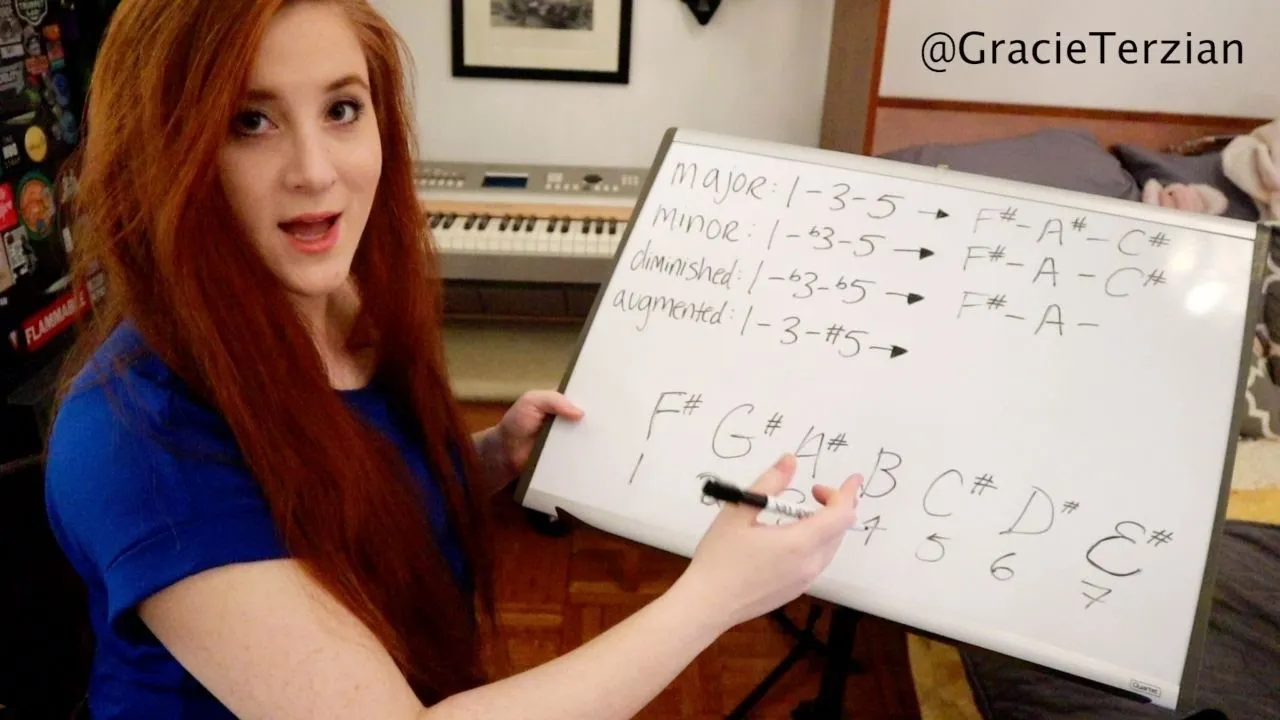





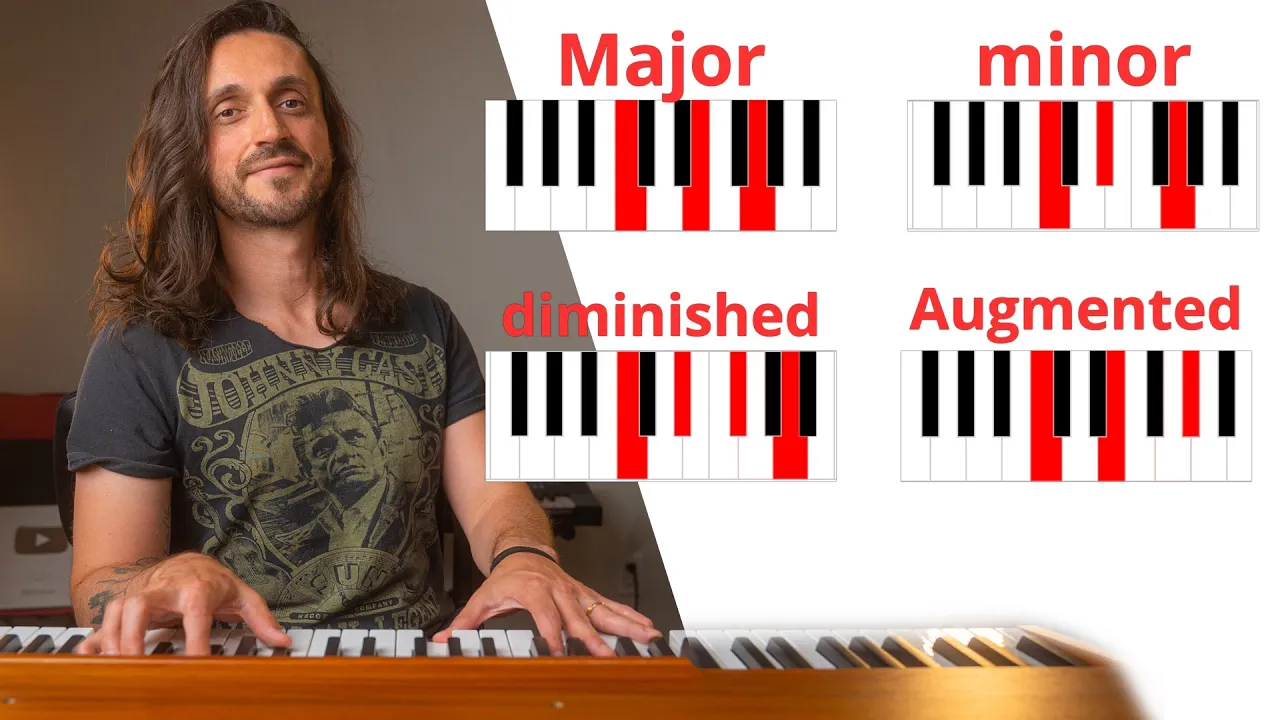
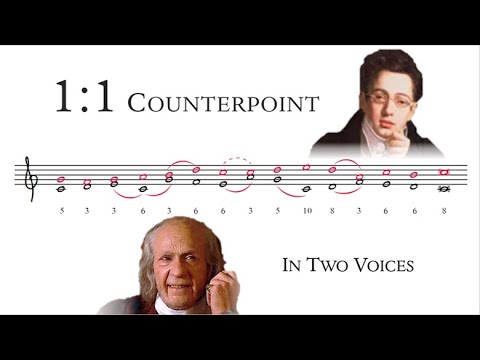
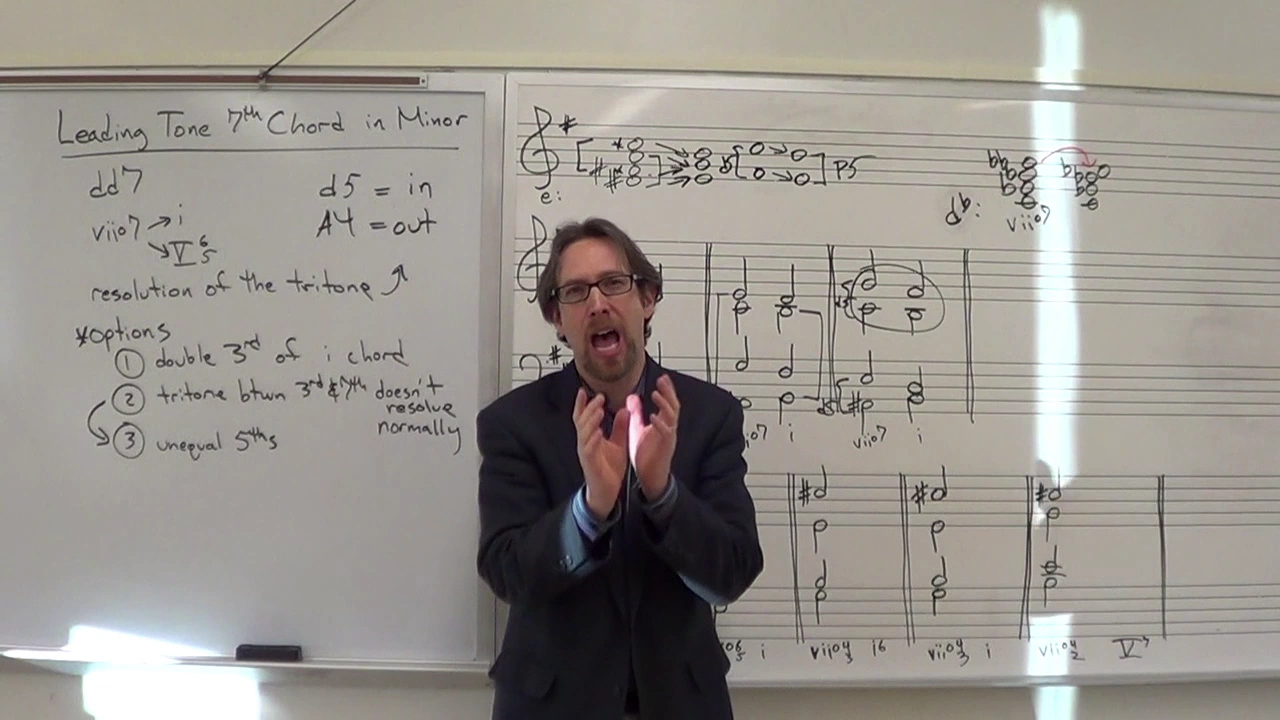







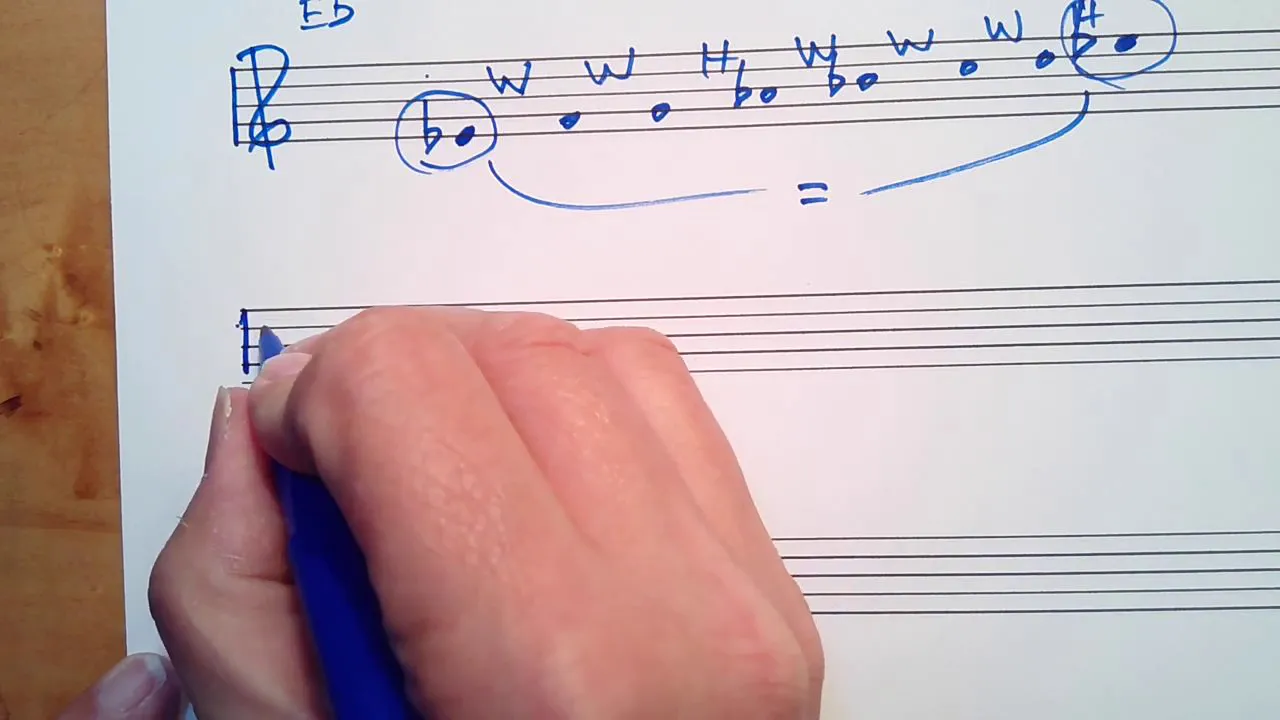
The three minor scales (natural, harmonic, and melodic) exist because musicians historically modified the natural minor scale to achieve specific harmonic effects: the harmonic minor raises the seventh degree to create a leading tone for stronger dominant-to-tonic resolution, while the melodic minor raises both the sixth and seventh degrees to eliminate the awkward augmented second interval between them; each scale produces different diatonic chords, with the harmonic minor offering a g major dominant chord and the melodic minor providing smoother melodic lines when ascending, though it reverts to natural minor when descending since the raised notes no longer function as leading tones.
Understanding the Three Minor Scales and Their Diatonic Chords (2024 Guide) - Piano Tutorial
Added:Basic piano keyboard geography, including identifying white and black keys and understanding octaves.
The construction of the major scale using whole steps and half steps (tones and semitones).
Fundamental chord theory, specifically how to construct major and minor triads using root, third, and fifth intervals.
An understanding of key signatures and how sharps and flats are used to define a musical key.
Applying minor diatonic chords to common progressions, such as the minor ii-V-i cadence.
Constructing and analyzing four-note seventh chords (such as minor-major 7th and half-diminished 7th) within the three minor scale systems.
Voice leading principles in minor keys, particularly the resolution of the leading tone (raised 7th degree) to the tonic.
Advanced modal improvisation techniques using modes derived from the melodic minor scale, such as the Altered Scale or Lydian Dominant.
Exploring modal interchange, which involves borrowing chords from parallel minor keys to enrich major-key compositions.
655.6K views29.7Klikes42:59Original Release: 2021-09-20
if you find it confusing that there are three main variants of the minor scale this video is for you maybe you can never remember which is which or maybe you don't understand the point of learning all three of them but today we are going to break through all of that confusion and you will learn what the diatonic chords are of each of these different scales why we need to know all three of them and how we can actually use them in our playing so why are there three variants of the minor scale well we have to remember that a scale is just a melody it's a series of notes that has a particular sound and over time composers and musicians have changed certain notes in the minor scale to achieve a specific sound they're looking for by changing certain notes in the minor scale we change the color and the style and the sound of the scale the natural minor scale is sort of like our default minor scale now i'm not saying it's the most important or the most commonly used minor scale i'm just saying that you can think of it as our default minor scale so first let's look at how the natural minor scale differs from the harmonic minor scale [Music] so here's a c natural minor scale and a c harmonic minor scale and if we were to analyze the notes in them the only note that's different between them you see is uh this note right here b flat or b natural other than that all of the notes are the same and we say that the harmonic minor scale has a raised seventh degree when compared to the natural minor scale which just means that the seventh note has been raised up by one half step going from the note b flat to the note b natural so first let's talk about why people might have begun playing the harmonic minor scale instead of the natural minor scale but first we need to talk about something called the leading tone let me play a c major scale for you and i'm going to stop at the seventh note okay this is just a c major scale can't you feel how badly you want the scale to resolve back to the c at the top there's just so much tension uh when we linger on that note b because when our ears or rather our brains hear that leading tone note which is the seventh degree we feel a very strong desire for the note to resolve back to the tonic which is c it's really leading us back to that tonic or root note right which is why we call this note a leading tone and leading tones are always one half step higher or lower than whichever note they're leading us to and you see how this note b is just a half step away from the note it's leading us to which is the note c so it's either one half step apart and that's why the seventh degree of a major scale is referred to as a leading tone so in a major scale we have this nice leading tone seventh degree right b note is leading us to c because it's one half step away from c now let's look at the natural minor scale on the piano okay so i'm going to place c natural minor scales we have c d e flat f g a flat b flat c now is the seventh degree still a leading tone well what's the seventh degree in this scale it's b flat right one two three four five six seven right b flat is our seventh degree and is b flat a half step away from the tonic which is c no it's not you see how there's a note in between them this note b natural so that means that the seventh degree is not a leading tone because it has to be a half step away from the note it's leading to in order for it to be a leading tone people missed hearing that leading tone note in a natural minor scale so they began raising the seventh degree of the scale which just means they're moving it up one half step which then created the harmonic minor scale which sounds like this c d e flat f g a flat b c so you could think of the harmonic minor scale as being just like the natural minor scale but with a leading tone seventh degree so we just taking that seventh degree of the natural minor scale and saying i wish this would be a nice leading tone then we're just going to shift up a half step and voila now that's one reason why someone might prefer using the harmonic minor scale over the natural minor scale but there's another big reason and that is because of the diatonic chords it creates okay so first let's quickly discuss what are diatonic chords you can think of diatonic chords as being a close family of chords that are connected to a certain key so if you're playing a song in a certain key there's a good chance you will hear some of those diatonic chords that are connected with that key in the song will you hear other chords most likely yes the same way you don't just talk to your family members all the time you also probably socialize with co-workers and friends and it's the same way with diatonic chords the diatonic chords of a key are just like the close family member chords of the key so a song will most likely include some diatonic chords from its key but it will also use some other chords from other keys too and each diatonic chord has an important role it plays harmonically speaking within the key for example the root chord of a key has a pretty important role i'd say what i mean by that is if we were in the key of a major the chord of a major is one of the diatonic chords of the key of a and it happens to be the root chord of the key makes sense you know a major chord is the root chord of the key of a major nothing too crazy going on here yet so the root chord is one of the diatonic chords of the key so let's talk about its role or job position because remember how i said every diatonic chord has a specific job or role that it plays within the key so what does the root chord do well it's the center of gravity for the key everything we hear in that key is ultimately leading us back to that chord it's like the home base you know when we hear that root chord we feel a sense of resolution in home and no matter what key you're in the root chord will be doing that job another really important diatonic chord is the chord we get from the fifth degree of the scale which we refer to as the dominant the same way people refer to the first degree as the reader tonic we also refer to the fifth degree as the dominant so why is the dominant so special well it has a very powerful pull back to the tonic when you hear that dominant chord you really want to hear it resolve to the tonic or root and that relationship between the tonic and dominant is so important that it's arguably the most important harmonic relationship in all music that connection between the one and the five the root and the dominant so the job of the dominant is to lead us back to the root for example in the key of c major g is the dominant right and when you hear it you feel a really strong pull back to the root of c right you can hear it with the chords too for instance if i play a g major chord it really wants to resolve back to the chord c major right there's tension it feels like unresolved and then it really is leading us back home to that root or tonic now diatonic chords are made up entirely of notes in the scale that it's connected to to show you this let's figure out the notes in each diatonic chord in the c natural minor scale okay so let's just look at the c natural minor scale okay so here's our c natural minor scale and we're going to turn every single note in this scale into a chord okay so our first chord is going to start with the note c okay because each note is going to turn into its own chords so this this chord is going to start with the note c this one is going to start with the note dr and that's all we need to do because we just repeat we already did c so these are the root notes of each of the diatonic chords but what are the rest of the notes in these chords well we just move up the scale in thirds to create the chord and what does that mean let me just show you because i think it's easier just to show you so this first chord we know it's starting on the note c right then we move up a third in the scale and if we move up a third from c we get to the note e flat so that means e flat is the second note in this chord okay so i'm going to write c and then i'll do e flat okay then we move up another third from e flat and we get to the note g so that means g is the third note in this chord okay so we have c e flat and g like that and voila we have figured out the notes in the first diatonic chord in this c natural minor scale okay and what chord is this when i play those three notes together c e flat and g what chord am i playing i'm playing a c minor triad chord so i'm just gonna write uh c minor here underneath because that is our first diatonic chord okay and the little lowercase m is a shorthand for minor as you can see when i say moving up in thirds in the scale it just really you could if you want to really simplify it it just means you're hopping over one note in the scale to get to the next one so you're sort of choosing every other note in the scale starting from whichever one you're starting from so let me show you so let's do the next chord so we know this next chord starts on the note d right so and to find the next note in the chord we're gonna just move up a third or we could think of it as just just hopping over the next note and so if we do that which note do we get to so we go from d we hop over the next note and we land on f right so f is the next note in the chord so we have d and we have f and then we have one other note so after f we skip over the next note right we're gonna hop again like a bunny rabbit and land on a flat right so a flat is the next note in the chord so we have d f and a flat all right so um that's what i mean by moving up in thirds so what chord is this when i play d f and a flat together d f and a flat what chord is that that's a d diminished chord okay so that means d diminished is our second diatonic chord in the c natural minor scale okay so right d diminished and that little circle is a shorthand symbol for diminished okay okay so what about the third chord i think you're maybe starting to get the hang of this a little bit right so we're just going to start on e flat right and we hop over the next note so e flat we move up at a third we get to the note g right so next note is g then after g we hop over another note we get to b flat right so we have e flat g and b flat and what chord is that when we play e flat g b flat so e flat g b flat that's an e flat major chord okay so this is e flat that is our third diatonic chord in a c natural minor scale okay what about the fourth chord now okay we have f then we skip over one we get to a flat right f a flat and we have one other okay after a flat we jump again we get to c all right what chord is that when we play f a flat and c here's f a flat c that is f minor okay again i'm just gonna do a little lowercase m for minor so that's our fourth diatomic chord is f minor all right what about the fifth one starting on g right we've got g we move up a third or we just hop over we get to b flat right okay and hey what about this next one like the scale ended right so where do i go well you just pretend like you're back at the beginning again so if i were on b flat and i hopped over the note c here's my c again i would land on d right because this is redundant we don't actually need to write this last c right so after b flat i jump over the c and i get to d so we've got g b flat and d and what chord is that when i play g b flat d g b flat d it's a g minor chord right so all right g minor all right that was our fifth chord what about the sixth chord we've got a flat right then after a flat we skip over b flat and we land on c right because after this b flat was c right so we have a flat c and then skip over again we get to e flat right so we're just moving up in thirds and what chord is this a flat c and e flat when i play those three notes together what chord am i playing a flat c e flat that's an a flat major chord so all right a flat okay and last but not least the seventh chord i've got a b flat right and then after if i skip over the next note i land on b flat you could imagine it being here get to d right and after d i skip over another and i get to f and what chord is this b flat d and f ready b flat d f that is b flat major so b flat major so these chords c minor d diminished e flat major f minor g minor a flat major and b flat major are the diatonic chords of c natural minor so these are like the close family of chords that are connected to the c natural minor scale okay now do you remember before when i was talking about the root and the dominant chord and i was saying that the g chord really has a strong pull to the note c and i told you that relationship between the root and the dominant was probably the most important relationship in all of music well now that we're looking at a c natural minor scale let's say we were writing a melody with these notes in the scale and we want to end the song on the note c so key of c minor and i want to end the song on the note c okay i could play the dominant chord uh in c natural minor and the fifth fifth chord in c natural minor is g minor right so let's listen to what that sounds like having g minor lead us back to the tonics so i've got g minor leading s2 c minor and that sounds good that dominant does lead us back home in a very minor way back to the home chord or note of c right but let's listen if we had that g major chord instead of the g minor chord and let's see how that sounds so we've got instead of g minor we would have g major leading us to c minor ah that is a pretty strong pull too [Music] and one of the reasons why that g major chord sounds so good leading us back home to the root is because uh we have that leading tone note in the chord of g major for instance look here's uh my g major chord i know it's in second inversion right but i'm just putting in second version so you can see how close it is to the note we're going to see how this note b is just one half step away from the tonic where we're trying to get to that's one reason why we have such a strong pull with this chord g major from g major to c minor right so it doesn't matter if we're going from g major to c major or g major to c minor we're still if we're going from g major we still have that leading tone note in the chord that b is very close to the note c right but if i were playing g minor instead right and then i wanted to resolve it to c minor ah now i don't have that leading tone note anymore right if it's close to the tonic right because now i have a b flat instead of b it's a whole step away from c this is the root which is c atomic okay so g minor to c minor it sounds nice but we don't have that nice leading tone note pulling us uh to the tonic so it's not quite as strong of a dominant chord so if i were playing a song in the key of c minor and i wanted to have a g major chord as one of my diatonic chords i would need to change some of the notes or one of the notes in this natural minor scale to get that g major chord right because right now i have a g minor chord and i need a g major chord and as you can see these diatonic chords all the notes in these chords are made up completely of the notes that are in the scale so if i wanted the chord g major instead of g minor as my fifth diatonic chord the dominant chord which note in the scale would i need to change to get a g major chord instead of a g minor chord i would need to change the middle note b flat middle note in that chord to a b natural right then it would be g b and d and that would be a g major chord but wait a second that means i would have to change the note in the scale from b flat to b natural too right in order for that to be one of the diatonic chords and hey wait a second if i turn that b flat into a b natural then this scale goes from being the c natural minor scale to the c harmonic minor scale see check it out see when i turn this b flat into a b natural now i've got the c harmonic minor scale so wait let's figure out the diatonic chords in the c harmonic minor scale okay so we're going to do it the exact same way we did the natural minor chords so we're just going to move up in thirds which means you know with this chord the notes so the first note is going to be c so we skip over one we get to e flat right so c e flat and then after e flat we skip another one and we get to g right and what chord is that c e flat and g that's c minor so that's the same diatonic chord as the natural minor scale right that one didn't change at all all right what about the second chord okay so second chord we start with d and then we move up the third and we get two f right then we move up another third from f we get two a flat and what chord is that d f a flat that is d diminished all right same as before all right what about the next one we have e flat is the first note right e flat [Music] all right so what chord is this this one is actually different than uh in the natural minor scale so if we have e flat g and b that is an e flat augmented chord so e flat augmented and that little plus symbol is a shorthand for augmented okay then the next one we have starting out with f then after f we move up the third we get to a flat right and after a flat we move up another we jump over b we get two what's the note here c right f a flat and c what chord is that that's f minor same is up there all right this next one we have g right and then after g we move up the third we get to b natural and then after b we jump again we get to d right and that is a g major chord so that one is different then the next one we have a flat right then after a flat we skip over there's no b we get two c right after c we jump over get to e flat okay a flat c and e flat what is that that is a flat major all right last but not least we have a b natural we're starting on we skip over the next note let's get what you see and we get to the note d so b d and after d we [Music] that's a different one this is b diminished so b diminished again do a little circle shorthand and hey these are our diatonic chords in the c harmonic minor scale we have c minor d diminished then e flat augmented f minor g major a flat major and b diminished so which are the ones that are different from the natural minor scale this third one right we had an e flat major now we have an e flat augmented this fifth one right we had a g minor now we have a g major and then the seventh one we had a b flat major and now we have a b diminished so hey check it out we have different diatonic chords depending on whether we are using the natural minor scale or the harmonic minor scale so some of them are the same but some of them are different right so this is a big reason why someone might want to use the c harmonic minor scale instead of the c natural minor scale in a song because they get different chords from the scale and that g major chord can be really powerful when leading to the note c now this brings us to the melodic minor scale because melodic minor scale has its own set of diatonic chords so let's just look at those quickly so first let's write out a c melodic minor scale so let's figure out the diatonic chords of c melodic minor because here's my c melodic minor scale okay so um and you see what's the difference between c melodic minor and these other two harmonic minor has just a raised seventh and melodic minor has a raised six and a raised seventh when we're comparing them to the natural minor scale okay so let's figure out how it works so this first one starts with c move up the third [Music] all right what chord is that that's c minor same as the other guys all right next one starts on d then we have d after doing and after f we have a all right what chord is that d f a d f a it's a d minor chord so got d minor this one is different because before we had d diminished now we have a d minor chord all right next chord we have b flat all right then whatever that comes up and we have g then we have f g we have b e flat g and b what is that that is an e flat augmented chord so same as in the harmonic minor scale same chord all right next chord we've got f after f we move up to a then after a we move up to c so this is an f major chord this one's different right before we hit f minor now we have f major c f a c f major chord all right what about the fifth chord so we start with a g after g we get to b all right and after b we get two we stick over to c and we land on the d right and this is what chord is that has a g major chord same as in uh the harmonic minor scale right and this one is going to start on a so this one is definitely a difference after a we skip over b and we land on c right after c we jump again we get to e flat a c e flat what chord is that let's listen that is an a diminished chord and last but not least we have b after b d after d f that is a b diminished chord same as in the harmonic minor so if you look at the diatonic chords of the melodic minor scale you can see that we also have that g major dominant chord right the same one that we had in the harmonic minor scale as well so someone might want to use a melodic minor scale to use some of the chords that are part of the scale but let's also talk about why people might have begun to play the c melodic minor scale from a melodic standpoint so let's go back really quickly and think about our harmonic minor scale again okay so some composers uh might have found the gap between the sixth and 7 degrees in the harmonic minor scale which are between the notes a flat and b to be a little awkwardly large so remember the harmonic minor scale sounds like this [Music] and that large interval uh between the notes a flat and b uh which is an augmented second um it's quite a big distance and you know of course many composers have used this augmented second interval in the harmonic minor scale in their compositions and enjoyed it obviously but others i think wanted to maybe eliminate that large gap because they found it difficult to navigate especially with vocal music and writing nice melody lines so um the only way you could eliminate this large gap and let's listen to it just one more time so you can hear it so [Music] there's that large augmented second interval and then back to the root again so the only way we could make this distance between the sixth and the seventh note or this interval smaller is by lowering the seventh and if you do that then you're just going to be back at the natural minor scale right if i lowered the seventh i would be c d e flat f g a flat b flat c right that's the natural minor scale so that's one way i could make that interval distance smaller but another way we could make this interval distance smaller between the sixth and seventh degree is by raising the sixth degree as well so this a flat turns into a natural and check it out that is the melodic minor scale so c c d e flat f g a b c so the melodic minor scale has a raised sixth and seventh note um and we get both the leading tone note of b natural which leads us back to c and we've eliminated the large augmented second interval by also raising the sixth degree from a flat to a does that make sense i hope so if you're still confused by that let me know in a comment below and i'll try to make another video that elaborates on this a little further but let's go back to the diatonic chords now so as you can see the diatonic chords of a minor key are a little bit more complicated than a major key right because for a major key we just have seven diatonic chords but when we talk about the diatonic chords of a minor key we suddenly have way more right we actually have a total of well you can try counting if you want but it's a total of 13 different diatonic triads in a minor key for instance if i'm playing a song in the key of c minor just just regular old c minor key there are 13 different diatonic triads i could use by the way a triad is just a chord with three notes we also have diatonic seventh chords but i'm not going to get into that in this video because otherwise this video will go on forever and i will cover them in another video by the way if you are enjoying this video don't forget to give it a thumbs up and leave a comment and share it with a friend so if you are improvising or writing a melody over a chord progression and you come across a b diminished chord in the chord progression um here's a b diminished chord right we also have one in the harmonic minor scale but we're just gonna focus on this one right now that's in the melodic minor scale um you could say hey that b diminished chord is a diatonic chord of c melodic minor therefore i could play the notes in the c melodic minor scale over that chord and it could sound nice so let's listen to what the c melodic minor scale sounds like while i'm holding a b diminished chord now let's hear what a c harmonic minor scale sounds like over a b diminished chord because as i said earlier the b diminished chord is also a diatonic chord for c harmonic minor [Music] sounds pretty nice right now let's listen to a c natural minor scale over a b diminished chord so a lot of those notes in the c natural minor scale sounded pretty good over the b diminished chord right but we did have fewer note options that sounded good because we have different notes going on for example this note b flat in the scale clashes with the note b in our b diminished chord listen to it see here's my b diminished chord [Music] i mean it doesn't sound bad it sounds kind of cool but it's very dissonant let's look at another one let's listen to an f minor chord okay so here's my f minor chord and if you see we have an f minor chord in our natural minor scale and our harmonic minor scale but not in the melodic minor scale so first let's listen to a natural minor scale c natural minor scale over an f minor chord so here's my f minor chord and i'm going to play a c natural minor scale first okay those sounded like some pretty good note options right a lot of those notes sounded very nice with that chord now let's do a harmonic minor scale with this f minor chord a lot of good note options there too all right now i'm going to play a melodic minor scale this is one where it's not one of the diatonic chords of the scale but let's see what it sounds like so a lot of those notes did sound good and why is that well because a lot of the notes are the same in these scales right there's only one note that's different right between these two scales we just have this a instead of a flat but it's just good to remember that hey that note a won't sound quite as good over that f minor chord as the note a flat will right so you would want to play maybe one of these two scales over that chord instead or pick notes from those scales if you were writing or improvising now it doesn't mean you can never play the note a natural over an f minor chord absolutely not you know there's no uh when it comes to writing and improvising as long as it sounds good it sounds good so you know all the rules we can always throw them out the window but we want to have ideas about what will probably sound good that can help us but you know if you're playing an a natural note just as a passing tone really quickly uh then i'm sure it would sound really nice you might not want to hang out on that note for a long time you know if i were playing right here's my f this minor really clashes to play that a natural note right i sounds better to play a flat right but if i was just running through it really quickly it could sound cool so i'm just just play that a natural for just a second but i wouldn't i wouldn't want to hang out there for long so at the end of the day no rules as long as it sounds good it sounds good but we learned the rules just so we have good ideas and good instincts about what to play so basically if you look at the diatonic chords of the three minor scales then you can play each of these scales over all of the diatonic chords that are connected with them for instance you could play the notes in a c harmonic minor scale over any of these chords and it will probably sound pretty nice i'm actually going to make another video that goes more in depth on diatonic chords of minor scales but for now i want to move on because there's one last thing i'd like to address in this video and that is why does the melodic minor scale get played differently when it's ascending versus descending so if you don't know what i'm talking about i actually made another video at it i will link in the description below it's sort of like an introduction to these three different uh minor scales and i go into more depth in that video but basically a melodic minor scale is only played with the raised sixth and seventh degrees when it is ascending so as descending it just turns back into the natural minor scale for example if i played a c melodic minor scale both ascending and descending it would sound like this c d e flat f g a b c and then if i'm descending c b flat a flat g f e flat d and c so i played these notes when i was ascending but when i was descending i played those notes i went back to the natural minor scale so why well when we play a scale descending um then the seventh degree is no longer resolving to the tonic right check it out i'm gonna play um the c melodic minor scale ascending first okay so if i'm playing ascending then i play the b first right before resolving up to the c so when i'm ascending it makes sense to want to have that leading tone note to lead us up to c right but if i'm playing it descending then i'm playing the c first and then i'm playing the b it's no longer acting like a leading tone so because we only need the leading tone when the scale is ascending that's why when it's descending it just goes back to the regular old natural minor scale because we no longer need this uh leading tone because it doesn't matter going if i'm going down all the leading tone only counts when you're leading from the leading tone to the tonic right so there's the leading tone pointing up to c if i'm going down it doesn't matter so i might as well just go back to [Music] the natural minor scale really the main thing to remember is that we only have the raised 6th and 7th degrees when the scale is ascending because that's when we would want the leading tone and you might still be wondering okay i get that when we're descending we don't need a leading tone but why do we bother switching back to the natural minor scale what's the point of it um and well as i said at the very beginning of this video if you remember scales are just melodies that people use to practice and they teach us uh about harmonies and ways that melodies can act in certain keys or harmonic conditions and maybe people chose to start doing this because um you know if you're playing a song in a minor key you would be more inclined to play that note be natural when you're playing an ascending melody line that's going up to the note but when you're descending it sounds better to use that a flat and b flat maybe that's why because it shows us how notes typically or often behave in minor keys that might be one reason another reason could be just people like the sound of it while they were playing and practicing it i've also been told although i don't know that it's necessarily true that um people thought the melodic minor scale sounded too major right there's only one note that's different from a major scale that's the e flat so because it sounded too major and also maybe because that raised six and seventh clashed with some harmonies uh people to adjust for that decided to just lower the sixth and seventh note whenever they were playing scale descending since they didn't need the leading tone um you know maybe that's why who knows but really the main thing to remember is that we only have the rays six and seven degrees when the scale is ascending because that's when we would want the leading tone so we learn all this stuff but how do we actually really really get it into our playing and our goal is to make music here so it's really nice to take these scales and to actually start making some music writing some melodies improvising and having fun little exercises where we can just improvise in a very low stress way so one of my favorite ways to go about doing this is uh just using two chord vamps so um what we're going to do is we're just going to pick two chords in any of these scales and uh for instance we'll just pick the first two uh c minor and d diminished okay so we're gonna do a vamp between c minor and d diminished and on the piano i'm just gonna with my left hand play those two chords and just go back and forth playing them and then with my right hand i'm going to improvise uh just notes in the c natural minor scale and any and you can play nice and slow it doesn't have to be anything fancy just play a simple little melody if you're playing guitar or ukulele you can record yourself playing these two chords back and forth you know you can just make a little recording and then uh just play on top of that improvised skill notes while listening back to the recording um but let me just show you what i mean and this is i think a really great way to just to start actually practicing these scales and playing music because that's what this is all about right [Music] [Applause] so [Music] just like that now i can just take that exact same vamp c minor and d diminished and do it over the harmonic minor scale too because see we have those two diatonic chords in harmonic minor as well okay so i'm gonna be still vamping back and forth between c minor and d diminished but this time i'm going to play the c harmonic minor scale notes from that scale instead of the natural minor scale okay so let's check it out [Music] keep it slow and simple [Music] so [Music] so [Music] [Music] so [Music] [Applause] [Music] [Applause] [Music] it doesn't have to be anything profound just have fun and noodle around and just practice your skills this way and just so you know while you're playing and improvising like this sometimes you might hit a wrong chord accidentally you know maybe you'll accidentally play c major or d major instead of e minor um and sometimes those are really cool actually and so you'll realize that sometimes your mistakes sound really awesome and they can actually give you really good new ideas um so that's sort of the fun of just re doing these two core advanced because they're so it's nice and simple it's manageable and even when you make a mistake you know it sometimes sounds really refreshing because your ears start to get tired of hearing just those same two chords so have fun with it discover new sounds we're just trying to make beautiful music here at the end of the day right that's what all this is for what's the point of learning skills unless we actually are going to make some nice music with it so if you make a mistake and you discover a really cool sound maybe you hit a note that actually wasn't in the scale but it sounds awesome great you know you definitely can play many other notes over these two chords and just those you know these are just exercises so um keep your keep your ears open to those mistakes embrace them and have fun that is the most important part have fun at the end of the day scales are useful to us because sure they help us with technique but they also help us understand how to write and play beautiful melodies chords and harmonies and we can adjust the notes in these scales to help us achieve the sounds we're looking for the reason why you might practice playing these three different skills on your instrument is because it's teaching you different ways melody notes behave in minor keys so the melodic minor and harmonic minor scales are really just helpful tools that show us how the sixth and seventh scale degrees can be raised sometimes in minor keys and we find it helpful to have those notes and knowing these three different scales separately helps us understand which notes to play over certain chords when we begin to analyze the diatonic chords of each minor scale as i said earlier i'll be making a video about diatonic chords of minor scales later down the road so stay tuned for that and when i do i will try to remember to post a link to it in the description below here if i forget to post the link in the description comment and remind me please um and that is all for today i hope you guys found this video helpful if you're new to my channel and you'd like to see more videos like this don't forget to subscribe and turn on the bell notification so that you actually will know when i post a new video i post a video once a week and i would love to have you here and if you want to practice what we learned in this video i have printable pdf practice materials as well as some video summaries and a link in the description below so if you like this video give it a thumbs up leave a comment and a special big thank you to my patreon supporters who make it possible for me to make these videos that is all guys thank you so much for watching see you next week and have a wonderful rest of your day or night
Up Next
12:49
The 2-5-1 Chord Progression Explained for Jazz Piano
@jazztutorial
247K views•2014-06-07

10:20
Mozart's Musical Dice Game Explained: History, Rules, & Fun
@webpianoacademy
5K views•2023-03-13
35:32
Intervals in Seventh Chords Explained | Music Theory
@GracieTerzian
72K views•2021-07-18
10:49
Understanding John Coltrane's Giant Steps: A Music Theory Analysis
@Vox
10.4M views•2018-11-12
Related Study Plans & Knowledge Roadmaps
Structured learning paths in Music Theory
music-theory
Composing Galant Music: Partimento & Schemata
01Foundations of Figured Bass and Keyboard Harmony
02The Rule of the Octave (Regola dell'Ottava)
03Galant Schemata: The Building Blocks of Form
+ 2 more learning modules
30h5 modules
Explore Roadmap
music-theory
Decoding Overtone Series: Tuning & Drone Music
01Acoustic Foundations: The Physics of the Overtone Series
02Tuning Systems: Equal Temperament vs. Just Intonation
03Microtonality and Spectralism: Beyond Standard Pitches
+ 2 more learning modules
24h5 modules
Explore Roadmap
music-theory
Impressionist Harmony: Scales, Planing & RPGs
01Foundational Music Theory: Keys, Intervals, and Seventh Chords
02Impressionist Color: Chord Planing and Parallel Harmony
03Whimsical Textures: Pentatonic Cascades and Whole-Tone Scales
+ 1 more learning modules
14h4 modules
Explore Roadmap
music-theory
Negative Harmony: Axis Reflection in Indie Pop
01Music Theory Foundations: Scales, Intervals, and Triads
02Functional Harmony and the Circle of Fifths
03Demystifying the Negative Harmony Axis Reflection
+ 2 more learning modules
16h5 modules
Explore Roadmap