








![[sky光遇]音樂演奏教學(一)基本功!音程/原位三和弦/原位七和弦完整收錄](https://i.ytimg.com/vi/deRj22wGIj8/maxresdefault.jpg)






![Intro To ALTERED DOMINANT Chords [SONGWRITING / JAZZ / MUSIC THEORY]](https://i.ytimg.com/vi_webp/63-PX9XvrKg/maxresdefault.webp)


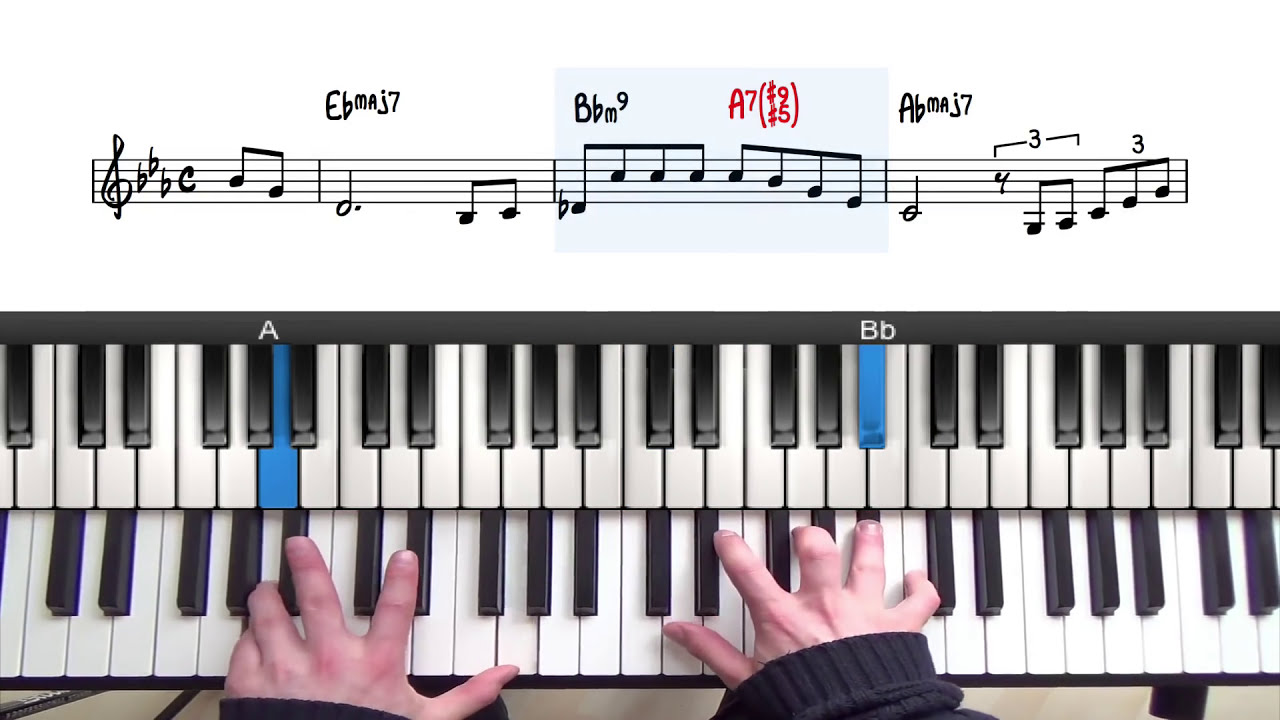


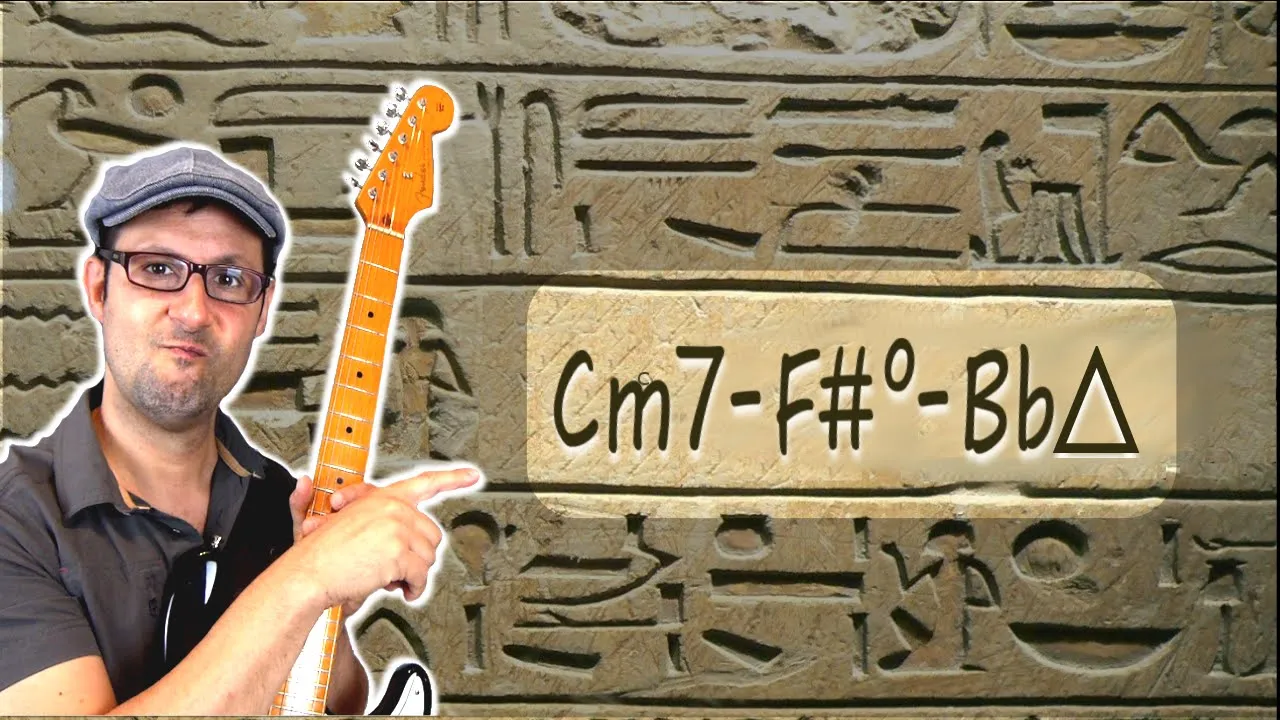
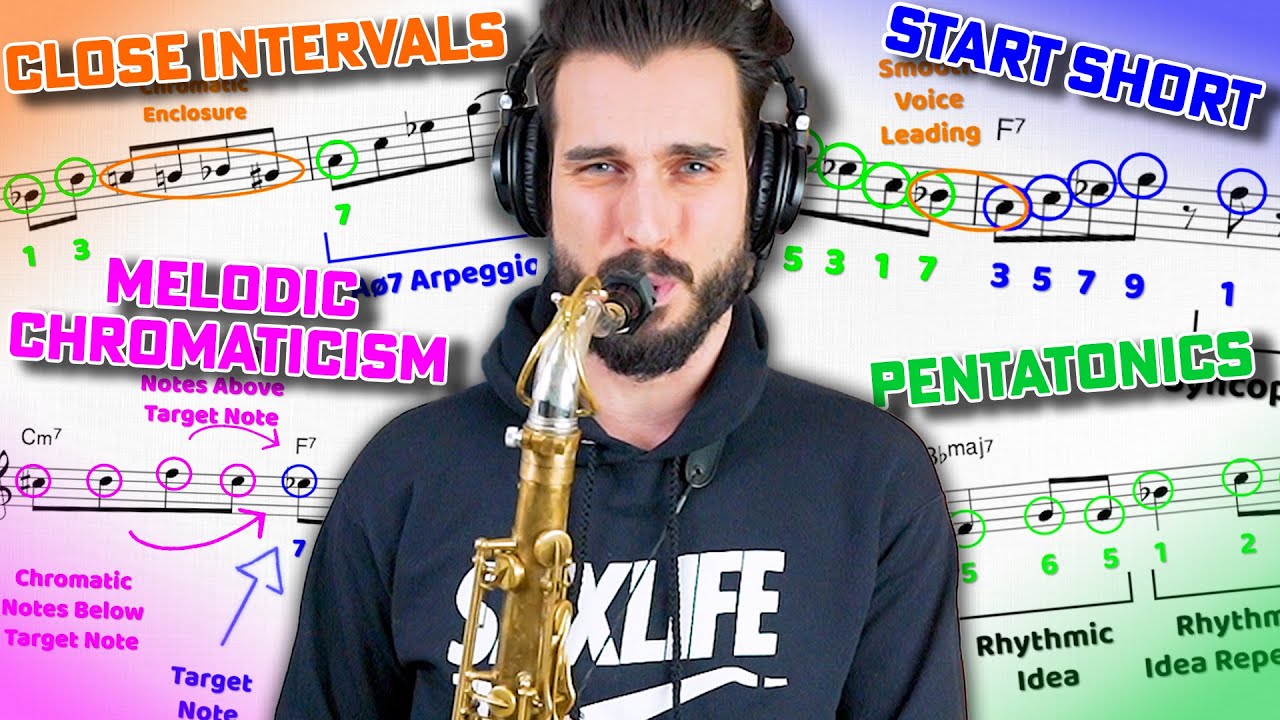

The ii-V-I chord progression is the most common harmonic structure in jazz, consisting of three consecutive chords where each chord moves down a perfect fifth. In major keys, it uses a minor 7 chord (ii), dominant 7 chord (V), and major 7 chord (I). In minor keys, the ii chord becomes a half-diminished chord, and the V chord is played as a dominant 7 chord rather than a minor 7 chord to create proper resolution to the minor I chord. This progression appears throughout jazz standards and serves as the foundation for improvisation and composition.
The 2-5-1 Chord Progression Explained for Jazz Piano
Added:Understanding major and minor scale construction and key signatures.
Familiarity with diatonic seventh chords (specifically major 7th, minor 7th, dominant 7th, and half-diminished/minor 7b5 chords).
Basic knowledge of Roman numeral analysis in music theory.
Fundamental piano technique, including playing basic triads and root-position seventh chords.
Mastering jazz chord voicings, specifically shell voicings and rootless A and B form voicings.
Improvising over 2-5-1 progressions using scale-chord theory (e.g., Dorian, Mixolydian, and Ionian modes) and guide tones.
Introducing altered dominant chords (adding b9, #9, b5, and #5 extensions to the V7 chord).
Learning tritone substitutions and other common jazz reharmonization techniques.
Applying 2-5-1 progressions to analyze and perform jazz standards from the Great American Songbook.
247K views8.4Klikes12:49Original Release: 2014-06-07
How's it going guys? Julian Bradley here with another jazz tutorial. In today's lesson, I'm going to explain the 251 chord progression. So, you've probably heard of the phrase 251. [music] It is the most common chord progression which you'll encounter in jazz music. And in this lesson, I'm going to explain both the major and the minor 251 chord progressions.
So within C major scale there are seven [music] chords which can exist.
Basically a chord built off each note in the scale. You have C major which we call the one chord. D minor [music] which we call the two chord.
E minor the three chord. [music] F major the four chord. G major the five chord. A minor the six chord and B diminished the seven chord. So the phrase 251 is referring to the numbers of each chord. [music] We have D minor is the two chord, [music] G major is the five chord and C major is the one [music] chord.
[music] Now the 251 is basically the last three chords in an entire cycle of fifth chord progression.
Now you may have already seen my video on cycle of fifths, but basically a cycle of fifth chord progression is where every chord resolves down a fifth each time.
[music] So in jazz you do sometimes get a complete cycle of fifths.
[music] However, because jazz is known for changing key often, typically every two or three chords at least, jazz will change the scale that it's using. So that means that rarely do you ever get the complete cycle of fifths in because a complete cycle of fifths goes through all seven chords in the scale and that takes seven chords. So that's a long time for jazz to stay in the same key, which means that it's more common just to get fragments of that complete circle of fifth chord progression. And instead of playing fragments of the circle of fifths within it or at the beginning of the circle of fifths, it's common to play the end of the circle of fifths, which is where the circle of fifths finally resolves. [music] And it happens to be the two chord going to the five chord ending on the one chord. And this is basically where the 251 comes from, it's just the last three chords in a complete circle of fifths. And if you ever encounter the phrase 6251, well, that just refers to the final four chords in the entire chord progression. So instead of starting at D, you start on the six chord, which would be a minor [music] if we're in the key of C major. So this is the six chord going down a fifth to the [music] two chord. Going down a fifth to the five chord. Going down another fifth [music] to the one chord.
[music] Now, it's worth pointing out that in jazz, every chord pretty much without exception is played at least with a seventh on it. [music] So, when we say 25, one, really we mean two with a [music] seventh, five with a seventh, and one [music] with a seventh.
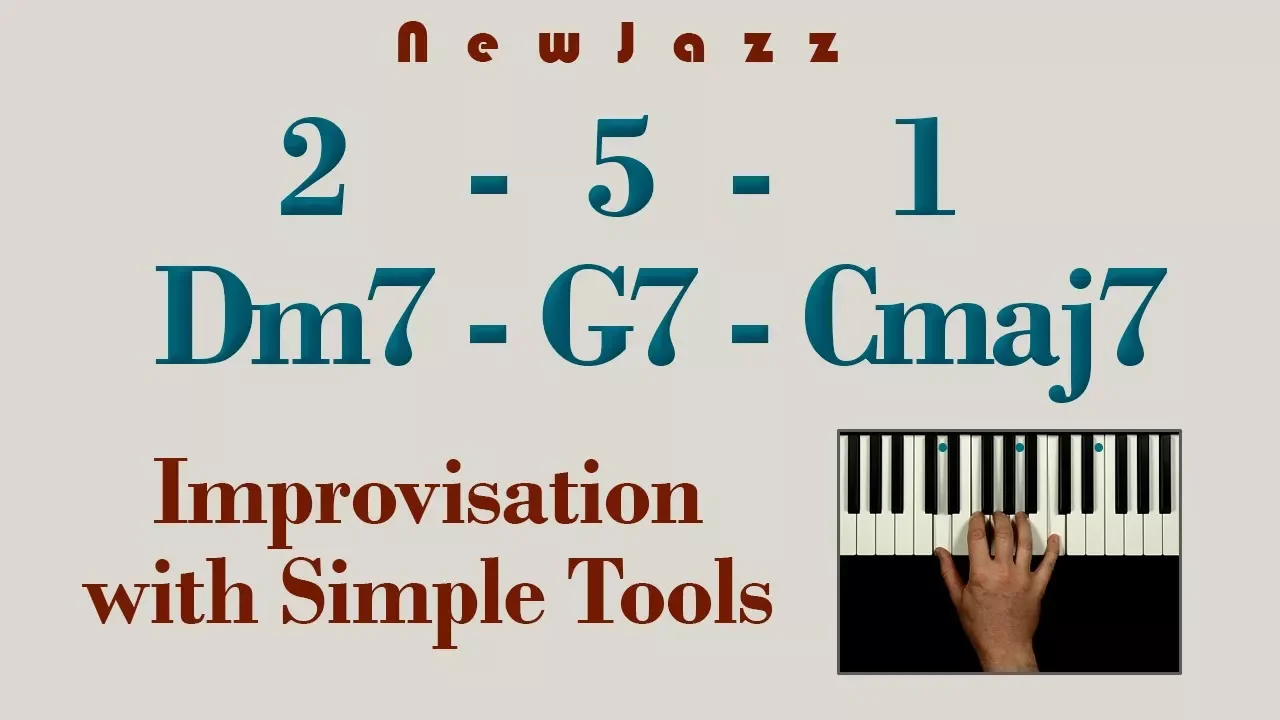
So we'd have D minor 7, [music] have G7 or G dominant 7 and C major 7. [music] So that's really what's meant in [music] jazz when you say 251. We're talking about three seventh chords.
[music] So the major 251 is straightforward.
It's just the three types of 251 chord that you get in the major scale. So that's all straightforward. That's easy to understand. However, the minor 251 is where the confusion occurs. So now let's play a 251 in C minor scale. I'm going to build all chords from the notes of C natural minor scale.
So that would give us [music] a D half diminished chord as our two chord.
[music] The five chord would be a G minor 7 [music] and the one chord would be a C minor 7.
However, if you play the these three chords, they don't sound quite right.
[music] That doesn't sound quite right.
And it's this five chord [music] when I'm playing it as a minor chord, as you'd expect, doesn't quite [music] lead up to the one chord resolution.
So what we do in jazz [music] is we play this chord, the five chord as a dominant [music] 7. We basically change the B flat to a B natural.
And then [music] we go back and then every other chord you would play a B flat, but it's just reserved for that five chord.
And the [music] same goes if you're playing a complete circle of fifth chord progression in the key of C minor.
Every chord would be built [music] with a B flat except [music] for the final five chord which you would play with a B natural [music] which just creates a more grandiose resolution to the final one chord.
[music] And that's [music] normal.
[music] So, let's take a look at some famous jazz songs and identify the 251s that are in them. Let's start with one of my own favorites, Afternoon in Paris.
[music] So we [music] start on a C major 7 chord, but [music] then when it changes to C minor 7, we find ourselves in a 251 in B flat major because [music] I can see a minor 7 chord, going to a dominant seven chord, a fifth below, and then going to a major seven chord.
Another fifth below. And those three chords in a row is the sign of a major 251.
[music] C minor 7, F dominant 7, and B flat major 7. So that's a 251.
[music] Then when the chord changes [music] to B flat minor, we find ourselves in another 251, another major 251 [music] in a [music] flat major.
[music] And next, let's take a look at Autumn Leaves. Now, Autumn Leaves starts with a complete circle of fifths. The piece is in G minor, starts on [music] a C minor chord.
[music] So, that's a complete circle of fifths ending on [music] G minor 7, the one chord of G minor.
But then if we look at the B section, we have [music] an A half diminish chord, which is the sign [music] of a two chord in a 251.
Sure enough, we have a 251 in G minor.
So this is a minor 251 example.
[music] D dominant 7, the five chord, ending on G minor, the one chord.
[music] That was a 25 one in B flat major.
[music] We had a C minor 7 chord, an F7 chord, B flat major 7 chord. So that's a major 251.
And then we have a series of two fives.
[music] So that's a two, a five, a two, a five.
[music] And these are major 25 fives.
And then we end with a minor 251 in G minor.
[music] So to end with a good way to ingrain this way of thinking would be to look through your real book, to look through any jazz song, and to try and spot as many 251s as you can. So to recap, if you see three chords in a row, each chord moving down a fifth, then you know that a circle of fifths is being played.
And if the first chord is a minor 7 chord, the second chord [music] is a dominant seven chord, and the final chord is a [music] major 7 chord, then you know that that's a major 251.
[music] But if the first chord is a half diminish [music] chord, which is sometimes written as a minor 7 flat 5 going to a [music] dominant seven chord ending on a minor [music] 7 chord. Then that is a minor 251. So these are the only type of 251. The major scales 251 and the minor scales 251.
Up Next

40:42
Music Theory Basics: Intervals, Chords, Scales & Keys
@RickBeato
235K views•2018-04-09

10:20
Mozart's Musical Dice Game Explained: History, Rules, & Fun
@webpianoacademy
5K views•2023-03-13

47:36
Understanding Diatonic 7th Chords in Major Keys | Music Theory Tutorial
@GracieTerzian
54.7K views•2022-03-02
10:49
Understanding John Coltrane's Giant Steps: A Music Theory Analysis
@Vox
10.4M views•2018-11-12
Related Study Plans & Knowledge Roadmaps
Structured learning paths in Music Theory
music-theory
Composing Galant Music: Partimento & Schemata
01Foundations of Figured Bass and Keyboard Harmony
02The Rule of the Octave (Regola dell'Ottava)
03Galant Schemata: The Building Blocks of Form
+ 2 more learning modules
30h5 modules
Explore Roadmap
music-theory
Decoding Overtone Series: Tuning & Drone Music
01Acoustic Foundations: The Physics of the Overtone Series
02Tuning Systems: Equal Temperament vs. Just Intonation
03Microtonality and Spectralism: Beyond Standard Pitches
+ 2 more learning modules
24h5 modules
Explore Roadmap
music-theory
Impressionist Harmony: Scales, Planing & RPGs
01Foundational Music Theory: Keys, Intervals, and Seventh Chords
02Impressionist Color: Chord Planing and Parallel Harmony
03Whimsical Textures: Pentatonic Cascades and Whole-Tone Scales
+ 1 more learning modules
14h4 modules
Explore Roadmap
music-theory
Negative Harmony: Axis Reflection in Indie Pop
01Music Theory Foundations: Scales, Intervals, and Triads
02Functional Harmony and the Circle of Fifths
03Demystifying the Negative Harmony Axis Reflection
+ 2 more learning modules
16h5 modules
Explore Roadmap