






























Roman numeral analysis is a music theory system that uses Roman numerals to represent chords based on their scale degree within a key, where uppercase numerals (I, IV, V) indicate major chords and lowercase numerals (ii, iii, vi) indicate minor chords, with diminished chords marked by a circle (vii°) and augmented chords by a plus sign (V+). The scale degrees have specific names: tonic (1), supertonic (2), mediant (3), subdominant (4), dominant (5), submediant (6), and leading tone (7), with the leading tone strongly pulling toward the tonic. In major keys, the chord qualities follow a pattern: I (major), ii (minor), iii (minor), IV (major), V (major), vi (minor), vii° (diminished). In minor keys, the pattern differs: i (minor), ii° (diminished), III (major), iv (minor), V (major), VI (major), vii° (diminished), often requiring accidentals to create the dominant chord.
Roman Numeral Analysis in Music Theory: Chord Fundamentals Explained
Added:You can become a master of music theory.
Let's do it together. I'm Dr. Ben. I taught music theory for 19 years at a university. Today, we're going to be talking about the basics of Roman numeral analysis. Where Roman numerals come from is the scale degree. So, if we're in C major and we have a chord built on the first scale degree, that gets a Roman numeral 1. Chord built on the second scale degree gets a Roman numeral 2. the chord built on the third scale degree, a Roman numeral 3, etc. We need to know our scale degree names. It makes things much faster and easier to communicate. So scale degree one is called tonic in C major. The second scale degree is D. That's called supertononic. Super meaning above. The third scale degree is called the median because it's the midway between the tonic note on the first scale degree and the dominant note on the fifth scale degree. The dominant is called that because it's a very strong note. The chord built on the dominant really strongly wants to pull to tonic. It's the strongest note in the key other than tonic. So if you look down here at C, the tonic note, and G, the dominant note, E, the third scale degree, is right in the middle of those two. It's called the median, the middle point. You might think subdominant is called that because it's one below the dominant. That makes sense, but that's not the reason it's called the subdominant. Notice that the dominant is five steps above the tonic. CB E F G.
Well, if you start on C, the tonic right here, and you go five steps down, 1 2 3 4 5, you get to the note F. And so F, the fourth scale degree, is the dominant below the tonic. A fifth below the tonic, the subdominant. Fifth scale degree is the dominant. The sixth scale degree is the submedian.
It gets its name because it's halfway the middle point between the tonic C and the subdominant F. You can see this A is right in the middle of the tonic and the subdominant. So, it's the submedian. The seventh scale degree is called the leading tone. If you're in a minor key and the seventh scale degree is a whole step below the tonic instead of only a half step below the tonic, it's called the subtononic.
The leading tone gets its name because it strongly leads to tonic. If you have a melody and you have a leading tone in the melody that doesn't go to tonic, it sounds very unsettling and awkward. So, you'll get used to those scale degree names pretty quickly, and that will help us communicate uh easily and quickly in the future. Another thing you'll get used to and know without having to think about it is the qualities of chords that occur on which scale degrees. So a chord built on the first scale degree in a major key is a major chord. Major chords get capital Roman numerals. A chord built on the second scale degree of a major chord is a minor chord. They get smallcase Roman numerals. Roman numeral 2. A chord built on the third scale degree is minor, fourth major, fifth major, sixth minor, seventh scale degree chord is diminished, which you can see is gets a small case Roman numeral and the little circle. And we're back to C major. In a minor key, there's much more variety of possible qualities of chords on which scale degree. That's because of the possibility of the melodic minor scale and the harmonic minor scale.
Since this is an introduction, I'm only going to show you the most basic and the most common chords that occur on the scale degrees. On the first scale degree in a minor key, the chord is minor. On the second scale degree, it's diminished. Third scale degree is major.
Fourth scale degree is minor. The fifth scale degree is major. And you can see that requires an accidental in a minor key. If you just use the key signature of a minor key and build a chord on the fifth scale degree, it will be a minor chord. But that would be B flat. It would be a whole step away from tonic. So it doesn't strongly lead to tonic if it's B flat. It needs to be B natural so that it's the leading tone.
So it strongly pulls toward tonic. A chord built on the sixth scale degree and minor is a major chord. And a chord built on the seventh scale degree, by far the most common, is a diminished triad. And you can see that also requires an accidental to raise the seventh scale degree so that it becomes a leading tone. So let's practice. Let's identify the proper Roman numeral for this chord. First, you look at the notes D, F, and A. That's a triad built on D. If we're in the key of C major, B is the second scale degree. So this is a chord built on the second scale degree and that's a minor chord. So it's a small case too, supertonic. Let's take a look at this example. This is a triad built on the note D. And we can see that in the key of G, D is the 1 2 3 4 5th scale degree.
So the proper Roman numeral for this is five, a capital five because it's a major chord, dominant in the key of G.
Let's look at one that's in a minor key.
If we're in C minor and we have this chord, the notes are A flat, C, E flat, and we can see that A is the 1 2 3 4 5 6 scale degree in C minor. It's a major chord, so it's going to be a capital letter. So the proper Roman numeral is capital 6. It's the submediant in C minor. Instead of identifying a chord's Roman numeral, let's find the chord if we're given the Roman numeral. So in the key of C, if we want to write the subdominant chord, that's the fourth scale degree. So we count scale degrees 1 2 3 4. That will be a chord built on F. I'm using Musecore which is a wonderful free music notation program.
So one of the advantages of these videos is you'll watch me navigate in the program and learn how to use it. So if we want to build a subdominant chord in the key of C, I go up and select my pencil and I've selected a whole note.
We said that the fourth scale degree in the key of C, C, D, E, is F. So we're going to build a chord on F.
So, we'll do it this way.
F A [Music] C. Let's do another one. In the key of E flat, let's build a leading tone chord.
We know the leading tone is the seventh scale degree. So, if we count scale degrees, we can count up 1 2 3 4 5 6 7.
But, of course, you can count down one instead of up seven. So, this chord is going to be built on D. And so, I'll select my pencil tool.
I'll do it in whole notes. We'll have a D and we'll have an F and we'll have an A [Music] flat. So, D F A flat leading tone. Let's practice the special case where we have to alter a note in order to get the right chord quality. Let's build a dominant chord in the key of F minor. So, we find our fifth scale degree. 1 2 3 4 5. We're going to build a major chord on C. We'll select our pencil tool. We have C. And I'll put the other C here. E and G. We'll talk about doublings and four voices in future videos. You always double the bass note in a root position triad.
So right now we have a minor chord C E flat G. We need to raise the third of the chord by a half step in order to make it a major triad. So we add the C natural. Now we have a major chord built on the fifth scale degree dominant in the key of F minor. I hope you enjoyed this video.
Like, subscribe, and share so the channel can grow so I can keep making these. And we'll see you next time.
Up Next

Music Theory on Keyboard Explained in 30 Minutes
@RickBeato
90.1K views•2024-07-29

Mozart's Musical Dice Game Explained: History, Rules, & Fun
@webpianoacademy
5K views•2023-03-13

Understanding Diatonic 7th Chords in Major Keys | Music Theory Tutorial
@GracieTerzian
54.7K views•2022-03-02
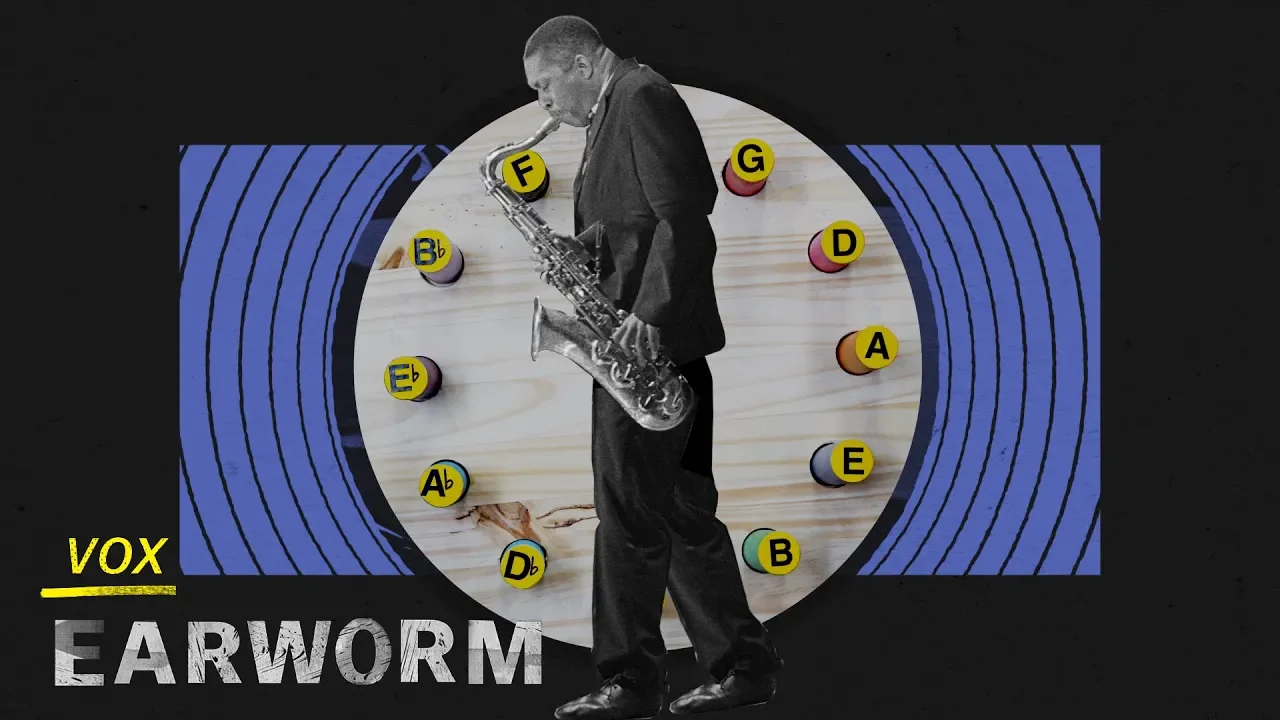
Understanding John Coltrane's Giant Steps: A Music Theory Analysis
@Vox
10.4M views•2018-11-12
Related Study Plans & Knowledge Roadmaps
Structured learning paths in Music Theory