Composing Galant Music: Partimento & Schemata
Learning Goal: Decoding the Galant Style: Applying 18th-Century Italian Partimento Schemata and the Rule of the Octave to Craft Elegant Neoclassical Piano Compositions.
Through this 30-hour curriculum, you will learn to navigate the keyboard through the eyes of an 18th-century Neapolitan conservatory student. You will master the Rule of the Octave, identify and execute structural Galant schemata, realize historical partimenti, and synthesize these skills to improvise and compose your own elegant keyboard works.
Prerequisites
- Intermediate Piano Proficiency: Ability to read Grand Staff notation and comfortably play basic keyboard shapes (triads, scales, and simple arpeggios).
- Basic Music Theory: Familiarity with major/minor scales, intervals, and basic chord spelling.
Estimated Total Study Time
- 30 Hours (including lectures, practical keyboard drills, and composition exercises).
Module 1: Foundations of Figured Bass and Keyboard Harmony
Module Overview
To master the art of the partimento, you must first acquire its primary tool: figured bass. This module establishes the structural foundations of keyboard-style voice leading and teaches you how to decode historical interval shorthand. You will transition from reading block chords to weaving independent, fluent musical lines at the keyboard.
Recommended Videos

Why this video
Dr. Seth Monahan provides a gold-standard introduction to voice leading specifically optimized for the keyboard. Rather than looking at four-part vocal textures, he demonstrates the crucial "keyboard style" (three voices in the right hand, one voice in the left). This division of labor is precisely how partimento and basso continuo realizations are handled.
Knowledge Checkpoint
- Differentiate between vocal-style and keyboard-style chord distributions.
- Identify and avoid parallel fifths and octaves when moving voices.
- Connect a simple progression (e.g., I–IV–V–I) using smooth, stepwise voice leading in the right hand.
Why this video
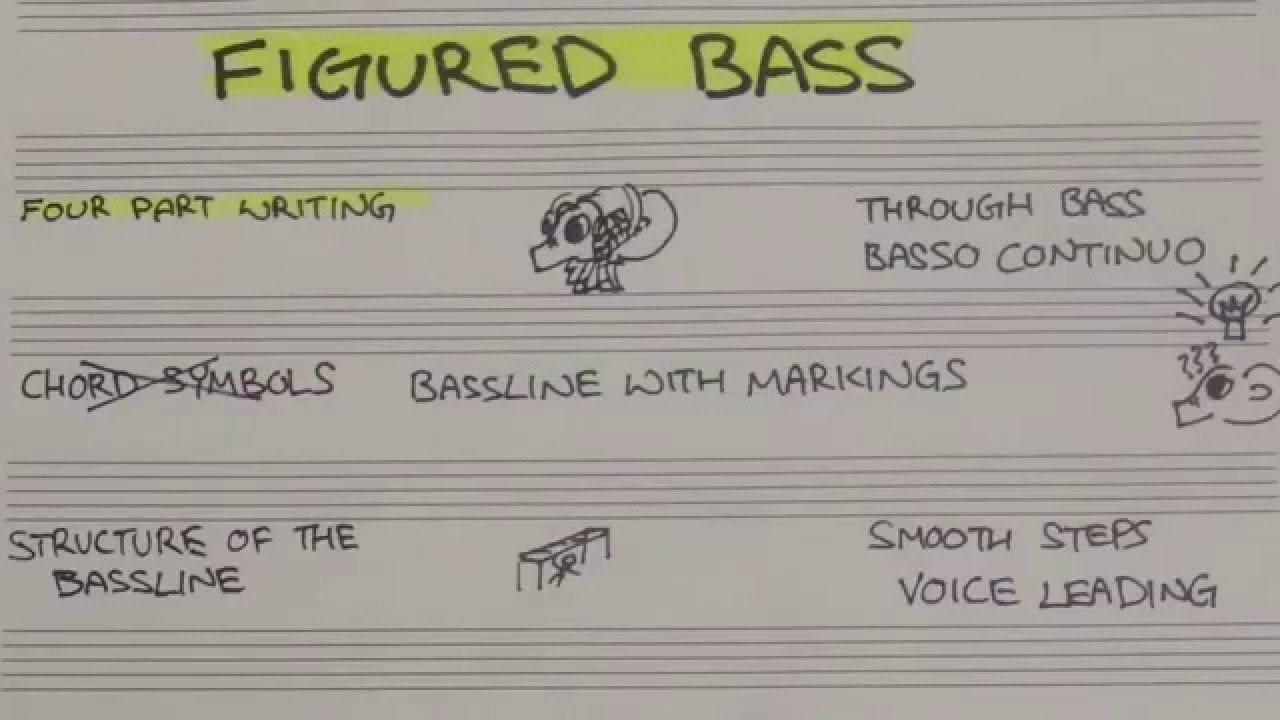
This fast-paced, highly visual guide explains how the historical shorthand of figured bass works. It demystifies the numbers and accidentals below a bass line, establishing the foundation you need to read 18th-century compositions and instructional partimenti.
Knowledge Checkpoint
- Interpret standard figured bass symbols (e.g., , , ) and map them to their corresponding diatonic intervals above the bass.
- Explain how accidentals (sharps, flats, and naturals) behave within a figured bass stave.
Why this video
This video reinforces figured bass principles by teaching you how to work backward: converting a voiced keyboard chord into its correct figured bass notation. This reverse-engineering solidifies your harmonic fluency.
Knowledge Checkpoint
- Reduce any wide keyboard chord layout down to its closed-position equivalent above a given bass note.
- Write out the mathematically correct figures for a series of major and minor triads in root position, first inversion, and second inversion.

Why this video
This micro-lecture encapsulates three non-negotiable rules for voice-leading keyboard triads. It targets the physical logistics of playing figured bass, specifically outlining hand displacement and contrary motion.
Knowledge Checkpoint
- Explain why alternating hand positions helps prevent parallel fifths and octaves.
- Execute contrary motion between the left-hand bass line and the right-hand accompaniment at the keyboard.
Module 2: The Rule of the Octave (Regola dell'Ottava)
Module Overview
The Rule of the Octave (Regola dell'ottava) was the foundational harmonic engine of the 18th-century Italian conservatory. It assigned a specific, standardized chord to every scale degree of an ascending and descending bass scale. This module teaches you how to memorize and play this harmonic guide in major and minor keys, freeing you from the need for written notation.
Pedagogical Note on Video Gaps: While the recommended videos below offer excellent conceptual overviews, step-by-step minor-key keyboard tutorials are historically scarce online. To bridge this gap, practice playing the Rule of the Octave in minor keys by mapping the specific chord modifications (such as raising the leading tone on scale-degree and using a minor chord on scale-degree ) onto your local minor scales (e.g., A minor, C minor, and G minor).
Recommended Videos
Why this video
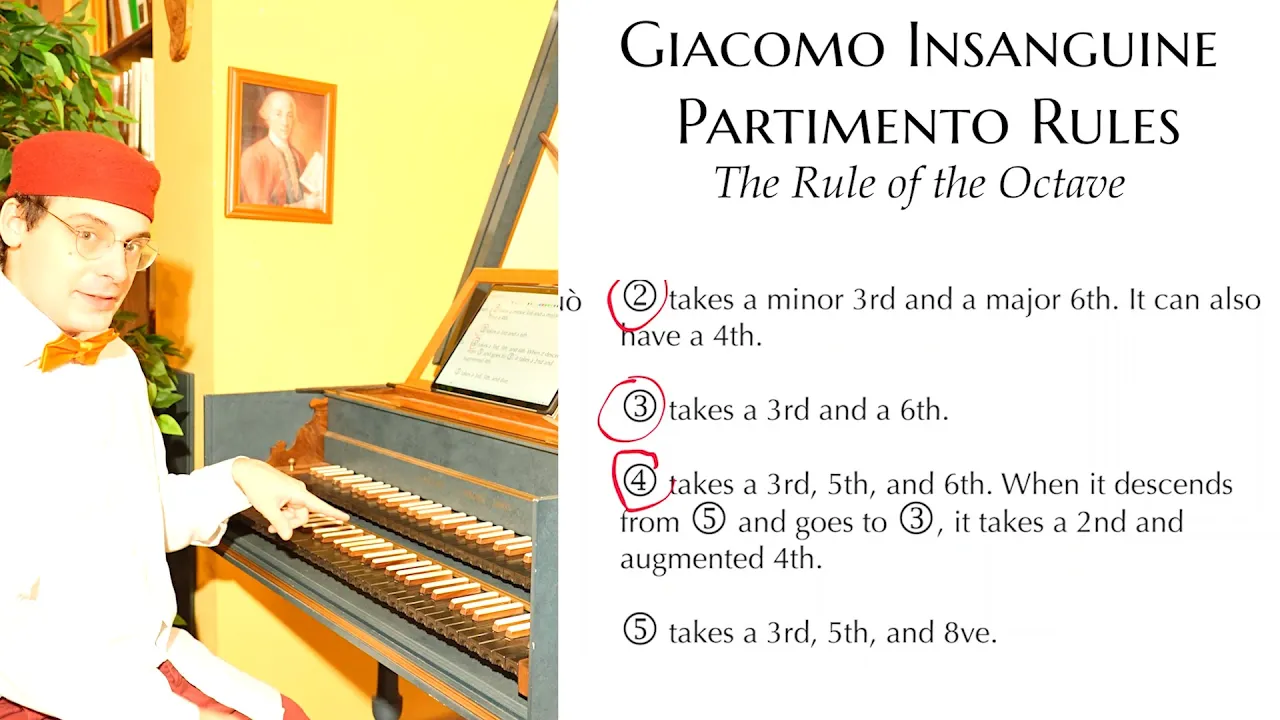
This video walks through the historical formulation of the Rule of the Octave from Giacomo Insanguine’s 18th-century treatise. It breaks down the precise intervals and chords designated for each scale degree as the bass rises and falls.
Knowledge Checkpoint
- Identify which scale degrees require standard triads () and which require dissonant chords ( or or ) according to Insanguine.
- Play an ascending major scale in the bass with your left hand while executing correct historical chord placements in your right hand.
Why this video
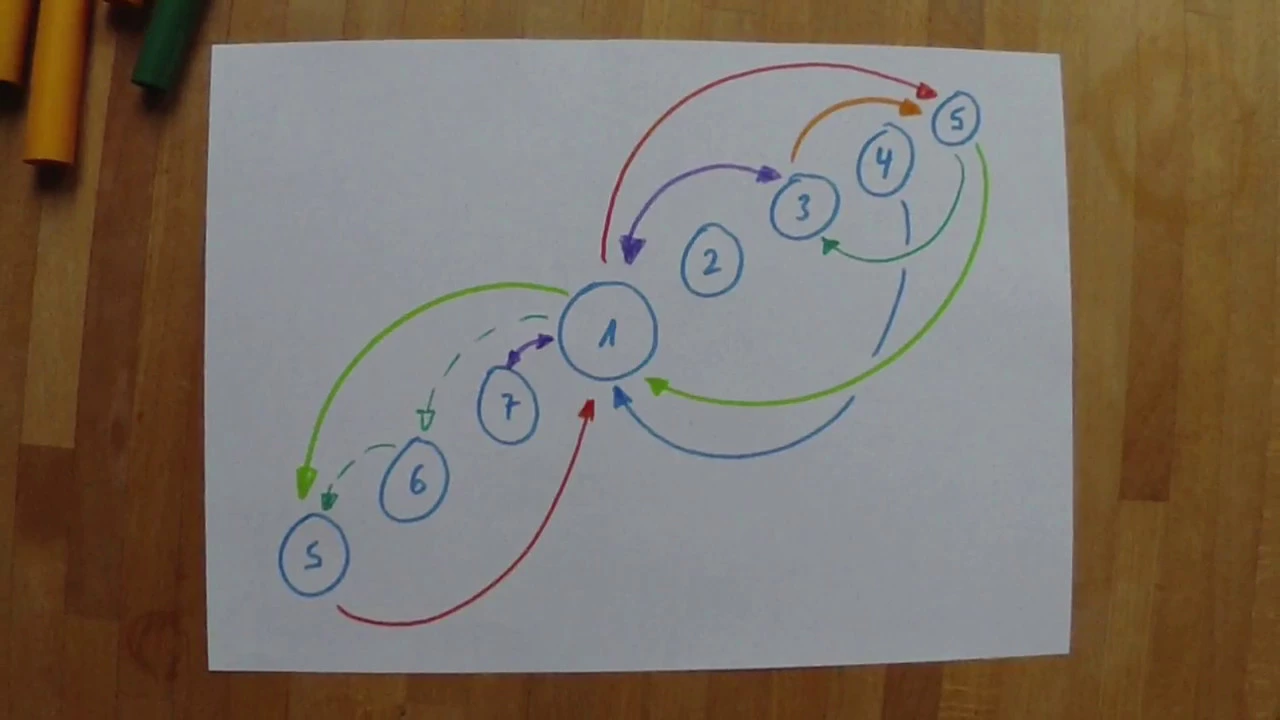
Tobias Cramm provides a practical demonstration of the Rule of the Octave at the keyboard. This video shows how this historical framework serves as a map for real-time harmony and improvisation.
Knowledge Checkpoint
- Recognize the distinct chord progressions of the ascending scale versus the descending scale.
- Play the Rule of the Octave in at least two different major keys (e.g., C major and G major) without looking at sheet music.
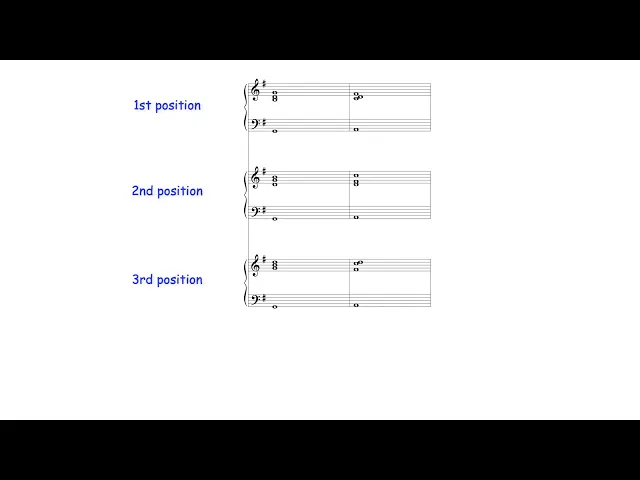
Why this video
This video explains the voice leading mechanics of the Rule of the Octave, demonstrating how it resolves step-wise bass motions. It bridges the gap between abstract figured bass rules and practical, hands-on keyboard playing.
Knowledge Checkpoint
- Explain how the Rule of the Octave creates a clean system of resolutions for passing tones and neighbor tones in the bass.
- Define the roles of scale degrees , , and as "stable harmonic pillars."

Why this video
Using Giovanni Furno's pedagogical methods, this brief tutorial demonstrates how the Rule of the Octave functions within a minor-key context (specifically B minor). It shows the fingerings and chord shapes needed to negotiate minor-key voice leading.
Knowledge Checkpoint
- Describe how the Rule of the Octave alters scale degrees and in a minor key during ascending versus descending motions.
- Play a basic minor-key realization using Furno’s first-position hand placement.
Module 3: Galant Schemata: The Building Blocks of Form
Module Overview
18th-century music was built on schemata—recognizable, formulaic patterns that combined melodic lines, bass lines, and harmonic intervals. Scholars like Robert Gjerdingen have shown that mastering these patterns is key to understanding the Galant style. This module covers major schemata like the Romanesca, Prinner, and Fonte, showing you how to play, link, and ornament them.
Pedagogical Note on Video Gaps: While the videos below cover the Prinner, Romanesca, and Fonte in depth, direct tutorials for the Monte and Ponte are less common online. To learn those, apply the sequential principles you learn from the Fonte (which descends) in reverse to construct a rising sequential Monte, and practice sustained dominant-pedal improvisations to master the Ponte.
Recommended Videos

Why this video
This video introduces Joseph Riepel’s revolutionary 18th-century compositional theories. Riepel championed phrasing, melody, and schema-driven organization over abstract, old-style counterpoint, laying the groundwork for the Galant style.
Knowledge Checkpoint
- Explain how Riepel's focus on melodic phrasing and clear structures differed from older Baroque fugal writing.
- Describe how Galant composers organized symmetrical, song-like phrases using simple patterns.
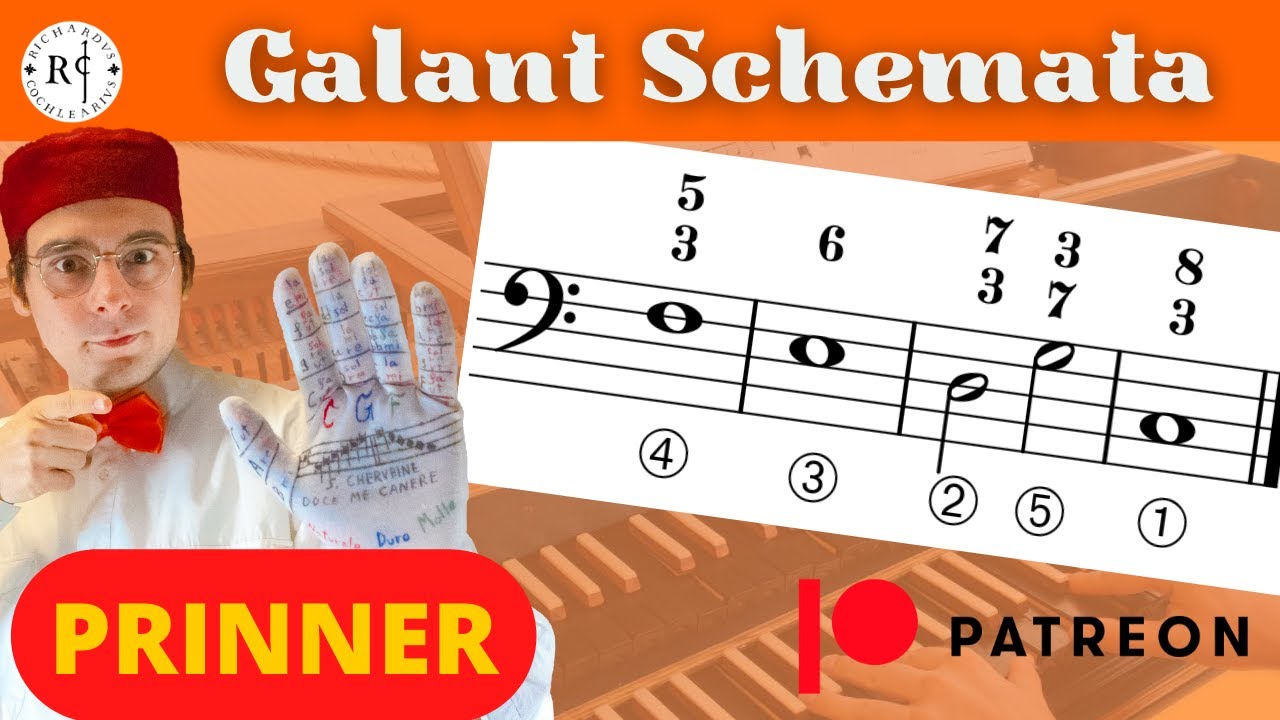
Why this video
This video explains the mechanics of the Prinner—the classic Galant response schema. It demonstrates how the Prinner naturally links with the Romanesca, showing you how to connect individual schemata into a larger, cohesive musical sentence.
Knowledge Checkpoint
- Identify the characteristic step-wise descending bass line of a standard Prinner ().
- Play a Prinner schema at the keyboard, adding simple decorative notes (diminution) to the melody.

Why this video
This video covers the Fonte—a classic descending sequence used to start the second half of a Galant binary form. It teaches you the step-wise chromatic patterns (like the "fala sofa" and "la solfami") that give this schema its elegant color.
Knowledge Checkpoint
- Explain how the Fonte uses a two-stage descending sequence to modulate or create musical contrast.
- Play a Fonte pattern at the keyboard, resolving the chromatic leading tones correctly.

Why this video
This masterclass demonstrates how to use the Romanesca schema as a foundation for a complete keyboard piece. It shows you how to turn a simple, structural schema into an elegant, fully-realized Allemande.
Knowledge Checkpoint
- Map out the bass line of a Romanesca ( or its stepwise equivalents).
- Improvise a simple melody over a Romanesca bass pattern using basic rhythmic motives.
Module 4: Partimento Realization and Diminution
Module Overview
A partimento is a single bass line that contains the blueprint for a complete keyboard work. To realize one, you must flesh out the implicit harmony and add melodic interest. This module teaches you how to turn a bare-bones bass line into a rich keyboard performance using partimento frameworks, hand-position techniques, and ornamental decoration (diminution).
Recommended Videos
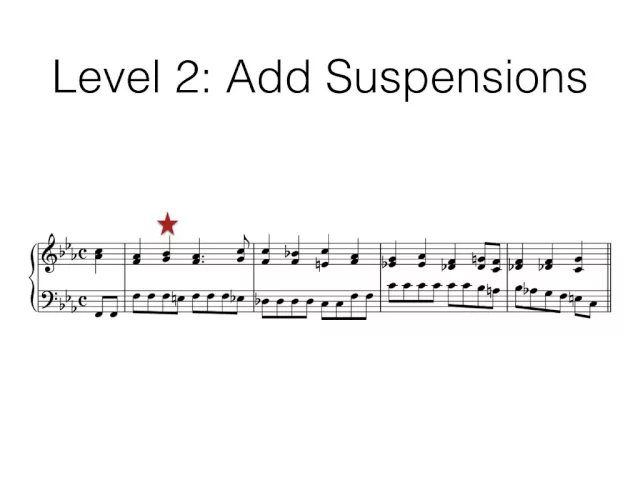
Why this video
This video breaks down partimento realization into five levels of difficulty. It starts with basic chordal accompaniments and progresses to advanced realizations featuring imitation and florid melodies, giving you a clear roadmap for your practice.
Knowledge Checkpoint
- Describe the difference between a Level 1 realization (simple, consonant chords) and a Level 3 or 4 realization (incorporating suspensions and imitative entries).
- Identify which level matches your current keyboard skill level, and outline the steps needed to reach the next level.

Why this video
This in-depth tutorial guides you through realizing Fedele Fenaroli’s famous Partimento No. 1. It explains how to determine the key, establish a steady harmonic rhythm, and apply the Rule of the Octave step-by-step.
Knowledge Checkpoint
- Realize Fenaroli’s Partimento No. 1 at the keyboard in three different right-hand starting positions (the third, fifth, or octave on top).
- Maintain consistent voice leading throughout the realization while avoiding parallel motion.

Why this video
This advanced tutorial focuses on Francesco Durante’s diminuiti—exercises designed to teach you how to turn plain chords into fluid, decorative melodies. This is the key step where realization becomes true composition.
Knowledge Checkpoint
- Recognize opportunities to add running eighth or sixteenth notes over a slow bass line.
- Apply diminution techniques (such as passing tones, neighbor tones, and arpeggiations) to a basic, block-chord realization.
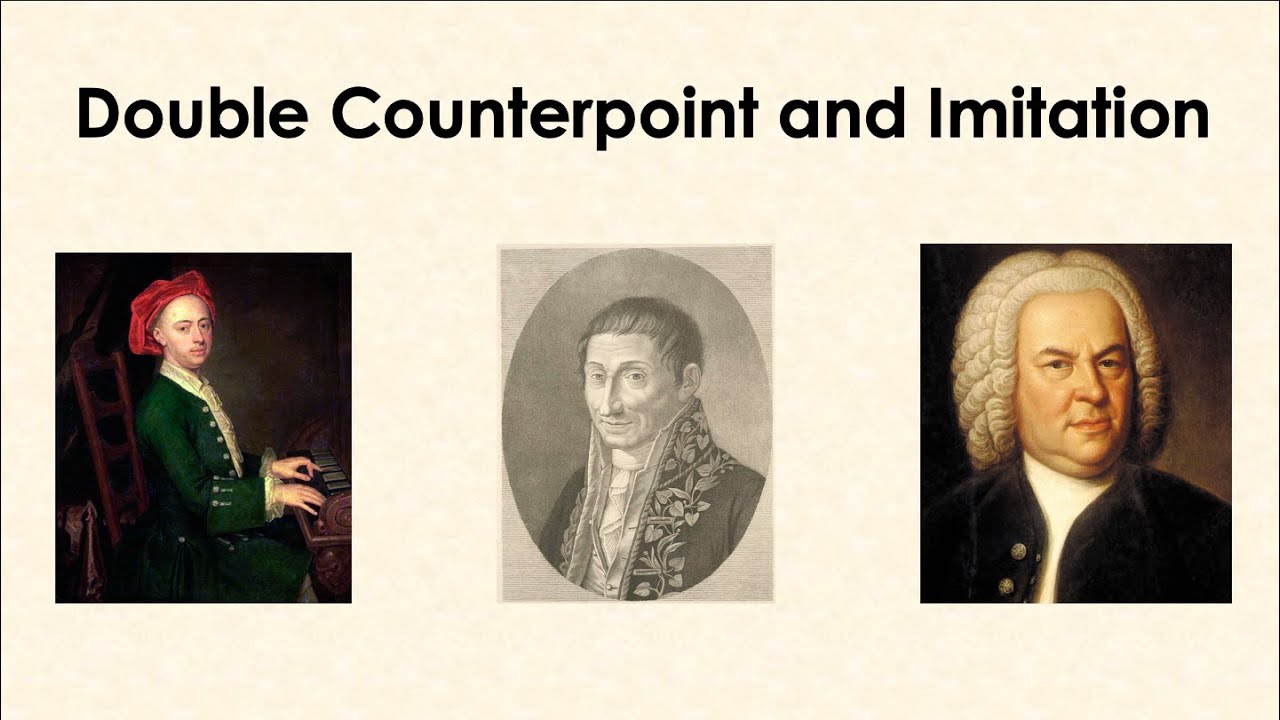
Why this video
This video shows how a realized partimento can weave multiple voices together using double counterpoint and imitation. It demonstrates how to turn a single right-hand line into a conversation between voices.
Knowledge Checkpoint
- Define how two upper voices can dissolve into a single, continuous line of faster note values.
- Play a short section of a partimento where the right hand imitates a melodic motive first introduced in the bass.
Module 5: Crafting Neoclassical Galant Compositions
Module Overview
In this final module, you will bring together everything you have learned: the Rule of the Octave, Galant schemata, and partimento realization. You will analyze historical forms, explore Galant phrasing, and study the structure of early classical sonatas. Your final project is to compose and perform an original Galant-style keyboard work.
Recommended Videos
Why this video
This video provides an excellent summary of how partimento training led directly to advanced improvisation and composition in 18th-century Naples. It serves as a great bridge, showing you how to turn daily keyboard exercises into complete, creative pieces.
Knowledge Checkpoint
- Explain how historical composers used the Rule of the Octave as an automatic guide when improvising or writing new music.
- Sketch a short, 8-bar musical phrase based entirely on a sequence of partimento patterns.
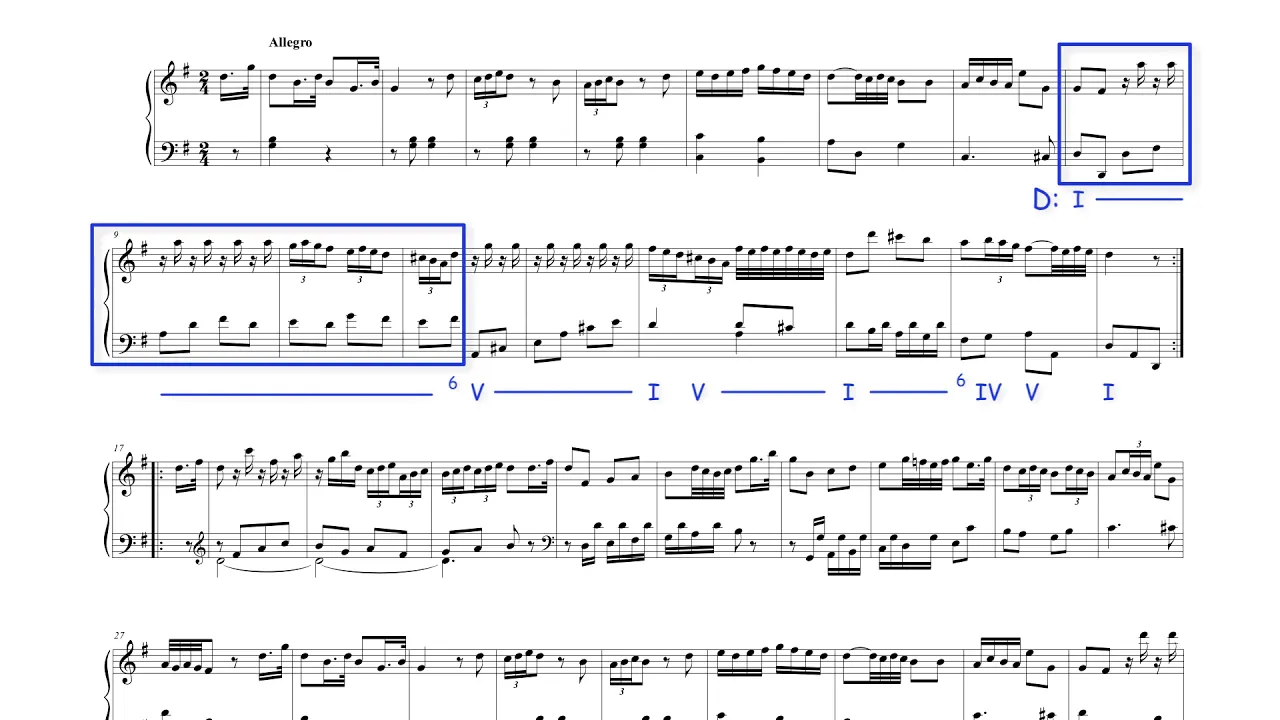
Why this video
This analysis of a Joseph Haydn sonata provides a perfect blueprint for your own compositions. It shows how mid-18th-century composers combined individual schemata to build a complete, early-classical sonata movement.
Knowledge Checkpoint
- Identify the main sections of an early classical sonata-allegro form (Exposition, Development, Recapitulation).
- Point out how Haydn uses specific schemata to mark key structural moments, like transitions and final cadences.
Why this video
Nahre Sol breaks down the core elements that give Mozart’s music its distinctive, elegant sound. She analyzes his melodic grace, ornamentation, and clean accompaniments, giving you practical ideas to use in your own neoclassical composing.
Knowledge Checkpoint
- Describe the classic Galant accompaniment styles (such as Alberti bass or simple pulsated chords).
- Incorporate characteristically Mozartean ornaments (such as appoggiaturas and trills) into your melodic lines.

Why this video
This short look at Mozart's Musikalisches Würfelspiel (Musical Dice Game) reveals the modular nature of the Galant style. It shows how the music was built from interchangeable, schema-based blocks, proving that elegant composing is a skill you can learn and practice systematically.
Knowledge Checkpoint
- Explain how a modular approach to musical phrases allows different Galant patterns to connect seamlessly.
- Compose two interchangeable 4-bar phrases that share the same underlying harmonic structure but feature different melodies.
Course Map
Key People Index
- Giacomo Insanguine (1728–1795): A prominent Neapolitan composer and teacher whose treatise outlines the classic, practical rules for learning the Regola dell'ottava.
- Fedele Fenaroli (1730–1818): One of the most influential teachers of the Neapolitan school. His introductory partimenti remain the standard entry point for students of historical keyboard harmony.
- Francesco Durante (1689–1755): A legendary Neapolitan pedagogue. His challenging diminuiti exercises taught students how to turn basic chords into flowing, beautiful melodies.
- Joseph Riepel (1709–1782): A German theorist whose ideas about melody, phrasing, and modular structures laid the foundation for the Galant style.
- Robert Gjerdingen: A modern music theorist whose groundbreaking book Music in the Galant Style brought the historical study of schemata and partimento back into modern music education.
Final Self-Assessment
Complete this checklist to test your mastery of the Galant style and keyboard skills:
- Voice Leading: Can you realize a 4-bar figured bass line at the keyboard without creating parallel fifths or octaves?
- Rule of the Octave (Major): Can you play the ascending and descending Regola in C major, G major, and F major without looking at sheet music?
- Rule of the Octave (Minor): Can you play the ascending and descending Regola in A minor and D minor, making the correct adjustments for the minor-scale degrees?
- Schema Identification: Can you point out a Prinner, a Romanesca, and a Fonte when looking at an 18th-century score (like a Haydn or Mozart sonata)?
- Schema Performance: Can you play a standard Prinner sequence and a Fonte sequence in at least two different keys at the keyboard?
- Partimento Realization: Can you play a complete, smooth realization of Fenaroli’s Partimento No. 1 from just the bass line?
- Diminution: Can you take a simple, block-chord progression and decorate it with flowing eighth-note or sixteenth-note patterns?
- Composition Project: Have you composed an original, 16-to-32-bar Galant-style piece in binary form that uses at least two of the schemata covered in this course?
- Performance: Can you play your original composition with steady rhythm, clean articulation, and appropriate historical ornaments (like appoggiaturas)?