










![Nicola Sala, Partimento n. 77 [Fugue] | Roberto Cornacchioni Alegre (Organ)](https://i.ytimg.com/vi/Vxj-o_p69E8/sddefault.jpg)







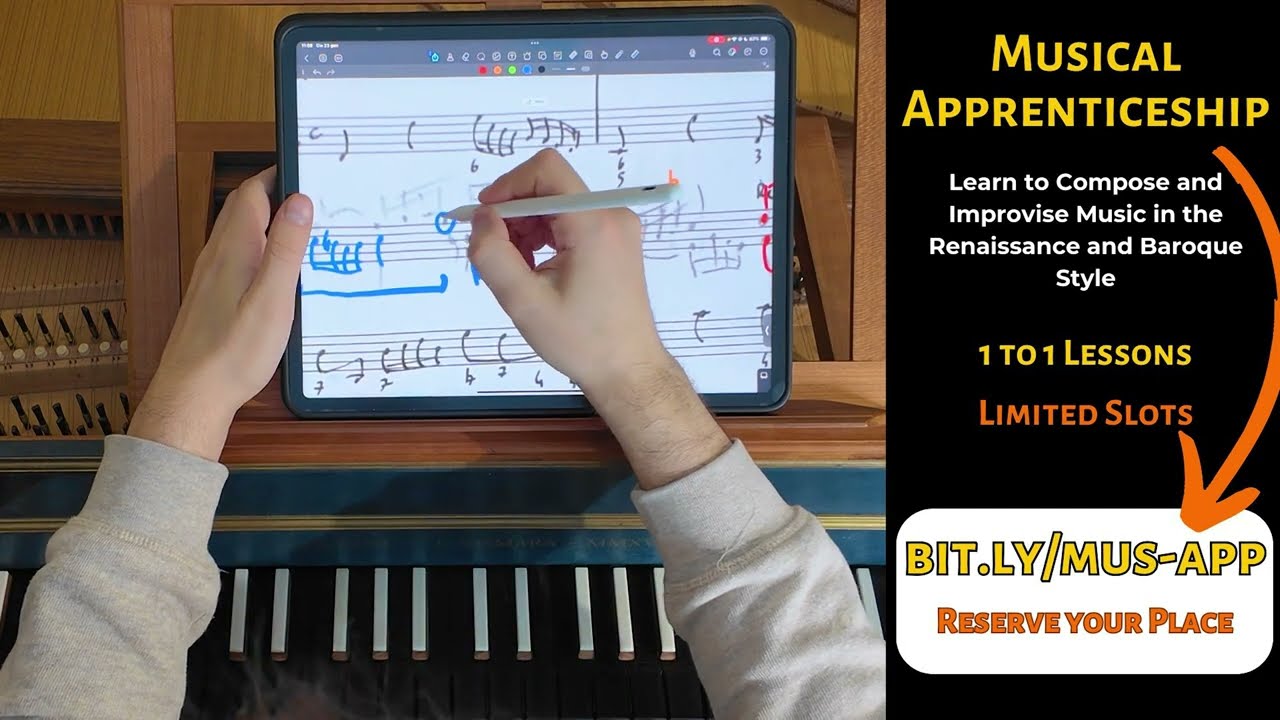

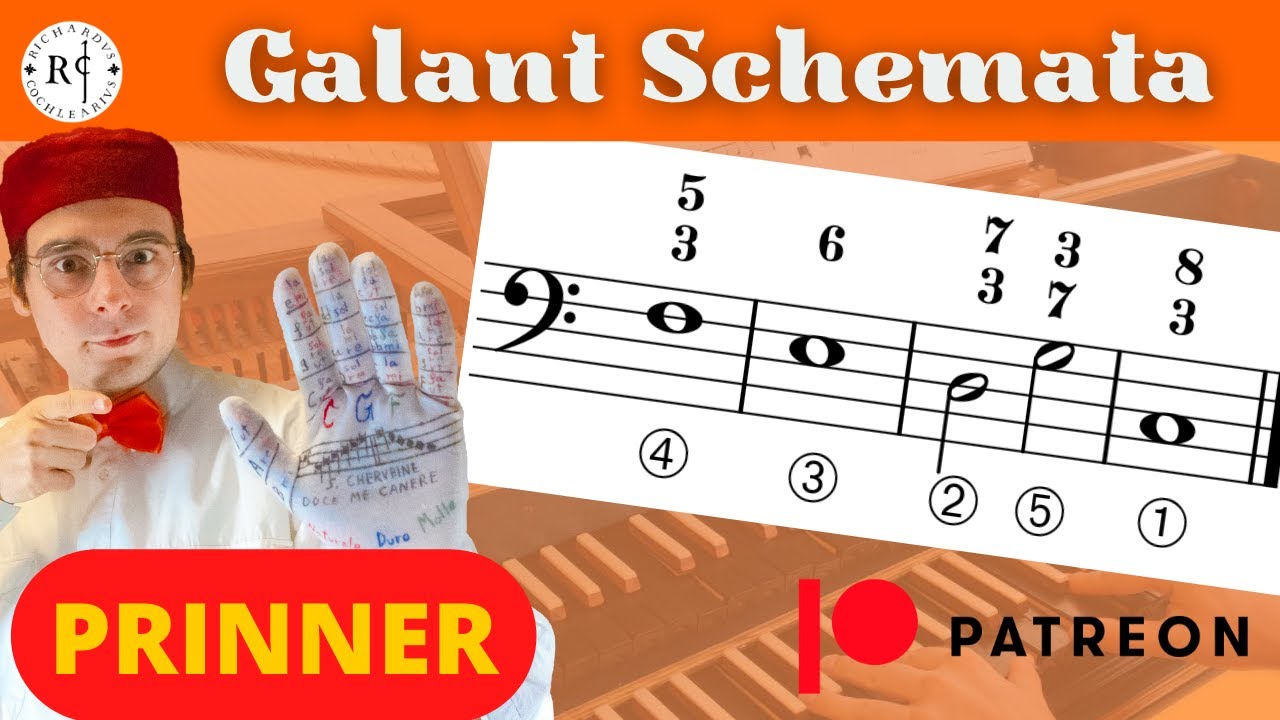
To successfully realize a partimento at the keyboard, musicians must consider five key elements: (1) identifying the key of the partimento before beginning, (2) recognizing modulations to different keys, (3) understanding the figuration of the bass line, (4) applying rules (regole) provided by the composer for melodic possibilities, and (5) utilizing harmonic and melodic patterns. The process involves first playing the bass alone to analyze its movements, then applying specific rules for semitone movements (such as arpeggios, descending scales, or diminished bass), and finally adding figuration while maintaining harmonic understanding throughout the realization.
Partimento Realization: Mastering Durante's Diminutions at the Keyboard
Added:Fundamental keyboard harmony and basso continuo realization, including the ability to interpret figured and unfigured bass lines.
A solid understanding of standard voice-leading principles and 18th-century counterpoint rules.
Familiarity with diatonic modulation patterns and identifying key areas within a continuous bass line.
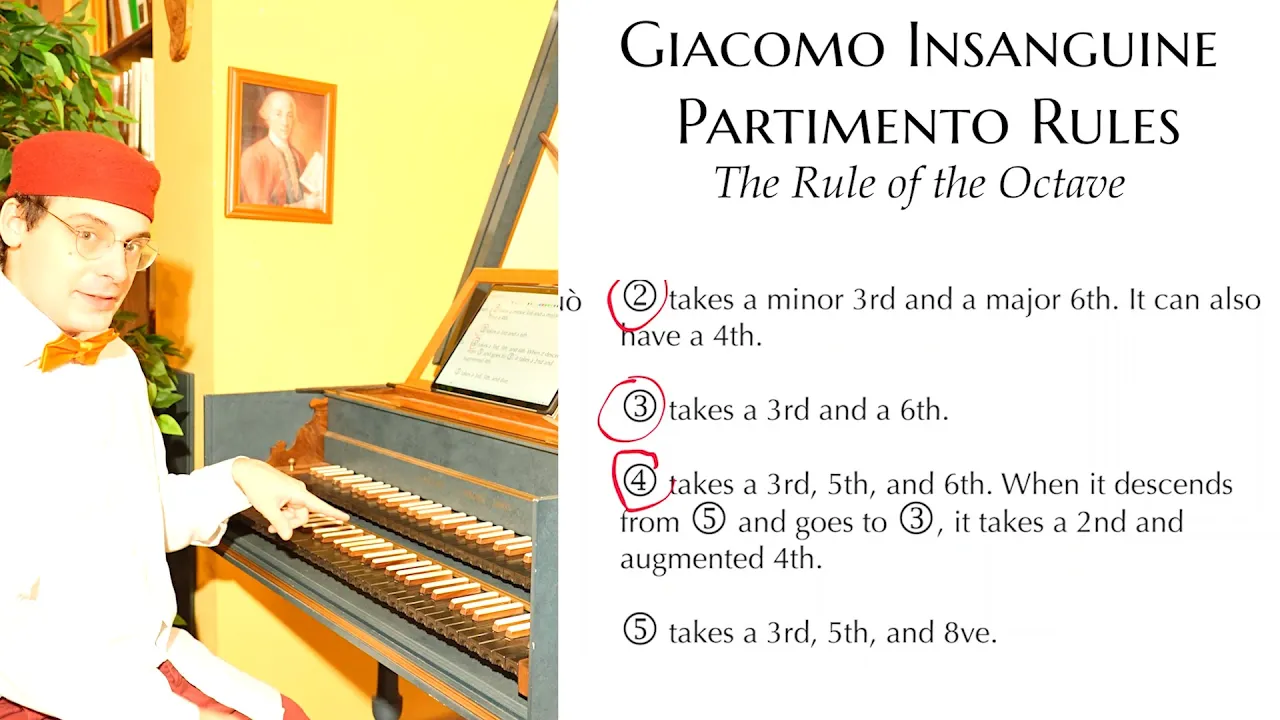
Basic knowledge of the 'Rule of the Octave' (Regola dell'ottava), which governs standard scale-step harmonizations in the partimento tradition.
Improvising structured Baroque keyboard genres (such as preludes, toccatas, and diminutions) fluently in real-time.
Studying advanced partimenti from other Neapolitan masters, such as Fedele Fenaroli, Leonardo Leo, or Nicola Sala.
Transitioning to 'partimento-fuga' (fugal partimenti) to master the art of improvising imitative counterpoint and fugues.
Applying partimento schemas (e.g., Monte, Fonte, Ponte, Romanesca) to the analysis and historical composition of Galant-style music.
2.5K views122likes15:47Original Release: 2022-10-05
if you have difficulties in realizing a partimento at the keyboard watch this video to the hand in this video we're gonna realize the partimento and I show you all the elements you have to consider for a good a perfect realization of a pretty minute like an old master before starting I welcome you to this video I'm Ricardo the music's practicus and here on the web I share with you all my knowledge and a lot of things about early music about party mental composition white Master annotation and all what we I and you want if you like this kind of content and if you want to separate my activity here on the web you can do it on my patreon but now don't talk anymore and let's go to the keyboard for our pratimento the first Parliament from to run this party diminutive okay the first thing you should do is playing the bass alone and while you are playing the bass consider and pay attention where the base goes in the um for example modulations for example for example figuration and over the aspects that are very important for our realization so first question what's the key a measure you see only two sharps in the key but this is a tradition to write one less flat or sharp that comes from model system so we are in a measure as we can see the first arpeggio is a measure and the last note is a so let's play this bass and let's understand all its movements foreign [Music] cabins to the fifth degree [Music] another cannons to emeasure the fifth degree foreign [Music] the fourth degree of a measure [Music] Cadence to B minor the second degree of a major [Music] and then cabins to a measure that is the first degree these two cadences together make escanata that is called fonte because the second is repeated One Tone lower effort with the others schemata is very important for realizing party maintenance with the mind of Old Masters I will talk about Fonda in other videos so let's go on we have a Cadence to a measure [Music] thank you as we can see two similar movements [Music] and the final cabin is to a measure so now what we have to do as we can see Durante gives us a route what's a rule a rule is a melodic possibility we can use we can play with the right hand open for example some movement of the base as we can see duronte writes three possibilities for the semitone movement [Music] it means that when we have a semitone movement to the up we can play one of the three rules this is the first [Music] that is an arpeggio and a descending a little scale foreign foreign rule that is a descending scale scale and the third rule is diminishing the base [Music] for this exercise I'll choose the first rule it means that every time I I make a passage like that [Music] I try to apply this rule so let's highlight all these passages the first then we have another one [Music] the same passage in E Major and then to the measure [Music] and learn to be Mario because this repeated note is like okay so another time to a major another time to aim initial so another time in the major [Music] another time in the image and then we have another time in a major okay now the second element we see in this participant is the Cadence these Cadence this Cadence is like the Gallant cannons because we have a four six chord followed by a three and five chord so the first cabin is to a measure the next one to e major then another to E major another to D measure another to B minor and then the last one to a measure okay now let's try to harmonize this prociment with these elements thank you [Music] okay the next step we can add in our realization is use a figuration also in all the passages that are not the rule let's try an example [Music] in this way I'm staying in the Harmony in the understanding Harmony but I am planning something new four and six cards three and five cards so let's recap the first phrase how to do that think the understanding Harmony and try to invent to write new melodies what you want stay in the harmony okay we can go on now the same in E Major [Music] okay now we are in B minor and we can do the same the trick is what's the understanding Harmony [Music] so let's add a figuration for example [Music] okay in this case we have two chords that are not moving like in this point we can take the rest with the right hand or we can maybe do some other for example [Music] okay now I like finish this apartment with this movement [Music] the harmonies is the measure six chord A major six with the sharp a major chord and six chord and in this case I apply the second rule and then I repeat the same in a measure so a measure sixth sixth with the sharp and image and then applying figuration and this way now let's listen a possible realization of this party menu [Music] foreign [Music] wonderful let's recap now the five elements you should consider for a correct realization of a party event the first is the key ask you before you start playing and harmonize apartment what's the key of this partimento of this base the second is modulations what's keys does this partimento modulates to this is really important because if we have a figure a pattern and we have to transfer this pattern in the other case we must know which are these Keys the third element is the figuration of the base if we don't have a rule we should choose an element figuration like a rule from the base for example and the figuration of the base is important because some passages can be diminished or with other nodes and we must recognize them so we have to pay real attention for recognizing for example a movement in the base that we can meet diminished in another point the fourth is the rule if we have a rule we should use it or we can invent another rule but if we have Ariel we should apply this rule according to the indications of the composer of this parchment and the fifth is the melodic harmonic patterns there are a lot of harmonic and melodic patterns that an improviser at the keyboard must know in this way you can apply these patterns to every to every party members and then you will be able some days to play to harmonize the pertinent at the first time you read it and about harmonic and melodic pattern you can find on my patreon new patterns for practicing at the keyboard every week these videos will help you to improve from week to week your abilities of improvising wind pattern in Barrack Style with simple shirt fun exercises you can practice through all the keys measure or minor well I hope you enjoyed this video and it has been useful for you to keep updated on all new videos subscribe this Channel and activate the Bell leave me yoga mode and see you in the internet bye [Music]
Up Next
8:32
15-Minute Haydn Sonata in G Major Analysis: Form & Harmony
@decipherguitarandmusictheory
15.4K views•2018-05-26

10:20
Mozart's Musical Dice Game Explained: History, Rules, & Fun
@webpianoacademy
5K views•2023-03-13

29:13
Partimento for Beginners: Fenaroli No. 1 Bass Harmonization
@RichardusCochlearius
8.9K views•2022-08-05
10:49
Understanding John Coltrane's Giant Steps: A Music Theory Analysis
@Vox
10.4M views•2018-11-12
Related Study Plans & Knowledge Roadmaps
Structured learning paths in Music Theory
music-theory
Composing Galant Music: Partimento & Schemata
01Foundations of Figured Bass and Keyboard Harmony
02The Rule of the Octave (Regola dell'Ottava)
03Galant Schemata: The Building Blocks of Form
+ 2 more learning modules
30h5 modules
Explore Roadmap
music-theory
Decoding Overtone Series: Tuning & Drone Music
01Acoustic Foundations: The Physics of the Overtone Series
02Tuning Systems: Equal Temperament vs. Just Intonation
03Microtonality and Spectralism: Beyond Standard Pitches
+ 2 more learning modules
24h5 modules
Explore Roadmap
music-theory
Impressionist Harmony: Scales, Planing & RPGs
01Foundational Music Theory: Keys, Intervals, and Seventh Chords
02Impressionist Color: Chord Planing and Parallel Harmony
03Whimsical Textures: Pentatonic Cascades and Whole-Tone Scales
+ 1 more learning modules
14h4 modules
Explore Roadmap
music-theory
Negative Harmony: Axis Reflection in Indie Pop
01Music Theory Foundations: Scales, Intervals, and Triads
02Functional Harmony and the Circle of Fifths
03Demystifying the Negative Harmony Axis Reflection
+ 2 more learning modules
16h5 modules
Explore Roadmap