Impressionist Harmony: Scales, Planing & RPGs
Learning Goal: Mastering Impressionist Harmony: Applying Chord Planing, Pentatonic Cascades, and the Whole-Tone Scale to Compose Whimsical RPG Exploration Themes.
Prerequisites
- Basic familiarity with a keyboard or piano layout.
- Access to a Digital Audio Workstation (DAW) like Ableton Live, Reaper, Cubase, or Logic Pro.
- No prior formal music theory degree is required; the curriculum builds systematically from foundational concepts to advanced orchestration.
Estimated Total Study Time
14 Hours (including guided video analysis, practical composition exercises, and DAW mockups).
Module 1: Foundational Music Theory: Keys, Intervals, and Seventh Chords
Module Overview
To break the rules of classical functional harmony, you must first master them. This module provides a solid musical foundation by breaking down scales, intervals, and the construction of seventh chords. You will learn to recognize semitones, calculate intervals, differentiate relative major and minor scales, and stack thirds to construct the essential seventh chords that serve as the building blocks of Impressionist textures.
Recommended Videos
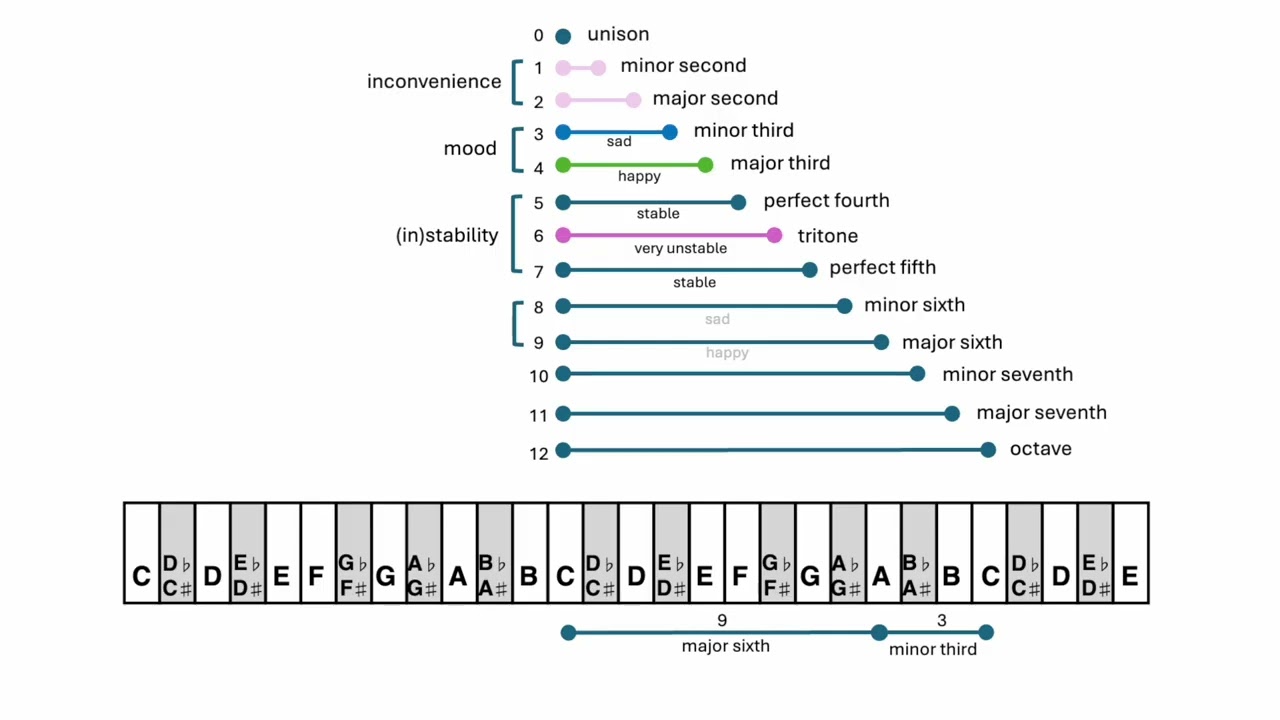
- Why this video: This video introduces the most fundamental building blocks of music theory. It demystifies how notes are named and adjusted via semitones (sharps and flats) and shows how intervals—the distance between these notes—scale up to construct basic chords.
- Knowledge Checkpoint:
- Understand the 12 chromatic semitones and how sharps/flats alter pitches.
- Define what an interval is and recognize how pitch distances are measured.
- Identify basic triads built from stacking basic intervals.
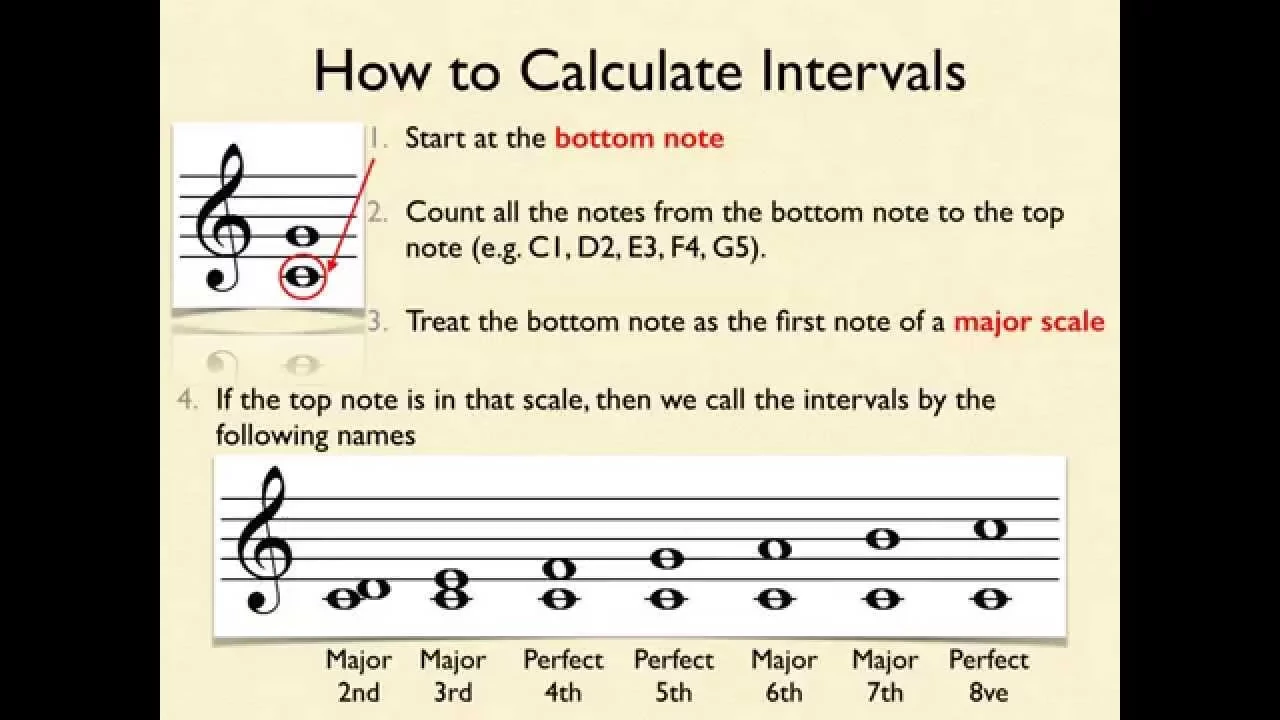
- Why this video: Moving beyond isolated notes, this lecture details keys, scales, and intervals in depth. Crucially, it explores how relative major and minor scales share identical key signatures, a concept critical for shifting emotional landscapes in RPG soundtracks.
- Knowledge Checkpoint:
- Calculate the distance of major, minor, and perfect intervals.
- Understand key signatures and determine a key based on its sharps or flats.
- Find any relative minor scale by moving down three semitones from its relative major.
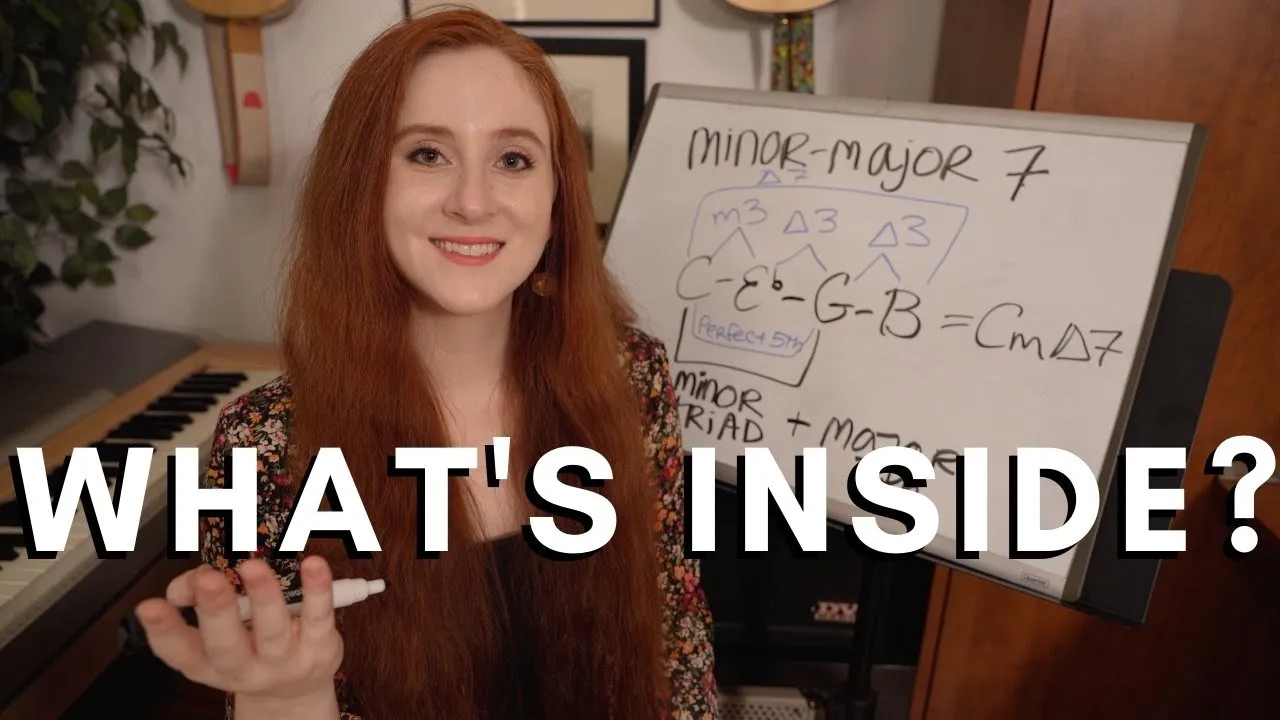
- Why this video: Modern and Impressionistic styles rely heavily on four-note harmonies. This video teaches you how to construct seventh chords by stacking intervals of major and minor thirds. It provides the exact interval formulas for major, minor, and dominant seventh chords.
- Knowledge Checkpoint:
- Explain how a seventh chord is built from three stacked intervals of thirds.
- Distinguish the interval formula of a Major 7th chord (major 3rd, minor 3rd, major 3rd) from a Minor 7th chord.
- Construct a dominant 7th chord starting on any given root note.
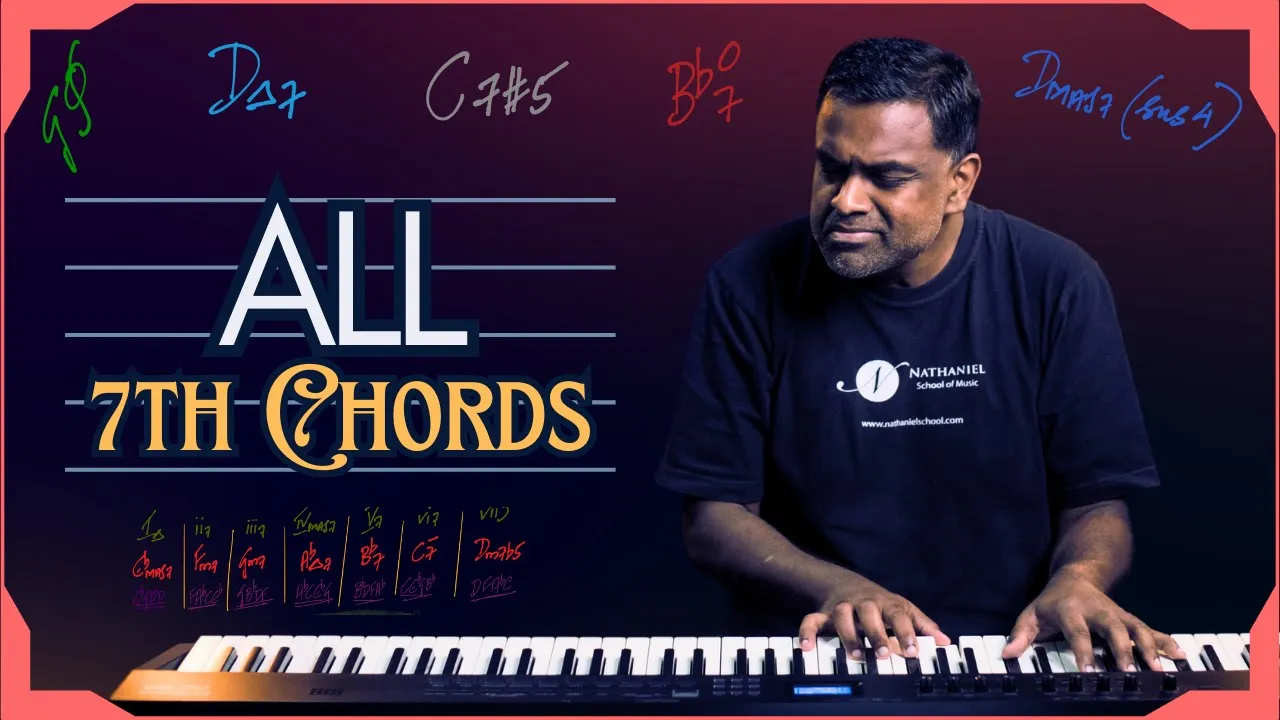
- Why this video: This video bridges basic chord theory and creative keyboard application. It systemically explains how to append major, minor, or diminished seventh intervals onto five fundamental triad types (major, minor, augmented, diminished, and suspended), preparing you for non-functional harmonic structures.
- Knowledge Checkpoint:
- Memorize the five core triad types that act as bases for seventh chords.
- Construct minor-major sevenths and half-diminished chords.
- Visually map these seventh chords on a keyboard layout.
Module 2: Impressionist Color: Chord Planing and Parallel Harmony
Module Overview
With traditional theory established, you will now learn how Impressionist masters like Claude Debussy and Maurice Ravel intentionally broke traditional voice-leading rules. This module focuses on "chord planing"—the technique of moving identical chord shapes (parallel harmony) up and down the scale or chromatic spectrum. This strips away traditional functional tension and resolution, replacing it with a fluid, drifting "wash of sound" perfect for atmospheric gaming environments.
Recommended Videos

- Why this video: This video introduces the philosophical shift of Impressionism in music. You will discover how early 20th-century composers prioritized mood, timbre, and textures over strict, goal-oriented classical structures.
- Knowledge Checkpoint:
- Describe how Impressionist music prioritizes mood and tone color over formal melodic development.
- Differentiate the "atmospheric" philosophy of Debussy from traditional, dramatic Romantic period music.
- Identify how texture acts as a primary musical theme.
- Why this video: This lesson defines "chord planing" as voice-leading non-functional chord sequences in parallel motion. It explains how to move a static chord voicing across a scale, treating the entire harmonic structure as a single, thickened melodic line.
- Knowledge Checkpoint:
- Define the term "chord planing" (or parallel harmony).
- Explain how parallel motion bypasses traditional rules of resolving dissonances.
- Construct a basic parallel chord sequence using consecutive minor third or seventh chords.

- Why this video: Using an analysis of Debussy’s orchestral masterpiece La Mer, this tutorial demonstrates how chord planing functions in full-scale orchestral arrangements. Learn how parallel block chords create pulsating horizontal movements and rich orchestral timbres.
- Knowledge Checkpoint:
- Identify planing textures in a symphonic score.
- Explain how chord spacing and instrumentation choice affect the clarity of parallel chords.
- Understand how Debussy used orchestration to emphasize the horizontal contour of planing chords rather than their vertical function.
Module 3: Whimsical Textures: Pentatonic Cascades and Whole-Tone Scales
Module Overview
To evoke a truly whimsical, mystical, or dreamlike atmosphere, you must escape the directional gravity of major and minor scales. This module explores two powerful tools used by Impressionist composers: the whole-tone scale and the pentatonic scale. Because the whole-tone scale consists entirely of equal whole-step intervals, it lacks a standard tonic or "home" note. This creates a state of suspended animation, often associated in media with dream sequences, floating castles, and magical portals. You will also learn to write cascading pentatonic runs that emulate the sweeping, magical textures of a concert harp.
Recommended Videos

- Why this video: This concise theoretical analysis dissects the symmetrical architecture of the whole-tone scale. It explains how skipping semitones results in a hexatonic (6-note) scale with exactly two possible transpositions.
- Knowledge Checkpoint:
- Explain why the whole-tone scale has only six notes per octave.
- Spell a whole-tone scale starting on C, and another starting on C#.
- Describe why symmetrical scales lack a traditional tonal center or tonic note.

- Why this video: This video connects raw music theory to emotional storytelling, illustrating how the physical construction of the whole-tone scale eliminates harmonic tension and resolution. This feature makes it highly effective for score-writing designed to evoke curiosity, magic, or dreamlike wonder.
- Knowledge Checkpoint:
- Explain the relationship between the absence of half-steps and the loss of harmonic gravity.
- Describe how film and game composers use whole-tone clusters to represent dream sequences.
- Compose a short melodic motif using only whole-tone steps.
- Why this video: This practical keyboard tutorial provides hands-on performance patterns for the whole-tone scale. Discover how to isolate the two "hidden" augmented chords buried within the scale, and learn to execute rolling runs and atmospheric fills.
- Knowledge Checkpoint:
- Identify and play the two hidden augmented triads inside a whole-tone scale.
- Execute a flowing whole-tone run using smooth keyboard fingerings.
- Utilize the whole-tone scale over altered dominant chords to build musical interest.
![Play EPIC and BEAUTIFUL Piano Music [Exercise Suitable For Beginners] 🎹](https://i.ytimg.com/vi/e36cdsR1JLo/hqdefault.jpg)
- Why this video: Beautiful, cascading textures can be simple to play. This video teaches an easy, four-finger hand shape that constructs a beautiful, open impressionistic chord texture, perfect for building cascading ambient arpeggios on a keyboard.
- Knowledge Checkpoint:
- Recreate the four-finger open chord pattern on the keyboard.
- Execute an arpeggiated cascade by hand-over-hand movement across different octaves.
- Apply this physical pattern to build a sparkling, harp-like background layer.
Module 4: Composing the Theme: Orchestration and RPG Game Application
Module Overview
In this final capstone module, you will synthesize everything you've learned. You will step into your DAW to compose, orchestrate, and refine a whimsical RPG exploration theme. By studying real video game soundtracks, learning to layer organic virtual instruments, and utilizing smart orchestrator tools, you will construct a looping theme ready to accompany players as they explore magical forests, cozy villages, or ancient ruins.
Recommended Videos

- Why this video: This curated compilation acts as a comprehensive reference library of whimsical video game music. It features tracks from The Legend of Zelda, Donkey Kong Country, and Paper Mario. Use this resource to analyze how composers employ woodwind leads, auxiliary percussion (glockenspiels, celestas), and wandering melodies to construct lighthearted gaming soundtracks.
- Knowledge Checkpoint:
- Identify recurring orchestration choices (e.g., flute solos, pizzicato strings, mallet percussion) in whimsical RPG tracks.
- Analyze the balance between ambient chord pads and playful melodic ornaments.
- Pinpoint moments where harmonic ambiguity (such as pentatonic or whole-tone shifts) is used.
- Why this video: Acclaimed game composer Inon Zur details how RPG music operates as an active narrative device. Learn how to write music that supports the game’s lore, enhances exploration, and adapts to environmental shifts.
- Knowledge Checkpoint:
- Explain how music transitions from a passive background element to an active narrative layer in RPGs.
- Balance high-profile themes with simple background loops so players do not experience "listening fatigue."
- Define how to structure exploration music to accommodate open-world gameplay.
- Why this video: This video demonstrates how to arrange and build a modern, high-production fantasy track. The host starts with a simple chord progression (such as minor-to-major modal mixture), develops a memorable melodic motif, and systematically layers sample libraries to construct a lush, final arrangement.
- Knowledge Checkpoint:
- Follow a step-by-step workflow for composing a fantasy track in a DAW.
- Layer delicate instruments (solo woodwinds, celesta, soft strings) to build a fantasy atmosphere.
- Integrate expression and modulation automation to make MIDI parts sound like a live orchestra.
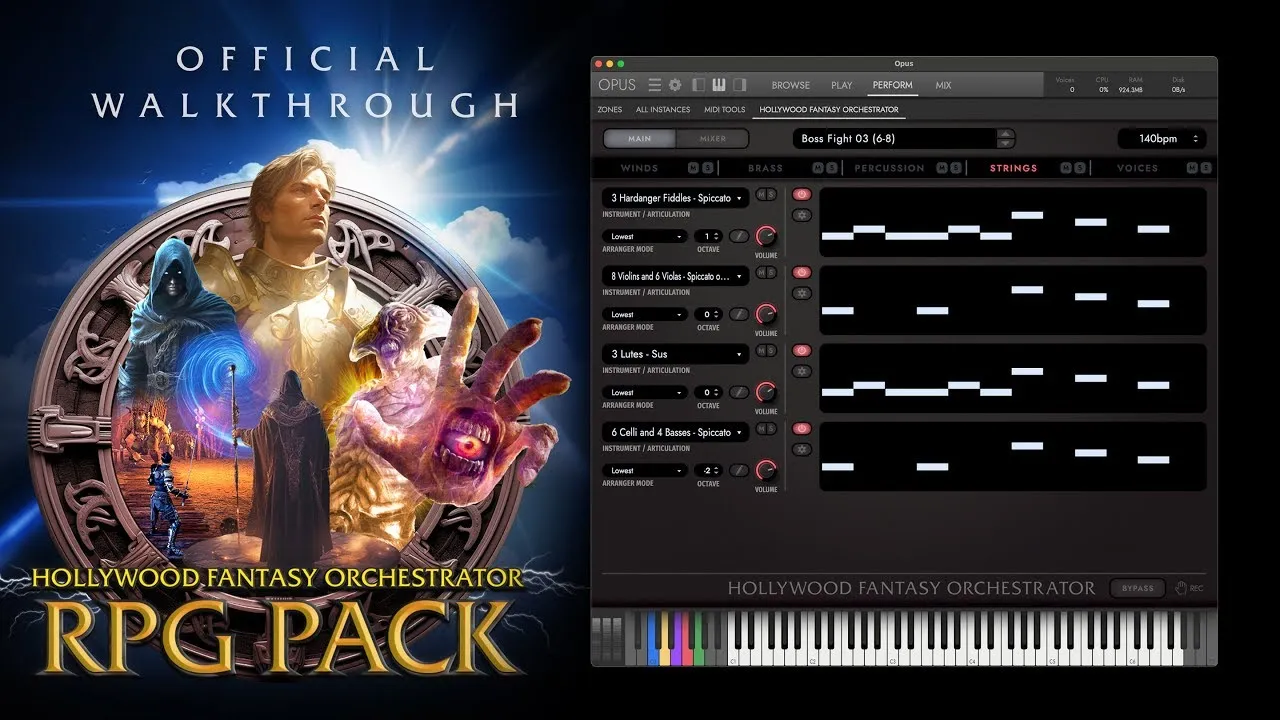
- Why this video: This tutorial demonstrates how to leverage professional MIDI engine software (the Hollywood Fantasy Orchestrator) to build complex arrangements. Learn how to trigger string patterns, harp arpeggios, and woodwind runs automatically by inputting simple chords.
- Knowledge Checkpoint:
- Set up and use automated orchestration plugins in a modern DAW environment.
- Program and control ostinato patterns to keep your background tracks feeling alive and dynamic.
- Combine strings, brass, woodwinds, and folk instruments to craft custom RPG presets.
Course Map
Key People Index
- Claude Debussy (1862–1918): Pioneering French composer who laid the groundwork for musical Impressionism. He rejected rigid classical forms to focus on tone color, parallel chord planing, and symmetrical scales (the whole-tone scale).
- Maurice Ravel (1875–1937): A master orchestrator and French composer. Alongside Debussy, he expanded the orchestral palette by using extended harmonies (ninths, elevenths), cascading instrumental runs, and unique instrument couplings.
- Inon Zur: Multi-award-winning contemporary video game composer (Fallout, Dragon Age, Pathfinder: Kingmaker). He is known for using music as a narrative tool, combining live orchestras with ethnic instruments to build immersive game worlds.
Final Self-Assessment
Perform this step-by-step composition audit to verify that you have mastered the materials:
- Interval Construction: Can you construct a Major 7th, Minor 7th, and Dominant 7th chord from any root note on the piano or in your DAW?
- Relative Keys: Can you identify the relative minor of a major key by counting down three semitones (e.g., C Major to A Minor)?
- The "Wash of Sound": Do you understand how parallel harmony (chord planing) differs from traditional voice-leading, and can you write a chord progression that moves in parallel blocks?
- Planing Practice: Have you composed a phrase where a single minor-seventh chord shape is shifted up or down a scale to thicken a melody line?
- Whole-Tone Symmetries: Can you build a 6-note whole-tone scale starting on D or E, ensuring every note is exactly two semitones apart?
- Harmonic Suspension: Can you explain why a whole-tone scale lacks a resolution, and can you utilize this to score a dreamlike transition?
- Sparkling Cascades: Have you programmed or played a hand-over-hand cascading arpeggio using a major or minor pentatonic scale to mimic a concert harp?
- Timbre Selection: Have you curated a primary palette of whimsical instruments in your DAW, including flute, oboe, pizzicato strings, and glockenspiel or celesta?
- MIDI Modulation: Have you written automation lanes for expression (CC11) and modulation (CC1) on your string and woodwind parts to make your MIDI instruments sound realistic?
- Loop Design: Does your final composition loop smoothly, allowing players to explore without hearing abrupt musical cuts or repetitive patterns?