







![The MUSIC NOTES: Brilliant Explanation [Names, Sharps (♯) & Flats (♭)]](https://i.ytimg.com/vi_webp/VP5svVxOEok/maxresdefault.webp)
![VOR- & VERSETZUNGSZEICHEN - Klavier lernen - Theorie-Basics [3]](https://i.ytimg.com/vi_webp/OyyNKPRceTQ/maxresdefault.webp)











This video introduces the fundamental building blocks of music theory, explaining that notes are named C-D-E-F-G-A-B with sharps and flats indicating semitone adjustments, while intervals are the 12 possible distances between notes within an octave (unison, seconds, thirds, fourths, fifths, sixths, sevenths, and octaves), each creating distinct emotional qualities from stability to tension. Simple chords are built by combining a root with a third and fifth (major chords use happy major thirds, minor chords use sad minor thirds), while seventh chords add a fourth note to create various tensions, with dominant seventh chords containing the unstable tritone interval that enables tritone substitutions.
Music Theory Fundamentals: Notes, Intervals, and Chords
Added:Familiarity with the musical alphabet (A through G) and how pitch repeats in octaves.
Basic understanding of the piano keyboard layout, specifically the arrangement of white and black keys.
The concept of half steps and whole steps (semitones and whole tones) as the fundamental units of pitch distance.
An awareness of basic accidentals, specifically how sharps (#) and flats (b) alter a note's pitch.
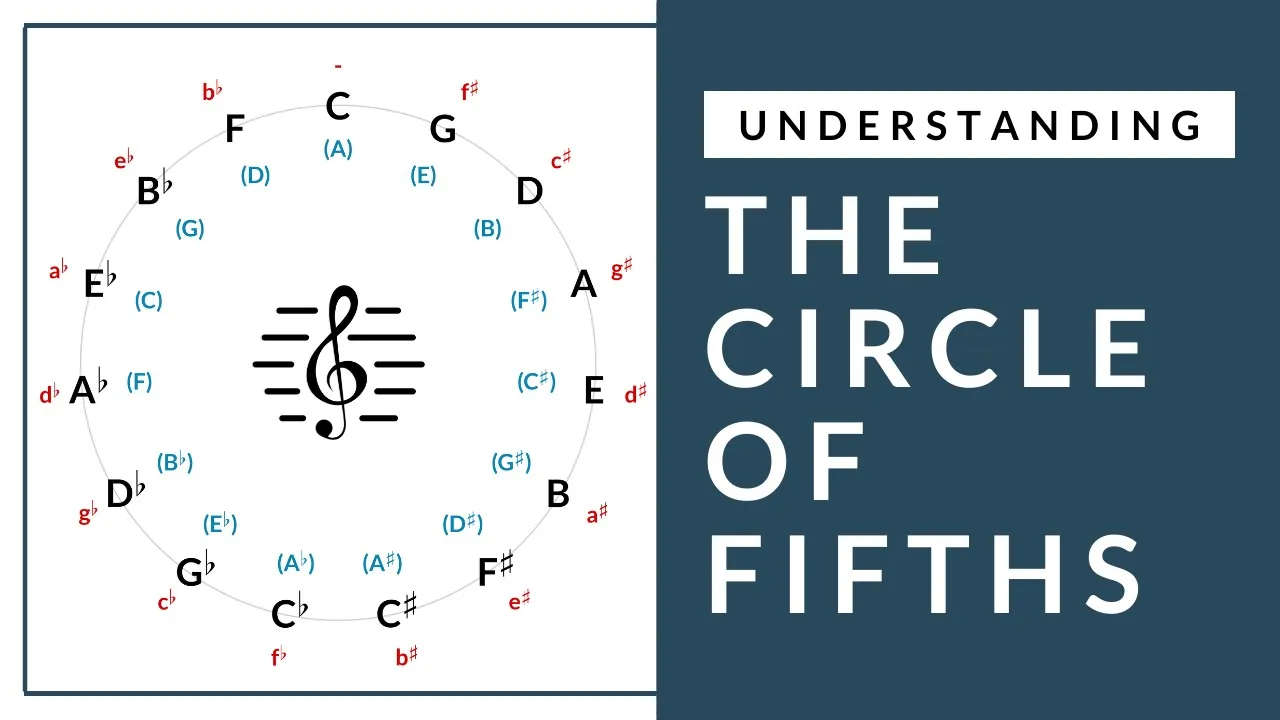
Understanding major and minor scales and key signatures, including the Circle of Fifths.
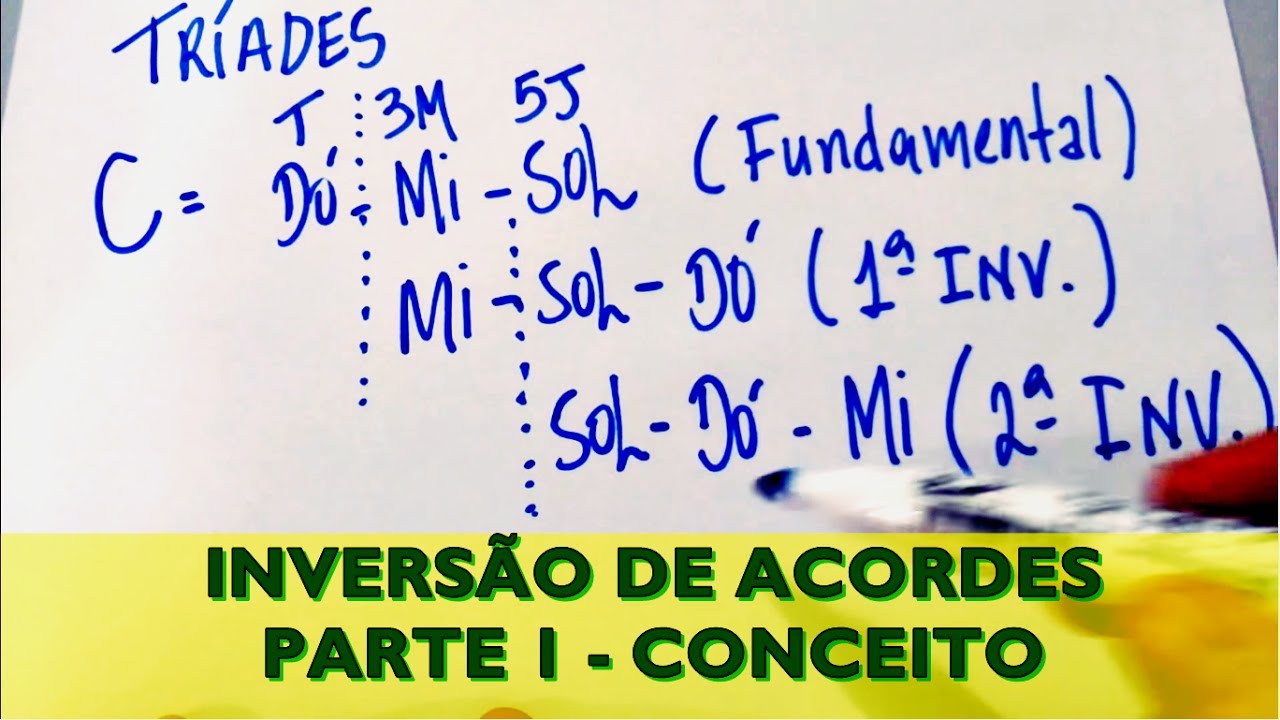
Exploring chord inversions, which involve rearranging the order of notes within a triad or seventh chord.
Learning Roman Numeral Analysis to identify chord functions and progressions within a specific key.
Introduction to voice leading and basic part-writing rules for smoother harmonic transitions between chords.
Applying diatonic chords and basic progressions to practical songwriting, ear training, and improvisation.
609 views42likes8:28Original Release: 2025-11-29
Hi there, harmony decoder here. What are notes called? What are musical intervals? How are simple and seventh chords built? Below this video, you will find timestamps that will help you navigate to these very topics. If this sounds too simple for you, watch the next video in the series. There I'll introduce musical harmony in the context of the Beatles songs. All right, so let's discuss the ver vocabulary of music, notes, and chords.
Let's take a look at a piano keyboard.
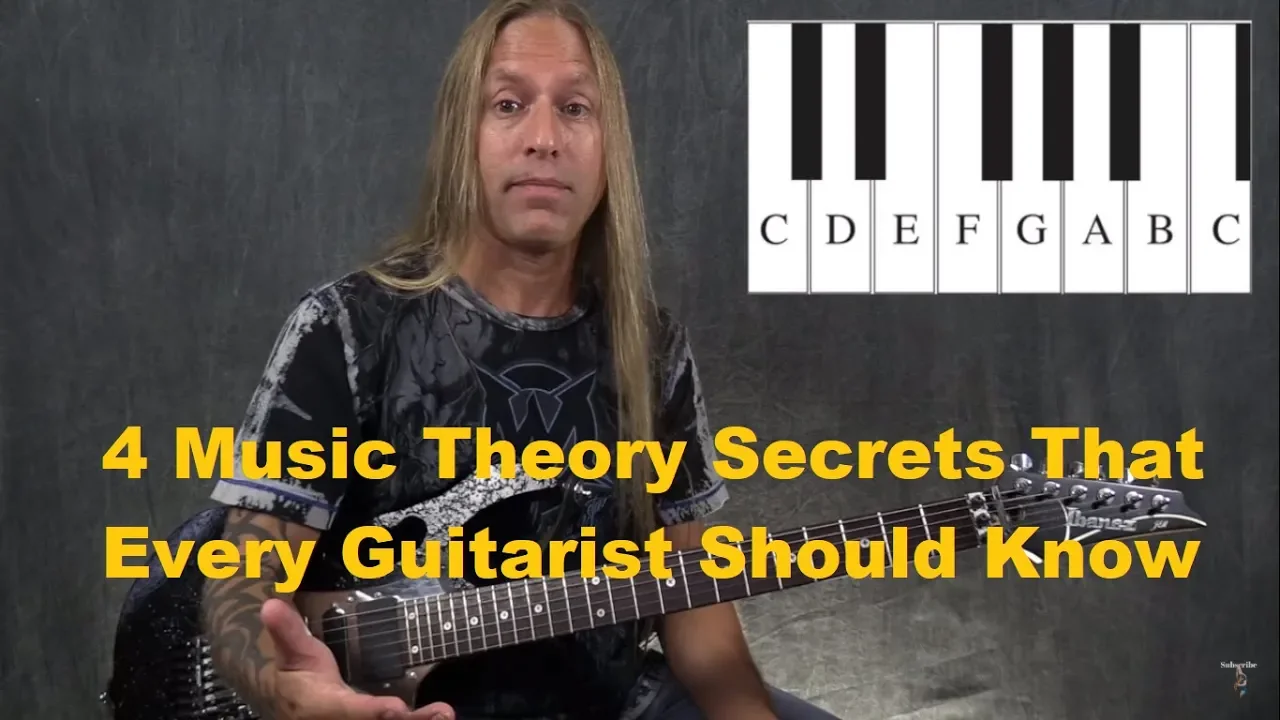
Well, first we should know what the notes are called. C D E F G A B. The repeating pattern starts before the two black keys, goes by the alphabet from C through G, then A and B, and then the pattern repeats.
Speaking of black keys, we call a note sharp when it is just a little bit, one semmit tone higher than some other note.
For example, this one is just a little bit one semmit tone higher than an F note. So we call it F sharp. We call note a flat note when it is one semmitone lower than some other note. So this very same note could also be referred to as a G flat note.
Let me straighten up our piano keyboard.
The special feature of this new keyboard is that all semmitones here are exactly the same distance apart, which will help us see some connections easier in the rest of this video.
Now, the first fundamental concept notes that are 12 semmitones apart will always end up having the same name. For example, C and C or D and D [music] or F# and F#. And they will always sound really similar to our ears. We call this interval an octave.
Even though we can say that the distance between this and that note is that many semmitones, musicians [music] use special words to describe each one of the 12 possible distances within an octave. Plus, of course, we can have a zero difference between the two notes.
No difference between two notes is called the unison. One semmitone is minor 2 and two semmitones [music] is a major second. Three semmitones is a minor third and four semmitones is a major third. Five semmitones is called the [music] perfect fourth and seven semmitones is called the perfect fifth.
I know we skipped six semmitones. Six semmitones is called a trionee. 8 and 9 semmitones is minor and major 6th. 10 and 11 semmitones is minor and major 7th. And finally 12 semmitones makes an octave. Now seconds don't sound pleasing to our ears. Seconds create inconvenience. Major second gives us regular [music] inconvenience and minor 2 when a note is just one semmitone away from the other gives us extreme inconvenience.
Thirds give us basic moods. Minor third is sad. Major third is happy.
A fourth and a fifth give us a sense of stability. Out of context, either one sounds like a monumental ancient civilization battle horn. not happy or sad but rather monumental. A tritone is right in between perfect fourth and perfect fifth are stable intervals. A tritone can be seen as either an augmented fourth a fourth that got stretched a little bit or as a diminished fifth fifth that got squeezed a little bit. Former stability is taken away altered trionee sounds quite unpleasant and unstable.
Being a sixth up from a particular note is the same as being a third down from its octave note. In that sense, they are like cousins of the thirds. But because the distance is significant, we don't sense the mood that the sixth convey as distinctly as we do with the thirds.
Sevenths up for the same reason are cousins of seconds down. And this brings us to the 12 semmitones of a perfect stable octave. Before building chords, I should say that in the context of chords where perfect fifth is very common, eight semmitones is rather perceived as an alteration of perfect fifth. It's augmentation. As a result, let's call eight semmitones as an augmented fifth in our future analysis and it's a rather unstable interval since we are deviating from the perfect fifth interval.
Now we are ready to build some simple chords. Chords is when we have three or more notes played at once. If we have a happy major third interval [music] and the stability interval perfect fifth, we got a major chord. No matter which root note it starts from, it'll sound happy.
Similarly, a sad minor third interval and the stability interval perfect [music] fifth gives us a minor chord which sounds sad.
Now, let's take a major chord, but [music] let's alter it. Let's augment its perfect fifth. It'll give us an unstable magical sounding augmented fifth and the resulting chord will [music] be called augmented.
Similarly, let's take a minor chord, but let's alter it. Let's diminish its perfect fifth. It'll give us an unstable, terrifying diminished fifth, which is the same as a trionee, and the resulting chord [music] will be called diminished.
Let's examine chords that are made of four sounds. If we add a major 7th to the root of a major chord, see that the interval between the third of our chord and the seventh is a perfect fifth, which is a stable interval. As a result, the major 7th chords are not particularly [music] tense. They are very commonly used in jazz music. Give some jazzy feel to it.
However, if we add a minor [music] 7th to the root of our major chord, the situation is very different. It's not easy to see at first, but see that we've created a trionee by putting that minor 7th, and that's really unstable. Such chords are called dominant [music] seventh chords. They are really tense.
Similarly, you can create other seventh chords. I'll just show some more common types. Here we have a minor 7th chord [music] by adding a minor 7th to the minor chord. See that it's not that intense as a dominant 7th since there's no tritone here. Minor 7th chords are used in jazz a lot. In this sense, there are similar to major 7th chords only that they bring some minor mood due to their minor third.
Another common seventh chord is a minor major [music] 7th chord. When you add a major 7th to a minor chord, now we have a trionee which we perceive as augmented fifth. So it's like a blend of an augmented chord but with a minor flavor.
The last common seventh chord is called diminished seventh. Here we start from a diminished chord which already has tension and add a diminished fifth relative to its third. So double tension. Diminished seventh chords are like a diminished chord on steroids.
Scary and tense.
One last thought regarding seventh chords. Take a look at the dominant seventh chord. Remember it has the tense tritone interval which overpowers everything else in that chord. In this particular case, it's notes E and B flat. Well, see that if you were to move the whole chord trione up, then this new chord still has these notes E and B flat in a different order, but we still have that trionee. And that means that this particular chord will pretty much have the same tension as our original chord.
So this new chord G flat dominant 7th is called a trionee substitution for a C dominant 7th [music] chord. Any dominant seventh chord one trionee up or down from the original one will end up being its trionee substitution.
All right, now we are ready to build on our knowledge of notes and chords and discuss the musical harmony principles.
We'll use the songs of the Beatles to tackle this difficult but exciting topic. Thanks for watching, guys.
Up Next
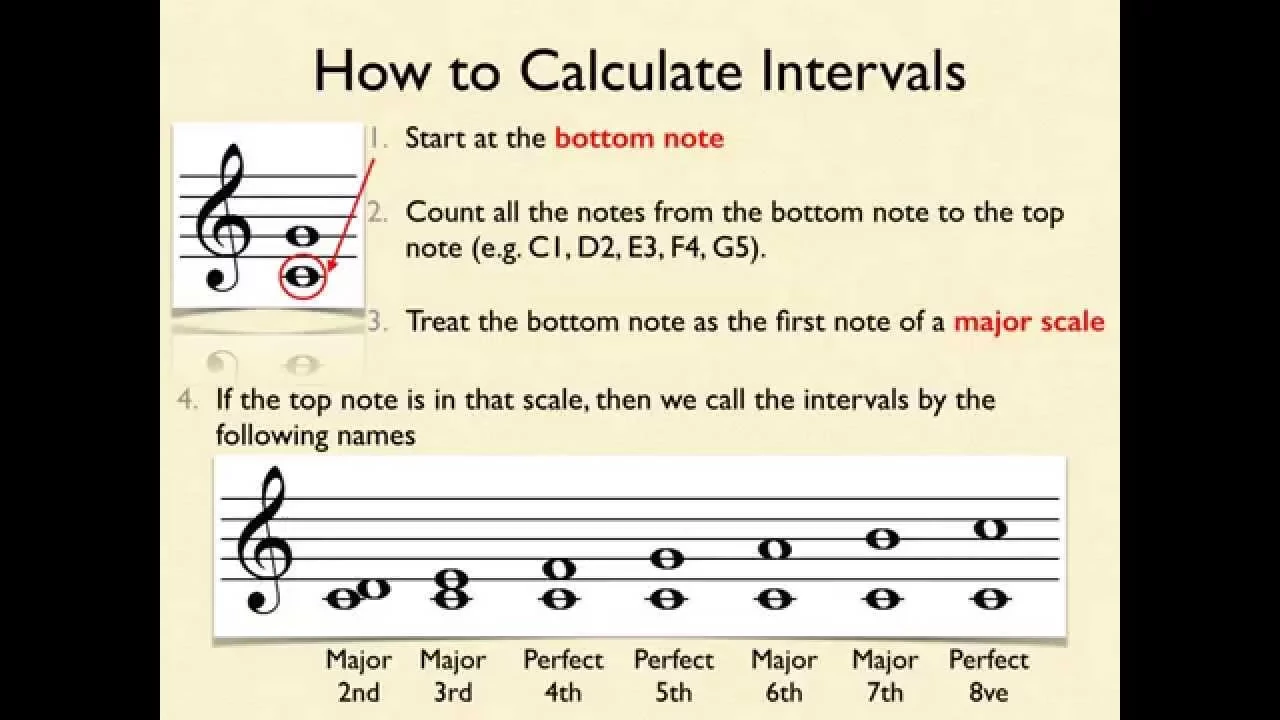
51:13
Advanced Music Theory: Keys, Scales, and Intervals Explained
@topscoremusicacademy
62.5K views•2015-05-11

51:08
Simon Rattle on Early 20th-Century Music: Tonality's Decline
@theclandestinum
18.3K views•2012-06-16

47:36
Understanding Diatonic 7th Chords in Major Keys | Music Theory Tutorial
@GracieTerzian
54.7K views•2022-03-02
10:49
Understanding John Coltrane's Giant Steps: A Music Theory Analysis
@Vox
10.4M views•2018-11-12
Related Study Plans & Knowledge Roadmaps
Structured learning paths in Music Theory
music-theory
Tintinnabuli: Pärt's Counterpoint & Composition
01Music Theory Foundations: Intervals and Triads
02Fundamentals of Counterpoint and Voice Leading
03Arvo Pärt and the Spirit of Holy Minimalism
+ 2 more learning modules
16h5 modules
Explore Roadmap
music-theory
Composing Galant Music: Partimento & Schemata
01Foundations of Figured Bass and Keyboard Harmony
02The Rule of the Octave (Regola dell'Ottava)
03Galant Schemata: The Building Blocks of Form
+ 2 more learning modules
30h5 modules
Explore Roadmap
music-theory
Decoding Overtone Series: Tuning & Drone Music
01Acoustic Foundations: The Physics of the Overtone Series
02Tuning Systems: Equal Temperament vs. Just Intonation
03Microtonality and Spectralism: Beyond Standard Pitches
+ 2 more learning modules
24h5 modules
Explore Roadmap
music-theory
Impressionist Harmony: Scales, Planing & RPGs
01Foundational Music Theory: Keys, Intervals, and Seventh Chords
02Impressionist Color: Chord Planing and Parallel Harmony
03Whimsical Textures: Pentatonic Cascades and Whole-Tone Scales
+ 1 more learning modules
14h4 modules
Explore Roadmap