












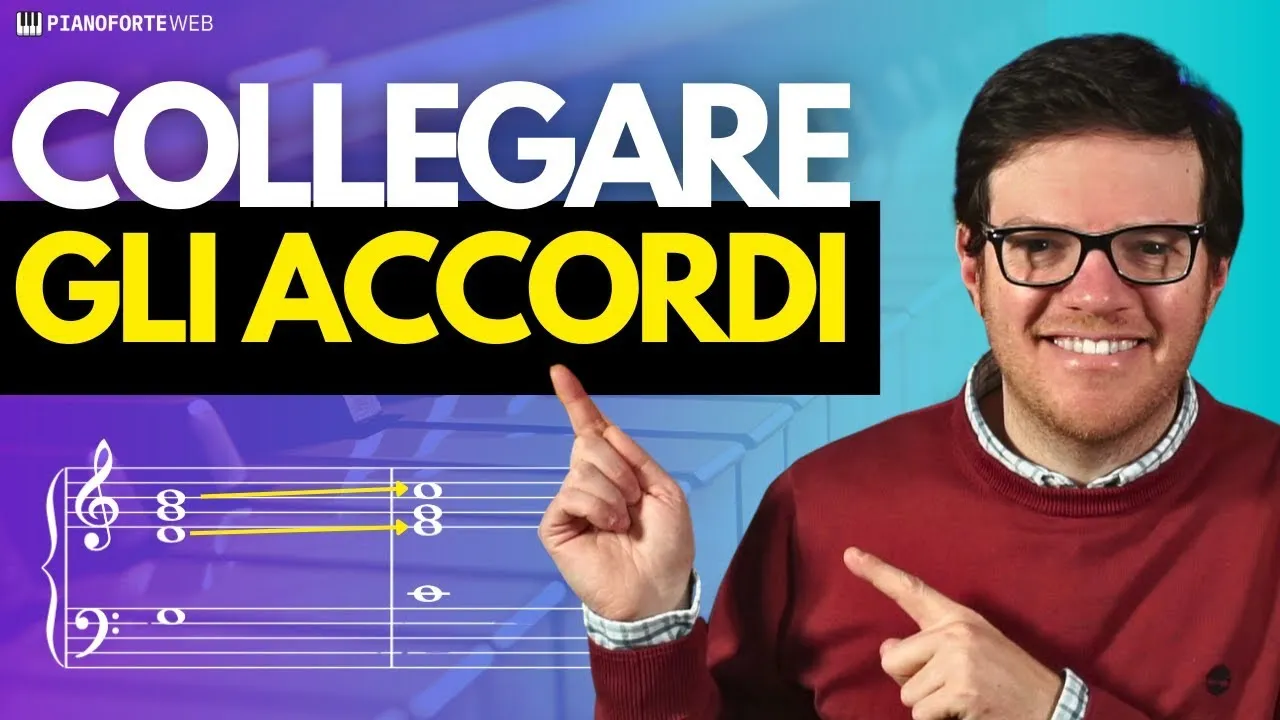






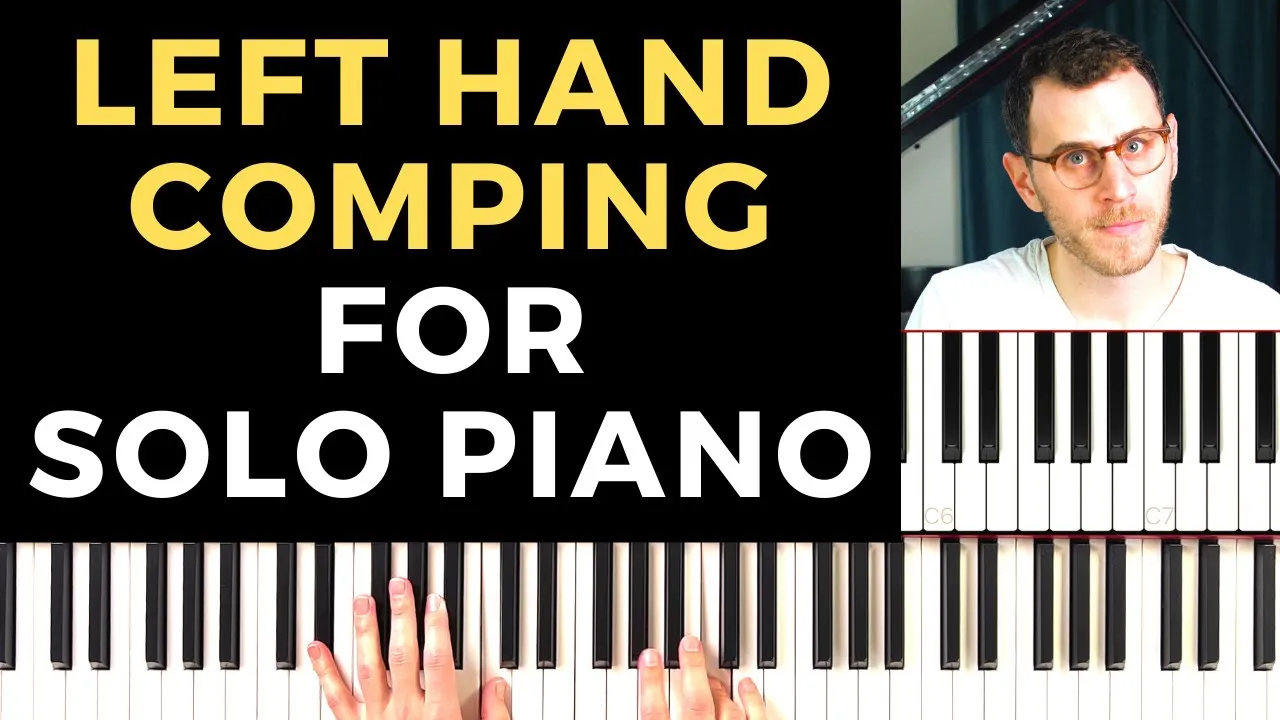
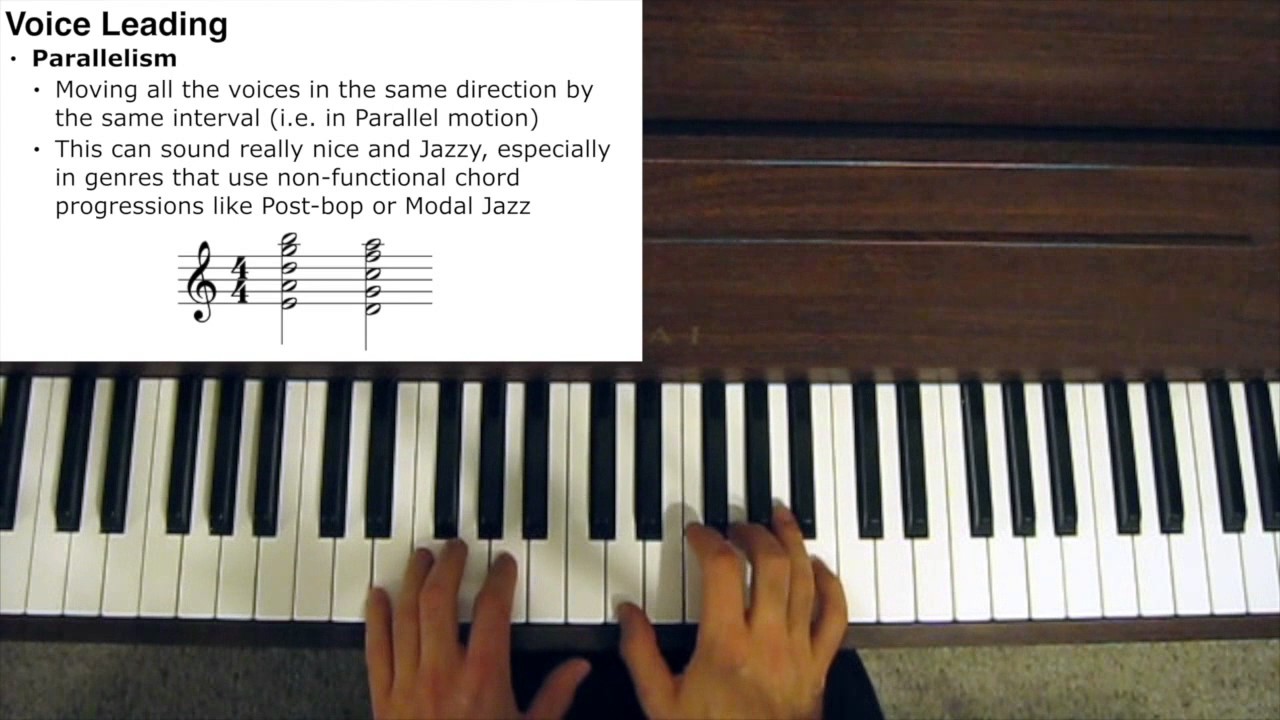

Voice leading is the technique of connecting chords by keeping at least one common note fixed while moving other notes by no more than a tone (two semitones), which creates smoother, more connected chord progressions; this principle applies to any chord progression and helps transform simple sequences into more musically satisfying arrangements.
Voice Leading for Beginners: Smooth Piano Chord Progressions
Added:Understanding of the C Major scale and its corresponding scale degrees (I, ii, iii, IV, V, vi, vii°).
Familiarity with building basic major and minor triads (root, third, and fifth).
Basic knowledge of Roman numeral chord notation (specifically identifying the ii, V, I, and vi chords).
An introductory understanding of chord inversions (root position, first inversion, and second inversion) on the piano.
Transposing the 2-5-1-6 chord progression and voice leading patterns into other major and minor keys.
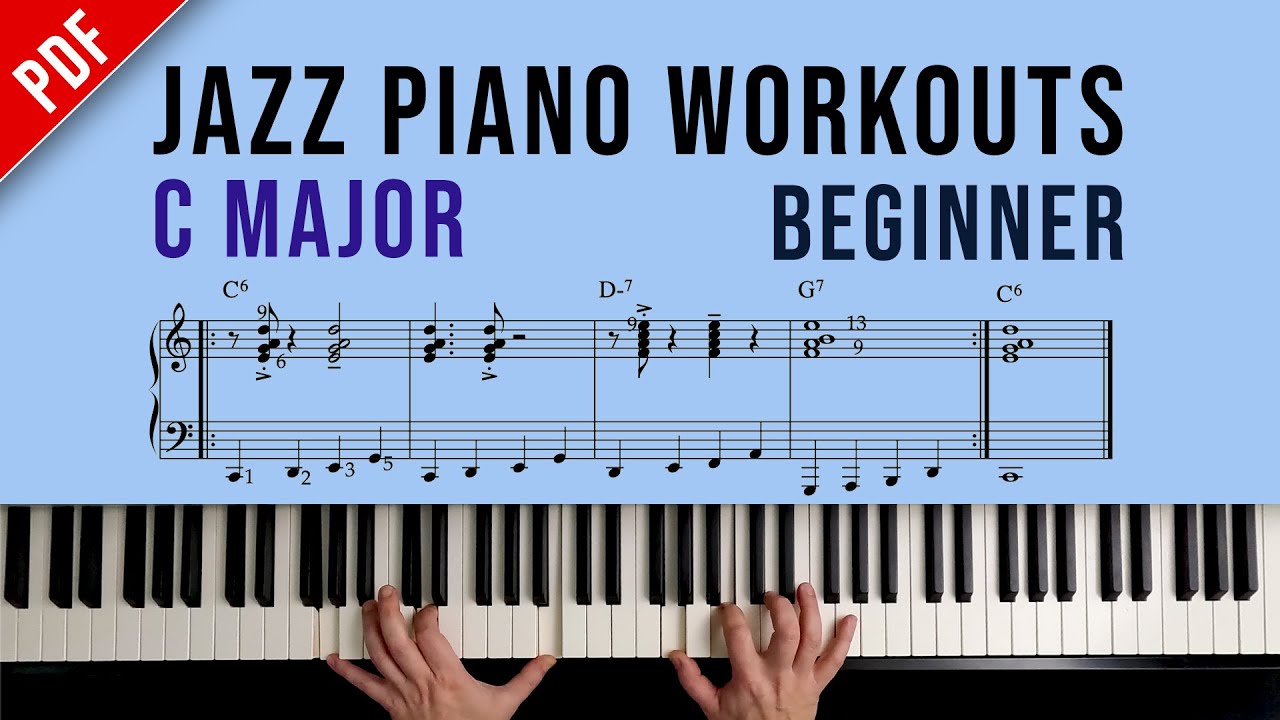
Applying voice leading principles to four-note seventh chords (such as major 7ths, minor 7ths, and dominant 7ths).
Studying 'guide tones' (the 3rd and 7th of chords) to create even smoother jazz-style voice leading.
Exploring classical SATB (Soprano, Alto, Tenor, Bass) voice-leading rules, including the avoidance of parallel fifths and octaves.
Using voice-led progressions as a foundation for hands-split accompaniment (comping) and basic keyboard improvisation.
154K views2.4Klikes11:29Original Release: 2015-07-05
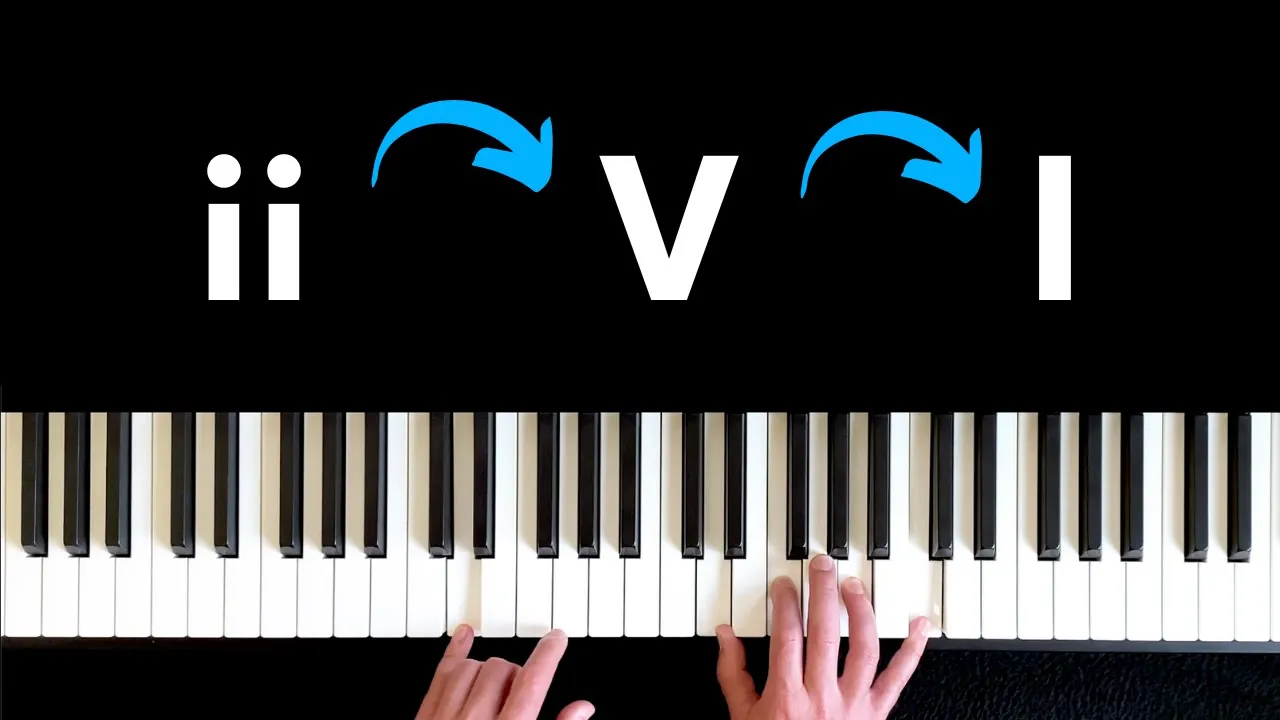
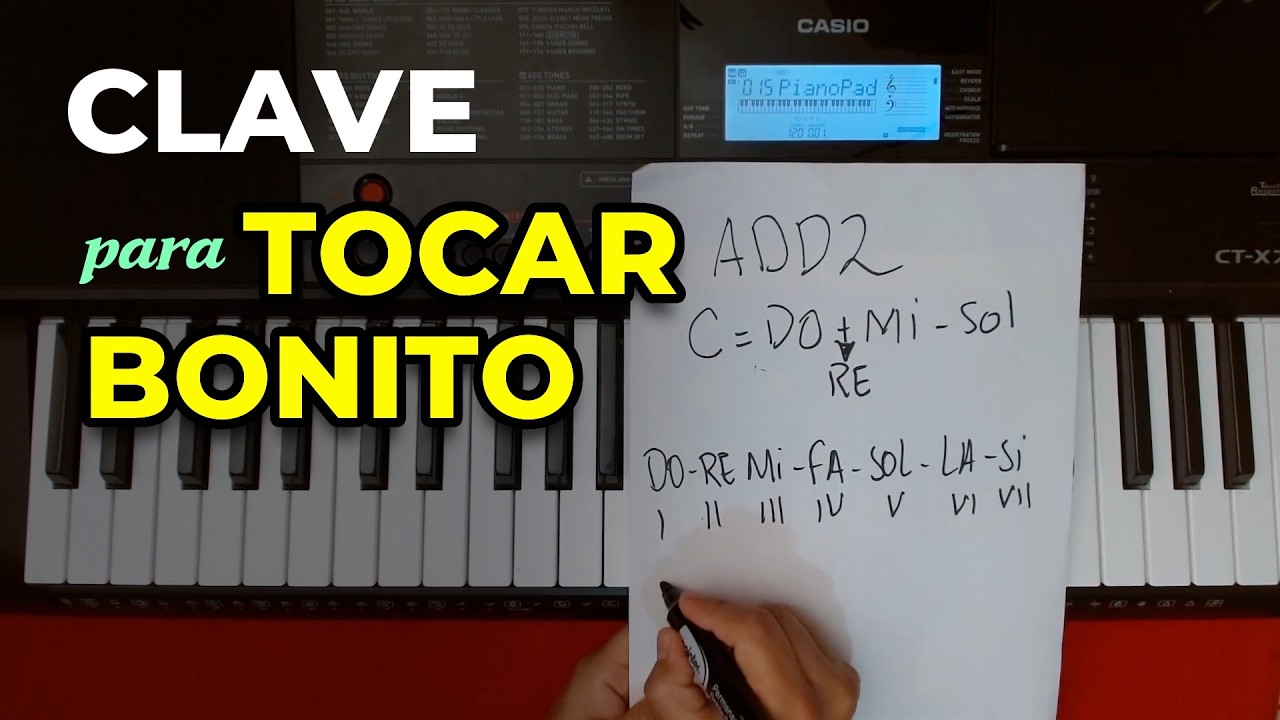
welcome back in this lesson we're going to talk about voice leading uh it's going to be geared mostly towards beginners and I'm going to have a slightly more advanced lesson coming out uh next time so for this lesson I'm going to show you how voice leading can make your core progressions sound a lot smoother we're going to start with a simple chord progression in C so for this chord progression I'm going to play a C A C major to an A Minor to a D Minor to a g now all of these chords are played in their root form uh and they're all Triads and remember that each Tri has a root form a first inversion a second inversion and then back to the root form so for example for C the chord is made out of c e and G and the first inversion has e g and C the second inversion has g c and e and back to the root form which has c e and G all of these forms have the exact same three chords c e and G but just play made in a different order or configuration same goes for a minor a minor in its root form has a c and e the first inversion has c e and a second inversion E A and C and then back to a c and e all of them have a c and e but in different orders D minor in the root form has d f and a and then it has the two inversions first inversion second back to root and G has G B and D which first inversion is this uh b d and g second inversion is d g and B and then back to root now we're going to play a little game I'm going to start with uh one of the forms let's say the root form for C and I'm going to play this progression C to a to DM to G over and over and the rule there actually going to be two rules to this game the first is that as I move between chords I'm going to have to keep at least one note fixed that is unchanging and the second rule for this game is that the other two notes can change but not more than uh tone and a tone is two semmit tones and a semitone is simply the distance between two adjacent notes in the piano so these two notes are one semitone apart these are two semitone aparts apart uh these two are two semmit tones apart or tone one two uh these two are semmit tone two semitones two semitones because I can go 1 2 so I can maximum move them to semmit tones uh in each Direction each okay so here's I'm going to this game has more than one solution and I'm going to basically play my solution to the game and you can simply then take the same three four chords and come up with your own different solutions in my left hand I'm going to play the base so just C to a to d to g over and over and over again okay I'm starting from the root form for C then I'm going to move to an inversion for a [Music] minor so look how I kept these two notes constant and I moved the G up to a now I'm playing an A Minor which has C E and A so this G moved up only two semmit tones which is allowed within the rules of the game next chord is D minor and I'm going to keep the a fixed and I'm going to move the c and d e up to a d and g to a d and an f and then for the G I'm going to keep the D fixed and I'm going to move these two up the F and the a up to a g and a b and for the next step I'm going to keep the G fixed and I'm going to move the B and the D up to a c and an e so let me play this back to you a little [Music] faster so you see how by keeping a note fixed a common note fixed and not moving the other Notes too much I could achieve this smooth voicing or chord progression uh which I didn't really have when playing the chords in the the root forms so just to [Music] compare [Music] versus let's keep on going so here's where we landed for the a minor which comes after the C I'm going to keep e and C fixed and just move this G up to semmit tones then for the D Minor I'm going to keep this a fixed and move the E and C up to an f and a g and a d and now I'm going to keep the D fixed and move these two guys the F and the a up to a g and a b and finally for going back to the C major I'm going to keep the D the G fixed and move the B and D up to a c and an [Music] e so let me play the entire progression from the beginning [Music] and I actually challenge you to keep on going start from this and keep on going up or down or whereever wherever it is you uh feel like you'd like to go uh play this progression and try to find these smooth uh voice leadings now youd might ask how did you come up with these Solutions how did you know to go from here to here when you started out from the c major to the a minor I mean how did you know how to choose these particular inversions well it turns out that there really aren't that many solutions to the game once you play by the rules I've laid out let's see what we could have done here's our C major chord in the root form and one solution to going to the a minor would be doing this and we've played out the solution the other solution might be to keep these two fixed and maybe then you'd say okay let's take this gep down here but really that's not a solution because we're not uh abiding by the second rule which tells us that we can only move this G by a little bit by either a semmit tone or two semitones up or down so really there was only one solution I was being a little uh dishonest when I made it appear as if there's 's more than one way of resolving the c major Triad in the root form to the a minor so sometimes you will have more than one solution uh sometimes you won't and you can try and play this game with any progression you come across now with some progressions it would be possible for example when you look at two chords like C major and D Minor now these chords have no common notes you see the c major has c e and G and the D Minor has d f and a so you really can't uphold the first rule which tells us that we need to keep at least one Note One common note fixed between the two voicings uh we can try and observe the second rule which says that we can't move any note by more than a semmit tone or two semmit tones so playing this would be acceptable actually here we can bend the rules by a [Music] bit we might start with a C major in The Brute form and play A D minor in the second inversion now here we're sort of breaking the second rule we're taking these two notes the E and the g down to an D and an f and but we're taking the C all the way down to an A so we're really moving it by three semmit tones 1 2 3 but this just goes to show that the rules I've given you aren't some golden rules that will always yield the best possible result so I kind of urge you to experiment with them and to try and break them and see when it sounds good or doesn't sound good they're a good starting point for building up your own chord voicings as you work through chord progressions that's it for now I hope you've learned something interesting and I will see you next time
Up Next
6:07
Tonnetz Chord Builder: Neo-Riemannian Analysis and Progressions
@JShells88
7.1K views•2019-03-22

12:54
Triumph of Orthodoxy Icon: Byzantine Art & History Explained
@BenCallan
2.1K views•2024-08-06
13:27
Neo Soul Chord Progressions: Advanced Harmony Techniques
@MangoldProject
340.9K views•2017-05-27

1:42
Game of Thrones Opening Credits: A Cinematic Analysis
@gameofthrones
46.3M views•2011-04-18
Related Study Plans & Knowledge Roadmaps
Structured learning paths in General & Interdisciplinary Studies
general-studies
Elevator Engineering: History, Physics & Cities
01From Hoists to Safety Brakes: The Dawn of Vertical Lift
02Hydraulic vs. Traction: The Engineering Physics of Elevators
03Modern Speed, Safety, and Algorithms
+ 2 more learning modules
12h5 modules
Explore Roadmap
general-studies
Rubber: Material Science, History & Geopolitics
01Origins of Natural Rubber & Mesoamerican History
02The Chemistry of Natural Rubber & Vulcanization
03The Geopolitics of the Rubber Boom & Colonization
+ 2 more learning modules
12h5 modules
Explore Roadmap
general-studies
Containerization: Evolution, Logistics & Trade
01Ancient Trade & Bulk Cargo: Amphorae to Barrels
02The Industrial Revolution & Cardboard Packaging
03The Containerization Revolution: Malcom McLean
+ 2 more learning modules
12h5 modules
Explore Roadmap
general-studies
Textile Tech: Evolution, Labor & Global Impact
01Pre-Industrial Textiles: Handloom & Cottage Industry
02Mechanization: The Spinning Jenny to the Power Loom
03The Factory System & Global Labor Transformation
+ 2 more learning modules
10h5 modules
Explore Roadmap