



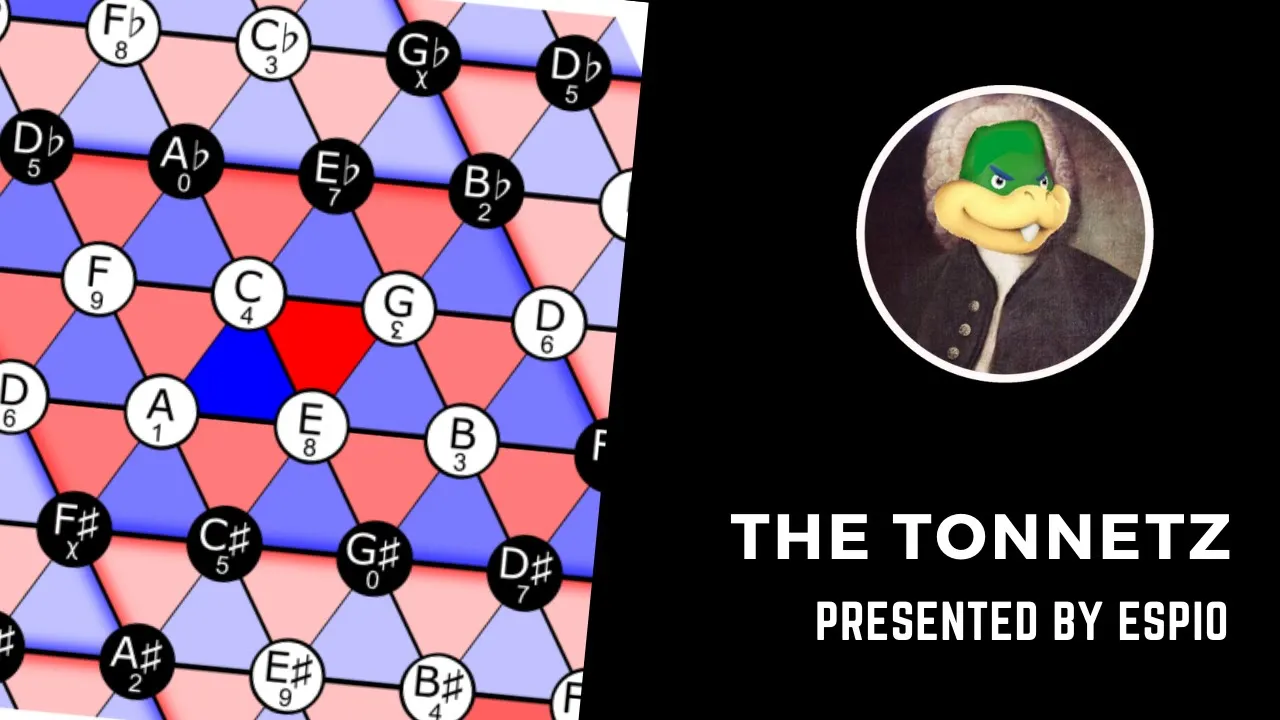
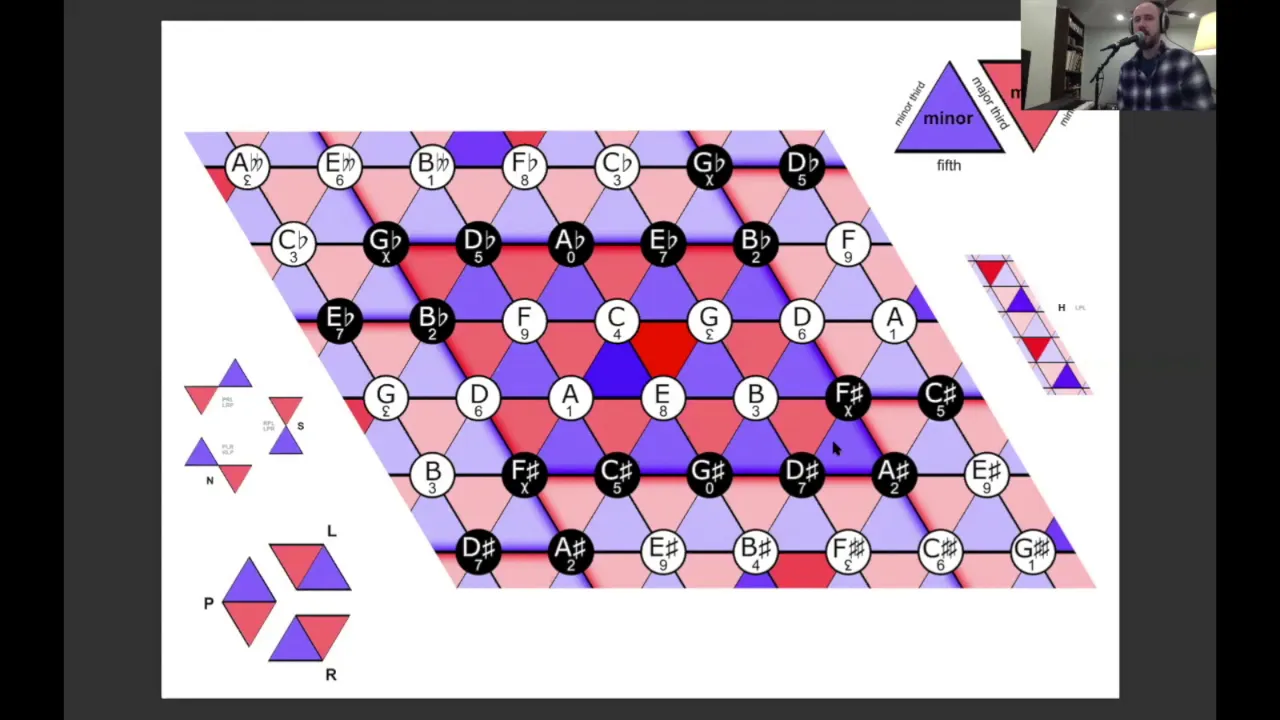
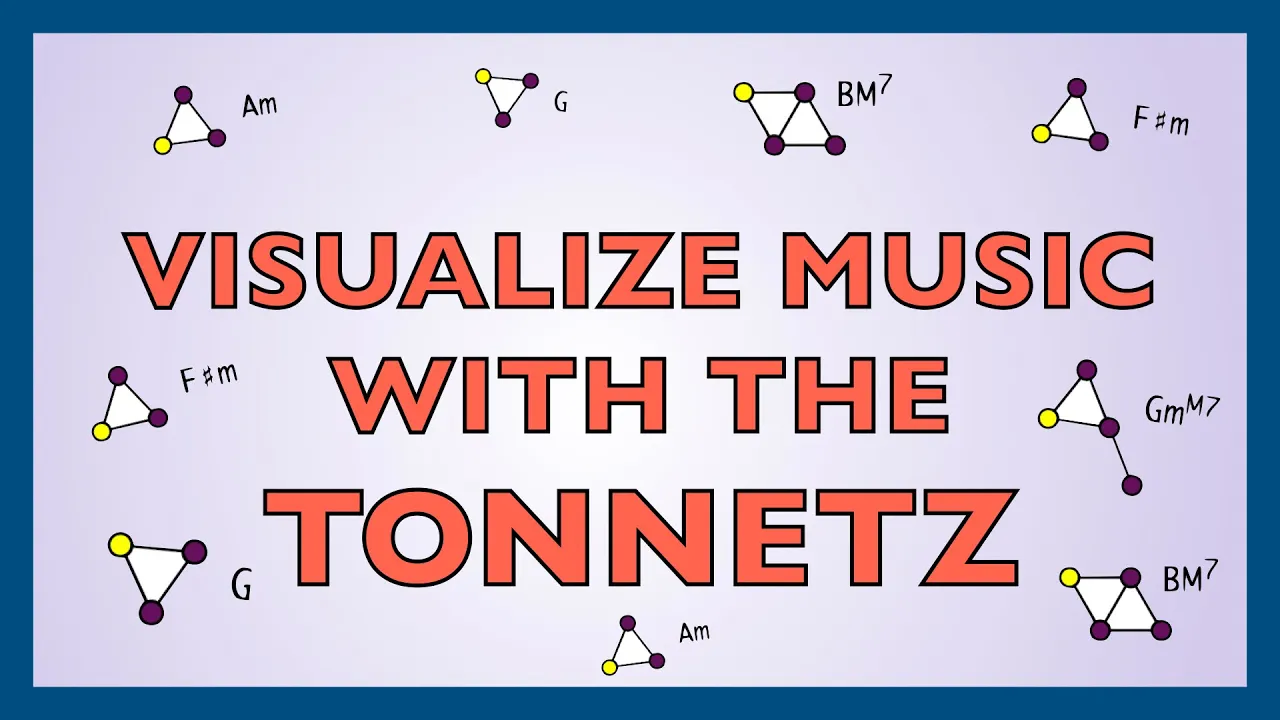





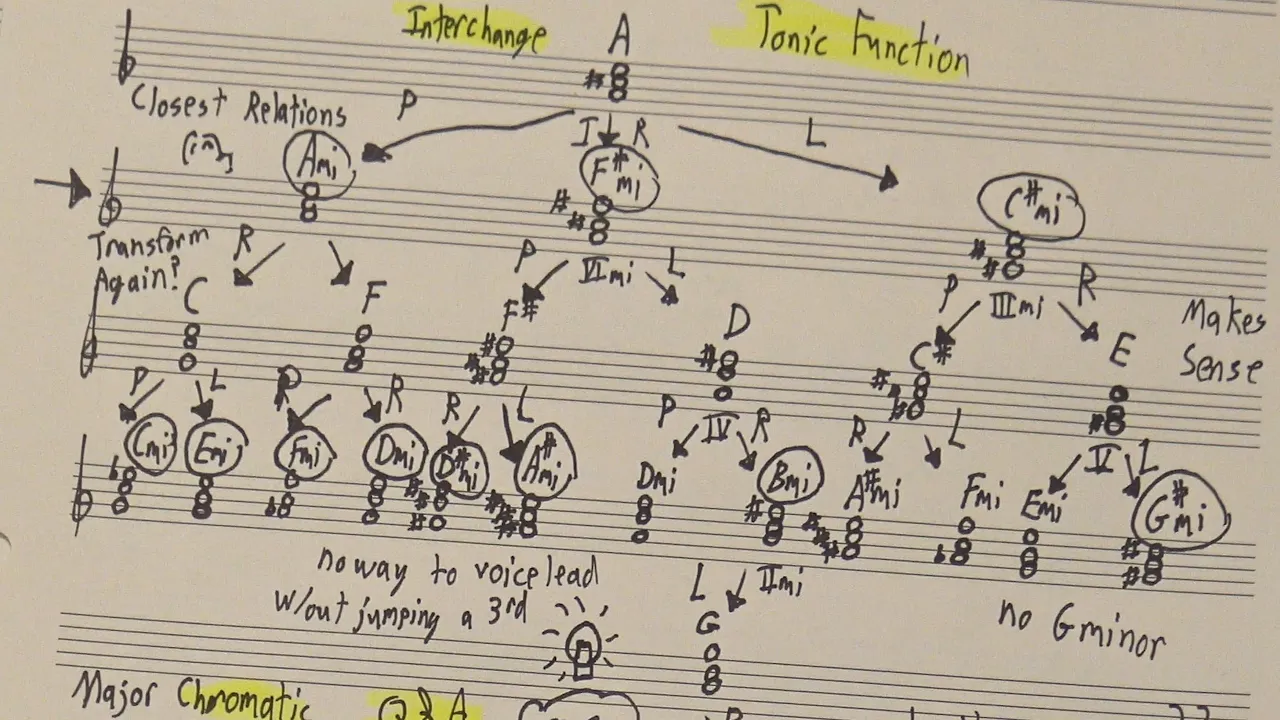





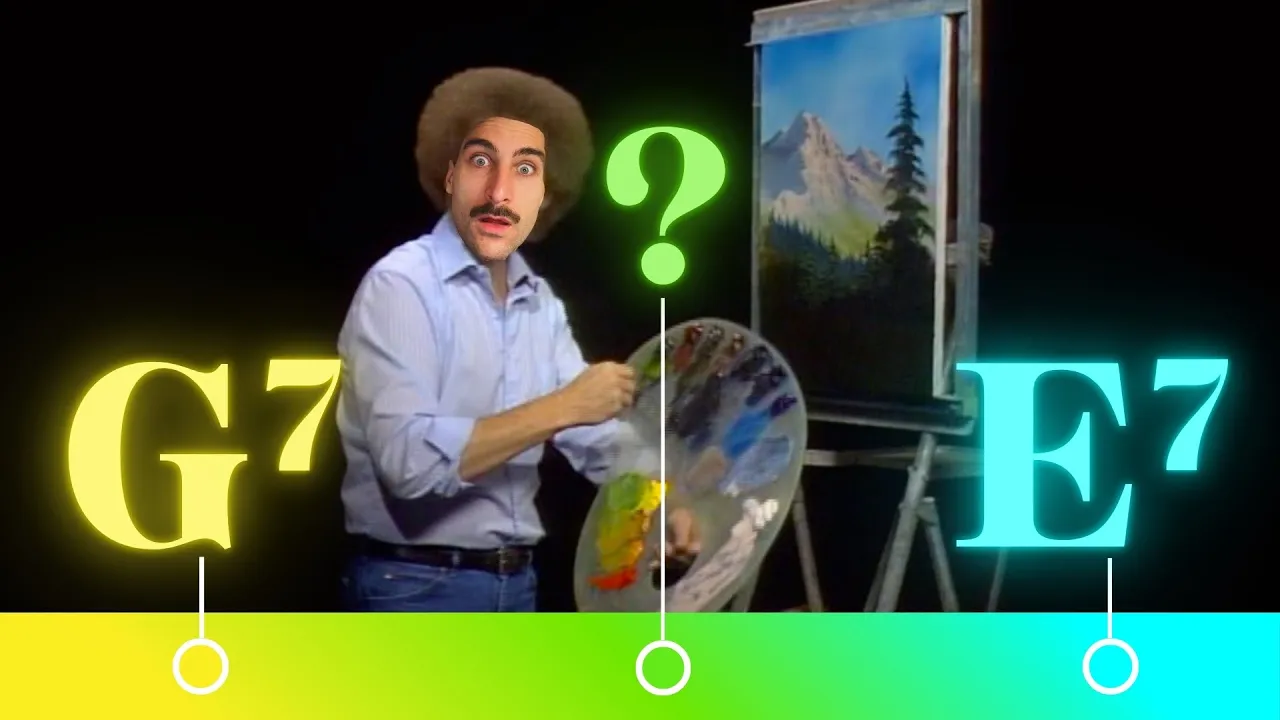




The Tonnetz grid is a visual tool for building chord progressions by applying transformations (P, R, L) to triads and using the app's suggestion feature to find compatible chords, allowing users to create harmonious sequences by selecting chords that share similar positions on the grid and adding extensions like seventh notes for richer harmonies.
Tonnetz Chord Builder: Neo-Riemannian Analysis and Progressions
Added:Basic music theory concepts, including major and minor triads, their inversions, and interval relationships.
An introductory understanding of the Tonnetz grid as a geometric representation of tonal space.
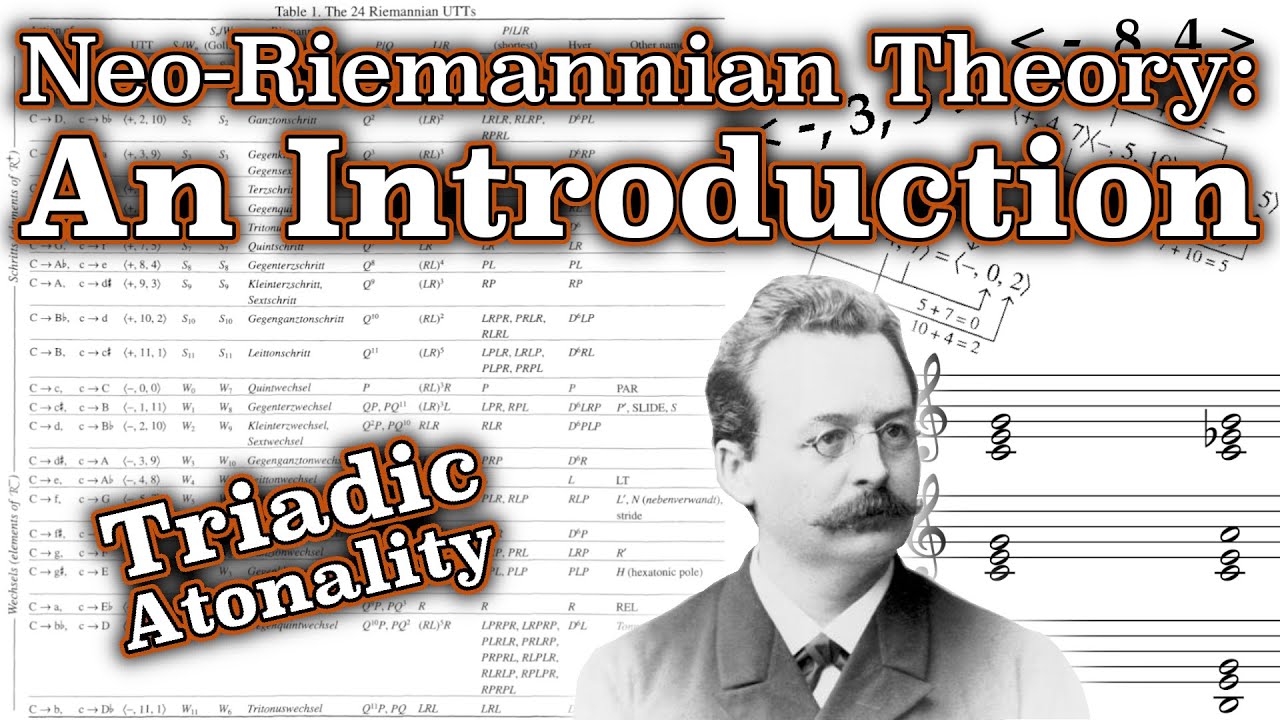
The fundamental definitions of Neo-Riemannian PRL (Parallel, Relative, Leading-tone exchange) transformations.
The concept of modal interchange (borrowing chords from parallel keys/modes).
Applying Neo-Riemannian analysis to late-Romantic repertoire (e.g., Wagner, Liszt) and modern film scores (e.g., Hans Zimmer).
Exploring advanced compound transformations beyond PRL, such as Slide (S) and Nebenverwandt (N) operations.
Studying geometric music theory and multidimensional chord spaces (such as voice-leading orbifolds).
Integrating Tonnetz-based compositional workflows into Digital Audio Workstations (DAWs) for algorithmic and interactive music generation.
7.1K views195likes6:07Original Release: 2019-03-22
hi this is a quick demo of how to build a few different compressions using the tonics call builder app so I'll start the app and here we have the toilets grid I'm gonna bring up the keyboard view and the stage view and to get started we'll do a very simple chord progression so I'm just gonna pick a random triad on the grid you've got the F minor and to start I'm just going to use these PRL transformations to try to find something that fits so let's do an R so it goes from that F minor through an a flat major and I might now try a leading to an exchange transformation that's already sounding quite nice and say we want to find something else that fits with that for the last chord so I picked this triangle passes because it's quite close in position to the last triangle so it's quite likely to sound good with it so we'll hear that and you can play it back with the play function so that's quite a nice base basis for our corporation and say we want to maybe make it a bit more interesting we can get these chords and we can add maybe a in intonation of that so add the E flat and now it's an F minor 7th chord and say let's make this one sound a bit different as well we'll add the B flat so this makes turns into a seventh chord the C minor seven [Music] and that sounds nice but I might also drop this note down here give it a slightly different sound and we have quite a nice chord progression so now we're gonna try a different way of making a corporation this time I'm going to use the chord builder down here and let's say we start with a a major seventh so we click go and it will put it onto the grid for us and onto the first bar now we want to try and make a try and find a chord that sounds good with this E major 7th and let's say that we're kind of stuck for ideas we're not quite sure what to do the suggest button down here can be used it will look at the current chord and it will pick another court that sounds good in context with it so I click that then it gives us the B major seventh and it puts it into the next bar so if you click it it will always put the cord into the next bar and this caused some pretty nice together so I'm gonna keep those two and I'm going to do it again and that's giving us another chord the E major chord so now we have and that's already sounding quite nice so we're gonna try and find another chord which kind of ends the progression or resolves it and you know I'm gonna add the D flat onto this just to make it slightly more interesting that chord and I feel like I want to hit a minor chord to end it feel like that's what the natural progression after discordant sound want to be and I think this is the kind of course I'm looking for so now we have and there I was just changing the inversion slightly just to make it sound good in context with the notes in this chord so you want the same similar pitch of notes in terms of what octave it's in just to make it's kind of go together with the last chord so we're left with this question now which is a nice sounding progression so if you want to find some more information about everything that's going on go to info and this will give you all the music there you need to know about the tonics grid and the chords and if we go to shapes this shows you the basic shape of all the chords which the app will recognize so any of these shapes applied anywhere in the grid will give that intonation of the chord with be lighter blue now as its root so those are two other ways that I go about creating cup questions there are plenty of other different methods you can try out get to know the tonics grid and you'll be making corporations of your own soon enough okay thanks
Up Next
37:02
John Williams Orchestration Secrets: Harry Potter Score Analysis
@JJBerthume
73K views•2017-05-30

26:22
Walking in the City: Urban Rituals and the Flâneur in Contemporary India
@PSBTIndia
1.9K views•2016-08-02

9:49
FastAPI vs Flask vs Django: Choosing the Right Python Web Framework
@TechWithTim
302.5K views•2024-05-26

1:42
Game of Thrones Opening Credits: A Cinematic Analysis
@gameofthrones
46.3M views•2011-04-18
Related Study Plans & Knowledge Roadmaps
Structured learning paths in General & Interdisciplinary Studies
general-studies
Artificial Light: History, Tech & Human Impact
01The Pre-Electric Era: Fire, Oil, and Gas Lighting
02The Incandescent Revolution and Grid Electrification
03Gas Discharge and Fluorescent Illumination
+ 3 more learning modules
14h6 modules
Explore Roadmap
general-studies
Elevator Engineering: History, Physics & Cities
01From Hoists to Safety Brakes: The Dawn of Vertical Lift
02Hydraulic vs. Traction: The Engineering Physics of Elevators
03Modern Speed, Safety, and Algorithms
+ 2 more learning modules
12h5 modules
Explore Roadmap
general-studies
Rubber: Material Science, History & Geopolitics
01Origins of Natural Rubber & Mesoamerican History
02The Chemistry of Natural Rubber & Vulcanization
03The Geopolitics of the Rubber Boom & Colonization
+ 2 more learning modules
12h5 modules
Explore Roadmap
general-studies
Containerization: Evolution, Logistics & Trade
01Ancient Trade & Bulk Cargo: Amphorae to Barrels
02The Industrial Revolution & Cardboard Packaging
03The Containerization Revolution: Malcom McLean
+ 2 more learning modules
12h5 modules
Explore Roadmap