


















Neo-Riemannian Theory, developed by David Lewin and Richard Cohn, analyzes harmonic relationships through transformations (P, L, R) between triads rather than traditional Roman numeral labeling; key concepts include clangs (consonant triads), the tonnetz visualization grid, hexatonic cycles (where adjacent triads differ by one semitone), and the Cube Dance model showing how four hexatonic cycles connect through augmented triads.
Neo-Riemannian Theory: Transformations in Music Analysis
Added:Fundamental understanding of triad construction, specifically how major and minor triads are built using major and minor thirds.
Familiarity with traditional diatonic functional harmony and Roman numeral analysis to appreciate why Neo-Riemannian theory is used as an alternative.
The concept of parsimonious voice leading, where chords transition with minimal stepwise motion (semitones or whole tones).
Basic awareness of pitch-class space and the division of the octave into 12 equal semitones.
Analyzing highly chromatic late-Romantic repertoire (e.g., works by Richard Wagner, Franz Liszt, or Franz Schubert) using PLR transformations.
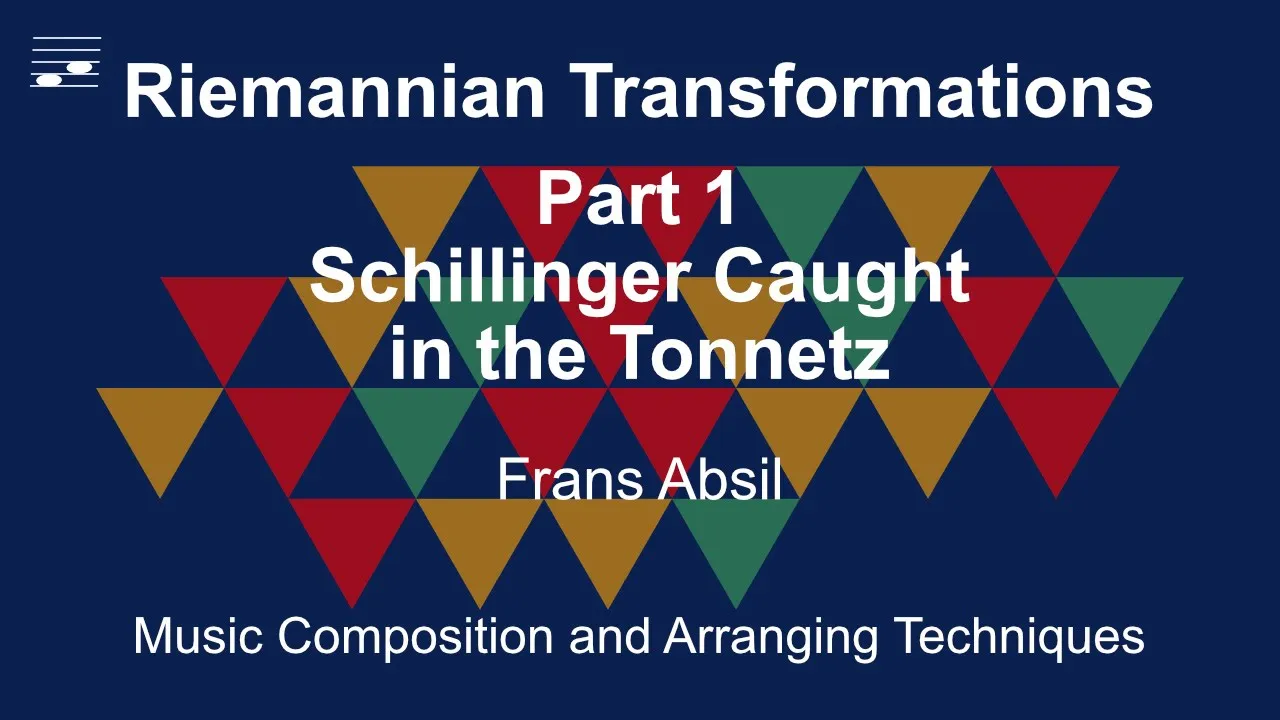
Navigating and mapping chord progressions on the Tonnetz, a two-dimensional geometric representation of tonal space.
Exploring compound and secondary transformations, such as the Slide (S) transformation, and their mathematical properties.
Analyzing modern film and media music (e.g., the works of John Williams or Hans Zimmer) using Neo-Riemannian concepts to understand epic or sci-fi harmonic shifts.
Studying the connection between music theory and abstract algebra (group theory), examining how transformations form mathematical groups.
38.5K views975likes9:06Original Release: 2015-05-06
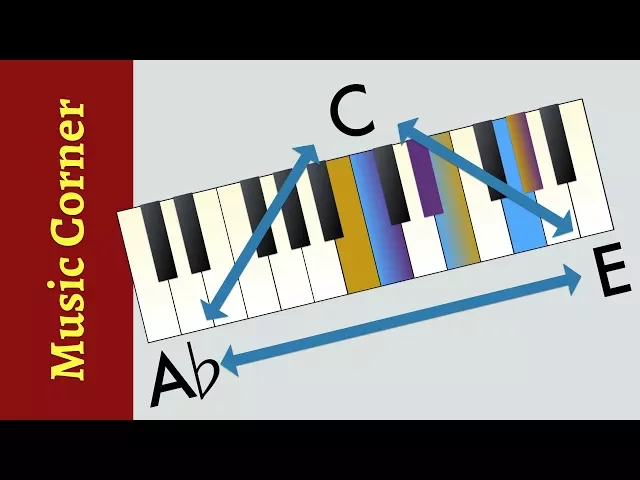
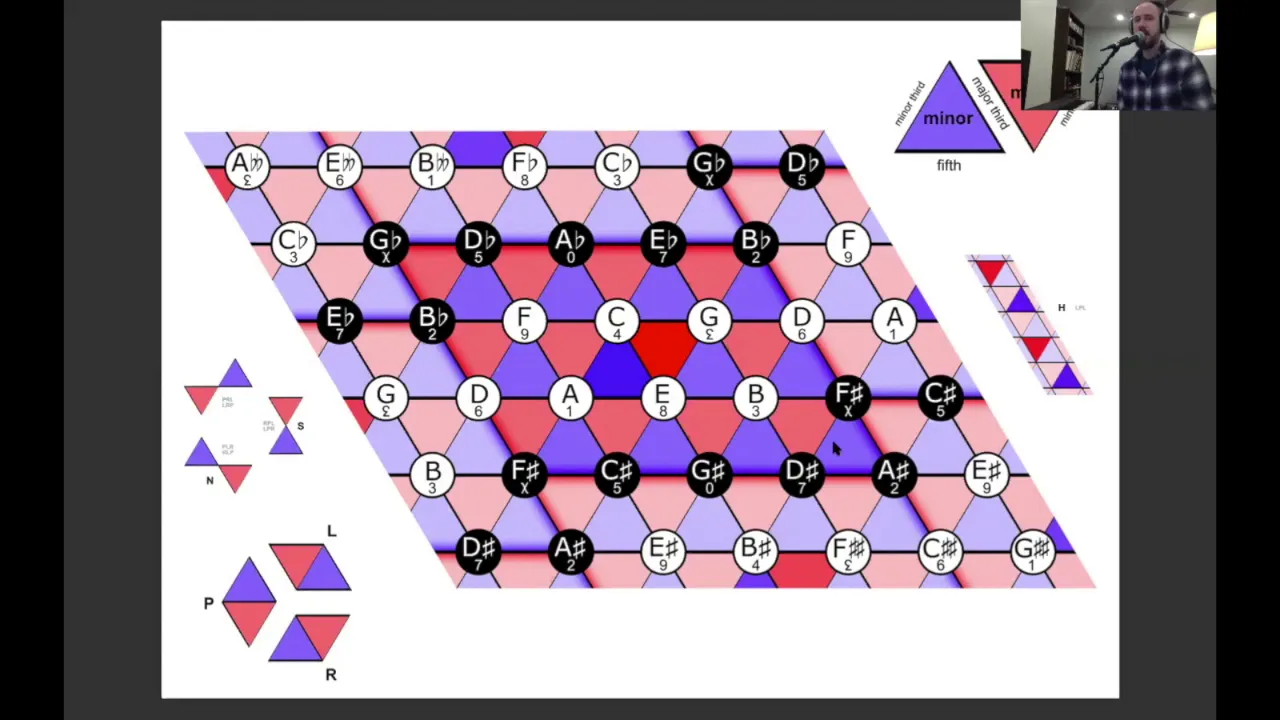
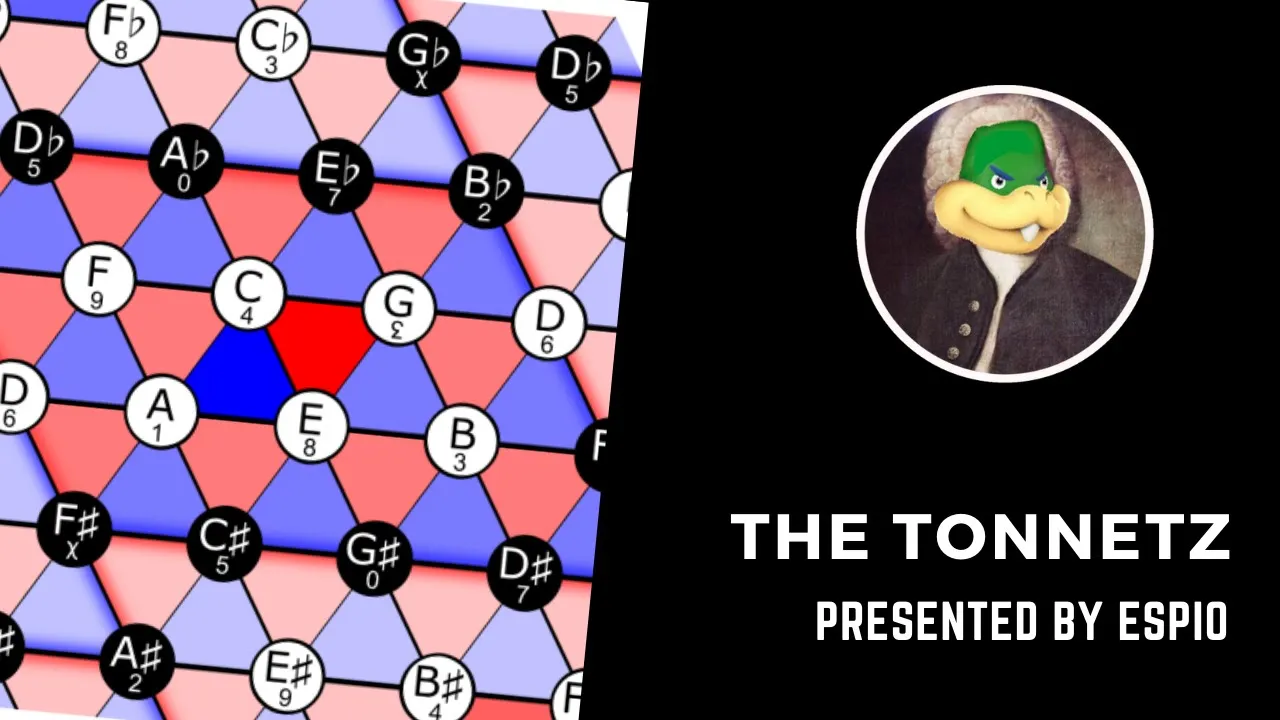
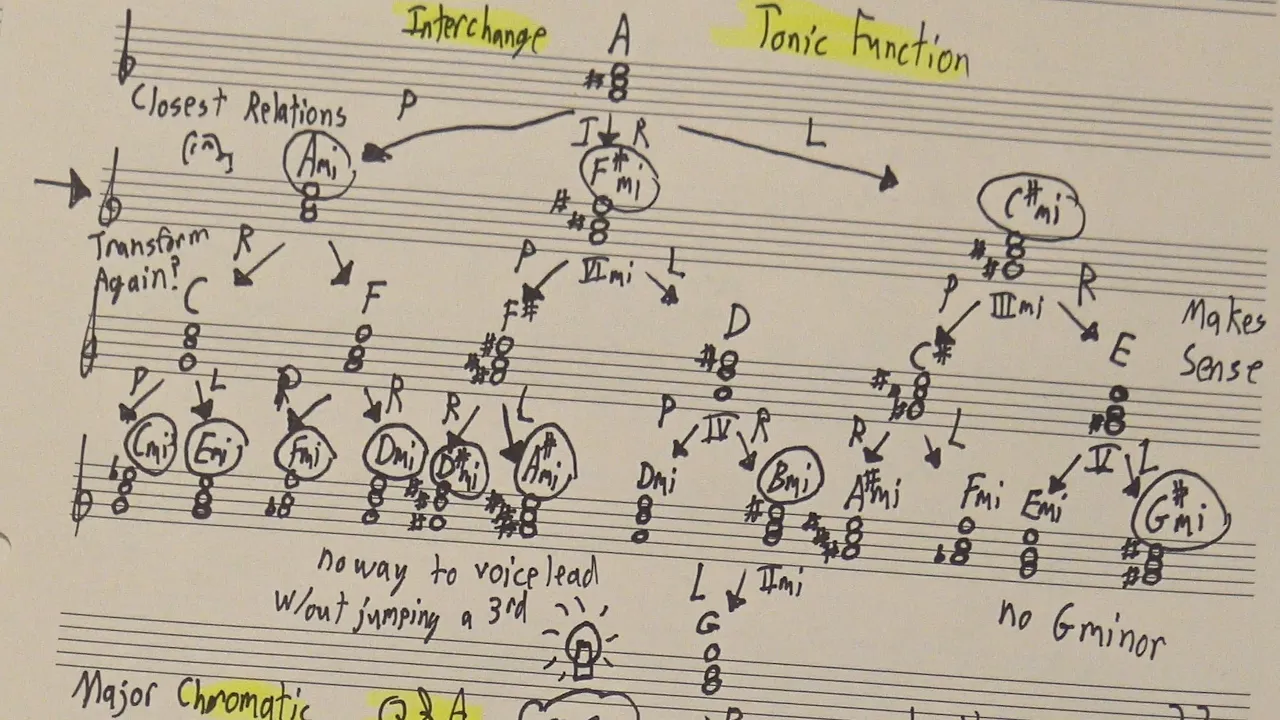
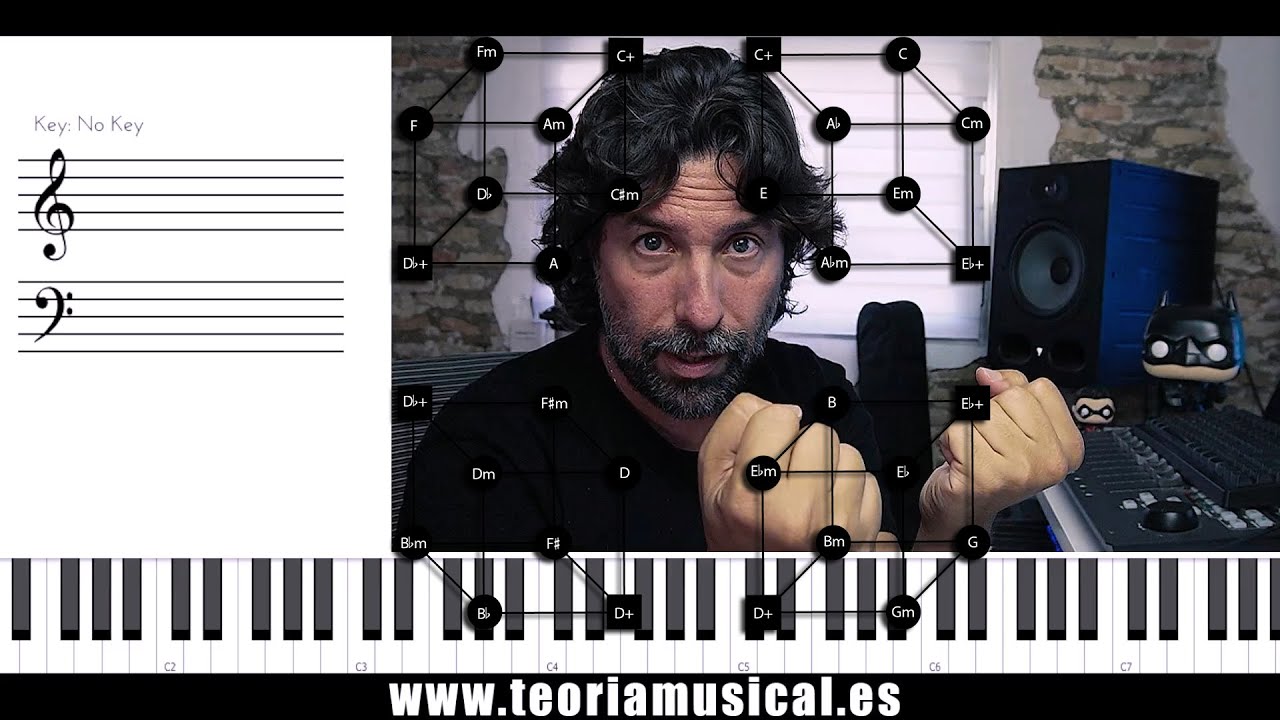
hello Theory students and congratulations you have completed the five core semesters of undergraduate Theory today I invite you to join me on a journey to expand your training but how you may ask we already know how to label every chord and non- chord tone out there and that is precisely my point today we will not be labeling chords with Roman numerals nay that will not suffice for our inves ation consider the following example taken from bram's kerto for violin anello in A Minor Opus 102 let's listen to this excerpt from the middle of the first movement and attempt to add some ran numerals we begin in a flat [Music] major [Music] [Applause] these Roman numerals seem a bit unusual perhaps there's a better way to understand what Brahms is doing here enter Neo ranian Theory so how does ranian Theory work essentially it looks to study the connections and relationships between chords cadences or other musical events rather than the labels or definitions for the events themselves a neor ranian sees a transformation of one chord into another David Luen who was the first theorist to really Kickstart the modern field of nanian theory began writing on this subject in 1982 and by 1987 he had articulated several terms that will be necessary to our discussion today one of these terms the clang is given to the musical objects that we are working between specifically at least for now we can think of a clang as a general term for a consonant triadic sority essentially meaning any major or minor Triad let's return to the brumms that we just examined you may have noticed before for that one Triad occurs in each measure specifically the major and minor Triads on a flat E or F flat spelled inharmonic c and a flat once more these Transformations are particularly interesting because each clang is only one semitone away from its predecessor assuming inharmonic equivalence we could represent the Transformations like this the arrows show which pitch within the clang changes or transforms to give us the new clang I've included conventional Triad labels for reference using plus and minus to indicate major and minor we can identify two types of Transformations here the first indicated with red arrows transforms a major Triad into its parallel Minor triad we will refer to this transformation as P for parallel Luen and con label our second type of transformation indicated with yellow arrows as a leading tone exchange represented by L we needn't concern ourselves with the history of this terminology for now just know that in our example L transforms each Minor triad into its submediant by moving the fifth of the Triad up by a semitone I should take a brief moment to mention that these Transformations also work in Reverse just as l transforms A Minor triad into its submediant it also transforms a major Triad into its medient that is the clangs E minor and C major are l- related in the same way C major and C minor are P related here is a list of all of the Transformations denoted in the early neonian writings of David Luen and Richard con do not be alarmed by the sheer number of them most other functions can be derived from three main Transformations relative parallel and leading tone which we will henceforth refer to as r p and l one common way that music theorists visualize these Transformations is through a use of a table of tonal relations often referred to as a tonet the tonet appears in several forms but one of the more common ones is pictured here as an infinitely expanding grid featuring diagonals for major3 minor3 and perfect fifths beginning with the gray clang C minor we can apply r p and l to reach new clangs respectively E flat major C major and a flat major in this way R will always reflect over the line of major thirs therefore preserving the major thir P preserves the perfect Fifth and L preserves the minor third recall that P and L were found in our opening bram's example each L transformation moved the chord rout down by a major third we can arrange these Triads into a circle such as this to better visual ual their relationships we refer to this circle as a hexatonic cycle because every clang in the hexatonic cycle is related to its neighbors by moving a single Voice by a semitone the hexatonic cycle is a type of maximally smooth cycle it has at least four distinct elements of the same set class whose Transformations between elements are parsimonious or maximally smooth we refer to the Triads found directly across the circle from one another as hexatonic poles hexatonic poles share no common tones by this point you're probably wondering what Northern means this hexatonic cycle is actually one of four possible hexatonic Cycles Which con arbitrarily labels northern eastern southern and western all six clangs in each cycle are made up of only six pitch classes which can also be divided into two augmented Triads separated by a semmit tone delit and Steinbach represented this feature by showing the hexatonic Cycles in relation with the two augmented Triads that comprise their pitch class sets the hexatonic Cycles are shown in bold note that one can transform one augmented Triad into the other via three parsimonious semitonal movements and that each individual augmented Triad exists Within precisely two hexatonic cycles with this in mind we can view the augmented Triads as coupling cords which link the hexatonic Cycles to one [Music] another this Arrangement results in doit and steinbach's famous Cube dance in addition to the four hexatonic Cycles shown here we can also divide the cube dance into Parts centering around the augmented Triads these divisions are known as viton regions together we can divide the cube dance into hexatonic Cycles or viton regions and both methods are useful for analysis in conclusion let us remember that neonian theory begins with Transformations such as p l and R there are many more cycles that can be derived D from p l and R such as the octatonic cycle or PR cycle some other topics that expand on those covered today include a model similar to the cube dance that works for seventh chords this is known as the power towers and with that I must say that I hope you enjoyed this introduction into neonian Theory and will be inspired to learn more about it in the [Music] future [Music] h
Up Next

15:44
How to Build Major and Minor Chords on the Piano
@pianolessonwithwarren
61.8K views•2014-10-14

10:20
Mozart's Musical Dice Game Explained: History, Rules, & Fun
@webpianoacademy
5K views•2023-03-13

47:36
Understanding Diatonic 7th Chords in Major Keys | Music Theory Tutorial
@GracieTerzian
54.7K views•2022-03-02
10:49
Understanding John Coltrane's Giant Steps: A Music Theory Analysis
@Vox
10.4M views•2018-11-12
Related Study Plans & Knowledge Roadmaps
Structured learning paths in Music Theory
music-theory
Composing Galant Music: Partimento & Schemata
01Foundations of Figured Bass and Keyboard Harmony
02The Rule of the Octave (Regola dell'Ottava)
03Galant Schemata: The Building Blocks of Form
+ 2 more learning modules
30h5 modules
Explore Roadmap
music-theory
Decoding Overtone Series: Tuning & Drone Music
01Acoustic Foundations: The Physics of the Overtone Series
02Tuning Systems: Equal Temperament vs. Just Intonation
03Microtonality and Spectralism: Beyond Standard Pitches
+ 2 more learning modules
24h5 modules
Explore Roadmap
music-theory
Impressionist Harmony: Scales, Planing & RPGs
01Foundational Music Theory: Keys, Intervals, and Seventh Chords
02Impressionist Color: Chord Planing and Parallel Harmony
03Whimsical Textures: Pentatonic Cascades and Whole-Tone Scales
+ 1 more learning modules
14h4 modules
Explore Roadmap
music-theory
Negative Harmony: Axis Reflection in Indie Pop
01Music Theory Foundations: Scales, Intervals, and Triads
02Functional Harmony and the Circle of Fifths
03Demystifying the Negative Harmony Axis Reflection
+ 2 more learning modules
16h5 modules
Explore Roadmap