Decoding Overtone Series: Tuning & Drone Music
Learning Goal: Decoding the Overtone Series: Utilizing Just Intonation, Spectral Harmonies, and Microtonal Tuning to Compose Immersive Ambient and Drone Music.
Prerequisites
- Basic familiarity with digital audio workstations (DAWs) such as Ableton Live, Logic Pro, or Reaper.
- A conceptual understanding of basic synthesizer parameters (oscillators, filters, LFOs).
- No advanced mathematical background is required, though open-mindedness toward non-standard ratios and frequencies is essential.
Estimated Total Study Time
24 Hours (including guided listening, synthesizer patch configuration, and compositional exercises).
Module 1: Acoustic Foundations: The Physics of the Overtone Series
This module establishes the physical laws governing sound wave propagation, resonance, and the natural generation of the overtone series. You will learn how any vibrating physical system—whether a string, an air column, or a vocal cord—produces a fundamental pitch coupled with a mathematically ordered series of higher frequencies (harmonics).
Recommended Videos
Video 1: The Physics of Music: Crash Course Physics #19
- Why this video: This video provides a foundational grounding in wave physics. It explains the mechanics of standing waves, nodes, and antinodes within vibrating string systems, visually bridging the gap between physical movement and the acoustic frequencies we hear.
- Knowledge Checkpoint:
- Explain how a standing wave forms on a string fixed at both ends.
- Define the physical difference between a node and an antinode.
- Calculate the wavelength of the third harmonic () given a string of length .
Video 2: The overtone series
- Why this video: A clear, mathematically driven guide to the exact numerical relationships of the overtone series. It explicitly details how integers scale fundamental frequencies to construct the harmonic series.
- Knowledge Checkpoint:
- Calculate the frequency of the 1st, 2nd, 3rd, and 4th harmonics if the fundamental frequency is .
- Explain why the fundamental frequency is designated as the first harmonic.
- Identify which physical divisions of a string correlate to the 2nd and 3rd harmonics.
Video 3: Harmonic Animation Pt 1 - Intro to Harmonics and their Animation

- Why this video: This animation visualizes how complex timber is formed. By showing how individual harmonic frequencies sum together to create a single complex waveform, it visualizes the concept of Fourier synthesis in a highly digestible format.
- Knowledge Checkpoint:
- Explain how relative volumes of individual overtones define a sound's unique timbre.
- Describe the visual difference between a fundamental sine wave and a complex wave with active high-order overtones.
Module 2: Tuning Systems: Equal Temperament vs. Just Intonation
This module explores the historical shift from pure, physics-based mathematical ratios to the modern compromise of 12-Tone Equal Temperament (12-TET). You will analyze the mathematical discrepancies between natural harmonies and tempered approximations, realizing what is acoustically sacrificed to achieve key modulation.
Recommended Videos
Video 1: The Mathematical Problem with Music, and How to Solve It

- Why this video: An in-depth mathematical exploration of why a perfect tuning system cannot mathematically exist. It walks you through the "Pythagorean comma"—the mathematical reality that stacking perfect fifths () will never perfectly align with octaves ().
- Knowledge Checkpoint:
- Mathematically demonstrate why does not equal a whole power of ().
- Define the "Pythagorean comma" in terms of frequency ratios.
- Explain how different temperaments historically attempted to resolve this mathematical discrepancy.
Video 2: Just Intonation vs Equal Temperament (visual demonstration)
- Why this video: A stark visual and auditory demonstration showing the "beating" (phase interference) caused by Equal Temperament. You will clearly hear the difference between a slightly detuned, pulsating equal-tempered third and a perfectly still, pure just-intoned major third.
- Knowledge Checkpoint:
- Describe why "beating" occurs when two frequencies are slightly out of phase.
- Contrast the frequency ratio of a just major third () with its 12-TET equivalent.
- Explain the acoustic benefits of a stable, beat-free harmonic interval in drone music.
Video 3: What Did Equal Temperament Make Us Lose?

- Why this video: A philosophical and acoustic evaluation of the 18th-century adoption of 12-TET. It details how prioritizing standard keyboard modulation came at the expense of resonant chord purity and key-specific emotional characteristics.
- Knowledge Checkpoint:
- Describe how equal temperament shifts intervals away from whole-number ratios.
- Identify which intervals in 12-TET are most out-of-tune compared to natural overtones (e.g., thirds vs. fifths).
Module 3: Microtonality and Spectralism: Beyond Standard Pitches
This module takes you beyond the 12 standard Western pitch divisions. You will study the history of microtonality, alternate equal division systems (like 22-EDO and 53-EDO), and the French Spectralist movement—led by composers like Gérard Grisey—who bypassed traditional scales entirely to compose with analyzed overtone data.
Recommended Videos
Video 1: Spectralism: An Introduction

- Why this video: A comprehensive historical and musicological analysis of French Spectralism. It explores how technological analysis of acoustic sounds (using sonograms and fast Fourier transforms) became a blueprint for orchestral and electronic compositions.
- Knowledge Checkpoint:
- Explain the core philosophy of Spectralism: why do spectralists view sound as "force" rather than "dead matter"?
- Define how composers like Gérard Grisey translated acoustic analysis into instrumental scores.
- Identify how microtonal inflections are used to simulate natural overtones orchestrally.
Video 2: Spectralism - a short introduction to spectral music

- Why this video: A focused look at the compositional techniques used to manipulate spectral structures. This video outlines how the harmonic spectrum can be compressed, stretched, and dynamically warped across a timeline.
- Knowledge Checkpoint:
- Contrast "spectral harmony" with traditional functional harmony.
- Explain the term "instrumental synthesis" (synthesizing a timbre using acoustic instruments).
- Detail how a composer can morph a sound from a pure harmonic state into a complex, noise-like inharmonic state.
Video 3: Exploring 22-Tone Equal Temperament in Electronic Music Production

- Why this video: An invaluable transition from theory to practical electronic application. Renowned microtonal producer Sevish explains the sonic properties, chord shapes, and creative workflows of utilizing 22-EDO (Equal Division of the Octave) in synthesizer-based production.
- Knowledge Checkpoint:
- Define "EDO" (Equal Division of the Octave) and explain how 22-EDO differs from 12-EDO.
- Identify the intervals in 22-EDO that closely approximate just intonation intervals (such as the septimal subminor third).
- Explain the workflow of mapping a non-standard EDO grid to a standard MIDI keyboard.
Module 4: Digital Tools: Configuring Synthesizers for Microtonal Tuning
This module covers the software configurations required to compose outside equal temperament. We will unpack how to construct, export, and load custom scale profiles.
Clarification on Tooling: "Scala" refers strictly to the musical microtuning software used to generate .scl and .kbm scale files, not the Scala programming language. You will learn to route tuning systems via MTS-ESP (MIDI Tuning Standard) and map custom files into native softsynths.
Recommended Videos
Video 1: How to export microtonal tuning files using Scala
- Why this video: A concise, direct walkthrough showing how to save and name custom tuning scales within the Scala microtonal scale software. It demonstrates the necessary metadata structure to prevent software crashes.
- Knowledge Checkpoint:
- Successfully write a simple 3-line Scala scale file configuration text.
- Explain why a text description is required in the Scala file header.
- Save and export a
.sclfile without syntax errors.
Video 2: Surge Synth: a Tuning Gold Standard

- Why this video: This tutorial walks through setting up custom microtonal scales in a powerful, open-source software synthesizer (Surge). It covers how to import
.scltuning files and pair them with keyboard mapping.kbmfiles to target specific root keys. - Knowledge Checkpoint:
- What is the functional difference between an
.sclfile and a.kbmfile? - Demonstrate how to configure Surge to track a 7-limit just intonation scale.
- Explain how changing keyboard mapping alters which physical key represents your fundamental frequency ( ratio).
- What is the functional difference between an
Video 3: Tuning: Sharing bitKlavier Tuning with other plugins/applications via MTS-ESP
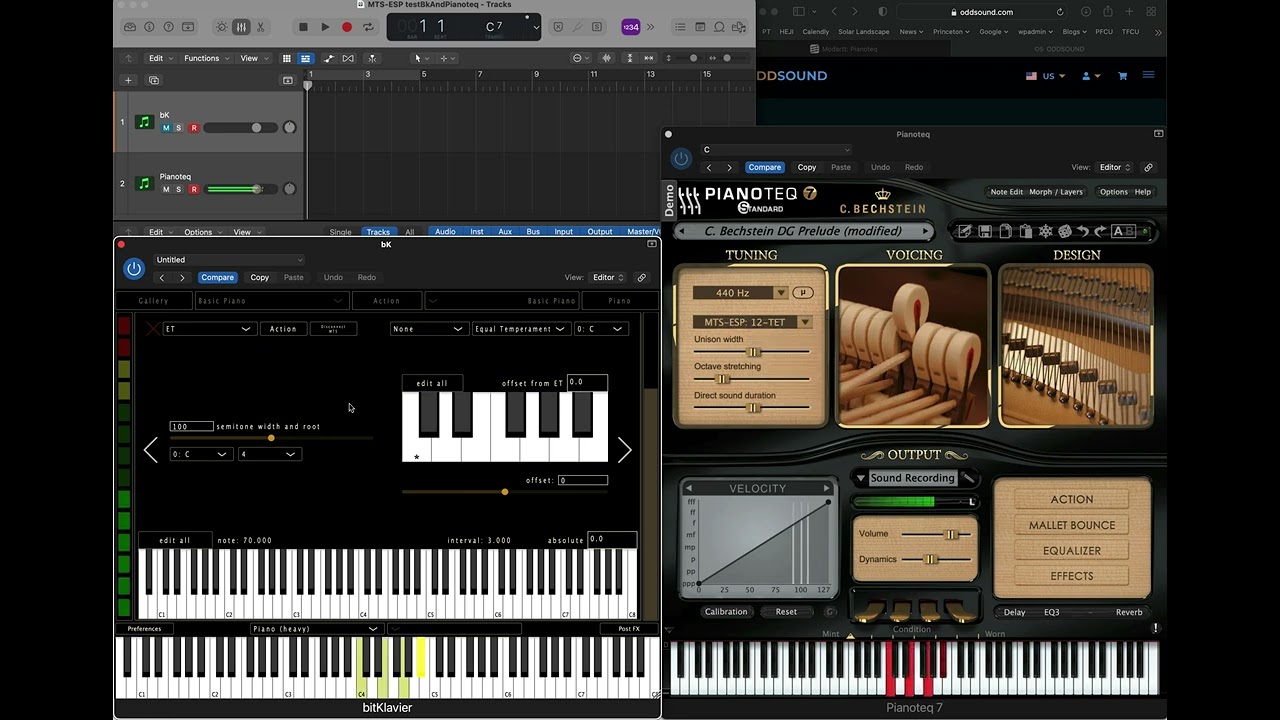
- Why this video: An essential demonstration of MTS-ESP (ODDSound), a master tuning protocol that bypasses the need to load individual Scala files into every separate plugin. You will learn how to synchronize your entire DAW project to a single global microtonal tuning server.
- Knowledge Checkpoint:
- Describe how the MTS-ESP protocol communicates tuning data dynamically between a master server and client VSTs.
- Explain how to route a master tuning signal from bitKlavier (or MTS-ESP Suite) into other active synthesizers in your session.
Module 5: Composing Spectral Drone and Ambient Music
The final module synthesizes your theoretical, musicological, and technological knowledge. You will study practical composition workflows: transforming field recordings, leveraging long-decay reverbs, stacking stable Just Intonation intervals, and applying automation to synthesize and mix evolving, immersive ambient drone tracks.
Recommended Videos
Video 1: Ambient Drone In Ableton Live From Rain Tutorial
- Why this video: This video demonstrates how to extract pitch and tonal qualities from complex, natural textures. It walks you through transforming raw field recordings (like falling rain) into highly resonant musical drones using granular synthesis, EQing, and extreme reverb stretching.
- Knowledge Checkpoint:
- Describe the process of finding and boosting resonant fundamental frequencies in a non-pitched field recording.
- Configure a reverb unit with wet mix and long decay times to create a static ambient pad.
- Automate filter frequencies to let natural spectral textures subtly emerge over time.
Video 2: SULK ROOMS - Objects In The Mirror Are Closer Than They Appear (Production Walkthrough)

- Why this video: A complete, professional walkthrough of an actual atmospheric drone production session. The artist shows how to capture accidental audio artifacts, set up loops, and structure an evolving drone track without a defined rhythmic beat.
- Knowledge Checkpoint:
- Explain the compositional technique of utilizing an Ableton Looper (or digital delay) to accumulate unpredictable layers of sound.
- Detail how to mix low-frequency drones to prevent muddy frequency masking in the master bus.
- Explain why subtle drift and unstable acoustic artifacts add emotional depth to static harmonies.
Video 3: I Discovered the SECRET to Ambient Drone with Roland S-1 and Behringer JT-4000
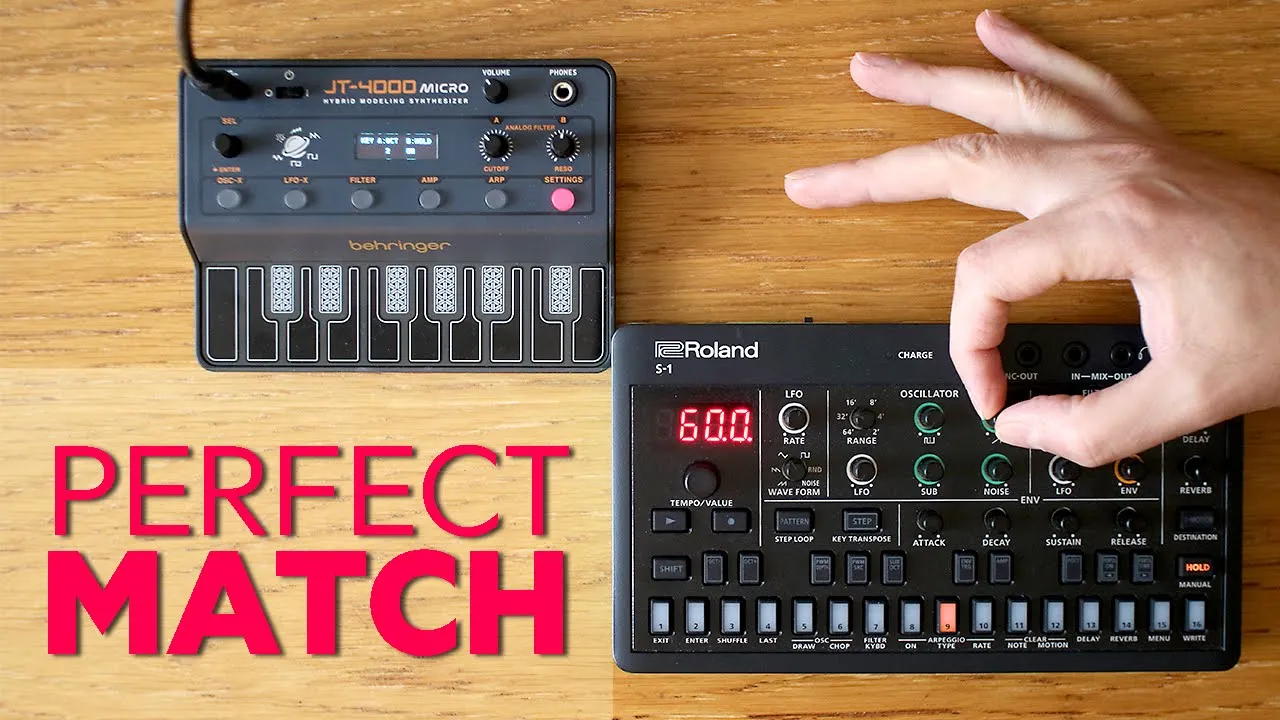
- Why this video: This video provides a blueprint for generating evolving hardware-based drones. It details how to use synth "hold" features to sustain custom-tuned microtonal chords, freeing your hands to modulate filters, wave-shaping, and envelope shapes.
- Knowledge Checkpoint:
- Explain how the "Hold" function can be used as a structural foundation for long-form ambient compositions.
- Detail how to modulate oscillator wave shapes (e.g., morphing from saw to square) to dynamically alter the active overtones in your drone.
Course Map
Key People Index
- Gérard Grisey (1946–1998): French composer and pioneer of the Spectralist movement. Known for works such as Partiels, which analyzed the acoustic spectrum of a low trombone note and mapped its overtones to a full orchestra.
- Sevish: Contemporary microtonal electronic musician, known for making highly accessible music in complex, alternate-EDO tuning systems (such as 22-EDO and 53-EDO) and developing open-source tools for scale development.
- Pythagoras: Greek philosopher who discovered the mathematical relationships between vibrating string lengths and musical pitch ratios, laying the groundwork for Just Intonation.
Final Self-Assessment
Navigate through these checklist items to confirm your comprehension and mastery of the material:
- I can explain the physical origin of the overtone series on a string or air column.
- I can calculate the frequency of any harmonic up to the 16th given a specific fundamental frequency.
- I can explain the mathematical and acoustic reasons why 12-Tone Equal Temperament represents a tuning compromise.
- I can define the "beating" phenomenon and explain how Just Intonation reduces it to create consonant, stable intervals.
- I can define the core aesthetic goals of French Spectralism and give an example of one spectralist compositional technique.
- I can explain the structural difference between equal division scales (such as 22-EDO) and pure, ratio-based Just Intonation systems.
- I can successfully write, format, and compile a custom
.sclfile using Scala syntax. - I can configure a softsynth (e.g., Surge) to load a custom
.sclscale and.kbmkeyboard map. - I can configure the MTS-ESP client/server relationship to route global tuning across multiple VSTs.
- I can construct a continuous ambient drone track utilizing granular synthesis or field recording manipulation.
- I can apply real-time filter, oscillator wave-morphing, and reverb decay modulation to design an evolving, immersive drone composition.