














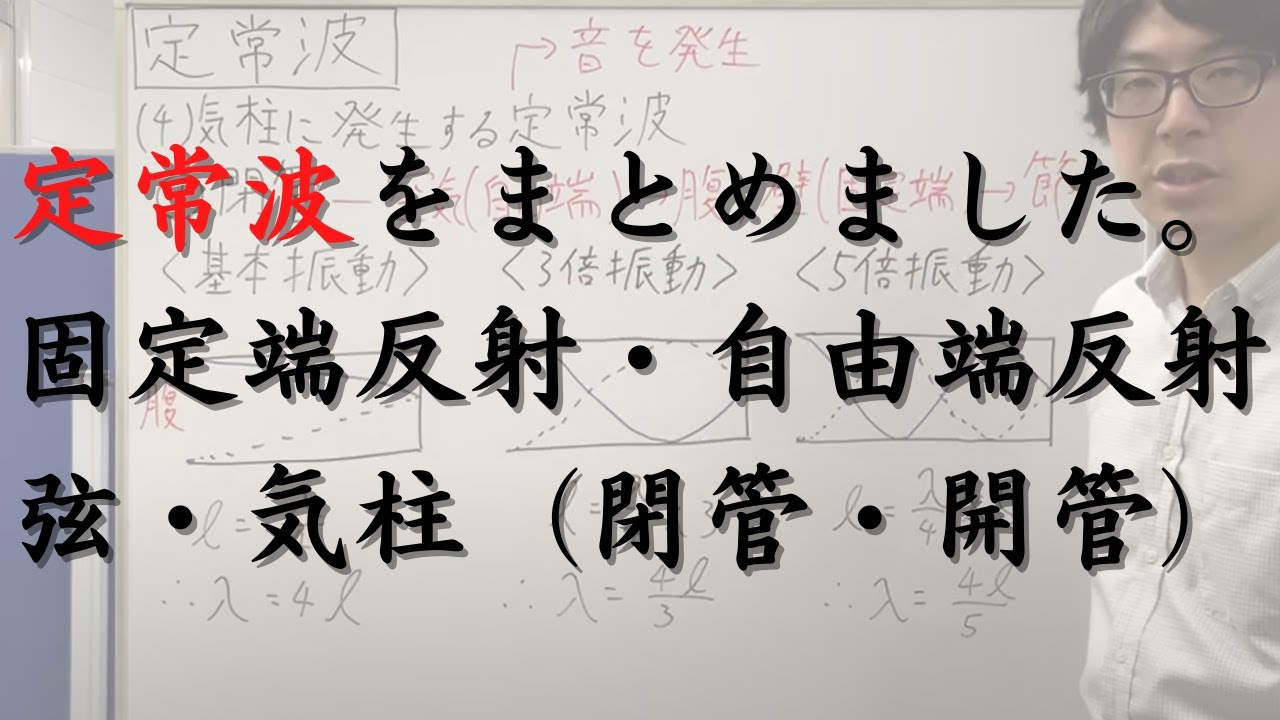









Standing waves are stationary waves formed by the interference of reflected waves, characterized by nodes (points of no displacement) and antinodes (points of maximum displacement); in musical instruments, the fundamental frequency corresponds to the first harmonic, while overtones create higher harmonics, and the specific combination of harmonics produced depends on whether the instrument has two fixed ends (piano/guitar strings), two open ends (flute), or one closed and one open end (pan flute), with closed-ended pipes unable to produce even-numbered harmonics.
Understanding Standing Waves and Harmonics in Music
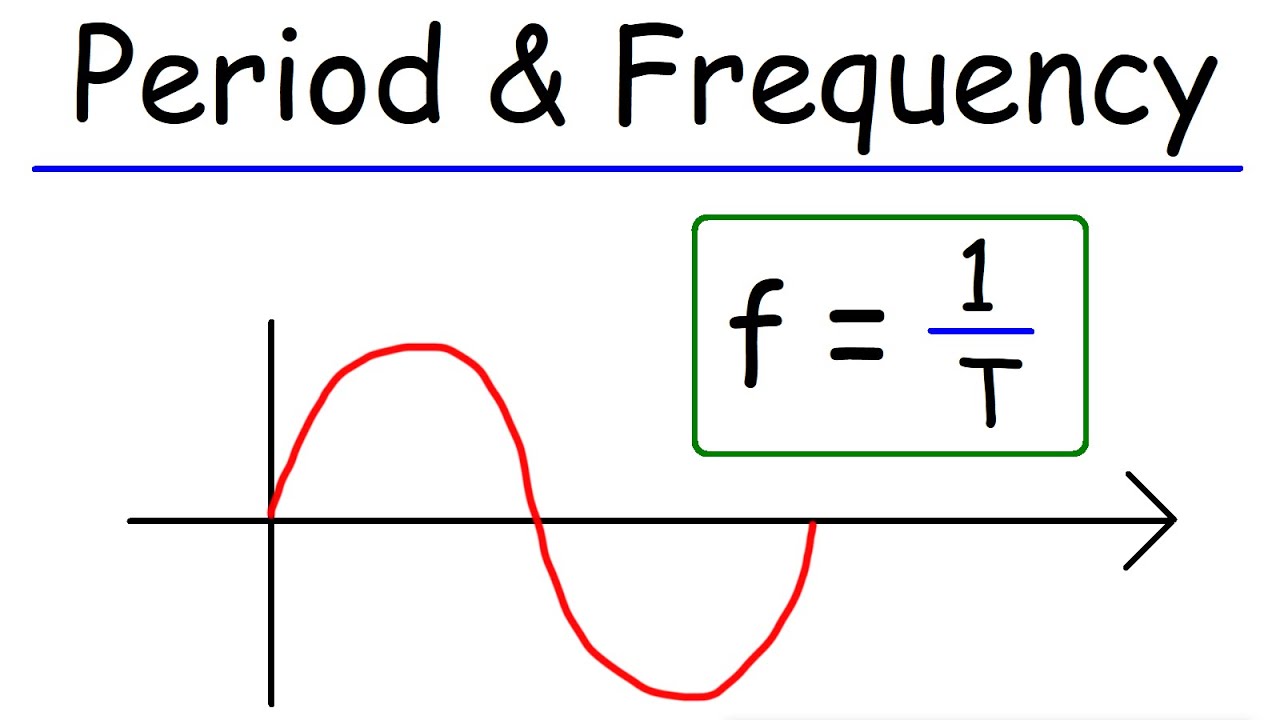
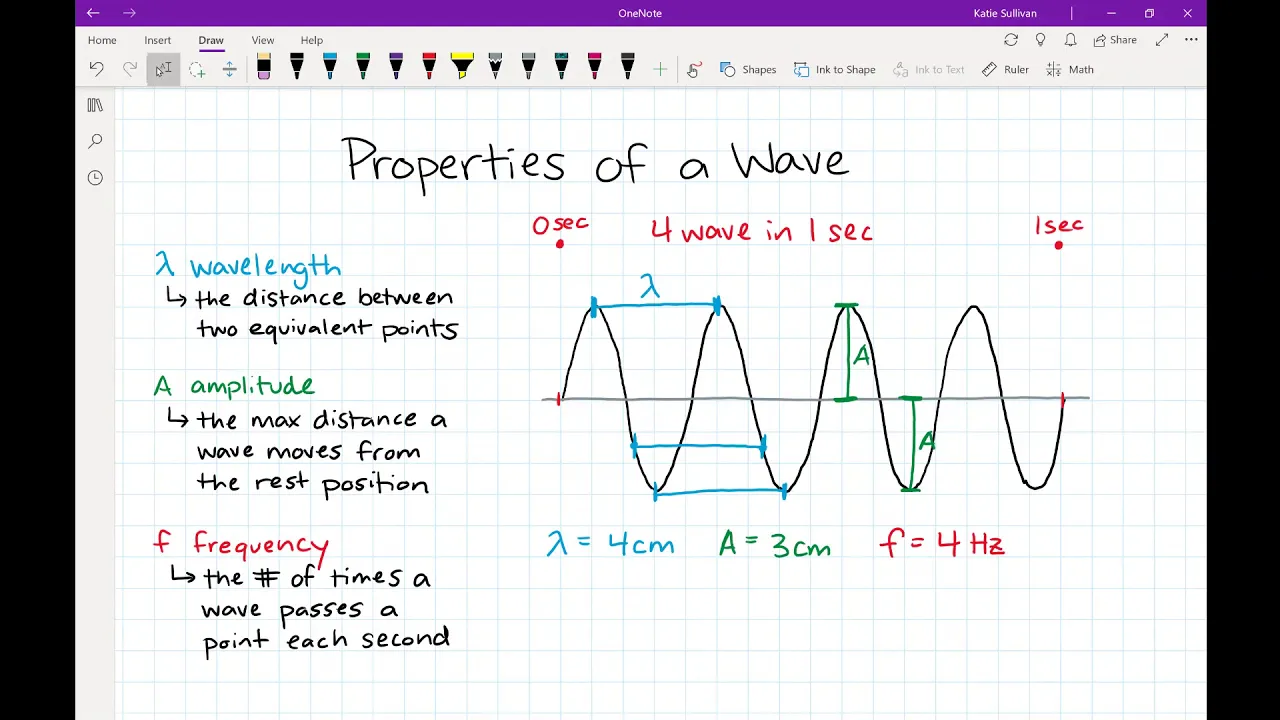
Added:Basic properties of waves, including wavelength, frequency, amplitude, and wave speed.
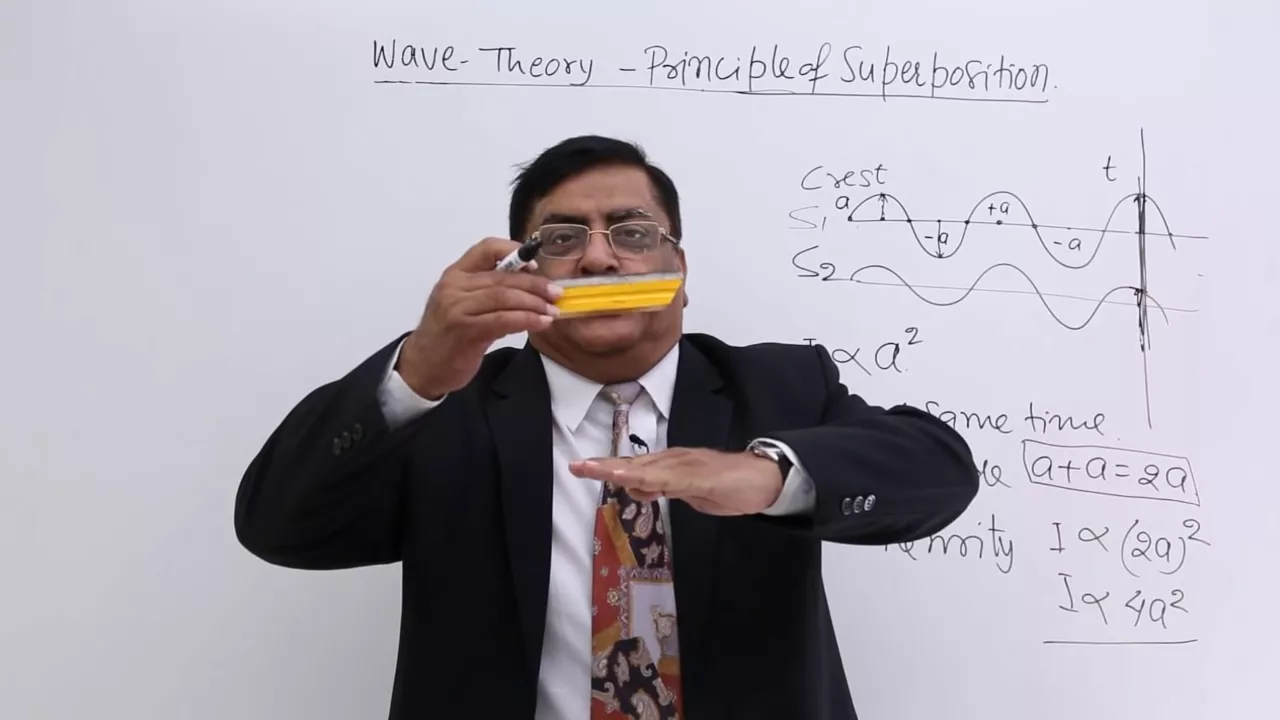
The principle of superposition and how constructive and destructive wave interference occur.
The classification of sound as a longitudinal mechanical wave requiring a medium to travel.
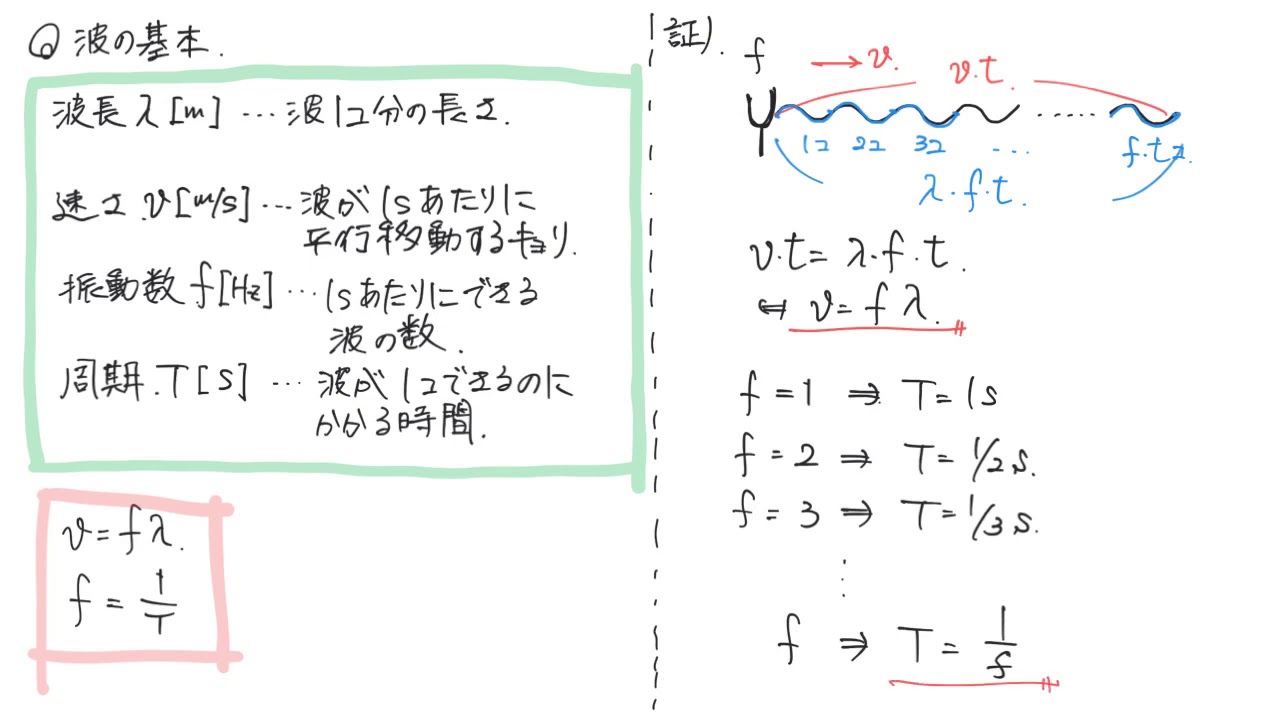
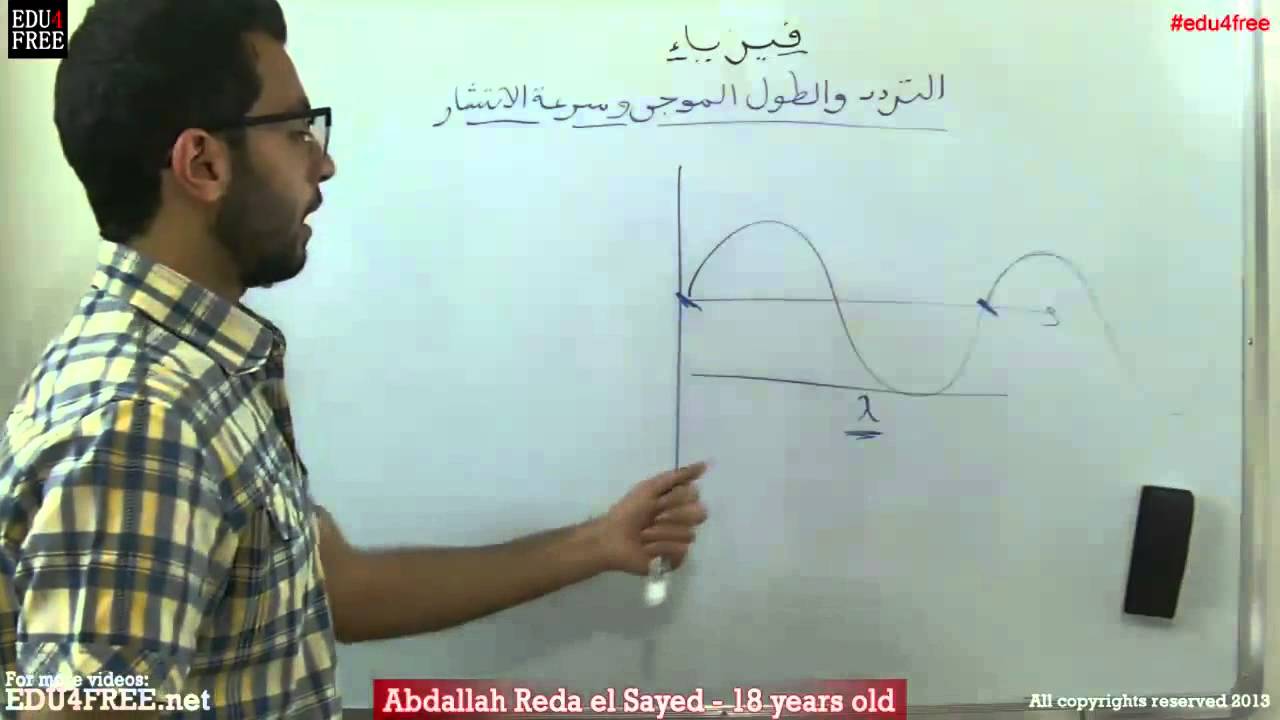
The fundamental wave equation relation, where wave speed is the product of frequency and wavelength.
How different boundary conditions affect standing waves in string instruments versus wind instruments (open and closed pipes).
The concept of timbre (tone color) and how Fourier analysis explains how combined harmonics create unique instrumental sounds.
The relationship between harmonic frequency ratios and the development of musical scales and tuning systems, such as Equal Temperament.
The principles of acoustic resonance and its applications in architectural acoustics and instrument body design.
833.9K views12.6Klikes10:35Original Release: 2016-08-11
[flute plays Crash Course theme] That’s a familiar tune!
How do instruments, like this guitar, create music?
We’ve talked about the science of sound, and some of the properties of sound waves.
But when we talk about sound waves in the context of music, there are all kinds of fascinating properties and weird rules to talk about.
I’m talking about the music that comes from string, wind, and brass instruments.
String instruments create sound when their strings vibrate in the air.
And in order to understand how these instruments work, you have to realize that making music is not just an art.
It’s ALSO a science.
[Theme Music] Sound, you’ll recall, is a wave: a ‘longitudinal’ wave.
This means that the medium that the wave travels through oscillates -- or moves back and forth -- in the same direction that the wave is moving.
But string, wind, and brass instruments use a special kind of wave — they’re ‘standing waves.'
A standing wave is a wave that looks like it isn't moving.
Its ‘amplitude’ may change, but it isn't traveling anywhere.
Standing waves are the result of two other things waves do, both of which we’ve talked about before: reflection and interference.
Reflection is what happens when a wave reaches the end of a path, and then moves back along the same path.
That’s what happens when you send a pulse down a rope -- it reaches the end, and then comes right back.
When we send a continuous wave down the rope, that’s when interference comes into play.
The wave reaches the end of the rope and is reflected, but there are more peaks on the way.
As the peaks pass each other, they interfere with one another, changing their sizes.
Usually, you end up with crests and troughs that are different sizes and various distances apart.
But at certain frequencies, the reflected waves interfere in such a way that you end up with a wave that seems to stay perfectly still, with only its amplitude changing.
That’s a standing wave, and it can happen both in strings and in the air in pipes.
And that's what makes music: Standing waves with different frequencies correspond to different musical notes.
Now, in order to understand how standing waves operate, you should get to know their anatomy.
The points of a standing wave that don’t oscillate are called nodes, and the points at the maximum height of the peaks are antinodes.
And here’s something cool.
If you look at a string on a stringed instrument, you can actually see where the nodes and antinodes are.
The standing wave creates peaks along the string, and between those peaks, there are points that just stay still.
So the peaks are the antinodes, and the points that don’t oscillate are nodes.
And if one or both of the string’s ends are fixed, then each fixed end is a node too, because it’s stuck in place.
Now, in a pipe, the standing waves are made of air molecules moving back and forth.
But the areas where molecules oscillate the most (including those near any open ends of the pipe) form the peaks, and therefore the antinodes.
And between those peaks, as well as at any closed ends of the pipe, are areas where molecules don’t move at all; those are the nodes.
Generally, musicians make their music using the frequencies of these standing waves.
But the nature of these waves depends a lot on what the ends of the string or pipe look like.
Remember how a wave traveling down a rope gets reflected differently, depending on whether the end of the rope is fixed or loose?
A fixed end will invert the wave -- turning crests into troughs, and vice versa -- while a loose end will just reflect it without inverting it.
The same thing holds true for air in a pipe: a closed end will invert the wave, while an open end won’t.
So the properties of a standing wave will be a little different, depending on whether it’s made with a string with two fixed ends, or a pipe with two ends open, or a string or a pipe with one end fixed, and the other open.
A string with two fixed ends -- like in a piano -- is probably the simplest way to understand standing waves.
Because, we know that no matter what, the wave made by a fixed string will have at least two nodes -- one at each end.
And in its most basic form, it would have just one antinode, in the middle.
So the wave is basically a peak that moves from being a crest to a trough and vice versa like some kind of one-dimensional jump rope.
This most basic kind of standing wave is known as the fundamental -- or the 1st harmonic.
It’s the simplest possible standing wave you can have, with the fewest nodes and antinodes.
There are other, more complex standing waves that you can have, too.
These are known as overtones.
Overtones build on the fundamental, incrementally: each overtone adds a node and an antinode.
So each of these overtones is related to the fundamental wave -- and all of the overtones are related to each other.
Together, the fundamental wave and the overtones make up what are known as harmonics.
The fundamental is the 1st harmonic, and the overtones are higher-numbered harmonics.
With each node-and-antinode pair that’s added to the standing wave, the number of the harmonic goes up: 2nd harmonic, 3rd harmonic, and so on.
Now, physicists sometimes express harmonics in terms of wavelength.
For example, for a string with two fixed ends, you’ll notice that the fundamental covers exactly half a wavelength.
A full wavelength of the wave would span two peaks: a crest and a trough, but the fundamental spans exactly one peak, which is half the wavelength.
So, for the fundamental of a string with two fixed ends, the length of the string is equal to half a wavelength.
The second-simplest standing wave you can have on a string with two fixed ends has 3 nodes -- one at each end, and one in the middle -- plus 2 antinodes in between the nodes.
It’s called the 2nd harmonic, and the string holds exactly one wavelength.
You can probably guess what the 3rd harmonic looks like: it has 4 nodes and 3 antinodes, and the string holds 1.5 -- or, 3/2 -- wavelengths.
You may have started to notice a pattern: For a standing wave on a given length of string, the number of wavelengths that fit on the string is equal to the number of the harmonic, divided by 2.
So, now we have an equation that relates the wavelength of a standing wave to the number of the harmonic and the length of the string.
Once you get a handle on wavelength, you can figure out the aspect of the wave that musicians care about most -- the frequency.
We’ve already established that a wave’s wavelength, times its frequency, is equal to its velocity, which will be the same for each harmonic, because a wave’s velocity only depends on the medium it’s traveling through.
So a standing wave’s frequency will be equal to its velocity divided by its wavelength.
For the fundamental with two fixed ends, we already know that the wavelength is twice the string's length.
So the frequency of that fundamental standing wave -- known as the fundamental frequency -- is equal to the velocity, divided by twice the length of the string.
We write it as f, with a subscript of 1.
Now what about the frequency of the second harmonic -- the standing wave with 3 nodes and 2 antinodes?
It will be equal to the velocity, divided by the length of the string.
Which is twice the fundamental frequency.
And the frequency of the third harmonic, with its 4 nodes and 3 antinodes, will be equal to three times the fundamental frequency.
So, we’re starting to see another pattern here: The frequency of a standing wave with two fixed ends will just be equal to the number of the harmonic, times the fundamental frequency.
In fact, that’s one way to define harmonics: The number of a harmonic is equal to the number you multiply by the fundamental frequency, to get the harmonic’s frequency.
This math is what makes musical instruments work.
When you press down a key on a piano, you make a hammer strike a string, creating standing waves in that string.
Every string in the piano is tuned so that its fundamental frequency -- which depends on the string’s mass, length, and tension -- corresponds to a given note.
Middle C, for example, is 261.6 Hz.
Guitars are also tuned so that the fundamental frequencies of their strings, correspond to set notes.
And when you press down on the strings in certain places, you change the length of the active part of string so that its fundamental frequency corresponds to a different note.
So, for a standing wave with two fixed ends, we can relate wavelength, frequency, velocity, the length of the string, and the number of the harmonic.
And we can do the exact same thing for a standing wave with two loose ends -- in an open pipe, for example, like in a flute.
A standing wave in a pipe with two open ends is kind of the opposite, of the wave with two fixed ends: Instead of having a node at each end, it has an antinode at each end.
So the fundamental standing wave for a pipe with two open ends will have two antinodes, and one node in the middle of the wave.
Then, the 2nd harmonic will have three antinodes and two nodes, and so on.
But each harmonic still covers the same number of wavelengths.
Remember how the fundamental wave for a string with two fixed ends covered half of a wavelength?
The fundamental wave for a pipe with two open ends also covers half of a wavelength.
That half is just in a different section of the wave.
And just like a string with two fixed ends, the second harmonic for a pipe with two open ends also covers a full wavelength.
It’s just that, in the case of the pipe, the wave starts and ends with a peak instead of a node.
So the equations for wavelength and frequency for a standing wave with two open ends will be the same as they were for a standing wave with two fixed ends.
So, we’ve covered guitars and pianos and flutes!
But a pipe with one closed end and one open end works a little differently.
These kinds of pipes are used in instruments like pan flutes, where you blow across the top of a closed pipe to make music.
Here, standing waves need a separate set of equations, for a couple of reasons: First, the closed end of the pipe will be a node, because the air molecules aren’t oscillating there.
And the open end will be an antinode, because that’s where there’s a peak in the oscillations.
Which means that the simplest wave you can make in this pipe will stretch from one node, to one peak.
But that’s only a span of a quarter of a wavelength in the pipe.
Before, with both a string fixed at both ends, and an open pipe, the fundamental spanned half a wavelength.
The fact that a pan-flute pipe only covers a quarter of a wavelength changes things.
Because, remember: the frequency of each harmonic is equal to the number of the harmonic, times the fundamental frequency.
But for a pipe that’s closed on one end, you can’t double the fundamental frequency, or quadruple it -- or multiply it by any even number.
Because it would result in a wave that would need a node on both ends, or a peak on both ends.
Which isn't possible.
So, a pipe that’s closed on one end can’t have even-numbered harmonics.
All of this helps explain why musical instruments sound different, even when they’re playing the same note.
When you play a note, you’re creating the fundamental wave, plus some of the other harmonics -- the overtones.
And for each instrument, different harmonics will have different amplitudes -- and therefore sound louder.
But because of the physics of standing waves, instruments that have pipes with one closed end won't create the even-numbered harmonics at all.
That’s why a C on the flute sounds so different from a C on, say, the bassoon!
Today, you learned about standing waves, and how they’re made up of nodes and antinodes.
We discussed harmonics, and how to find the frequency of a standing wave on a string with two fixed ends, a pipe with two open ends, and a pipe with one closed end.
Finally, we explained why a pipe with one closed end can’t have even-numbered harmonics.
Crash Course Physics is produced in association with PBS Digital Studios.
You can head over to their channel and check out a playlist of the latest episodes from shows like First Person, PBS Game/Show, and The Good Stuff.
This episode of Crash Course was filmed in the Doctor Cheryl C. Kinney Crash Course Studio with the help of these amazing people and our equally amazing graphics team is Thought Cafe.
Up Next

6:43
Detecting Ionizing Radiation in a Cloud Chamber: Electron Beam Visualization
@TheActionLab
279.8K views•2021-08-19

12:53
21cm Hyperfine Transition in Neutral Hydrogen: Radio Astronomy Basics
@AaronRobertParsons
12.4K views•2011-10-13
8:59
Special Relativity Explained: Time Dilation and Length Contraction
@crashcourse
1.4M views•2017-02-23

27:14
Entropy and the Second Law of Thermodynamics Explained
@veritasium
27.5M views•2023-07-01
Related Study Plans & Knowledge Roadmaps
Structured learning paths in Physics
physics
Nuclear Physics (Decay, Fission & Reactors)
01Atomic Structure and the Binding Force
02Radioactive Decay and Half-Life
03Nuclear Fission Mechanics and Chain Reactions
+ 2 more learning modules
12h5 modules
Explore Roadmap
physics
Soft Matter (Polymers, Colloids & Rheology)
01Foundations of Soft Matter & Thermal Forces
02Polymer Physics and Macromolecules
03Colloids, Surfactants, and Self-Assembly
+ 2 more learning modules
38h5 modules
Explore Roadmap
physics
Analytical Mechanics: Lagrangian & Hamiltonian
01Mathematical Foundations: Calculus of Variations
02From Newtonian Mechanics to Constraint Dynamics
03The Principle of Least Action & Lagrangian Mechanics
+ 3 more learning modules
28h6 modules
Explore Roadmap
physics
General Relativity (Spacetime & Cosmology)
01Foundations of Relativity: Special Relativity
02The Geometry of Spacetime: Equivalence Principle & Curvature
03Einstein's Field Equations: The Mathematics of Gravity
+ 2 more learning modules
55h5 modules
Explore Roadmap