Just intonation produces pure, resonant harmonic intervals by using natural frequency ratios, while equal temperament slightly detunes intervals to allow modulation between keys; modern technology now enables musicians to restore pure harmony that composers like Bach could only approximate, eliminating the 'rough and restless' beating heard in tempered tuning.
Just Intonation vs Equal Temperament: A Comparative Analysis
Added:Deep Dive
Understanding of the physics of sound, specifically frequency (Hz), pitch, and how they relate to the human perception of audio.
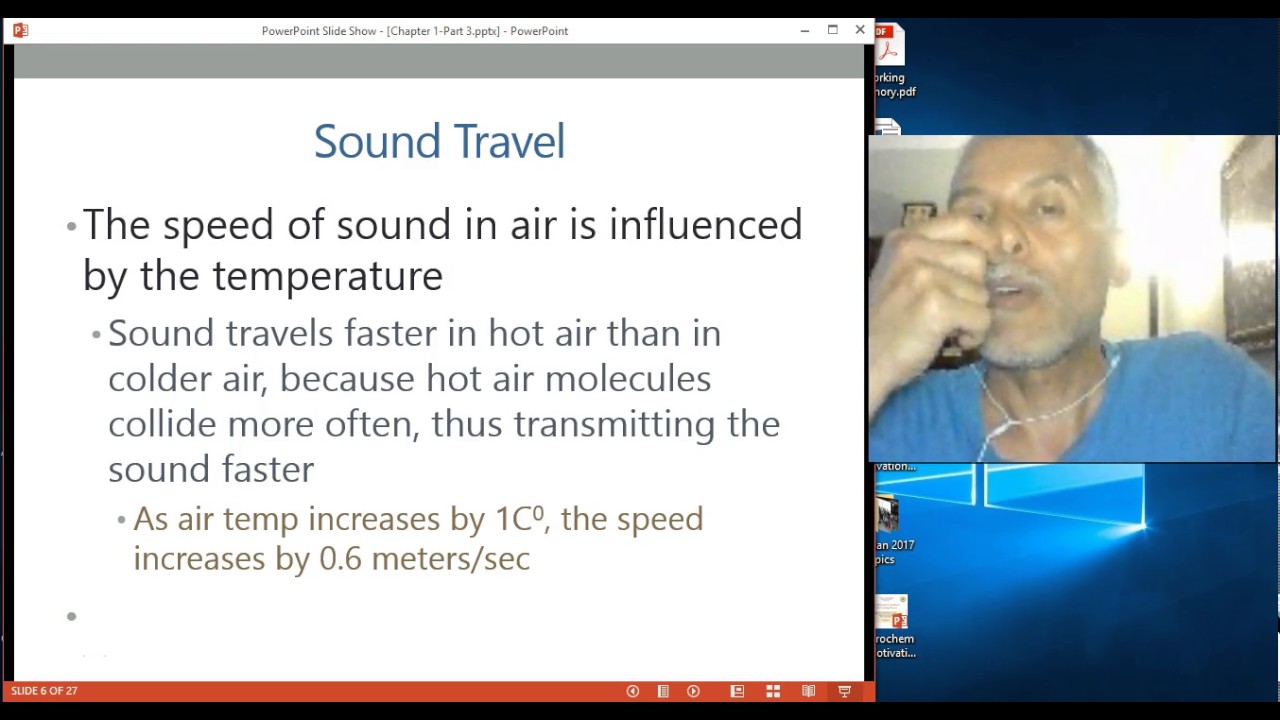
S&H Nature of Sound Part 3
117
Frequency is the absolute number of vibrations per second (measured in Hertz), while pitch is our subjective perception of frequency. Higher frequency produces higher pitch. Three physical characteristics determine pitch: mass (heavier objects vibrate slower, producing lower pitch), length (longer objects vibrate slower, producing lower pitch), and tension (tighter objects vibrate faster, producing higher pitch). The human hearing range is 20 Hz to 20,000 Hz, with speech sounds best heard between 1,000 Hz and 4,000 Hz. These principles explain why adult males have lower voices than children and how vocal folds control pitch.
Click to watch →
What is Frequency ? Frequency Explained. What is Hz?
111.1K
Human ears are tuned to perceive frequencies between 20 hertz and 20 kilohertz. Sound waves are essentially changes in air pressure. When air pressure changes 20 times per second, it creates a 20 hertz sound wave. When air pressure changes 20,000 times per second, it creates a very high-pitched sound that humans can hear. This demonstrates how frequency directly determines the pitch of sounds we perceive.
Click to watch →

EMRS MUSIC CLASS||EMRS MUSIC NOTES #emrsmusic #kvsmusic #nvsmusic
4.5K
Frequency (आवृत्ति) measures sound vibration speed as vibrations per second, measured in Hertz. Pitch is the subjective perception of frequency. Human ears can only hear sounds between 20 Hz and 20,000 Hz. Sounds below 20 Hz are Infrasound, and above 20,000 Hz are Ultrasound. Different musical notes correspond to different frequencies, with Sa at 240 Hz, Re at 270 Hz, Ga at 300 Hz, and so on.
Click to watch →

Hertz and frequency response
34.1K
Hertz (Hz) measures cycles per second, with prefixes like kHz (1,000 Hz), MHz (1 million Hz), and GHz (1 billion Hz). In audio, frequency refers to how many times a sound wave completes a cycle per second, directly determining pitch—higher frequency means higher pitch. The human ear hears from 20 Hz to 20 kHz, with sounds above called ultrasonic and below called subsonic. This range divides into lows, mids, and highs. Most adults cannot hear above 16 kHz, and hearing decreases with age, explaining why children hear high-pitched ring tones adults cannot.
Click to watch →

Frequências do Som | Hertz | Ciclos | Entenda de uma vez | Expert Electronics
104.7K
Hertz (Hz) measures audio frequency as cycles per second. One cycle involves a speaker cone moving outward, inward, and returning to rest. Higher Hz values mean more cycles occur in one second. Named after physicist Heinrich Rudolf Hertz, this unit covers the human hearing range of 20 Hz to 20,000 Hz. Lower frequencies near 20 Hz produce deeper, graver sounds, while frequencies approaching 20 kHz create higher-pitched tones. Understanding this relationship is essential for audio processing and equipment selection.
Click to watch →
Deep Dive
Familiarity with the harmonic series and overtones, including how integer-ratio multiples of a fundamental frequency create natural harmonics.

ESTUDO DE ESCALAS, EMPRÉSTIMO MODAL, ACORDE LÍDIO, DICAS || #1625AOVIVO - NELSON FARIA
637.6K
The harmonic series consists of frequencies that are integer multiples of a fundamental frequency. For example, if the fundamental is 200 Hz (C), the series includes 400 Hz (C octave), 600 Hz (G), 800 Hz (C), 1000 Hz (E), and so on. These frequencies create the natural overtones that give instruments their characteristic timbre.
Click to watch →

Music Building
4.9K
When a string or column of air vibrates, it produces a fundamental frequency along with overtones that are integer multiples of that fundamental frequency. For example, if the fundamental frequency is 220 Hz (an A note), the overtones occur at 440 Hz (2×), 660 Hz (3×), 880 Hz (4×), and so on. These integer multiples form what is called the harmonic series. The prominence of these overtones decreases as you move away from the fundamental pitch, with the first few overtones being most significant for determining the character of a note.
Click to watch →
Why Did We Evolve To Like Harmony?
61.3K
When any periodic sound is produced (voice, flute, guitar), it contains multiple frequencies simultaneously called the harmonic series. The fundamental frequency creates the main pitch, while overtones at integer multiples create additional notes. The first overtone is an octave above (2:1 ratio), followed by a perfect fifth (3:2), then a perfect fourth (4:3), then a major third (5:4), and so on. These intervals form a major chord naturally within every pitched sound.
Click to watch →
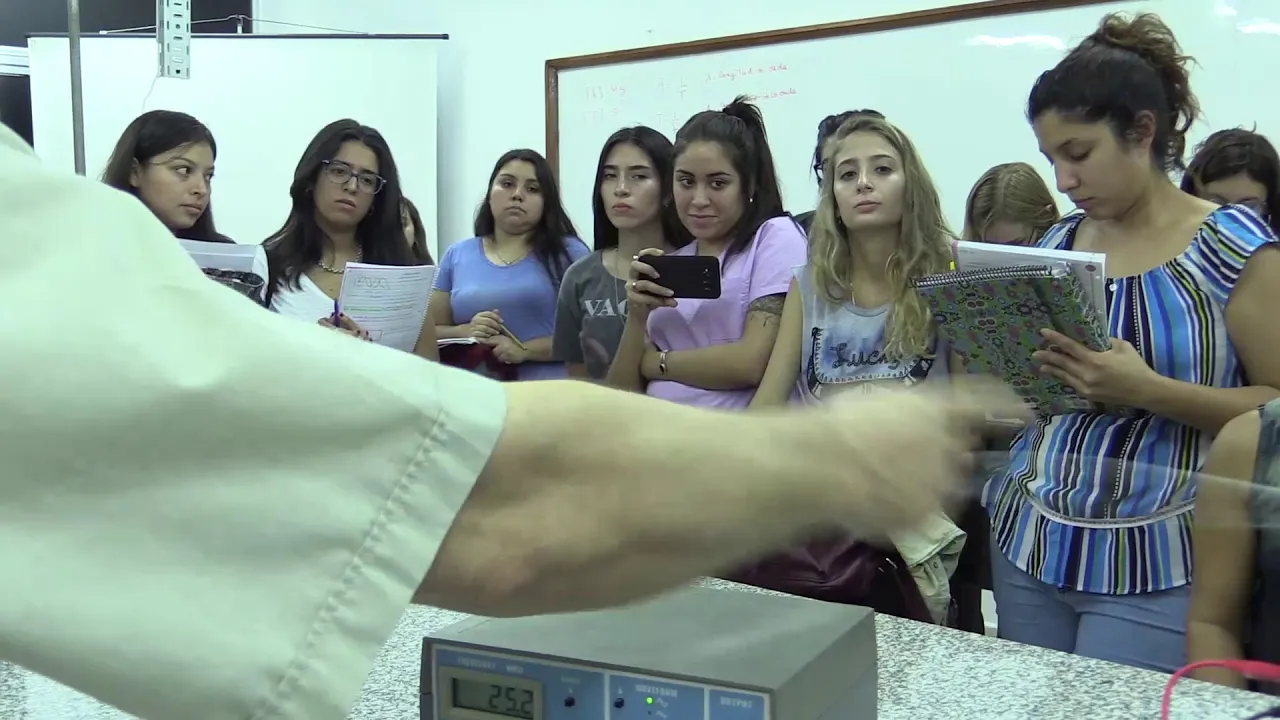
Laboratorio de Acústica Parte 5
2.1K
Harmonics are integer multiples of the fundamental frequency. The fundamental frequency (first harmonic) is the base frequency. The second harmonic vibrates at double the fundamental frequency (2f). The third harmonic vibrates at triple the fundamental frequency (3f). The fourth harmonic vibrates at four times the fundamental frequency (4f). The fifth harmonic vibrates at five times the fundamental frequency (5f). For harmonics to form, an integer number of half-wavelengths must fit within the string length, satisfying boundary conditions at both ends.
Click to watch →

Overtones, harmonics and Additive synthesis
439.1K
Harmonic overtones always occur at whole number multiples of the fundamental frequency. For example, if the fundamental frequency is A at 110 Hz, the first harmonic is also 110 Hz (the fundamental itself), the second harmonic is 220 Hz (fundamental × 2), the third harmonic is 330 Hz (fundamental × 3), continuing infinitely. The mathematical relationship ensures that each overtone starts and finishes at the same phase points as the fundamental frequency, creating a repetitive wave cycle essential for musical tones.
Click to watch →
Deep Dive
Basic music theory concepts of intervals (such as octaves, perfect fifths, and major thirds) and their mathematical representations as frequency ratios.
Music Theory: Intervals as Ratios (Just Intonation)
11.6K
In just intonation, musical intervals are defined by their frequency ratios derived from the overtone series, where the most harmonious intervals have the simplest ratios: the perfect fifth is 3:2 (1.5), the perfect fourth is 4:3 (1.333), the major third is 5:4 (1.25), and the minor third is 6:5 (1.2); as intervals become more complex with larger numbers in their ratios, they become progressively less harmonious and more dissonant, which is why equal temperament was developed to divide the octave into twelve equal semitones using the twelfth root of 2 (~1.05946) for consistent tuning across all keys.
Click to watch →

Math and Music Pt2/5
32.5K
Musical intervals are defined by specific mathematical ratios: the octave has a ratio of 2:1, the fifth is 3:2 (approximately 1.5), the fourth is 4:3 (approximately 1.33), the major third is 5:4 (1.25), the major sixth is 5:3 (approximately 1.67), and the major seventh is 15:8 (approximately 1.875). These simple ratios, which Pythagoras believed were given by God, determine the consonance and dissonance of musical intervals, with simpler ratios producing more pleasing sounds. The frequency of a musical note is measured in hertz, where an octave higher doubles the frequency (e.g., A4 at 440 Hz becomes A5 at 880 Hz).
Click to watch →

Your ultimate guide to TUNING! | Team Recorder
72.1K
In music theory, the relationships between frequencies determine interval qualities. An octave has a frequency ratio of 2:1, meaning the higher note is exactly double the lower note's frequency—this creates a perfect fit that sounds beautiful. A perfect fifth has a ratio of 2:3, a perfect fourth has 3:4, and a major third has 4:5. These simple mathematical ratios create consonant, pleasant-sounding intervals.
Click to watch →
Математика 2025 года, лекция Савватеева «Тройки abc, и abc- гипотеза»
6.7K
Musical intervals are based on frequency ratios. An octave corresponds to 2:1 ratio. A perfect fifth corresponds to 3:2 ratio. The 12-tone equal temperament system divides the octave into 12 equal semitones, where each semitone increases frequency by 2^(1/12) ≈ 1.05946.
Click to watch →

| Live | Acústica - Qualidades fundamentais | Física | Prof. Rodrigo Trevisano
10.1K
Musical intervals are defined by the ratio between frequencies of two notes. An interval of 1 (f2/f1 = 1) means the notes have the same frequency (unison). An interval of 2 (f2/f1 = 2) means the frequency has doubled, corresponding to one octave above. An interval of 1/2 (f2/f1 = 1/2) means the frequency has halved, corresponding to one octave below. These ratios are fundamental to musical harmony and tuning systems.
Click to watch →
Deep Dive
An introductory understanding of consonance and dissonance, particularly how overlapping sound waves can cause acoustic beating.

ТОП 7 ЗВУКОВЫХ ИЛЛЮЗИЙ. Обман слуха
62.1K
Beats occur when two periodic (harmonic) sounds with close frequencies are superimposed, creating a periodic increase and decrease in the amplitude of the combined signal. When two waves differ by 1 Hz (e.g., 200 Hz and 201 Hz), they coincide once per second, producing one beat per second. Human hearing can clearly perceive beats up to 6 per second, which creates a vibrato-like effect. However, when the beat rate exceeds this threshold, the perception becomes unpleasant, which forms the objective basis for perceiving musical dissonance as a tense combination of sounds.
Click to watch →

Musical Consonance & Dissonance Explained...
80.6K
Consonance refers to pleasant, stable musical sounds that can begin or end a piece (like major chords), while dissonance refers to unstable, tense sounds that require resolution to consonance (like diminished triads); these concepts can be understood through three perspectives: the musician's definition (pleasant vs. unpleasant sounds), the untrained listener's perception (sounds resembling single tones vs. multiple competing tones), and the audio engineer's analysis (frequency ratios where smaller ratios produce more consonant sounds).
Click to watch →

Dissonance is the Heart of Good Music
60.1K
The perception of consonance and dissonance has both scientific and cultural foundations. The harmonic series explains why certain intervals sound natural—the fundamental note produces overtones at precise mathematical ratios (octave 1:2, fifth 2:3, fourth 3:4, major third 4:5). When two notes play together, their sound waves interfere, creating beating sounds that become rougher as pitches get closer. However, this scientific framework has limitations—Rameau could not explain minor chords within it. These physical principles provide part of the explanation but not the whole story.
Click to watch →

The Physics Of Dissonance
1.1M
Musical dissonance and consonance arise from the interaction between the fundamental frequencies and overtones of sound waves; when two notes have overtones that align closely in frequency, they create consonance (harmony), while misaligned overtones create dissonance (tension), which explains why different musical cultures developed different scales and tuning systems based on the overtone patterns of their primary instruments.
Click to watch →
MÚSlCA, FREQUÊNClA E C0NTR0LE MentaI
9.7K
Consonance refers to sounds that sound pleasant and stable, while dissonance refers to sounds that sound unpleasant and unstable. The video explains that consonance involves specific mathematical relationships between frequencies, particularly the coincidence of harmonics (overtones). Perfect consonance occurs when frequencies have simple integer ratios, such as unisons, octaves, fourths, and fifths.
Click to watch →
Prerequisite Knowledge
- Concept 01Understanding of the physics of sound, specifically frequency (Hz), pitch, and how they relate to the human perception of audio.
- Concept 02Familiarity with the harmonic series and overtones, including how integer-ratio multiples of a fundamental frequency create natural harmonics.
- Concept 03Basic music theory concepts of intervals (such as octaves, perfect fifths, and major thirds) and their mathematical representations as frequency ratios.
- Concept 04An introductory understanding of consonance and dissonance, particularly how overlapping sound waves can cause acoustic beating.
Subsequent Learning
- Step 01The historical evolution of tuning systems, including Pythagorean tuning, Meantone temperament, and Well-temperaments (like those used in Bach's Well-Tempered Clavier).
- Step 02The musical and compositional trade-offs of Equal Temperament, specifically how it enables modulation to any key at the cost of acoustically pure intervals.
- Step 03An introduction to microtonality and xenharmonic music, exploring alternative equal divisions of the octave (such as 19-EDO or 31-EDO) and non-octave scales.
- Step 04Practical application in electronic music and synthesizer programming, such as using Scala files to implement custom microtuning and Just Intonation in modern digital audio workstations (DAWs).
Harmonic vs Tempered
Bach’s Vision Realized
Harmonic vs Tempered
0:04Playing Section
- 1
Compares pure harmonic intervals with modern tempered tuning, highlighting audible pitch discrepancies.
- 2
Demonstrates rough, restless quality of tempered chords versus clear, resonant pure intervals.
- 3
Contrasts a chord progression played in false tempered tuning with its auto-retuned counterpart.
Cultural and Cognitive Constructivism in Musical Consonance
While the debate between Just Intonation and Equal Temperament relies on acoustic and mathematical definitions of 'pure' consonance (based on simple integer ratios), cognitive science and ethnomusicology offer a critical counterpoint: consonance and dissonance are not purely objective physical phenomena, but are heavily shaped by culture, exposure, and learning. Research shows that listeners from non-Western musical traditions—such as Bulgarian folk singing or Indonesian Gamelan—do not perceive acoustic beating or complex frequency ratios as inherently dissonant. Instead, they often favor tuning systems, like the slendro and pelog scales, that defy both Western harmonic series and equal divisions of the octave. This perspective argues that musical 'perfection' is a cultural construct rather than an absolute biological or physical law, suggesting that the brain's plasticity and cultural conditioning play a far greater role in shaping musical preference than the physics of vibrating strings alone.
Deep Dive
The historical evolution of tuning systems, including Pythagorean tuning, Meantone temperament, and Well-temperaments (like those used in Bach's Well-Tempered Clavier).

Der Wolf in der Musik | Obertonreihe, Komma, historische Stimmungen, Wolfsquinte, Hörbeispiele
17.7K
Medieval European music used Pythagorean tuning, which tuned all fifths to be perfectly pure except for one 'wolf fifth' that bore the entire burden of the Pythagorean comma. Only octaves and fifths were considered consonant; seconds and thirds were used only as dissonant suspensions. During the Renaissance, thirds became accepted as consonant intervals, requiring new solutions. Mean tone temperament emerged, prioritizing pure major thirds by reducing each fifth by one-quarter of the comma, creating beautifully resonant thirds but causing the circle of fifths to break open at one point. By the late 17th century, various well-tempered tunings emerged, partially solving the problem by applying mean-tone adjustments selectively to some fifths while keeping others pure. Bach's 'Well-Tempered Clavier' demonstrated that all keys could be used musically, though each well-tempered system had its own unique character for each key. The subjective nature of tonal color perception meant that claims about key characteristics were often more artistic than acoustically precise.
Click to watch →

Temperaments - What you need to know
1.4M
Temperaments are systems that define the exact sizes of musical intervals; historically, they evolved from Pythagorean tuning (pure fifths creating a 'wolf' interval) to meantone temperaments (prioritizing pure major thirds), then to irregular/well-tempered temperaments (offering some pure intervals while others sound tense), and finally to equal temperament (where all 12 fifths are equally tempered to close the circle, becoming the dominant system by the 19th century despite being technically achievable only with modern tuning machines).
Click to watch →

Tunings, Temperaments, and the Well Tempered Clavier
1.1K
Tuning systems in Western music evolved from pure tunings like just intonation and Pythagorean tuning, which prioritize harmonic purity but limit key flexibility, to tempered systems like mean tone temperament and well temperament, which sacrifice some purity for greater flexibility across keys; Bach's Well-Tempered Clavier was specifically composed for well temperament, which allows modulation between all keys while preserving each key's unique character, rather than equal temperament, which divides the octave into 12 equal parts for complete key interchangeability but eliminates the distinctive qualities of individual keys.
Click to watch →
Live 12 : Comprendre et utiliser les tempéraments alternatifs
3.9K
The generalization of equal temperament is a relatively recent phenomenon dating to the mid-19th century. Before this, different temperaments were used, left to composer and performer choice. In medieval music, fewer tonalities and simpler harmonies reduced the need for equal temperament. Pythagorean tuning constructs perfect fifths but causes octaves to drift, creating the Pythagorean comma. Bach's 'Well-Tempered Clavier' explored all 12 tonalities, requiring new systems. Multiple temperaments coexisted, including mesotonic and Zarlino's system. Music from the 17th-19th centuries was composed with different temperaments than modern recordings. Composers chose tonalities based on acoustic colors—fewer alterations produced brighter sounds, while more alterations created different qualities.
Click to watch →
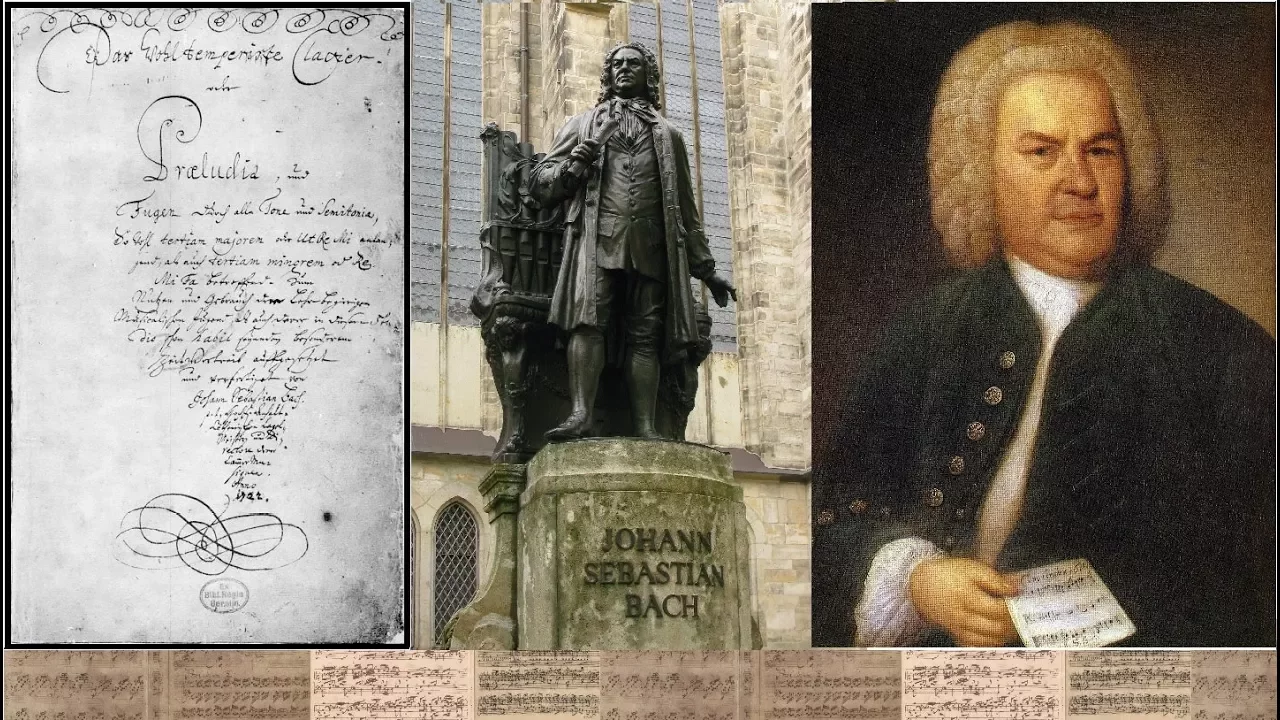
EL CLAVE BIEN TEMPERADO - El rincón del melómano
61.9K
Bach's Well-Tempered Clavier (1722-1744) is a collection of 48 preludes and fugues, each in a different tonality, that demonstrated the viability of equal temperament—a tuning system that allows playing in all 24 tonalities without retuning. However, Bach actually collaborated with organ builder Andreas Werckmeister to develop 'good temperaments' that preserved each tonality's unique character, rather than using pure equal temperament. This work reinforced the Baroque theory of affects, which associated each tonality with specific emotional characteristics, establishing a tradition that influenced Chopin's 24 Preludes and continues to shape musical interpretation today.
Click to watch →
Deep Dive
The musical and compositional trade-offs of Equal Temperament, specifically how it enables modulation to any key at the cost of acoustically pure intervals.

The Mathematical Problem with Music, and How to Solve It
852.3K
Equal temperament divides the octave into 12 equal semitones using the 12th root of 2 (~1.06) as the ratio between adjacent notes. This enables perfect transposition between any keys—a revolutionary advantage for Western music. The fifth approximates 3:2 with only 0.1% error, nearly indistinguishable to expert ears. However, all intervals except the octave are slightly compromised, particularly the third (~0.8% error). This system sacrifices the unique character of each key present in historical temperaments, fundamentally changing the musical landscape since the mid-19th century.
Click to watch →

Why are there 12 different notes?
840.5K
The advantage of equal temperament is that intervals are consistent across all keys, enabling free transposition. The downside is that except for the octave, no interval is mathematically perfect. You can hear the difference between a major chord in equal temperament and the same chord with pure ratios. This represents a fundamental trade-off between mathematical perfection and practical usability.
Click to watch →

Prueba de Sonido
10.7K
Just intonation produces sweeter, more harmonious chords based on pure mathematical ratios. Equal temperament divides the octave into 12 equal semitones, allowing modulation to any key but resulting in slightly less pure intervals. This system was developed as a compromise solution that sacrifices some harmonic purity for the flexibility to play in any musical key without retuning instruments.
Click to watch →

¡Toda la Música Está Desafinada! ft Javier Santaolalla (Date un Vlog)
822.1K
Equal temperament was developed to solve the practical limitations of previous systems by allowing all 12 notes to be used in any composition. In this system, the 12 notes are equally spaced, meaning each adjacent key on a piano has the same interval distance. This eliminates the wolf interval but sacrifices perfect consonance—every chord sounds slightly out of tune. The trade-off enables harmonic freedom, allowing composers like Beethoven, Stravinsky, and Britten to experiment with complex harmonies. This represents the fundamental tension in music between mathematical perfection and creative flexibility.
Click to watch →

音楽の正体 - SPECIAL (後半) 1/2
110K
Pure tuning (just intonation) creates perfectly consonant intervals but cannot accommodate modulation between keys. This limitation led to equal temperament, which sacrifices perfect consonance in individual intervals to enable free modulation across all keys. While equal temperament creates intervals that are not perfectly consonant (with some differing by up to 14 cents from pure tuning), it allows for free modulation between keys. Johann Sebastian Bach's Well-Tempered Clavier explicitly demonstrates these possibilities, with its title directly referencing this tuning system. The adoption of equal temperament fundamentally transformed musical development by providing composers with unprecedented freedom in modulation, enabling the emergence of diverse musical styles including bossa nova.
Click to watch →
Deep Dive
An introduction to microtonality and xenharmonic music, exploring alternative equal divisions of the octave (such as 19-EDO or 31-EDO) and non-octave scales.

Microtonal Music Tutorial (Xenharmonic)
24.6K
Xenharmonic or microtonal music explores tunings, scales, and chords beyond the standard 12-tone equal tempered scale used by most Western musicians. This approach opens new musical possibilities ranging from strange and alien sounds to fresh interpretations of familiar chords and scales. Two primary approaches exist: just intonation using intervals derived from the harmonic series, and equal temperaments dividing the octave into equal steps (such as 22-tone equal temperament). The harmonic series reveals that when an instrument plays a note, we actually hear a chord of multiple frequencies (partials or harmonics) occurring simultaneously. The fundamental frequency determines perceived pitch, while partials create timbre. Harmonic sounds follow integer multiples of the fundamental, while inharmonic sounds have chaotic structures. Just intonation derives intervals from frequency ratios like 5:4 (major third, 14 cents flatter than equal temperament) and 7:4 (minor seventh, 31 cents lower). These ratios represent simple mathematical relationships, with simpler ratios generally producing more consonant intervals. This foundation enables creation of microtonal tunings that sound consonant and natural, reflecting inherent acoustic relationships.
Click to watch →

What If We Had 31 Notes Instead of 12?
53.2K
In 31-tone equal temperament (31EDO), dividing an octave into 31 equally spaced notes expands traditional Western harmony by enabling new chord types such as neutral chords (between major and minor), subminor chords (flattened minor thirds), and supermajor chords (raised major thirds), which offer more precise tuning and greater harmonic flexibility than the 12-note equal temperament system commonly used in Western music.
Click to watch →

I Broke Music Theory
154.1K
Microtonal music theory explores tuning systems beyond the standard 12-note equal temperament, such as 31 EDO (Equal Division of the Octave), which contains 31 equally spaced notes per octave. Within this system, subsets like Orwell 9 (a nonatonic scale with nine notes) and Orwell 4 (a tetratonic scale with four notes) are constructed by stacking alternating step patterns of four and three steps, creating intervals like neutral seconds (~155 cents) and minor seconds (~116 cents) that don't exist in 12-note tuning. These scales enable unique harmonic possibilities including sub-minor thirds, super-major thirds, and neutral intervals, expanding the traditional understanding of musical harmony and chord structures.
Click to watch →

31-EDO Music Theory: Basic Triads
91.6K
In 31 equal divisions of the octave (31edo), there are six basic triads: Sus4 (root, perfect fourth, perfect fifth at EDO steps 0, 13, 18), Supermajor (root, supermajor third, fifth at 0, 11, 18), Major (root, major third, fifth at 0, 10, 18), Neutral (root, neutral third, fifth at 0, 9, 18), Minor (root, minor third, fifth at 0, 8, 18), and Subminor (root, subminor third, fifth at 0, 7, 18). Unlike 12edo, 31edo provides two variations of major and minor chords plus a neutral chord, offering richer harmonic possibilities through its superior approximation of just intonation ratios like 5:4 and 7:6.
Click to watch →

How To Notate Microtonal Music
10.4K
Microtonal music is defined as music written in tuning systems other than the standard 12-note system, with more than 12 notes per octave creating notes between semitones. The 19-EDO system divides an octave into 19 equal divisions, adding 7 notes and making previously enharmonically equivalent notes (like C and Db) distinct. The 24-EDO system doubles notes per octave, introducing quarter tones and requiring new accidentals (half-sharp, half-flat) for notation. In 24-EDO, C half-sharp is enharmonically equivalent to Db half, and D half-flat is equivalent to C# half. These systems demonstrate how increasing notes per octave creates new harmonic relationships and notation requirements.
Click to watch →
Deep Dive
Practical application in electronic music and synthesizer programming, such as using Scala files to implement custom microtuning and Just Intonation in modern digital audio workstations (DAWs).

Çifteli: This microtonal instrument changed the way I think about music
1.3M
This extended segment details the technical process of adding microtonal capabilities to digital audio software. The creator explains that standard samplers assume the 12-tone equal temperament scale, which cannot accurately reproduce microtonal instruments like the chipi. To solve this, the creator implements microtuning support in their software (Decent Sampler), enabling users to load custom scale files in formats like Scala. The implementation allows users to apply alternative tuning systems by simply dragging scale files onto the sampler interface. The final result is a chipi sample library offering both the standard chromatic scale and an authentic Albanian scale option, demonstrating how software development can preserve and make accessible traditional musical knowledge for contemporary composition.
Click to watch →
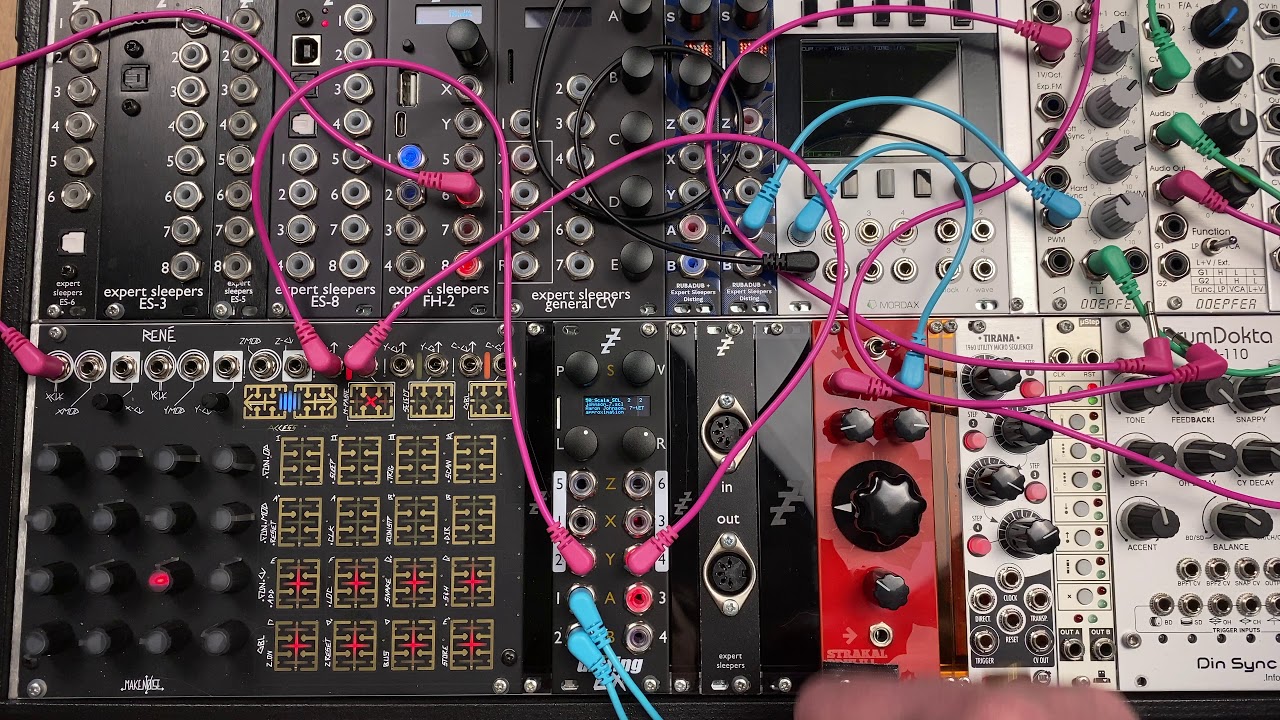
disting EX - Scala & microtuning
2.1K
The Destiny X synthesizer's SD multisample mode supports microtonal tunings using Scala files, which are placed on the microSD card in designated folders (SEL for scales, KVM for keyboard maps). Users can select from default scales like equal temperament or the R & Johnson 710 seven-tone scale, and must match the keyboard map to the scale to avoid mismatch warnings. Custom Scala files can be generated online and exported to enable microtonal tuning on the sample player.
Click to watch →
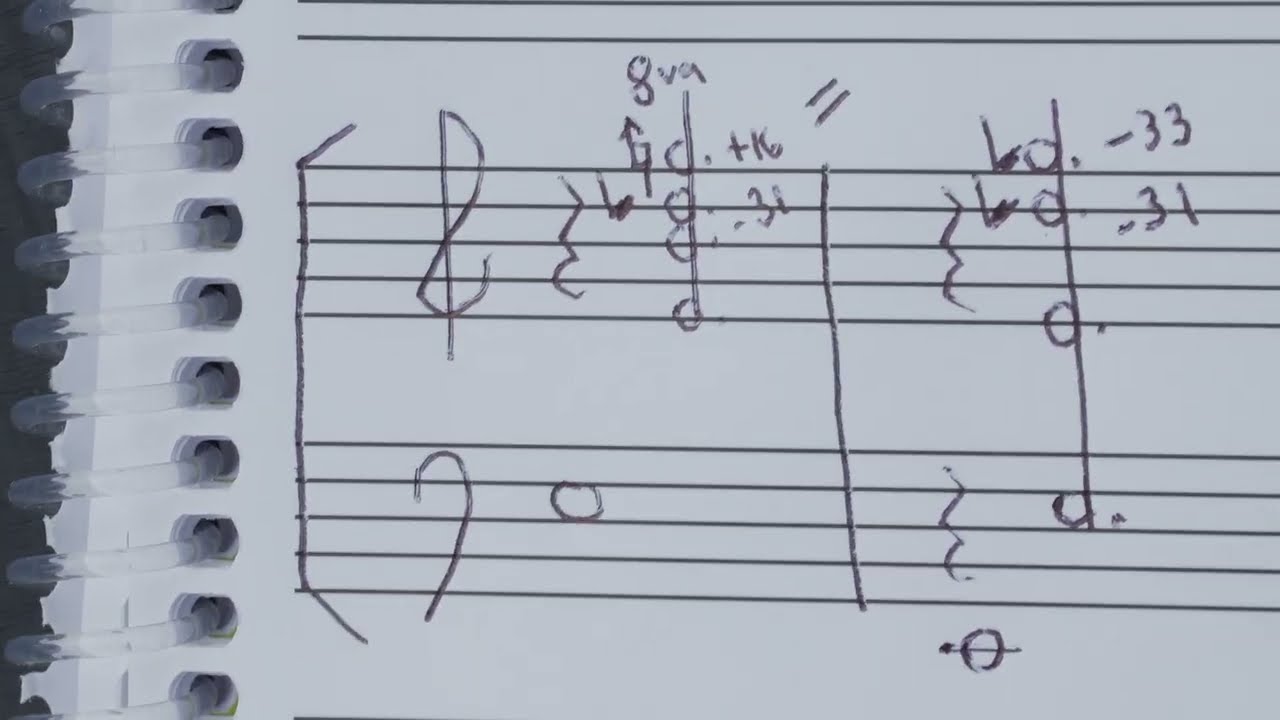
Microtonal Software Tutorials: Part 1
3.3K
This tutorial demonstrates how to use the Vienna Synchron Player software to implement microtonal tuning, including features like cent deviation adjustment on the piano roll, support for various tuning systems (22 EDO, just intonation), and keyboard mapping for non-standard scales. The presenter shows practical techniques such as applying the same cent deviation across all octaves of a note, creating custom Scala files for scales like 22 EDO, and combining multiple software instances to create interesting microtonal effects.
Click to watch →

Microtuning - Exploring new frequencies // Novation Live
5.7K
The Lima software exports tuning systems as Scala files (.scl format). The Base Station 2 has MIDI Tuning System (MTS) support, allowing users to upload custom tuning tables. The Peak synthesizer has 16 built-in tuning tables that can be saved and recalled. Users can create custom tuning systems in Lima by adding notes at arbitrary frequencies, then export the Scala file and upload it to the Base Station 2. This enables musicians to implement custom microtonal tunings on hardware synthesizers, demonstrating the practical application of microtonal theory.
Click to watch →
Why you should go Microtonal - The joy of Just Intonation
1.1K
Just intonation is a tuning theory using simple ratios to determine pitch frequencies, producing consonant intervals. Unlike 12 tone equal temperament (standard since Bach), it offers unique intervals like 7/6 (septimal minor third), 14/9 (quarter-tone sharper fifth), and 7/4 (minor seventh). This provides originality since 230 years of equal temperament have exhausted many possibilities. Equal temperament was adopted for key flexibility on fixed-pitch instruments like pianos, but is less relevant for synthesizers. To ensure consonance, calculate all intervals between notes using a matrix method. Adding 4/3 (perfect fourth) creates a consonant pentatonic scale impossible in 12 tone equal temperament.
Click to watch →
Harmonic vs Tempered
Bach’s Vision Realized
Harmonic vs Tempered
0:04- 1
Compares pure harmonic intervals with modern tempered tuning, highlighting audible pitch discrepancies.
- 2
Demonstrates rough, restless quality of tempered chords versus clear, resonant pure intervals.
- 3
Contrasts a chord progression played in false tempered tuning with its auto-retuned counterpart.
Cultural and Cognitive Constructivism in Musical Consonance
While the debate between Just Intonation and Equal Temperament relies on acoustic and mathematical definitions of 'pure' consonance (based on simple integer ratios), cognitive science and ethnomusicology offer a critical counterpoint: consonance and dissonance are not purely objective physical phenomena, but are heavily shaped by culture, exposure, and learning. Research shows that listeners from non-Western musical traditions—such as Bulgarian folk singing or Indonesian Gamelan—do not perceive acoustic beating or complex frequency ratios as inherently dissonant. Instead, they often favor tuning systems, like the slendro and pelog scales, that defy both Western harmonic series and equal divisions of the octave. This perspective argues that musical 'perfection' is a cultural construct rather than an absolute biological or physical law, suggesting that the brain's plasticity and cultural conditioning play a far greater role in shaping musical preference than the physics of vibrating strings alone.
Understanding of the physics of sound, specifically frequency (Hz), pitch, and how they relate to the human perception of audio.
Familiarity with the harmonic series and overtones, including how integer-ratio multiples of a fundamental frequency create natural harmonics.
Basic music theory concepts of intervals (such as octaves, perfect fifths, and major thirds) and their mathematical representations as frequency ratios.
An introductory understanding of consonance and dissonance, particularly how overlapping sound waves can cause acoustic beating.
The historical evolution of tuning systems, including Pythagorean tuning, Meantone temperament, and Well-temperaments (like those used in Bach's Well-Tempered Clavier).
The musical and compositional trade-offs of Equal Temperament, specifically how it enables modulation to any key at the cost of acoustically pure intervals.
An introduction to microtonality and xenharmonic music, exploring alternative equal divisions of the octave (such as 19-EDO or 31-EDO) and non-octave scales.
Practical application in electronic music and synthesizer programming, such as using Scala files to implement custom microtuning and Just Intonation in modern digital audio workstations (DAWs).
377.6K views6.3Klikes3:55@3ppinOnCookiesOriginal Release: 2014-02-18
this is the sound and visual image of a pure harmonic third an A and A C [Music] Shar this is the tempered version as played by a modern piano or guitar clearly Out Of [Music] Tune this is a pure harmonic fifth an A and an e and the tempered version of a fifth again Out Of Tune we put these M tuned tempered intervals together in a major chord you can hear the rough and Restless quality that Helm Hotes referred to the pure chord Rings true every interval in perfect harmonic balance let's hear a simple chord progression and the false tempered [Music] tuning [Music] and now that same progression automatically retuned by just [Music] tonic just tonic and tempered Josh [Music] tonic this is the final Cadence of box Prelude number one and harmonic tuning by Josh tonic and [Music] tempered you can hear the Restless beating in the cords and again in pure harmonic tuning Bach wrote for Pure Harmony and he struggled with keyboard temperaments to find the least annoying solution today computer technology allows us to achieve what Bach could only [Music] approximate pure Harmony [Music] music evolves modern musicians are breaking new ground and modern technology is helping us expand the palet of sounds available to [Music] musicians just tonic is helping to restore pure Harmony the very foundation of the musical [Music] arts
Up Next

18:12
The Perfect Semitone: 5- and 7-Limit Just Intonation Explained
@SocraticSwansongs
1.8K views•2024-07-03

10:20
Mozart's Musical Dice Game Explained: History, Rules, & Fun
@webpianoacademy
5K views•2023-03-13

47:36
Understanding Diatonic 7th Chords in Major Keys | Music Theory Tutorial
@GracieTerzian
54.7K views•2022-03-02
10:49
Understanding John Coltrane's Giant Steps: A Music Theory Analysis
@Vox
10.4M views•2018-11-12
Related Study Plans & Knowledge Roadmaps
Structured learning paths in Music Theory
music-theory
Composing Galant Music: Partimento & Schemata
01Foundations of Figured Bass and Keyboard Harmony
02The Rule of the Octave (Regola dell'Ottava)
03Galant Schemata: The Building Blocks of Form
+ 2 more learning modules
30h5 modules
Explore Roadmap
music-theory
Decoding Overtone Series: Tuning & Drone Music
01Acoustic Foundations: The Physics of the Overtone Series
02Tuning Systems: Equal Temperament vs. Just Intonation
03Microtonality and Spectralism: Beyond Standard Pitches
+ 2 more learning modules
24h5 modules
Explore Roadmap
music-theory
Impressionist Harmony: Scales, Planing & RPGs
01Foundational Music Theory: Keys, Intervals, and Seventh Chords
02Impressionist Color: Chord Planing and Parallel Harmony
03Whimsical Textures: Pentatonic Cascades and Whole-Tone Scales
+ 1 more learning modules
14h4 modules
Explore Roadmap
music-theory
Negative Harmony: Axis Reflection in Indie Pop
01Music Theory Foundations: Scales, Intervals, and Triads
02Functional Harmony and the Circle of Fifths
03Demystifying the Negative Harmony Axis Reflection
+ 2 more learning modules
16h5 modules
Explore Roadmap