22-tone equal temperament (22edo) is a tuning system that divides the octave into 22 equal parts, enabling unique musical patterns and harmonic possibilities not achievable in standard 12-tone equal temperament; this microtonal system allows for more nuanced expressions of intervals like 7th and 11th harmonics, subminor thirds, and quarter tones, providing electronic musicians with expanded creative possibilities for crafting distinctive atmospheric and groovy compositions.
Exploring 22-Tone Equal Temperament in Electronic Music Production
Added:Deep Dive
Understanding of 12-Tone Equal Temperament (12-TET), including standard scale construction and interval naming conventions.

5.1 Tuning, Notation, and Keys
893
12-tone equal temperament is the standard tuning for pianos and most Western music. The term means 12 tones per octave, where an octave is the relationship between two notes of the same name with a 2:1 frequency ratio (e.g., 100 Hz and 200 Hz). The 'equal temperament' part means each of the 12 notes is exactly the same distance apart, equally dividing the octave. This allows musicians to play in any key without retuning, as the relationships between notes remain consistent across all 12 keys.
Click to watch →
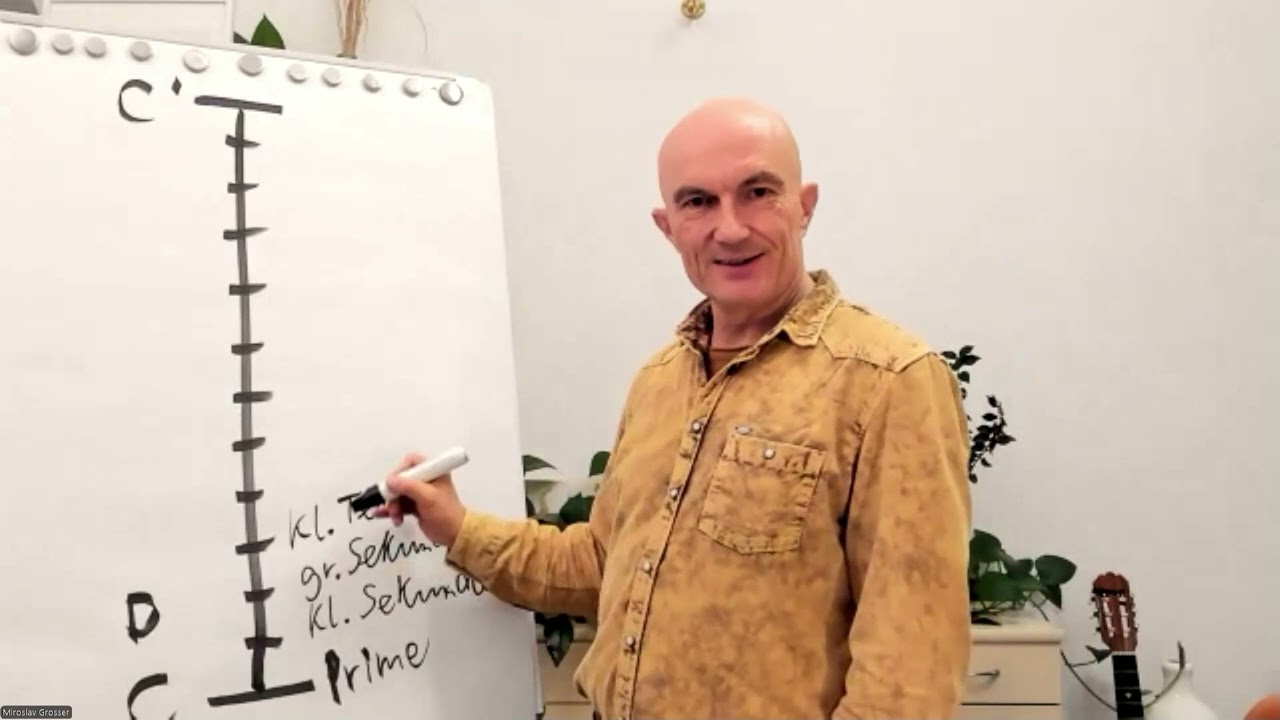
Miroslav´s entwirrende Erklärung zum Aufbau der zwölfstufigen gleichstufigen Tonskala / Stimmung
516
The 12-tone equal temperament scale divides one octave into 12 equal semitones, allowing musicians to combine different musical styles and harmonies without difficulty; this system evolved from whole-tone based music by introducing semitones as the fundamental building blocks (called 'Ziegel' or bricks) of musical language, with intervals named by their position in the scale (Prime, Second, Third, Fourth, Fifth, Sixth, Seventh, Octave) and the major scale following the pattern 2-2-1-2-2-2-1 (whole-whole-half-whole-whole-whole-half).
Click to watch →

【プチ音楽理論講座Vol.1】音名とインターバル
168.4K
The 12 semitones in an octave can be precisely named using specific interval terminology: 1st (same note), M2nd (major 2nd), m2nd (minor 2nd), M3rd (major 3rd), m3rd (minor 3rd), 4th, ♭5th (flat 5th), 5th, M6th (major 6th), m6th (minor 6th), M7th (major 7th), m7th (minor 7th). Major/minor distinctions apply to 2nd, 3rd, 6th, and 7th intervals, while 4th and 5th typically don't use major/minor notation. This complete system allows musicians to precisely describe any interval within an octave, which is essential for understanding chord construction, scales, and musical harmony.
Click to watch →
Bas Gitarda Armoniye Giriş 1 (Nota,aralık,kromatik ve diyatonik dizi)
42K
Modern Western music uses a 12-tone equal temperament system where an octave divides into 12 equal semitones. The chromatic scale contains all 12 notes within an octave: C, C#, D, D#, E, F, F#, G, G#, A, A#, B. This system allows playing in any key without retuning, though it involves slight compromises in pure interval ratios.
Click to watch →

【1本で全部わかる】弾き語りの音楽理論、完全ロードマップ
36.9K
Western music uses a system where the octave is divided into 12 equal semitones. The notes are arranged in a specific pattern of whole tones and half tones (whole tone, whole tone, half tone, whole tone, whole tone, whole tone, half tone). This specific pattern creates the major scale and is the foundation of Western music. The same pattern can be applied to any starting note to create a major scale in any key.
Click to watch →
Deep Dive
Basic physics of sound and acoustics, specifically the concept of frequencies, the harmonic series, and cents as a unit of pitch measurement.

Math of Musical Scales, Part 1 of 3
98.2K
In music theory, a cent is a unit used to measure pitch differences. One equally tempered semitone equals 100 cents, corresponding to a frequency ratio of 2^(1/12). Therefore, a single cent corresponds to a frequency ratio of 2^(1/1200). For most humans, the threshold for perceiving different pitches is approximately 5 cents, meaning people can distinguish between tones that differ by this amount but cannot perceive smaller changes in pitch.
Click to watch →

Физика звука. Гармоники, обертоны, музыкальные строи, центы и т.д.
4.5K
Cents are a unit of measurement for musical intervals, where 100 cents equal one semitone. This logarithmic scale allows musicians to measure intervals with precision. For example, a perfect fifth is 702 cents, while a major third is 386 cents.
Click to watch →
Sound Design Tutorial Part 2 - Frequency, Harmonic Series, LFO's, & Wavetables
18.2K
Frequency is measured in Hertz (oscillations per second). In music, pitches are referred to by note names with octave numbers (e.g., D#5 is an octave higher than D#4). Octaves occur when frequency is doubled or halved. Each octave contains 12 semitones controlled by coarse pitch, and each semitone contains 100 cents controlled by fine pitch. This system allows precise specification of any musical pitch.
Click to watch →

World Music Online Lecture 01: Introduction to the course, acoustics, aesthetics
3.1K
Acoustics is the branch of physics dealing with the properties of musical sound. The underlying phenomenon is the harmonic series, due to complex vibrations of sound sources like strings or air columns. The frequencies in the harmonic series are integer multiples of a fundamental frequency. An octave is the interval formed by two notes in a two-to-one frequency ratio. The integers 1, 2, 3, 4, 5 in the harmonic series are identified as partials (first partial, second partial, third partial, etc.). The first partial is also known as the fundamental.
Click to watch →

#56 - Série Harmônica: A origem de tudo! Você ainda não conhece?
4.3K
The harmonic series is a physical phenomenon where any sound is accompanied by other sounds with lower intensity. The main sound we hear is the fundamental tone, while accompanying sounds are harmonics. Timbre is determined by the relative volumes of harmonics. The harmonic series is a precise mathematical sequence where harmonics are integer multiples of the fundamental frequency. Frequency measures vibrations per second in Hertz (Hz). A string vibrating at 110 Hz produces A2. When divided into equal parts, each part vibrates at integer multiples: 2nd harmonic (220 Hz, A3 - octave), 3rd (330 Hz, E4 - perfect fifth), 4th (440 Hz, A4 - two octaves), 5th (550 Hz, C#4 - major third), 6th (660 Hz, E4 - perfect fifth), 7th (770 Hz, G4 - minor seventh), 8th (880 Hz, A4 - two octaves). Lower frequencies produce lower pitches, and higher frequencies produce higher pitches.
Click to watch →
Deep Dive
Familiarity with electronic music production, synthesizer architectures (oscillators, filters), and how MIDI data controls pitch.

Cyma Forma ALT: A beautiful soundscape synthesizer from France
23.3K
A synthesizer generates sound through interconnected components: oscillators produce base frequencies (waveforms like sine, triangle, saw), filters shape the timbre by removing specific frequencies (low-pass allows low frequencies, high-pass allows high frequencies), and modulation systems (using LFOs and matrices) dynamically change parameters over time to create evolving sounds. The Cyma Forma ALT demonstrates these principles with five oscillators (four digital with scale constraints, one analog sine wave), low-pass and high-pass filters, and a modulation matrix that allows any parameter to control any other, enabling complex sound design from simple components.
Click to watch →
Как устроен ЛЮБОЙ синтезатор // Разбираем аналоговые синтезаторы // Behringer, Korg + Serum
22.7K
Synthesizers share a universal architecture regardless of brand or complexity. The core blocks include oscillators (1-4), mixer, filter, envelope, filter envelope, and effects. The oscillator section contains three essential controls: pitch (determines note height), waveform shape (sine, triangle, sawtooth, square), and pulse width (duty cycle for square waves). Understanding these fundamentals allows you to understand any synthesizer.
Click to watch →
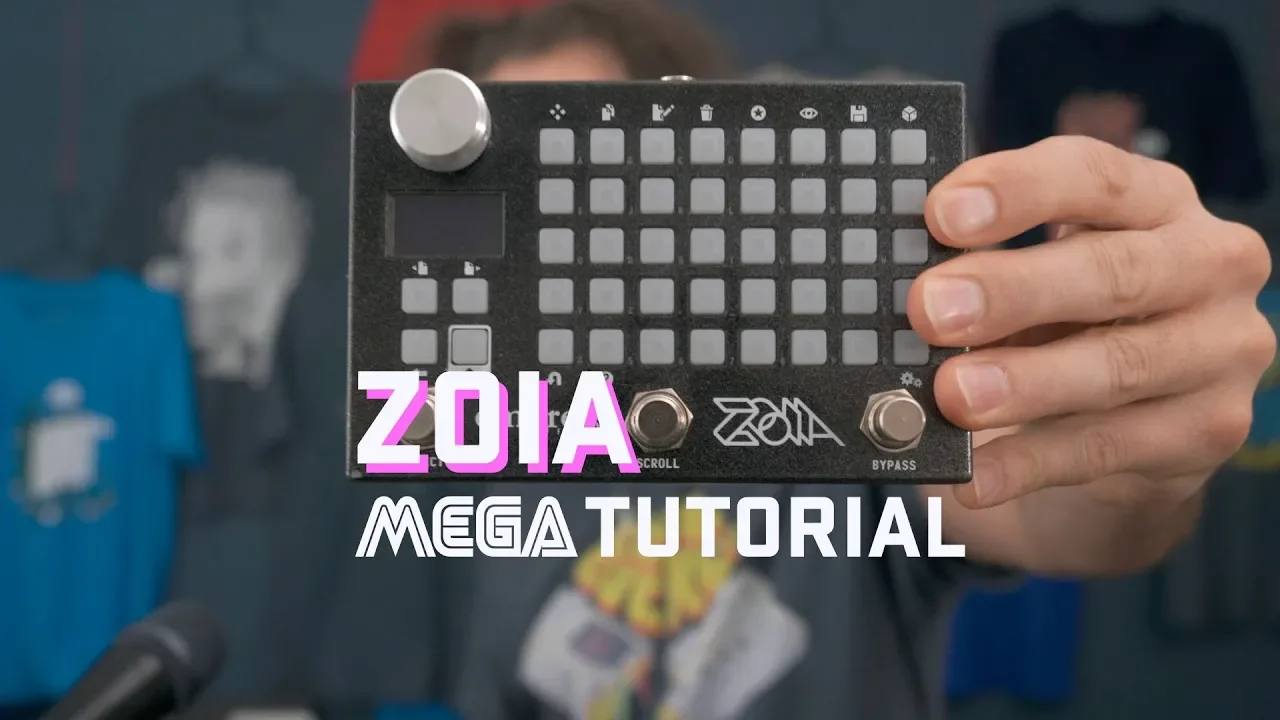
ZOIA Mega Tutorial 1
120.3K
Synthesizer construction involves oscillators generating waveforms (sine, square, triangle, sawtooth), MIDI input modules converting digital signals to control voltages, and cabinet simulators adding harmonic character. Keyboard controllers map note values to frequencies using standardized MIDI conversion. Basic designs use VCAs controlled by keyboard gates for note triggering. This foundation enables more complex implementations including FM synthesis and envelope-controlled amplitude shaping.
Click to watch →

SECRETS OF ANALOG AND DIGITAL SYNTHESIS | Steve DiFuria | VHS instructional course | 1985
103.2K
All synthesizers share three functional areas: sources (oscillators generating waveforms like sawtooth, square, triangle, and sine), modifiers (amplifiers controlling loudness and filters sculpting timbre), and controllers (envelopes and LFOs enabling dynamic changes). Oscillators provide raw material with variable tuning and pulse width. Amplifiers attenuate amplitude for loudness control. Filters selectively remove frequencies around cutoff points with resonance emphasis. Four filter modes serve different purposes: low-pass (brightness control), high-pass, band-pass, and notch. This architecture applies universally to both analog and digital synthesizers regardless of input method.
Click to watch →
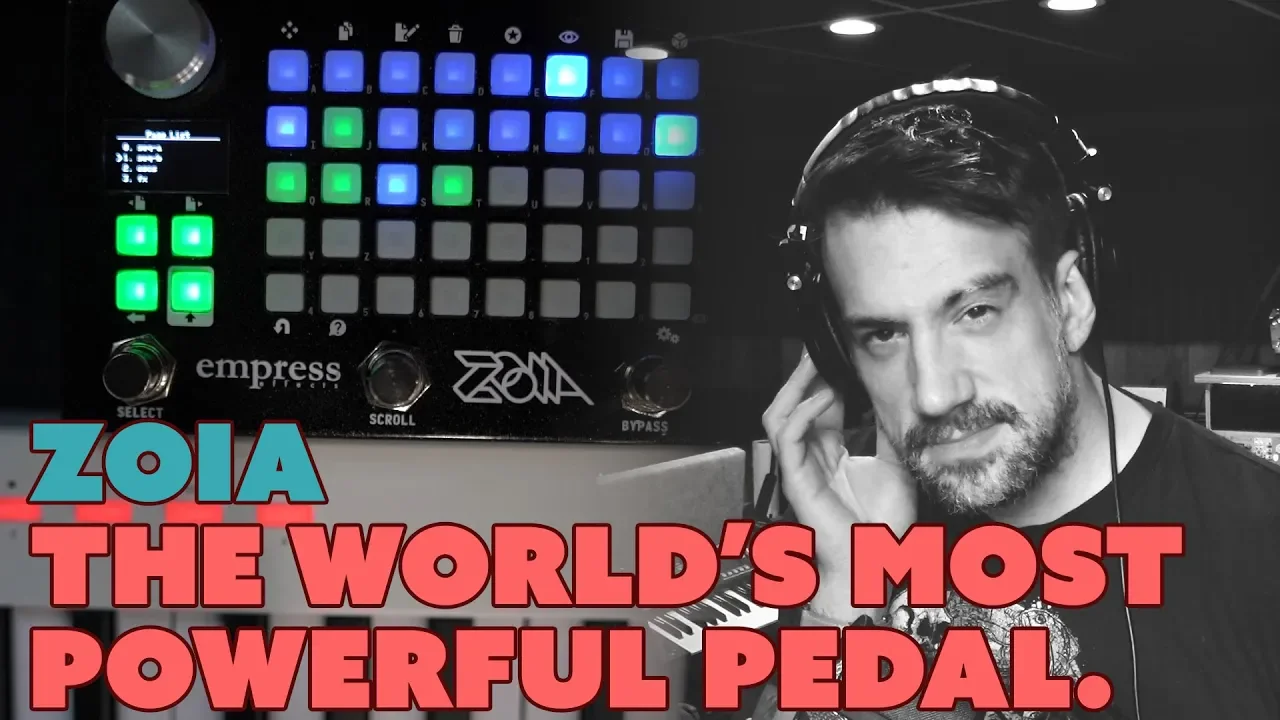
Diving Into The Empress ZOIA.
60.3K
The ZOIA can function as a MIDI synthesizer using a standard chain: MIDI notes input, oscillator (waveform generator), filter (for tonal shaping), VCA (voltage controlled amplifier), and envelope (ADSR). The gate output from the MIDI input triggers the envelope, which controls the VCA level. FM synthesis uses multiplier modules to modulate one oscillator's frequency with another, creating complex timbres. The ZOIA's FM synthesis is linear rather than exponential, suitable for physical modeling. Multiplier modules can also function as attenuators or as FM operators, enabling sounds like 80s-style bass.
Click to watch →
Deep Dive
An introduction to Just Intonation and the historical context of tuning systems and temperaments.

Just Intonation vs Equal Temperament: A Comparative Analysis
377.6K
Just intonation produces pure, resonant harmonic intervals by using natural frequency ratios, while equal temperament slightly detunes intervals to allow modulation between keys; modern technology now enables musicians to restore pure harmony that composers like Bach could only approximate, eliminating the 'rough and restless' beating heard in tempered tuning.
Click to watch →

Tuning a Lyre to the Just Intonation of Antiquity
15.3K
Just intonation is a divisive tuning system where strings are divided into precise mathematical ratios, devised by ancient Mesopotamians 5,000 years ago for fretted lutes. This contrasts with equal temperament, which artificially equalizes intervals for key transposition but creates impure, slightly out-of-tune intervals with shimmering beat waves. Just intonation produces pure, three-dimensional sound quality. Modern tools like SCALA software enable musicians to generate and record precise just intonation reference tones for tuning instruments, bridging ancient mathematical principles with contemporary technology.
Click to watch →
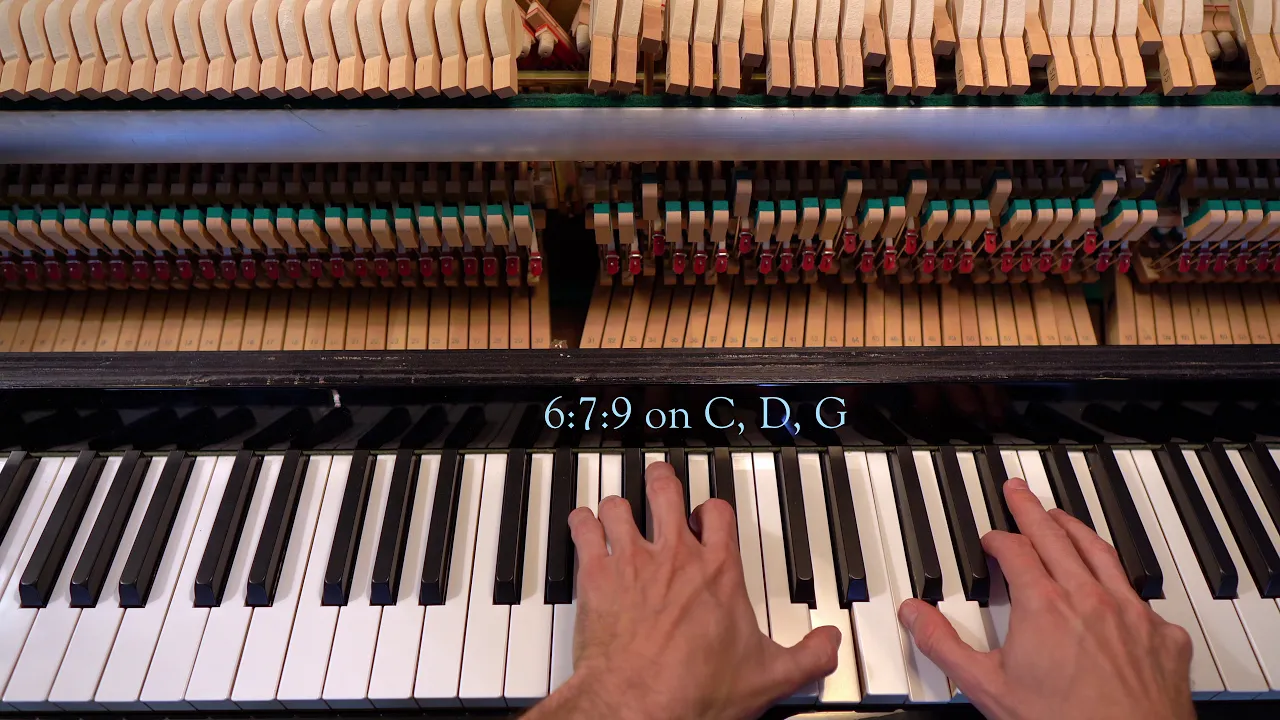
Piano Tuning in 13-limit JI
9.4K
This video demonstrates a 13-limit just intonation piano tuning system where Jacob Adler begins with C as the fundamental tone, tunes a Pythagorean chain of fifths (C-G-D-A), adds pure major thirds using the fifth harmonic, introduces extended harmonies through the seventh harmonic (creating crunchy C7 chords and narrow minor thirds), and incorporates the 11th and 13th harmonics for microtonal colors, enabling harmonic series up to the 16th partial.
Click to watch →
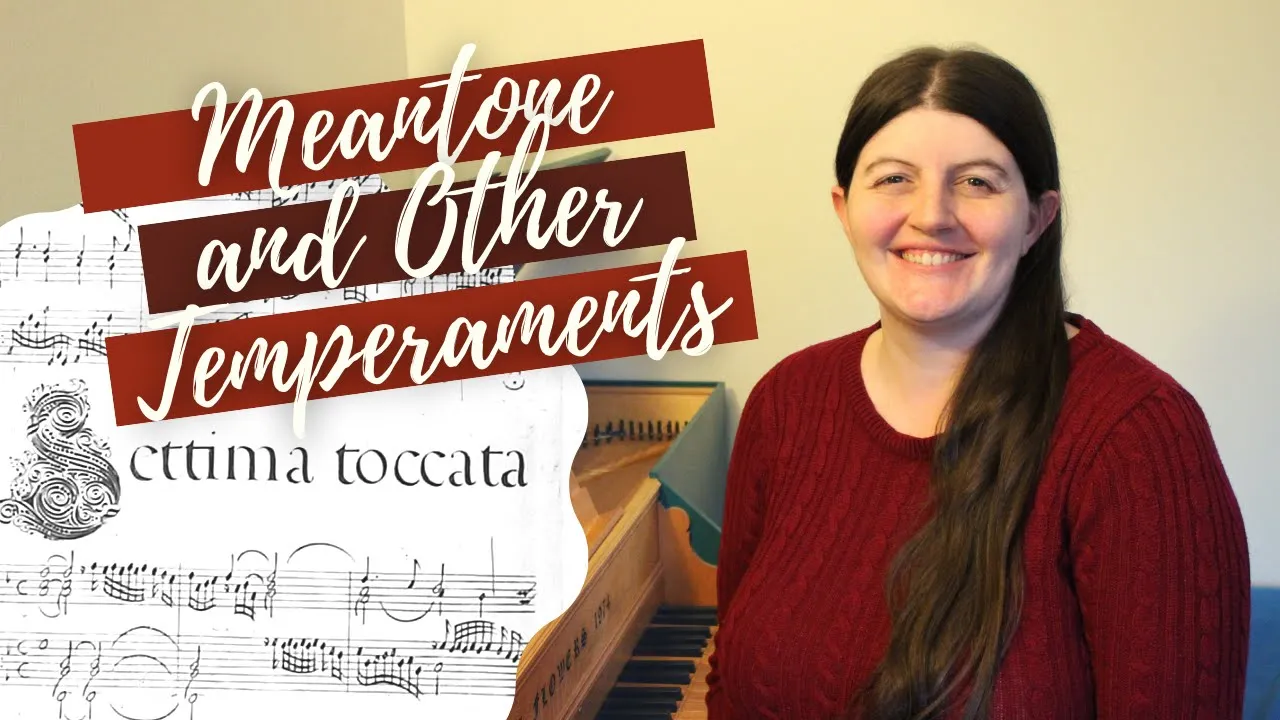
Meantone Temperament and Other Historical Tuning Systems, Part 1
27.1K
Temperaments are systems defining interval sizes within the octave, creating pitch relationships. Equal temperament (modern piano tuning) divides the octave into 12 equal semitones, but this makes all intervals slightly impure. Two critical commas govern temperament creation: the Pythagorean Comma (~24 cents) arises when tuning perfect fifths around the Circle of Fifths and failing to return to the starting pitch; the Syntonic Comma (~22 cents) represents the difference between four pure fifths versus two octaves plus a pure major third. These fixed discrepancies must be distributed across intervals, creating an infinite number of possible temperaments. Historically favored systems balance maintaining pure intervals against enabling playability across multiple keys—a fundamental tension in tuning design.
Click to watch →
Is Cb The Same Note As B? (A Response To Adam Neely)
200.7K
Just intonation, dating back to Pythagoras, defines pitches through simple frequency ratios (octave 1:2, major third 4:5). Starting from Eb at 311 Hz, this yields B at 486 Hz and Cb at 498 Hz—different frequencies. However, using perfect fifths (2:3 ratio) to derive whole steps produces similar results. Just intonation contains multiple half-step types (chromatic 24:25, diatonic 15:16) that don't even agree on which note should be higher. The difference between extreme Cb values equals the difference between B and Cb in equal temperament. We don't assign unique names to these variants because accounting for every tuning context creates unnecessary complexity.
Click to watch →
Prerequisite Knowledge
- Concept 01Understanding of 12-Tone Equal Temperament (12-TET), including standard scale construction and interval naming conventions.
- Concept 02Basic physics of sound and acoustics, specifically the concept of frequencies, the harmonic series, and cents as a unit of pitch measurement.
- Concept 03Familiarity with electronic music production, synthesizer architectures (oscillators, filters), and how MIDI data controls pitch.
- Concept 04An introduction to Just Intonation and the historical context of tuning systems and temperaments.
Subsequent Learning
- Step 01Advanced harmonic analysis within 22-EDO, including the use of unique intervals like neutral thirds, sub-major seconds, and septimal tritones.
- Step 02Exploring other microtonal tuning systems (such as 15-EDO, 19-EDO, and 31-EDO) to compare their harmonic profiles and structural benefits.
- Step 03Creating custom tuning files (.scl and .kbm formats) using software like Scala to retune software and hardware synthesizers.
- Step 04Applying MIDI Polyphonic Expression (MPE) and specialized controllers to perform and record microtonal compositions with expressive pitch bends.
- Step 05Developing microtonal ear training practices to recognize and accurately produce non-traditional intervals and chord qualities.
Opening Applause
Main Content Starts
Key Argument Segment
Audience Engagement
Closing Statements
Opening Applause
0:06Playing Section
- 1
Audience applause signals event initiation.
- 2
Setting a vibrant and engaging atmosphere.
- 3
Momentum builds before the main content.
The Psychoacoustic and Practical Case for 12-Tone Equal Temperament (12-TET)
While 22-EDO offers novel harmonic paths, proponents of traditional tuning argue that 12-TET is not an arbitrary restriction but a highly optimized system for human cognition and music production. 12-TET strikes an exceptional balance between harmonic consonance—particularly near-perfect fifths and fourths—and keyboard playability. Transitioning to 22-EDO dramatically increases cognitive load, as listeners often perceive the unfamiliar intervals as 'out-of-tune' rather than intentionally expressive, due to deeply ingrained psychoacoustic templates. Furthermore, the vast majority of electronic music hardware, software instruments, and MIDI protocols are structurally optimized for 12 notes per octave. Adapting these tools for 22-EDO introduces severe workflow bottlenecks, requiring complex pitch-bend mapping, specialized MPE controllers, or restrictive software workarounds. Consequently, critics argue that the practical and communicative advantages of 12-TET far outweigh the marginal harmonic novelty of microtonal systems like 22-EDO.
Deep Dive
Advanced harmonic analysis within 22-EDO, including the use of unique intervals like neutral thirds, sub-major seconds, and septimal tritones.

Exploring Microtonal Guitar in 22 EDO: Intervals and Demonstration
40.6K
This segment explores specific microtonal intervals in 22 EDO and their musical applications. The neutral second (11:10 ratio) creates interesting melodic possibilities. The subminor third (7:6 ratio) sounds pleasant in triads. The minor third is slightly wider and brighter than 12-tone equal temperament. The major sixth (12:7 ratio) sounds consonant yet novel. The 11:8 interval sits between a perfect fourth and tritone, offering a new consonant sound. Two types of minor sevenths exist: one close to 7:4 with a characteristic 'ji' buzzing sound, and another as the inversion of 11:10. These intervals demonstrate how 22 EDO expands harmonic possibilities while maintaining musical functionality.
Click to watch →

31 edo except its just intonation (UNEQUAL divisions of the octave) on Lumatone. Enharmonic Genus!
197
Septimal intervals incorporate the seventh harmonic, adding unique colors through ratios like 28/27 (septimal semitone), 7/6 (septimal minor third), 21/16 (septimal flat fourth), and 9/7 (septimal major seventh). Extending further to 11-limit just intonation adds even more complex interval colors including neutral thirds and various 'super sharp' or 'sub sharp' fourths and fifths. These extensions create darker, more confused, and wobbly sounds but offer expanded harmonic possibilities beyond five and seven-limit systems. The video demonstrates how these advanced intervals enable micro-modulations that were previously impossible on standard equal-tempered instruments.
Click to watch →

Microtonal Music with Sevish: Exploring Alternate Tunings
528
22 EDO (22 Equal Divisions of the Octave) allows conventional triads but with altered intervals—major thirds are slightly flat and minor thirds slightly sharp compared to 12-TET. Stacking fifths accumulates error differently, leading to unexpected harmonic destinations. This tuning provides sub-minor thirds (more grave, serious sounding) and super major triads (extremely bright, jarring, restless). The tuning maintains recognizable chord structures while offering new harmonic possibilities. Musicians don't need to fully explore all possibilities; new avenues can always be discovered in the future.
Click to watch →

Microtonal Music Tutorial (Xenharmonic)
24.6K
Just intonation allows multiple distinct versions of the same interval type with dramatically different tonal colors. For minor thirds, the 6:5 version is 16 cents sharper than equal temperament (brighter, more in-tune), while the 7:6 version is 33 cents flatter (much darker). These intervals are melodically equivalent but sound dramatically different. The 11:8 ratio creates neutral intervals falling between minor and major categories, such as neutral thirds, sixths, and sevenths, which blur the line between major and minor tonality. While initially jarring to ears trained in equal temperament, neutral intervals can sound natural with proper contextualization. Just intonation scales are built by tuning every pitch against a chosen root, creating asymmetrically tuned relationships. Using E as root, the scale includes 22:21 (smaller semitone), 9:8 (octave-reduced ninth), 7:6 (flat minor third), 5:4 (pure major third), 11:8 (super fourth), 7:5 (tritone), 3:2 (perfect fifth), 11:7 (subminor sixth), 27:16 (Pythagorean major sixth), 7:4 (harmonic seventh), 11:6, and neutral seventh. Equal temperaments like 22-tone provide approximations of just ratios (closer 5:4 major third, harmonic seventh, 11:8, 7:6) while enabling free transposition. The trade-off is fewer conventionally good-sounding chords versus unique sonic colors that push compositional boundaries.
Click to watch →

benyamind - The Mirror
21.9K
22-EDO (22 Equal Division of the Octave) is a microtonal tuning system that divides the octave into 22 equal parts, offering a different approximation of just intonation compared to the standard 12-note Western tuning; this system provides stronger fifths and crisper major thirds while introducing 'mirror' effects where neighboring notes can serve different harmonic functions depending on their context, enabling richer harmonic possibilities and extended tension resolution in musical composition.
Click to watch →
Deep Dive
Exploring other microtonal tuning systems (such as 15-EDO, 19-EDO, and 31-EDO) to compare their harmonic profiles and structural benefits.

31-EDO Music Theory: Basic Triads
91.6K
In 31 equal divisions of the octave (31edo), there are six basic triads: Sus4 (root, perfect fourth, perfect fifth at EDO steps 0, 13, 18), Supermajor (root, supermajor third, fifth at 0, 11, 18), Major (root, major third, fifth at 0, 10, 18), Neutral (root, neutral third, fifth at 0, 9, 18), Minor (root, minor third, fifth at 0, 8, 18), and Subminor (root, subminor third, fifth at 0, 7, 18). Unlike 12edo, 31edo provides two variations of major and minor chords plus a neutral chord, offering richer harmonic possibilities through its superior approximation of just intonation ratios like 5:4 and 7:6.
Click to watch →

"Imagination Off the Charts: Jacob Collier comes to MIT" screening on campus
340K
Standard tuning systems contain inherent imperfections - for example, major thirds on pianos are 14 cents too high. Microtonal exploration moves beyond equal temperament to discover fresh harmonic possibilities. Perfect pitch is essentially a memory of sound, and recognizing that standard tuning is arbitrary opens doors to new sonic landscapes. Voices naturally move with gesture and arrival, and arriving in satisfying places matters more than the exact path taken. This approach finds magic in details that aren't quantized or standardized.
Click to watch →
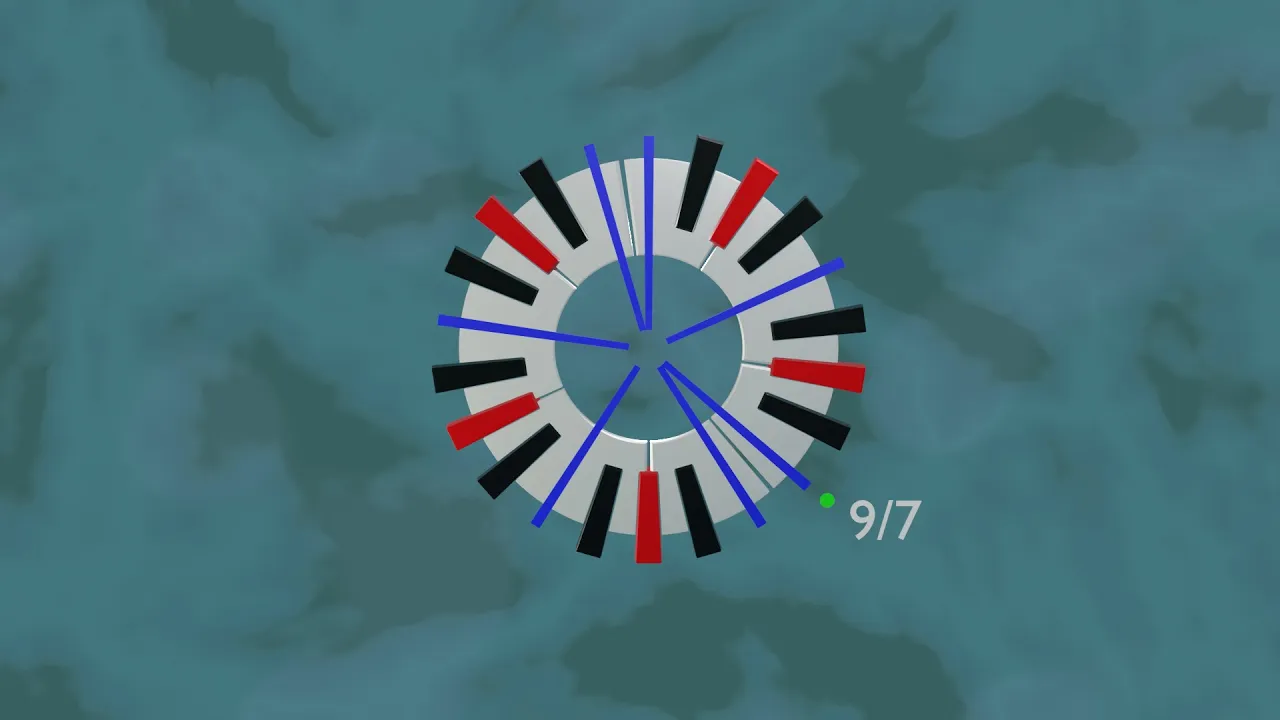
Making Sense of Microtones by Stacking Fifths
45.6K
This section explores extreme tuning territories. 7edo achieves complete uniformity where all gaps equalize, eliminating harmonic motion entirely. Mavila tunings (23edo, 11edo) represent anti-diatonic systems where gap sizes invert: major/minor and diminished/augmented chords swap roles, yet harmonic structure remains intact. 13edo can be understood through negative steps or by stacking eight fifths to create LsLsLLsL patterns. Moment of Symmetry describes scales with only two step sizes, enabling diatonic-like structures in various EDOs. 47edo supports two different diatonic structures; 72edo supports two mavila structures. This progression demonstrates how increasing divisions enable unprecedented harmonic complexity and diversity in microtonal composition.
Click to watch →
Simplifying Large Microtonal Tunings
146
MOS (Moment of Symmetry) scales provide a practical solution for exploring large microtonal tunings like 31 EDO, 39 EDO, and 94 EDO by isolating manageable, efficient subsets of notes that retain the benefits of the larger tuning while reducing complexity. For example, the 19-tone MOS of 31 EDO offers nine harmonic seventh chords and five harmonic 11s, making it far more flexible than the 12-tone MOS of 31 EDO (which only provides two harmonic seventh chords), while remaining playable on standard keyboards. This approach allows musicians to access the harmonic richness of larger tunings without the practical challenges of playing 31+ notes per octave.
Click to watch →

Learning Lumatone: Episode 21 - "19-EDO Basics"
12.7K
The 19-EDO (Equal Division of the Octave) tuning system divides the octave into 19 equally spaced intervals of approximately 63.2 cents each, providing a manageable gateway to microtonality that extends the familiar 12-note tuning by adding seven more notes. Unlike 12-EDO where enharmonic equivalents like C# and Db are the same note, 19-EDO treats them as distinct, enabling new intervals such as the super major third, augmented fourth, and B-sharp. While 19-EDO offers more accurate minor and major thirds compared to 12-EDO (closer to Just Intonation), it sacrifices accuracy in perfect fourths and fifths (about 7 cents off versus 2 cents in 12-EDO). This tuning system creates unique harmonic possibilities including sub-minor triads, super-major triads, and pure-sounding sixths, demonstrating that all tunings have distinct sonic characteristics rather than being universally 'in-tune' or 'out-of-tune.'
Click to watch →
Deep Dive
Creating custom tuning files (.scl and .kbm formats) using software like Scala to retune software and hardware synthesizers.
Live 12 : Comprendre et utiliser les tempéraments alternatifs
3.9K
Tuning systems in Live are based on Scala files (.scl files), text files defining specific tunings. The Scala software allows users to create custom tunings for any musical scale. Users can download Scala files from the project website, containing thousands of tunings from around the world. Tuning systems can divide the octave into various numbers of equal parts, including 24 and 31 equal divisions, creating microtonal scales with finer granularity. Live implements tuning by using the pitch bend wheel to adjust pitch note by note. With MIDI 2.0 (MPE), Live provides independent pitch control for each note, enabling polyphonic tuning where each note in a chord can be tuned differently according to the selected system.
Click to watch →

Microtuning - Exploring new frequencies // Novation Live
5.7K
The Lima software exports tuning systems as Scala files (.scl format). The Base Station 2 has MIDI Tuning System (MTS) support, allowing users to upload custom tuning tables. The Peak synthesizer has 16 built-in tuning tables that can be saved and recalled. Users can create custom tuning systems in Lima by adding notes at arbitrary frequencies, then export the Scala file and upload it to the Base Station 2. This enables musicians to implement custom microtonal tunings on hardware synthesizers, demonstrating the practical application of microtonal theory.
Click to watch →
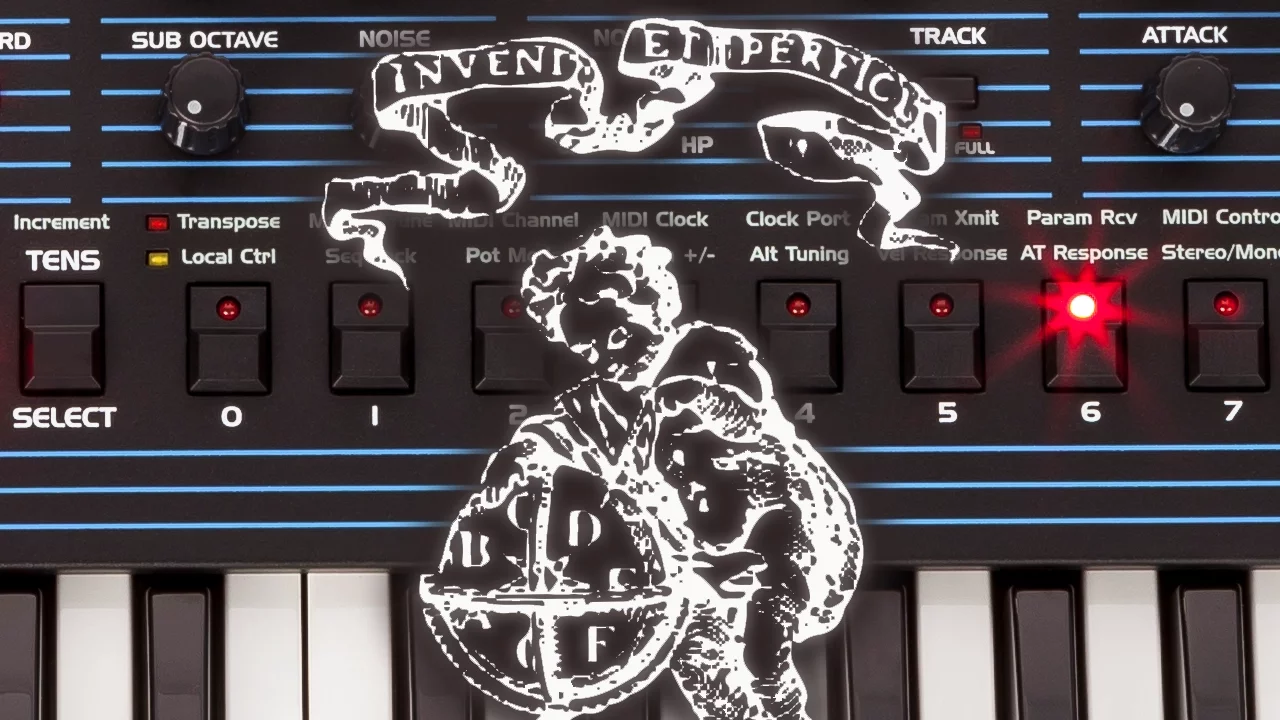
How to export microtonal tuning files using Scala
20.1K
To export a Scala tuning file, click File then Save As. Type in the scale name at the top (e.g., '22 EO'). It is important to include a description since some synthesizers may crash if the tuning file lacks one. Click OK to save. If the file already exists, type 'replace' and hit Enter to overwrite it.
Click to watch →
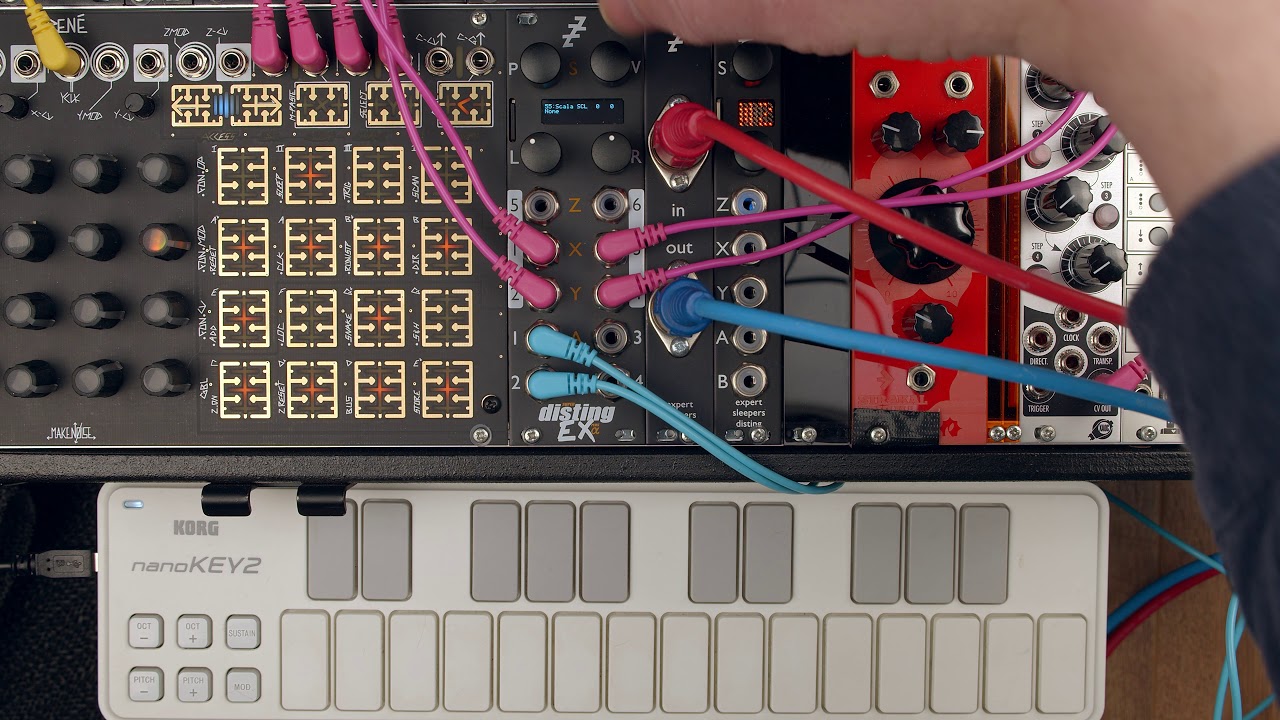
disting EX - Poly Wavetable, part 5: Scala
1.4K
The poly wave table mode on the listing ex supports non-equal tempered tunings through scala files, which can be loaded from a micro SD card. Two essential files are required: an SCL file that defines the relationships of notes and pitches within a scale, and a KBM file that maps the pitches in your scale to a MIDI keyboard or CV gate, effectively converting CV signals into note numbers to look up the correct pitch.
Click to watch →
Microtonal Music with Sevish: Exploring Alternate Tunings
528
Not all synthesizers support microtonal tuning. Those that do allow retuning through tuning files, which contain scale or tuning data. The main formats are SCL (Scala scale files) and TUN files. To use microtonal tuning, musicians load these files into their synthesizer, and all notes played will then produce pitches according to the specified tuning. MIDI controllers continue to send standard note data, but the synthesizer interprets these notes according to the loaded tuning, producing microtonal sounds.
Click to watch →
Deep Dive
Applying MIDI Polyphonic Expression (MPE) and specialized controllers to perform and record microtonal compositions with expressive pitch bends.

The most innovative music tools of 2025!
198.7K
MPE-capable instruments like Geos Shred allow each key to have independent pitch bend and modulation, enabling expressive playing techniques similar to how string players use vibrato. This technology can be used with MPE-compatible virtual instruments, allowing iPad controllers to record MPE data into DAWs for use with any MPE virtual instrument.
Click to watch →

Deckard's Dream MK2: Is it a Yamaha CS-80 replicant? // Full tutorial and review
199.5K
Deckard's Dream supports MPE (MIDI Polyphonic Expression) capable controllers like the X-Key Air, HAWKEN Continuum, or ROLAND Seaboard. This provides two additional dimensions of control beyond polyphonic aftertouch: the ability to bend the pitch of individual notes separately (not just all held notes together like a standard pitch bend strip), and the ability to control LFO speed or other parameters per note using the Y-axis.
Click to watch →

Osmose // The 7 Stages of Ownership
67K
MPE is a MIDI protocol that provides independent control data for each key on a polyphonic keyboard. Unlike traditional MIDI where all keys share the same velocity and aftertouch values, MPE allows each key to have its own velocity, aftertouch, pitch bend, and other parameters. This enables unprecedented expressive possibilities for performers, allowing them to apply different effects to individual notes within a chord. The controller described has 24-note polyphony with separate aftertouch zones for each key, enabling complex articulations like plucked string sounds where each note can be individually brightened or muted.
Click to watch →
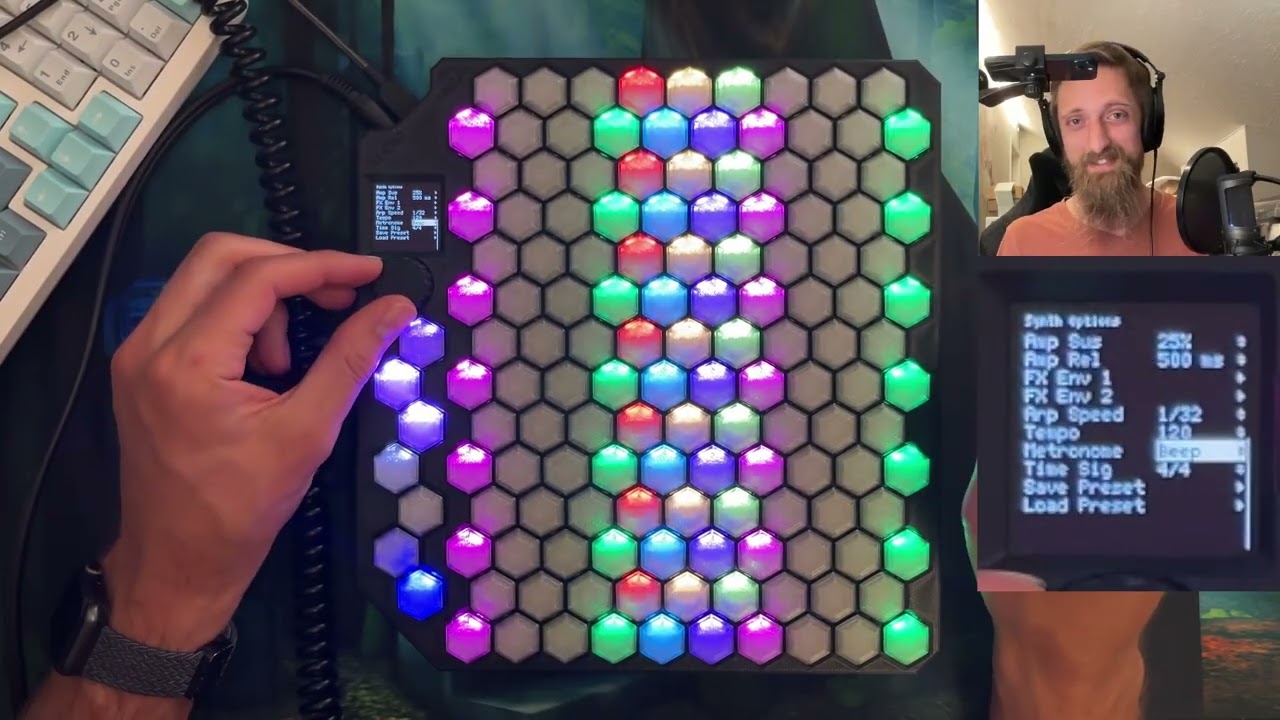
HexBoard Firmware 1.3 Walkthrough
172
The Hexboard offers comprehensive MIDI configuration including channel selection, MPE (MIDI Polyphonic Expression) mode for microtonal playing with per-note pitch bend, and bend range settings (default 48 for good accuracy). MPE mode sends notes on separate channels with individual pitch bend, working with many synthesizers but requiring specific software support. Control wheels provide virtual velocity and mod wheel controls with configurable response curves (slow, medium, instant) and sticky/springy behavior. Transpose allows quick key changes, while performance slots save complete configurations for different contexts. The system also includes MIDI channel mapping for multi-synth setups and Roland MT-32 instrument selection.
Click to watch →

PUSH 3 - Learn It In 1 Hour!
85.2K
MPE adds three expressive controls: Pressure (after-touch after initial note strike), Slide (vertical Y-axis movement affecting sound), and Pitch Bend (horizontal X-axis movement changing pitch). You can slide from pad to pad like frets on a guitar neck. These controls enable dynamics similar to guitar or piano performance.
Click to watch →
Deep Dive
Developing microtonal ear training practices to recognize and accurately produce non-traditional intervals and chord qualities.

Fast-Track Your Practice Routine
61.2K
For interval recognition, practice identifying intervals by name rather than by note. Start with a reference note and identify intervals such as perfect fourths, major thirds, minor thirds, perfect fifths, major sixths, and tritones. Practice both ascending and descending intervals. This method develops the ability to recognize interval quality and direction, which is essential for understanding chord progressions and improvisation. Practice for approximately 3-4 minutes of the 10-minute session.
Click to watch →

BRUNO BOCK - PRÉ-AMPLIFICA #028
30K
Non-Western musical traditions use microtonal scales that differ from the standard Western chromatic scale. The host explains that Indian classical music uses intervals smaller than semitones, requiring musicians to develop specialized ear training to perceive and reproduce these subtle pitch differences.
Click to watch →

Workshop - Nico assumpção na Bahia - Completo
192.4K
Interval training is fundamental for developing musical ear skills. When musicians train intervals, they automatically discover chord qualities and harmonic relationships. This approach helps develop a more open melodic relationship with the instrument, moving beyond purely scalar thinking to interval-based improvisation. The ability to hear intervals and chord qualities enables musicians to understand their instrument's capabilities and limitations, such as recognizing that intervals like fourths are difficult for pianists but easy for bassists due to the fretboard layout.
Click to watch →

Music Theory on Keyboard Explained in 30 Minutes
90.1K
Effective ear training begins with interval recognition—learning to identify distances between notes whether played harmonically (together) or melodically (separately). Once intervals are recognized, chord identification becomes easier by identifying the bass note first, then determining the chord quality (major, minor, dominant, diminished). This builds a vocabulary of recognized sounds.
Click to watch →

Trinity College London Grade 3 Piano Exam
240.6K
Aural training develops the ability to identify musical elements by ear. The student demonstrated recognition of intervals (second) and chord qualities (minor). These skills are fundamental for musicians to understand harmonic relationships and melodic structures without visual notation, enabling better sight-reading and improvisation abilities.
Click to watch →
Opening Applause
Main Content Starts
Key Argument Segment
Audience Engagement
Closing Statements
Opening Applause
0:06- 1
Audience applause signals event initiation.
- 2
Setting a vibrant and engaging atmosphere.
- 3
Momentum builds before the main content.
The Psychoacoustic and Practical Case for 12-Tone Equal Temperament (12-TET)
While 22-EDO offers novel harmonic paths, proponents of traditional tuning argue that 12-TET is not an arbitrary restriction but a highly optimized system for human cognition and music production. 12-TET strikes an exceptional balance between harmonic consonance—particularly near-perfect fifths and fourths—and keyboard playability. Transitioning to 22-EDO dramatically increases cognitive load, as listeners often perceive the unfamiliar intervals as 'out-of-tune' rather than intentionally expressive, due to deeply ingrained psychoacoustic templates. Furthermore, the vast majority of electronic music hardware, software instruments, and MIDI protocols are structurally optimized for 12 notes per octave. Adapting these tools for 22-EDO introduces severe workflow bottlenecks, requiring complex pitch-bend mapping, specialized MPE controllers, or restrictive software workarounds. Consequently, critics argue that the practical and communicative advantages of 12-TET far outweigh the marginal harmonic novelty of microtonal systems like 22-EDO.
Understanding of 12-Tone Equal Temperament (12-TET), including standard scale construction and interval naming conventions.
Basic physics of sound and acoustics, specifically the concept of frequencies, the harmonic series, and cents as a unit of pitch measurement.
Familiarity with electronic music production, synthesizer architectures (oscillators, filters), and how MIDI data controls pitch.
An introduction to Just Intonation and the historical context of tuning systems and temperaments.
Advanced harmonic analysis within 22-EDO, including the use of unique intervals like neutral thirds, sub-major seconds, and septimal tritones.
Exploring other microtonal tuning systems (such as 15-EDO, 19-EDO, and 31-EDO) to compare their harmonic profiles and structural benefits.
Creating custom tuning files (.scl and .kbm formats) using software like Scala to retune software and hardware synthesizers.
Applying MIDI Polyphonic Expression (MPE) and specialized controllers to perform and record microtonal compositions with expressive pitch bends.
Developing microtonal ear training practices to recognize and accurately produce non-traditional intervals and chord qualities.
113.4K views4.2Klikes7:22@SevishOriginal Release: 2019-07-26
[Music] [Applause] [Music] [Applause] [Laughter] [Music] [Applause] [Music] [Applause] [Music] [Applause] [Music]
Up Next
4:58
Exploring Complex Chords in 22-Tone Equal Temperament
@Xotla
1.7K views•2019-06-29

10:20
Mozart's Musical Dice Game Explained: History, Rules, & Fun
@webpianoacademy
5K views•2023-03-13

47:36
Understanding Diatonic 7th Chords in Major Keys | Music Theory Tutorial
@GracieTerzian
54.7K views•2022-03-02
10:49
Understanding John Coltrane's Giant Steps: A Music Theory Analysis
@Vox
10.4M views•2018-11-12
Related Study Plans & Knowledge Roadmaps
Structured learning paths in Music Theory
music-theory
Composing Galant Music: Partimento & Schemata
01Foundations of Figured Bass and Keyboard Harmony
02The Rule of the Octave (Regola dell'Ottava)
03Galant Schemata: The Building Blocks of Form
+ 2 more learning modules
30h5 modules
Explore Roadmap
music-theory
Decoding Overtone Series: Tuning & Drone Music
01Acoustic Foundations: The Physics of the Overtone Series
02Tuning Systems: Equal Temperament vs. Just Intonation
03Microtonality and Spectralism: Beyond Standard Pitches
+ 2 more learning modules
24h5 modules
Explore Roadmap
music-theory
Impressionist Harmony: Scales, Planing & RPGs
01Foundational Music Theory: Keys, Intervals, and Seventh Chords
02Impressionist Color: Chord Planing and Parallel Harmony
03Whimsical Textures: Pentatonic Cascades and Whole-Tone Scales
+ 1 more learning modules
14h4 modules
Explore Roadmap
music-theory
Negative Harmony: Axis Reflection in Indie Pop
01Music Theory Foundations: Scales, Intervals, and Triads
02Functional Harmony and the Circle of Fifths
03Demystifying the Negative Harmony Axis Reflection
+ 2 more learning modules
16h5 modules
Explore Roadmap