

















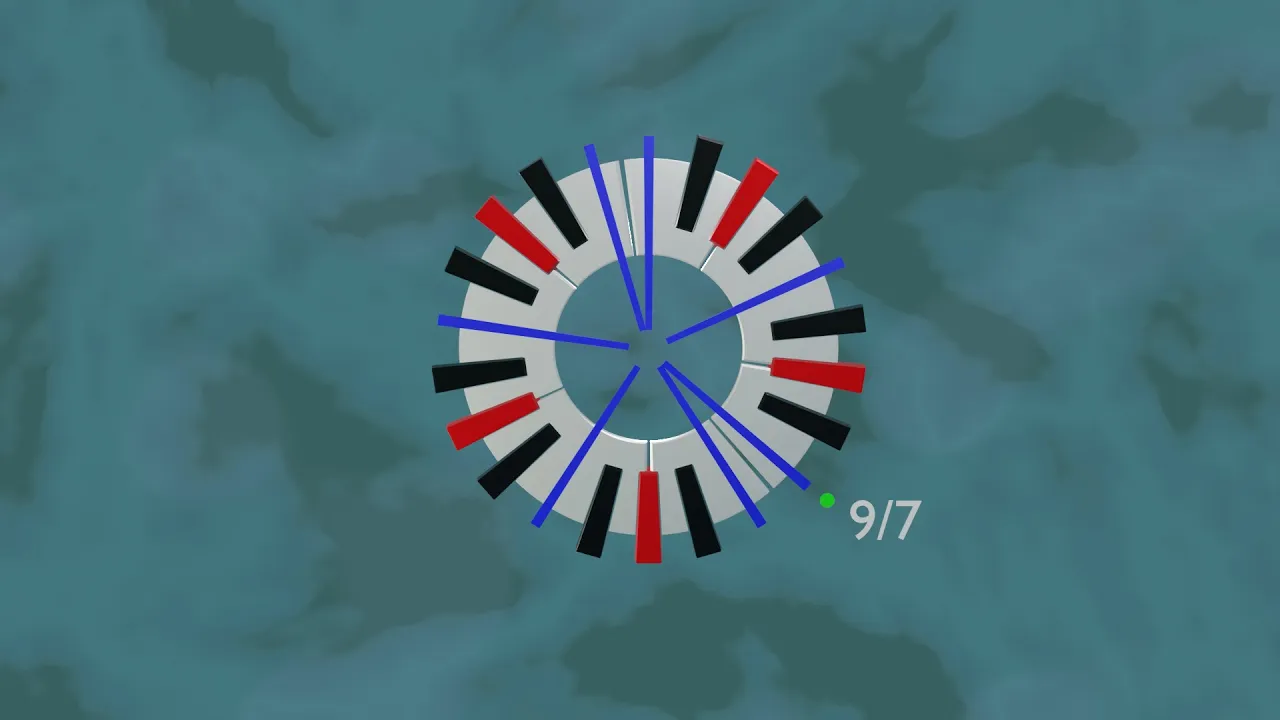






In 22 Equal Division of the Octave (22 EDO), each step is approximately 54 cents, which is close to a quarter tone (50 cents in 24 EDO), allowing for new consonant intervals while maintaining familiar chord structures like the major triad; this tuning system provides intervals such as a neutral second (11:10 ratio), subminor third (7:6 ratio), and 11:8 interval that sit between standard Western intervals, creating novel harmonic colors while preserving musical consonance.
Exploring Microtonal Guitar in 22 EDO: Intervals and Demonstration
Added:Understanding of 12-EDO (12-Tone Equal Temperament) and standard Western music theory, including basic scale and chord construction.
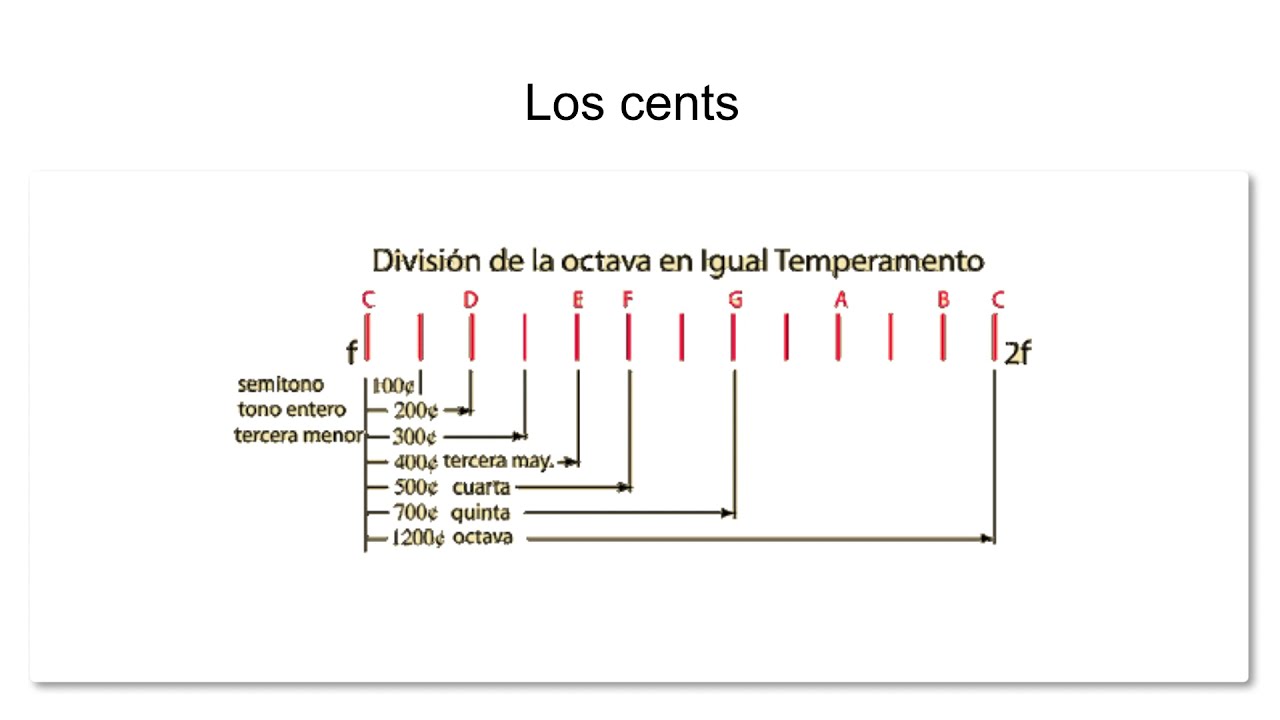
The mathematical concept of intervals measured in cents (where an octave is 1200 cents) and how equal temperaments divide this octave.
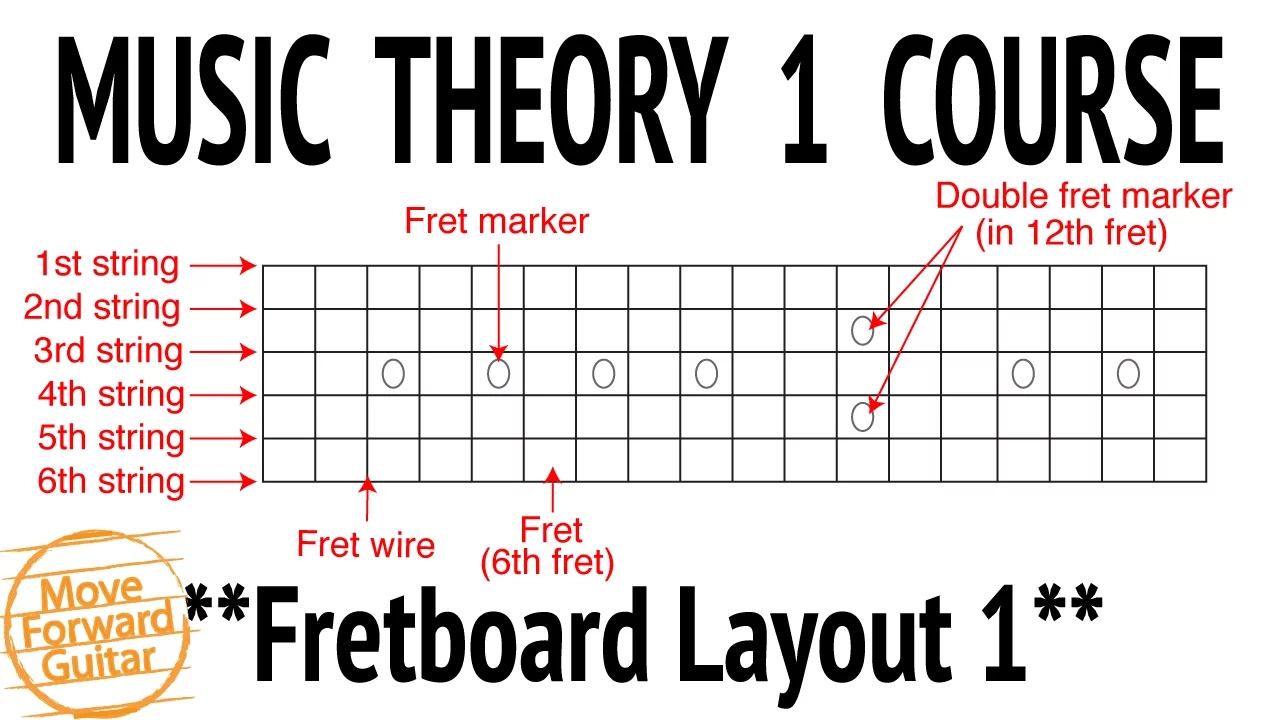
Basic guitar fretboard layout, physical mechanics of fretted instruments, and standard tuning systems.
An introduction to the concept of Just Intonation and how it compares to tempered tuning systems.
Advanced chord construction and voice leading techniques specific to 22-EDO harmonic structures, such as utilizing subminor and supermajor intervals.
Comparative study of other microtonal systems, such as 19-EDO, 31-EDO, and Bohlen-Pierce scales, to understand different harmonic palettes.
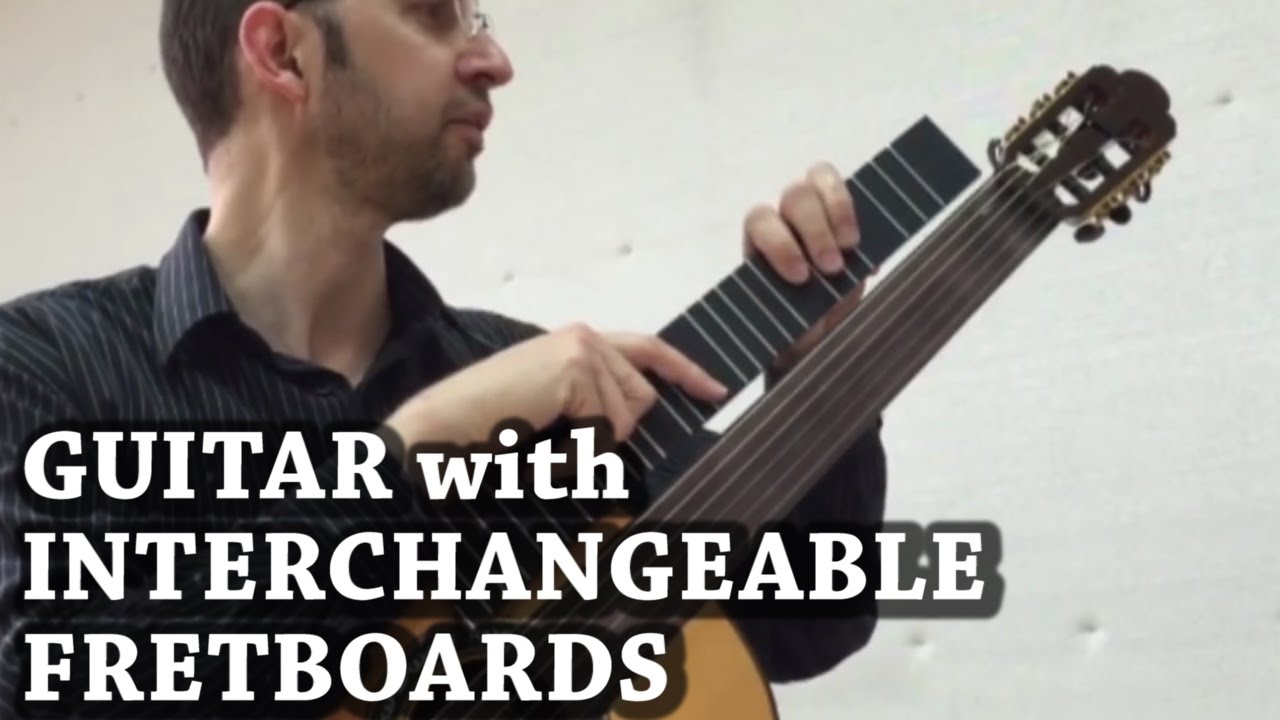
Practical lutherie and physical modification of guitars, including custom refretting or using interchangeable fretboards for microtonal playing.
Compositional strategies and software tools (like Scala or specialized DAWs) for arranging and mixing microtonal music.
40.6K views1.3Klikes9:12Original Release: 2014-01-11
what a in a oh so each step is about 54 cents um which is almost an exact quarter tone if you had had uh 24 divisions of the octave um you would get sort of 50 Cent quarter tones so 22 sort of spread spreads the tuning stretches it a little bit differently and um it allows us to get some um kind of new consonant intervals new consonant chords um but it also allows us to get some very familiar sounding chords like um it's actually a very good major chord um you can play a major chord and all 22 Keys going on and on so the the chord is tuned a little bit differently so it has kind of a different um sort of color to it but um it sounds you know really consent pretty unoffensive to me um but that's nice cuz um the Triad is a very the major Triad is a very um significant thing I think in the construction of a lot of types of music so um it's nice to have that sort of taken care of or um at least somewhat in tune um so I'll just Dive Right In I guess so um I'll just go through the interval intervals first um so obviously we have an octave that's tuned perfectly we have uh semitone which is very close to the 12 tone equal um semitone this is slightly sharper but really has the same effect not too much different um the whole tone is also very similar again this is a little bit sharp but um to my ears it actually in most most contexts it sounds pretty good um so easy it's okay um there's also a neutral second which this is tuned very closely to the um ji ratio of 11 to 10 um so in the context of sort of Melodies I find it really interesting and then also in the context of some chords um it can sound really cool as this kind of neutral second sound um so moving on we have we have a sub minor so this is really close uh to a 7 to6 GI ratio and in the context of a Triad can sound pretty nice um we also have a tri uh sorry A minor third that's a little bit sharper this is closer to a 6 to 5 minor thir um a little wider a little brighter sounding context of a chord actually prefer it most of the time um we also again have our nicely tuned major chord the major third is a little bit flat in uh 12 tunical temperament the major third would be tuned something like this maybe something around there in 22 it's I don't know sorry to hear the difference maybe on the video but um there's that that and then this so you know it's slightly tuned flat um we also have a super major third which in the context of a chord I don't like too much or in the context of a major Triad I don't like too much but in the context of uh a different voicing like here it is again context of that kind of chord or something else it could really work okay um one of my favorite intervals is um the uh it's tuned really closely to the 11 to8 or the 11th partial of the harmonic Series so I played that before this chord so this note is uh exactly in between a perfect fourth which 22 Tunes quite well and a trone which uh is tuned exactly like it's tuned in 12 tone equal temperament it's just 600 cents so this 11 to8 say right in the middle and I think in the context of a lot of chords it actually sounds really really nice um very uh new consonant kind of sound um is provided you take the time to sort of get familiar with it um we also have in 22 uh two different types of minor 7ths so we have this one this is really close to a 7 to four injust intonation tune a little bit sharp but to me it definitely has that sort of ji sound which is kind of a buzzing sound um which can be really fun to play with now we also have this this is a wider uh minor 7th and this is just the inversion of that 11 to 10 um interval that I played earlier the 11 to 10 so this is a 20 to 11 uh we also have a really nice major sub um tune a little bit better than 12 equal actually uh if you're going for just ination um and then we have I don't know what that is maybe not that useful and then back to the octave so um oh I also missed a major six so so this is a uh considered a a super major 6 it's really close uh to a 12 to7 GI ratio um so I think it sounds really nice and consonant but also sounds kind of new which is cool um okay so uh I think that's just a quick demo that's good for now and I'll just uh play the piece and I don't know if anybody has any questions just message me or or dive in uh online there's plenty of info out there um okay for
Up Next

86:18
Microtonal Music with Sevish: Exploring Alternate Tunings
@thebestmusicpodcast
528 views•2021-05-14

10:20
Mozart's Musical Dice Game Explained: History, Rules, & Fun
@webpianoacademy
5K views•2023-03-13

47:36
Understanding Diatonic 7th Chords in Major Keys | Music Theory Tutorial
@GracieTerzian
54.7K views•2022-03-02
10:49
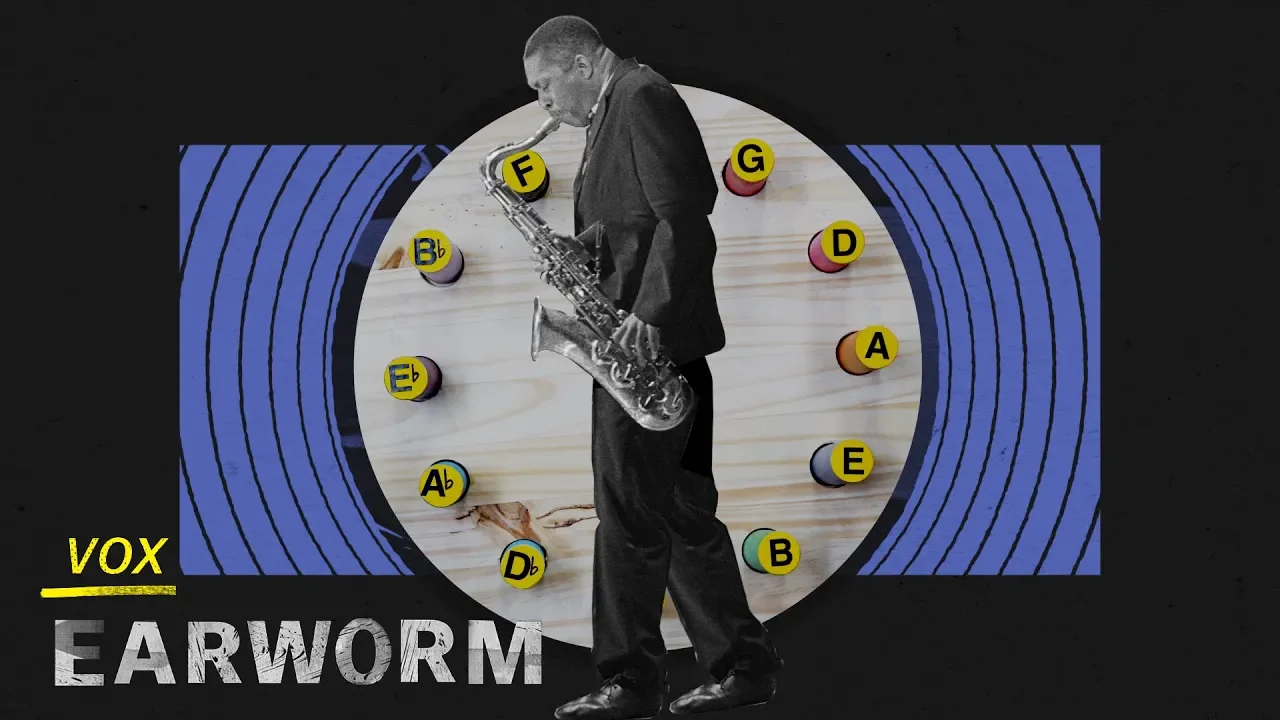
Understanding John Coltrane's Giant Steps: A Music Theory Analysis
@Vox
10.4M views•2018-11-12
Related Study Plans & Knowledge Roadmaps
Structured learning paths in Music Theory
music-theory
Composing Galant Music: Partimento & Schemata
01Foundations of Figured Bass and Keyboard Harmony
02The Rule of the Octave (Regola dell'Ottava)
03Galant Schemata: The Building Blocks of Form
+ 2 more learning modules
30h5 modules
Explore Roadmap
music-theory
Decoding Overtone Series: Tuning & Drone Music
01Acoustic Foundations: The Physics of the Overtone Series
02Tuning Systems: Equal Temperament vs. Just Intonation
03Microtonality and Spectralism: Beyond Standard Pitches
+ 2 more learning modules
24h5 modules
Explore Roadmap
music-theory
Impressionist Harmony: Scales, Planing & RPGs
01Foundational Music Theory: Keys, Intervals, and Seventh Chords
02Impressionist Color: Chord Planing and Parallel Harmony
03Whimsical Textures: Pentatonic Cascades and Whole-Tone Scales
+ 1 more learning modules
14h4 modules
Explore Roadmap
music-theory
Negative Harmony: Axis Reflection in Indie Pop
01Music Theory Foundations: Scales, Intervals, and Triads
02Functional Harmony and the Circle of Fifths
03Demystifying the Negative Harmony Axis Reflection
+ 2 more learning modules
16h5 modules
Explore Roadmap