










![Making Music With The AUGMENTED SCALES (Both Of Them!)[Guitar Theory]](https://i.ytimg.com/vi/PTL5Q1VQHss/hqdefault.jpg)
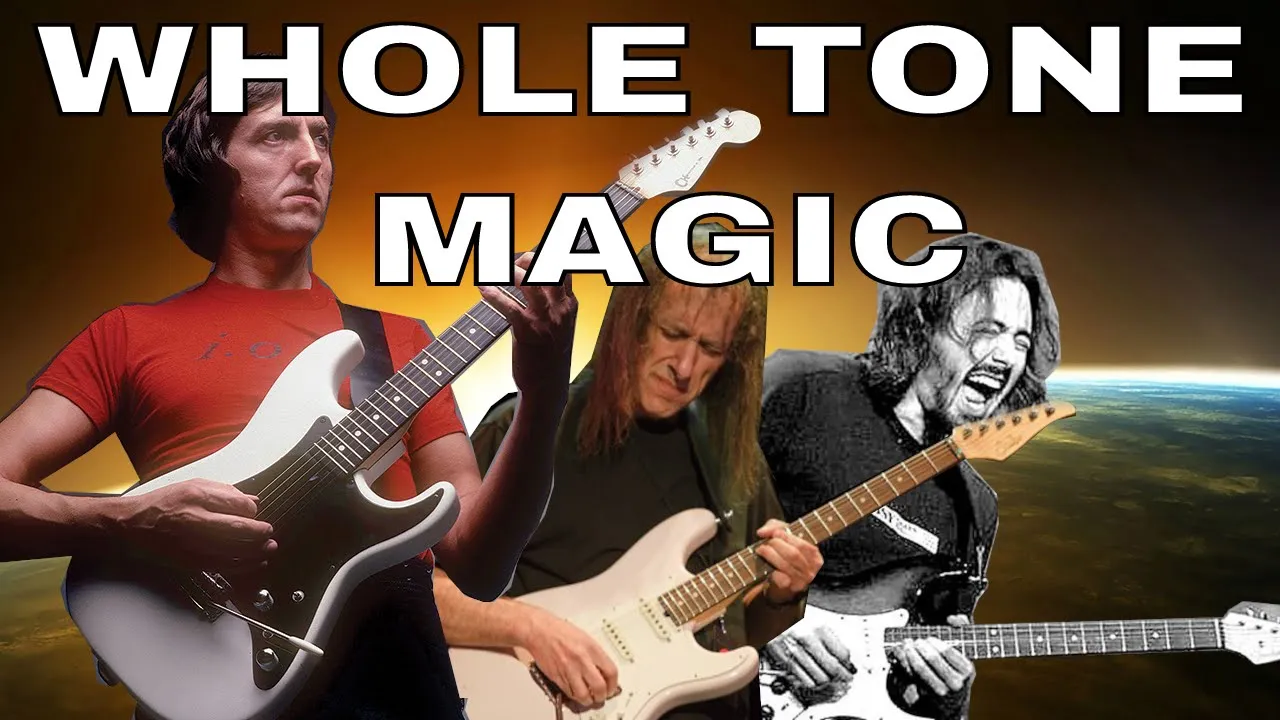




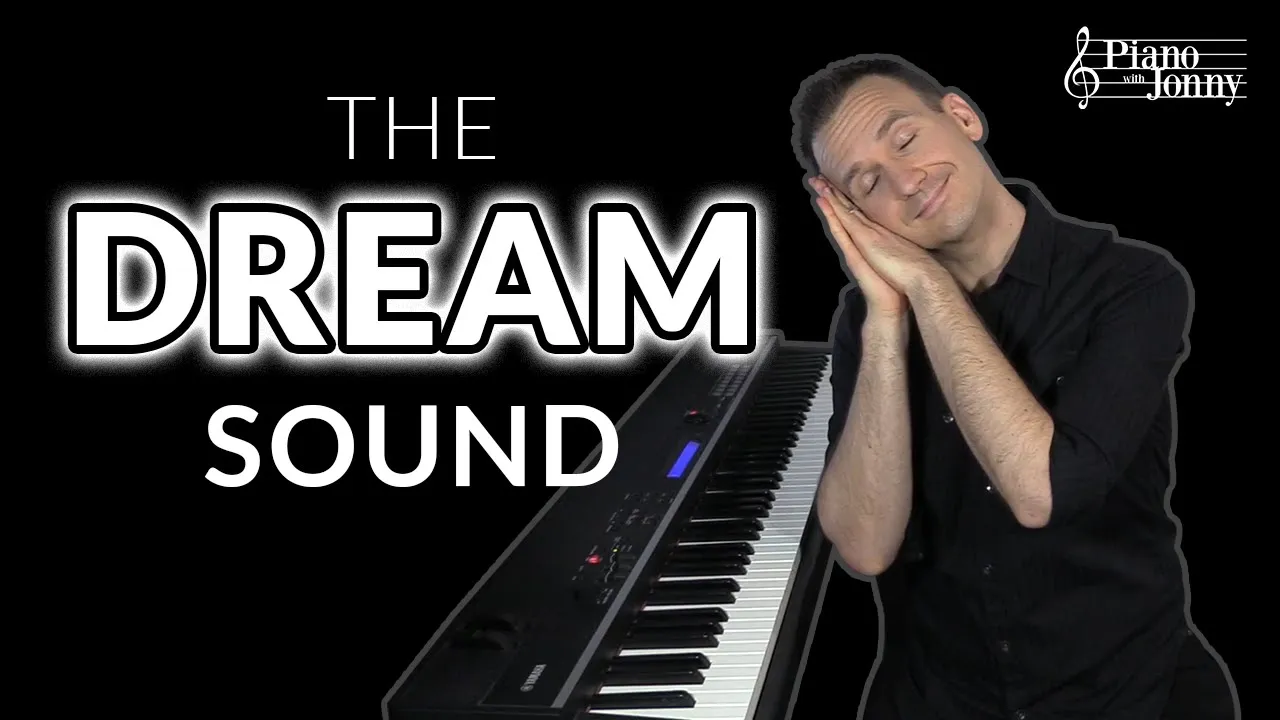
The whole tone scale sounds dreamy because it lacks a tonal center or home note, making it structurally incapable of creating tension and resolution like other Western scales; this unique property stems from its perfectly symmetrical construction where every note is evenly spaced a whole tone apart, leaving the listener in a state of musical limbo that naturally evokes feelings of the unknown and otherworldliness.
Whole Tone Scale: The Musical Science of Dreamlike Ambiguity
Added:Understanding of basic intervals, specifically the distinction between half steps (semitones) and whole steps (whole tones).
Familiarity with the construction of diatonic major and minor scales and their reliance on asymmetrical step patterns.
The concept of tonality, tonal centers, and how traditional Western harmony creates tension and resolution.
Basic knowledge of chord construction, particularly major, minor, and augmented triads.
The study of Impressionist music, focusing on how composers like Claude Debussy used the whole tone scale to break away from functional tonality.
Exploration of other non-diatonic and symmetrical scales, such as the octatonic (diminished) scale and the chromatic scale.
Application of the whole tone scale in jazz improvisation, specifically over augmented dominant chords (e.g., 7#5).
Practical techniques in film scoring and media composition, utilizing musical ambiguity to underscore dream sequences, transitions, or mystery.
An introduction to pitch-class set theory and post-tonal music analysis.
8K views637likes6:42Original Release: 2024-11-07
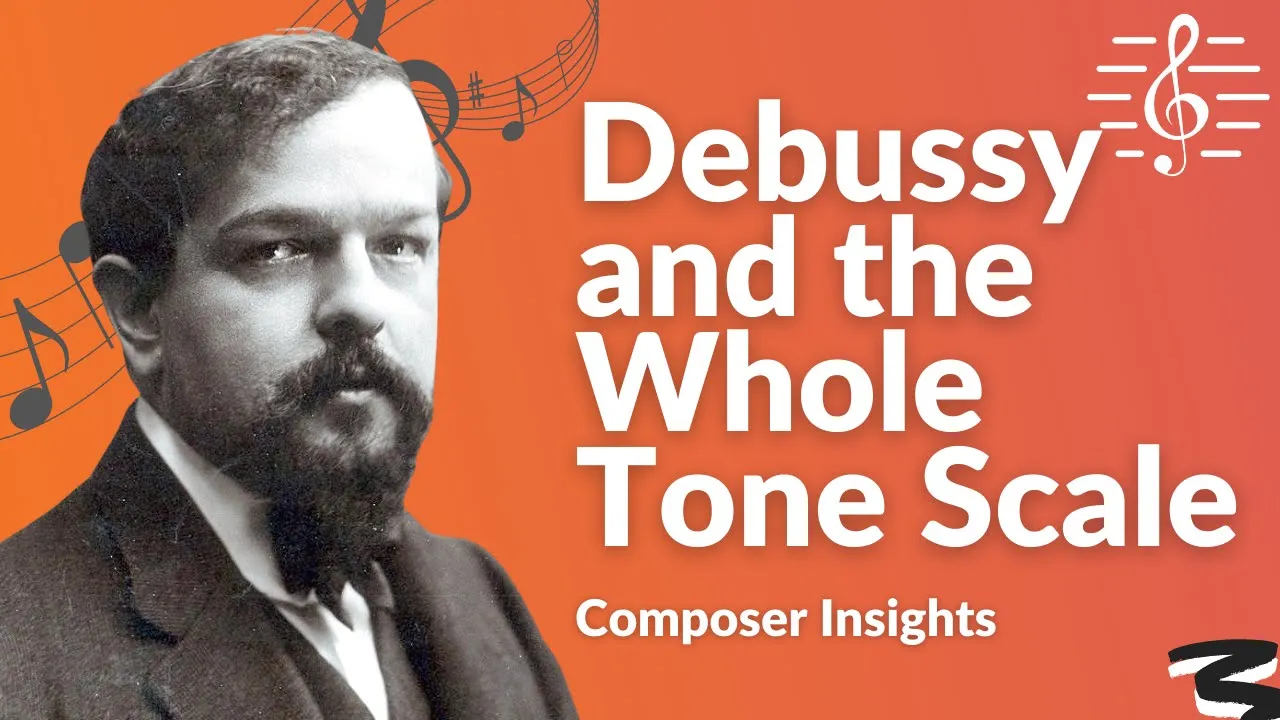
if you've seen Disney's 1951 animated classic Alice in Wonderland then you probably remember the famous scene in which she falls down the rabbit hole which itself has become a kind of shorthand for delving into the unknown so it's totally appropriate that the instant she crosses the threshold from The Real World into Wonderland we hear this familiar musical cliche goodbye Diner goodbye what you're hearing is the whole tone scale and it's very often used as a musical device in any story involving a dream sequence some other transition into the otherworldly in this video we're going to go down our own musical rabbit hole and I'll show you why this specific set of notes is objectively the sound of dreams so let's get into it on The Art of Storytelling so let's begin with a simple major scale one thing you'll notice when you hear this collection of notes is that they come home to a feeling of resolution there's one note in the scale that feels perfectly resolved and I can demonstrate that by not quite making it to the end of the scale and just pay attention to how this creates an expectation in your mind that is not [Music] fulfilled now you can hear that ability to resolve even more clearly if I Clump the notes in the scale together into chords and create chord progressions that also lead to home that home note has many names it's called the tonic or the key Center or the root basically basically the do in DOI you can think of it as a kind of musical anchor or center of gravity and most scales in the western system of Music have this anchor whether they're major or minor or anything else and that is why nearly all of the music that you hear has an emotional quality to it it's because all these scales have a built-in structure that is capable of expressing tension and [Music] resolution now this is where one might start to assume that this ability to become tense and then resolve is simply an inherent property of all music that is not so the whole tone scale has the rare quality of not having a home note and if you're saying well the scale still has an ending so the last note that you play in the scale is the home note listen to what happens if the scale keeps [Music] going do you hear a resolution in there every note feels like it could be the home note which means none of them is really the home note and what happens if I try to play chords in this scale and try to make a nice chord progression that has a feeling of resolution the point is that it's actually impossible to create tension or resolution like we could with the other scales there's a nice little demonstration of this distinction when Alice Falls further down the rabbit hole the sequence begins with her in total darkness and the musical underscore there sounds totally ambiguous it doesn't have a tonal Center but when she switches on a lamp the chord that plays does have a tonal Center if I just isolate that chord you can clearly hear it has that home [Music] note this gets even more interesting when you begin to understand the reason why the whole tone scale can't resolve and a clue can be found in its name the scale is created by simply playing notes that are evenly spaced a whole tone apart all I'm doing here is skipping every other note on the keyboard in other words every note in the scale has the exact same relationship to its neighbor which makes it very different from other scales the major scale has an asymmetrical pattern of whole steps and half steps and that means it contains information that your brain can interpret to kind of predict what you're going to hear next the whole tone scale on the other hand is perfectly symmetrical there's no information for your brain to interpret it's just an evenly repeating set of notes with no pattern to guide your ear towards any kind of [Music] resolution and this means that the whole tone scale doesn't have any musical function it has no expressive potential it's kind of interesting because it's neither resolved nor tense it's just a kind of musical Nether world in which there's no musical meaning and that makes it totally useless for creating emotion unless the feeling that you want to capture is that feeling of being in limbo the composer Claude deusi famous ly used the whole tone scale to subvert the conventions of his era and create so-called impressionistic music that seem to float in tonal [Music] ambiguity and you will occasionally hear it in popular music as a kind of jazz [Music] Harmony some of the earliest examples of it being used as a storytelling device can be found in the work of Alfred Hitchcock who created several memorable dream sequences check out this one from [Music] Spellbound it seemed to be a gambling house this scene was actually designed by Salvador Dolly to portray the unconscious mind under psychoanalysis really a perfect fit for the whole tone scale you might be wondering if there's a halone scale in which you just play all of the notes on the keyboard and yes this is called the chromatic scale and it is sometimes used in dream sequences like this one in Vertigo [Music] this scale also cannot resolve but it has a different flavor it's kind of like just mashing her hands on the keyboard to create maximum dissonance so it's a much darker kind of musical [Music] ambiguity it doesn't really have the spaciness that the whole tone scale does today the whole tone scale is basically a musical meme it's usually heard when somebody spirals into the unknown which makes sense given its cyclical nature and its disorienting effect and this Cultural Association might lead you to believe that the only reason that the whole tone scale sounds dreamy is that we're just accustomed to hearing it in this context but the point of this video is to show that music also has certain intrinsic properties that can make it more or less suited to conveying a particular idea or feeling and these are not always man-made cliches the whole tone scale is objectively ambiguous and has sounded dreamy ever since the first time it was heard long before Alice went down on the rabbit hole so thanks for watching please subscribe for more videos and I'll see you on the next one
Up Next

3:36
Whole-Tone Scale Explained: Structure & Harmonic Use
@behindthescore3327
1K views•2024-04-21

51:08
Simon Rattle on Early 20th-Century Music: Tonality's Decline
@theclandestinum
18.3K views•2012-06-16

47:36
Understanding Diatonic 7th Chords in Major Keys | Music Theory Tutorial
@GracieTerzian
54.7K views•2022-03-02
10:49
Understanding John Coltrane's Giant Steps: A Music Theory Analysis
@Vox
10.4M views•2018-11-12
Related Study Plans & Knowledge Roadmaps
Structured learning paths in Music Theory
music-theory
Tintinnabuli: Pärt's Counterpoint & Composition
01Music Theory Foundations: Intervals and Triads
02Fundamentals of Counterpoint and Voice Leading
03Arvo Pärt and the Spirit of Holy Minimalism
+ 2 more learning modules
16h5 modules
Explore Roadmap
music-theory
Composing Galant Music: Partimento & Schemata
01Foundations of Figured Bass and Keyboard Harmony
02The Rule of the Octave (Regola dell'Ottava)
03Galant Schemata: The Building Blocks of Form
+ 2 more learning modules
30h5 modules
Explore Roadmap
music-theory
Decoding Overtone Series: Tuning & Drone Music
01Acoustic Foundations: The Physics of the Overtone Series
02Tuning Systems: Equal Temperament vs. Just Intonation
03Microtonality and Spectralism: Beyond Standard Pitches
+ 2 more learning modules
24h5 modules
Explore Roadmap
music-theory
Impressionist Harmony: Scales, Planing & RPGs
01Foundational Music Theory: Keys, Intervals, and Seventh Chords
02Impressionist Color: Chord Planing and Parallel Harmony
03Whimsical Textures: Pentatonic Cascades and Whole-Tone Scales
+ 1 more learning modules
14h4 modules
Explore Roadmap