
















Effective orchestration requires balancing chord spacing, voicing, and timbre to achieve desired sonic effects; composers like Mahler, Debussy, and Scriabin demonstrate this through strategic register placement, instrument selection, and articulation choices that either separate or blend musical elements to create specific emotional and atmospheric qualities in orchestral music.
Orchestration Fundamentals: Chord Spacing & Timbre
Added:Basic music theory, including chord construction (triads, seventh chords, and extensions) and standard voice-leading principles.
Familiarity with standard orchestral instruments, including their respective playing ranges and basic register characteristics.
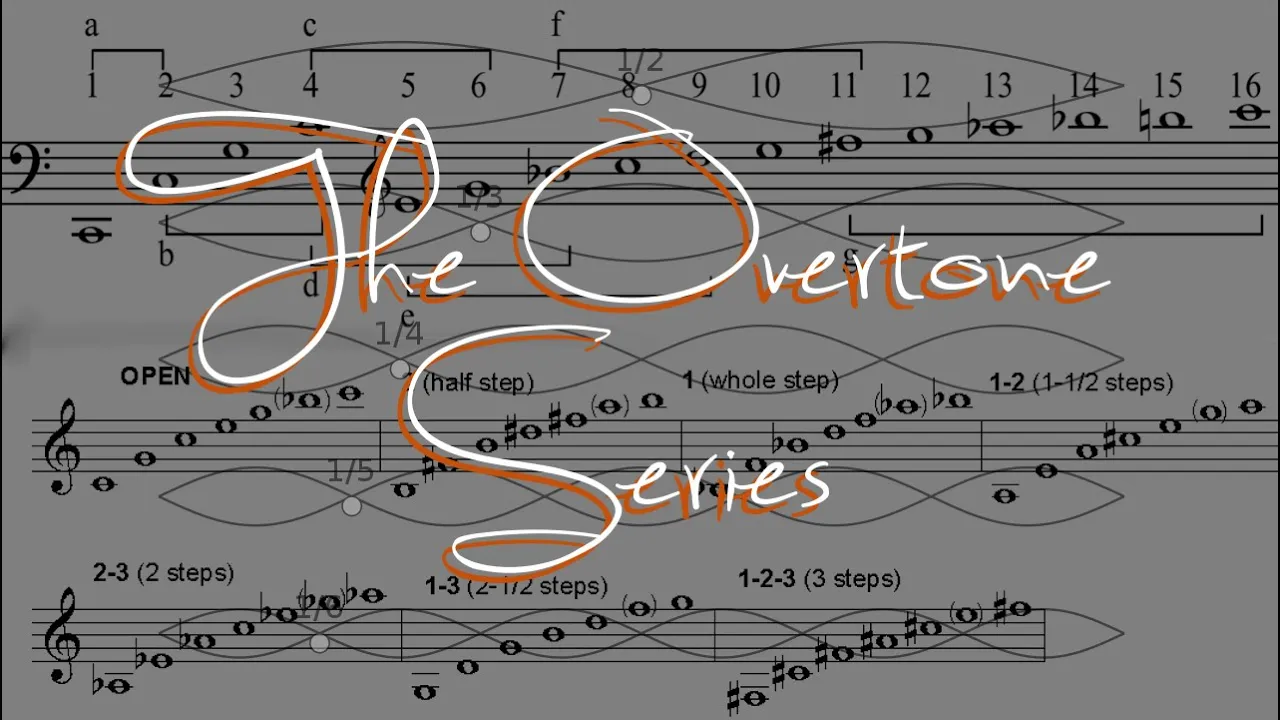
An understanding of the overtone (harmonic) series and its fundamental relationship to acoustic resonance and interval spacing.
Basic orchestral score-reading skills to follow multi-stave musical examples.
Advanced orchestration techniques, such as voice-doubling strategies and the blending of dissimilar instrument families.
A comparative stylistic analysis of late-Romantic, Impressionist, and early-Modernist orchestration (contrasting Mahler, Debussy, and Scriabin).
Practical application of spacing principles in arranging or composing for a live symphonic orchestra or creating virtual MIDI mock-ups.
Study of psychoacoustics, specifically focusing on how the human ear perceives orchestral blend, acoustic balance, and frequency masking.
4K views132likes21:08Original Release: 2021-01-30
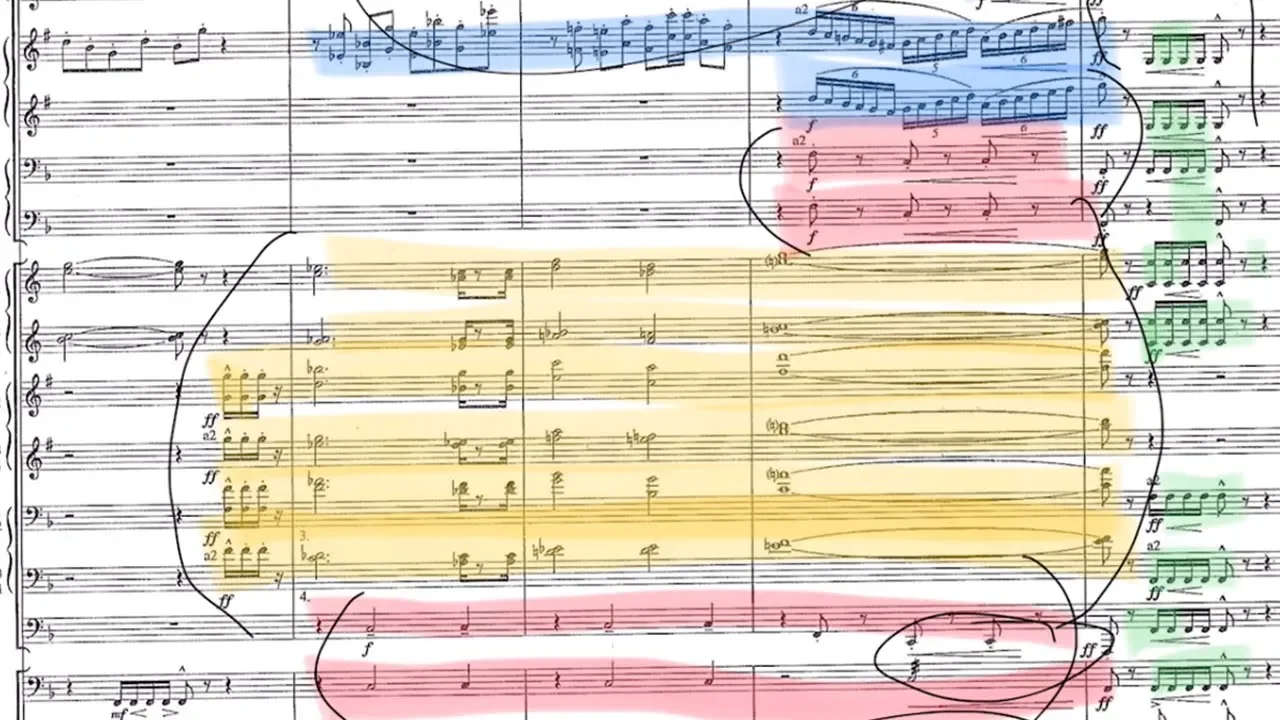
hello and welcome to the second part of chord spacing in timbre where i'll be looking at more examples from the canon of western classical music specifically examples of homophonic textures i'll continue my discussion of spacing notes and voicing chords in an orchestral texture as well as the timbral changes that occur with these orchestrational decisions in the previous video i specifically looked at examples from brahms and berlioz two composers that captured that romantic era sound through their own version of the orchestra today i'll look at examples from three different composers during the late 19th and early 20th century each of whom developed a unique compositional and orchestrational voice that will hopefully be apparent in this video let's get started with the first examples the first set of examples is from mahler's first symphony composed between 1887 and 1888 and scored for four flutes four oboes for clarinets three bassoons seven horns five trumpets four trombones tuba percussion and strings so a much larger orchestra than what we saw in the previous video and with it mahler achieves a vastly different aesthetic and overall sound the first example is from the opening measures of the symphony and right away the listener is transported into mahler's unique sound [Music] world here we have a third inversion dominant seventh chord scored between the brass and winds with the conflicting major seventh of the chord a beat later in the string pizzicato the registral and timbrel difference between the strings and the winds and brass chord allows us to separate these two events in spite of their conflicting pitch content take a look at how mauler distributes each note of this d-flat seven chord at the top of the chord the d-flat is given to two piccolos two flutes four oboes e flat clarinet and three b flat clarinets by now you should be able to guess how this will sound everyone here but piccolos are positioned very high in their respective ranges especially the b-flat clarinets and oboz this will result in a piercingly bright sound now look at the four muted trumpets mueller divides them into two here and in the high part of the range this will also be a piercing sound that will balance the volume of the winds [Music] [Applause] the mutes here don't really lower the volume but rather they change the timbre think of them as filters that remove some of the mid-high frequencies resulting in a more metallic or buzzy sound finally the seven stopped horns have the c-flat in unison with the bassoons both instruments are once again in the high part of their respective ranges and you might think seven horns plus three bassoons might overpower the rest of the chord but stopping the horn lowers the volume a bit creating a more nasal sound one that blends well with the high bassoons i just want to point out that my reduction and sample library realization don't include percussion simply because my focus is on harmony so please listen to a real recording of this piece to get the full experience the second example from this symphony demonstrates a second inversion f minor chord in closed position meaning between all the instruments present here there are no gaps in chord tones from the lowest to highest note this chord only occupies an octave plus a sixth range and because of the articulation and dynamic level we get a compact aggressive punch sort of like an exclamation point in musical form looking at the brass we have two of the seven total horns doubling the four trumpets with a minor third interval a lot of the brightness will come from these notes in this range and a lot of the weight or thump sound will come from the low brass scored below [Music] short fortissimo trombones and horns have a lot of bite to them here while the brass does most of the heavy lifting in this cord we also get bassoons and low strings enforcing the octave c's for added clarity the next example demonstrates a diminished triad in the low brass and wins with an added leading tone resolving to the tonic in the strings and oboe [Music] notice how the violins violas and chely are unison here [Music] and also notice just how low these horns are over the past few videos i've discussed the harmonic series as it pertains to spacing for balance purposes but here's an effective example that certainly goes against this mauler doubles low bassoons with horns here and because the cord is voiced so low there's a slightly muddy quality although offset a bit by the low dynamic level the overall sound is dark and mysterious [Music] the last example from the symphony is from a climactic moment towards the end of the fourth movement compositionally speaking there are some interesting chords here the first chord is a f major triad in the middle register with octave g's in the lowest voices i'm sure music theorists would debate how to identify this chord but in popular music or jazz we might call it an f slash g or an f over g whatever you decide to call it it's a four note chord that then moves to a three note b flat major chord to my ears it's a bit jarring that the bass notes from the first chord which were sort of separate from the f chord suddenly join back up with the rest of the orchestra as they have now the root of the b-flat chord i understand why mahler does this or at least i think i understand he's establishing movement by thirds in the bass which he then continues into the next measure the b-flat chord seemed to be wanting to move to a c chord of some sort based on where the upper melody was going but what we get is a modulation upwards to d which is highlighted by the orchestration so going back to the base movement the third's progression also brings us to d so that kind of makes the modulation a bit smoother so let's look at the strings we have tremolo upper strings with the violins in unison in the upper register they have contrasting motion that leads us to the d major chord with some nice voice leading the violas are divided into three in the middle register they fill out the harmony and unfortunately they are doubled with brass and winds otherwise it wouldn't be balanced [Music] the oboes and trumpets well two of the four trumpets are in unison on this ascending gesture which our ears perceive as the melody here combining fortissimo oboes and trumpets works well here as their timbres share some acoustic similarities so the remaining instruments here are supporting the harmony the chordal configuration here is in a nice balanced spacing again somewhat reflective of the harmonic series the brass in this range overpower the clarinets and bassoons so the overall timbre of the orchestra is brass heavy the string tremolos obviously add motion and energy as well the next set of examples comes from wc's la mer composed between 1903 and 1905.
as i move further and further away from the romantic period it's more rare to find simple homophonic textures so many of these examples are more complicated though we can still closely look at the vertical spacings the first example is from early on in the first movement and we sort of have three things going on here first let's look at the string tremolos which are sort of pulsating back and forth with contrasting motion between top and bottom voices [Music] in the third measure here we add notes of the harmony creating this planing effect of parallel chord motion that depu c is known for the second part of the texture is the quarter note triplet ascending gesture in the flutes bassoons and clarinets the overall harmony in this example is a sort of subset of a pentatonic collection with the exception of the chely and base when they move to the a natural even though these lines are moving horizontally we can still look at the vertical harmonies formed at any given point in time and with that you can see how the ascending triplet line interacts with the other parts of the texture we occasionally form a major second between this gesture and the rest of the orchestra but we're in a nice range for that close interval to occur the third part of this texture is the motivic gesture in the english horn and trumpet which cuts through the texture just enough to grab our attention [Music] the second example from la mer demonstrates three successive chords starting with b flat dominant seventh chord moving to an e flat dominant seventh chord and finally a d flat dominant seventh chord there are some passing tones present in all three chords that add some additional color for example the ninth of the chord briefly in beat seven so we can break this texture down into three parts as well there's the dotted quarter note harmonic support which can be found in the bases half of the chili section the horns and winds [Music] the overall timbre here is well rounded and balanced and doesn't overpower or take anything away from the other two parts of the texture the note spacing is fairly wide here and notice that even when these lines move chromatically up and down the collective vertical harmony is never jarring in other words wc maintains fantastic voice leading even with all of these grammatically moving parts we also have this interesting cello figure that almost serves as a counter [Music] melody it functions both as harmonic support as well as a chromatic motific gesture the half section of trellos in a tenor range gives this a vocal quality with a more intimate sound finally we have the violins with the primary melodic material in octaves isolated in the highest register of this texture overall the next example demonstrates a melody in the english horn and two high cellos over top a series of static string chords with a petal a flat in the chelyan bases i won't go into too much detail about the harmonic content here but wc is clearly thinking more in terms of scales like the whole tone scale or even the mixolydian mode as opposed to tonal functioning chords notice how he separates the bass and shelly petal from the rest of the supporting harmony by keeping them apart registerly the melody overlaps with the upper harmonic support range but our ears separate them because of the motion obviously but also the timbre of english horn and height jello it's a really lovely [Music] combination notice also how the violin ones move in parallel octaves as do the violin twos so they're interlocking this is very common string writing [Music] the last thing i want to point out is the petal a flats are labeled soltasto in french it's solatus which means to play with the bow up on the fingerboard which has a softer warmer texture overall playing up on the fingerboard actually removes some of the high frequencies the opposite of this would be sol ponticello which has more high frequencies present the last example from la mer features two flutes on an ostinato like eighth note figure against a bassoon and low brass chorale-like texture [Music] in the first measure here we have four horns two bassoons and a muted trombone together take a look at the spacing of the second chord which occurs on the and of b2 it's a relatively low positioned closed spacing cord this doesn't sound muddy because of several reasons these timbres blend really well together and the dynamics are very low in the next measure we add more muted trombones an extra bassoon and low charlie doubling the lowest voice in the harmony [Music] i think any lower and this brass coral like texture would start to get muddy but it lies in such a perfect range for this warm sound muting the trombones as he does here also removes some of the mid-high frequencies that might possibly make this texture more muddy the last set of examples is from scriabin's prometheus composed in 1910 i could easily make an entire video about this piece as there's so much to discuss but to keep it simple i'll just look at a few examples the first example is from the opening few measures of the piece and features an interesting chord that many have labeled as the mystic chord i won't go into detail about this chord but just notice the chord spacing in this example we have very close intervals in a very low range specifically in the bassoons and low strings obviously there's a programmatic context to this piece and specifically to this moment but even without knowing what it's about you can guess that the goal of this texture is mystery and suspense as i mentioned it's known as the mystic chord which i think describes the overall sonic quality well [Music] the second example from prometheus demonstrates two consecutive chords the first based on a b flat lydian pitch collection with the bases and contra bassoon on the root the chelly horns and bassoons with sort of stacked fifths above that root and the rest of the strings trilling between notes of this collection [Music] we also have the piccolo and flute on the third of the chord coming through the texture as foreground material there is a sudden shift in the next measure and we have the mystic chord built on b flat this time with that shift in harmony we get a different articulation and dynamic so we have these strings switching from measured trills to a forte piano tremolo we also have a motific gesture appear in muted trumpets both measures here have chords scored with fairly close harmonies and positioned fairly low again this piece features that kind of voicing prominently throughout the third example demonstrates a climactic moment that can be broken down into three parts first you have the main melodic figure in the flutes piccolos violins and chili [Applause] notice just how high the violin ones get here in fact my sample libraries didn't even have this high g flat so i had to pitch shift a lower note up this is extremely high on the violin and unsurprisingly we have triple forte from everybody here this is yet another example where my sample library rendition doesn't do the moment justice so the second part of the texture is a trumpet figure which is also sort of a counter melody [Music] there are two trumpets on the higher octave here and one on the lower octave the remaining instruments function as harmonic support with the horns adding a rhythmic driving component to the texture [Applause] in comparison to the previous two examples these chords are spaced much higher so scriobin leaves a lot more room in the low end for these chords which helps to balance the chords [Music] just looking at the harmony essentially we have the same chord in each measure with the only major difference being the root of the chord changes from a flat to d natural finally the last example shows a beautiful moment between strings and horns where a fairly chromatic melody in the violin ones cellos first horn and later flutes is harmonized in a very interesting way hey the harmony here is based on the mystic chord but it sort of alternates between that and other closely related chords the lowest voice of this harmony which scriabin reinforces with bassoon and low strings forms an interesting counter line to the main melody here [Music] overall this is a great example of how to voice non-diatonic chords and specifically how to move from one to another with good voice leading so that does it for this video i hope you've enjoyed these tutorials and if you have please subscribe to my channel and like or comment below see you next time
Up Next

6:42
Whole Tone Scale: The Musical Science of Dreamlike Ambiguity
@theartofstorytelling1
8K views•2024-11-07

51:08
Simon Rattle on Early 20th-Century Music: Tonality's Decline
@theclandestinum
18.3K views•2012-06-16

47:36
Understanding Diatonic 7th Chords in Major Keys | Music Theory Tutorial
@GracieTerzian
54.7K views•2022-03-02
10:49
Understanding John Coltrane's Giant Steps: A Music Theory Analysis
@Vox
10.4M views•2018-11-12
Related Study Plans & Knowledge Roadmaps
Structured learning paths in Music Theory
music-theory
Tintinnabuli: Pärt's Counterpoint & Composition
01Music Theory Foundations: Intervals and Triads
02Fundamentals of Counterpoint and Voice Leading
03Arvo Pärt and the Spirit of Holy Minimalism
+ 2 more learning modules
16h5 modules
Explore Roadmap
music-theory
Composing Galant Music: Partimento & Schemata
01Foundations of Figured Bass and Keyboard Harmony
02The Rule of the Octave (Regola dell'Ottava)
03Galant Schemata: The Building Blocks of Form
+ 2 more learning modules
30h5 modules
Explore Roadmap
music-theory
Decoding Overtone Series: Tuning & Drone Music
01Acoustic Foundations: The Physics of the Overtone Series
02Tuning Systems: Equal Temperament vs. Just Intonation
03Microtonality and Spectralism: Beyond Standard Pitches
+ 2 more learning modules
24h5 modules
Explore Roadmap
music-theory
Impressionist Harmony: Scales, Planing & RPGs
01Foundational Music Theory: Keys, Intervals, and Seventh Chords
02Impressionist Color: Chord Planing and Parallel Harmony
03Whimsical Textures: Pentatonic Cascades and Whole-Tone Scales
+ 1 more learning modules
14h4 modules
Explore Roadmap