


















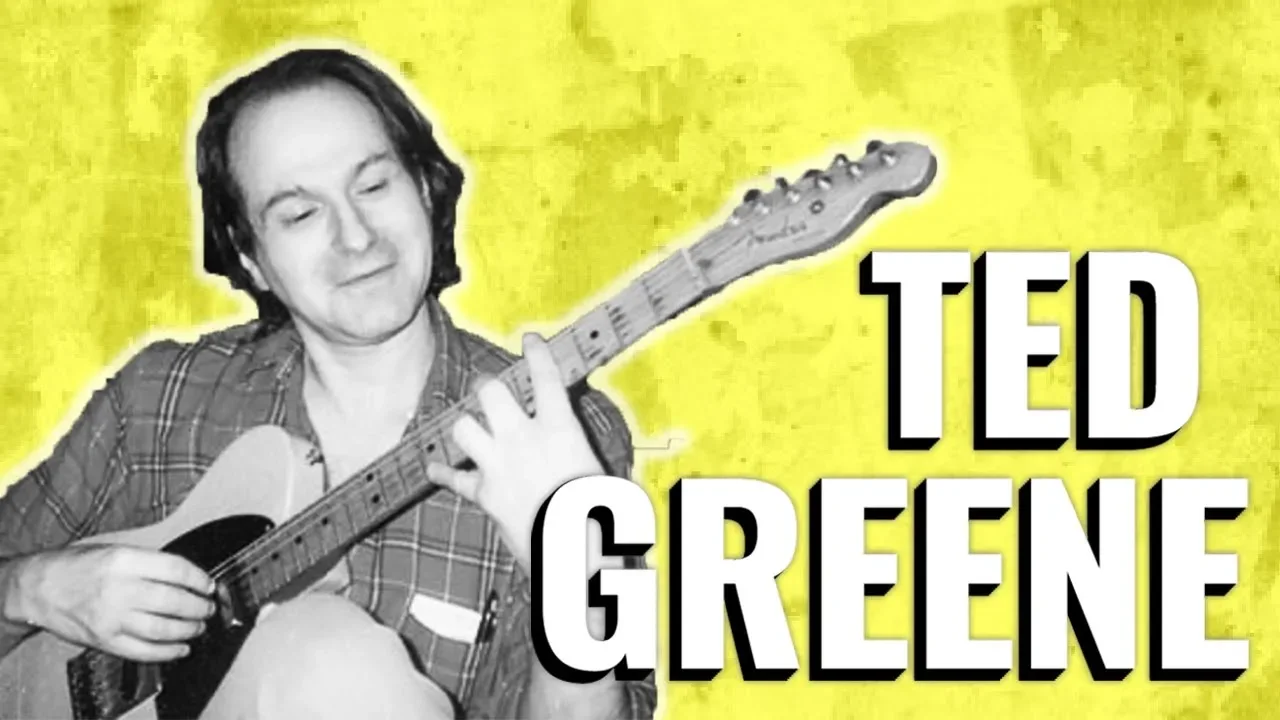


Chord planing is an impressionist harmony technique pioneered by Debussy and Ravel that involves voice-leading non-functional chord sequences using parallel motion as if they were a single melodic line, allowing guitarists to reharmonize dominant or 2-5 progressions with colorful chord sequences that resolve smoothly to the target chord, creating sophisticated harmonic textures while maintaining functional resolution.
Master Chord Melody Snippets: Learn Peter Bernstein's Jazz Guitar Techniques
Added:Solid understanding of standard jazz guitar chord shapes, specifically Drop 2 and Drop 3 seventh chords, and their inversions on the top string sets.
Familiarity with basic chord melody arranging principles, including how to isolate the melody note on the highest sounding string while supporting it with underlying chord tones.
Basic knowledge of functional jazz harmony, particularly the minor and major ii-V-I progressions found in standard jazz forms like 'Autumn Leaves'.
An understanding of basic interval construction, specifically perfect and augmented fourths, to serve as a conceptual foundation for quartal harmony.
Applying quartal harmony and chordal planing techniques to other jazz standards with more complex harmonic structures, such as 'Stella by Starlight' or 'All the Things You Are'.
Developing voice-leading strategies to seamlessly transition between traditional tertian harmony (chords built in thirds) and modern quartal voicings.
Transitioning from pre-arranged chord melody pieces to real-time, improvised chord soloing and dynamic comping behind a soloist.
Studying and incorporating the harmonic approaches of other chord melody innovators, such as Ted Greene, Joe Pass, and Ed Bickert, to synthesize a personalized playing style.
2.3K views104likes14:40Original Release: 2025-04-12
If you're a jazz guitarist or aspiring to be one in this day and age, you've most likely heard of Peter Bernstein. If not, it's time you check him out, as he is one of the finest and most influential players of the day. For those familiar with his playing, who also happen to be big Jim Hall fans like myself, I'm sure you're aware of the great influence this legendary master had on Bernstein. And this is especially evident when you listen to his use of chords in general. So if you love those modern sounding chord voicings, you are in for a treat. In this lesson, I am going to teach you some awesome chord melody snippets by Peter Bernstein and show you how you can incorporate them in the context of hundreds of standards.
I admit a lot of what you are going to hear is considered advanced from a harmony standpoint. But if you understand what a 251 is, please stick with me because I will break everything I am going to show you down to its most basic components. In addition, they are easy to play because they are mostly one or two finger chords.
[Music] And what I am going to teach you next I transcribed off a solo guitar introduction Bernstein played live at the Umbria Jazz Festival in Italy a few years back. This intro is to a lesserk known standard titled I'll wait and pray. If you want to hear a great version of it, check out John Cold Train's recording of this standard on Cold Train Jazz. And now it's my turn to play it for you and then I'll explain what is going on here.
[Music] So, you've most likely noticed that this is played rub, which the Oxford dictionary describes as the temporary disregarding of strict tempo to allow an expressive, quickening or slackening, usually without altering the overall pace. And that said, there are many different ways to notate it depending on how you want to feel the time and separate the measures. In my notation, I am usually starting a new measure on what I feel is a downbeat over a resolution chord. But the idea, as we will see, is for you to freely interpret the duration of different measures according to how you feel it.
Even Peter Bernstein would have trouble replicating what he originally played here. If you look at the very top of each measure, you will see that I've notated the original changes with their harmonic function. This is very important in order to understand what he is reharmonizing. right below and why it happens to work. Furthermore, be aware that because the time is being stretched, the changes don't fit neatly into a single time signature as when played at a fixed tempo. Okay, back to what is going on harmonically. Listen carefully one more time to the first two measures.
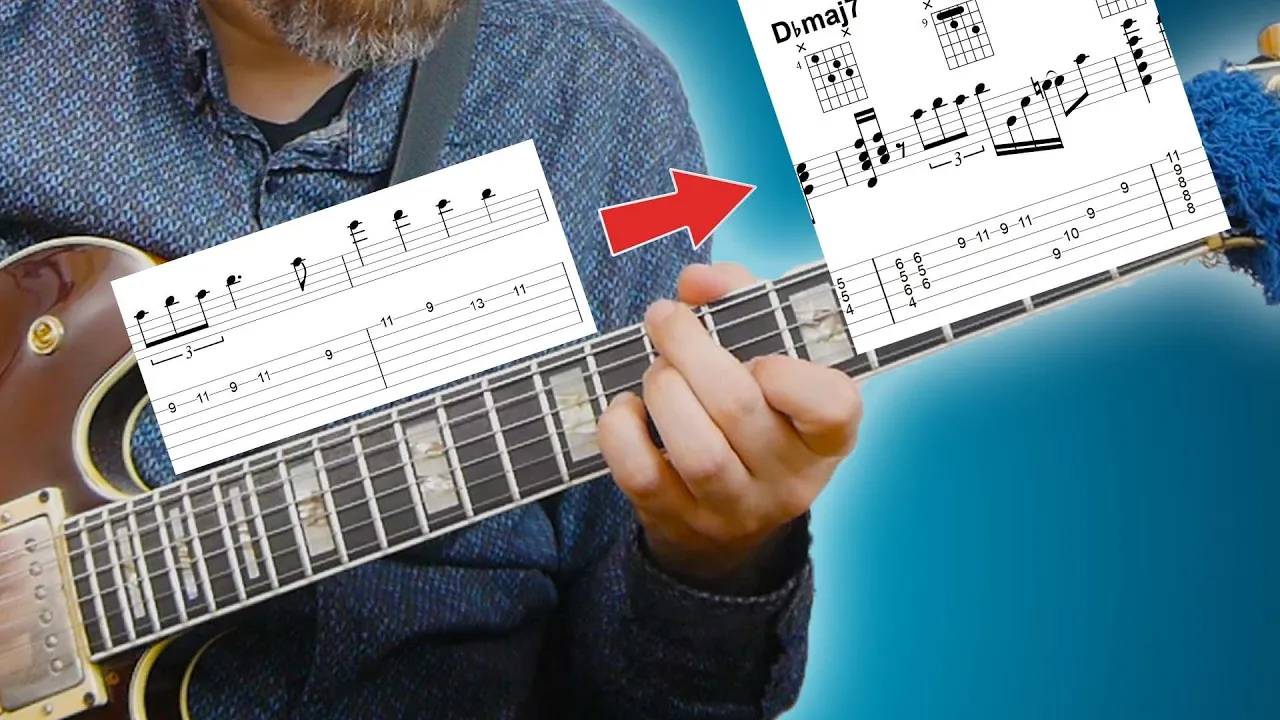
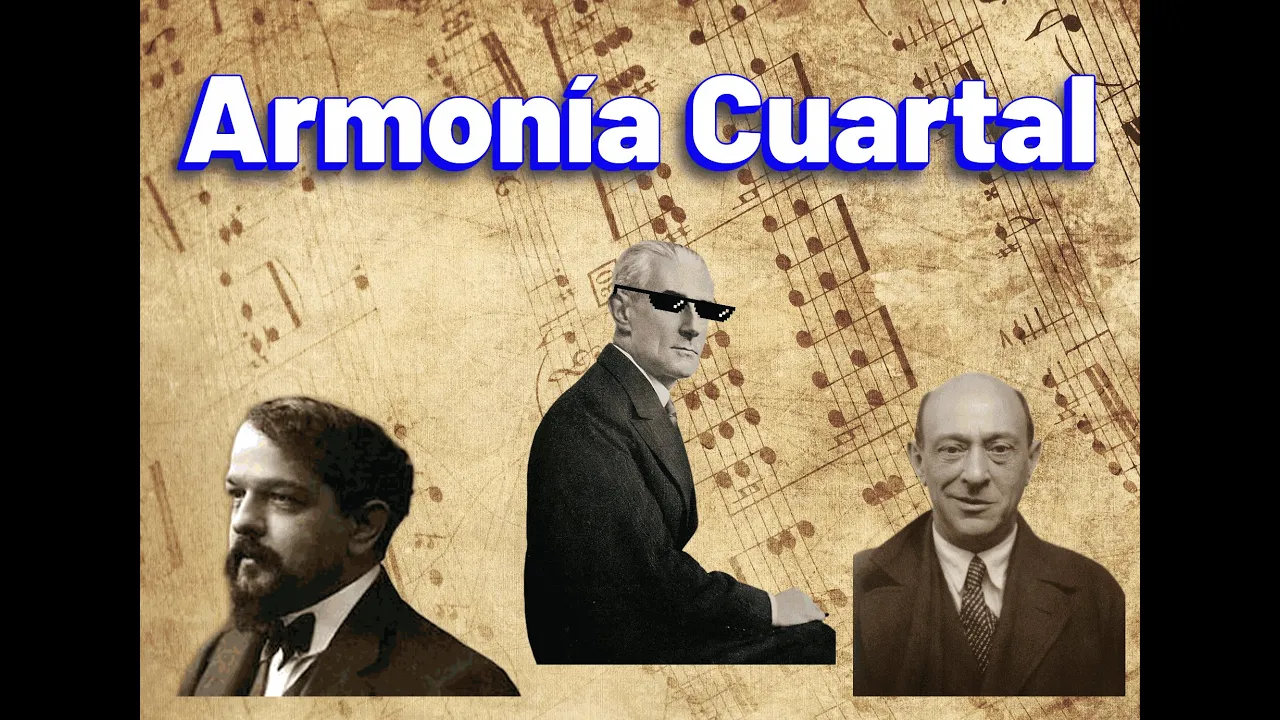
[Music] The first measure is a simple 25, no more, no less. In the second measure, it gets very interesting. Here, Bernstein reharmonizes a dominant tatonic cadence with a concept called planing. And this is a practice that was started during the impressionist harmony period, namely by WC and Rell. And it consists of voice leading nonfunctional chord sequences using parallel motion as if they were a single melodic line. And I've posted an entire video devoted to it if you want to understand it better. It's titled Cordal Planing from WC to Bill Evans.
and I will place a direct link to it below this video. But in essence, what I want to teach you here is that you can reharmonize the space taken up by any dominant or 25 with a nonfunctional sequence of chords as long as the final chord in the sequence resolves. And the resolution may take place using a final chord which functions as a dominant of the target or if unrelated by simply smoothly voice leading to it. In this case, the target or resolution chord is the E flat major 913 which happens to be the tonic. Now observe all the nonrelated chords that lead up to it from the beginning of the measure.
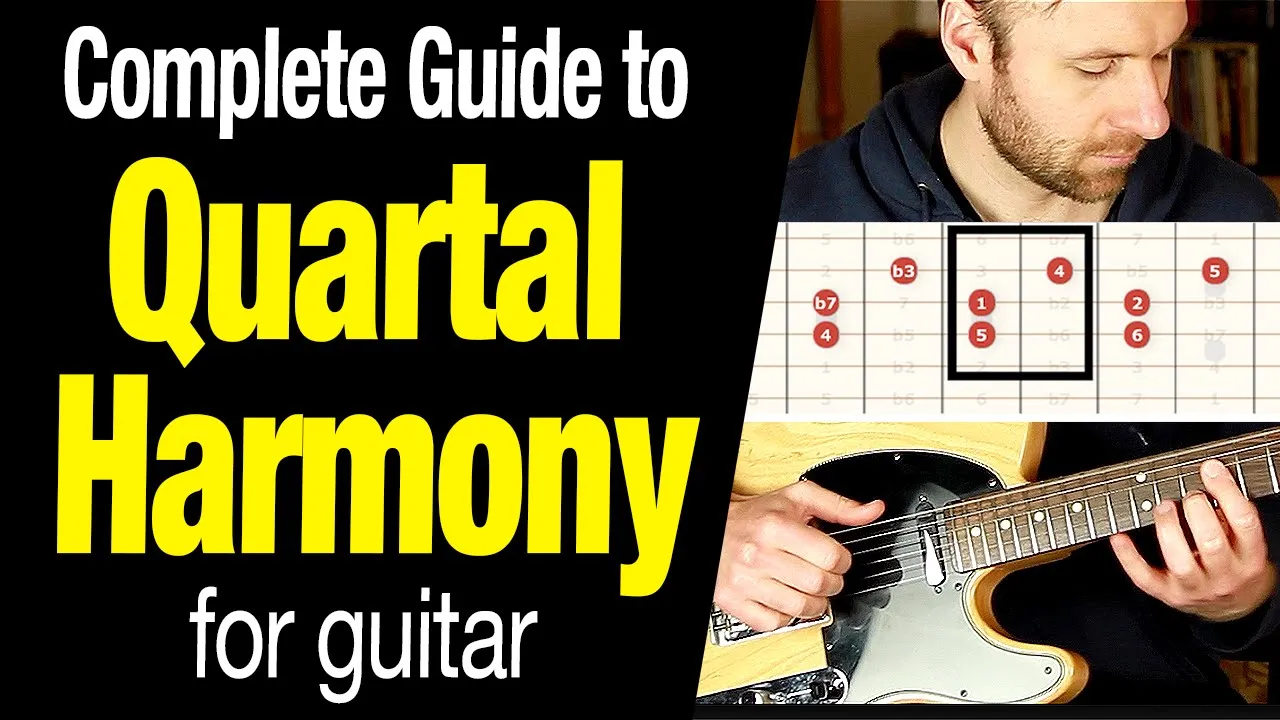
These can simply be thought of as colors creating intrigue as to where it is headed or where it will resolve. Note that most of it is progressing in parallel motion using predominantly quartal harmony. And after it arrives to what I am calling an E7 sus410, it resolves to the E flat major 9. So back to this E7 sus4 because it has the major third on top acting as an upper extension instead we are labeling it as the 10th. Now even though it is a non-functional chord in the context of tonal harmony we somehow feel a sense of resolution when playing the tonic immediately after it. So let's take this uh simple major [Music] 251. Here it [Music] is or [Music] minor. There it is.
The reason for this sense of resolution is because the sus4 chord is creating pure tension and a sense of release is felt when followed by the E flat major 7 which is next door to it half step down.
In addition to how it voice leads, it includes the defining notes of a B flat 7 sharp 9 which is a common resolution to E flat.
So it has a D which would be the third of B flat 7, a G sharp which is an anarmonic spelling of A flat or the dominant seven of B flat and finally on top a C sharp which is the sharp nine in B flat. Even the lowest note is an E which would be the sharp 11 in B flat 7.
The only note which is alien to a B flat altered chord is the A natural. So if you go back and listen to Herby Hancock comping behind Miles back in the 60s, he would use this concept a lot. McCoy Tiner used it a lot too with Cold Train.
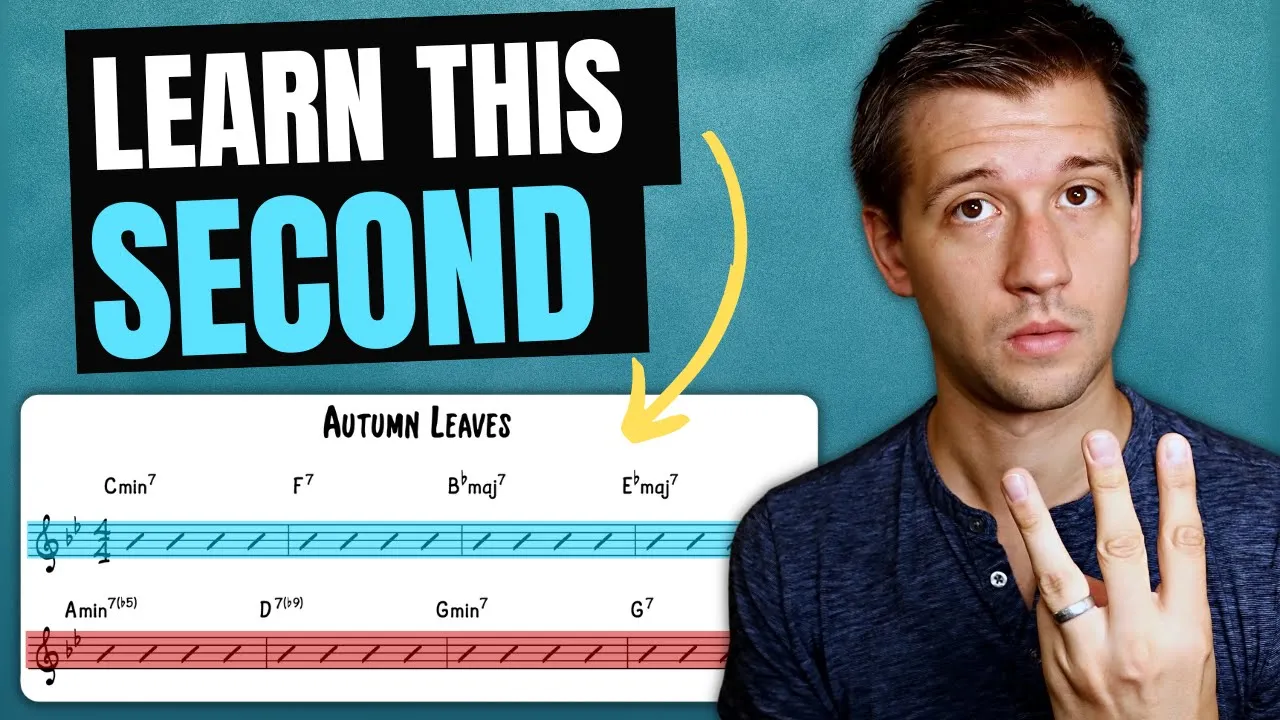
Before I proceed, I want to reassure you that all the concepts in these snippets I am analyzing can be applied to almost any standard. To demonstrate this, I am going to apply them over the changes to autumn leaves, which is a standard that I'm sure you know, and you'll be able to better appreciate the overall effect. So stick with me because I want to first analyze just a few more measures of this Peter Bernstein intro so you can gain a better understanding of how I am going to reharmonize some of the changes to autumn leaves with them. In the next two measures we have a substitute dominant resolving down by half step to a minor chord. Bstein here instead plays a D9 sus4 to G7 sharp 9. This in turn leads to another interesting sequence of cordal planing.
[Music] Listen. So here the planing starts with a B flat minor 11 to a C minor 11. From here on the progression consists of unrelated dominant 13 flat 9 chords progressing in parallel motion and ending on a B13 flat 9. What would we traditionally expect a B dominant to resolve to?
Huh? Down to a chord with an E root.
Correct.
or if it's functioning as a trionee substitute, it would resolve down by half step to a B flat. Nonetheless, it is followed by an implied F minor line in the next measure. But if we take a look at the next measure, which is a re-harmonization of the original F minor 7 and B flat 7, we see an E7 sharp 9 acting as a substitute dominant of the original B flat 7 above it. And suddenly it all makes sense from a functional perspective. Here is the delayed target of the B13 flat 9 that we encountered at the end of the cordal planing two measures back. And notice how it naturally resolves down by half step to the E flat 69. So let me show you how I might use this concept. So let's say we want to use the concept over a major 251. Uh let me do this in the key of [Music] A. So how about in minor? Let's do it. A minor.
[Music] Next, I want to incorporate some variations of the chord snippets I've analyzed over the changes to the A section of Autumn Leaves.
But before I do, I want to quickly tell you about the special study package you can download for this lesson. It includes a PDF with notation and tab of the I'll wait and pray intro as well as the featured Autumn Leaves changes incorporating these concepts. Also included are six additional chord snippets by Peter Bernstein, as well as MP3s of me playing everything. And you can download it all for a nominal contribution from jazz guitar.zellon.com forward slashpremium.
[Music] For those of you still with me, did you learn something new? As usual, I really appreciate your comments, likes, and if you enjoyed this lesson, and this is your first time on this channel, please be sure to subscribe. I'm Richie Zelen, and I look forward to sharing another infoilled lesson real soon with you. Until then, you know the drill. Practice, practice, practice. And if you're trying to make it to Carnage Hall, well, you're better off calling an Uber. May peace be with you.
Up Next
12:39
4 Whole Tone Scale Tricks for Piano Improvisation
@PianoWithJonny
36.1K views•2022-07-22

105:00
The Internet's Own Boy: Aaron Swartz Documentary (2014) | Digital Rights & Activism
@moviemaniacs
2.4M views•2014-07-01

9:49
FastAPI vs Flask vs Django: Choosing the Right Python Web Framework
@TechWithTim
302.5K views•2024-05-26

1:42
Game of Thrones Opening Credits: A Cinematic Analysis
@gameofthrones
46.3M views•2011-04-18
Related Study Plans & Knowledge Roadmaps
Structured learning paths in General & Interdisciplinary Studies
general-studies
Elevator Engineering: History, Physics & Cities
01From Hoists to Safety Brakes: The Dawn of Vertical Lift
02Hydraulic vs. Traction: The Engineering Physics of Elevators
03Modern Speed, Safety, and Algorithms
+ 2 more learning modules
12h5 modules
Explore Roadmap
general-studies
Rubber: Material Science, History & Geopolitics
01Origins of Natural Rubber & Mesoamerican History
02The Chemistry of Natural Rubber & Vulcanization
03The Geopolitics of the Rubber Boom & Colonization
+ 2 more learning modules
12h5 modules
Explore Roadmap
general-studies
Containerization: Evolution, Logistics & Trade
01Ancient Trade & Bulk Cargo: Amphorae to Barrels
02The Industrial Revolution & Cardboard Packaging
03The Containerization Revolution: Malcom McLean
+ 2 more learning modules
12h5 modules
Explore Roadmap
general-studies
Textile Tech: Evolution, Labor & Global Impact
01Pre-Industrial Textiles: Handloom & Cottage Industry
02Mechanization: The Spinning Jenny to the Power Loom
03The Factory System & Global Labor Transformation
+ 2 more learning modules
10h5 modules
Explore Roadmap