


![[sky光遇]音樂演奏教學(一)基本功!音程/原位三和弦/原位七和弦完整收錄](https://i.ytimg.com/vi/deRj22wGIj8/maxresdefault.jpg)












![[作曲に使う] マイナーキーでのドミナント終止、サブドミナント終止、ツーファイブを解説。後編](https://i.ytimg.com/vi/nWeEjpjW3yA/maxresdefault.jpg)



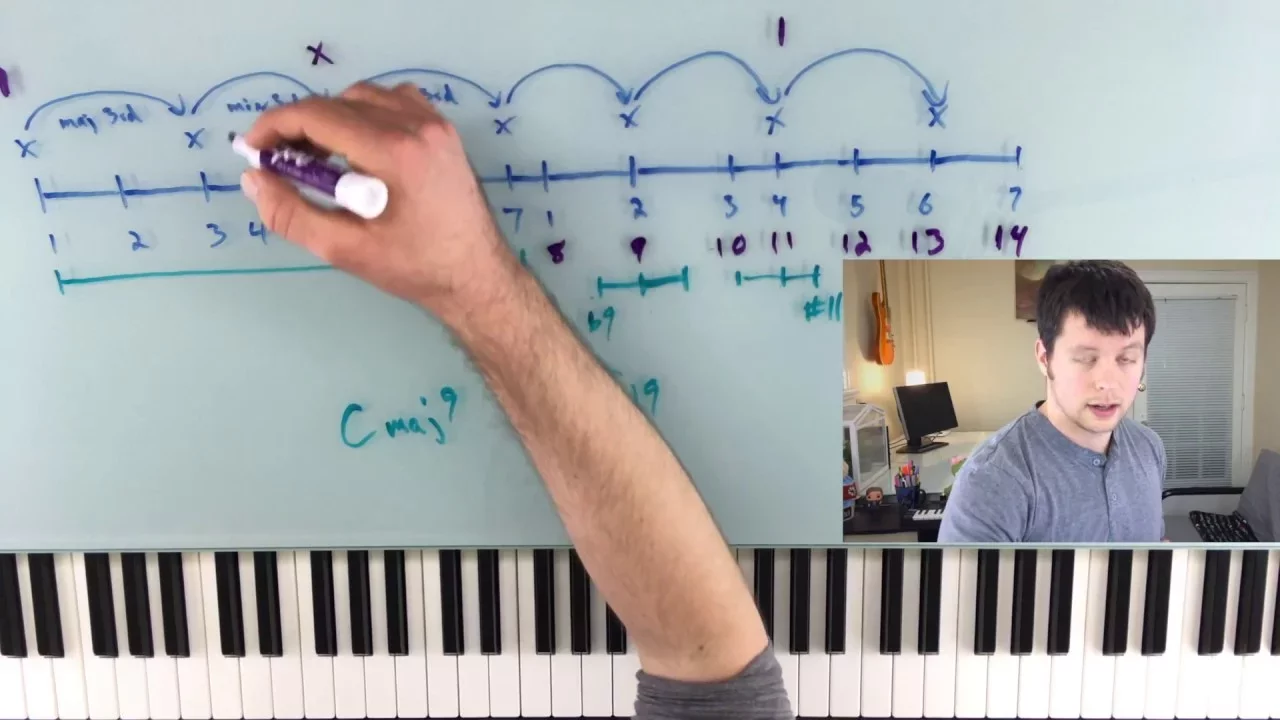



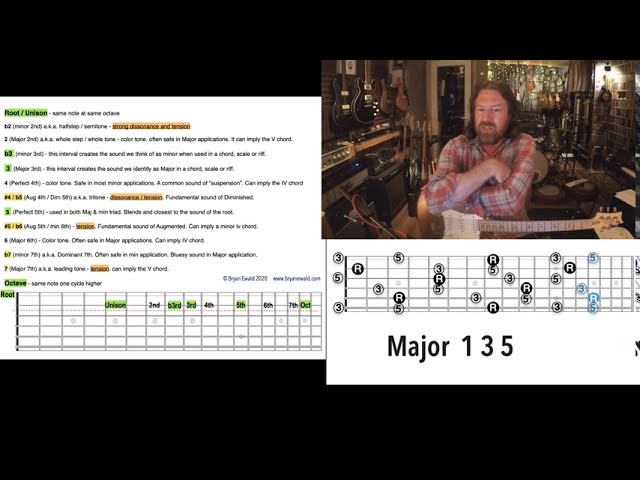





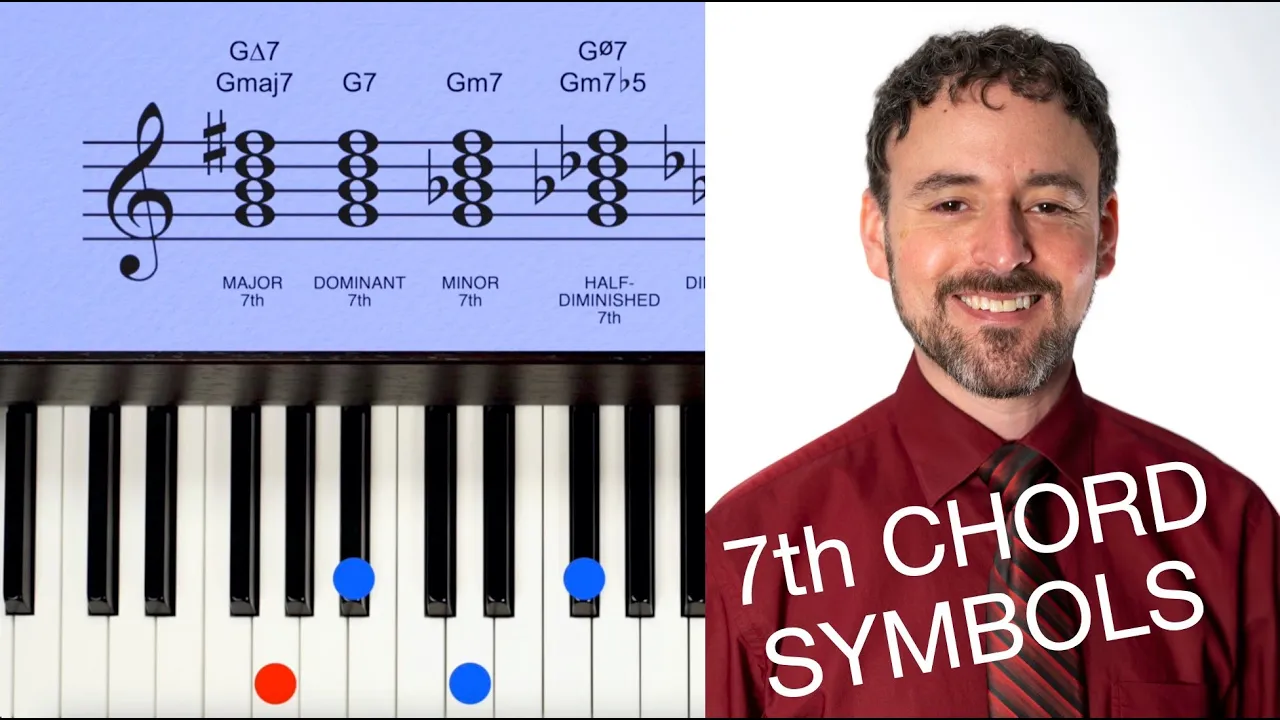
Seventh chords are built by stacking three intervals of thirds, and each type of seventh chord contains specific interval combinations: major seventh chords contain a major third, minor third, and major third (with the root to seventh being a major seventh interval of 11 half steps); dominant seventh chords contain a major third, minor third, and minor third (with a minor seventh interval of 10 half steps); minor seventh chords contain a minor third, major third, and minor third; half-diminished seventh chords contain two minor thirds and a major third (with a diminished fifth interval of 6 half steps); fully diminished seventh chords contain three stacked minor thirds (with a diminished seventh interval of 9 half steps); and minor major seventh chords contain a minor third, major third, and major third.
Intervals in Seventh Chords Explained | Music Theory
Added:today we're going to look at the different types of intervals within seventh chords if you get confused at any point during this video i recommend you watch my video about seventh chords and also my interval series links for both of those are in the description below first we're going to look at major seventh chords and if you remember the formula for a major seventh chord is one three five and seven and what that means exactly is let's say we're working in the key of c major like let's say i wanna know what a c major seven chord is so i'm going to think about my c c major scale okay so the c major scale is c d e f g a and b right and if i number this scale i'm just going to plug in the notes from the major scale into this formula so what's the one the one is c what's the three the three is e what's the five the five is g and what's the seven the seven is b so therefore these are the notes in a c major seven chord that's a shorthand symbol for c major seven okay now let's analyze the intervals within this chord so if i play the notes c e and g i would just be playing a regular old c major chord right so this right here is just a major triad and i'm going to use in this video the triangle symbol for major and i'm going to do a little m for minor okay just so you know i'm never gonna be using a capital m because you can write a capital m and that means major two but just to keep it easier to read i'm gonna only do a lowercase m for minor and a triangle for major okay so c e and g that's a major triad okay and let's first think about what are the intervals within a major triad well from c to g we have a perfect fifth okay perfect fifth and from c to e what do we have we have a major third so this is a major third okay and then from e to g what do we have that is a minor third i'm going to just erase this formula just so that it is a little easier to read okay so we have a perfect fifth from the c to the g and then a major third interval and then a minor third interval and every single major triad is built this way with a major third and then a minor third on top of it and the distance between the root and then that last note is a perfect fifth okay now seventh chords are just stacks of thirds and what do i mean by that exactly i'm saying from c to e we have a third from e to g we have a third and from g to b we have a third so there's there's actually three different types of thirds in this chord okay so what's what type of third is it between g and b it's a major third okay and as i said if this confuses you go watch my interval series and then this will make a lot more sense so in a major seventh chord and not just for c major seven any type of major seventh chord we have uh stacks of thirds and the order goes a major third a minor third and then a major third cool it's like a little sandwich major thirds with a minor third in the middle now the last interval i want us to analyze is the interval that goes from c all the way to b okay so what is that interval do you know that is a major seventh okay so we could think of a major seventh chord as having a major triad right and we now know that a major triad has a major third and then a minor third interval okay so we have a major triad plus a major seventh so we're we have a major major triad so c major triad is c e g and then we're popping a major seventh on top of it and we're always referring back to the root when i say major seventh it's saying it's a major seventh up from c okay now let's also analyze how many half steps are in each of these different types of intervals okay so the first one we're gonna look at is a minor third interval okay so our minor third equals how many half steps well let's count it on the piano okay so we have from e to g okay because this is our minor third so we have e and then we need to get to g so i'm counting one two three that is three half steps right so a minor third interval is three half steps okay what about a major third interval major third equals well again let's count it so let's go from c to e c to e okay so i'm starting to see one two three four that is four half steps okay four half steps so we have a minor third is three half steps major third is four half steps now what other intervals do we have in here we also have a perfect fifth okay let's look at perfect fifth um i'm just gonna erase these so that we have room for perfect fifth hope you wrote them down oh by the way if you want the notes from this video and practice worksheets for this video i have links for those in the description below and in that you can download a printable pdf of the notes from this lesson as well as a worksheet so a perfect fifth how many half steps are in a perfect fifth well we're gonna start let's see it's c to g is our perfect fifth right so let's let's count them so we're starting on c one two three four five six seven seven half steps between c and g therefore a perfect fifth is seven half steps cool and last but not least what about a major seventh because we also have a major seventh interval between c and b right so major seventh equals all right let's see so from c all the way to b so he's trying to see one two three four five six seven eight nine ten eleven eleven half steps i know it's a little confusing like oh my gosh wait a seventh has eleven half steps or hey seven eleven um or a fifth has seven half steps it's a little confusing because the numbers don't match up but i will say that um you don't have to necessarily have the number of half steps memorized in every interval when you're starting out so don't go crazy trying to memorize the number of half steps i'm just telling it to you guys uh for those of you who are interested and are ready to start memorizing that but if you're not ready don't worry so the next chord we're gonna analyze is a dominant seven chord also known as a major minor seventh chord and for this chord do you remember what the formula is for this one we have a one a three a five and then we have a flattened seventh okay so what would that be if we were in the key of c major okay so let's say i'm asking you what is a c7 chord and by the way if you ever see a dominant seven or a major minor seven chord written in a song chart it would usually just be written like this c7 so whenever you see a chord that looks like that just the note name and then the number seven it's a dominant seven or a major minor seventh chord cool so i'm saying hey what are the notes in a c7 chord okay and you just plug this formula into a c major scale so what's the first note in a c major scale it's a c right then the sec the third note in the scale is an e right the fifth note is a g and then the flattened seventh so what's the seventh note in a c major scale it's a b right and then we're going to flatten that b it turns into b flat okay so these are the four notes in a c7 chord or c dominant seven c major minor seven all the same different names same chord so now let's analyze the intervals within this chord okay so i'm going to erase this formula so we have a little more it's a little easier to read okay and i'm gonna try switching to a blue pen see if this makes it a little easier to read i don't know we'll find out so first question i have for you do we have a major triad or a minor triad up front when i see e and g is that a major triad or a minor triad that is a major triad right major triad and hey do you remember what the intervals are in a major triad we went over them just in the last uh chord we did so we said in a major triad what's the distance between the c to the g that would be a perfect fifth interval right then what would be the interval distance between c and e and then a and g so remember it's the same a major triad is always a stack of we first have a major third and then we have a minor third it's always that way a major major triad major chord always has a major third and then a minor third and just to clarify i'm only talking about chords in root position right now so far this is exactly like our c major seven chord right but the only difference is that we have a b flat instead of a b so that means that this interval is going to be different right from the c all the way to the b flat what is that interval going to be and with the major 7 chord it was a major 7th interval right but now since we have a flat it's a b flat it's a little bit lower we are going to have a minor seventh interval okay minor seventh got it so you could think of a dominant seven chord or a major minor seventh chord as a major triad plus a minor seventh okay now let's quickly review the number of half steps in each of these different types of intervals do you remember how many half steps are in a minor third interval three right how about a major third interval four what about a perfect fifth seven okay what about a minor seventh so this one is the new one okay so we could think of it as how many half steps are in a major seventh and then just subtract one that's one way to find it so if you remember what that number was in a major seventh interval the number of half steps you could just subtract one from that that's one way but i'm gonna also show you on the piano from c to b flat that's a minor seventh how many half steps we got so starting on c one two three four five six seven eight nine ten aha we've got ten half steps so a minor seventh equals ten half steps and if you remember the major seventh interval has eleven half steps that's why i said you could just subtract one so major seventh is eleven half steps minor seventh is ten half steps got it now the next type of chord we're gonna look at is a minor seventh chord and if you remember the formula for a minor seventh chord it is one flat three five and then flat seven okay so what would this be if we were looking for a c minor seven chord what would be the notes so let's think about our c major scale what's the first note in the c major scale so i'm trying to figure out a c minor seven chord okay first note in c major scale is c right what's the flattened third well what's the normal third not flattened third c d e the third note in a c major scale is e and then we just need to flatten that note so it's going to be e flat right what about the fifth note in c major scale it's a g right what about the flat and seventh it's b flat cool so i'm going to erase the formula and let's look at the intervals inside of this chord so what kind of triad do we have in these first three notes is this a major triad or a minor triad it is a minor triad okay because remember a major triad was c e g since we have a flattened third it turns into a minor triad so a minor triad always has a flattened third and actually that third degree when i say third degree i mean the third degree of the scale having a flattened third in your chord is what really uh tells us that it's a minor chord okay because you know we have all types of chords but a lot of chords are either major or minor not all of them but a lot of them and so it's that flattened third is what tells us it's a minor chord if it has a not flattened third if it's just a normal third then it is a major chord cool so that third is really important because it tells us this very important information about the chord tells us if it's a major or minor chord so this is a minor triad okay now what is the interval distance between c and g it's been the same distance for all the other chords we've done two so far right this is still a perfect fifth perfect fifth okay so we still got a perfect fifth then what about in a minor triad what are these two thirds because now it's a little different right before when it was a major triad we had what was it we had a major third and then a minor third well now we have it flips them around this is a minor third and a major third okay so c to e flat is a minor third and e flat to g is a that's a triangle major third okay now what is the interval distance from c all the way to b flat it's going to be some type of seventh right remember what it is it's a minor seventh okay so all right minor seventh okay so we could think of a minor seven chord as being a minor triad plus a minor seventh right and last but not least what is the distance between the g and the b flat this distance is a minor third so for a minor seventh chord we have stacks of thirds we have a minor third a major third and then another minor third okay and you could think of the chord overall as being a minor triad plus a minor seventh okay now there aren't any new interval distances in this chord i don't think that we haven't already been over as far as half steps are concerned like number of half steps so i will just quiz you then so how many half steps are in a minor third three that one's nice and easy because it's the third and the answer is three minor third has three half steps what about a major third that one has four what about a perfect fifth that has seven half steps and last but not least what about a minor seventh so from c to b flat that is ten half steps cool now we're going to look at a half diminished seven chord okay so if you remember the formula for half diminished seven chord it's one flat three flat five and flat seven so if we were looking for a c half diminished seven chord what would our notes be so c half diminished seven this is a symbol for half diminished right there okay well the one would be c right what about the flattened third that would be e flat right now what about the flattened fifth this one is the first time we have a flattened fifth in any of these chords well what's the fifth normally the fifth is a g right the fifth note in a c major scale c d e f g we're just gonna flatten that note and it becomes g flat g flat okay and what about the flattened seventh that is still b flat cool so for these first three notes is this a what type of triad is this is this a major triad a minor triad or something else do you have any idea if you watch my video about triads i do have a video all about triads we actually go over this so then you would know the answer um i will link that as well in the description below but even if you haven't watched it what is this do you know this is what we call a diminished triad okay and a triad is just a chord with three notes in it okay try add a try that makes sense right so c e flat and g flat is a diminished triad whenever we have a one a flat three and a flat five that's like the formula for a diminished triad cool so now let's look at the intervals within the diminished triad okay so from the c to the g flat what is this interval called so all the other ones before was were c to g and those were perfect fifths but now it's not a perfect fifth because we have a g flat now instead of a g so what is this this is a diminished fifth okay so i'm going to write diminished fifth okay now what is the distance between c and e flat it's the same as the other chords that had c and e flat we have a minor third now what about the distance between e flat and g flat okay this is a new one because we we our first time having a g flat this is also a minor third okay so in a diminished triad we always have two sets of minor thirds so it's a minor third stacked on top of a minor third okay now that we're done analyzing the triad let's look at g flat to b flat what is that distance that is a major third okay so we have two minor thirds and then a major third in any half diminished seven chord okay we have a diminished triad and then the last interval we need to analyze is from c all the way to b flat what is that interval we've done this one before in other chords c to b flat is a minor seventh okay so that means in a half diminished seven chord we have a diminished triad and plus a minor seventh make sense now let's go over the number of half steps in each of these different types of intervals okay so we've already done a bunch of these how many half steps are in a minor third three half steps right that one's easy 33. what about in a major third four half steps what about in a diminished fifth now this is a new one we haven't gone over a diminished fifth yet now you could just remember what the number was for perfect fifth and then subtract one from that so we could do that how many half steps are in a perfect fifth remember seven right so if we subtract one it turns into six therefore a diminished fifth has six half steps and let's analyze it on the keyboard so from c to g flat we're gonna count the number of half steps so see here's our starting point one two three four five six aha see six six half steps from c to g flat so diminished fifth has six half steps fifth has six half steps i'm just writing half steps six high schools no it's six half steps that's what that stands for so diminished fifth has six half steps and then last but not least how many half steps are in a minor seventh minor seventh has ten half steps and that's it now somebody wrote me a good question as a comment and it's something actually i think we should just quickly go over they asked how come when you're counting the distance between one note and another note the number of half steps how come so look here on my keyboard so i was counting the you know the distance between c and g flat when i started counting the number of half steps i didn't count that first c as one of the half steps i started here i said that's one half step two three so i went i started on c and then i went one two three four five six right so how come i didn't count that first note how come i didn't count that as one of those half steps they said how can you do that but then when you're looking at scale degrees or something like that like when i'm saying okay you know here's our c major scale and we're thinking of it as numbers okay well now you are looking at the first note and you are counting it as a one you're not counting one two three you know with the half steps we started on this the second note to start counting well that's because when we're counting the distance like of half steps we're you could think of it as measuring something with a ruler right so if i were measuring something with a ruler let's say here's my ruler this is not going to be accurate but let's say here's uh this is like my one inches two inches three inches and four inches okay i'm going to line up my object like let's say i want to measure this little eraser okay i'm gonna line up my object here right i line it up at the very end of the ruler and it says okay it's about two inches right as i said this is not accurate but you get what i'm doing well we didn't start measuring it like we didn't put the one here right and then the two here and then the three here and then the four here right because we're measuring a distance so that's i think i think that's sort of uh the best way to think about it okay so when we're measuring half steps you could think of it as sort of almost like a unit of measurement okay and whenever you're measuring something you count this is like the first inch right the second inch the third inch same thing with half steps this is the first half step the second half step the third half step makes sense and then when we're analyzing scale degrees like this well then it we do need to count the first first note as the one we're thinking what's the third note in the scale it's a it's a different thing so i think um normally you know you would always put the one as the first note in most things that i can that i can think of right now the only exception is that when we're counting like a distance of half steps or whole steps or something like that we don't start with the note we're starting on we we start counting on that second note we get to because it's like using a ruler hopefully that makes sense okay we only have two more chord types that we're going to go over this next one is a fully diminished seventh chord so do you remember what the formula is for a fully diminished seventh chord we have a one a flat three a flat five and then a double flattened seventh okay that's the formula so if we were doing a c major scale let's say i wanted to i wanted to know what a c diminished seven chord is that's a symbol for diminished seven okay what would it be so the one is c right that one's easy the flattened third is e flat right flattened fifth is g flat okay what about double flattened seventh you know what this one is this is a b double flat okay and just to show you quickly on the piano what that looks like so here's my c here's my e flat here's my g flat and then b double flat so here's b if i flatten it once it's there and if i flatten it twice or double flatten it goes here this note is also a a and b double flat are n harmonic equivalents which is our two two note names for the same pitch okay so this is our fully diminished seventh chord okay so i'm just gonna erase this so we have more room okay let's look at the intervals inside of this chord so first tell me what kind of triad is this is it a major minor or diminished it's a diminished triad right because we have a flattened third and a flattened fifth whenever you have a one flat three flat five it's always going to be a diminished triad and what is the distance between c to g flat what kind of interval what is that interval distance between c and g flat it's a fifth what kind of fifth it's a diminished fifth what about between c and e flat what is that that is a do you remember minor third we had a diminished triad in the previous chord so this should all be the same a minor third and then from e flat to g flat that's what is that that's also a minor third right now this is where it gets a little different what is the interval distance between g flat and b double flat that is also a minor third so as you can see a fully diminished seventh chord is three stacks of minor thirds okay so all minor thirds all minor thirds all the way okay and last but not least what is the interval distance between c and b double flat so this one is also going to be new so from c all the way to b double flat what is that that is a diminished seventh okay so you could think of a fully diminished seventh chord as being like a diminished triad with a diminished seventh on top got it okay now let's quickly review the number of half steps in each of these different types of intervals i'm going to scramble them up a little bit so how many half steps are in a diminished fifth do you remember how many were in a perfect fifth perfect fifth has seven right so a diminished fifth has six so six half steps and a diminished shift what about a minor third how many half steps were to my third three half steps right and last but not least how many half steps are in a diminished seventh okay so do you remember how many half steps a minor seventh had minor sevenths had ten half steps right so a diminished seventh would just be one less than that so that means diminished seventh has nine half steps and we can count on the keyboard if we want to so from c to b double flat so we're starting on c one two three four five six seven eight nine nine half steps so diminished seventh nine half steps okay and last but not least we have a minor major seventh chord okay so what is the formula for a minor major seventh do you remember it's one flat three five and seven okay so if i had to figure out what a c minor major seventh chord is that's one way to write that chord what would it be what would the notes be the one would be c right what would be the flattened third flattened third would be e flat right what about the fifth g and then the seventh b this one's not too crazy right no double flats in this one so let's analyze the intervals now so first let's see what kind of triad do we have is this a major triad minor triad or diminished triad this is a minor triad right and what is the interval distance between c and g it's a perfect fifth okay what about the interval distance between c and e flat so this is just again we're just analyzing a normal old minor triad in a minor triad the distance between the first two notes is a minor third right and then the distance between the next two notes is a major third cool now what about the distance between g and b this is a major third got it and last but not least what is the distance between c and b that is a major seventh so we could think of a minor major seventh chord as a minor triad plus a major seventh okay and this chord it's really in the name right minor major seven it's a minor chord with a major seventh minor triad minor chord with a major seventh ray minor major seventh so pretty straight forward and we already went over the number of half steps in all these different interval types but let's just do it again one last time just because so how many half steps are in a major seventh let's start with a major seventh do you remember it is eleven okay seven eleven what about a perfect fifth it has seven half steps what about a minor third three half steps and what about a major third it has four half steps and that's all guys thank you so much for watching i hope you liked this video if you did don't forget to give it a thumbs up leave a comment say hey ask any questions it helps a lot when you guys do that and i love hearing from all of you if you found this video helpful but you want to practice and reinforce what we learned in this video as i said earlier i have printable pdf worksheets that have quizzes so you can review what we've learned in this video i also have a printable document of everything we learned in this video and laid out nicely and visually for you i also have many other music theory worksheets and quizzes to practice all the stuff we learned on this channel so the link for that is in the description below check it out before i say farewell let's just play through each of these uh different types of seventh chords on the keyboard just because it's always good to listen to them make sure we're actually playing what we're talking about so first we have a c major seven chord then we have a c dominant seven chord [Music] then we have a c minor seven chord then we have a c half diminished seventh chord [Music] then we have a c fully diminished seventh chord [Music] and last but not least we have a c minor major seventh chord and let's also quickly listen to some of these intervals and what they sound like okay so from c to e that is a do you remember what c is it's a major third right so that's what a major third sounds like okay and then from e to g that is a minor third that's what a minor third sounds like and then from c to b that's a major seventh oh and i forgot from g to b is that a major third or a minor third that's a major third okay perfect fifth from c to g perfect fifth and then from c to b is a major seventh now let's listen to what a minor seventh sounds like from c to b flat that's a minor seventh okay now let's listen to what c to e flat sounds like so is this a is that a minor third or a major third that's a minor third right and from e flat to g what is that that's a major third from e flat to g okay then from g to b flat what is that that is a minor third okay now from e flat to g flat what is that is that a minor third or a major third that's a minor third okay what about from g flat to b flat what kind of third is that just listening to based on the sound what do you think that is it's a major third okay so this is a minor third and this is a major third so major third is a slightly bigger distance than a minor third and from c to g flat what is that interval distance that is a diminished fifth okay this is also called the tritone okay [Music] now what about the distance between g flat and b double flat what type of third is that just based on the way it sounds that's a minor third what about from just to quiz you what about from c to e flat what is this what does that sound like it's a minor third what about e flat to g what does that sound like that's a major third okay and what about from c to b double flat what is that that's a diminished seventh okay it should sound exactly the same as a major sixth and now let's listen to the triads this is a c major triad this is a c minor triad this is a c diminished triad and we'll end just back on our c major triad again thank you guys so much for watching don't forget to subscribe if you're new to my channel i post one video a week and i would love to have you here if you want to practice what we learned in this video or you want it all written out in a very nice easy to read way check out my worksheets in the description below if you like this video don't forget to give it a big thumbs up leave a comment share this video with your friends and family that is it thank you guys so much and see you next week
Up Next

How to Build Every 7th Chord in Music: A Complete Guide
@nathanielmusicschool
3.5K views•2025-03-22

Simon Rattle on Early 20th-Century Music: Tonality's Decline
@theclandestinum
18.3K views•2012-06-16

How to Use the Circle of Fifths: 7 Applications in Music Theory
@GracieTerzian
328.5K views•2021-03-31
Understanding John Coltrane's Giant Steps: A Music Theory Analysis
@Vox
10.4M views•2018-11-12
Related Study Plans & Knowledge Roadmaps
Structured learning paths in Music Theory