Applying Sonata Form: EDM Arrangement Rules
Learning Goal: Structuring Electronic Music with Sonata Form: Applying Classical Exposition, Development, and Recapitulation to Progressive EDM Arrangements. By the end of this curriculum, you will be able to map classical symphonic structures directly to your digital audio workstation (DAW) timeline, compose contrasting melodic themes, execute key modulations, and design high-tension, hybrid arrangements that combine classical narrative arcs with electronic dance music energy curves.
- Estimated Total Study Time: 12 Hours
- Prerequisites: Basic familiarity with a DAW (Ableton Live, FL Studio, Logic Pro, etc.), foundational MIDI editing, and basic music theory (major/minor scales and intervals).
Module 1: Foundations of EDM Structure & Arrangement
This module establishes the foundational structural architecture of electronic dance music. Before attempting to map complex classical structures like Sonata form, you must understand the standard structural layout of modern club tracks—specifically how energy builds, peaks, drops, and resolves over a timeline.
Curated Instructional Videos

Why this video
This video is essential for establishing the fundamental vocabulary of electronic arrangements. SeamlessR clearly explains that unlike pop music, which relies on verse-chorus patterns, EDM relies on structural blocks defined by drops, breakdowns, builds, and energy curves. Understanding this contrast is critical as we begin mapping these blocks to the classical Exposition, Development, and Recapitulation.
![HOW TO MAKE AN EDM BUILD-UP AND DROP! [FREE FLP] - FL STUDIO](https://i.ytimg.com/vi/Hou1d13SPhw/maxresdefault.jpg)
Why this video
This video breaks down the technical execution of EDM build-ups and drops inside the DAW. It provides the practical grid-based foundation needed to understand how tension is generated through rhythmic subdivision, riser effects, and high-pass filters before being released at the drop.

Why this video
Progressive house serves as the ideal bridge genre for Sonata-form experiments due to its long-form, atmospheric, and highly melodic arrangements. This deep-dive tutorial demonstrates how progressive tracks evolve incrementally over time, preparing you to structure complex melodic arrangements.
Knowledge Checkpoint
- Understand the standard bar lengths of club intros, builds, drops, breakdowns, and outros (typically multiples of 8 or 16 bars).
- Identify how energy is controlled in a DAW using automation curves on filter cutoffs, volume, and reverb sends.
- Map out a basic 128 BPM progressive track layout on a blank timeline.
Module 2: Classical Sonata Form Decoded
This module transitions from the dance floor to the concert hall. Here, you will study the history, theory, and narrative architecture of the Classical Sonata-Allegro form, analyzing how 18th-century composers generated narrative drama, tension, and resolution.
Curated Instructional Videos

Why this video
This comprehensive lecture explores how Sonata form functions as a dramatic narrative arc. It establishes the concept of musical themes acting as "characters" that leave home (the home key/tonic), face conflict in foreign territories (the development/modulations), and return home transformed (the recapitulation).
Why this video
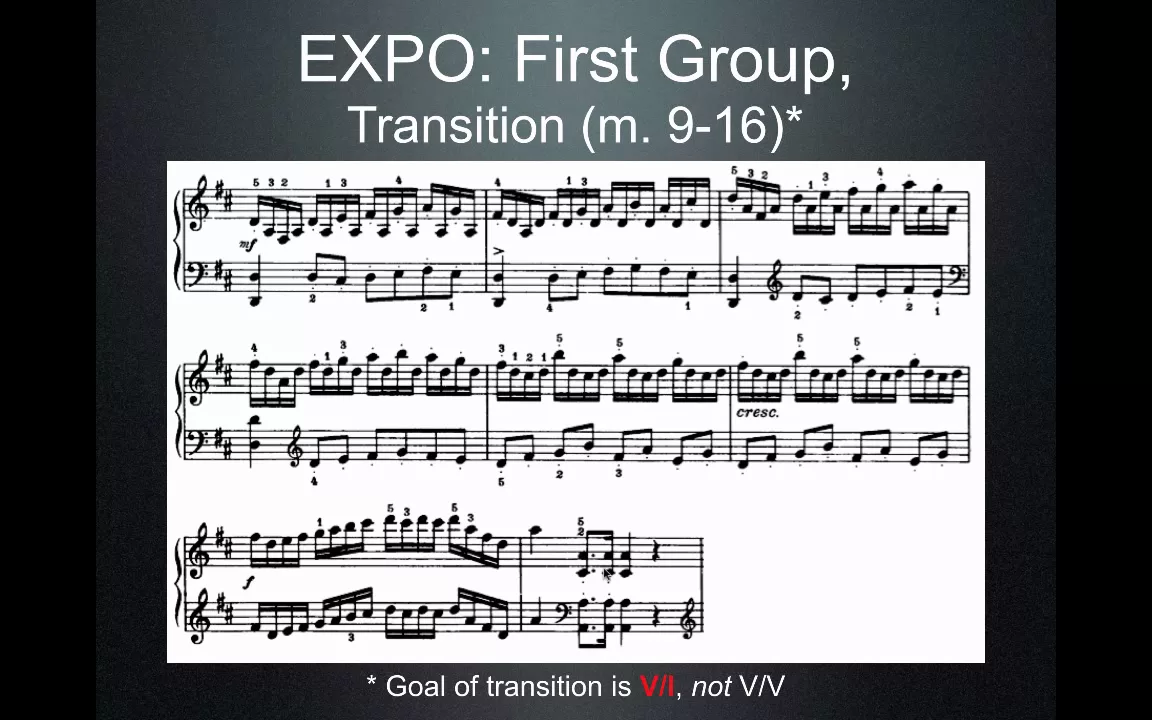
Dr. Scott Watson provides a rigorous, score-based musical analysis of Haydn's Sonata in D Major. This video is crucial for visualizing how the transition (or bridge) behaves between Theme A and Theme B, and how the development systematically manipulates small melodic fragments.

Why this video
This video provides a highly concise overview of the core mechanical rule of the Sonata form: the relationship between the Tonic (home key) and the Dominant (the key of the fifth scale degree). It explains how key relationships dictate the form's structural boundaries.
Knowledge Checkpoint
- Define the three primary phases of Sonata form: Exposition, Development, and Recapitulation.
- Explain the classic harmonic relationship between Theme A (Tonic key) and Theme B (typically Dominant or Relative Major key).
- Describe the function of the transition (or bridge) section in modulating between keys during the Exposition.
Module 3: Hybrid Arrangement: Mapping Sonata to EDM
Curriculum Gap Alert: No existing YouTube tutorials demonstrate mapping classical sonata-allegro frameworks directly to modern DAW grids. To bridge this conceptual gap, we will use the videos below to study hybrid instrumental design and long-form arrangement, then conceptually map the structures.
In this module, you will translate classical sonata zones into standard EDM structural blocks.
The Hybrid Alignment Blueprint
| Sonata Form Element | Traditional Harmonic Rule | EDM Track Equivalent | Target Arrangement Zone |
|---|---|---|---|
| Introduction | Optional, slow-tempo, establishes tonic atmosphere. | Club Intro & Out of Phase Elements | Bar 1 – 33 (Intro beat, subtle atmosphere elements). |
| Exposition: Theme A | Fast, rhythmic, establishes Tonic Key (I). | Drop 1 (Main Hook) | Bar 33 – 65 (Full energy, heavy driving baseline). |
| Exposition: Transition | Modulates from Tonic (I) to Dominant (V). | The Uplifter / Transition Break | Bar 65 – 81 (Filtered drums, introduction of new harmonic tension). |
| Exposition: Theme B | Contrasting lyrical theme in Dominant Key (V). | Breakdown Part 1 (Secondary Theme) | Bar 81 – 97 (Drums cut, atmospheric Pads introduce new melody). |
| Development | Fragmenting themes, heavy harmonic modulation. | Breakdown Part 2 & Build-up | Bar 97 – 129 (Melodic fragmentation, dramatic key modulation, riser effects). |
| Recapitulation | Theme A & B return, both in Tonic Key (I). | Drop 2 (Grand Finale) | Bar 129 – 161 (Massive synthesis of both themes in the home key). |
| Coda | Final structural resolution. | Club Outro | Bar 161+ (Tension stripped, fading elements over basic kick). |
Curated Instructional Videos
Why this video
This progressive trance track by pioneer Solarstone directly adapts the fast-slow-fast structural principles of the classic sonata to modern electronic synth structures, serving as a primary sonic reference for a successful hybrid production.
Why this video
This DAW tutorial demonstrates the mechanical process of arranging multiple small blocks (up to 35 individual section markers) along a chronological grid. Use the section marking techniques shown here to label your DAW project with Sonata structural markers (Exposition, Transition, etc.).
Knowledge Checkpoint
- Create 7 project markers in your DAW timeline labeled: Intro, Exposition: Theme A, Transition, Exposition: Theme B, Development, Recapitulation, and Coda.
- Match your target BPM (e.g., 126 BPM) to a strict 4/4 grid structure using 8, 16, and 32-bar segments.
Module 4: Crafting the Exposition: Dual Themes & Transitions
The Exposition requires two highly contrasting melodies: a rhythmic, assertive Theme A (usually the drop melody) and a lyrical, emotive Theme B (the breakdown melody). This module covers composing these distinct themes and creating the transitional bridge between them.
Curated Instructional Videos

Why this video
To distinguish Theme A from Theme B, you must apply contrasting sound design. This video demonstrates how to design sharp, screechy textures (perfect for a rhythmic Theme A) vs smooth, warm, atmospheric tones (perfect for a lyrical Theme B).
Why this video
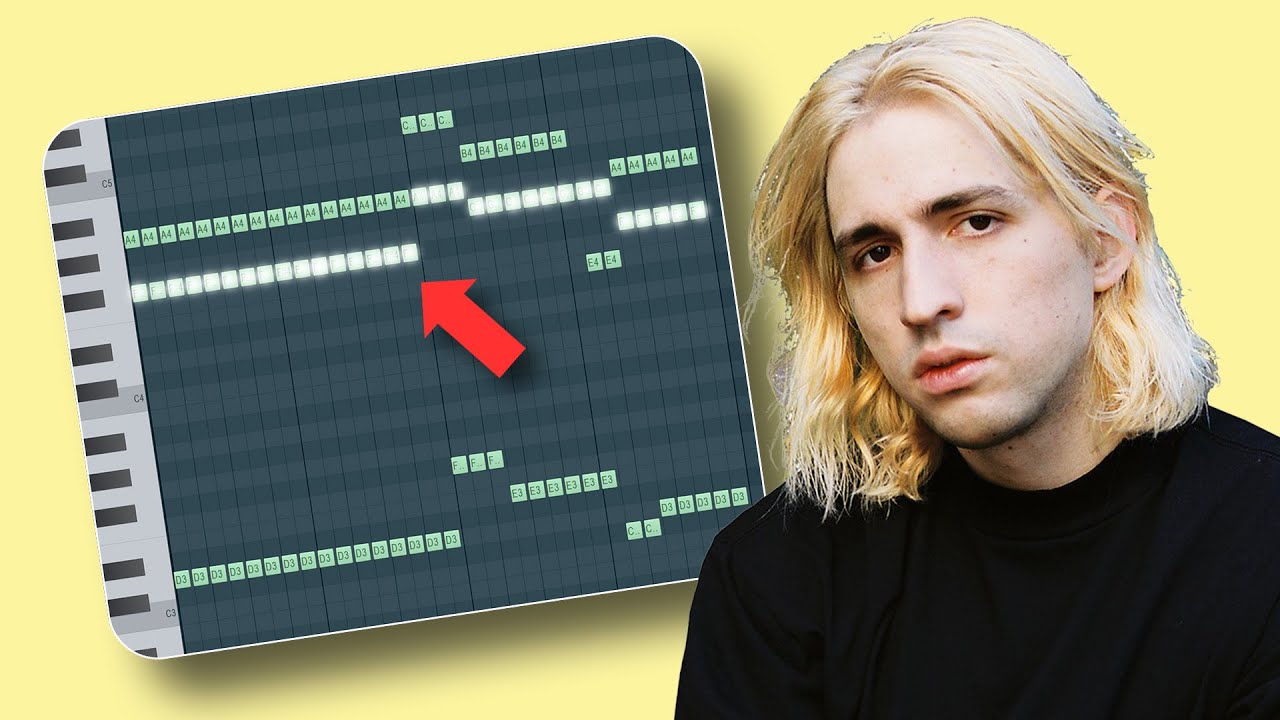
Alex Rome analyzes the pacing and emotional weight of melodies. This guide helps you compose a memorable, simple melodic hook (Theme A) and understand how to develop it structurally over time using filter variations and note timing.
Why this video
This video explains the technical workflow of using long sustained synth pads, delays, and filter sweeps to transition smoothly between distinct track sections. This mimics the harmonic transition phase of classical sonatas by slowly lifting the frequency range as the key shifts.
Knowledge Checkpoint
- Compose a high-energy, rhythmic "Theme A" MIDI loop in your home key (Tonic).
- Compose a contrasting, smooth, and elongated "Theme B" MIDI loop in the relative major or dominant key.
- Build a transition section that uses low-pass filtration and rising pitch effects to bridge the energy difference between the two themes.
Module 5: The Development: Tension, Filtration, and Modulation
In Sonata form, the Development is the core site of harmonic instability. This module teaches you how to take fragments of Theme A and Theme B and manipulate them through filter sweeps, rhythm changes, and—most importantly—harmonic key modulations during your track's breakdown and build-up.
Curated Instructional Videos
Why this video
This tutorial focuses on using feedback delays, filter sweeps, and volume automation on simple waveforms to construct a massive wall of tension. This is the electronic equivalent of classical thematic fragmentation, where a simple motif is repeated and morphed to create climax.

Why this video
David Foster visually and musically explains the concept of key modulation (specifically shifting key signatures by a step and a half/three semitones). This provides the exact harmonic context needed to transition your breakdown melodies into a new key to build tension.
Why this video
Autobahn is a masterpiece of electronic development. Doctor Mix analyzes how Kraftwerk took incredibly simple 4-note melodic seeds and systematically modulated them across a variety of synthesizer parameters to tell an evolving acoustic story.
Knowledge Checkpoint
- Slice a 2-bar MIDI fragment of Theme A and repeat it over a rising filter sweep to build tension.
- Implement a pitch-shift or MIDI key modulation of +2 semitones (or +3 semitones as shown by Foster) on your leads during the main build-up phase.
- Automate a delay feedback parameter to build a sustained wash of sound that masks the key transition.
Module 6: The Recapitulation: Grand Finale and Climax
The Recapitulation brings both Theme A and Theme B back to the home key (Tonic) for the track's second drop—resolving all previously generated harmonic tension. The track then concludes with a classical-inspired Coda (the EDM club outro).
Curated Instructional Videos

Why this video
This segment serves as an excellent demonstration of the universal psychoacoustic principle of "return." It demonstrates the structural movement from the tonic ("do") to the dominant ("so") and the eventual resolution back to "do," providing a direct metaphor for the Recapitulation's home-key return.

Why this video
Virtual Riot shows how to structure highly complex, resolved drops that layer multiple melodic voices. In the Recapitulation, you must merge structural components of Theme A and Theme B; this video provides the technical arrangement tips to layer those distinct parts without cluttering your mix.
Why this video
To make your Recapitulation feel like a true "climax," the entry point must be stripped of pre-drop tension effects instantly. Bthelick demonstrates how to mute background delay wash and filter automation right at the drop downbeat, giving the recapitulated themes maximum sonic impact.
Knowledge Checkpoint
- Transpose Theme B from its foreign key back to the home key (Tonic) of Theme A.
- Construct a final drop where Theme A acts as the driving bassline/pluck rhythm and Theme B acts as a high-register lead melody layered over top.
- Strip away the low-end frequencies and drums gradually over 16-32 bars to form your "Coda" outro.
Course Map
Key People Index
- David Foster (Producer & Composer): Mentioned in Module 5 for his pedagogical breakdown of key modulations. Foster is a multi-Grammy award-winning writer known for his highly dramatic harmonic modulations in pop and classical crossover arrangements.
- SeamlessR (Stephen Harrison): Featured in Module 1. An educator famed for complex sound design and structural deconstructions of electronic music production.
- Solarstone (Richard Mowatt): Featured in Module 3. A legendary trance producer who actively advocates for merging classical compositional architecture with underground club arrangements.
- Virtual Riot (Valentin Brunn): Featured in Module 6. A world-class EDM producer and educator known for teaching detailed MIDI layering, harmonic cohesion, and drop organization.
Final Self-Assessment
Complete this DAW-based checklist to verify your mastery of the Sonata-EDM hybrid production system:
- Timeline Organization: My project has clear marker labels designating the Exposition, Transition, Theme B, Development, Recapitulation, and Coda.
- Contrast Verification: My Theme A is rhythmically focused and utilizes a sharp, bright, or plucky synth patch.
- Harmonic Cohesion: My Theme B is written in a contrasting key (e.g., modulating up a perfect fifth or relative major/minor) and is sustained with warm, pads/lead synths.
- Transition Integrity: The transition between Theme A and Theme B contains automated parameters (cutoff filters, reverb sends) that smoothly guide the listener into the lower energy state of the breakdown.
- Thematic Development: The breakdown utilizes sliced or modulated MIDI notes sourced directly from Theme A or Theme B, rather than introducing completely new, unrelated ideas.
- Development Key Modulation: During the build-up phase, the main melodic motif shifts key signature upward to maximize tension prior to the drop.
- The Recapitulation Resolution: At the start of the final drop (Drop 2), both Theme A and Theme B are fully resolved back into the original home key (Tonic).
- Melodic Layering: In the final drop climax, Theme A (rhythm) and Theme B (counter-melody) play simultaneously without mud or frequency masking.
- Coda Execution: The final outro systematically strips away harmonic layers, leaving only the basic rhythmic elements to fade out, mimicking a classical coda.