Temple arti is a devotional ritual involving the singing of hymns accompanied by traditional instruments like the shankh (conch shell) and nagada (drum), creating a sacred atmosphere that promotes spiritual connection and inner peace; this video demonstrates the sounds of these instruments during a temple arti ceremony, allowing viewers to experience the calming and energizing effects of this spiritual practice from home.
Temple Arti Sound with Shankh | Nagada & Bell Audio for Meditation
Added:Deep Dive
The concept and spiritual significance of 'Aarti' (a Hindu ritual of worship using light and sound) and its role in daily devotion.

Aarti Keeje Hanuman Lala Ki with Lyrics By Hariharan Full Video Song I Shree Hanuman Chalisa
1.8M
Aarti is performed at the end of puja to compensate for any incompleteness caused by ignorance during worship. Those who witness and receive aarti with both hands can liberate themselves from karmic burdens across countless generations and attain the highest spiritual position in Vishnu's realm. Aarti is traditionally performed using five lamps (Panch Pradeep), kumkum, camphor, ghee, and sandalwood, accompanied by shankh and ghanta sounds. The proper method involves rotating the deity's image five times at the feet, twice at the navel, twice at the face, and seven times at all body parts. Hanuman is described as the son of Anjana, a powerful devotee of Raghunath who is always beloved and serves as the master of all devotees.
Click to watch →

देवघाटधाम देखि Live day-108 गण्डकी गङ्गा आरति दर्शन गराैं चतुर्मासकाे पावन अबसर रामायण कथा धर्मदर्शन
19.1K
This segment emphasizes the importance of daily Aarti (prayer ceremony) as a spiritual practice, with the phrase 'दिन दिन निर्मल वंदे' (Daily, pure worship) highlighting the significance of regular religious devotion. The video encourages devotees to participate in daily Aarti ceremonies for spiritual purification. The segment also covers various Hindu deities including Radha-Madhava, Krishna, Rama, and other divine figures, explaining how devotees express their devotion through prayer and worship.
Click to watch →

LIVE🔴: परम पूजनीय बाबा जी की संध्या आरती !! 11/04/2026 Karauli Shankar Mahadev
12.8K
Aarti is a fundamental Hindu devotional ritual performed to worship deities and seek divine blessings. The video emphasizes that Aarti serves to relieve devotees from their troubles and difficulties (भक्तों को है कष्टों से निवारती). This ritual involves offering prayers, singing hymns, and making offerings to seek relief from suffering. The performance demonstrates how musical elements (संगीत) are integrated throughout the Aarti, creating an immersive spiritual experience. The repeated emphasis on Aarti's purpose highlights its central role in Hindu spiritual practice as a means of connecting with the divine and finding relief from life's challenges.
Click to watch →

OMG! Biggest Good News Mama ko Mil Gai Governtment Job ❤️ Bindass Kavya Vlogs
1.1M
The Aarti ceremony is performed with all women participating, considered an honor for all ladies. The family has prepared haldi kumkum in a specific pattern for Maha Lakshmi's feet. The daughter explains that Maha Lakshmi sometimes takes some of the haldi kumkum, which gives her the feeling of being present. The family has built a mandir (temple) that can accommodate at least 50 people for bhajan and kirtan. The ground floor is kept empty for various religious functions including Ganesh Chaturthi, Diwali, and other pujas.
Click to watch →

श्रीजी का दिव्य श्रृंगार दर्शन और रसमय राधा नाम कीर्तन // 31/01/24
40.8K
This segment presents the 'Aarti' (आरती), a traditional Hindu devotional ritual involving worship of deities through rhythmic chanting, musical accompaniment, and offerings. The lyrics describe the divine couple Radha and Krishna (राधा मोहन) with elaborate praise of their divine attributes. The ritual includes invocations to Lord Krishna as 'Nand Ju Lal Vrishabhanu' and 'Shyam', and references to divine ornaments like 'Chandraka' and 'Kanak Mani'. The repetitive 'Utaroge Ali' phrase serves as a call to worship, creating a sacred atmosphere for devotees to express their devotion and seek divine blessings.
Click to watch →
Deep Dive
The symbolic and ritualistic importance of traditional Indian acoustic instruments, specifically the Shankh (conch shell), Nagada (kettle drums), and temple bells.

Indian Temple Sounds Loop Bells Shankh Percussion|
1.7K
This video presents traditional Indian temple sounds featuring bells, Shankh (conch shells), and percussion instruments, creating a devotional audio experience commonly used in Hindu temples for spiritual ceremonies and meditation.
Click to watch →

Ghanti aur shankh ka rahasya by Akshat Gupta | IN HINDI
616.6K
Temple bells and shankh (conch shells) serve scientific purposes beyond spiritual symbolism: bells help control negativity and alert deities during meditation, while shankh sounds have been scientifically proven to neutralize harmful bacteria and viruses in the air, reduce respiratory problems, improve lung capacity, and help control blood pressure and diabetes.
Click to watch →

Gita adhyay 01 : Slok 1.11 to 21 शंख वादन एवं युद्ध हेतु अर्जुन की व्याकुलता श्रीकृष्ण अच्युत हैं
416
This segment explores the spiritual significance of musical instruments in Indian tradition. The Shankha (conch shell) is used in auspicious ceremonies and produces the sound of 'Om', representing spiritual power. The Nagada (drum made from buffalo hide) is used in temples and for auspicious occasions. The Mridanga (small drum) was brought to America by A.C. Bhaktivedanta Swami Prabhupada, who established 128 temples worldwide. The segment emphasizes that these instruments help with mental and spiritual advancement and are essential for devotional practices.
Click to watch →
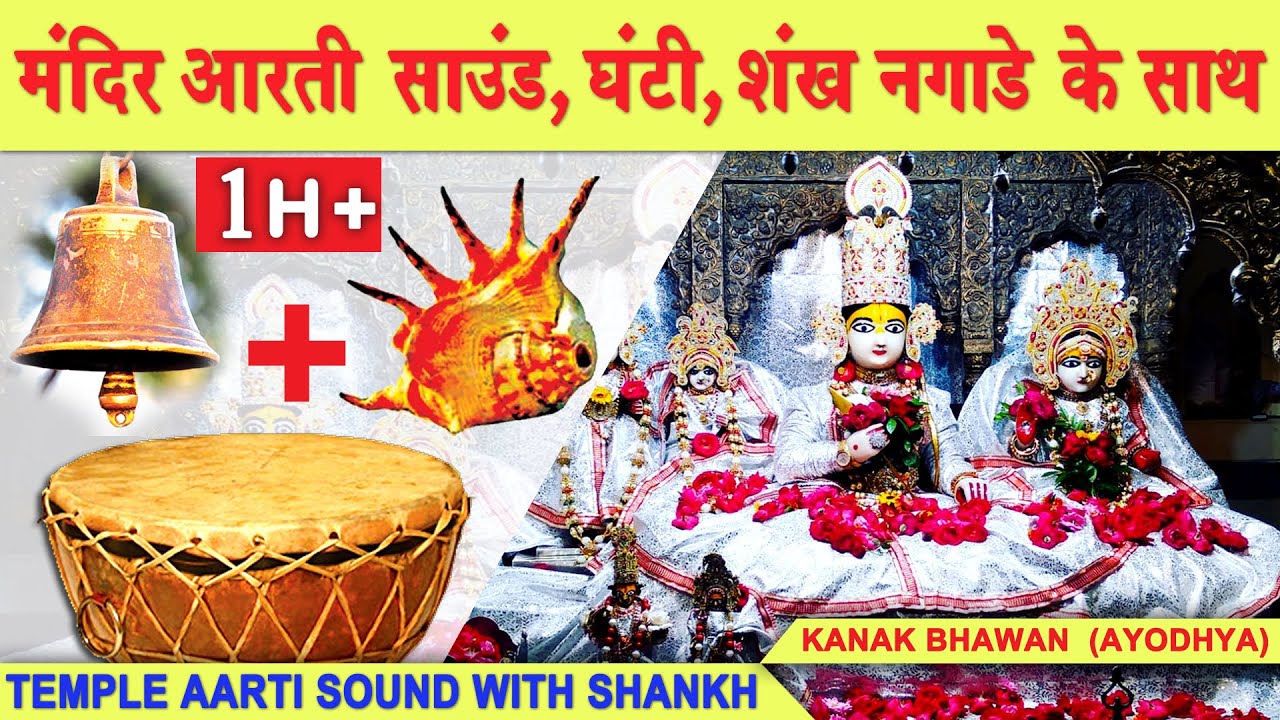
Temple Bell and Shankh Naad Sound | temple aarti sound with sankh | Kanak bhawan- Best Worship Music
2.4M
This video features temple bell and Shankh Naad (conch shell sound) as part of traditional temple aarti rituals, providing a relaxing and spiritual worship experience.
Click to watch →

Rhythm Collage Part 1 By Sanjay Karandikar - Introduction to Shankh & Wadan by Nitin Satav
787
The Shankh (conch shell) is a traditional Indian percussion instrument that produces a natural, unstruck sound close to anahata (unstruck) sound, as it is created by nature with minimal human modification. Historically, Shankh served dual purposes: it was used in religious worship (puja) and as a war instrument (ranvady) to challenge enemy armies and call own troops to battle. According to the Bhagavad Gita, five specific Shankh were blown at the beginning of the Mahabharata war: Panchajanya (Krishna's), Devadatta (Arjuna's), Paundra (Bhima's), Ananta Vijaya (Dharmaraja's), Sughooshi (Nakula's), and Manipushpaka (Sahadeva's).
Click to watch →
Deep Dive
Basic principles of sound-based meditation, including how repetitive auditory stimuli help anchor attention and quiet the mind.

20 Minute Daily Guided Meditation - PURE SOUND
352
Sound meditation is a practice where you use external sounds (such as a bell, singing bowl, or natural sounds) as an anchor to bring your attention back to the present moment, allowing thoughts to come and go without engagement. The key principle is that thoughts happen naturally like heartbeat, and the problem is not thinking too much but rather paying excessive attention to thoughts. By focusing on a sound and returning to it whenever your mind wanders, you train your attention to remain in the present rather than getting lost in mental chatter. This practice can be done with or without a bell, and even listening to birds or a clock without naming the sound can serve as an effective meditation object.
Click to watch →
Guided Transcendent Meditation (Sound Anchor) | Transcendence for Overthinking & Anxiety
949
The guided meditation uses sound as a focal point for awareness. The practitioner is instructed to rest attention on a sound—not to analyze, judge, improve, or control it, but simply to be with it. The sound moves into the foreground of awareness naturally. When thoughts arise, emotions appear, or sensations shift, these are not mistakes or problems. Each time attention wanders, the practitioner kindly and gently returns to the sound, putting it back on the foreground of the mind and center stage of inner space. There is no criticism, frustration, or story of doing it wrong. Each return is an act of witnessing—choosing not to fight experience. When the sound eventually fades, it continues resonating naturally inside as if the echo rests in the chest and breath within whole awareness. The practitioner stays with this inner resonance and completes silence until hearing the voice again.
Click to watch →

Meditación y Yoga Nidra. Módulo 3, clase 2. Introducción a Visuddha Chakra
105
Sustained sounds function as attentional anchors. The mind, before these anchors, stops dispersing, and the body begins to relax around the vibration. Tibetan singing bowls and conscious chanting produce similar effects.
Click to watch →
TRANSCENDENT Meditation | Overcome sadness, overcome a busy mind | Beyond distractions - guided
3K
A sound or vibration serves as an anchor for meditation, helping the mind from drifting away. Place the sound on the foreground of your mind, at the center stage of your inner personal space. When thoughts come, do not eliminate or judge them; simply return naturally and effortlessly to the sound.
Click to watch →

自律神経を整え脳を休めるマインドフルネス 音の瞑想 片鼻呼吸法
1.1K
Sound meditation involves focusing attention on the beginning and end of each sound, holding consciousness in each moment. When attention wanders, gently notice the distraction and return focus to the sound. This practice trains the mind to maintain concentration and return to the present moment repeatedly. The technique develops the ability to sustain attention and cultivate a calm, focused state of mind through repeated practice of returning to the sound.
Click to watch →
Deep Dive
An introductory understanding of how sound frequencies and rhythms can influence stress levels and physiological relaxation.

How Frequencies Help Regulate Rhythms
189
Sound is one of the simplest examples of frequency. Different tones and rhythms can influence mental states, shifting the body toward relaxation or alertness. This demonstrates how frequency-based inputs can affect psychological and physiological states.
Click to watch →
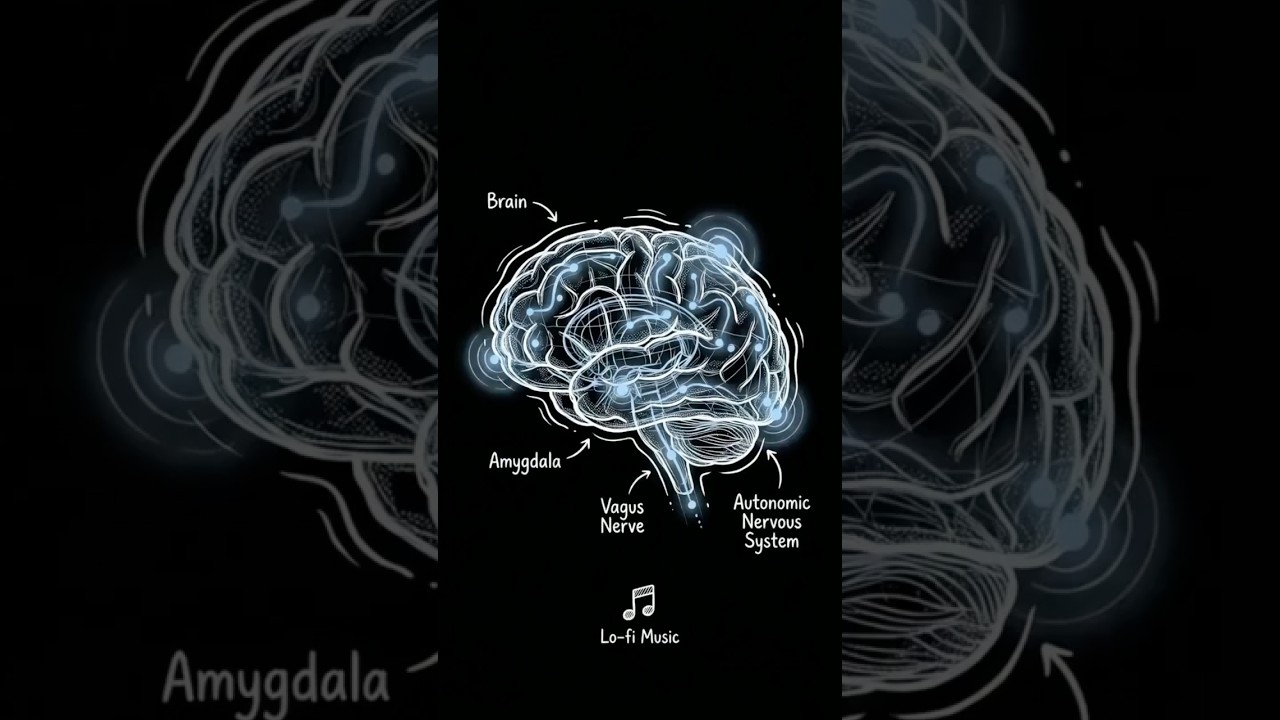
How Sound Can Calm Your Brain’s Stress Response
106
Rhythmic sound can calm the brain's stress response by entraining neural activity and promoting synchronization, which helps shift the autonomic nervous system from fight-or-flight to a calmer state; effective sounds include rhythmic instrumental music (60-80 bpm), nature sounds, binaural beats, drumming, and vocal toning, with alpha and theta frequencies being most beneficial for relaxation.
Click to watch →
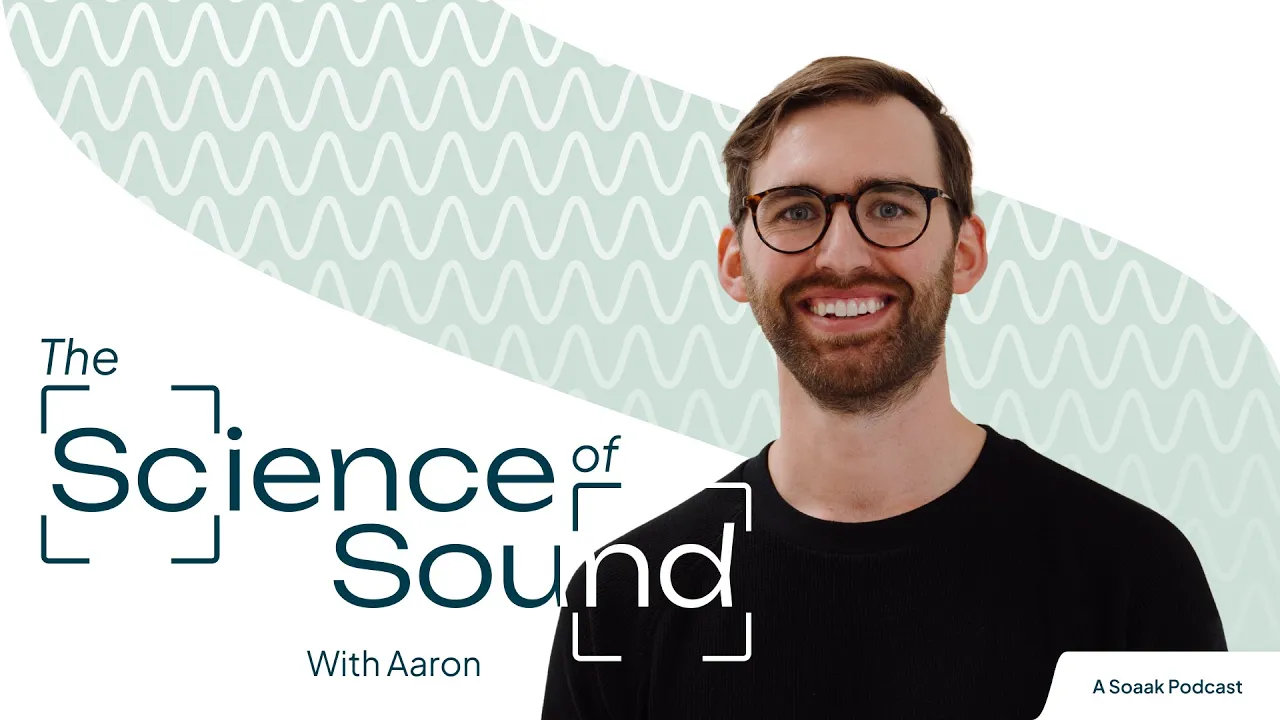
Scientifically, why do FREQUENCIES Enhance Your MIND and BODY? | The Science of Sound Podcast
361
Scientific research demonstrates that specific sound frequencies can reduce stress by lowering cortisol levels and increasing oxytocin, with studies showing that 528 Hz, 432 Hz, and 440 Hz frequencies help shift the body from fight-or-flight to relaxation mode, with 432 Hz showing particular effectiveness in reducing stress in dental patients and healthcare workers during high-stress situations.
Click to watch →

O SEGREDO DAS FREQUÊNCIAS NA MÚSICA QUE NINGUÉM TE CONTA
5.1K
The mind operates through two spheres: the conscious mind as rational gatekeeper and the subconscious as fertile soil that accepts without debate. Each word spoken is a biological decree that programs the body and destiny. The subconscious does not understand irony, capturing only semantic cores. Repeated thoughts strengthen synaptic connections through neuroplasticity - neurons that fire together connect together. The body is a complex vibratory system where cells possess mechanisms to hear sound waves that convert mechanical vibrations into chemical signals affecting gene expression. Sound can alter DNA, strengthen tissues, and modulate stress responses. The 432 Hz tuning is more congruent with biological rhythms than 440 Hz, inducing deeper relaxation. The 528 Hz frequency reduces oxidative stress. The vagus nerve can be activated through humming, releasing nitric oxide that dilates blood vessels. Neural entrainment causes the brain to synchronize with external rhythms, and binaural beats create alpha waves for relaxed alertness.
Click to watch →
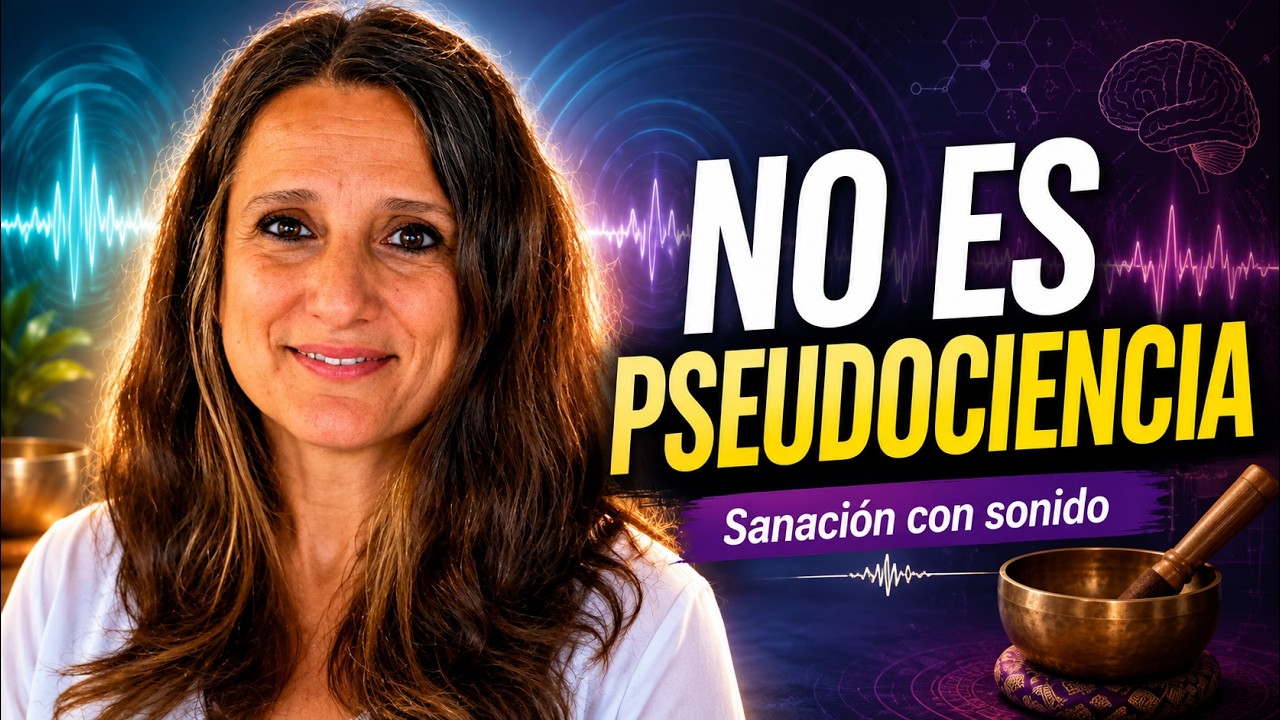
Vibración y frecuencia: ¿Por qué deberías tomar en serio la sanación con sonido?
235
Sound is not imaginary but a physical force - pressure, mechanical wave, vibration, and energy moving through matter. When focused with appropriate frequency and intensity, sound can move particles, create patterns, break crystal, and see inside the body with ultrasound. Calming the nervous system is biological - slowing respiration, reducing stress, and creating security are real physiological responses. The body cannot heal well in constant stress or survival mode, where shallow breathing, muscle tension, disrupted sleep, and anxious minds prevent proper healing. Sound helps people enter deeper calm, which is real nervous system regulation, not imagination.
Click to watch →
Prerequisite Knowledge
- Concept 01The concept and spiritual significance of 'Aarti' (a Hindu ritual of worship using light and sound) and its role in daily devotion.
- Concept 02The symbolic and ritualistic importance of traditional Indian acoustic instruments, specifically the Shankh (conch shell), Nagada (kettle drums), and temple bells.
- Concept 03Basic principles of sound-based meditation, including how repetitive auditory stimuli help anchor attention and quiet the mind.
- Concept 04An introductory understanding of how sound frequencies and rhythms can influence stress levels and physiological relaxation.
Subsequent Learning
- Step 01The study of 'Nada Yoga' (the yoga of sound), focusing on how external sacred sounds (Ahata) lead to the realization of internal spiritual sounds (Anahata).
- Step 02The neurological and psychological impacts of ritualistic soundscapes, specifically analyzing brainwave entrainment and autonomic nervous system responses.
- Step 03The architectural acoustics of ancient temples, exploring how spatial design was engineered to resonance-amplify sounds like bells and chanting.
- Step 04A comparative analysis of sacred sound practices across diverse global traditions, such as Tibetan singing bowls, Gregorian chants, and Sufi Dhikr.
Soundscape
Beat Flow
Melodic Shift
Tonal Drift
Rhythm Pulse
Sonic Blend
Echo Waves
Pulse Sync
Fade Frame
Resonance
Soundscape
2:21Playing Section
- 1
Minimal musical phrases dominate the initial segment.
- 2
Ambient tones and soft notes establish a calm atmosphere.
- 3
No spoken content emerges during this opening phase.
Silent Meditation (Mauna) and Low-Stimulus Contemplation
While traditional temple sounds like the shankh, nagada, and bells are used in devotional rituals (arti) to evoke alertness and spiritual fervor, many classical meditation traditions advocate for complete silence (Mauna) or low-stimulus environments. Schools of thought such as Vipassana, Zen, and Patanjali's Raja Yoga emphasize that deep meditation requires turning the senses inward (Pratyahara). Critics argue that loud, dynamic, and rhythmic acoustic stimuli can act as external distractions, keeping the mind anchored to sensory inputs and cultural associations rather than allowing it to settle into deep, objectless stillness. Furthermore, from a neuro-acoustic perspective, high-intensity sounds like drums and sudden bell rings can stimulate the sympathetic nervous system (alertness/arousal), which contrasts with the deep parasympathetic activation (relaxation and slow-wave brain activity) achieved through silent or drone-based meditation practices.
Deep Dive
The study of 'Nada Yoga' (the yoga of sound), focusing on how external sacred sounds (Ahata) lead to the realization of internal spiritual sounds (Anahata).

नाद बिंदु उपनिषद — ॐ से लेकर अनाहत नाद तक की यात्रा | गहन ध्यान और योग
54K
Nada Yoga is the practice of transforming external sound into inner silence. The Upanishad states 'Yatha bahya nada layam gachchati, tatha manoyam gachchati'—as external sound gradually merges, so does the mind. The practice involves three stages: Prarambhika (learning to listen to external sounds), Madhyama (internal transformation where sound becomes like a conch or flute), and Parama (Anahata Nada—the unstruck sound that is neither sound nor silence). This Nada is heard in the heart chakra and represents the highest level of Nada Yoga. The journey begins with external sound and ends in inner silence, where the mind merges with Nada.
Click to watch →
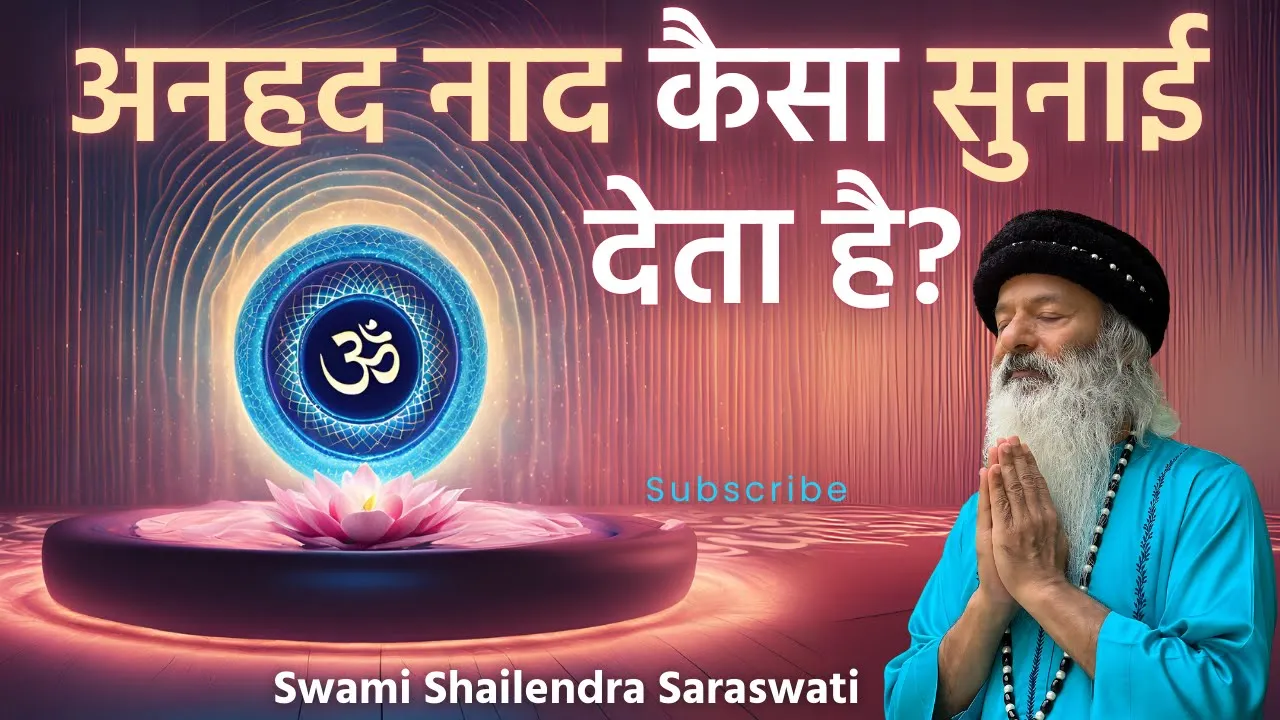
अनहद नाद कैसा सुनाई देता है? स्वामी शैलेन्द्र सरस्वती
166.7K
Anahata Nada (अनाहत नाद) is a subtle, divine sound that differs fundamentally from external sounds. The term 'Anahata' means 'unstruck' or 'without being struck,' contrasting with 'Aahata' sounds produced by physical striking. This inner sound is eternal, never created and never ceasing, unlike external sounds that originate from specific sources and eventually fade. To hear it, one must develop extreme consciousness and calm the mind free from mental chatter. It is omnipresent and so subtle that it cannot be recorded by scientific instruments. Similarly, the inner light of consciousness differs from external light - it is unborn, immortal, and completely stationary with no origin or destination. Saints compared it to moonlight and starlight appearing without visible sources. Religious rituals like temple lamps are symbolic representations of this inner reality.
Click to watch →

#ध्यान_की_विशेष_विधि_जिससे_मिलता_है_अद्भुत_लाभ#MEDITAION#sawmi_umakantanand_sarswati.
67.1K
Nada Yoga is a meditation practice where practitioners learn to hear the subtle inner sounds (Anahata Nada) by quieting the mind and body, which can reveal spiritual insights and connect the practitioner to higher consciousness; the practice involves sitting in a quiet place, relaxing the body, blocking external sounds, and gradually focusing on internal vibrations that may include sounds like ocean waves, conch shells, or musical instruments, ultimately leading to states of deep meditation and spiritual bliss.
Click to watch →

आपके कान में छिपा गुप्त द्वार, जिसे बहुत कम लोग जानते हैं | Secret Door Inside Your Ear
36.9K
Nada Yoga is an ancient spiritual practice focused on listening to internal sounds. When practitioners open the secret door in their ears, they hear ten types of internal sounds: cricket, bell, conch shell (gross sounds), flute, veena, drum (subtle sounds), and ultra-subtle sounds only advanced practitioners can hear. Each sound represents a deeper spiritual level. The Anahata Nada (unstruck sound) is the fundamental vibration of the universe, arising without external cause. When practitioners focus on these internal sounds, their mind naturally becomes calm because thoughts cease, bringing them closer to their true nature. This practice activates all chakras and leads to inner peace.
Click to watch →
5 Minutos de Yoga para LA ALEGRÍA 😊🧘✨ #SadhguruEspañol
532.8K
Nada Yoga is a practice based on the scientific principle that all existence is a single reverberation, and where there is reverberation, there must be sound. The three fundamental sounds—'Aaa,' 'Uuu,' and 'Mmm'—form the foundation of all other sounds. These sounds activate different body regions: 'Aaa' activates the navel center where 72,000 energy channels unite, 'Uuu' activates the chest center, and 'Mmm' activates the throat center. Daily practice of these sounds benefits those with psychological disturbances, weak constitutions, or attention disorders by activating the three lung lobes and establishing the foundation for a joyful existence. The practice involves sitting cross-legged, pronouncing each sound seven times while observing where reverberations occur in the body.
Click to watch →
Deep Dive
The neurological and psychological impacts of ritualistic soundscapes, specifically analyzing brainwave entrainment and autonomic nervous system responses.
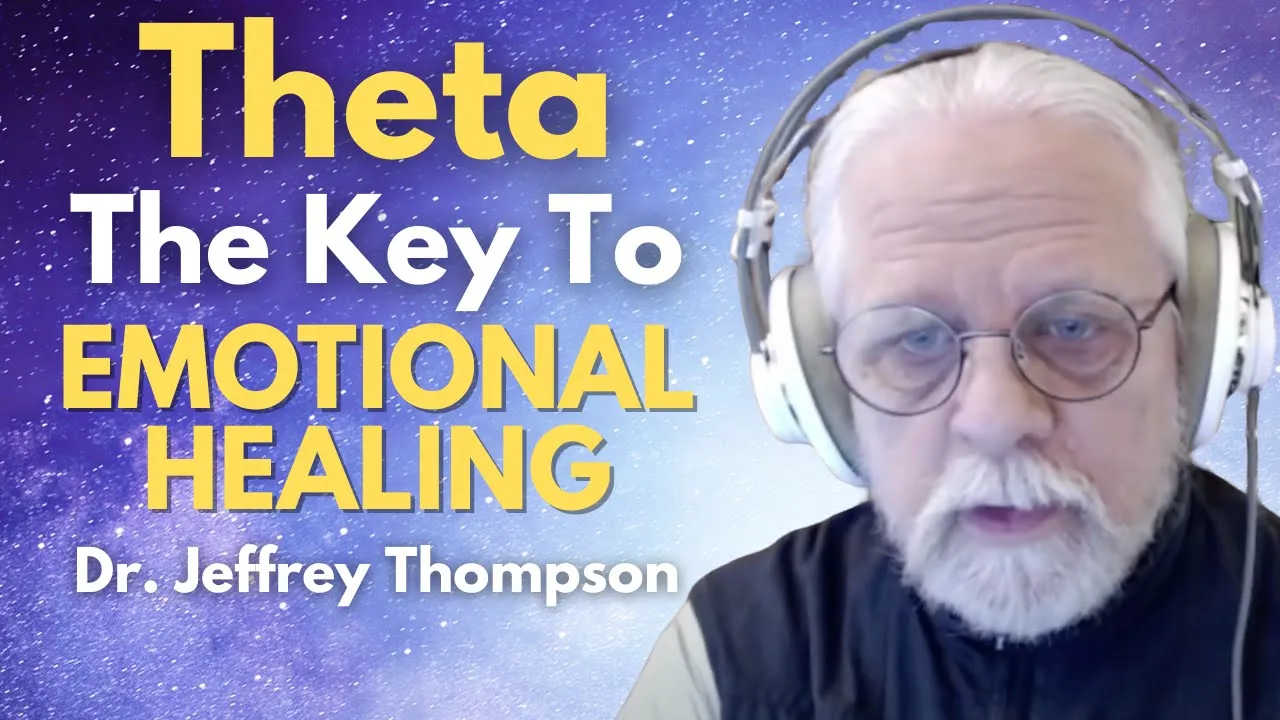
Theta Brainwaves | The Secret To Healing Unconscious Emotional Wounds, Dr. Jeffrey Thompson
455
Brainwave entrainment uses sound frequencies to synchronize brain waves for healing. Beta waves (13-38 Hz) represent focused alertness, while alpha waves (8-12 Hz) represent relaxed mind pondering. Theta waves (7-8 Hz down to 3.5-4 Hz) are where emotions are processed during dreaming sleep. Delta waves (0.5-4 Hz) represent deep unconsciousness essential for physical regeneration. Sleep deprivation experiments show that denying delta sleep causes physical death, while denying theta sleep causes psychological breakdown. The autonomic nervous system has sympathetic (fight-or-flight) and parasympathetic (rest-and-digest) branches that function like a seesaw. When sympathetic is activated, energy is pulled away from healing processes. Sound frequencies can be precisely calculated to activate healing mechanisms. According to acoustic physics, any octave of the correct frequency will cause resonant structures to vibrate. The vibration sense network detects frequencies from 500 Hz down to 0.3 Hz, even below hearing range. The hypothalamus is the physical location where emotions have direct access to organ and gland function throughout the body.
Click to watch →

OPTIMIZA tu MENTE, REDUCE el ESTRÉS y MEJORA tu SUEÑO con BRAINTAP con Daniela Kuri en Las 3R Ep#184
27.4K
Different brainwave frequencies correspond to different states: Beta waves are associated with alertness, activity, and stress/anxiety; Delta waves are associated with deep sleep and unconsciousness; Alpha waves create a state of deep relaxation and meditation; Theta waves represent the state between being awake and falling asleep, also associated with superlearning. The autonomic nervous system controls involuntary body functions like heart rate, temperature, and blood pressure without conscious thought. It has two main branches: the sympathetic system (fight or flight) and the parasympathetic system (rest and digest). Brainwave assessment can determine whether the brain is in a state of complete sleep, complete alertness, or the optimal Alpha state. This assessment measures neurohormonal response, energy availability, and body efficiency. Brain fitness is like physical exercise for the brain, requiring consistent practice similar to eating and exercising the body. Brainwave therapy should ideally be done daily, with a minimum of six sessions recommended. The technology uses flashing lights entering through the eyes via the optic nerve and sounds entering through the ears to stimulate the entire brain.
Click to watch →

모든 것이 가능해지는 양자 세계에 접속하는 법! (정말 이루어집니다!) / 조 디스펜자 / 당신도 초자연적이 될 수 있다(2부) / 책읽어주는여자 SODA's 오디오북 ASMR
173.5K
When consciousness shifts from beta waves (active thinking) to alpha and theta waves (relaxed, meditative states), the brain connects with the autonomic nervous system. This system controls involuntary bodily functions including heart rate, hormone secretion, body temperature, blood sugar regulation, immune function, and cellular regeneration. Normally considered unconscious, this system responds to conscious intention when the brain enters deeper states of awareness.
Click to watch →

EL CONCIERTO CÓSMICO. Anton Aliwen
6.7K
The brain responds to enjoyable music by releasing dopamine, similar to eating favorite foods or intimate relationships. Brain waves are electrical impulses measured in hertz, with five types corresponding to different physiological states: Beta waves indicate stress and problem-solving, while Alpha waves indicate relaxation and creativity. Brain wave entrainment occurs when external rhythmic stimuli cause the brain to synchronize with those rhythms. Ancient shamans used rhythmic drumming to induce altered states of consciousness, and yogis use repetitive mantra chanting to achieve similar synchronization. This demonstrates that rhythmic sound has been used throughout human history as a tool for consciousness expansion and healing.
Click to watch →

Wake Up with the Consciousness Café: Rev. Christie Hardwick talks with musician Roxanne Layton
101
Music composed at 60 beats per minute, matching the average resting heart rate, can entrain the listener's physiological systems including breathing, heart rate, and brain waves. This entrainment effect typically begins within one minute of listening. Soundscape refers to the acoustic environment that surrounds us and affects our bodies through the vagus nerve, influencing heart rate and blood pressure. Understanding how soundscape affects us allows us to make better environmental choices for our wellbeing.
Click to watch →
Deep Dive
The architectural acoustics of ancient temples, exploring how spatial design was engineered to resonance-amplify sounds like bells and chanting.

Częstotliwość, z jaką się zmienili — i dlaczego wszystko tak bardzo
945
Buildings were designed as instruments, with stone, vaults, proportions, and embedded vessels calibrated to amplify specific frequencies. Bells rang at these exact frequencies, organs tuned to bell sounds, and choirs adjusted to organs. For centuries, entire buildings resonated in harmonized resonance. Stone amplified bronze, which amplified voice, and voice amplified stone—a feedback loop calibrated to architecture at the molecular level of limestone properties. Modern churches have replaced stone with drywall, marble with carpet, and crystalline limestone with acoustic foam panels. One researcher described the effect as 'too dead for singing, too live for home audio.' Sound is absorbed unevenly—high tones disappear while low tones become muffled. Modern churches require microphones to compensate, representing a shift from instrument to box.
Click to watch →

La Technologie Interdite Cachée Dans les Temples Anciens
114
Ancient temples were designed as acoustic instruments for ritual purposes. The architecture created acoustically rich environments where participants experienced immersive sound experiences. Stone walls facilitated sound transmission, and strategic orientation exploited natural acoustic properties. Many temples follow the Fibonacci sequence in construction, distributing sound uniformly. Circular and hexagonal arrangements reduce sound loss. The Temple of the Sun at Modhera aligns with solar frequencies. The cloches of temples, cast in bronze, produce deep, lasting carillons. At West Kennet Long Barrow in England, lateral chambers resonate at 110 Hz, within the male vocal range. Acoustician Paul Marshall found sustained resonance between 95-120 Hz in Neolithic structures across the UK. Similar frequencies appear in Paleolithic caves in France and Spain containing parietal art from 42,000-9,600 BC. The evidence demonstrates that ancient builders understood and deliberately applied acoustic principles. At Chavín, passages narrow precisely to create waveguides. At Malta, the Oracle Chamber ceiling is sculpted as a waveguide. At New Grange, chamber dimensions create standing wave patterns. The King's Chamber dimensions create specific resonance frequencies. Göbekli Tepe in Turkey, dating to approximately 11,000 years ago, supports the theory that religion preceded agriculture. The site features carved stone pillars weighing 7 tons each, requiring hundreds of workers who needed to be fed and housed. This level of coordination required social organization. Once gathered, communities remained, and agriculture emerged to support the gatherings. The spiritual need led to civilization, not the reverse.
Click to watch →

Tehnologia Interzisă Ascunsă în Interiorul Templelor Antice
503
Temple architecture demonstrates intentional acoustic design across multiple cultures. Sound travels freely in spacious chambers, stone walls facilitate transmission, and strategic orientation exploits natural acoustic properties. Circular and hexagonal arrangements reduce sound loss, maintaining clarity and resonance. The Temple of the Sun in Modhera, Gujarat aligns with solar frequencies. At Chavín, passages narrow precisely to create waveguides. At Malta, the ceiling is sculpted as a waveguide with niches positioned to concentrate sound. At New Grange, chamber dimensions create standing waves, and spiral carvings match wave patterns. At Giza, sarcophagus dimensions create specific resonant frequencies. At Delphi, the cella is positioned and modeled for acoustic effects. At Indian temples, Fibonacci sequences distribute sound. These are deliberate engineering decisions, not coincidences. Temple architecture served as a mechanism for controlling information and society. At Chavín, passages filtered sound so only specific frequencies reached the public. At Malta, the camera oraculum amplified specific voices. At Giza, chambers were accessible only through specific routes. Initiates followed a path, with each chamber offering different experiences: sound, darkness, vibrations, and altered consciousness.
Click to watch →

Harate with Hamsa - Ganesh Bhat | Ayodhya Ram Lalla Statue | Ayodhya | Sculptor of Ram Lalla
5.2K
The speaker explains how ancient temple architecture incorporated scientific principles of sound and light. He describes how temple design affects acoustic properties - Hoysala temples are designed to prevent echo while other designs may create echo effects. He explains that ancient architects understood how sound waves behave in different spaces and how light interacts with architectural surfaces. He describes the engineering behind musical pillars, where the thickness and shape of stone pillars affect the sound they produce - thinner sections produce higher-pitched sounds while thicker sections produce lower-pitched sounds. He explains that this demonstrates the understanding of acoustic principles that ancient Indian architects possessed, developed through systematic research and observation.
Click to watch →
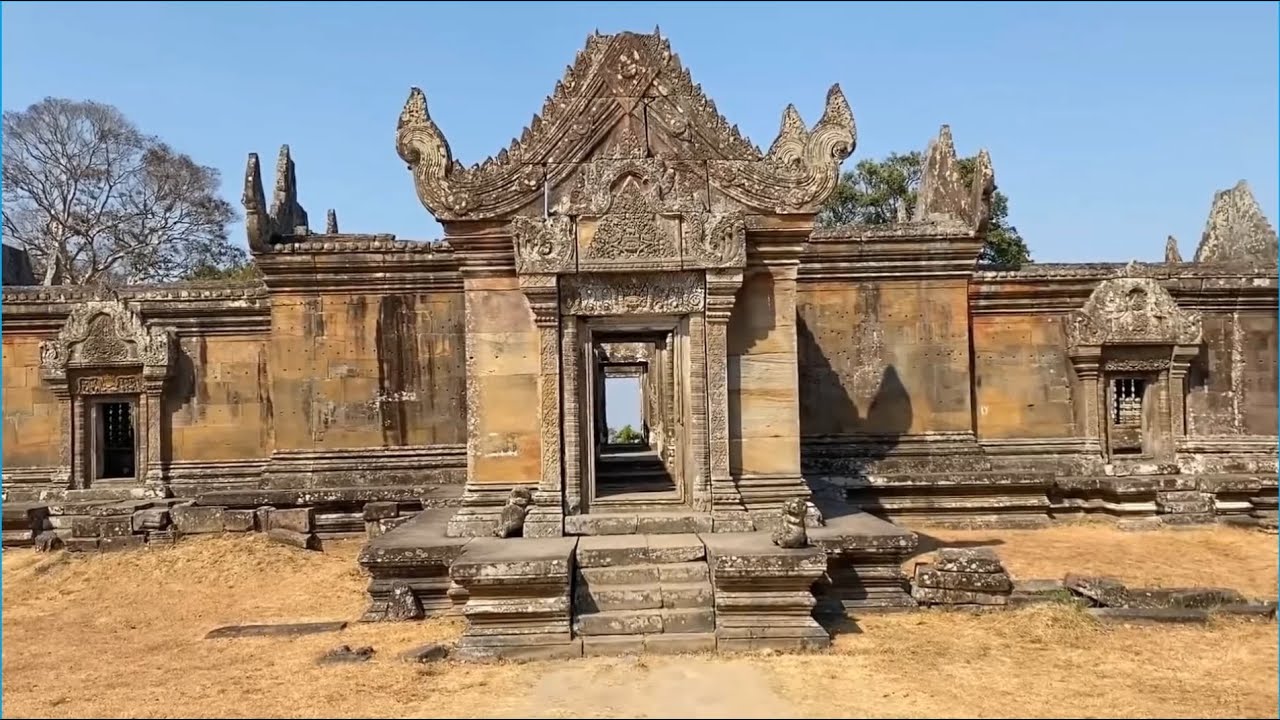
часть 3 перевод+анализ Шокирующая древняя технология - Храм Преа Вихеар, Камбоджа, Praveen Mohan
332.5K
Ancient builders intentionally designed temple interiors to control sound behavior. Rough, textured surfaces absorb and scatter sound waves, reducing echo and resonance. Conversely, smooth surfaces allow sound to reflect more efficiently. The presence of numerous holes and grooves in temple walls suggests deliberate acoustic engineering to create specific sound effects for religious rituals, demonstrating that ancient architects understood and applied principles of acoustics.
Click to watch →
Deep Dive
A comparative analysis of sacred sound practices across diverse global traditions, such as Tibetan singing bowls, Gregorian chants, and Sufi Dhikr.

El SONIDO que te PROTEGE de las MALAS ENERGÍAS | Nadie PODRÁ Contigo
53.3K
Tibetan singing bowls produce metallic, almost liquid vibrations that travel through space like invisible waves, breaking dense accumulations. Mantras transform scattered minds into ordered rivers of consciousness. Shamanic drums connect with the earth and expel what does not belong to life. Solfeggio tones awaken dormant memories and bring equilibrium, with modern science beginning to investigate these effects.
Click to watch →
James Bean: The Light & Sound Vibrations of God
2.9K
Various sacred music styles and world music instruments attempt to emulate divine sound. Tibetan singing bowls, bells, and gongs produce resonances that approximate heavenly music. Buddhist monks developed overtone chanting (kirtan khand) to reproduce inner sounds for fellow practitioners who weren't hearing them. Tuvan throat singing from Central Asia and similar traditions use harmonic overtones to create complex sounds. These practices demonstrate humanity's ongoing effort to bridge the gap between earthly and divine sound. The goal is to create vibrations that resonate with the primordial sound of creation, allowing practitioners to experience something approaching the actual heavenly music described in mystical traditions.
Click to watch →

Tibetan Singing Bowls Workshop Pt 4
540
Tibetan singing bowls are sacred instruments made from seven metals (gold, silver, mercury, copper, iron, tin, and antimony) representing the seven planets, which connect to the seven cervical vertebrae and symbolize the union of spirit (sun) and soul (moon). These bowls, crafted in centers like Durgi, Ping, and Nepur or by wandering smiths, are used in tantric practices to invoke deities like White Tara (female divine mother representing unconditional love) and Green Tara (transmuting envy and removing obstacles), helping practitioners tune into primordial awareness and divine love.
Click to watch →

O PODER DE CURA DA MÚSICA E DO SOM CELSO ZYMON FERNANDO BETETI
230
Tibetan singing bowls are instruments that produce the 'Om' sound when struck. These bowls are not just meditation tools but technologies that vibrate specific words and intentions. Each bowl is associated with a specific purpose - for example, one bowl is used to request wisdom from God and transform impurity into purity. The bowls are used before rituals to program intentions. The speaker notes that ancient church bells also had inscriptions similar to these bowls, showing that this practice is universal across traditions. The ideal time to use these bowls is in the morning to start the day properly, as starting the day rushed and chaotic prevents effective programming.
Click to watch →

Comparatif Complet : Bols Chantants Tibétains vs Cristal pour Votre Bien-Être
5.1K
Tibetan singing bowls originated in Asia around 2000 years before Jesus Christ, primarily used in India, Nepal, the Himalayas, and Tibet. They arrived in the West in the early 20th century. These bowls are composed of seven metals (gold, silver, copper, lead, iron, mercury, and tin), corresponding to the seven chakras and seven planets. They can be hand-hammered or factory-made. Each metal has its own vibration, creating a fundamental tone with multiple harmonics. The frequency ranges from 50 Hz to over 1000 Hz, with larger bowls producing lower frequencies. The combination of harmonics creates a complex, rich sound.
Click to watch →
Soundscape
Beat Flow
Melodic Shift
Tonal Drift
Rhythm Pulse
Sonic Blend
Echo Waves
Pulse Sync
Fade Frame
Resonance
Soundscape
2:21- 1
Minimal musical phrases dominate the initial segment.
- 2
Ambient tones and soft notes establish a calm atmosphere.
- 3
No spoken content emerges during this opening phase.
Silent Meditation (Mauna) and Low-Stimulus Contemplation
While traditional temple sounds like the shankh, nagada, and bells are used in devotional rituals (arti) to evoke alertness and spiritual fervor, many classical meditation traditions advocate for complete silence (Mauna) or low-stimulus environments. Schools of thought such as Vipassana, Zen, and Patanjali's Raja Yoga emphasize that deep meditation requires turning the senses inward (Pratyahara). Critics argue that loud, dynamic, and rhythmic acoustic stimuli can act as external distractions, keeping the mind anchored to sensory inputs and cultural associations rather than allowing it to settle into deep, objectless stillness. Furthermore, from a neuro-acoustic perspective, high-intensity sounds like drums and sudden bell rings can stimulate the sympathetic nervous system (alertness/arousal), which contrasts with the deep parasympathetic activation (relaxation and slow-wave brain activity) achieved through silent or drone-based meditation practices.
The concept and spiritual significance of 'Aarti' (a Hindu ritual of worship using light and sound) and its role in daily devotion.
The symbolic and ritualistic importance of traditional Indian acoustic instruments, specifically the Shankh (conch shell), Nagada (kettle drums), and temple bells.
Basic principles of sound-based meditation, including how repetitive auditory stimuli help anchor attention and quiet the mind.
An introductory understanding of how sound frequencies and rhythms can influence stress levels and physiological relaxation.
The study of 'Nada Yoga' (the yoga of sound), focusing on how external sacred sounds (Ahata) lead to the realization of internal spiritual sounds (Anahata).
The neurological and psychological impacts of ritualistic soundscapes, specifically analyzing brainwave entrainment and autonomic nervous system responses.
The architectural acoustics of ancient temples, exploring how spatial design was engineered to resonance-amplify sounds like bells and chanting.
A comparative analysis of sacred sound practices across diverse global traditions, such as Tibetan singing bowls, Gregorian chants, and Sufi Dhikr.
2.2M views16.5Klikes32:10@phoenixthehealer6335Original Release: 2022-04-04
hey [Music] do [Music] do so [Music] do so [Music] do so [Music] so [Music] do so [Music] so do so [Music] so [Music] so [Music] do so [Music] so do so do so [Music] do so [Music] do so don't do so [Music] so do so do so [Music] do so do so [Music] do [Music] so do so do so do [Music] so [Music] so [Music] so [Music] so [Music] so [Music] [Applause] so [Music] so do [Music] so [Music] so [Music] do so [Music] so do so you
Up Next

18:34
Vocal Chops, Drop Arrangement & Sound Design Tutorial in Harmor
@VirtualRiot
204.3K views•2014-05-08

12:54
Triumph of Orthodoxy Icon: Byzantine Art & History Explained
@BenCallan
2.1K views•2024-08-06

9:49
FastAPI vs Flask vs Django: Choosing the Right Python Web Framework
@TechWithTim
302.5K views•2024-05-26

1:42
Game of Thrones Opening Credits: A Cinematic Analysis
@gameofthrones
46.3M views•2011-04-18
Related Study Plans & Knowledge Roadmaps
Structured learning paths in General & Interdisciplinary Studies
general-studies
Elevator Engineering: History, Physics & Cities
01From Hoists to Safety Brakes: The Dawn of Vertical Lift
02Hydraulic vs. Traction: The Engineering Physics of Elevators
03Modern Speed, Safety, and Algorithms
+ 2 more learning modules
12h5 modules
Explore Roadmap
general-studies
Rubber: Material Science, History & Geopolitics
01Origins of Natural Rubber & Mesoamerican History
02The Chemistry of Natural Rubber & Vulcanization
03The Geopolitics of the Rubber Boom & Colonization
+ 2 more learning modules
12h5 modules
Explore Roadmap
general-studies
Containerization: Evolution, Logistics & Trade
01Ancient Trade & Bulk Cargo: Amphorae to Barrels
02The Industrial Revolution & Cardboard Packaging
03The Containerization Revolution: Malcom McLean
+ 2 more learning modules
12h5 modules
Explore Roadmap
general-studies
Textile Tech: Evolution, Labor & Global Impact
01Pre-Industrial Textiles: Handloom & Cottage Industry
02Mechanization: The Spinning Jenny to the Power Loom
03The Factory System & Global Labor Transformation
+ 2 more learning modules
10h5 modules
Explore Roadmap