
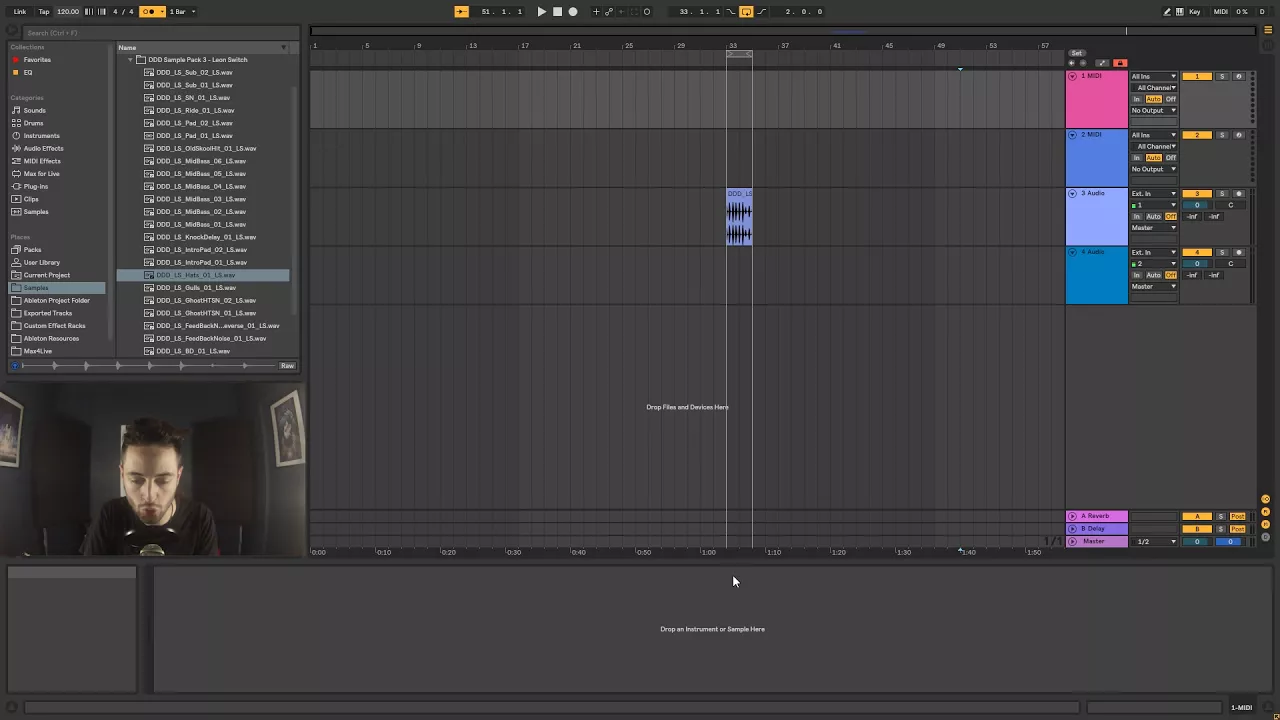



















This tutorial demonstrates how to create ambient drum and bass tracks by transforming simple chord progressions (G minor, F major, D minor) into atmospheric pads using octave-shifted notes and reverb plugins like Valhalla Super Massive and Portal, layering contrasting pads with different characteristics, designing call-response melodies with distinct layers, creating unique drum patterns by combining and cutting samples, designing complex bass lines with distortion and compression, and structuring tracks with hooks, bridges, and transitions to create emotional contrast.
Ambient Drum and Bass Production: Ableton Techniques for Chords, Drums, and Bass
Added:Basic navigation of the Ableton Live interface, including the Session and Arrangement views, MIDI editing, and basic signal flow.
Fundamental music theory concepts, specifically chord construction (triads and seventh chords) and scales suitable for creating ambient pads.
Core principles of synthesis, including how oscillators, filters, ADSR envelopes, and LFOs function to shape sound.
The basic rhythmic characteristics of Drum and Bass, including typical tempo ranges (160-180 BPM) and standard breakbeat patterns.
Advanced mixing and mastering strategies tailored for low-frequency heavy genres, focusing on sub-bass management, sidechain compression, and headroom.
Complex sound design techniques using Wavetable or FM synthesis to create modern, evolving 'Reese' basses and textured atmospheric layers.
Creative sampling and drum processing, such as slicing and rearranging classic breakbeats (e.g., the Amen Break) using Ableton's Sampler/Simpler.
Arrangement psychology and automation techniques for building tension, crafting impactful drops, and managing long transitions in electronic music.
17.8K views1Klikes7:55Original Release: 2023-10-21
[Music] let's start with quarts this court progression is G minor F major D minor and F major once again a really simple cord progression but we can add more width and character with this middle notes putting them one octave above just like that adding a ton of Reverb to turn these quarts into a pad using a well-known Reverb plugins like Valhalla super massive and Valhalla Shimmer both are great in terms of making deep and longtailed Reverb another VST I would recommend is portal which is also amazing for creating pads and atmospherics an interesting way to spice up your quarts is to layer them with another Pad but these pads should have a certain contrast to them first one that I showed you is made in vital with a lot of shimmering high-end which is achieved due to a lot of Unison on this wave tables and some multimon compression in the FX section and the second one is clean and more melancholic and here I used a standard loving design face plant preset together these pads create this in the-middle feel adding some uncertainty to the [Music] sound and in the second part you can add an instrument like violin from BBC Orchestra on the background which will elevate your sound making it a little bit more complex again using the same chord [Music] progression writing good Melodies is challenging and in ambient znb its purpose of hooking a listener and spicing up a repetitive quart and Pad layer so in here I decided to have two layers for melody in the first part and a completely different melody in the second part of the track first layer smoothly Fades into the first hook and kind of lingers in the [Music] back basically it's a four bar Loop fading in and out having these half of bar gaps so we would have some callon response action so this will be our call Melody and this one will be our response Melody filling those half of a bar gaps in the first Melody and this block is brighter and is a great contrast to the first layer both of them are made in serum first one is screechy and uses a triangle wave and a basic mini with a lot of Unison and using some unique flanger filter connected to LFO for more movement and the second block is more melodic using two sways with a lot of delay and chorus and it's from free unwave collection using some Valhalla super massive here as well for some dreamy Reverb undertone and in the second part there is a fullon high Pace arpeggio melee using some one semone steps to add this uncertainty to this melody using here serum as well also using Valhalla super massive and also adding some shaper box for panning from one ear to [Music] another well in terms of using drums instead of using the same brakes and Loops you can combine several different patterns and samples to create something unique at first we have a basic D&B KY and snare structure some different snare hits here to make every second hit a bit different and to add some rhythmic element to your drums you can take a top drum Loop or a percussive loop but if you don't have one you can simply take a break of your choice and cut all the lows and mids with e so you would leave some space for your kicks and snares but still leave all percussive elements from your break cutting this top drum Loop to create the stells will also add a unique Dynamic to your drums and just cutting all the top drum Loops in the end of four or eight bar Loop and add a completely different drum brake bit this might also add some variety to the track and layering it all with another brake like a classic amen can bring more juice to the overall drum pattern but that's not all because I highly recommend to try using unique distortion on your drums like this free VST Crush I used the crunchy tremolo preset and it heavily saturated and distorted highend which made this drum Loop Fuller and much punchier in the overall mix it just adds so much flavor to your drums now talking about base usually in ambient D and be it's something really simple like this re base for example but even a re base can be a little more complex and a little unique here's an example in serum using analog signs here fing from A to B adding some sub to octaves lower and in effects adding harsh zero Square Distortion some Dimension to make base wider and then compressing it with OT this will make this base as noisy as a triangle shaped one but still will have a different texture and just feel not as overused whatever you decide to add into your Arrangement two or three hooks it will still be pretty simple an intro a hook a bridge a second hook and an ultra in this case but transitioning is what important here in the intro you can use a portal preset or just use a standard LFO to automate and kind of Fade Out This chords into full sound leaving some space for drums in the main part just fitting in a top drum Loop and these stutters by the end of the intros section it's not a lot but it's needed to make a drop more unexpected and Powerful bringing in the base and saturated drums at the same time in the bridge section you can add any instrument you like to create a melodic transition in this case a piano in the same G minor scale with a lot of Reverb and delay [Music] and in the outro you can just shut down all of the instruments and leave just one like here I only left the BBC orchestra whiling that I talked about earlier which made this outro much more melodic and really an opposite to an intro or Bridge [Music] section and that's it these are just couple of ideas for your ambient D andb track if you have any questions just leave them in the comment section I will definitely answer them thank you for watching keep making your own sound and [Music] bye
Up Next
14:32
GarageBand Tutorial: Twenty One Pilots Heathens on iOS
@ArrivedMusic
341.8K views•2016-09-08

26:22
Walking in the City: Urban Rituals and the Flâneur in Contemporary India
@PSBTIndia
1.9K views•2016-08-02

9:49
FastAPI vs Flask vs Django: Choosing the Right Python Web Framework
@TechWithTim
302.5K views•2024-05-26

1:42
Game of Thrones Opening Credits: A Cinematic Analysis
@gameofthrones
46.3M views•2011-04-18
Related Study Plans & Knowledge Roadmaps
Structured learning paths in General & Interdisciplinary Studies
general-studies
Artificial Light: History, Tech & Human Impact
01The Pre-Electric Era: Fire, Oil, and Gas Lighting
02The Incandescent Revolution and Grid Electrification
03Gas Discharge and Fluorescent Illumination
+ 3 more learning modules
14h6 modules
Explore Roadmap
general-studies
Elevator Engineering: History, Physics & Cities
01From Hoists to Safety Brakes: The Dawn of Vertical Lift
02Hydraulic vs. Traction: The Engineering Physics of Elevators
03Modern Speed, Safety, and Algorithms
+ 2 more learning modules
12h5 modules
Explore Roadmap
general-studies
Rubber: Material Science, History & Geopolitics
01Origins of Natural Rubber & Mesoamerican History
02The Chemistry of Natural Rubber & Vulcanization
03The Geopolitics of the Rubber Boom & Colonization
+ 2 more learning modules
12h5 modules
Explore Roadmap
general-studies
Containerization: Evolution, Logistics & Trade
01Ancient Trade & Bulk Cargo: Amphorae to Barrels
02The Industrial Revolution & Cardboard Packaging
03The Containerization Revolution: Malcom McLean
+ 2 more learning modules
12h5 modules
Explore Roadmap