

![Fachbegriffe zur Analyse der Form in der Musik [Motiv | Thema | Satz | Periode | Erklärung | Abi]](https://i.ytimg.com/vi_webp/NHQ_KPCQzxM/maxresdefault.webp)











![[세종문화회관] 🎹고전 피아노곡을 들어야 하는 이유 | 소나타 형식 한방에 정리 | 세종 체임버 시리즈 (이혁, 마르틴 가르시아 가르시아, 박재홍, 백혜선)ㅣ안인모 클래식해설](https://i.ytimg.com/vi/AXelfjA1gFs/maxresdefault.jpg)
Classical sonata form creates a dramatic narrative where musical themes function as characters that depart from a home key, travel through contrasting emotional experiences, and return transformed, using only two fundamental elements: tunes that define specific locations (keys) and motion music that transports between these locations; this structure, pioneered by Haydn, Mozart, and Beethoven, allows composers to embody a complete range of emotions within a single movement by establishing departure and return through three main sections—the exposition (presenting themes), development (transforming material), and recapitulation (returning home)—with the key insight being that understanding the continuous journey of musical ideas from one location to another provides a simpler way to appreciate the form than traditional textbook explanations.
Understanding Classical Sonata Form: Haydn Symphony No. 90
Added:hello this is Dave Harris executive editor at classics today.com and today I'm going to be talking to you about Sonata form that fearsome topic and in particular classic Sonata form the type used by hiden really invented by Haydn Mozart Beethoven and a few other composers since this is a wonderful wonderful thing I'm kind of a form junkie I don't know about you I think it's fascinating because because music has shape it has structure and even though it's intangible once you know a piece well once you really get it into your head you can practically see the entire thing whole you can understand how its put together and what that structure is and Sonata form was about the most amazing invention in the history of music at least after contrapuntal forms like you know fugues and things like that because what Sonata form does is it creates a dramatic narrative the themes of a piece of music become characters and those characters have adventures in the course of a movement they start at point a they travel along a continuum stuff happens they eventually wind up back at home but they're changed by their experiences along the way so it's like a novel or a play or a movie or a something there's a story there's a plotline only the story is one of feelings and emotions not physical events that you can identify there may not be the car chase or the suicide or the practical joke but you understand that those things are happening by the emotional reactions that they create you and so not a form is the thing that allows that to happen rather than in the previous Baroque period a piece that could be basically happy and that was it or sad and that was it if you have movements which include an entire range of emotions because you have an entire of experiences and I'm going to explain Hal sonata form dozen what the basic structures of Sonata form are and this explanation is going to be quite different from what you usually find in textbooks so first I want to talk to you a little bit about the the textbook explanation of what a sonata form movement is and then I want to give you my take on it my understanding because I actually think it's much more helpful in following what happens in a piece of music particularly one that you're not familiar with so hang on to your hats and here goes now the music theorists tell us that a sonata form movement is binary that means it has two big sections or it articulates a dual process that's really a better way of thinking because the dual process is movement away from the HOME key and then returned to the home key so it's departure and return that is the process in your basic Sonata form movement the home key and this is a terribly complicated subject which I have to be honest I don't understand at all myself I'm not a music theorist I don't understand the intricacies of harmonic theory and that's why I've had to come up with an explanation of Sonata form that takes into account my lack of understanding and also the fact that I truly truly believe that it's not necessary to know it's nice it's fascinating if you study it but it isn't necessary it really isn't so all we need to know about a home key or a key the tonic is the home key in music theory parlance is that a key is a location it's a place and all of the other possible places in our musical universe and there are twenty-four major and minor keys are there for 24 different places are related to the one that you choose is home by some measure of musical distance that is how the rules of harmony permit you to get from one to the other and in the course of a sonata form movement you're going to go from place to place to place and the are going to be played in those different places and they may or may not take on different characters in those places and that's all you really need to know about tonality now the dual structure of a sonata movement this binary form this departure and then return is articulated in three sections those sections have names which are kind of terrible but we have to use them because it's the common coin and you're going to hear them so you might as well know what they are they are first the exposition which exposes as the words implies it presents the material of the movement then comes a development which is horrible because it sounds very technical when actually development sections there are the most action-filled parts of most movements and the development is when the composer takes the material he's presented and does stuff with it and anything can happen in a development section absolutely anything then comes a recapitulation which is the restatement of what you heard in the exposition however there's a big however the exposition is the part where the music departs the development and recapitulation are returned and so the departure has to go somewhere right so the exposition generally has two parts itself a first subject and a second subject and these are in complementary keys so the process of leaving begins in the exposition in the recapitulation on the other hand you don't want to go away the whole point is coming home so the second subject which is located in its own key is gonna have to be recomposed to stay in the HOME key so that the music doesn't go far away now it's not quite as simple as all that because you can still do all kinds of things you can go to other keys momentarily and come back you can pretend that that's where you want to go but not really go there there's always those sorts of ways composers can create tension but the basic principle is that a recapitulation is going to tell you where you are in the movement by letting you know that you're close to home that you're getting there that the end is coming and you feel it you feel it in your gut you know that the music is moving towards the end and that's why in a sonata form movement themes will never be exactly the same in the recapitulation as they were in the exposition because most of the time you've got to do something to them in order to keep them where they're supposed to be which is either home or elsewhere I know this sounds very abstract but when you actually hear a piece of music and we're going to hear music some great music then it will become extremely clear to you exactly what's going on and rather than get into this further I'd rather tell you how I think about Sonata form and then let's go straight to a musical example that will I think make the point much more eloquently than I can you see my theory is this and it seems to work pretty well for me and I think for a lot of other people I've been developing this with over years there are only two kinds of music in Sonata form movements it's really that simple the first kind is the tunes the tunes which define a location because whenever you play a melody that occupies a key any tunes sing a tune come up with any tune you know da da da da da da da da its god Bless America just came to mind I don't know why that defines a key the tune is in a key and the tune is the is the representation the formal representation of the location you're in that's the place it's the character occupying the place right it's a tune the only other thing that there is in a Sonata form movement is music that's transitional it's moving from one place to the other and I call it motion music because that's what it does it moves it's the music that transports us from one location to another where we meet another theme which defines that location and so and so that's all you need to know about Sonata form you either have a place a character with an emotional quality or you have motion music now the motion music can be composed of existing material it can be the traveling of one character to another place it can be new material entirely it can also participate in the development just like every other turn in the piece all of these things are possible that's what gives Sonata form its tremendous flexibility so the example we're going to hear is just that it's one example it's an example of a process but not an example of what a composer invariably does because other than that concept the idea of you're in a place you're moving and you're back there is no limit so what can happen and it's not a movement and that's why descriptions on it tend to be so complicated and so abstruse because because every piece is different when the hands are the great composers they're totally different and we're going to deal with the greatest we're dealing with the guy who invented Sonata form we're dealing with hidin and we're going to listen to the first movement of one of his symphonies that is Symphony number 90 in C major and the reason I chose this symphony is because I think the form is fascinating number one number two no one ever listens to symphony number ninety it's a late hidin work it falls between the six Paris symphonies and the twelve London symphonies which begin with number 93 the Paris symphonies end with number 87 number 88 I've talked about in one of these these videos it's very popular but nobody cares about 90 and it's a masterpiece it's a huge masterpiece it's also the last of Hyde and symphonies to have high horns in the key of C major this was a heightened specialty a specialty of his orchestra Esther Haase and no one else wrote for horns in that way in symphonies over a period of time the way Hyden did and this was the last of them because his other symphonies that were written to be played for example in London didn't have those high horns he couldn't count on them so he didn't write for them that gives the symphony of brilliance and attention in the orchestration that's quite wonderful it really is it's marvelous so we're going to play and listen to and discuss the first movement of symphony number 90 now already Symphony number 90 breaks the rules why because the first movement begins with an introduction and that introduction is really pretty fascinating I don't have a musical example of the first two notes of the introduction so I'm going to tell you what they are it goes tah dah that's all you need to know that's the introductory two notes then the introduction proceeds and I want you to hear the ideas that the introduction contains then when we get done with all this stuff we're going to run the whole movement straight through so don't worry about the fact that it appears in fragments the introduction contains two distinct ideas here's the first now what is that it's just plonk plonk plonk plonk plonk plonk right it's just it's nothing it's a nothingness it's it's it's six little notes but it's really something why because it's already an idea the first thing you need to know about Hyden particularly is that his ideas are just that they are not just tunes there anything that can happen musically can be a theme a subject an idea and this is an idea what is it the idea is a dynamic pattern soft soft loud right honk-honk honk-honk la longue that's it soft soft wild that's an idea as of yet it's the introduction we don't know what it has to do with anything but that's one idea here's the next [Music] now that is an actual theme right that's a theme it has a melody it's actually a closing cadence isn't it it's an ending right I mean it ends very comfortably somewhere you could go home after doing that and you would feel perfectly satisfied that you had uttered a complete musical thought right okay so that is one of the two ideas that makes up the introduction and that's all we know that that's the introduction now we're going to get to the exposition and I'm going to run the entire exposition through and then we'll take it apart bit by bit so here it goes [Music] [Applause] [Music] [Applause] [Music] [Applause] now you should have recognized what we heard in the exposition because it's ideas contained are contained entirely in the introduction at least the first subjects ideas let's listen just to the first subject [Music] you already know the theme right that was played slowly in the intro in the introduction and it's leads off the exposition as part of the first subject but the other part is three little squiggles notice the dynamics though da-dum da-dum da-dum soft soft loud that's the other idea from the introduction these are little seven note squiggles but they are developments of that idea from the introduction in that dynamic pattern and this is the first thing you need to know about heightened and about Sonata forms in general which is the exposition which presents the themes may not even be the exposition at all because height is already developing things for the introduction the music develops continuously what matters isn't so much what the sections are called and where you put things it's what happens where the music is going whether it's going away from home or returning to home and that's the process that you always have to keep in mind so that is the first subject and it's not really a tune is it it has two distinct ideas it has the theme from the introduction and the dynamic pattern from the introduction and then the theme again so it has an ABA shape that is your first subject in the symphony next comes motion music because we're going to go to the second theme the second subject so now let's listen to the motion music [Music] [Applause] [Music] all right now I mean it couldn't be clearer as motion music couldn't could it it's loud it's noisy its pounding brass it doesn't really have a theme in it does it it's basically very it's just motion it's noise it's it's activity it's rushing it's it's moving it's motion that's what motion music does it moves and now the second subject now that couldn't be more different from the first subject could it the first subject was short brief punchy widely contrasted in dynamics this is one beautiful lyrical theme for the solo flute and that's all it is the rest of the exposition is motion music again because now it has to decide where it's going to go next and in a sonata form movement like this one it has two choices it can either go back to the beginning and be repeated from the beginning of the exposition or it can go into the development section and haida does always what's most unexpected is no question you're never going to know what's going to happen next and so I'm going to let you hear the rest of the motion music and then we'll move on to discuss the rest of the movement [Music] [Applause] so now we're ready to go to the development section and I'm only going to play it for you when I play the whole movement we're not going to dissect it minute by minute because the whole point is that it's a continuous continuous plethora of activity based on what we've already heard if you know the first subject and the motion to music and the second subject then you'll know the development you'll understand exactly what's going on as its played the only thing I would stress is that that little dynamic pattern that second part of the expositions first subject da da da da dum ba no no no no it has seven notes right seven notes seven notes seven loud notes just be able to count to seven if you can count to seven you will be all set because that's going to be one of the main motives that's uniting the development section together in fact in the middle of the development section and I'm not going to tell you where you're going to hear it for yourself and you'll know it the second subject that beautiful flute theme comes back but underneath you'll hear Dom doctor thought thought thought thought thumb you'll hear that furtive little set seven note motive that prowls its way through the development section anyway from there we come to the recapitulation and the interesting thing about the recapitulation of the part I really want to stress is that because the music is not going to change key between the first and second subjects what has to change even more than the themes themselves is the motion music because it isn't going where it used to go its fact it's completely different in this case so here's the original motion music [Music] [Applause] [Music] and now listen to the motion music in the recapitulation [Music] [Applause] [Music] totally different right in fact it stays thematic it's based on primarily that first theme that's what it becomes it becomes its own motion music why because isn't really going anywhere so Hayden doesn't have to doesn't have to give us the idea that we're moving on to something else now the second subject returns is played on the oboe this time and then the motion music finishes up the recapitulation and there's a tiny tiny coda in which heightened has a little joke now a coda is a tail it's an ending it exists to provide the ending now you remember remember that that first subject that first tune that that that down bump-bump that it on tada which I've now done a thousand times and you're gonna hear a million times it's an ending right so you'd think that's how the movements gonna end right wrong Heiden ends with that seven note loud outburst it's a joke it's a surprise you don't know how it's gonna end until it actually ends and so now what I'd like to do is run the entire movement all the way through it's about six and a half minutes long it's not long but oh my god what a world of expression there is in this music and the more you hear it the more you'll hear in it I mean it's just incredible you just begin to be amazed not just not just it it's lively its cheerful its lyrical its it's sweet and and charming and and it's it's sentimental it's it's all of those things you know but it's full of surprises and joy and energy and excitement it's it's it's it's a world all by itself and it's a drama it's a story of two ideas two themes two subjects whatever you want to call them that make there a through some kind of dramatic dramatic event until we get to the end so anyway let me stop talking and you start listening all six and a half minutes [Music] [Applause] [Music] [Applause] [Music] [Applause] [Music] [Applause] [Music] [Applause] [Music] [Applause] [Music] [Applause] [Music] [Applause] [Music] [Applause] [Music] all right that's hidin Symphony number 90 the first movement and I think that this discussion is not a form hopefully has shown you how you can build a movement simply on two basic principles on defining your place and driving flying taking the train moving musically from one place to another that's all that's happening here but that's all that you need to do because that's exactly what happens in a play or in a show right you have dialogue you have scenes you have events where things happen and then the scene changes and something happens someplace else and then eventually there's a resolution this is the musical equivalent of that process and the fact that Hyden was able to create a music equivalent of that process because make no mistake heightened did create it nobody did things musically the way Hyden did them before Hyden did them makes it one of the most astounding geniuses that ever lived I talked about this particular movement also in my book on Hyden which I recommend highly of course if you're interested and I hope that this little talk has given you some insight into what to listen for in these symphonic first movements by the classical masters no two are alike but all of them have the same general purpose the idea of departure return and and a dramatic incident of events that will allow the composer to embody a range of emotions in a very very small usually tight little space you can just put so much music in there when you build things the way heightened builds them and Mozart builds them in Beethoven and then later composers who did things somewhat differently but we can get it we can talk about that too further discussions because as I said I'm a form junkie and if I have a chance to start talking about form I'm never going to stop talking about form and so now it's time for me to stop talking about form I hope you've enjoyed this talk and I hope it's given you some insights that you may not have had before thank you and keep on listening
Up Next
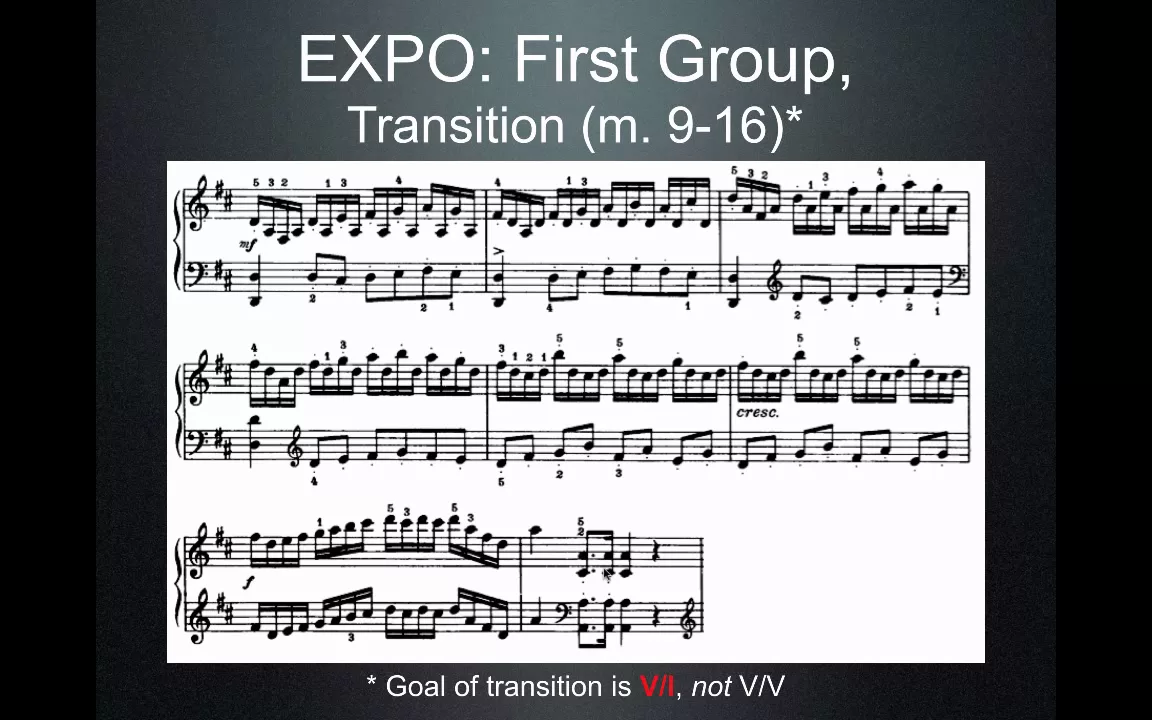
Sonata Form Explained: Haydn Piano Sonata in D Major, Mvt. 1
@ScottWatsonMusic
42.7K views•2015-05-21

Mozart's Musical Dice Game Explained: History, Rules, & Fun
@webpianoacademy
5K views•2023-03-13

Understanding Diatonic 7th Chords in Major Keys | Music Theory Tutorial
@GracieTerzian
54.7K views•2022-03-02
Understanding John Coltrane's Giant Steps: A Music Theory Analysis
@Vox
10.4M views•2018-11-12
Related Study Plans & Knowledge Roadmaps
Structured learning paths in Music Theory