





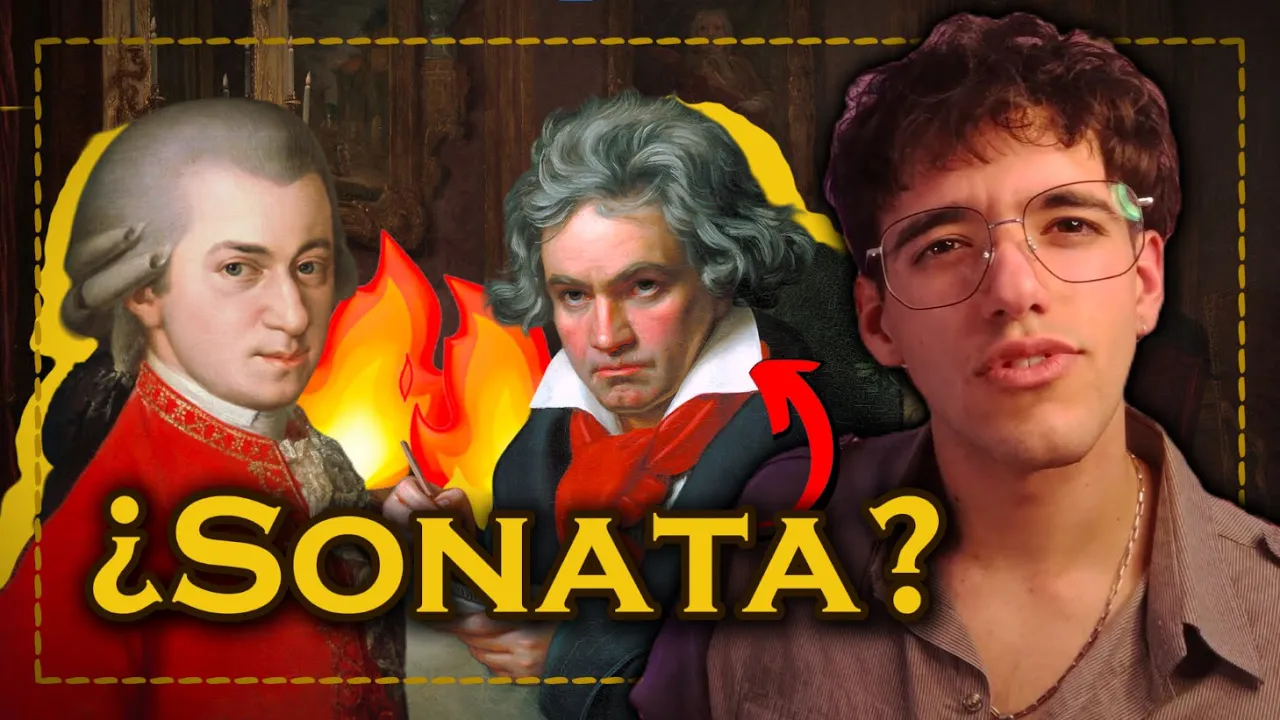






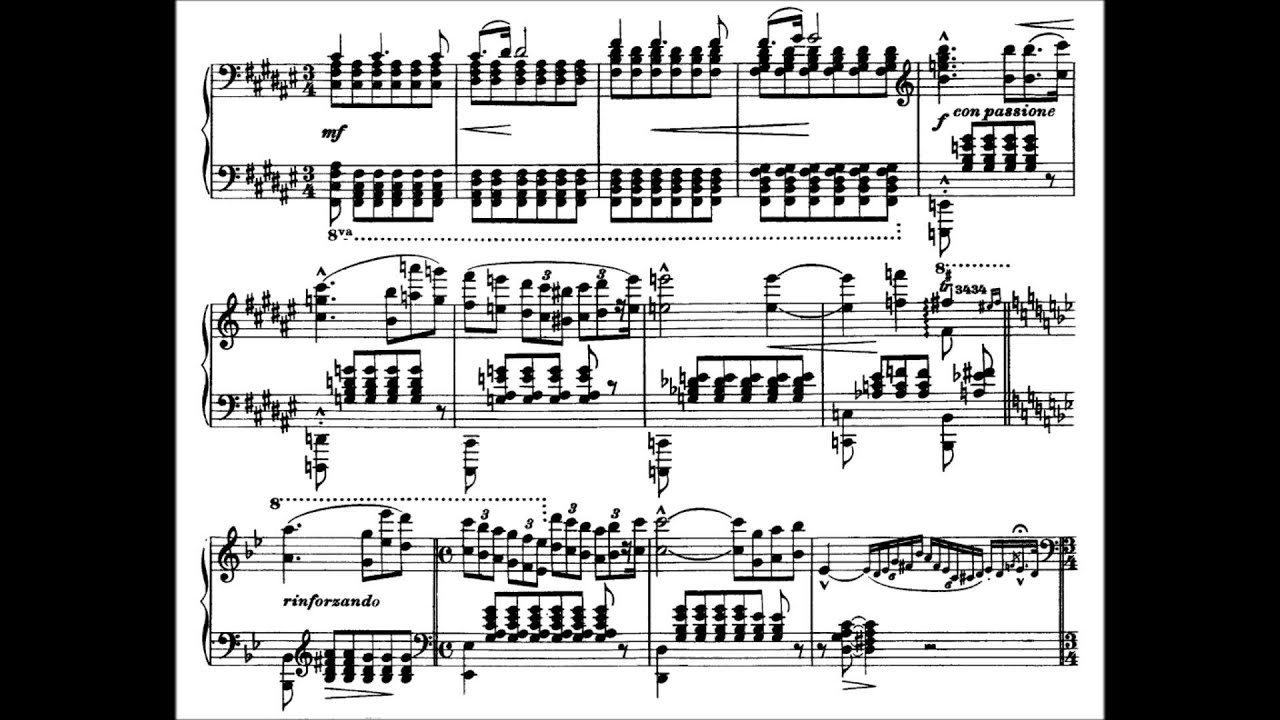
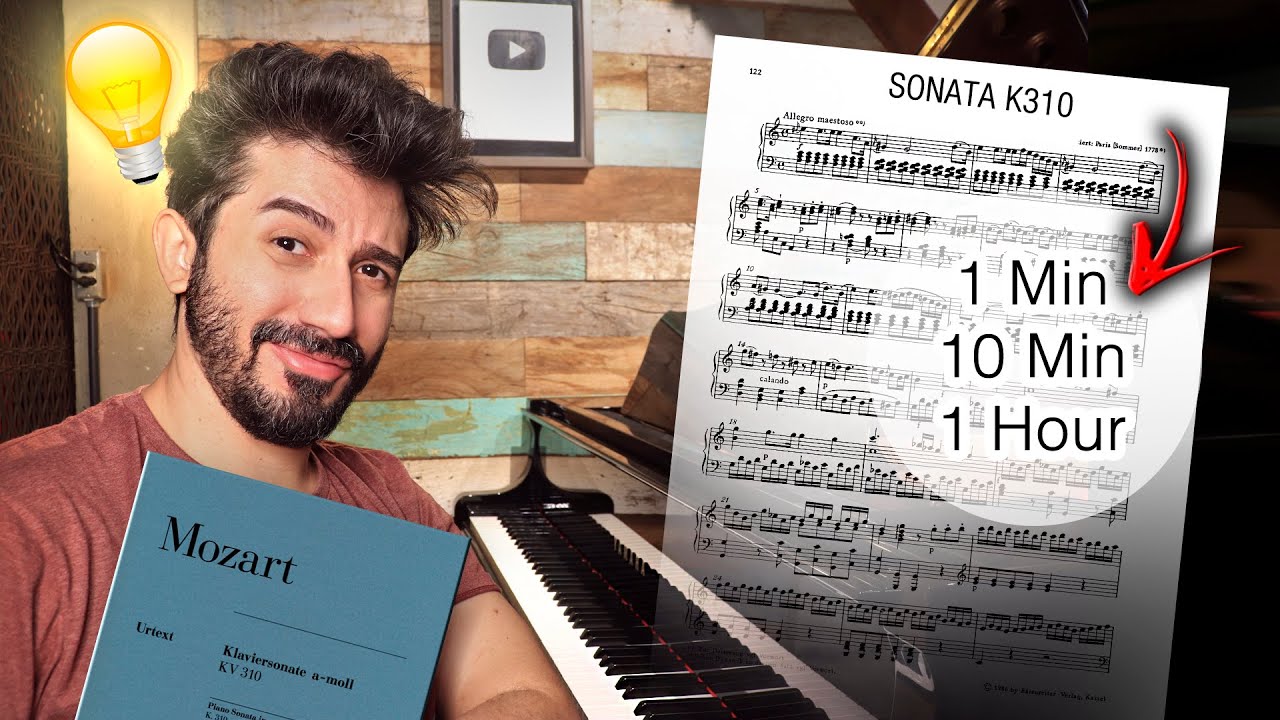
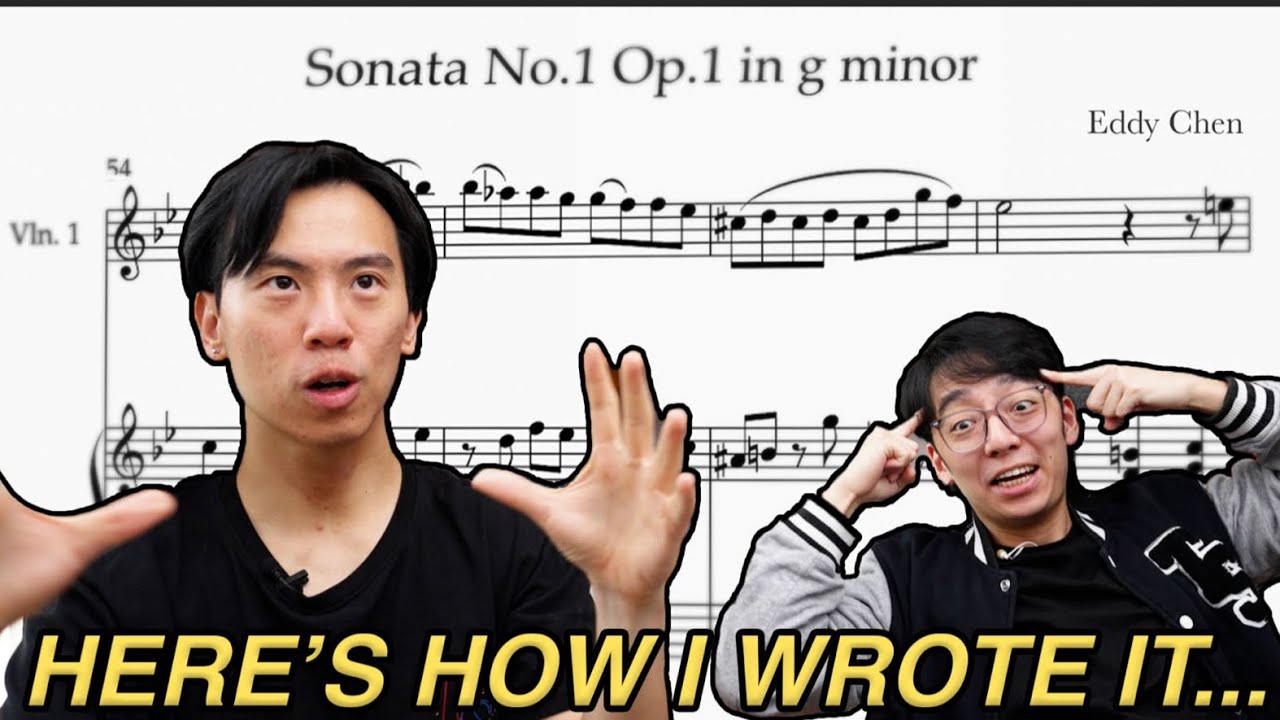
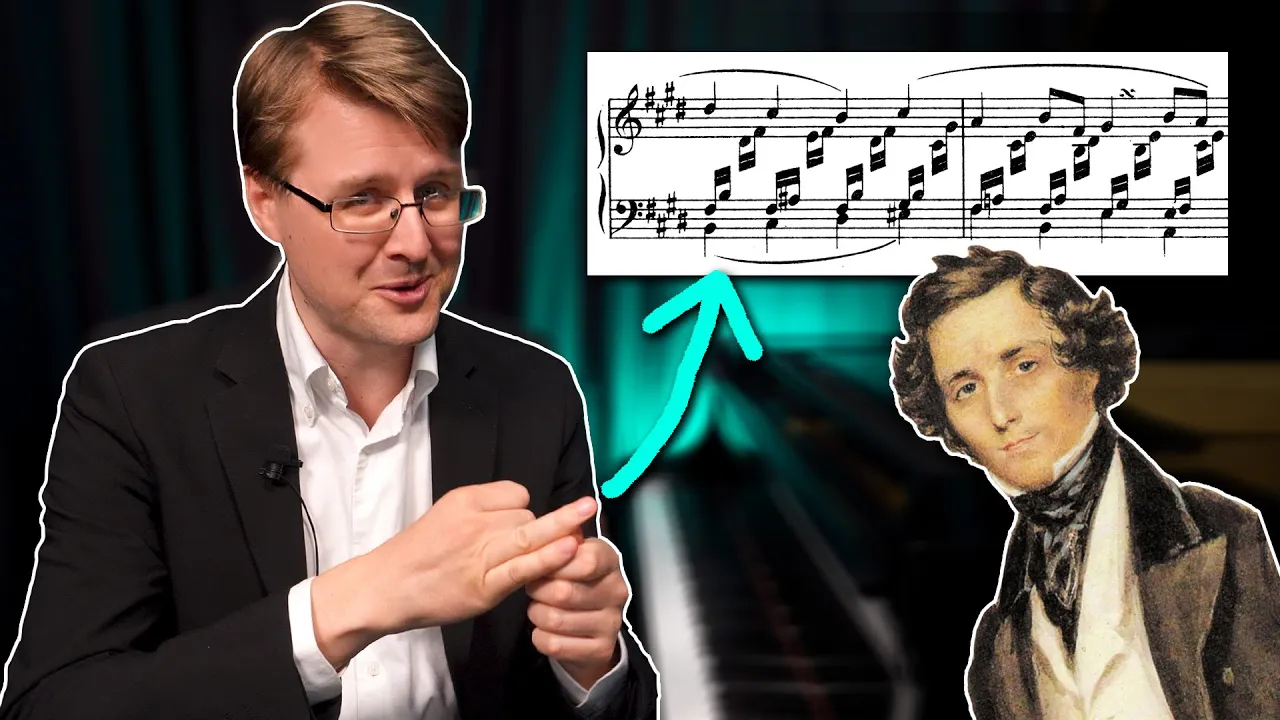


Sonata form is a musical structure that evolved from Baroque single-movement works into the multi-movement Classical era compositions of Mozart, Haydn, and Beethoven, and continues to influence music today. It follows an ABC structure: the Exposition introduces themes (first theme in tonic key, second theme in dominant key), the Development freely manipulates these themes through key changes and fragments, and the Recapitulation returns themes in the tonic key to resolve the musical journey. While this form creates expectations that composers can fulfill or creatively subvert (as Mozart did in his C major Sonata K.545), it remains a fundamental organizational principle across sonatas, chamber music, symphonies, and even pop songs.
Sonata Form Explained: Classical Music Structure (Mozart K545)
Added:Basic music theory notation and terminology, including the ability to read treble and bass clef.
The concept of musical keys, particularly the relationship between the tonic (home key) and the dominant (fifth scale degree).
An understanding of basic cadences (such as perfect authentic and half cadences) which signal structural boundaries in classical music.
Familiarity with the general stylistic characteristics of the Classical Era (e.g., clarity, symmetry, and phrase balance).
Analysis of more complex or atypical sonata-form movements, such as those in minor keys or works by Ludwig van Beethoven that stretch formal boundaries.
Introduction to Hepokoski and Darcy's 'Sonata Theory', which categorizes different types and deformations of sonata form.
Exploration of related classical structures, such as Sonata-Rondo form, Theme and Variations, and the Double-Exposition Sonata Form used in concertos.
Practical application of structural analysis to musical performance, understanding how identifying the exposition, development, and recapitulation informs interpretive decisions.
Study of the development of sonata form into the Romantic era, observing how composers like Brahms and Schubert expanded harmonic relationships within the structure.
130.6K views3.1Klikes9:54Original Release: 2013-08-07
[Music] Welcome. I'm Robert Estard here at virtual sheetmusic.com and living pianos.com with a very important video.
This subject today is what is a sonata?
Ah boy, this is a very very significant subject that I'm going to try to consolidate down for you to its essence because we could you could actually take classes you could study take a course for a year and what is a sonata? One of the most influential uh musical forms of all time arguably. So what we're going to talk about today is one aspect of what a sonata is. A sonata basically evolved from the Baroque era which were single movement works. What we're going to talk about today is the classical era sonata Mozart Heayen and later Beethoven. This form was multi-movement works. But the sonata form is what I want to talk about today. Typically the first movement of a sonata has a certain structure sometimes referred to as a sonata allegro form because the first movement is usually fast or allegro.
What is the sonata form and why is it so important? That's what we're going to talk about here. Well, first of all, the fact of the matter is even though the sonata form was prevalent during the classical era that I referred to, composers in the romantic era and into the 20th century and up till today still write sonatas. And in fact, not just sonatas have sonata form, but chamber music trios and and um quartets and symphonies all have this form. So what's so special about it? Well, even pop songs adhere to the sonata form to one extent or another. In the very simplest terms, you could call it an aba. It's a little more complex than that. But when I talk of aba, I mean something happens, you have a musical statement, you have something different, and then you have the first statement again. Well, that's very simple, but a sonata is a little more complex. And let's get into the the nuts and bolts.
And for this particular discussion, I'm going to bring up the famous Mozart sonata in C major.
K545 because most of you probably know it. Well, the sonata form, yes, is a kind of an ABA, but not exactly. It's more of an ABC form. The A is called the exposition. Why is it called that? Well, it exposes the themes. Typically, you start with one theme, which is the theme I just played. The sonata is in C major, and the theme is in C major. No surprises there. Well, after a while, the theme ends and you get to the second theme. The second theme is almost always in another key, typically the dominant.
The dominant is the key of the five. So, if you're in C major for your exposition, first theme. The second theme will usually be in the dominant, which is G major if it was in C major to begin with. So, let's see where that happens here.
[Music] [Applause] [Music] [Applause] [Music] [Music] Sounded like we ended. Yes. In fact, the first theme ended and now we have a brand new theme in G major.
[Music] [Applause] [Music] [Applause] And we just ended the entire exposition section and we're still in G major. And guess what happens now? Well, this happens in all sonatanas. It repeats back to the beginning and the entire exposition repeats. So, it's very easy to see where you are in the form because when you get to the repeat sign, that's the end of the exposition. So, then what happens?
Then comes the development. The development is a free use of themes one and themes two. They can do almost anything. They can go in different keys.
They can have little fragments. They they can develop in whatever ways the composer enjoyed developing the themes.
Now in Mozart and Heayen's time and earlier composers like Carl Philip Emanuel Bach and other huml and early composers the development was a shorter section later in the hands of Beethoven and certainly in the romantic composers like Schumann and later Brahms the development really expanded to be almost a whole symphonic section into itself.
So let's see what happens in this uh development section a little bit. But before we do, I want to talk about what comes after the development. How do you know when you come to the next section?
This is a great question. After the development comes the recapitulation. Now that's a big word, but recapitulation just means a return to the beginning. Remember at the very beginning of this video, I talked about the fact that it's kind of like an ABA. Well, the return to the beginning, theme one will be in your tonic and theme two instead of modulating to the dominant a key the five notes higher, it stays in the tonic. So, the piece ends in the tonic. But now, funny thing that I chose the K5 45 because he breaks the rules right out of the gate. And this is something you might want to be aware of.
It's not like somebody wrote a book, how to write a sonata, and composers for hundreds of years decided to read this book and say, "This is how I have to write pieces." In fact, the sonata form works because it has a way of being digestible. Themes are introduced and reinforced by repeating them. Then they develop and just at the point where you feel lost, ah, they come back again and it's refreshing to to enjoy them again.
However, in this particular sonata, Mozart does not return the theme one in C major. He doesn't have a return of theme one at all, except a quasi return at the end of the development section in the subdominant in F major. That's right. You'll hear the theme and which still isn't a recapitulation.
It's not till the second subject that you get the return, the true [Music] recapitulation. Now, why is that? Why is the recapitulation second theme in the tonic instead of the dominant? Well, it's so the piece ends in the key it began in. So, listen to the development going into the recapitulation of the Mozart Sonata K545. Hey. Hey.
[Music] [Applause] [Music] [Applause] [Music] [Applause] [Music] [Applause] Hey.
[Music] [Applause] Heat. Heat.
[Music] [Applause] [Music] and yes, it ends in the key it began in C major. So yes, Mozart broke the rules.
What did he just break the rules in this piece? No. And that's what makes music so great. It's that it's not a bunch of rules. It's just expectations set up structures you expect and the little twists and turns like a great novel or a Hitchcock movie. That's what keeps you in the edge of your seat wondering what's going to happen next because you set up expectations as a composer just to keep the audience captivated. And that's the genius of a Mozart and why a Mozart sonata is so compelling to listen to and a Hummel sonata maybe not so much but maybe worth listening to. Anyway, thanks for joining me. Robert Esn here at virtual sheetmusic.com and living pianos.com. I'll see you next time.
[Music] [Music]
Up Next
3:53
Solarstone sonata: Classical Structure in Progressive Trance
@blackholerecordings
3.6K views•2025-05-31

10:20
Mozart's Musical Dice Game Explained: History, Rules, & Fun
@webpianoacademy
5K views•2023-03-13

47:36
Understanding Diatonic 7th Chords in Major Keys | Music Theory Tutorial
@GracieTerzian
54.7K views•2022-03-02
10:49
Understanding John Coltrane's Giant Steps: A Music Theory Analysis
@Vox
10.4M views•2018-11-12
Related Study Plans & Knowledge Roadmaps
Structured learning paths in Music Theory
music-theory
Composing Galant Music: Partimento & Schemata
01Foundations of Figured Bass and Keyboard Harmony
02The Rule of the Octave (Regola dell'Ottava)
03Galant Schemata: The Building Blocks of Form
+ 2 more learning modules
30h5 modules
Explore Roadmap
music-theory
Decoding Overtone Series: Tuning & Drone Music
01Acoustic Foundations: The Physics of the Overtone Series
02Tuning Systems: Equal Temperament vs. Just Intonation
03Microtonality and Spectralism: Beyond Standard Pitches
+ 2 more learning modules
24h5 modules
Explore Roadmap
music-theory
Impressionist Harmony: Scales, Planing & RPGs
01Foundational Music Theory: Keys, Intervals, and Seventh Chords
02Impressionist Color: Chord Planing and Parallel Harmony
03Whimsical Textures: Pentatonic Cascades and Whole-Tone Scales
+ 1 more learning modules
14h4 modules
Explore Roadmap
music-theory
Negative Harmony: Axis Reflection in Indie Pop
01Music Theory Foundations: Scales, Intervals, and Triads
02Functional Harmony and the Circle of Fifths
03Demystifying the Negative Harmony Axis Reflection
+ 2 more learning modules
16h5 modules
Explore Roadmap