Electronic music producer Solarstone demonstrates how the traditional classical sonata form (fast-slow-fast structure) can be adapted for modern electronic music production, creating a progressive trance piece that maintains acoustic authenticity through hardware synthesizers while honoring the sonata's structured ensemble tradition.
Solarstone sonata: Classical Structure in Progressive Trance
Added:Deep Dive
The structural components of Classical Sonata-Allegro form, specifically the Exposition, Development, and Recapitulation.
The Classical Period | Music History Video Lesson
312.4K
The first movement of Classical sonatas follows sonata allegro form, which developed from the rounded binary form of the Baroque period. This form has an ABA outline: the exposition contains a first theme in the primary key, a second theme in the dominant or relative major key, and a conclusion back in the tonic key. The entire exposition repeats before entering the development section, where themes are manipulated and played through various keys. The movement concludes with the recapitulation, which is harmonically altered to land on a final cadence in the home key. Development and recapitulation sections are repeated in Classical sonata allegro form.
Click to watch →
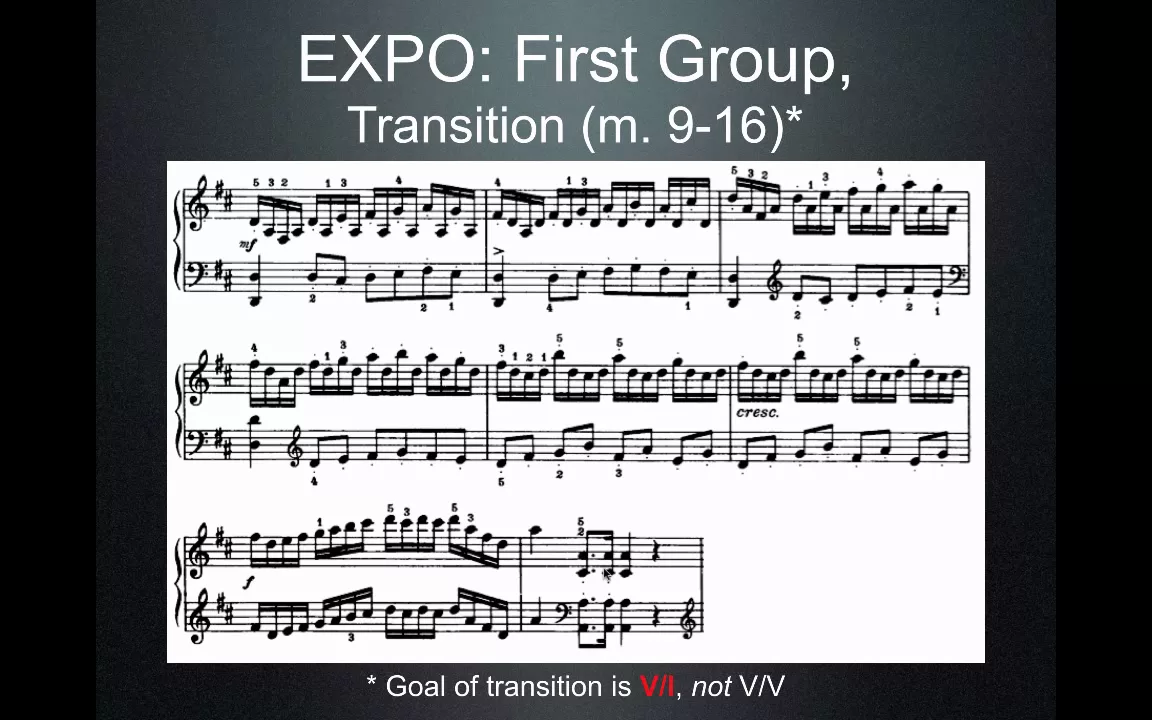
Sonata Form Explained: Haydn Piano Sonata in D Major, Mvt. 1
42.7K
Sonata-allegro form is a fundamental Western musical structure consisting of three main sections: the exposition (presenting two contrasting themes in related keys), the development (exploring and manipulating thematic material through harmonic tension and modulation), and the recapitulation (returning the opening themes in the tonic key); this form creates dramatic narrative through the tension-release pattern, where the principal theme represents the protagonist and the secondary theme the antagonist, ultimately resolving together in the tonic key.
Click to watch →
When Metal Meets Beethoven: Classical Composer Reacts to Tina S. | The Daily Doug (Episode 354)
175.8K
Sonata form consists of three main sections. The exposition presents multiple themes at the beginning. The development section restates and develops these themes, taking them apart and playing with them. The recapitulation restates the original material. This creates a ternary form (A-B-A) where the B section is more developmental based on the initial themes. The third movement of the Moonlight Sonata features fast arpeggios, strong accents, and demands expert playing with stamina.
Click to watch →

Лекция 69. Ранняя соната. И.С. Бах. | Композитор Иван Соколов о музыке.
8.3K
Sonata form consists of three essential sections: Exposition introduces main themes in the tonic key; Development explores themes through modulation and transformation; Recapitulation returns themes in the home key. While sonata form became standard in the Classical period, earlier works like Bach's suites employed similar structural principles. The form provides a coherent framework for musical argumentation, allowing composers to present, challenge, and resolve musical ideas systematically.
Click to watch →

Sonata Form Explained: Classical Music Structure (Mozart K545)
130.6K
Sonata form consists of three main sections. The exposition introduces themes: first theme in tonic key, second theme in dominant key, followed by a repeat sign marking the end. The development section freely manipulates themes through key changes and fragments, creating tension. The recapitulation returns themes in the tonic key, resolving the tonal journey. Mozart's Sonata in C major (K.545) demonstrates how composers can creatively break rules while maintaining structural integrity, showing that sonata form works through expectation-setting rather than rigid rules.
Click to watch →
Deep Dive
The defining characteristics and arrangement conventions of Progressive Trance music, including builds, breakdowns, and drops.
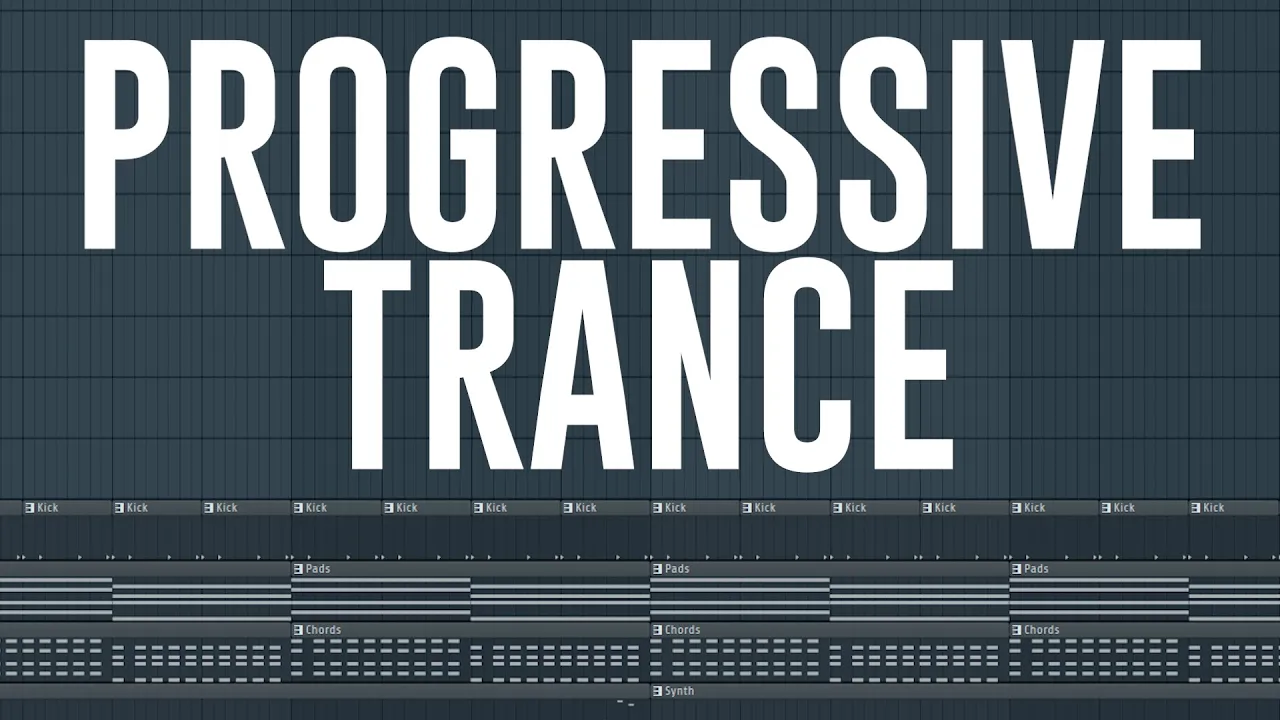
How To Make Progressive Trance!! - FL Studio Tutorial (+FREE FLP)
4.6K
Progressive trance tracks follow a specific structural progression from intro through drops. For the second half of the drop, add repetitive leads panned across the stereo field with cut formations to intensify at the drop's end. The intro and buildup section starts with pads and intra-melodies, then adds bass and plucks to build tension. Include buildup drums like rides and downlifters to create rhythmic anticipation. This structural approach creates the characteristic tension-release pattern essential to progressive trance, guiding listeners through a journey of building and releasing energy.
Click to watch →
![A State of Trance Episode 1003 [@astateoftrance]](https://i.ytimg.com/vi/_VYA0qJ59RY/maxresdefault.jpg)
A State of Trance Episode 1003 [@astateoftrance]
360.3K
Progressive trance is a subgenre characterized by gradual musical development, atmospheric builds, and emotional progression. The State of Trance Progressive Pick segment highlights tracks that exemplify these characteristics, showcasing the genre's focus on building tension and release through musical arrangement.
Click to watch →

THE TRANCE EMPIRE episode 357 with Rodman
1.7K
The host describes Progressive trance as 'nice and Progressive thumping chunky and building' music. This genre is characterized by gradual musical development, building tension and release through layered instrumentation, and maintaining a steady, driving beat that creates an immersive atmosphere. The host promotes an exclusive 2-hour Progressive mix featuring favorite tracks from the Trance Empire over recent months, demonstrating how Progressive trance creates emotional journeys through music.
Click to watch →
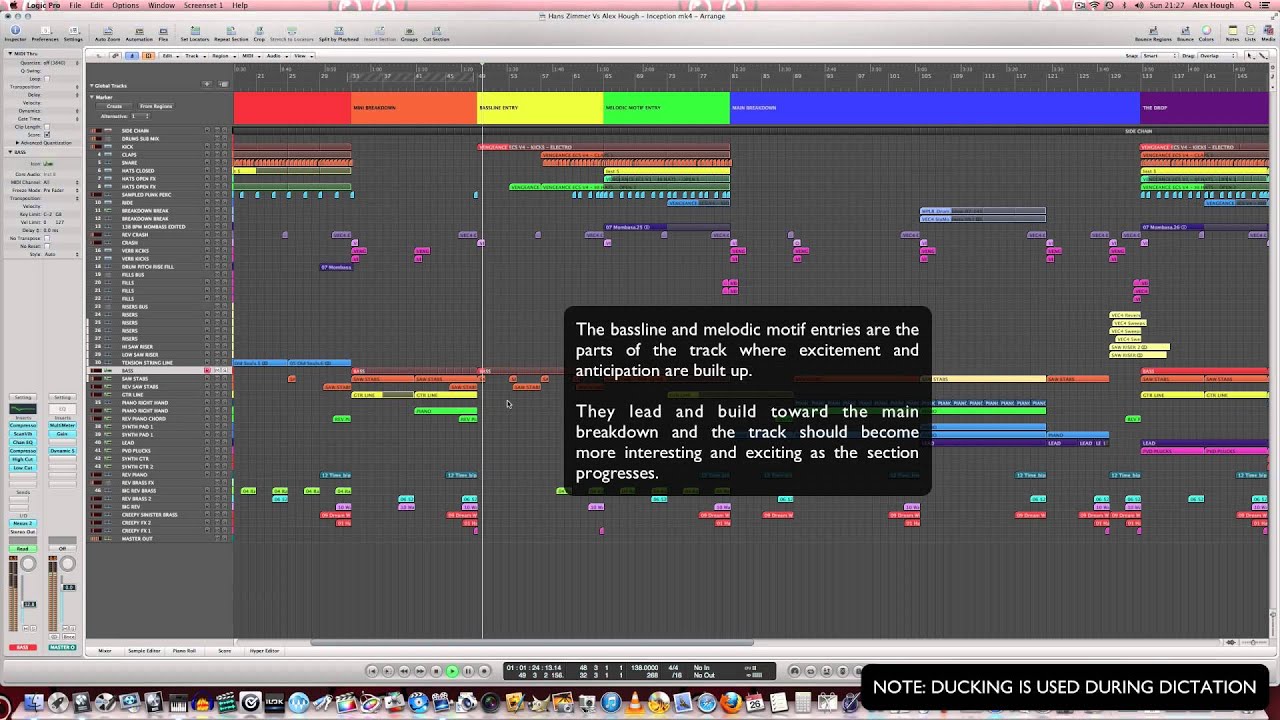
Introduction to trance structure - Hans Zimmer vs Alex Hough 'Inception Time'
22.5K
Trance tracks follow a structured format including DJ Intro, mini breakdown, baseline entry, melodic motif entry, main breakdown, drop, drop outro, outro with mini breakdown, beginning of the end section, baseline exit, and DJ outro, where the main breakdown serves as the most important section for building tension before the drop, and the DJ Intro and Outro sections are designed to facilitate smooth mixing for DJs.
Click to watch →
![A State of Trance Episode 995 [@astateoftrance]](https://i.ytimg.com/vi/uuzrLwoJet4/maxresdefault.jpg)
A State of Trance Episode 995 [@astateoftrance]
264K
Progressive trance is characterized by building musical tension through gradual layering of elements, steady rhythmic patterns, and emotional vocal elements. The genre emphasizes atmospheric soundscapes, melodic progression, and emotional depth. Artists like Avira and others contribute to this genre by creating tracks that evolve over time, creating an immersive listening experience that takes the audience on a musical journey.
Click to watch →
Deep Dive
Fundamentals of analog synthesis, including how oscillators, filters, and envelopes are used to create electronic timbres.
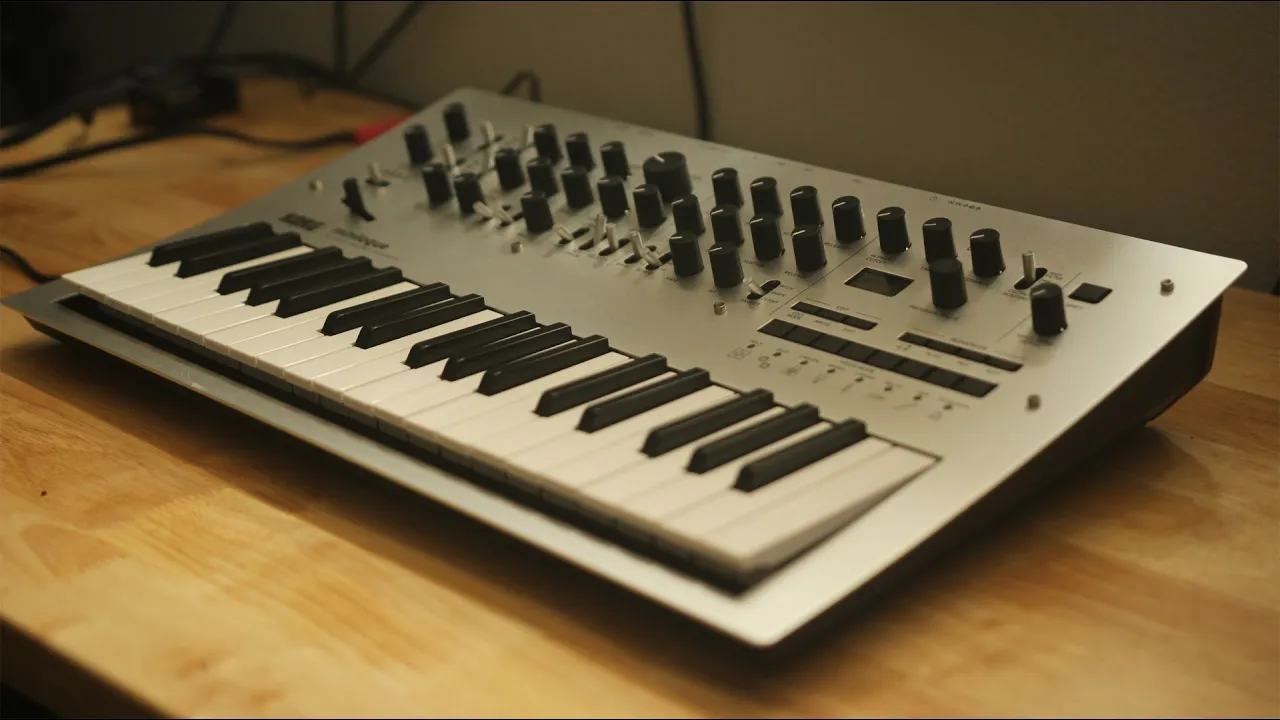
This is STILL the perfect first synthesizer...
95.4K
This comprehensive section covers the fundamental building blocks of analog subtractive synthesis. It begins with the Mini Log's dual Voltage-Controlled Oscillators (VCOs), each offering sawtooth, triangle, and square waveforms with wave shaping modulation that dramatically transforms timbre. The section then explores low-pass filter systems with resonance, explaining how cutoff frequency and pole count (4-pole vs 2-pole) determine frequency response steepness. Key tracking automatically adjusts filter response across the keyboard for natural timbre. Finally, ADSR envelope generators control amplitude and filter cutoff over time, with attack, decay, sustain, and release stages shaping sound evolution. This foundational knowledge enables understanding of how all synthesizer sounds are constructed from these core elements.
Click to watch →
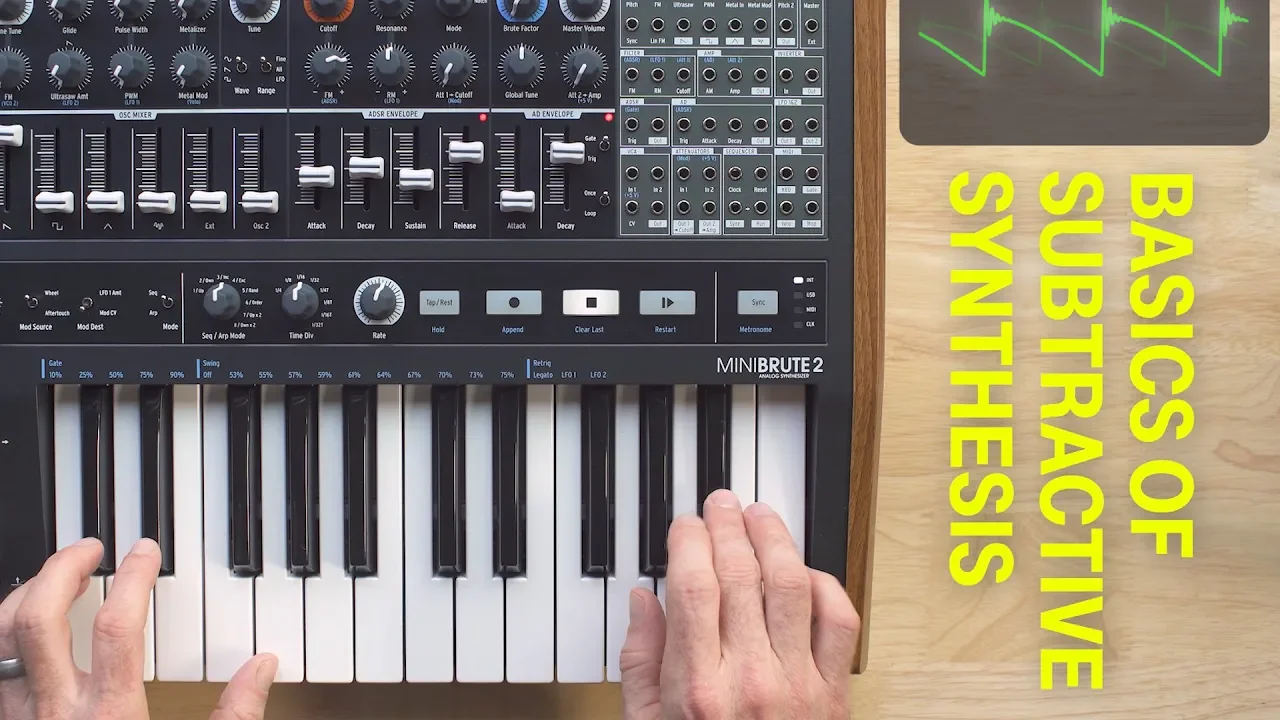
Basics of Subtractive Synthesis With the Arturia MiniBrute 2
106.7K
Subtractive synthesis creates sounds by starting with harmonically rich oscillators and removing frequencies. Oscillators generate waveforms: sine (smooth, least harmonics), triangle (slight buzz), square (more harmonics), and sawtooth (most harmonics, buzzy). Filters remove specific frequencies: low-pass removes highs, band-pass isolates mid-range, high-pass removes lows. Cutoff frequency determines where filtering begins, while resonance adds a resonant peak. Envelopes shape sound evolution: attack controls onset, decay brings sound down, sustain holds level, and release controls fade-out. Envelopes can modulate both volume and filter cutoff, enabling dynamic timbre changes. These three components form the foundation of subtractive sound design.
Click to watch →
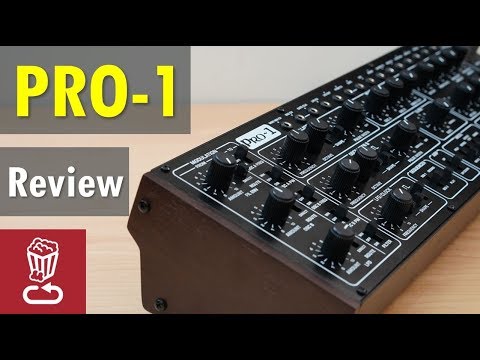
Review & tutorial: Behringer PRO-1 // 10 Patch ideas // Comparison vs Neutron, Crave and others
386K
This comprehensive section covers the core components of analog subtractive synthesis. The Behringer Pro-1 features two oscillators with distinct capabilities: Oscillator A offers oscillator sync (resetting to Oscillator B's frequency for sync sounds) and soft/square waveforms; Oscillator B provides low-frequency mode for modulation and variable pulse width. The glide function offers Normal mode (always glides between notes) and Auto mode (glides only during legato playing). The mixer section provides independent level control for each oscillator plus noise input. The filter system employs a 24 dB/octave low-pass filter with resonance control that can self-oscillate, with keyboard tracking ensuring appropriate response across the keyboard range. Both filter and VCA envelopes follow the standard ADSR structure (Attack, Decay, Sustain, Release), enabling precise control over spectral content and amplitude dynamics.
Click to watch →

Аналоговый синтез звука (видеоурок)
74.1K
Analog synthesizers generate sound through electrical voltages in their circuitry, using interconnected modules including oscillators (VCOs) that produce waveforms like sine, triangle, and sawtooth; filters that shape frequency content; envelope generators that control how sound parameters change over time (attack, decay, sustain, release); and LFOs that modulate parameters at low frequencies. The sound path typically flows from oscillators through mixer, filter, envelope generator, and finally to the VCA (voltage-controlled amplifier) for output.
Click to watch →
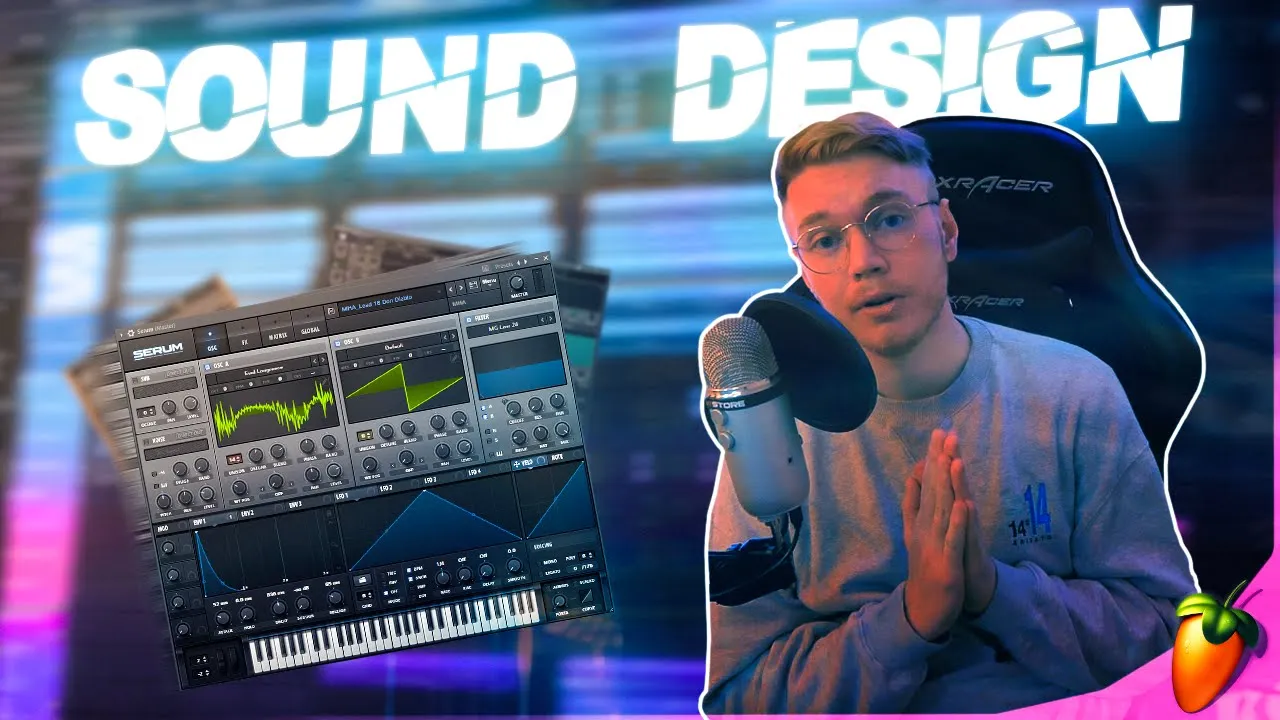
How To Make ANY Sound You Want (Serum Sound Design)
487.1K
This segment covers the three fundamental components of subtractive synthesis. Oscillators generate raw waveforms (saw, square, sine) and can be layered or modulated. Filters (specifically MG Low 24 in this demo) shape frequency content by cutting or boosting specific ranges, with resonance adding character. Envelopes control how parameters evolve over time, with Envelope 1 typically controlling amplitude. The video demonstrates routing these components together—applying filters to oscillators and noise, and using envelopes to shape sound evolution. These interconnected systems form the backbone of synthesizer sound design.
Click to watch →
Deep Dive
Basic music theory concepts regarding harmonic progression, tension, and resolution.
El Riff Millonario (parte 1) Master Class de Jesús Amaya Río IV...
903
Music is fundamentally built on tension and resolution, or instability and stability. The tonic (first note of the scale) represents stability and rest, while other notes create varying degrees of tension. The dominant creates the strongest tension, which resolves to the tonic. The subdominant (fourth note) creates medium tension. These three functions—tonic, subdominant, and dominant—work together to create musical structure and emotional impact. In any musical piece, these functions appear in various combinations, creating the narrative arc of the music. Without resolution, music would feel incomplete and unsatisfying.
Click to watch →
Беловежская пуща на гитаре - подробный разбор и табы!
22.8K
This comprehensive section covers the fundamental principles of harmonic progression in music. The instructor explains how chords function as tonic (home), subdominant (departure), and dominant (maximum tension). Key concepts include: chord inversions creating bass movement, parallel minor relationships between major and minor chords, and the dominant seventh chord as the 'evil chord' that creates maximum tension requiring resolution. The instructor demonstrates how chromatic bass movement and half-step tensions create anticipation, while ninth chords add sophistication. The section emphasizes that understanding these harmonic functions is essential for creating compelling musical progressions that guide listeners through tension and release.
Click to watch →

Aula 01 Harmonia - Campo Harmônico
101
The dominant seventh chord (V7) creates tension that demands resolution to the tonic chord. This is a fundamental principle of tonal music. The basic harmonic progression moves from tonic (I) to subdominant (IV) to dominant (V), creating a journey of tension and release. This progression prevents music from becoming static and creates emotional movement. The resolution always returns to the tonic chord, completing the musical cycle.
Click to watch →

Tension and Resolution in Music
9.5K
Tension and resolution is the essence of all music, particularly important in blues. There are three ways to create tension and resolution: harmonically, rhythmically, and dynamically. Harmonically, tension is created by establishing a harmonic center (like an A chord) and moving away from it (like to a D chord), then returning to resolve. Different chords create different degrees of tension, with the 5th chord (particularly 57th chords like E7th) creating the most tension and practically begging to return to the root chord. Within a key's major scale, specific notes like the 4th chord and 5th note create tension that makes listeners want to return to the root note.
Click to watch →

Entiende la ARMONÍA en 40 minutos 🎸 Así funcionan los ACORDES en la guitarra
8.5K
Music creates emotional impact through the alternation of tension and resolution. Tension is created by dissonant chords (like dominant 7ths), while resolution occurs when these chords resolve to consonant chords. The V-I progression (dominant to tonic) is the fundamental resolution pattern in tonal music. The harmonic minor scale raises the seventh degree to create a dominant seventh chord. For La minor: La, Si, Do, Re, Mi, Fa, Sol sostenido, La. This raised seventh creates a dominant seventh chord (Mi7) that generates tension and resolves to La minor, creating the characteristic sound of minor keys.
Click to watch →
Prerequisite Knowledge
- Concept 01The structural components of Classical Sonata-Allegro form, specifically the Exposition, Development, and Recapitulation.
- Concept 02The defining characteristics and arrangement conventions of Progressive Trance music, including builds, breakdowns, and drops.
- Concept 03Fundamentals of analog synthesis, including how oscillators, filters, and envelopes are used to create electronic timbres.
- Concept 04Basic music theory concepts regarding harmonic progression, tension, and resolution.
Subsequent Learning
- Step 01Applying classical composition frameworks (like Sonata, Fugue, or Theme and Variations) to modern DAW-based electronic music production.
- Step 02In-depth study of neo-classical electronic music and other artists who bridge classical and electronic genres.
- Step 03Advanced sound design techniques using hardware and software analog synthesizers to evoke acoustic-like emotional depth.
- Step 04Critical analysis of hybrid musical arrangements to identify underlying traditional formal architectures in contemporary electronic tracks.
Heat Intro
Heat Emphasis
Heat Repeat
Heat Focus
Heat Peak
Heat Echo
Heat Final
Closure
Heat Intro
0:10Playing Section
- 1
The video starts with the concept of heat.
- 2
It establishes the central theme of the content.
- 3
The initial repetition emphasizes the core topic.
Formal Reductionism and the Functional Divergence of Trance
Critics and musicologists often argue that mapping classical 'sonata form' onto progressive trance is a forced academic exercise that oversimplifies both genres. True sonata-allegro form relies on complex tonal relationships, key modulations, and rigorous thematic development. Progressive trance, by contrast, is functionally designed for the dancefloor, relying on loop-based repetition, modal harmony, and linear tension-and-release mechanics (such as the breakdown and drop). Skeptics suggest that labeling trance arrangements as 'sonatas' mistakes basic additive arrangement techniques for genuine classical development, projecting an intellectualized structure onto music fundamentally meant for somatic, hypnotic experiences.
Deep Dive
Applying classical composition frameworks (like Sonata, Fugue, or Theme and Variations) to modern DAW-based electronic music production.

Tutorial Mozart Classical Crossover Logic Pro X Template EDM Hard Rock
140
Professional music production templates can be constructed by analyzing classical compositions and breaking them down into individual instrument parts. Using Mozart's Piano Quartet as a source, producers extract piano lines and transform them into modern production elements including baseline, pads, and synth lines. This approach demonstrates how classical music theory and harmonic structures can inform contemporary electronic music production, bridging traditional composition techniques with modern DAW-based workflows.
Click to watch →
![Solarstone - sonata 12" [BLACK HOLE RECORDINGS]](https://i.ytimg.com/vi/qUMBaUyMntE/maxresdefault.jpg)
Solarstone - sonata 12" [BLACK HOLE RECORDINGS]
548
Electronic music producer Solarstone demonstrates how the traditional classical sonata form (structured fast-slow-fast arrangement) can be successfully adapted to modern electronic music production, creating a progressive trance piece that maintains acoustic authenticity through hardware synthesizers while bridging classical musical influence with electronic innovation.
Click to watch →
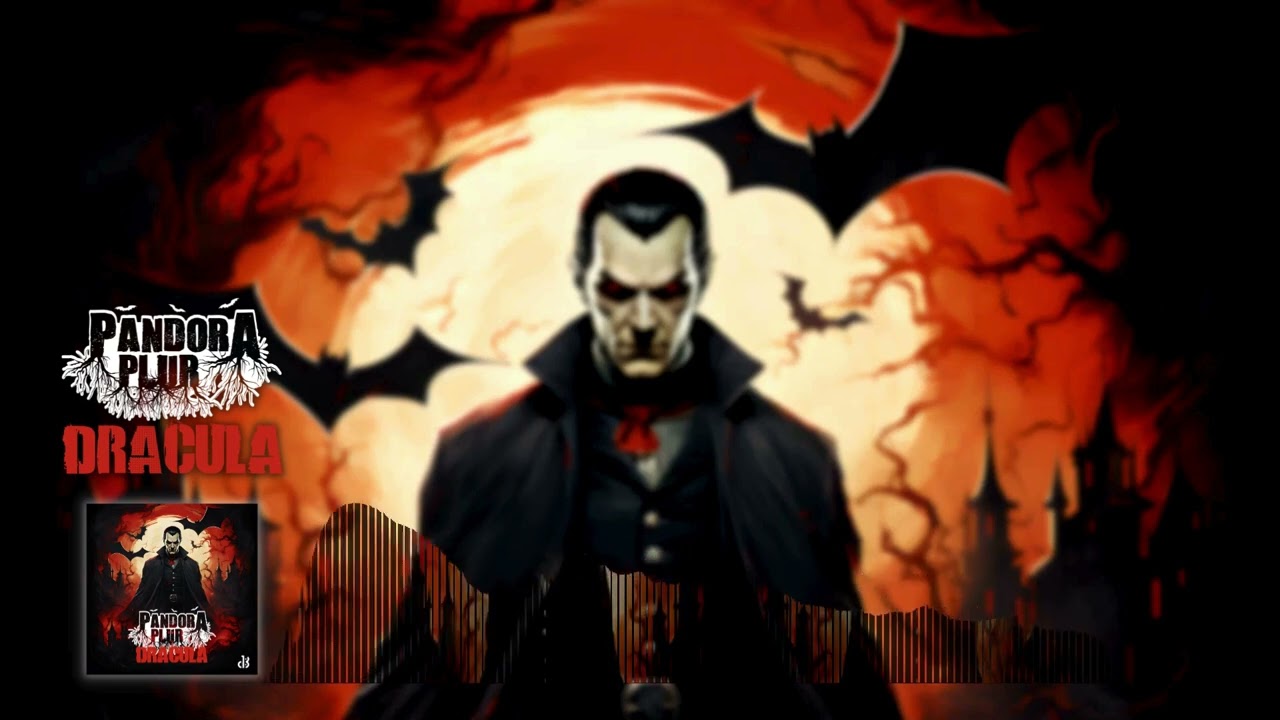
Pandora Plur - Drácula (Toccata and Fugue//Original Mix) ✯ 1dB Records ✯
117
This video showcases Pandora Plur's electronic music production 'Drácula (Toccata and Fugue//Original Mix)' released on 1dB Records in January 2024, demonstrating how modern electronic music can reinterpret classical musical structures like the Toccata and Fugue form through contemporary production techniques.
Click to watch →
A Complete Introduction to Musical Form
199.3K
Classical music employs several fundamental structural forms including Sonata Form (the most important form with exposition, development, and recapitulation), Minuet and Trio (a dance movement with contrasting sections), Scherzo (a more dramatic alternative to minuet), Rondo Form (where a main theme recurs repeatedly with contrasting episodes), Theme and Variations (where a theme is restated with modifications), and Fugue/Fugato (characterized by imitative counterpoint); these forms organize the typical four-movement structure of sonatas, symphonies, and concertos, creating emotional journeys through carefully sequenced contrasts between dramatic, slow, dance-like, and lively movements.
Click to watch →

Masterclass | Prayer - Integrating Classic Musical Practice into Music Production
1.7K
This comprehensive section covers six fundamental elements of classical music theory applied to electronic music production. Orchestration involves arranging instruments to add color and prevent listener boredom. Dynamics and velocity create natural-sounding performances. Musical texture types include monophonic (single line), homophonic (harmonies with melody), and polyphonic (multiple independent melodies). Development techniques encompass call-and-response (musical dialogue), imitation (repeating ideas across instruments), sequencing (replicating parts in different registers), octave doubling, and pedal notes (sustained notes creating tension). Harmony forms the foundation of compelling music, with key changes creating tension and resolution. Minimalist structure takes one simple idea and builds it into complex arrangements through gradual variation. These classical principles provide a framework for creating sophisticated electronic music.
Click to watch →
Deep Dive
In-depth study of neo-classical electronic music and other artists who bridge classical and electronic genres.
Undae Noctis (Waves of the Night) | Sonora Fluctus Movement I | Neoclassical Electronic Journey 2026
346
Neoclassical electronic music is a genre that combines the structural elements of classical composition with modern electronic production techniques, creating immersive soundscapes that prioritize continuous flow and emotional resonance over dramatic musical shifts.
Click to watch →
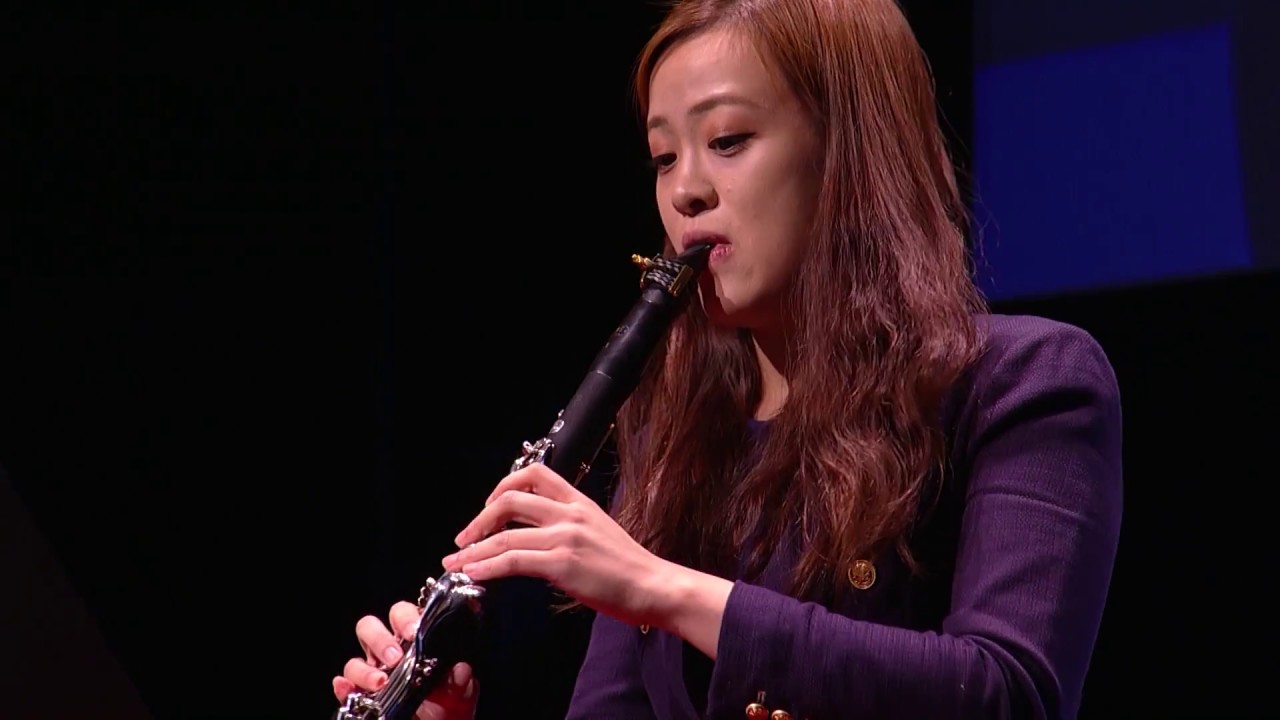
When classical music meets electronic music | Yu-Ting Cheng | TEDxSBU
35.4K
Classical musicians can make contemporary music more appealing to modern audiences by incorporating familiar electronic music elements, such as EDM beats and pop melodies, into classical compositions, thereby bridging the gap between traditional and contemporary musical cultures.
Click to watch →

BREATH OF FIRE by NOAH #BreathOfFire#NOAH#HardRave#HardTechno#NeoClassical
168
Neo-classical hard rave is a genre that fuses romantic classical music elements, such as concert flute melodies and dramatic musical arcs, with modern hard techno and rave rhythms, creating an emotional yet powerful peak-time experience designed for festivals and large stages.
Click to watch →

Washing Machine w/ Hoopa & Jax @ KURS Radio 02.04.26
463
Kuniyuki Takahashi is a Japanese producer known for his work in electronic music. His recent release is a two-track EP featuring approximately 13-14 minute tracks each, representing a departure from traditional electronic music conventions. The music moves away from typical house beats and dance elements, instead exploring neoclassical influences. This demonstrates how electronic music producers can experiment with extended formats and classical music influences while maintaining their electronic music identity, showing the genre's capacity for artistic experimentation.
Click to watch →

Henrik Schwarz - beats without borders | with Sarah Willis
1.2K
Successful collaboration between electronic and classical music requires producers to adapt their rhythmic precision expectations and learn traditional music notation, as classical musicians prioritize expressive timing over strict electronic beats, while both genres fundamentally rely on the same core principle of exchanging energy with audiences through musical performance.
Click to watch →
Deep Dive
Advanced sound design techniques using hardware and software analog synthesizers to evoke acoustic-like emotional depth.
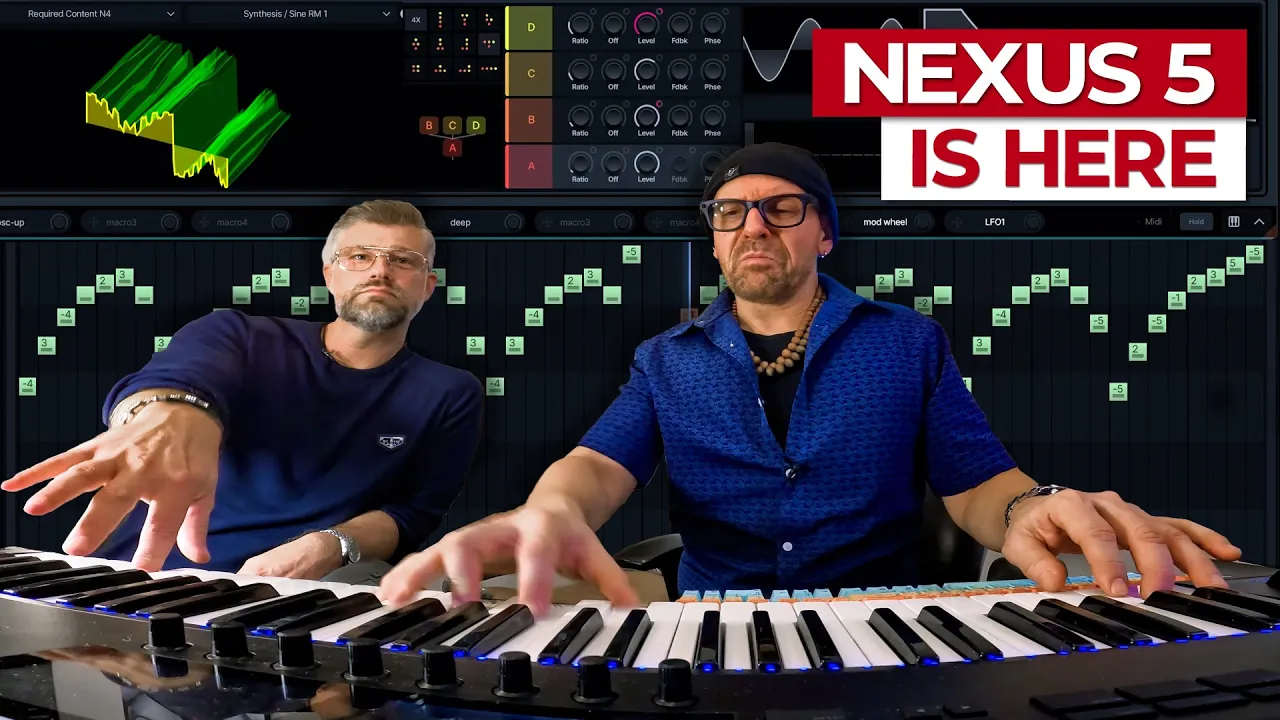
reFX Nexus 5 Is Here: World-First Exploration & Jam with the Creators!
202.1K
Advanced synthesis encompasses retro sampling (reducing bit/sample rates for vintage warmth), FM synthesis (using 11 algorithms for punchy bass sounds), and particle synthesis (creating dense evolving textures). Analog effect emulation includes Bucket Brigade Delay (warm vintage delay), analog ensemble (string machine textures), puncher (transient enhancement via allpass filters), vowel filters (vocal formant simulation), vinyl noise generators, and reverb. These techniques represent diverse approaches to sound design, from warm analog character to precise harmonic control, demonstrating the breadth of modern virtual instrument capabilities.
Click to watch →

Synth studio tour + synthesizer reviews / home music studio setup (10K subs special video)
50.3K
Legendary analog synthesizers like the Yamaha CS50 produce sounds described as 'alive and organic' with emotional depth. The CS50 features a suboscillator (LFO) with multiple wave shapes including noise, square, inverted saw, and sine, which can modulate VCO, VCF, and VCA simultaneously. It includes a ring modulator for bell-like tones, VCOs with pulse width modulation, noise with a unique 'breathing' character, and serial filters. The after-touch controls allow real-time modulation of VCF, VCO, and filter brilliance. This represents the pinnacle of analog sound design with its unique tonal characteristics.
Click to watch →
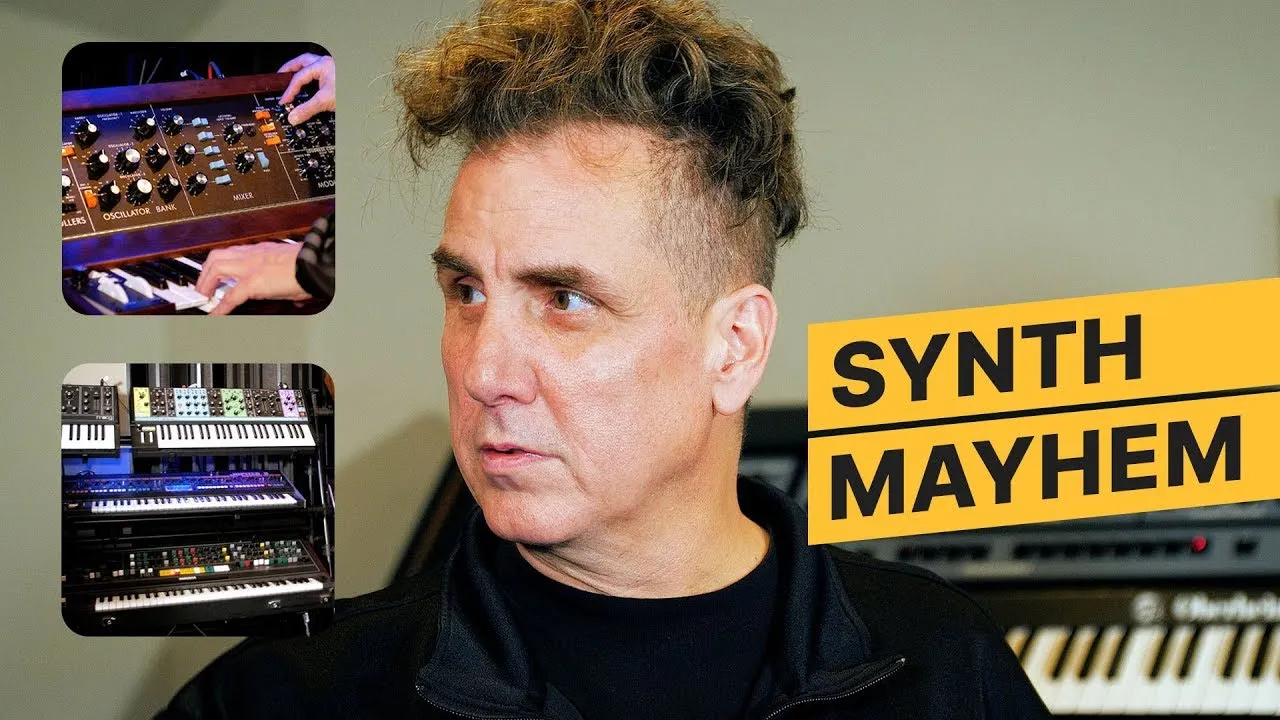
Mike Dean Building a Track Is Analog Synth Mayhem | The Process
491.3K
Professional analog synthesizer sound design emphasizes achieving a great foundational sound quality before adding effects, using techniques like arpeggiators for rhythmic patterns, poly aftertouch for expressive note control, and creative knob repurposing to optimize workflow; the key principle is that getting the good sound matters more than the synth itself, as demonstrated by producers who achieve remarkable results using accessible equipment rather than expensive vintage gear.
Click to watch →

This Fix Makes Software Synths Sound Real
68K
To make software synthesizers sound more like hardware, producers can apply three key techniques: harmonic distortion (adding specific harmonic structures to add warmth and character), noise sculpting (adding controlled noise that responds to the signal rather than being constant), and bit reduction (emulating the low-bit-rate behavior of vintage digital synths to create authentic quantization noise). These subtle processing chains help virtual synths achieve the weight, warmth, and placement qualities of real analog and digital hardware synths, making them easier to integrate into mixes.
Click to watch →
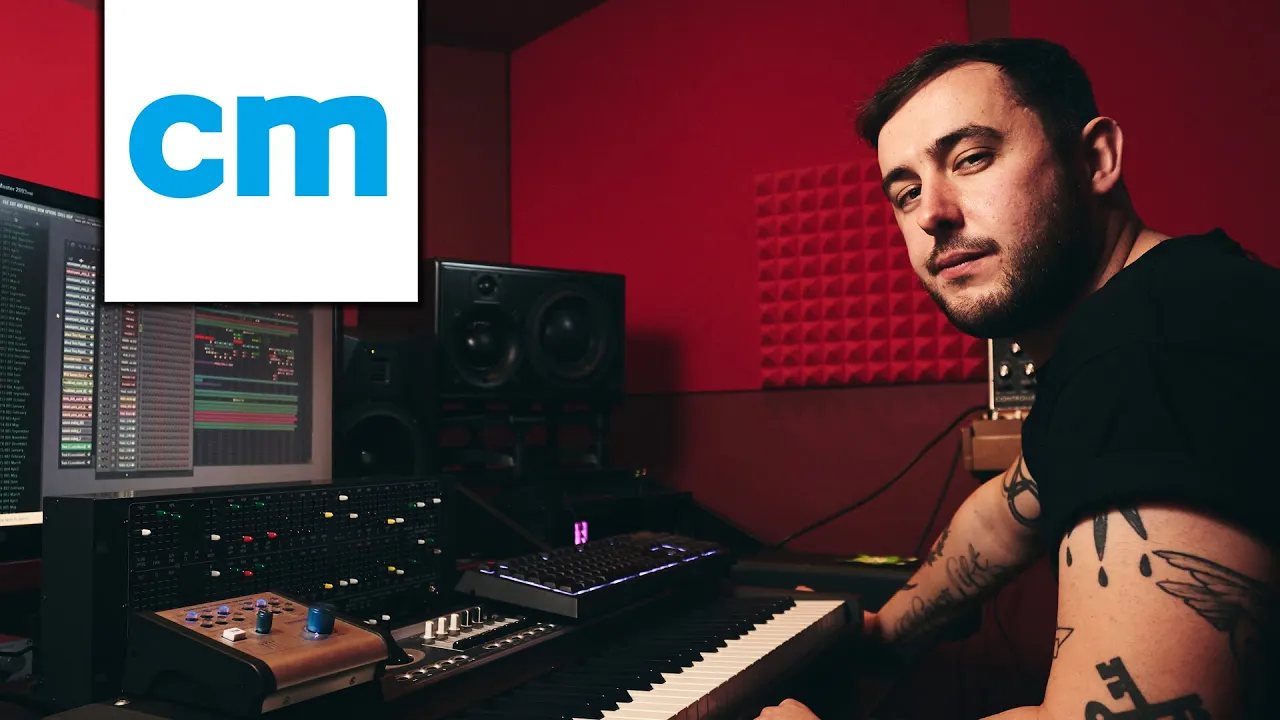
In The Studio with Feed Me | CM Producer Masterclass
83.8K
This extensive section covers professional synth sound design and processing. Separating bass from other elements provides maximum frequency control—initially creating bass-heavy sounds for emotional impact, then isolating low-end for independent processing. Bandpass filtering creates space by allowing only specific frequency ranges to pass through. Scooping the midrange (removing 200-500 Hz) creates perception of size and distance, making sounds appear bigger and further away. Triangle waves with filters provide better sub bass translation than pure sine waves because they maintain presence on small speakers. Cloning synth patches creates separate instances with different filter settings for independent control over main sounds and sub frequencies. Chord progression workflows involve playing chords into MIDI, finding inversions, combining with bass, noise, organ, piano, and guitar in unison, bouncing performances, chopping into individual key hits, and playing them quickly—enabling producers who cannot play fast manually to create complex patterns. FS Arpeggiator is recommended for its logical interface and speed of use. Sidechain triggering using high-pitched sine waves with very short envelopes provides precise rhythmic pumping control. When driving low-end into distortion, aggressive EQ follows to remove unwanted frequency boosts that would muddy the mix.
Click to watch →
Deep Dive
Critical analysis of hybrid musical arrangements to identify underlying traditional formal architectures in contemporary electronic tracks.

Work Efficiently Music | Calm Nature Ambient for Deep Focus
444
This segment examines hybrid musical approaches, structural frameworks, and expressive techniques in contemporary electronic music. The video demonstrates the integration of electronic production methods with traditional vocal elements, creating fusion styles that draw from multiple traditions simultaneously. Key concepts include call-and-response patterns as organizational structures, rhythmic synchronization across extended works, and expressive vocal techniques within minimalist contexts. The segment shows how composers balance innovation with consistency to sustain listener engagement over prolonged durations while leveraging the strengths of both organic and synthetic sound sources.
Click to watch →
Pierre Henry : interview vidéo Qobuz
21.7K
The composer explains that he approached his new work by treating it as a formal composition rather than just impressions or sensations. He worked on a partition (score) and examined his previous works to determine what elements were important to retain, modify, or completely discard. This demonstrates how electronic music can have rigorous formal structures similar to traditional classical compositions.
Click to watch →

Jerome Sydenham & Dennis Ferrer - Timbuktu (Pan African Electro Dub)
156.7K
This extended segment illustrates the structural organization of modern electronic music tracks, showing how different sections (verse, chorus, bridge) are constructed using specific rhythmic and melodic patterns. The arrangement demonstrates transitions between contrasting musical phrases while maintaining a cohesive overall structure.
Click to watch →
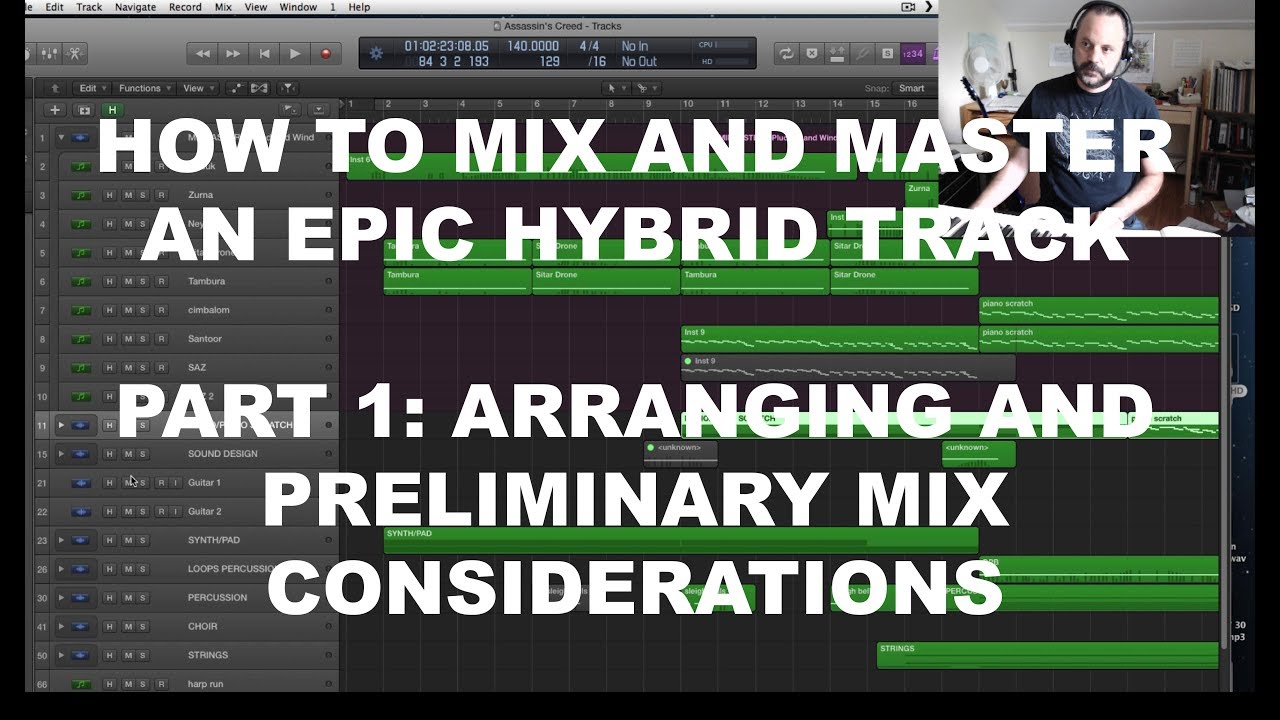
How To Mix and Master An Epic Hybrid Track Part 1
1.5K
Hybrid tracks combining electronic and orchestral elements require careful organization into stems (plucked/wind instruments, piano scratch track, sound design, percussion loops, choir, strings, harp, brass, winds). The three core elements are Mid Eastern plucks/percussion, strings, and coloristic elements. The introduction establishes atmospheric foundations through drone textures combining sitar, drums, and desert wind samples. Melodic reinforcement involves doubling lines with violins and viola. Percussion depth is created by layering low and high elements with strategic panning. This section demonstrates how to build atmospheric depth and manage complex arrangements through systematic organization and layering techniques.
Click to watch →

Steve Angello - In The Studio With Future Music 2007
654.4K
Typical electronic music arrangements follow a pattern of approximately 1 minute of intro, followed by buildups leading to breaks lasting 30 seconds to 1 minute, then returning to full arrangement. This structure creates the tension-release dynamics that drive listener engagement throughout the track.
Click to watch →
Heat Intro
Heat Emphasis
Heat Repeat
Heat Focus
Heat Peak
Heat Echo
Heat Final
Closure
Heat Intro
0:10- 1
The video starts with the concept of heat.
- 2
It establishes the central theme of the content.
- 3
The initial repetition emphasizes the core topic.
Formal Reductionism and the Functional Divergence of Trance
Critics and musicologists often argue that mapping classical 'sonata form' onto progressive trance is a forced academic exercise that oversimplifies both genres. True sonata-allegro form relies on complex tonal relationships, key modulations, and rigorous thematic development. Progressive trance, by contrast, is functionally designed for the dancefloor, relying on loop-based repetition, modal harmony, and linear tension-and-release mechanics (such as the breakdown and drop). Skeptics suggest that labeling trance arrangements as 'sonatas' mistakes basic additive arrangement techniques for genuine classical development, projecting an intellectualized structure onto music fundamentally meant for somatic, hypnotic experiences.
The structural components of Classical Sonata-Allegro form, specifically the Exposition, Development, and Recapitulation.
The defining characteristics and arrangement conventions of Progressive Trance music, including builds, breakdowns, and drops.
Fundamentals of analog synthesis, including how oscillators, filters, and envelopes are used to create electronic timbres.
Basic music theory concepts regarding harmonic progression, tension, and resolution.
Applying classical composition frameworks (like Sonata, Fugue, or Theme and Variations) to modern DAW-based electronic music production.
In-depth study of neo-classical electronic music and other artists who bridge classical and electronic genres.
Advanced sound design techniques using hardware and software analog synthesizers to evoke acoustic-like emotional depth.
Critical analysis of hybrid musical arrangements to identify underlying traditional formal architectures in contemporary electronic tracks.
3.6K views191likes3:53@blackholerecordingsOriginal Release: 2025-05-31
[Music] Heat.
Heat. Heat. Heat.
[Music] Heat. Heat.
[Music] Heat.
Heat.
[Music] Heat.
[Music] [Applause] Heat.
Heat.
[Music] Heat. Heat [Music] [Music] up here.
[Music]
Up Next
10:24
Why Porter Robinson's Music Is a Masterclass in Arrangement
@AlexRome
530.5K views•2023-08-18

10:20
Mozart's Musical Dice Game Explained: History, Rules, & Fun
@webpianoacademy
5K views•2023-03-13

47:36
Understanding Diatonic 7th Chords in Major Keys | Music Theory Tutorial
@GracieTerzian
54.7K views•2022-03-02
10:49
Understanding John Coltrane's Giant Steps: A Music Theory Analysis
@Vox
10.4M views•2018-11-12
Related Study Plans & Knowledge Roadmaps
Structured learning paths in Music Theory
music-theory
Composing Galant Music: Partimento & Schemata
01Foundations of Figured Bass and Keyboard Harmony
02The Rule of the Octave (Regola dell'Ottava)
03Galant Schemata: The Building Blocks of Form
+ 2 more learning modules
30h5 modules
Explore Roadmap
music-theory
Decoding Overtone Series: Tuning & Drone Music
01Acoustic Foundations: The Physics of the Overtone Series
02Tuning Systems: Equal Temperament vs. Just Intonation
03Microtonality and Spectralism: Beyond Standard Pitches
+ 2 more learning modules
24h5 modules
Explore Roadmap
music-theory
Impressionist Harmony: Scales, Planing & RPGs
01Foundational Music Theory: Keys, Intervals, and Seventh Chords
02Impressionist Color: Chord Planing and Parallel Harmony
03Whimsical Textures: Pentatonic Cascades and Whole-Tone Scales
+ 1 more learning modules
14h4 modules
Explore Roadmap
music-theory
Negative Harmony: Axis Reflection in Indie Pop
01Music Theory Foundations: Scales, Intervals, and Triads
02Functional Harmony and the Circle of Fifths
03Demystifying the Negative Harmony Axis Reflection
+ 2 more learning modules
16h5 modules
Explore Roadmap