
![Alle Intervalle einfach erklärt [Prime | Sekunde | Terz | Erklärung | Definition | Quarte | Oktave]](https://i.ytimg.com/vi_webp/ZahFfrEaAI8/maxresdefault.webp)















![Playing Baroque Basslines (Basso Continuo) - Handel, Vivaldi, Corelli on Baroque Cello [NEW ALBUM!]](https://i.ytimg.com/vi_webp/4ELeMFn3RIU/maxresdefault.webp)





In thoroughbass realization, 5/3 triads (root position) can be played in three hand positions—octave, third, or fifth position—requiring alternation to avoid parallel octaves and fifths, while 6/3 triads (first inversion) typically use specialized voicings that avoid doubling the bass note; when the bass moves by step, the right hand must move in contrary motion, and common tones should be maintained when the bass leaps by fourth or fifth.
How to Realize Figured Bass Triads in Keyboard Style
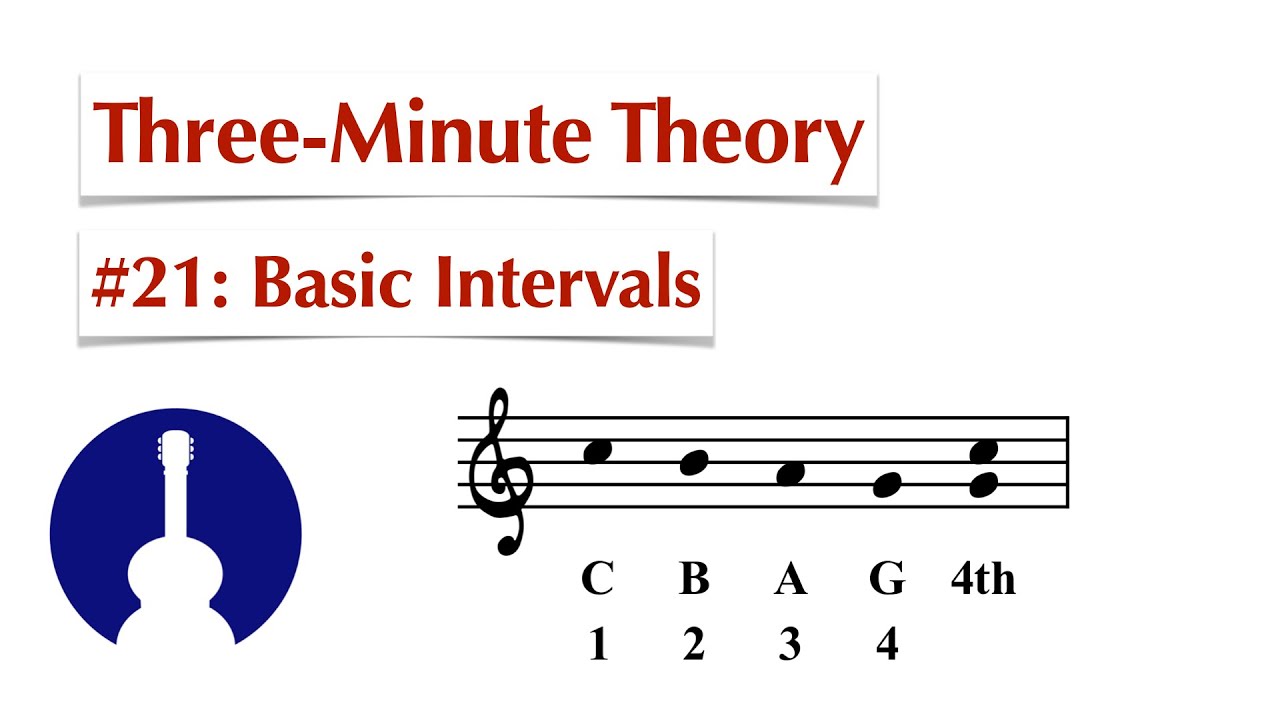
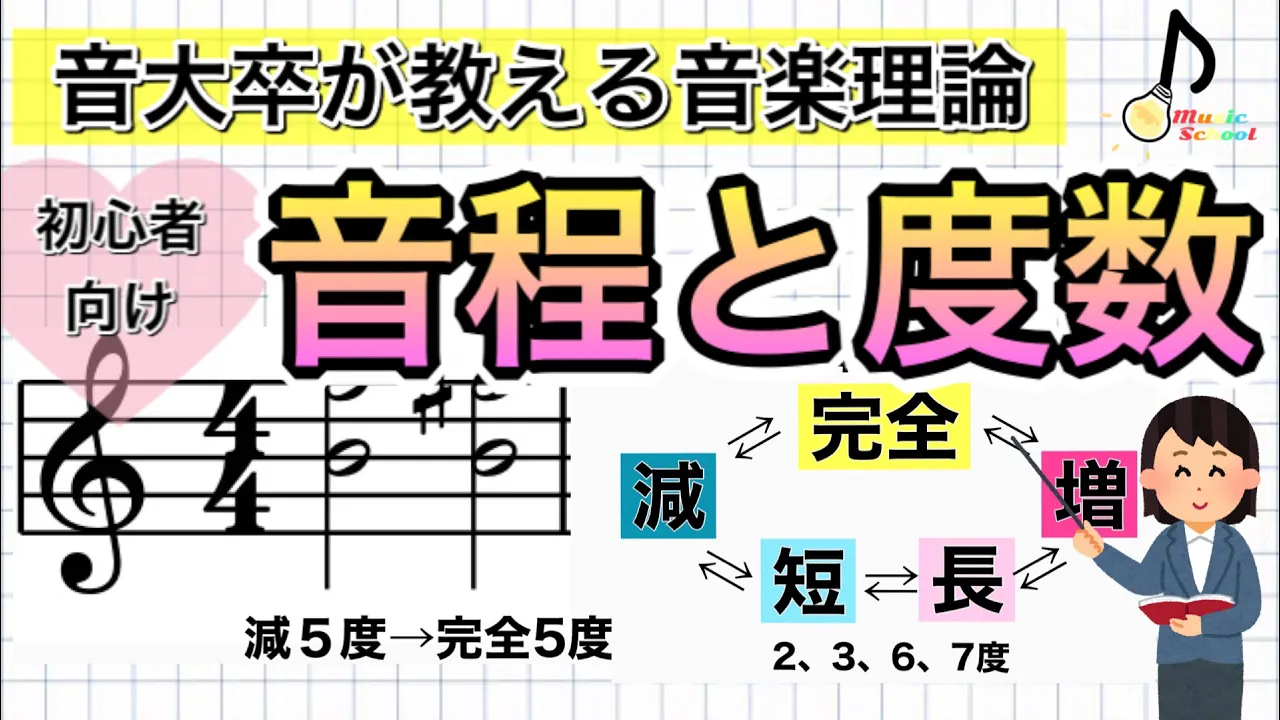
Added:Understanding of basic intervals, specifically thirds, fifths, sixths, and octaves.
Familiarity with triad construction in major and minor keys, including root, third, and fifth components.
Ability to read music fluently on the grand staff, utilizing both treble and bass clefs.
Basic knowledge of four-part vocal texture (Soprano, Alto, Tenor, Bass) and standard keyboard style layout.
Familiarity with key signatures and diatonic scale degrees.
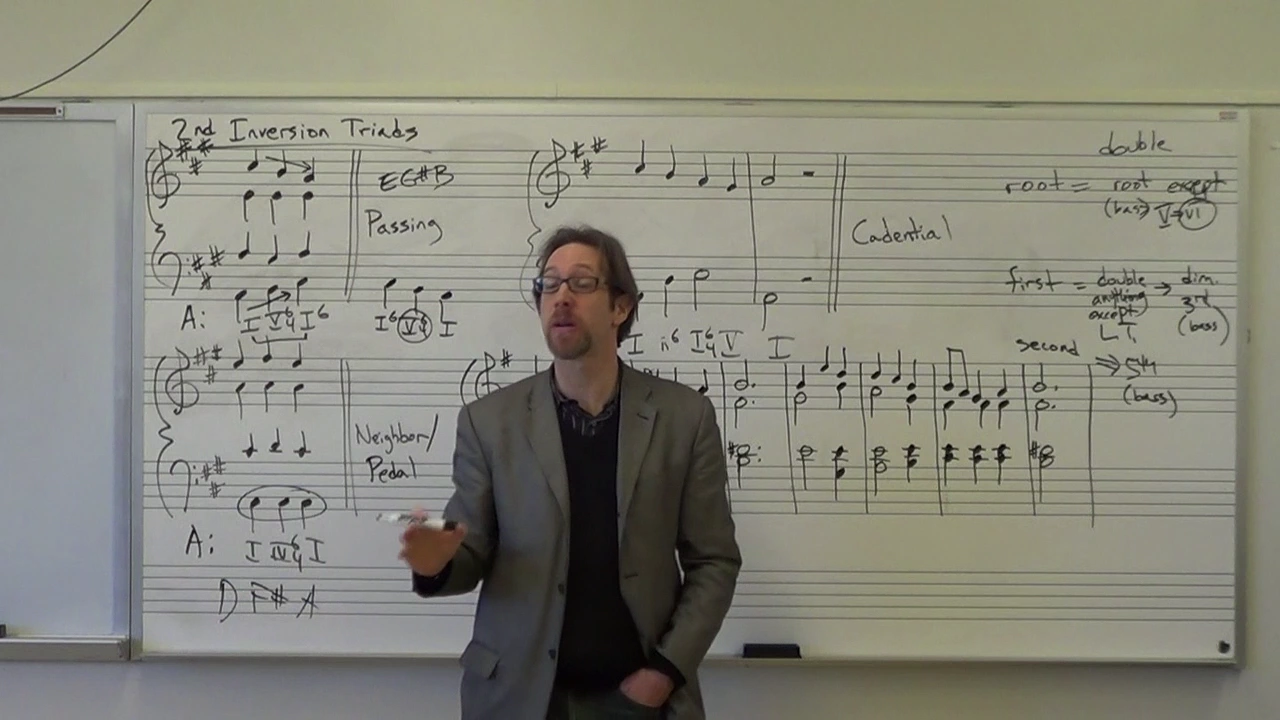
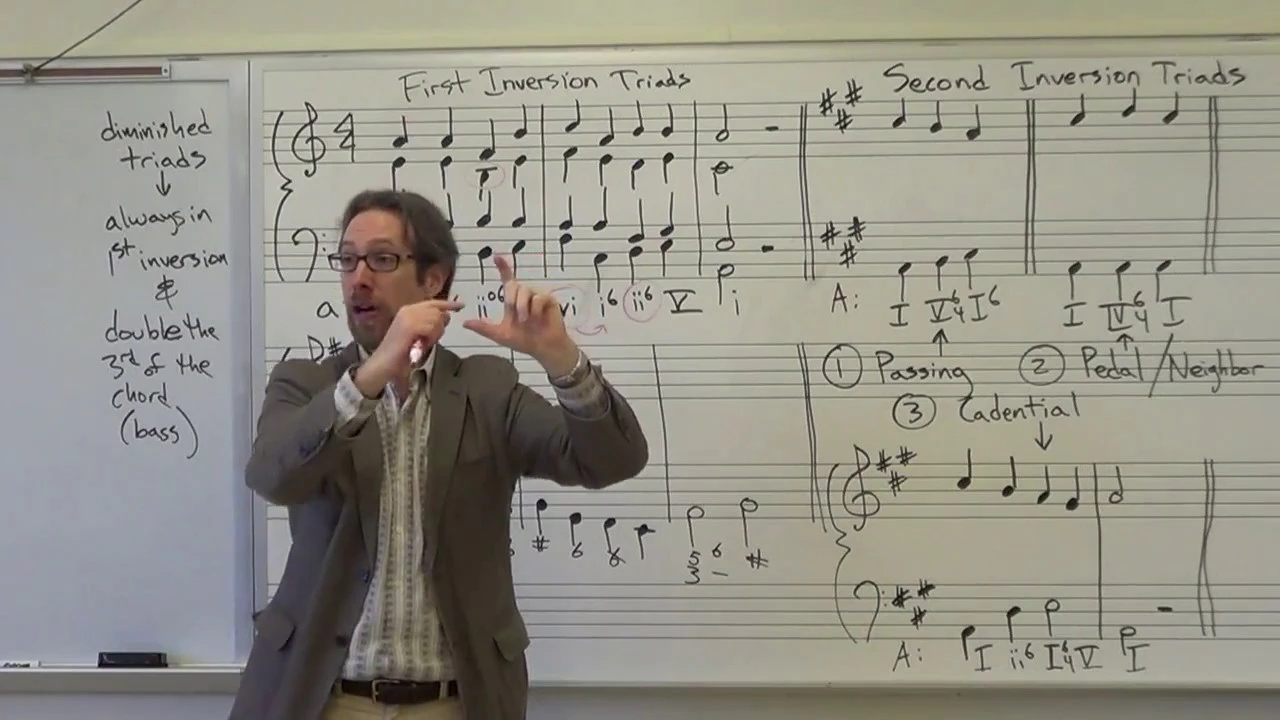
Realization of second-inversion triads (6/4 chords) and understanding their specific voice-leading behaviors (passing, cadential, and pedal 6/4 chords).
Realization of dominant and non-dominant seventh chords and their respective inversions (7, 6/5, 4/3, and 4/2).
Interpretation of chromatic alterations, accidentals, and suspensions (such as 4-3, 9-8, and 7-6 progressions) within figured bass.
Applying thoroughbass skills to practical Basso Continuo accompaniment for Baroque ensemble repertoire.
Harmonizing unfigured bass lines, which requires applying functional harmonic analysis to determine appropriate chords without numerical symbols.
17.7K views501likes13:49Original Release: 2020-12-19
Hello again everybody. My name is Dr. Jacob Gran and in this video we're going to learn about 18th century thoroughbass also known as part writing in keyboard style. No don't run away! It's actually not as bad as it sounds. This is an essential skill for understanding common practice harmony and triadic voice leading. After you've learned counterpoint in two voices, it's really nearly impossible to advance into common practice harmony without understanding the basics of thoroughbass.
I'm going to try to teach you the same way they would have in the 18th century. You're not going to get the most out of this if you just watch and listen; you need to also go to a keyboard instrument and play along. The idea is to learn by doing. In the old days continuo players used to be able to sight read figured bass lines in real time and they were able to do that partly because they remembered these voice leading patterns in the muscle memory of their fingers and hands.
We will start with bass lines that only use root position 5/3 chord figures. Once we've mastered that, I will also give you some bass lines that include 6/3 chords and in future videos we will incorporate the more complex chord types.
When you see a bass note that has no chord figures, this implies a 5/3 triad.
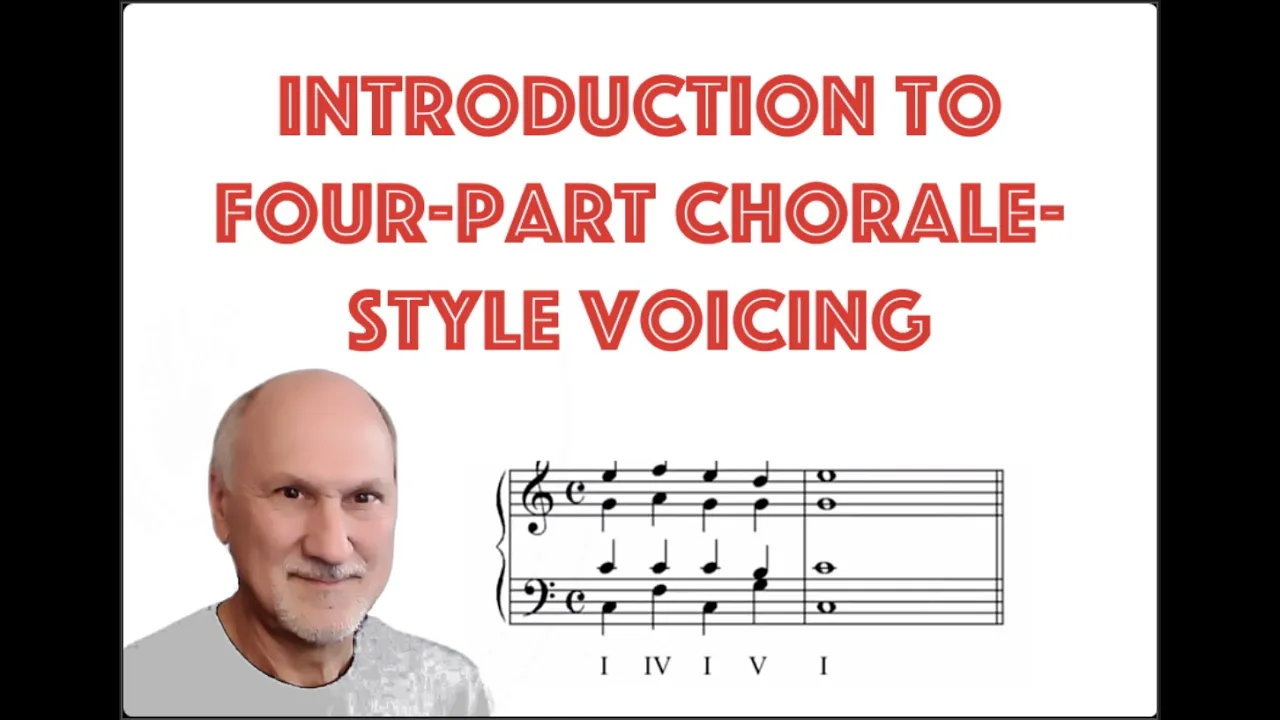
We're going to perform the bass line with our left hand written in the bass clef and we're going to realize the three other voices with our right hand all in the treble clef.
The bass figures don't usually specify how we should distribute the tones of the triad in our right hand realization, so we have three standard hand positions to choose from.
These hand positions are named after whichever chord member is realized in the top-most voice: the chordal root in "octave position," the chordal third in "third position," and the chordal fifth in "fifth position."
Before moving on to an example, here are three quick tips for realizing figured bass lines.
First, you should try to alternate between these three hand positions often.
All three of these hand positions include an octave doubling of the bass note, and so there is a possibility of parallel octaves occurring if we use the same hand position multiple times in a row. The fifth position chord includes a fifth between the outer voices in our right hand, so we definitely can't use fifth position twice in a row or we will have parallel fifths.
The easiest way to guarantee that we spread the fifths and octaves out between the voices is to alternate hand positions. Second, you should learn to be generous with contrary motion.
By that I mean that you should move your right hand chords in contrary motion to the bass line, even when it is not necessary. Building this up as a habit will decrease the likelihood of voice leading errors. Lastly you should try for an economy of motion; we want our fingers to move as little as possible and we want our brain to have to think as little as possible. The best way to do that is to move your hand position and fingers as little as possible between chords.
This probably sounds like a lot to remember, so let's see how these ideas work with an example.
Here is a bass line given by Albrechtsberger that he used to teach his students, including Beethoven. Because there are three different starting hand positions to choose from, that means that there are at least three different realizations of this bass line. Here is what one realization would look like if we chose to begin with the first chord in octave position.
Notice the natural alternation between octave position chords and fifth position chords throughout the exercise.
Albrechtsberger composed this bass line in a very clever way.
He made sure to include different kinds of leaps in the bass voice so that the student could gain experience with different voice-leading transitions in the right-hand chords. Anytime the bass leaps up or down by a fourth or by a fifth, the right-hand chords will always contain one common tone, and this common tone should be realized in the same voice in both chords and should probably be performed by the same finger.
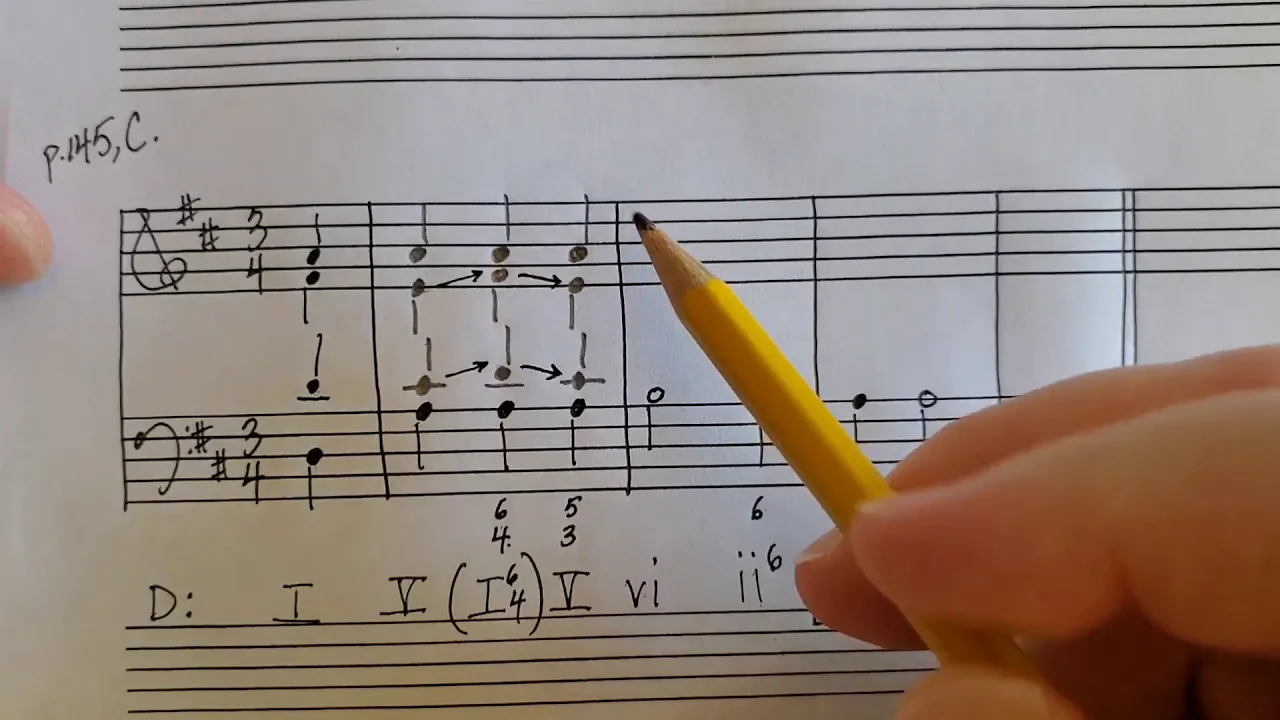
If the bass moves by third or sixth, the chords will contain two common tones, and if the bass moves by second or, less commonly, by a leap of a seventh, there will be no common tones between the adjacent chords. It is important to remember that whenever the bass moves by step, our right hand chord must move in contrary motion to the bass, like we see here between the last two chords, otherwise we are bound to have parallel perfect intervals.
This bass line could also have been realized with the initial C major chord in third position or in fifth position and the rest of the exercise would have turned out slightly differently.
I'm not going to play these other realizations because they sound almost exactly like the first one; all of these continuo realizations are going to sound fairly boring, but in this case boring is good. These continuo parts were supposed to just provide filler, not to be the center of attention, so you have to imagine some sort of melody part moving on top of these chord changes.
Here is a bass line you can use to practice with by Georg Friedrich Handel which he used to teach the daughters of King George II. Notice that this bass line also makes use of all sorts of leaps and different bass motions between adjacent chords. I'll give you one example of a realization starting in third position and I'll leave the other realizations to you.
A more advanced exercise with 5/3 chords would be to practice with these modulating bass lines by C.P.E. Bach. The figures above each bass note refer to the recommended hand position.
So for this first chord, Bach recommends octave position, etc. The accidentals in the figures indicate that the continuo player should either raise or lower the chordal third.
The first bass line starts in the key of C major and modulates to F major, one position down in the circle of fifths. The second exercise similarly starts in A minor and modulates down to D minor.
Musicians of the 18th century would have practiced transposing exercises like these through the circle of fifths and therefore through all 24 major and minor keys.
Now, I can't make you do that, but I can promise that it is a good workout for your brain and for your fingers and it's in the spirit of learning by doing.
Now that we've mastered 5/3 triads we can move on to 6/3 triads. We can take the same chart of C major 5/3 chords that we started with but move the bass up to the chordal third -- E. However, these hand positions that were perfectly fine for 5/3 chords are actually not the most common ones used for 6/3 chords. Instead, we usually use these three idiomatic hand positions.
The reason isn't super clear; some authors claim that these voicings sound better and some authors claim that they help avoid voice-leading errors that are unique to the 6/3 chord.
In any case, what all three of these hand positions have in common is that they avoid doubling the bass note. Instead, we either double the chordal fifth, double the chordal root, or we decline to double any of the chord members by simply reducing the texture to three voices.
When we use the three-voice hand position, we usually voice the right hand notes as a fourth, rather than a fifth, since fourths between upper parts are allowed to move in parallel motion and so they have greater freedom. This is especially useful when you're asked to accompany bass lines that move in parallel 6/3 chords, sometimes known as "Fauxbourdon," which is very common. Before moving on, I don't want to leave you with the false impression that the normal octave, third, and fifth hand positions aren't also used with 6/3 chords; they are. They just have to be used carefully because doubling the bass voice is dangerous when the bass is likely to move by step, as commonly happens with 6/3 chords. In order to make sure that you can use those normal hand positions with 6/3 chords, you will need to read ahead a little bit in the chord figures.
In this example, we can repeat the right hand octave position chord as common tones over the 6/3 chord as long as we've checked ahead that we can form smooth contrary motion into the next G chord.
Similarly, we can use hand positions that double the bass of the 6/3 chord if we look ahead and see that we can form overall contrary motion and that no errors arise.
This is more difficult because it requires us to read two chords ahead of the chord that we are currently playing which requires a lot of experience.
Here is another bass line by Albrechtsberger that includes 6/3 chords. Notice that this bass line is based around a sequential pattern. When realizing sequential bass lines, it's usually good technique to also include sequences in the right hand chords to highlight that compositional pattern.
One way to realize this bass with our hands starting in third position would be like this. Notice that for this chord we had to drop into a three-voice texture in order to avoid a leap of an augmented second in the inner voice from G-sharp to F. You can always use a three-voice texture as long as you realize all three chord members of the triad.
Finally, here are two more bass lines for practicing 6/3 chords. The first one, by Handel, uses a bass that runs in constant eighth notes, which is different than what we've seen so far.
Sometimes the bass notes are going to arpeggiate through the same chord, so it is implied that these bass notes under brackets are going to have only one right hand chord in quarter notes while the bass arpeggiates through the chord.
This F-sharp is a dissonant neighbor note and it doesn't get its own chord.
It might be necessary to write out the right hand chords over this bass line before attempting to play it. In the example by Tchaikovsky, be aware that he asks for a 6/4 position chord in the penultimate measure which is a chord that we will cover in future videos.
That's all for this video. Stay tuned for the next one when we will be introducing new kinds of dissonant voice leading chords.
Up Next

20:48
Keyboard Style Voice Leading in Classical Harmony | Lesson 14
@SethMonahan
22K views•2019-06-28

10:20
Mozart's Musical Dice Game Explained: History, Rules, & Fun
@webpianoacademy
5K views•2023-03-13

47:36
Understanding Diatonic 7th Chords in Major Keys | Music Theory Tutorial
@GracieTerzian
54.7K views•2022-03-02
10:49
Understanding John Coltrane's Giant Steps: A Music Theory Analysis
@Vox
10.4M views•2018-11-12
Related Study Plans & Knowledge Roadmaps
Structured learning paths in Music Theory
music-theory
Composing Galant Music: Partimento & Schemata
01Foundations of Figured Bass and Keyboard Harmony
02The Rule of the Octave (Regola dell'Ottava)
03Galant Schemata: The Building Blocks of Form
+ 2 more learning modules
30h5 modules
Explore Roadmap
music-theory
Decoding Overtone Series: Tuning & Drone Music
01Acoustic Foundations: The Physics of the Overtone Series
02Tuning Systems: Equal Temperament vs. Just Intonation
03Microtonality and Spectralism: Beyond Standard Pitches
+ 2 more learning modules
24h5 modules
Explore Roadmap
music-theory
Impressionist Harmony: Scales, Planing & RPGs
01Foundational Music Theory: Keys, Intervals, and Seventh Chords
02Impressionist Color: Chord Planing and Parallel Harmony
03Whimsical Textures: Pentatonic Cascades and Whole-Tone Scales
+ 1 more learning modules
14h4 modules
Explore Roadmap
music-theory
Negative Harmony: Axis Reflection in Indie Pop
01Music Theory Foundations: Scales, Intervals, and Triads
02Functional Harmony and the Circle of Fifths
03Demystifying the Negative Harmony Axis Reflection
+ 2 more learning modules
16h5 modules
Explore Roadmap