




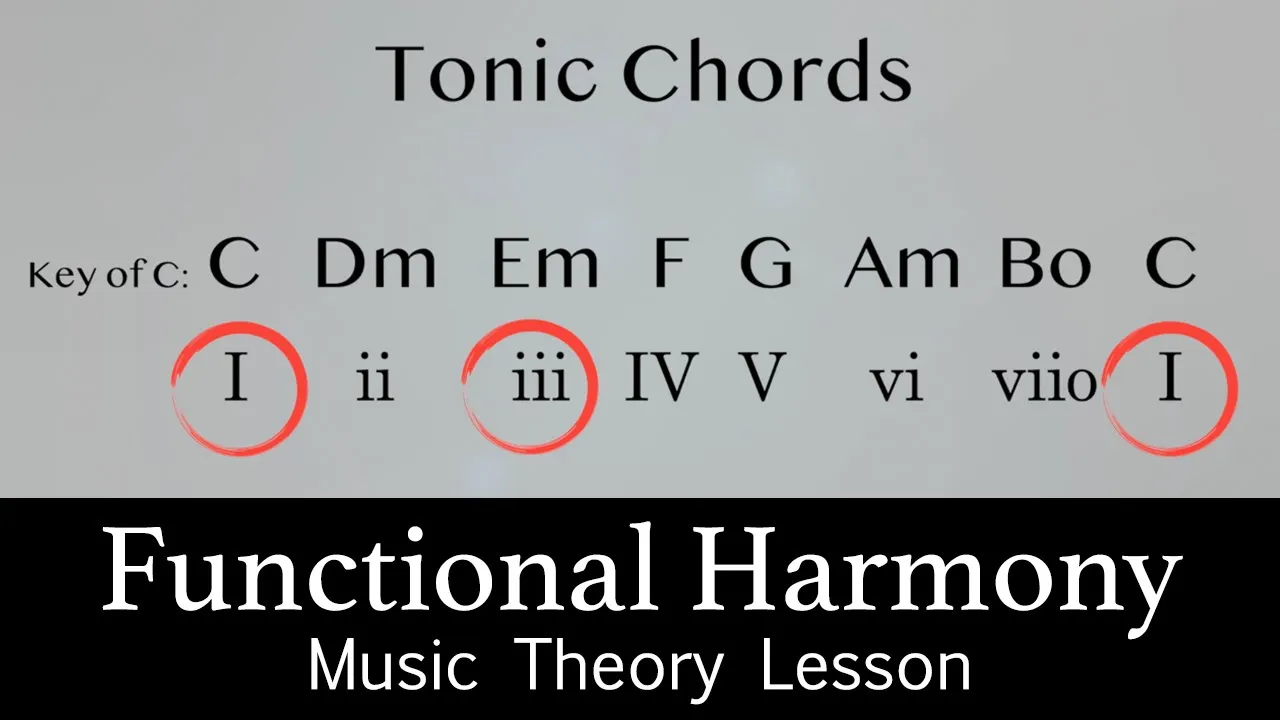



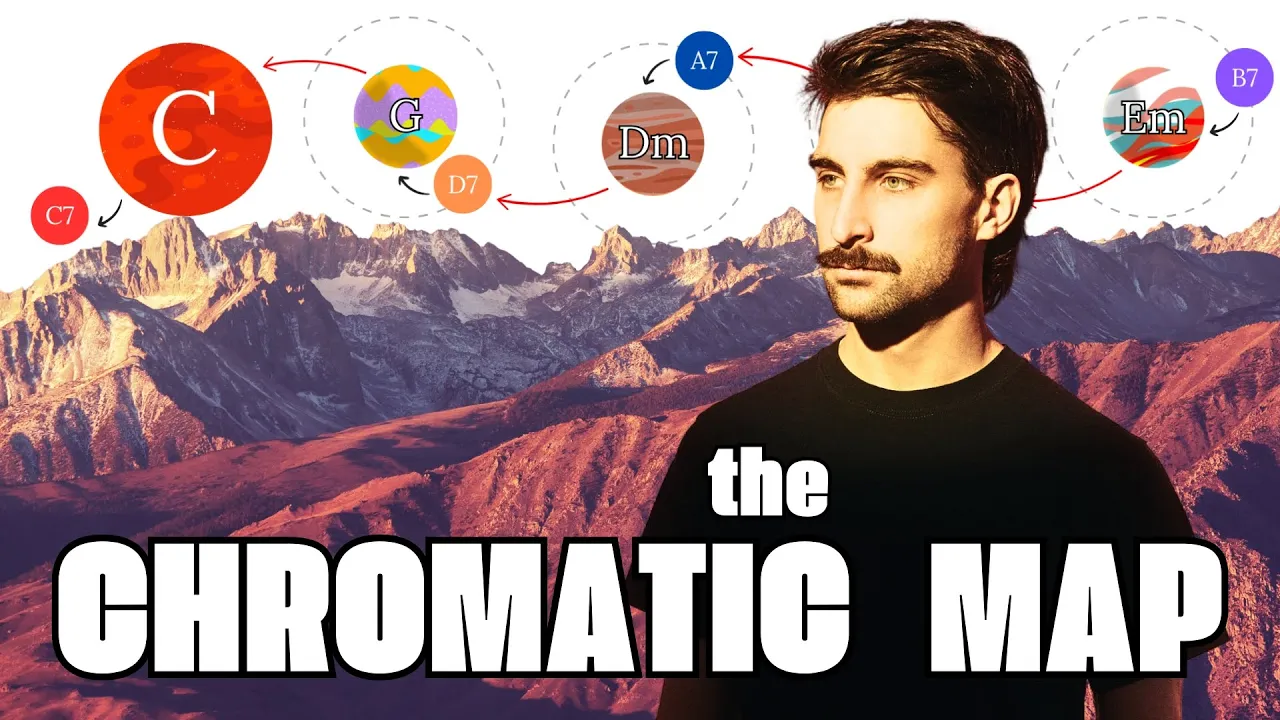









In tonal music, harmonic progressions follow specific patterns based on chord functions: the dominant (V) chord naturally resolves to the tonic (I) but can move deceptively to the submediant (vi), while the subdominant (IV) typically progresses to the dominant (V) or other related chords; the leading tone (VII) always resolves to the tonic, and any chord can move to the tonic or dominant, creating smooth voice leading through circle-of-fifths progressions like V-I, II-V-I, and VI-IV-V-I.
Harmonic Progressions in Tonal Music: Chord Sequences and Voice Leading
Added:Fundamental understanding of major and minor scales, key signatures, and interval identification.
Knowledge of triad construction (major, minor, diminished, augmented) and basic seventh chords.
Basic familiarity with Roman numeral analysis and functional harmony (tonic, subdominant, and dominant functions).
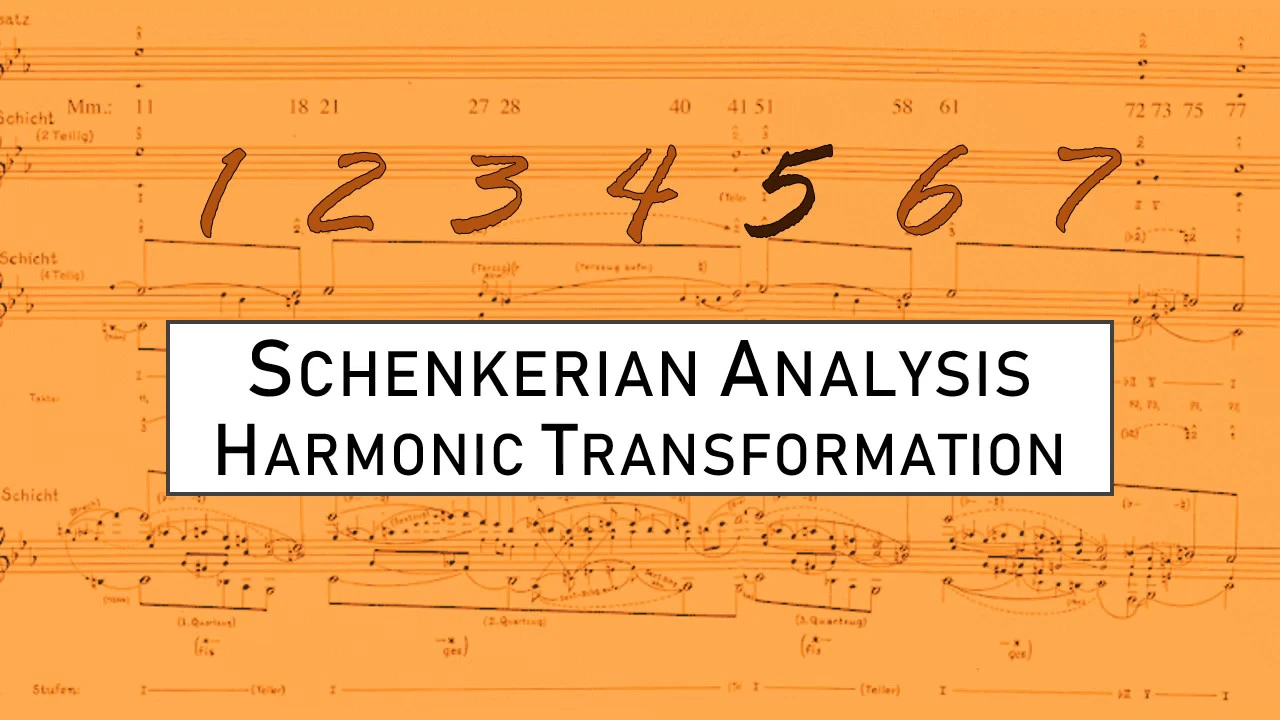
Introduction to chromatic harmony, including secondary dominants, secondary leading-tone chords, and modulation techniques.
Study of advanced voice-leading structures such as Neapolitan sixths, augmented sixth chords, and modal mixture.
Realization of figured bass and creative chorale harmonization in the style of J.S. Bach.
Exploration of species counterpoint to understand how independent melodic lines interact rhythmically and harmonically.
2.3K views56likes1:24:11Original Release: 2021-03-19
greetings this week we are in chapter seven and we'll be studying the harmonic progression and the sequence so i recommend that you read the chapter um but we're just going to jump right in here with the homework so on exercise 7-1 um we are to complete each harmonic fragment to conform with the major mode diagram presented on page 105.
the cord and the blank should be different from those on either side of it okay so number one we have a four chord and we need to know which chord or chords can fit in between there so if we look at the diagram on page 105 this is for the major mode you can tell that because the one four and five are major right oh um if you notice we have a circle of fifths progression on the bottom three six two five one and then we have the four chord and the seven diminished on top here so these arrows um they point to where the chords naturally tend uh to go and there are some exceptions for instance here the five chord of course likes to go home to the one chord but sometimes it wants to be deceptive and move somewhere else like to the six chord okay um which sounds really cool because you're expecting to go home and then all of a sudden oh you're jumping up to a minor chord it's like wow we're not finished yet okay so that's a good one and it's also good to know that the one chord can move to any chord it wants at any time and any chord can move to the one chord okay and also any chord can move to the five chord okay the five tends to go to one sometimes it goes to the six sometimes it'll go to the three it depends on the composer so we see the three likes to go to the four and sometimes the four likes to go to two and then directly to one like at a playable cadence seven diminished it always goes to one and the two likes to go to the five or the seven these chords are somewhat interchangeable um both have a strong pull to the tonic and the seven diminished having the strongest pull so there's that and in our first question we had the example um what was it before and what chord would go in between the four chord and the one chord so if we look at our diagram again there's two chords that would go between the four and the one the seven diminished and the five the dominant so we'll put that here seven diminished or five okay now number three what would go between the one chord and the two chord well if we look at the two the two likes to go to the five or the seven as well two five one is very common especially in jazz they're everywhere as well as pop and rock and other genres too but especially in jazz so we'll put the seven diminished and the five that's very common in classical two it's a beautiful progression now number five we have the seven diminished between the seven diminished and the sixth chord okay so we know that the seven diminished it only likes to go to the one chord okay so there's our answer there and we're done with that section okay so go ahead and fill out the rest and i will see you in the next section for part b okay so here we are part b and we are to bracket any portions of these progressions that do not conform to the chord diagrams on page 105.
so number one is in a minor key so we have to look at the minor progression and the only really major difference is that we have the major seven chord going to the three seven three six two five one um and then we have the seven diminished as well because we know sometimes in the um harmonic minor scale or the melodic minor scale we'll have the raised subtonic the raised seventh scale degree and it becomes the leading tone this is just the natural subtonic okay part of the natural minor scale so the rest of the chords like to move just as they did in major they're just different qualities okay so let's check it out we have a one going to a seven two back to a one and we know one can move to any chord so yes the one can move to the seven and the seven diminished doesn't like to go to the one that's its primary function so far so good one can move to four and let's see does four like to go to six well if you look at our diagram here four does not tend to go to the six that often so it likes to go to the two or the five or the seven or the one okay so let's start a little bracket there okay and we know that that doesn't like to go to the six um does the six like to go to the five well any chord can move to the dominant um so yes um and that is possible most commonly the 6 likes to go to the 4 or the 2 but since any chord can move to the dominant there is an exception there so if you want to be strict about it from that diagram um and it says to conform to the diagram so in this case i guess we will include that okay because we're trying to conform to just the diagram all right so number three we're back in major and we have the one to the three we know one can move to any chord now does the three like to go to the four now we see here yes that it does and does the four like to go to the seven yes all right four to the seven so far so good seven goes to one yes one can move to any chord one four five very common progression five to one i don't see any problems with this one okay so we're done with this uh section and i'll see you in part c thanks hi so we're back and we're in part c and we're to do an analysis so we must label all chords with roman numerals and bass position symbols bracket any successions of roman numerals that do not agree with the complete major and minor chord diagrams in addition provide lead sheet symbols above the top of the staff okay so we have an excerpt from piece by bach and we have three sharps in the key signature and we're starting on an a chord which is a good indicator of the key that we're in a major has three sharps let's just make sure and check the end and it ends on an a2 okay we have a e major to an a major five to one cadence so we know that it is an a major okay so let's put that down here a big a and we have our uppercase roman numeral for the one chord so now we move on to looks like the d major oh let's put the lead sheet up here too so we have a and we have a d major d f sharp a in root position and that is the four chord okay and here we have a b a d a g sharp and a b so g sharp b d is g sharp diminished and since it has a b in the base it is in first inversion so we have a seven diminished six okay so we'd have g sharp diminished over b um i just realized i'm not supposed to do all of these chords for you um so i'm going to go ahead and um skip the next one and move on to this one so i shouldn't have given you the d but oh well that's a freebie for you okay one of the benefits of watching these long videos i really hope they're helpful though so thank you and uh yeah please let me know in the comments too if they do help it gives me encouragement um so anyhow moving on we have a g sharp e b and an e so that's an e major chord with a g sharp in the bass e over g sharp okay now um so that is a five chord in first inversion the five six e g sharp b okay so you'll do the next one and i'm here now we have the g sharp the e the b and the d so if we stack that up e g sharp b d we have an e seven over g sharp okay so let's put that e7 over g sharp and that is a five chord but since it's a seventh chord you have to indicate that by using a six five okay remember the inversion symbols for seventh chords root position is seven first inversion six five second inversion four three and third in version four two so seven six five four three four two all right now we have the second a over c sharp you have the a c sharp e and that is a one chord in first inversion we're back and you'll do that one and i will do this one so we have another a major and this time it's in root position a a c sharp e just a one chord and then we have e major e g sharp b in root position so there's the five so in order to find out if these really conform to the common chord progression um you have to fill out all the chords and see how they relate to each other so i'll let you do that and go ahead and pull out your major chord diagram like i have here and when you're finished go through it and see if it conforms and if not put brackets anywhere that it doesn't okay so have fun with that and i'll see you in the next section okay greetings now we're in part d and we're to analyze the chords specified by these figure bases and now to enter voices to make a four part texture bracket all circle of fifth progressions even those that contain only two chords before beginning review the part writing for deceptive progressions on pages 88 and okay so i have that here and the progression 5 to 6 is known as the deceptive progression for reasons that will become clear in the next chapter in terms of voice leading deceptive progressions present some special problems in most cases the leading tone scale degree 7 moves parallel with the bass resolving up to the tonic whereas the other two voices move down contrary to the bass to the next available chord tones this results in a double third in the sixth chord as in example 6 9 a and b okay in the major mode if the leading tone is in an inner voice it may move by step to six as an example c um because the lack of resolution is not so apparent to the ear oh it's like frustrating the leading tone in an inner voice and making it resolve somewhere other than the tonic of the key however this is not acceptable in the minor mode because of the awkward interval of an augmented second that results okay so here we have the f sharp going down to the e flat okay and e flat to f would be a major second so e flat to f sharp is an augmented second we want to avoid that that happens in the minor mode but not in the major mode right it's just f sharp to e okay so it's better to do this when you're in the minor mode okay um you have the leading tone moving up to the g which is the tonic but it's also the third of the six chord the e flat major okay and here in the major mode we have a d major and it's moving to an e minor five to six so in your five chord the leading tone is the third of your chord okay the f sharp and it is moving up to the tonic okay or the third of the six chord and the other voices are moving down see this moves the leading tone moves up like the bass and then the soprano and the tenor both move down okay so um that creates a double third and in this case we don't have the double third we have the double root so both of these options are good in the minor mode we need to stick with this option and avoid the augmented second okay and the voice leading away from a triad with a double third must be handled carefully because the conventions discussed in this chapter all assume double roots so we'll have to watch out for that okay so let's start with the homework now we need to analyze the chords first and add inner voices to make a four-part texture okay so let's analyze this we have in three sharps in our key signature and if you go up a half step from the last sharp we have a g sharp and that would go up to a so most likely we're in the cube a major we're starting on our a and the base here and we're ending on a in the base there and it looks like some kind of e yeah five to one so we're in a i'll just put that down here capital a all right there we go this is one chord now here we have an f sharp and an a i'm sorry we have an f sharp and an f sharp okay so that's like a double root of the six chord the minor six okay and we have a d and an f sharp that's almost a d major there's a four chord and we have two e's and four likes to go to five i'm thinking that's a five chord and then we have an f sharp and a c sharp okay so f sharp a c sharp would be f sharp minor another six chord okay and here we have a c sharp and an e okay so this could be a three chord um it could also be a one chord in first inversion um let's see let's try the minor three see how it works and then um here we have two d's so there's a four chord three likes to go to four and we have a e and a b all we need is a g sharp and we have a five chord and we're moving to one okay and so now we just need to voice the chords and so we have an a and e so we want to try and double the a and add a c sharp um let's see the best way i think to do that because the c sharp is very close up here and it would be too far away down here so let's just double our a in the outsole and put the c sharp here in the tenor okay now we're moving to six chord f sharp minor and i already see two common tones let's just keep those right where they're at and see sharp very smooth voice leading now our four chord d major so we have a d and an f sharp another common tone here and the c sharp will move nicely to the d there for a double root e major v chord now a root is already doubled and so um we need a g sharp and a b okay so i'm thinking the d would probably smoothly go there okay so that's just a little leap um d2b is minor third and then a you can go down to the g sharp here we'll have the alto sing a different note for a change huh okay um i'm going to check for parallels quick along the way and everything looks good all right so our six chord f sharp minor again um we have the f sharp and the c sharp so we want to double the f sharp and add an a so this d could move down to the a here and then we have our f sharp here okay that's a sixth to a fifth very good we have a leap the base is moving in contrary motion all right so here's our three chord a c sharp minor so c sharp e g sharp we have the c sharp and the e so we want to double the c sharp and we need an e so we have the e okay so we need a g sharp c sharp e g sharp um let's just try this double the base your g sharp here and everything all the notes are represented in the triad let's check for parallels really quick i've shot to sharp let's draw to the sixth f sharp to c sharp also in bass and soprano moving in contrary motion looks good all right so our four chord d major the d is already doubled so we need an f sharp and an a this moves the closest chord tone here be a and then yeah sharp here okay so we're moving in parallel sixths there that's fine i have an octave moving to fifth very good um you see anything else uh c to g um c sharp to g sharp is a perfect fifth that a to f sharp is a major six so we're good our five chord now e major so we need an e and a g sharp let's see we can just keep moving down here to the e move in similar motion here digi sharp and that seems to work nicely here's a fifth e to b that's moving from an octave that's good six to the fifth it's fine okay five to one we're going to the a major uh the root is doubled i see a common tone here um and we have to be careful with the g sharp it's the leading tone but it isn't an inner voice so it doesn't have to move up to that a um because if it did we'd have a triple root and then well we could omit the fifth and put the third here on the c sharp that's one way of doing it or we could keep the common tone here and then the third of our chord here g sharp to c sharp pops up a fourth and as long as there's no parallels we're good okay that's good um let's that's an octave okay so that worked out nicely now let's see if there's anywhere that doesn't conform to the harmonic progression or actually let's bracket the circle of fist progression so and that can be between any two chords um and i don't see any be three six two five one there's no two five well there's a five one that's a circle of fifths right and there we go okay okay for this next one you need to be careful um when you determine the key you will find that it is in minor and when you see these naturals here that just means to raise the leading tone okay so the third of your five chord is going to be a natural okay i'm not gonna give it away but just um be aware of that okay and then i will see you and we'll do number three together okay so here we are number three and i need to realize this figured bass line with the chord progression so it looks like we're in the key of c and we have a g to c five to one so we are in c okay so this would be one chord c major and if we follow the bass notes would be e minor and we have the b in there too so eg b would be the e minor and then f a c f major the four chord two g's let me get a five chord and then the a would be minor six and this could be f major so back to the four chord and here's a d and an f d minor there's a two a g and a d so b five and two g's still a five and back to the one with the c okay so now it's time to voice the chords the c has already doubled so we need an e and a g so let's try the e here and a g here okay and for the e minor that would leave two common tones double the root of the chord and we're on the f so we have f and a so we need another f and a c so it looks like the smoothest way would be like this don't see any parallel octaves or fifths yet and we're on the g so we need a d and a b and the closest voices the nearest chord tones are here okay so we're going five to six the deceptive progression so the leading tone which is b likes to move up to the tonic which is the third of the a minor chord and then the rest of the notes also move down to their nearest chord tones so we've doubled the third just like it talked about in the example um so that's a good voicing and we're off with f major we have common tone here and there's our a there fac and the d minor we have the common tone there now let's move the c up to the d now for the g major this is about the only place we can put that b so we can double the g all right now if we keep the common tone here the b and the common tone here with the g those are octaves but they're moving static motion um so we have an incomplete v chord all right we've omitted the fifth the d there's no longer a d and so that means we can do a complete one chord the leading tone will go up for the tonic and we'll keep the g as a common tone and there it is so that went pretty smoothly um now we just need to bracket any circle of fifth progression so looks like we have the two five one there okay so that's it and i will see you in the next section thanks alright so we're back again and we're on part g and the following are two unfigured bass lines and using triads in root position and first inversion only we are to show a good harmonization of each one by placing roman numerals below the baseline be sure to refer to the diagrams on page 105 while you work on your harmonizations so i'm gonna do number one and you get to do number two and so uh the diagrams on 105 this will come in handy remember that one and i also have another one and this is from toby brush and it's a really cool little easy guide uh to remember now there's a pattern um you can go up a second down a third or down a fifth okay so it's a pattern that uh works and it follows the um the the common practice period style of writing um pretty well and not as strictly as the other from the book so here's a couple exceptions we talked about these already any chord can move to one to the tonic and the one can move to any chord okay any chord can move to the dominant and the leading tone triad must move to the tonic okay so up a second down a third down a fifth or you can think of it up a second down a third up a fourth okay because these invert right fifths invert to fourths fourths invert to fifths thirds invert to six seconds invert to sevenths right so um however you like it so we'll keep that in mind and keep this nearby and let me zoom in on this a little bit okay so here we go and we're in i think the key of b flat uh we have two flats and there's no f sharps in the uh piece anywhere no accidentals um to indicate g minor uh here we have uh an f to a b flat it'd be like a five to one and it starts in b flat oh there we go b flat and why don't we just start with the one chord and we have an f so that could be the five chord which is a good way to establish the key right off the bat that is also the third of the three chord we could do that um let's see what another chord could that be so you'd have to have the d in it so the d minor the three chord the b flat major or the g minor that would be the fifth of the g minor but we're only supposed to use root position and first inversion so let's go ahead and go with the five yeah i'm sorry there okay now we have the g um and the g is part of the six chord it's the root of the sixth chord minor so we could go five to six right the deceptive um progression um and let's see what else the four chord would be the third of the four chord so um it'd be like e flat major uh in first conversion but that'd be going five to four and that doesn't really work um that's kind of like a retrogression uh so let me just go to the six do the deceptive movement and here we have an e flat and that could be the four chord the root of the four chord or um it's the third of the two chord the c minor chord c e flat g um six two is a good movement 6 4 also works [Music] right so if we're on the g minor chord the six chord if we move down a third okay that would move us down to e flat which is the root of the four chord um and also here it shows the six also going to the four so um we have a choice we can go to the two chord or the four chord and let's see um six two then we have a d minor possibly the three chord um can the two go to the three chord well by toby rush standards yes it can move you can move up a second okay so that's a possibility um i'm just gonna go with the e flat major so let's go with the four chord and then um for shouldn't we go into the three that's like a retrogression um and it doesn't doesn't indicate that here um or here right so um what if we made it a 1 6 right a b flat over d 4 can go to 1 right any chord can go to y okay so okay so here we are we have a c uh in the base now the c would be the root of the two chord okay so that's a possibility one can go to two um or it would be the third of the a diminished so that would be the uh seven diminished triad in first inversion which it's most commonly used in so and it's going to be flat so that could be a seven diminished six to one and we could just finish it off we have e flat f g so we could do a four five one um and we're done yeah so this follows the guidelines and um looks like a nice progression so go ahead and fill out number two and i'll see you in the next section thank you hi so here we are in part h and we are to harmonize the following melodies by using root position major or minor not diminished triads in an acceptable progression try to give the bass a good contour while avoiding parallel and direct fifths and octaves with the melody be sure to include analysis finally add one or two inner parts to make a version uh for a three-part or four-par course as indicated but i think we're only doing four-part courses so um i'm gonna start with number one and it is for a four-part course satb in the key of g all right we're starting on a g ending on a g um and it says g so yeah makes it easy um all right so i took the liberty of harmonizing the g major scale here um this is what i like to do when i'm going to create a chord progression um it helps you to see the chords and the notes which belong to them and that way we can find the melody notes and we can choose the chords from there okay so let's do the first one and we'll just create a bass line right now so we're in the key of g and our first note is a g and let's make our first chord a one chord okay so uh you can start with the g here and there we go okay one is done now we have the a and so um let's find out what uh chords the a belongs to of course it belongs to the a minor is the root and it's the fifth of the uh d the v chord and it's the third of the f sharp diminished so we can choose the two chord the v chord or the seven diminished chord okay um and let's see so the two chord would be a minor one can go to two one can move to any chord and plus it's just moving up a second um so is that the best choice though um the five chord is a good choice uh for establishing the key right off the bat one five and the seven diminished will also work because we have a b here and that is part of the g chord so the seven diminished could go to the one here but i don't know i think we'll go with the five okay now g to d that creates a fifth here but that's fine um it's not a direct fifth because if it was a direct fifth the soprano would have to leap right not move by step it would have to leap and then the base would have to move in similar motion into an octave or a fifth okay so we're cool there now we have a b in the melody so let's find out what chords we can use this one which chords have the b in it so the g major is the third the b minor it's the root and the e minor it's the third um no egb is the fifth of the e minor chord so we can use a one a three or a six okay so can the five go to three well yes it can um let's see so the three chord would be b minor and that would be moving down a third all right and with toby rush all right we talked about that that's one of the rules up a second down a third or down a fifth i can't find that paper here but oh no sorry okay so we can use the b minor um that'd be the three chord we can go back to one uh go back to the g and let's see we could also use the e minor the six chord five will go to six all right um the six chord this could be the six as well so if this can go to three i'm seeing a three six okay that's a circle of fifths progression which is nice so let's do the b here b minor and then the six chord e minor maybe here okay and so far there are no contrary octaves or anything this is a fifth going to an octave octave going to a fifth all right um no leap in the soprano no worries now so the six chord is e minor um and now we have a c so what chords does the c belong to the sides of the c so it is the third of the a minor the two it's the root of the c chord and it is the third of the f sharp diminished the seven chord okay so we can use the two the four chord or the seven chord [Applause] all right so six can go to four six can also go to two um i'm not really interested in the seven diminished here um it won't work because the a is not part of the g chord and the seven diminished must go to one okay so um three six uh two okay um so the two chord is a minor and that will put us right here with the a so i'm gonna move the two down a little bit there two now the a major i'm sorry the a is part of the a minor triad uh the two chord it is the third of the f sharp diminished f sharp ac and it is the fifth of the d major chord the five chord two five one so we have the d and we can go down to g for the big finish below g so we have one five three six two five one okay see the three six two five one is a circle of fifth progression so that worked out nicely um yes okay no parallels good good okay so now it's time to voice it all right so the g major we need a b and a d so easiest way to see that right now is right here there's our one chord now our five d major uh so we have the d and the a so we need an f sharp and we need to double the d we have a common tone so d there and then bring the f sharp here okay base and ten are moving in thirds and now we have b minor the b is already doubled so we need a d and an f sharp we got two common tones right there that chord practically voiced itself right looking good now e e minor so we have the e and the b so we need to double the e and add a g so moving to the nearest chord tones the f sharp will move nicely to the g and the d and move nicely up to e okay six to fifth very good all right that's two third okay um octave to fifth just checking for parallels real quick and we're good okay so the two chord a minor a c e we have the a and the c and there's a e for common tone very nice and the g moves nicely up to the a the octave there perfect all right so our v chord d major d f sharp a i see a common tone there there's an a and the e moves nicely up to the f sharp there which is the leading tone this is a five to one cadence um and you need to be careful with these the leading tone is in an inner voice and so we can frustrate it it doesn't have to go to the tonic it's in an inner voice right so we can make it jump down a third to the d right there's a fifth of our chord the a moves nicely up to a b and there's a third of our chord okay so we have complete triads in both that's because the leading tone is in an inner voice okay so this looks really good uh let's go ahead and uh do number two um i would do uh satb and then um i'll see you for number three alright thanks bye okay so here we are on number three and we're in e flat major so here's the melody and i say why don't we start on the one chord let's put an e flat in the bass there we go we'll do the baseline first um so g is our next melody note let's see what chords the g belongs to all right so the g is the third of the e flat major chord um it's the root of the g minor chord and it's the fifth of the c minor chord so we can choose the one the three or the six okay now um the one chord can go to any of those chords um but right now i think we'll just stay on the one chord so there we go and let's see we have a b flat and we know that that is the root of the v chord it's also the fifth of the one chord and it's the third of the three chord so we can choose the one the three or the five chord um let's see instead of going or staying on the one um let's try going to the five establish the key and we'll put a b5 here okay so now we have the g again and we know that that is the uh root of the the g minor the three chord um it's the third of the flat major the one chord and it's the fifth of the c minor the six chord so um five going to six is the deceptive um movement and that might work out nicely and so let's try that c there okay and see we have the a now let's see what chords the a belongs to the a belongs to i'm sorry the a flat belongs to the uh f minor it's a third so it belongs to the two chord it's the root of the four chord and it is the fifth of the seventh diminished chord but we're not to use diminished uh triads in this exercise so we can choose the two chord or we can choose the four chord and since this is the six why not try the circle of fifths type regression and go to the two okay so that would be f you can put that there now we have it f and that is the root of the two chord it is also the fifth of the five chord and it's the third of the diminished so we can use the two or the five and six two five is a circle of fifths regression so let's stick with that then we have the e flat five one so we have a six two five one and then we have the f again um so let's see let's do the e flat here before we get too far one and then five and one let's make a strong finish at the end five one five one all right so um there's our chord progression and the bass line so now all we have to do is fill in the missing inner voices okay so in the e flat major we need a g and a b flat both the e flats are covered so um you put the g here and the b flat there okay now if we keep the common tones we would end up doubling the third of the chord and we want to try and double the root of the chord so we can closely move the g up to b flat here and then double the root there okay now our five chord we have b flat major and the b flat's already doubled so we need a d and an f and the closest way to get to the d would be here and the closest way to get to the f would be like this so we want to move with the nearest chord tone if possible okay and so far i don't see any parallels um moving good moving right along so our six chord the c minor would have c e flat and g so we've got the root and the fifth so we need an e flat and a g um oh we yeah we don't need the g we need a c and an e flat so this d can move nicely right down to c okay and then the f can move back to the e flat here very smooth voice leading no parallels um good okay so now we're on the two chord the f minor so that has f a flat and c we've got the f and the a flat so we need an f and a c we've already got a common tone here let's keep that and move the event back to f again and we're good okay now our v chord b flat major b flat d f so we've got the f this c will move nicely to the b flat and we're doubled there double the root and then we just up hop down a third to the d there that looks good so our one chord e flat um let's see the root is already doubled um we could follow the leading tone up and keep the b flat here but then we wouldn't have a third of our triad we need the g in there the only note that we can omit is the fifth so um since the leading tone is in an inner voice we can frustrate it and move it down to make a complete chord so we'll put the b flat here and the g here okay and check for parallels quickly and we're good so one to five and b flat okay so we're gonna need to double the b flat um yeah i think that would be voice cry um that would be a spacing error if we put the b flat here and the d there and also if we tried to put the d up here and the b here it would be voice crossing so i don't want space or spacing errors or voice crossing so let's move this on up back to the d and then we'll double a route there okay so there's another complete uh triad complete five going to one we have the leading tone in an inner voice and we have a common tone here so let's try to keep that common tone and this time we can easily move that leading tone up to tonic and we have a complete one chord so yeah it looks good there are no parallels that i can see and we have the complete five one because we have the leading tone in the inner voice and the complete five one here so this is a nice little progression one five six two five one five one uh so very much circle of fifths base progression all right so go ahead and do number four and i recommend you write it out um the harmonized scale the key that you're in like i did here and then you can easily pick out the notes okay so i'll see you for the final uh review section and enjoy okay okay and here we are part j we are to label the chords with roman numerals and base position symbols where needed okay so here's an example c minor the four chord would be f minor and it's in first inversion okay so here we go bass clef f minor and we have a flat c f okay [Music] the same chord in bass clef so we have an f minor chord um in first inversion so in the key of f minor that would be the one six see that you see the six three that's first inversion six four would be second inversion and here we are bass clef again g major we have a root position triad you can tell by the way it's stacked b d f sharp that would be the b minor triad and gab that'd be the three chord the minor three okay okay so here we are number five and we're in the alto clef so that means the middle line will be c so we have a c sharp e f sharp and an a sharp c sharp f sharp a sharp okay so if we put the c up here we have f sharp a sharp c sharp right and that would be the f sharp major triad and it's a six four it has a c sharp in the bass so that's second inversion alright you can see it a six to a fourth and in the key of b minor the f sharp major would be the five chord so i'll do five six four and here we go a root position seventh chord a super snowman we have g b flat d f that is a diminished triad with a minor seventh so that is a half diminished seventh that would be g half diminished seventh and we know that g is the leading tone in the key of a flat so that would be seven half diminished seven okay now number nine we have e flat g b flat that's e flat major and in the key of g minor that would be the six chord the major six right and here we are the key of d d f-sharp a we have see that that's a one chord in second inversion you can see the six four so let me one six four okay now c sharp minor we have a c sharp f sharp a so another six four so if we put the c sharp up on top we would have f sharp a c sharp that'd be f sharp minor okay and then the key of c sharp that would be the four chord minor four and six four okay and here we are in a major f a c sharp d f-sharp so that's a seventh chord and you can see here the four three right a to d is a fourth and then a to c sharp is a third the four three is a second inversion all right seven six five is first four three is the third second inversion so root first inversion second inversion uh now if we stack these up d f-sharp a c sharp that would be the d major seventh chord so d major seventh over a the d is a b c sharp d that's the four chord it's major right um and four three tells us that it's a seventh chord in second inversion oops i'm sorry that is a uh four major 4 3.
okay we need to put that major sign so we're able to distinguish it from a major seventh and a dominant seventh whereas the dominant seventh um we don't use the the m so okay so we're done with this uh chapter and i hope it's going well for you in music theory um and i hope that filling these out and seeing the the triads and seventh chords is getting easier as well as recognizing the inversions i hope you're learning your key signatures and i guess that's it and i will see you in the next chapter bye now
Up Next
28:04
Writing Four-Part Harmony: A Beginner's Music Theory Guide
@MusicMattersGB
257.7K views•2020-10-29

10:20
Mozart's Musical Dice Game Explained: History, Rules, & Fun
@webpianoacademy
5K views•2023-03-13

47:36
Understanding Diatonic 7th Chords in Major Keys | Music Theory Tutorial
@GracieTerzian
54.7K views•2022-03-02
10:49
Understanding John Coltrane's Giant Steps: A Music Theory Analysis
@Vox
10.4M views•2018-11-12
Related Study Plans & Knowledge Roadmaps
Structured learning paths in Music Theory
music-theory
Composing Galant Music: Partimento & Schemata
01Foundations of Figured Bass and Keyboard Harmony
02The Rule of the Octave (Regola dell'Ottava)
03Galant Schemata: The Building Blocks of Form
+ 2 more learning modules
30h5 modules
Explore Roadmap
music-theory
Decoding Overtone Series: Tuning & Drone Music
01Acoustic Foundations: The Physics of the Overtone Series
02Tuning Systems: Equal Temperament vs. Just Intonation
03Microtonality and Spectralism: Beyond Standard Pitches
+ 2 more learning modules
24h5 modules
Explore Roadmap
music-theory
Impressionist Harmony: Scales, Planing & RPGs
01Foundational Music Theory: Keys, Intervals, and Seventh Chords
02Impressionist Color: Chord Planing and Parallel Harmony
03Whimsical Textures: Pentatonic Cascades and Whole-Tone Scales
+ 1 more learning modules
14h4 modules
Explore Roadmap
music-theory
Negative Harmony: Axis Reflection in Indie Pop
01Music Theory Foundations: Scales, Intervals, and Triads
02Functional Harmony and the Circle of Fifths
03Demystifying the Negative Harmony Axis Reflection
+ 2 more learning modules
16h5 modules
Explore Roadmap