

















To write four-part harmony, first identify which chords fit each melody note by building triads from scale degrees (I, IV, V are major; II, III, VI are minor; VII is diminished), then strategically choose chords considering cadences (perfect V-I, plagal IV-I, imperfect I-II/II-V/IV-V, interrupted V-VI), chord inversions (root position, first inversion, second inversion), and voice leading rules such as avoiding consecutive fifths and octaves while maintaining smooth melodic motion between parts.
Writing Four-Part Harmony: A Beginner's Music Theory Guide
Added:Basic notation literacy, including the ability to read notes comfortably in both treble and bass clefs.
Understanding of major and minor scales, key signatures, and interval relationships.
Knowledge of triad construction (root, third, and fifth) and basic chord qualities (major, minor, diminished).
Familiarity with Roman numeral analysis and diatonic chord functions within a key.
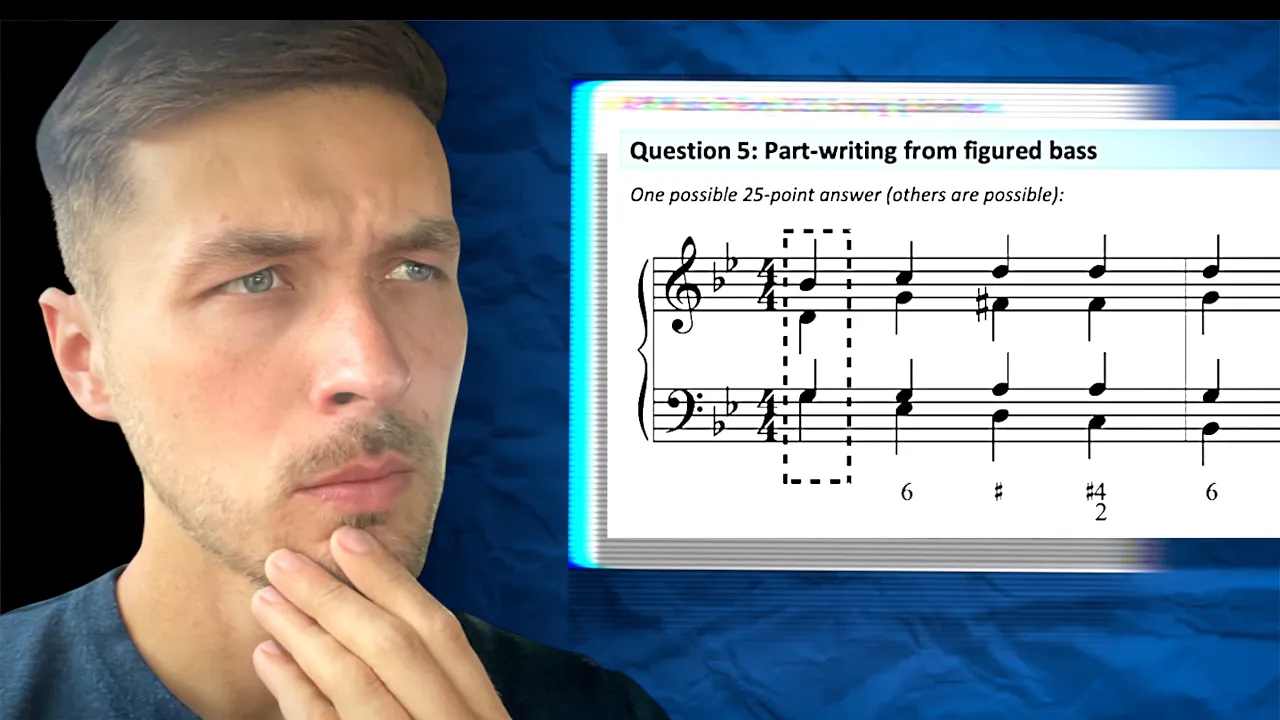
Study of chord inversions (first and second inversions) and interpreting figured bass symbols.
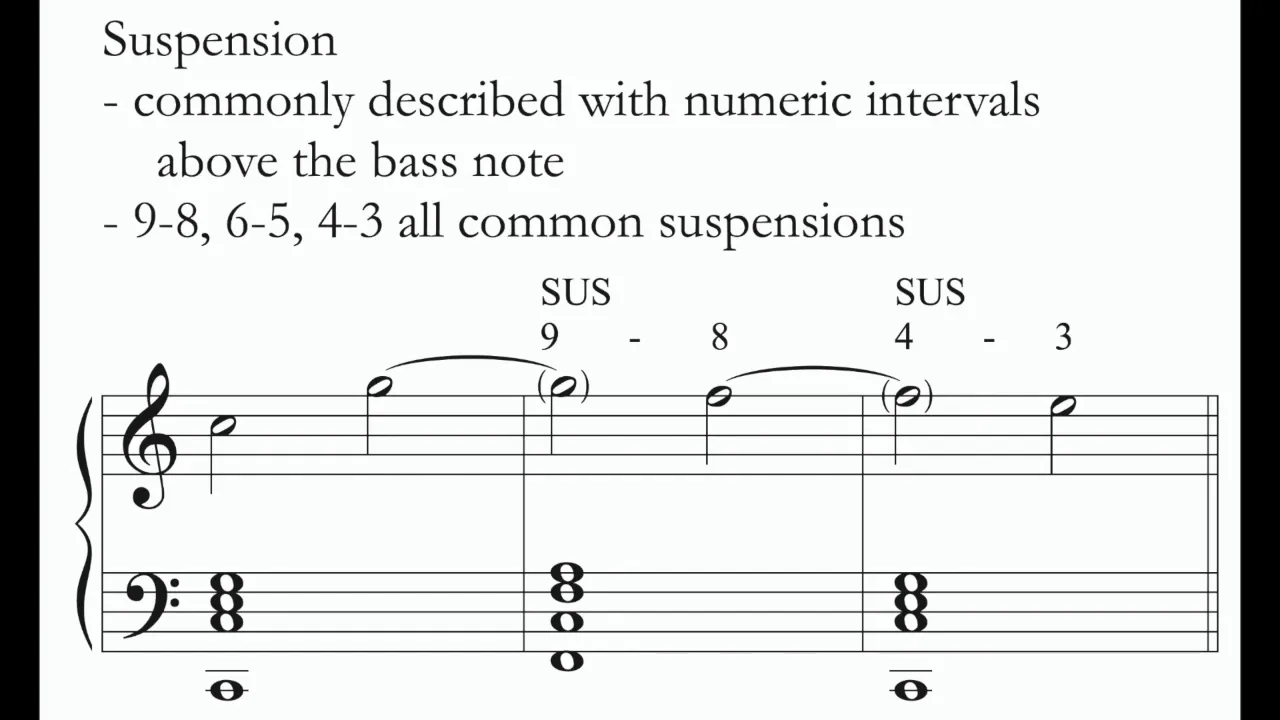
Incorporation of non-chord tones, such as passing tones, neighbor tones, and suspensions, to decorate the voices.
Voice leading rules for writing and resolving dominant seventh chords and other seventh chords.
Exploration of chromatic harmony, including secondary dominants and modulation to closely related keys.
Practical application through the analysis and composition of Bach-style four-part chorales.
257.7K views7.9Klikes28:04Original Release: 2020-10-29
- Hi, I'm Gareth.
And in the next few minutes we're going to explore a kind of beginner's guide to writing four-part harmony.
And I know there are many people out there who would love to be able to do this, so let's see how we get on.
So we'll work on the basis that we've got some kind of given melody for starters.
Lots of people out there writing your own music and you may have come up with this cracking melody and you thinking, "Wow this could be the best melody ever, "but I don't know how to put chords with it, "how to write harmony, "how to do it in four-parts if I was asked to do that."
Maybe people who are preparing for exams and they've got to do some of this stuff for exams.
So we're just going to sort of take a look at some fundamentals.
We've got other videos out there, which demonstrate how to do some more sophisticated things with a harmony, but this is just going to be kind of how do I make the essential choices here?
So, we've got four bars of a melody in the key of C major.
So the first thing is to work out what my chord options are.
So the way to do that is to write out the scale of C major.
Now you notice, I haven't put C at the top, I've gone, C, D, E, F, G, A, B.
Because if I go to C at the top, well it's going to give me the same chord as I've got down here.
You can put it in if you want to, but if you do don't call it VIII.
Call it I again because it's one, just an octave higher.
When we label our chords, by the way, we label them in Roman numerals.
And it's just to show that we're talking about chords.
And if we put numbers it might look like it's fingering, or number three might look like a triplet or something else.
There are two forms of doing the chords.
One is called basic Roman which is what I'm doing, but there's also something called extended Roman where you put your minor chords in a kind of lower case, so if you wanted to show which chords were minor and which were major, you would do this, but don't worry too much about that.
This is what it would look like in extended.
And then this is a diminished chord, so it's in a different category.
But that's how that works.
What you find is in any major key, chords I, IV and V are major chords.
Chords II, III and VI are minor chords and chord VII is a diminished chord.
You don't need to worry too much about that at this stage, but just so you know and also if you see basic Roman, that's what it looks like.
If you see extended Roman, you know what that's telling you.
The large uppercase things are major chords and the lowercase things are minor chords.
Okay now the thing is, every note in the melody will appear in three different chords because what we do with these notes in the scale that I was talking about is above each note, we put the third note on the fifth note.
So, here we've got C.
A third above C is E.
A fifth above C is G.
So that gives me chord I.
I take the second note to the scale D.
I put a third above D which is F and a fifth above D which is A.
And I do the same with each of these chords.
Just take the fundamental note of the scale and add the third and the fifth above it.
Now some of you will say well, "Why aren't there any sharps or flats "or anything like that?"
You don't need that because you're in the key of C major.
So every single chord follows the key signature, so no sharps, no flats.
If you were in the key of D major where you've got F-sharp and C-sharp, then every time you saw F in a chord, it will be F-sharp.
Every time you saw C in a chord, it would be C-sharp.
But I'm doing in C major for the sake of simplicity at the moment.
So when we look at the first note C, can you notice that C is at the bottom of chord I.
It's at the top of chord IV and it's in the middle of chord VI.
Now that tells me that C will fit with I, IV or VI.
Well, what does that sound like?
If I've got this C the first note and I put chord I sounds quite good.
If I put IV.
Sounds good.
If I put VI.
Well that sounds good as well.
But if I put VII.
It's a bit kind of clashy, isn't it?
So, that's why you've got to find a chord that fits with the note.
So, one job you can do is go through the notes and work out which chords actually fit.
So I does.
IV does and VI does.
I'm going to do this in basic Roman to keep it nice and simple for now.
Okay, now to kind of reduce your journey time with this, we've done C so there's C again.
There's C again.
There's C again.
There's C again.
So the same options are going to apply to every C aren't they?
So again.
And all we're doing at the moment is listing options.
There we go.
And there we go.
Now, how are we going to decide between those three chords?
Well that's a job that we'll have to do and fundamentally we're going to do it through our ears.
We're going to say actually what's the sound that I really want here?
What to me sounds best or ideal for this moment?
But you might think about things like this.
If we're in the key of C major, we need to sort of establish the key of C major from the first chord.
So chord I would do that job better than anything else.
It's kind of like oh okay here we are, scale of C major.
Chord I.
If I start with chord VI, I could be thinking, am I really in C major or am I say in A minor?
It could sound a bit like we're different key.
So there's a lot to be said for having chord I at the beginning.
So we can make that decision, couldn't we, that we're going to go for I.
You might take the same view of the last chord as well.
So, we might want to finish on chord I.
Now, we also have these things called cadences.
So when we come to the end of a phrase, the last two chords of the phrase form a cadence.
So, how does the cadence thing work?
Well, if I go V followed by I.
Well, that is what we call a perfect cadence.
So that's one of our possibilities for the last two chords of a phrase.
If I go IV to I, I get something called a plagal cadence.
If I go anything to V, but it's normally, I, II, or IV to V, that's called imperfect.
And if I go V to VI, that's called interrupted.
We use a cadence when we come to the last two chords of a phrase, so the last two chords here, the last two chords there, want to be one of those cadences.
Now why am I talking about that now?
Well, we've already decided to make this one I.
So we either need a perfect or a plagal cadence because they're the two cadences that finish on I.
So, if I'm going to have I as the last chord, the previous chord must be IV or V.
Well V is not here, but IV is, so that helps me to make another decision.
That is going to be IV followed by I to give me a plagal cadence.
So we're kind of doing all this just thinking about some of the basic pointers to writing harmony before we even worry about what they sound like.
What do these cadences sound like by the way?
Perfect cadence, V-I.
Oh, sounds like a sort of full stop, doesn't it?
Plagal cadence.
It's a different kind of full stop, isn't it?
But it's the end of something.
An imperfect cadence sound seems more like a sort of musical comma.
I-V.
Or II-V.
Or IV-V.
So it's a bit of musical punctuation, but it's more like a comma than a full stop.
Interrupted, possibly more like a musical question mark.
V-VI.
Ooh, slight surprise that chord, isn't it?
So, if you wanting musical full stops, go for the perfect and the plagal.
If you want a kind of musical comma, so we come to the end of something, but it's not the end of the piece, imperfect.
If you want to have a slight surprise at the end of the phrase, use the interrupted.
As long as they fit with the given notes.
So you see, we've looked at all the C's in the piece and we've already made some decisions about why we're going to start with chord I and where we're going to finish by having chord IV followed by chord I.
Now, you might then look back to the C before it and say well, if I've got IV there, do I want to have IV there?
Well not really, do I?
So, do I want to have the chord twice in a row?
Probably not.
Do I want to go I-IV-I?
Well you could do.
I-IV-I.
Sounds right, but do I want to go VI-IV-I?
Possibly.
But you know we could keep our options open on that, but I'm just getting rid of the IV, so we don't just do two IV's.
So IV, IV again because that can feel a bit kind of stuck.
Also going from a weak beat at the end of a bar onto a strong beat at the beginning of the next bar in the same chord usually not the greatest idea.
So you see we're already beginning to make some decisions, aren't we?
Brilliant, now let's move on.
The next note is G.
G is at the top of chord I.
It also comes in chord III.
And it also comes in chord V.
Just to be able to get that labelled correctly.
Chord V.
So, if we've got any more G's, well the same thing is going to be true there, isn't it?
So this G is going to throw out the same option.
So I, III, or V.
You notice these chords are kind of miss one out choose the next one.
Number one, miss out two, choose number three.
Miss out four, choose number five.
It's kind of how they work in the choice of the three chords.
Okay, any more G's?
No, we've dealt with the G's.
Okay, there's an A here.
Well A is at the top of chord number II.
A is in chord number IV.
A is in chord number VI.
So that gives me some options there.
Have I got any more A's?
No, I haven't, so we'll move on.
This note is D.
Well D is in chord II.
It's also in chord V.
And it's also in chord VII.
Now, I'm not saying don't use chord VII, but we said earlier chord VII is diminished, so it's a little bit of an awkward chord to use.
So a lot of textbooks say don't bother we chord VII, it's too much trouble.
I don't agree with that particularly, but you know treat it with caution.
So at the moment if you're just sort of starting out with this, you might think well I'll leave seven to one side simply because it's the only diminished chord in a major key.
All right, now does this help us with any other D's?
Yes, it does, here's one over here.
So that's going to give me II and V and this VII option as well.
Now, I've got E sitting here so E is in chord I.
It's also in chord III at the bottom there look.
And it's in chord VI.
So there's another option.
Now I've got the same options sitting around the corner here.
I, III, VI.
Okay I've only got one note left to sort out.
That's this F.
Well where's F?
It's at the bottom of chord IV.
What else have we got F?
It's sitting in chord II.
And it's sitting in chord VII.
Oh yeah that's that VII again.
So, maybe we could do that.
So technically speaking, as long as you use one of these chords with these notes, it's going to work perfectly.
In a real tune, you might have a few notes around that don't quite belong to the chords.
They're what we call inessential notes.
They're kind of extra little notes.
They're often quavers, you know, eighth notes that just gets sprinkled in to kind of make the tune sound a bit more jolly, and you don't have to worry too much about them.
But what I've done here is to just write a very straightforward melody that's just getting a note that belongs to each chord.
And what we've done now is to work out which chords absolutely fit.
Okay, now we started to make some decisions, didn't we?
Because we've got this cadence at the end that we said we're going to go for a plagal cadence.
So, let's firm up on that one.
So we know we're going to go IV-I at that point.
Brilliant.
There's another cadence sitting here because these are the last two chords of the first phrase.
So when we look at all these options, what can we end up with?
Well, we've got cadences that finish on I.
So in which case, it could be V-I.
IV is not here so plagal won't work.
There are no cadences that finish on III, so we can call it a draw with that, can't we.
And if it finishes with VI, it will have to go V-VI, because there's an interrupted possibility that we're going to put in there.
Well, doesn't really matter which one we go for.
If I go V-VI, I'm going to get.
If I go V-I, I'm going to get that.
I think actually for various reasons V-I might be better than V-VI, and I'll tell you the main reason for that.
If I go for V-VI, the bass will have to go G, the bottom of V, to A, the bottom of VI.
And then I'm going to have D to E at the top and G to A, at the bottom.
And they're going like in the same direction in perfect fifths.
That's what we call consecutive fifths.
And we try to avoid consecutive fifths going from one chord to the next with a perfect fifth in one pair of parts followed by a different perfect fifth in the same pair of parts.
So V to VI is going to throw up some trouble for us, which means that we probably want to go V to I.
So there's another decision that we're just sort of homing in a bit on there.
So, we've got some chords that we already know about, haven't we?
Which is sort of useful.
And maybe we can start to put in some notes.
Now if you're going to write in four-parts, you might be saying to me well, "Each of these chords only got three notes, "so where's the fourth one come from?"
Well, you can double up on any of these notes, so if you want to have two C's, that's fine.
You can do that.
Two E's is not quite so good because we try not to double the major third.
So, chords I, IV, and V are major.
So the thirds in those chords are what we call major thirds, so we try not to have them twice in the same chord.
Minor thirds that you get in II, III and VI, you can double them.
Just sounds a bit better if you don't double the major chords.
So okay, let's get something in here that uses the notes of chord I.
So do you see what I've done there?
I've got C, G, E, C.
C, E, G.
It's all those notes.
And I've got a C at the top and I've put a C at the bottom.
And I've tried to kind of space out the notes a bit.
So C, G, E, C.
That sounds quite nice, doesn't it?
I could have organised that differently.
I could have had G in the alto and E in the tenor.
Like that.
I could have had C in the tenor, E in the alto.
That would have given me three C's, so that's possibly not quite so good, but that's quite a nice balance of that chord, isn't it?
So that gives me a chord to go on.
When I get over this cadence, well we said we were going to put another chord I.
So let's put some notes in that might fit there.
So do you see what I've done?
C, E, G.
I'm using it again.
Two C's.
E at the top.
G in the middle.
So that's using the same chord, but it doesn't look like this.
Same notes.
Slightly different layout.
I'm trying to spread the notes over the four-parts there, but you can see what I've done there.
I've doubled the C again.
But this time in the two bottom parts as opposed to the outer parts there, but that works quite nicely.
Before it I said we we're going to put a V.
Well, V is G, B, D.
So how could I put a V?
I might decide for example to do something like this.
Okay, so chord V is G, B, D.
G, B, G, D.
So I've doubled the G, but there's the chord.
What I'm trying to do is to get as much stability as I can.
Sometimes it's quite good to get the top part and the bottom part to kind of do a bit of contrary motion, you know going in opposite directions.
You can't always do it, but that often helps you write good harmony.
In the middle parts going for a little bit more stability is quite good.
So the idea you've got a G in chord V and a G in chord I.
So you could put them both in the same part.
That's quite helpful.
This is just moving by step, isn't it?
So you see what's going on there?
I could work on my last chord, couldn't I?
The last cadence.
Well, maybe my final chord I could look like this.
So, I've come back to the chord that I started on.
So it's a C, E, G again.
Before it I want chord IV, so F, A, C.
Well, can I think about this stability with the parts again?
So the bass is going down from F to a C, but the tenor and the alto parts are just moving by step.
Well do you know what?
We're starting to write some decent four-part harmony.
So, so far we've got the first chord.
We've got this cadence.
And we've got this cadence.
So you get the idea putting the cadences in first.
Not a bad idea.
Maybe dealing with your first and last chords as well.
You're starting to get a skeleton of how this piece could go now.
Okay now then, we've then got to think well what can we do next?
Well, you might think well I've used chord I there so do I want to use chord I again?
Well possibly not but you could do or you could do this.
Now, let me just show you something else that's sort of quite useful if you've not come across this before.
I've gone for chord I, even though we had chord I on the previous chord just to sort of show you something.
But I'm going to call this Ib.
Why am I calling that Ib?
Well I'm using chord I, C, E, G.
When I have C at the bottom of the chord, we call it Ia, which is just abbreviated I.
So if just see I, assume it's Ia.
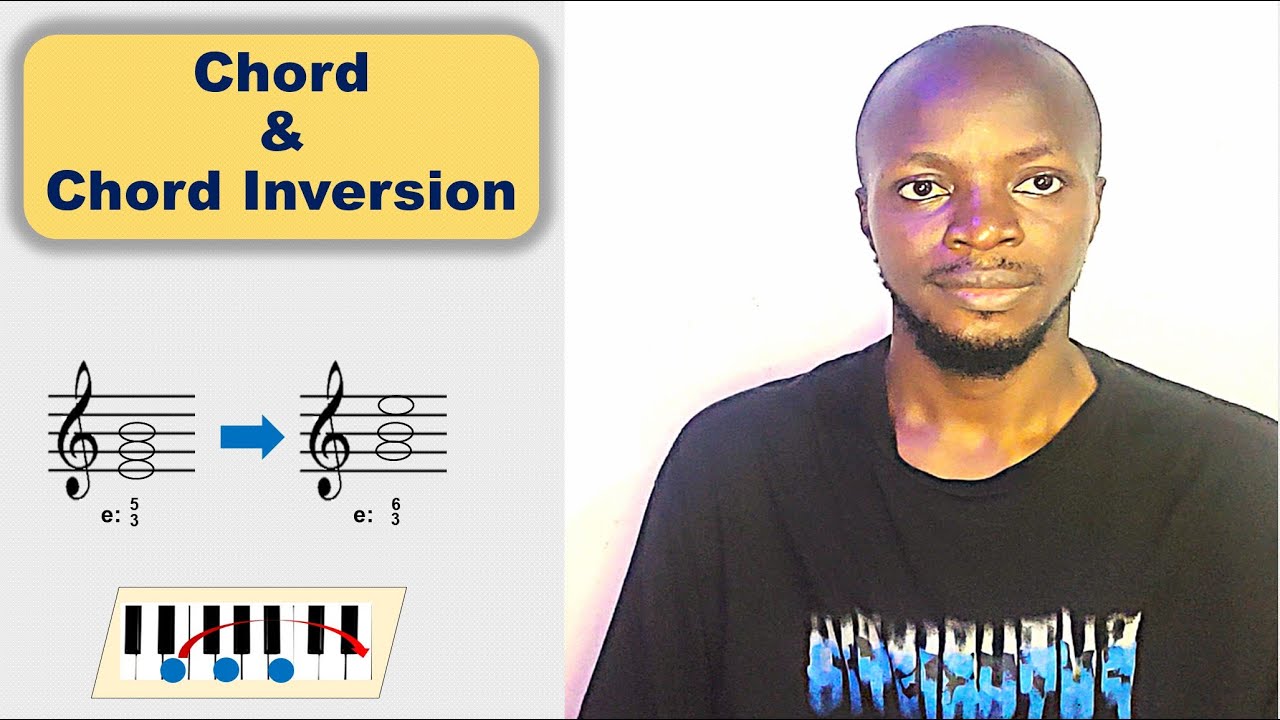
And that means the bottom note is the lowest sounding note, and we say it's in root position.
So Ia, the lowest note is at the bottom of the chord.
Root position.
If I put E at the bottom, but I'm using the notes C, E, G, so it's not chord III because chord III's got different notes, E, G, B.
I'm using the notes C, E, G, but I've got E at the bottom.
Then the third of the chord is at the bottom.
The middle of the chord.
And I say it's chord I in first inversion.
And I call it Ib.
So Ib, chord I, first inversion.
The middle note's at the bottom.
If I had G at the bottom, but I've got the notes C, E, G.
The C, E, G says it's chord I, but with G at the bottom, it's Ic.
It's chord I in second inversion.
So that's what's going on there.
Okay well, having done that I've got to go and make some other decisions.
Now there comes a point where you can just kind of, you know, experiment a little bit and think well do I prefer chord II or chord IV or chord VI.
So if I start with I.
Then I go to Ib.
Do I want chord II?
Or I, Ib, IV.
Or I, Ib, VI.
Well they're all perfectly possible, aren't they?
But for argument's sake, let's go for IV.
So, I'll use IVa this time because I've had Ib there.
And maybe I'll do something like this this time.
So I've got F, A, C from chord IV there.
Okay, that all works right, doesn't it?
So we've just chosen chord IV.
All right so other options existed there so we'll leave them on the board because you might look at it and think, "Well do you know I prefered the VI."
That's fine.
Go for VI.
Go for it.
Then where am I going to go next?
So if I've gone I-Ib-IV, do I want to go back to I?
I'm sort of thinking not because we've had I, I, I, I.
We're going to have too many I's, aren't we?
So maybe I's not such a good idea.
What about III?
I, Ib, IV, III.
You might like that.
I think the danger of going to III is the bass comes down one by step, which is the same as that and then we might get some of these consecutive fifths.
And you might even get consecutive octaves where you've got two parts on the same note an octave apart moving to another octave apart in the same path.
So, instinct kind of tells me that V is going to be a bit safer here.
So, I've gone for V, G, B, D, and I'm keeping it in root position so it's a Va.
Okay well, I could go on to IV or to VI so you know you decide what you think.
Or we can have I again.
I, Ib, IV, V, I, V, I.
This feels like a lot of ones, doesn't it?
I, Ib, IV, V, IV, V, I.
I think going IV to V, we'll go F, G, we'll have fifths again with the top.
Not so good.
Maybe VI is a good choice.
And VI we haven't used it before, have we?
So, do you think we might enjoy using a VI here?
I think we might.
Now, just to show you something.
It's perfectly possible to have the odd note like this where you just share it.
VI is A, C, E.
I've got tenor and the bass sharing the A, C, E, so I've got my chord VI.
But it's just helped, hasn't it, to have a different chord, chord VI.
Also VI is a minor chord.
So we've got all these major chords and now we've got a minor chord in.
So it now sounds like this.
I, Ib, IV, V, VI, V, I.
Sounds pretty good, doesn't it?
We have got a little technical problem in that there's a consecutive fifth crept in.
You see G to A, D to E makes that a consecutive fifth, which is a bit of a pain.
We might be able to fix it in some way.
There's different ways of doing that.
Well one thing we could do, another one of these doubling things.
Do a doubling there and I could have one of these things I was talking about earlier, a little passing note, you know, that just runs in between just to make it a bit more interesting.
That would work quite nicely, wouldn't it?
And anywhere I'm just skipping up a note like this, I could put a passing note in.
So I could have another one in there if you wanted to just to make it a bit more interesting.
Ah, suddenly starting to sound like a piece of music, isn't it?
Which is great.
Okay, I've got one bar of notes to go.
So we've said well maybe VII is worth not fussing with too much at the moment, but just for the sake of argument, let's go for a choice, Maybe where we go IV, I.
And then maybe we could try and get the two outer parts going in opposite directions.
Go for a II there maybe.
And then maybe I'll go for this but go for I, but make it a Ib chord.
So we've got one of those first inversion chords like we had there.
You don't want too many root position chords.
You may decide we've got too many in those piece, but that would just give us another bit of a variety, but you see how that's coming down, but that jumps down and then comes up.
So it's giving you a nice polarity between the top and the bottom part.
So if I go for chord IV, let's now fill out the chord.
So I could do something like this.
Now then that we could do something like this with our chord II.
And then onto our chord Ib.
You see how trying to get some reasonable stability in the parts?
And you know why not have a little passing note in there just to make it.
It's got to pass by step.
So you see, because I'm going from A to C, B is tucked in between.
So that would pass quite nicely.
So I've got a kind of harmony for this whole tune now that goes like this.
I, passing note, Ib, IV, V, passing note, VI, V, I, with a perfect cadence there, IV, I, II, with a passing note, Ib, IV, I, with a plagal cadence at the end.
Quite a lot to take on board there if you really are a beginner at doing this stuff, but I hope those basic principles make sense.
If you want to rewind this video and have another go at that, you could always stop and pause along the way and live with it, but if you get the idea of how that works, then you have accessed the ability to write some basic four-part harmony, which I'm sure you'll find incredibly rewarding as I have over many decades.
So good luck with your venture into writing four-part harmony.
Up Next

35:19
Music Theory: Harmonic Progression & Harmonizing Melodies
@ChristopherBrellochs
88.2K views•2016-10-25

10:20
Mozart's Musical Dice Game Explained: History, Rules, & Fun
@webpianoacademy
5K views•2023-03-13
16:22
Understanding Tritone Substitution in Music Theory
@MusicMattersGB
81.2K views•2021-10-18
10:49
Understanding John Coltrane's Giant Steps: A Music Theory Analysis
@Vox
10.4M views•2018-11-12
Related Study Plans & Knowledge Roadmaps
Structured learning paths in Music Theory
music-theory
Composing Galant Music: Partimento & Schemata
01Foundations of Figured Bass and Keyboard Harmony
02The Rule of the Octave (Regola dell'Ottava)
03Galant Schemata: The Building Blocks of Form
+ 2 more learning modules
30h5 modules
Explore Roadmap
music-theory
Decoding Overtone Series: Tuning & Drone Music
01Acoustic Foundations: The Physics of the Overtone Series
02Tuning Systems: Equal Temperament vs. Just Intonation
03Microtonality and Spectralism: Beyond Standard Pitches
+ 2 more learning modules
24h5 modules
Explore Roadmap
music-theory
Impressionist Harmony: Scales, Planing & RPGs
01Foundational Music Theory: Keys, Intervals, and Seventh Chords
02Impressionist Color: Chord Planing and Parallel Harmony
03Whimsical Textures: Pentatonic Cascades and Whole-Tone Scales
+ 1 more learning modules
14h4 modules
Explore Roadmap
music-theory
Negative Harmony: Axis Reflection in Indie Pop
01Music Theory Foundations: Scales, Intervals, and Triads
02Functional Harmony and the Circle of Fifths
03Demystifying the Negative Harmony Axis Reflection
+ 2 more learning modules
16h5 modules
Explore Roadmap