















![💡ADORNAR LÍNEAS de BAJO ["SIN PENSAR"] - Ni acordes, ni modos, ni notas! - Armonía bajo eléctrico](https://i.ytimg.com/vi/Y-iKkHv-2Co/hqdefault.jpg)


The Rule of the Octave is a core teaching component of the Partimento tradition that provides voice leading patterns over ascending and descending stepwise scales, originally devised to codify harmonic possibilities for use over bass notes; by the 18th century, a standard version emerged where chords remain essentially the same in both major and minor keys, with tonic and dominant harmonies predominant, super tonic and subdominant chords appearing only on the sixth degree of descending scales, and chromaticism introduced as secondary dominants and French augmented sixth chords to avoid augmented seconds in harmonic minor scales, with students learning these patterns in all keys using three right hand positions corresponding to doubled root, third, and fifth degrees of the initial chords.
Partimento Bass Lines: The Rule of the Octave Explained
Added:Oh hi everyone although not only used in the part of Minto tradition the so called rule of the octave comprises one of its core teaching components probably devised as a means of codifying some of the many earlier rules governing harmonic possibilities for use over base notes the rule of the octave provides a set of voice leading patterns over ascending and descending stepwise scales which can be used as a basis for composition improvisation and realizing figured and unfitted basis several earlier interpretations of the rule exist with some versions using only the notes of the scales tonic hex Accord this hexa quad version for example includes a dominant chord after the sub mediant you and these versions include descending options between the scales tonic and dominant degrees by the 18th century a standard version of the rule had developed in the standard version the chords are essentially the same in both major and minor keys was tonic and dominant harmonies used predominantly along with super tonic and subdominant chords only on the sixth degree of the descending scales and both major and minor as chromaticism introduced here as a secondary dominant and here as a French augmented sixth chord typically to avoid the Augmented second between the sixth and seventh degrees of the harmonic minor scale the melodic minor is the favoured scale choice [Music] you [Music] you you [Music] you while the basic rule of the octave patterns use only a single cord often played vertically over each of the scales degrees the chords notes may also be melodically embellished here for example the bass notes of this fragment of an ascending a minor all of the octave is prolonged by sixteenth notes [Music] rule of the octave patterns where to be learned by students in all keys using the three positions of the right hand these positions correspond to the laughs of the initial chords of the pattern in first position the initial chord has its doubled root note in the top part in the second position it has its third degree and in the third position its fifth degree with each right hand position the core type and their inversions remain identical but the right hand spacing and voice leading has changed familiarity with each right hand position and all keys meant students were capable of using the required progressions or part they're off to harmonize any stepwise bass line other complementary patterns still based on the notes of a diatonic scale were devised for use with disjunct mostly sequential bass lines chromatic and diatonic stepwise bass lines and the embellishment of a scales degrees the embellished scale degree patterns differ from the rule of the octave in that while and the rule of the octave each scale degree supports a single chord which may itself be embellished or used as a single vertical sonority the embellished scale degrees support two or more notes which may suggest that change of harmony on each degree or a series of recurring intervals used sequentially in these patterns often the intervallic pattern is more important than any chords which may be present and it is typically the patterns framing chords which define the key while the repeating pattern in between is often totally ambiguous the ascending five-six pattern for example which predates the rule of the octave and is in itself an elaboration of a 6 6 pattern even in its most basic version includes two notes for each scale degree the vertical sonority forming the sixth interval however is typically regarded as like required corrective to avoid consecutive fifths between the root position chords formed by the five figure you chromatic stepwise baselines also may use only a single chord over each chromatic note embellishing the diatonic scale [Music] you or may include more than one chord or repeating sonority over each scale degree [Music] you you you of the many possible disjunct sequential baselines the majority can be reduced to an underlying cycle of fifths progression which may be embellished in a number of ways from the relatively simple such as here where each base note supports a single root position triad to the more complex such as here where in the beginning bars each of the repeated quarter note beats supports a single chord the second of which is either a secondary half diminished or dominant seventh of the following chord in this example the resolution of the secondary half diminished 7th chords fifth degree is always by leap upper fifth to the doubled root note of the following chord and the resolution of the secondary dominant seventh chord seventh degrees unusually leaped down a fourth again to the following chords doubled root note you you it must be remembered that all of these patterns were designed to be used as a basis which could then be developed further or used in its simpler form many of the patterns however while useful for harmonizing diatonic stepwise or sequential baselines for other baselines such as those disjunct lines which don't move sequentially or are a mixture of conjunct and disjunct motion they are less effective to deal with this deficiency and to determine the tonality of a chord or chords to harmonize specific base motion teachers of the part of mento tradition devised additional rules such as - ascending notes of - second apart I heard as the seventh and first degrees of a new key here for example the raised fourth degree in G major is treated as the seventh degree in D major and is harmonized by that Keys first inversion dominant chord moving to its tonic [Music] - ascending Knights a major second depart I heard as the fourth and fifth degrees in the new key here the a as her as the fourth degree in E minor and is harmonized by that key supertonic half diminished seventh chord and first inversion moving to its dominant [Music] two nights descending by - second I heard is the sixth and fifth degrees of the new often minor key [Music] and the notes of a descending major second I heard is the second and first degrees of the new key it should be noted that in all of these examples the designated notes are approached by leap and are part of a baseline formed by a mixture of conjunct and disjunct motion I hope you found this useful thanks for watching see you next time
Up Next

Joseph Riepel's Secrets of Galant Melody | Early Music Sources
@EarlyMusicSources
27.6K views•2024-11-30

Mozart's Musical Dice Game Explained: History, Rules, & Fun
@webpianoacademy
5K views•2023-03-13
15-Minute Haydn Sonata in G Major Analysis: Form & Harmony
@decipherguitarandmusictheory
15.4K views•2018-05-26
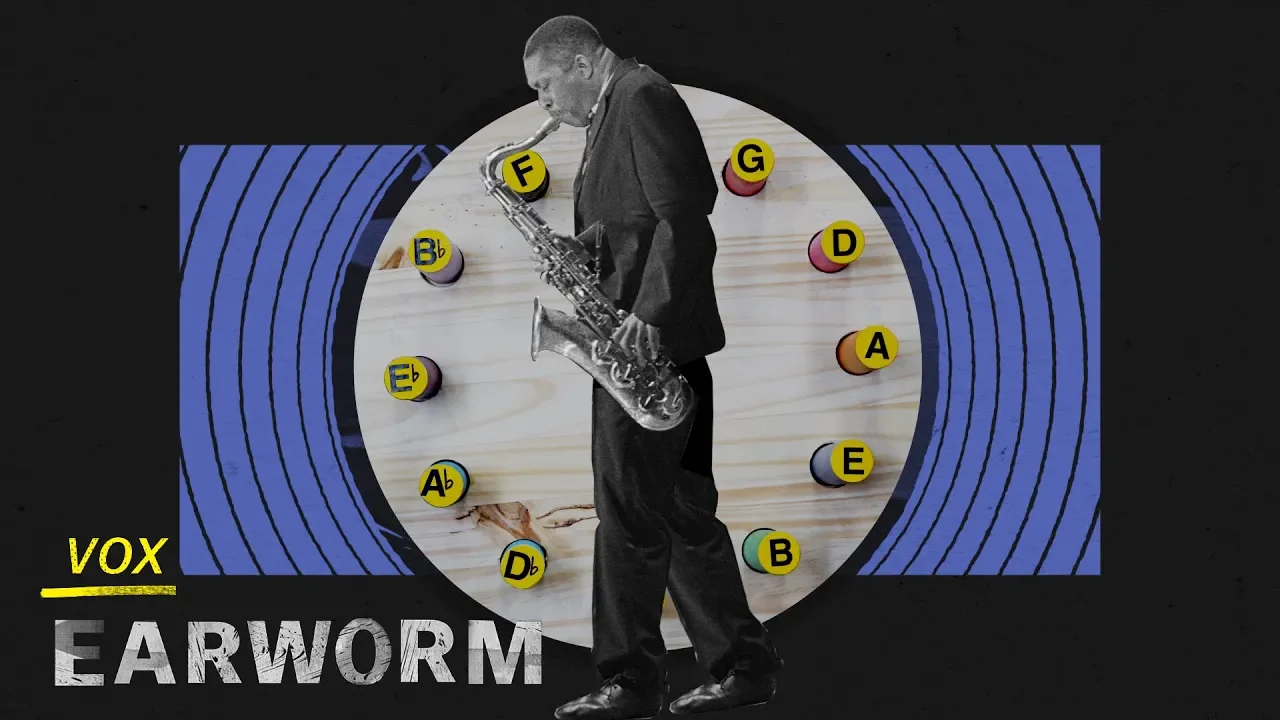
Understanding John Coltrane's Giant Steps: A Music Theory Analysis
@Vox
10.4M views•2018-11-12
Related Study Plans & Knowledge Roadmaps
Structured learning paths in Music Theory