














![FIGURED BASS Makes Chord Inversions RIDICULOUSLY Easy To Understand [Harmony]](https://i.ytimg.com/vi/yUHWfPebR2c/sddefault.jpg)












The Roman numeral system is a notation method that represents chords within a key using Roman numerals (I, ii, iii, IV, V, vi, vii°), where capital letters indicate major chords, lowercase letters indicate minor chords, and a circle indicates diminished chords; this system allows musicians to easily identify chord relationships and create transposable chord progressions across different keys by using the same numerical pattern regardless of the specific key being used.
Explaining Roman Numeral Analysis in Music Theory
Added:Understanding major and minor scale construction, including how to identify key signatures.
The ability to build and identify basic triads (major, minor, and diminished) on different scale degrees.
Familiarity with the concept of scale degrees and their numeric representations (1 through 7).
Basic knowledge of intervals, particularly thirds and fifths, which form the foundation of chord construction.
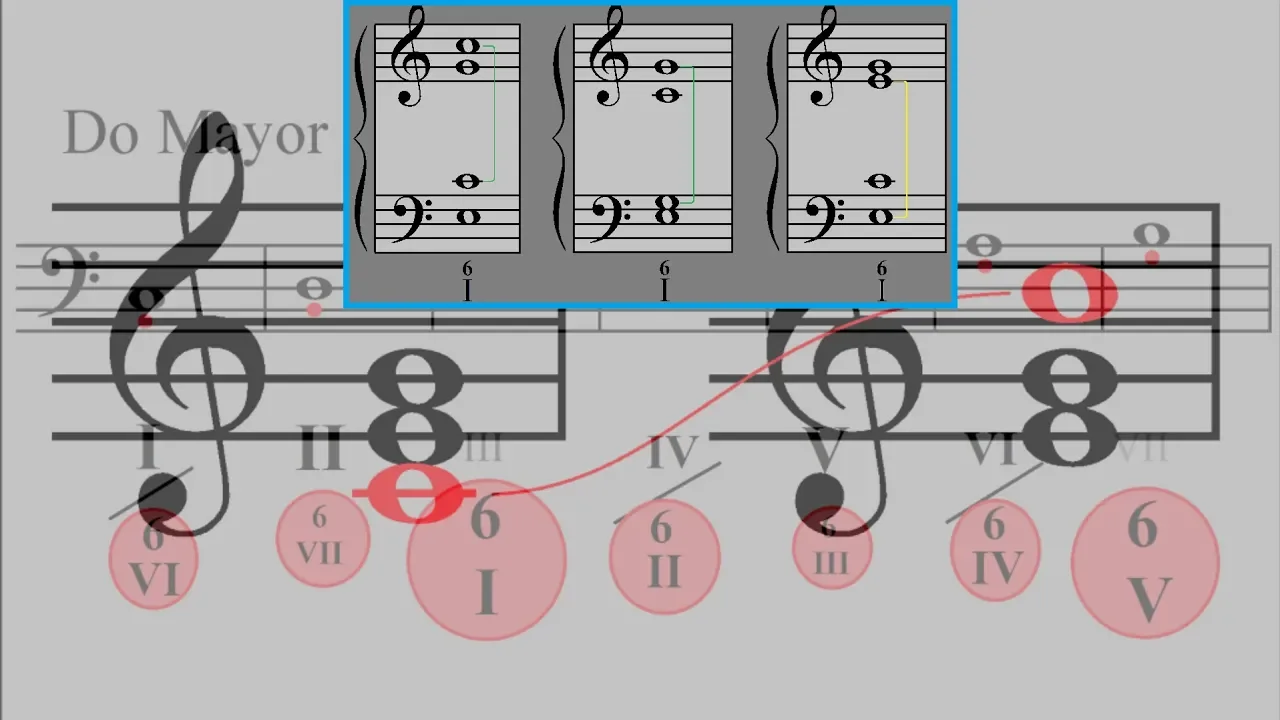
Studying chord inversions and learning how to represent them using figured bass notation (e.g., I6 or V6/4).
Understanding functional harmony, specifically how chords function as tonic, predominant, and dominant within a progression.
Exploring chromatic harmony, including secondary dominants, borrowed chords, and modulation to different keys.
Applying Roman numeral analysis to full musical scores from classical or contemporary repertoire to map out song form and harmonic structure.
199.2K views5.2Klikes7:09Original Release: 2012-11-07
hey guys uh I wanted to do a quick lesson today on What's called the Roman numeral system it's really simple um if you already understand the whole concept of of chords within a key which we've talked about before then this is almost a no-brainer uh but I I couldn't do it before cuz I didn't have a whiteboard but now I've got this sort of new camera set up with a this is actually a desk from Ikea but it works great as a whiteboard so I can show this to you now it's really easy though so quick review of of this whole idea of chords in a key and then I'll show you how this is supposed to work if you remember talking about uh we'll take a really easy key C major all right remember talking through the key this whole idea that you could you could take the first note in the key and you could use it to create a chord use it as the root note of a chord like this you wind up with a C major chord um You can call that just chord number one or it's you know the the first chord in the key call it chord one uh and the Roman numeral system is just a way of writing that down in a way that's simple um and easy to kind of at first glance know exactly what you're looking at so if I wanted to write this chord down using the Roman numeral system just write um Roman numeral number one and I know that that represents chord one in my key um if I go to chord two kind of work through that chord remember it's just the chord based on the second note in the key I get this chord and I can write that down as chord number two it's like that um and I can go through each one of the chords in this key key and represent them as Roman numerals just like this uh if you don't remember from like early middle school 1 2 3 you write number four is a V with a one on the left side and then a v is five the I is six hopefully you still know that um and there you go there's only seven chords in the key so you only go up to to number seven so I I wrote some of these differently I wrote this one as a a capital Roman numeral these two is capitalized but um these are lowercase so is that one and this has a little circle after it what this is doing is it's uh giving you kind of a visual way of representing each chord in this key in it's sort of descriptive it tells you exactly what kind of chord it is so Capital Roman numeral means that the chord is Major a lowercase means that it's minor and then if you remember back to talking about the basic chords the little circle means it's diminished so that right there is a way of writing down every chord in my key to where just looking at it you can tell exactly what they are I know that chord 4 is Major I know that chord six is minor and that's pretty much the idea of this Roman numeral thing it's just a way of kind of visually representing all the different chords in your key so you might think why is that so significant I mean you could just use numbers 1 through 7 to represent the chords and there's a couple reasons why this is so useful um for one uh it if you see a Roman numeral you know we're talking about chords right away if you saw note number one number three that could be talking about like an interval like if we had G7 we're using that seven to talk about um that fourth note in the chord but the Roman numerals are reserved for chords we know we're talking about chords it also makes it really easy to uh kind of map out chord progressions if if we're looking at kind of shifting from one chord to the next we can represent that as something like this we could say chord one chord two chord five cord one that right there that's a nice little chord progression um and and this is really powerful actually because this is sort of a a general way of looking at this this isn't actually tied to any specific key if you remember talking about Keys every major key is the same so if we worked out a progression in the key of C we have a one chord A two chord a five chord then a one chord we represent it this way we could say okay let's play this same thing in the key of G and we would start on in we' start on the one chord then the two chord then the five chord and then back to the one chord so that sort of this like abstracted progression of chords it could fit in whatever CU we want to um so this this this is the standard set of chords you get in a major key now there's also sort of a standard set of chords you get for a minor key it's going to be different than that because a minor key is set up differently so I'll show you the one for a minor key you could figure it out yourself probably kind of have already but just to be thorough in a minor key uh we'll take another easy one a minor you start on your first note make it into a chord you get a minor chord the minor key one chord is minor um in a minor key the two chord is diminished be careful with that one um let make sure that one's diminished and if we work through the rest of it you get major 3 minor 4 minor 5 major 6 and major 7 that right there is all the chords in a minor key and actually I'm going to write out ones in the major key again so you can kind of compare uh you heard me talk about this before uh trying to remember you know what all the the standard chords are in in each key and I was saying a really easy way to remember this is uh to try to focus on remembering one four and five uh remember in a major key 1 four and five are all major in a minor key 1 four and five are all minor so you just remember that those those three are the same um that gets you most of the way there the only other thing to really remember is is where this diminished chord goes you know both both keys have one diminished chord in the case of the major key it's it's kind of at the end it's your uh seventh chord um and in a in a minor key it's almost at the beginning it's your uh your two chord so if you can just remember that these are the same 1 14 and 5 and remember where your diminished chord goes you can kind of just fill in the blanks you remember that a major key has the three Majors um and then just you put the minors wherever you haven't already figured out like 1 four and five you already know seven you know two three and six are minor same for the uh the minor key 1 four five or minor um here's your diminished so your your three major just kind of go in the in the blanks more or less U so that's that's your Roman numeral system uh we're going to be using that a lot going forward now that I've kind of got set up here we're going to start talking a lot about a lot of new things and uh I'll be using this a lot so make sure you're clear on that um it's real simple though it's uh something to kind of play around with but uh that's it that's all I want to do today we'll get into some new stuff real soon here thanks
Up Next

17:27
Polychords and Modal Voicings in Music Composition
@RickBeato
20.4K views•2016-08-08

10:20
Mozart's Musical Dice Game Explained: History, Rules, & Fun
@webpianoacademy
5K views•2023-03-13
15:17
Circle of Fifths: How to Apply It in Music Theory
@MichaelNew
6.3M views•2015-03-13
10:49
Understanding John Coltrane's Giant Steps: A Music Theory Analysis
@Vox
10.4M views•2018-11-12
Related Study Plans & Knowledge Roadmaps
Structured learning paths in Music Theory
music-theory
Composing Galant Music: Partimento & Schemata
01Foundations of Figured Bass and Keyboard Harmony
02The Rule of the Octave (Regola dell'Ottava)
03Galant Schemata: The Building Blocks of Form
+ 2 more learning modules
30h5 modules
Explore Roadmap
music-theory
Decoding Overtone Series: Tuning & Drone Music
01Acoustic Foundations: The Physics of the Overtone Series
02Tuning Systems: Equal Temperament vs. Just Intonation
03Microtonality and Spectralism: Beyond Standard Pitches
+ 2 more learning modules
24h5 modules
Explore Roadmap
music-theory
Impressionist Harmony: Scales, Planing & RPGs
01Foundational Music Theory: Keys, Intervals, and Seventh Chords
02Impressionist Color: Chord Planing and Parallel Harmony
03Whimsical Textures: Pentatonic Cascades and Whole-Tone Scales
+ 1 more learning modules
14h4 modules
Explore Roadmap
music-theory
Negative Harmony: Axis Reflection in Indie Pop
01Music Theory Foundations: Scales, Intervals, and Triads
02Functional Harmony and the Circle of Fifths
03Demystifying the Negative Harmony Axis Reflection
+ 2 more learning modules
16h5 modules
Explore Roadmap