






![[초급 반주를 벗어나기 위한 LESSON TIP] 다이아토닉 코드/Diatonic Chord (악보 분석 적용)#다이아토닉#재즈화성학#코드분석](https://i.ytimg.com/vi/LhxNLlYp5m4/maxresdefault.jpg)

![20th Century Music Theory [20세기 음악이론] Polytonality and Bitonality](https://i.ytimg.com/vi/rB3808PDLZ8/maxresdefault.jpg)








![NES Longplay [596] Hudson's Adventure Island](https://i.ytimg.com/vi/Ly734lgeIAs/hqdefault.jpg?sqp=-oaymwEmCOADEOgC8quKqQMa8AEB-AH-A4ACwAOKAgwIABABGGUgZSgPMA8=&rs=AOn4CLAhE0Bm5Dez3y-J6KN8BsE6RuAOUw)
Polychords are sophisticated harmonic devices created by layering two or more chords simultaneously, allowing composers to achieve complex tonal colors and modal sounds that transcend traditional single-chord voicings. The key to effective polychord usage lies in maintaining smooth voice leading by identifying common tones between chord layers, such as keeping the tonic note consistent across different major triads while transposing them to create smooth chromatic movement. Composers can achieve various modal sounds—including Dorian, Lydian augmented, Aeolian, and altered dominant—by strategically combining different chord voicings and intervals, while avoiding overly muddy voicings by omitting redundant notes. The interval spacing within polychords significantly affects their sonic character, with different voicings of the same notes producing distinctly different flavors.
Polychords and Modal Voicings in Music Composition
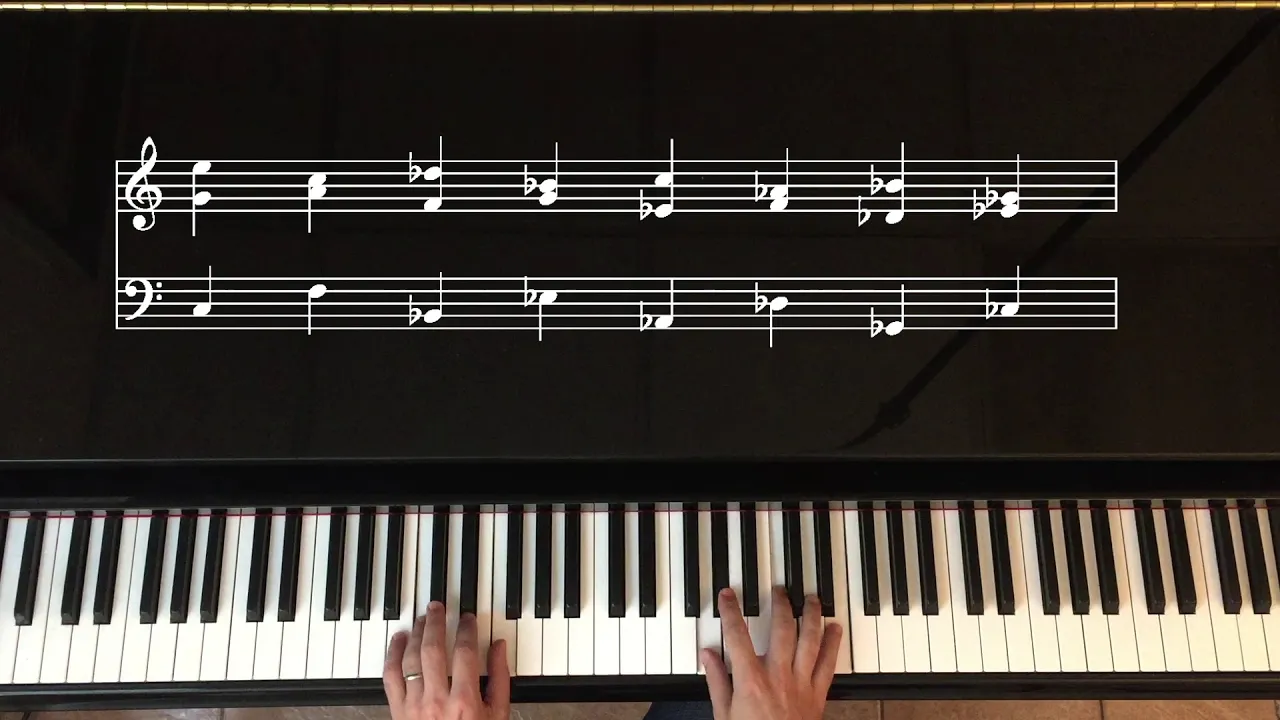
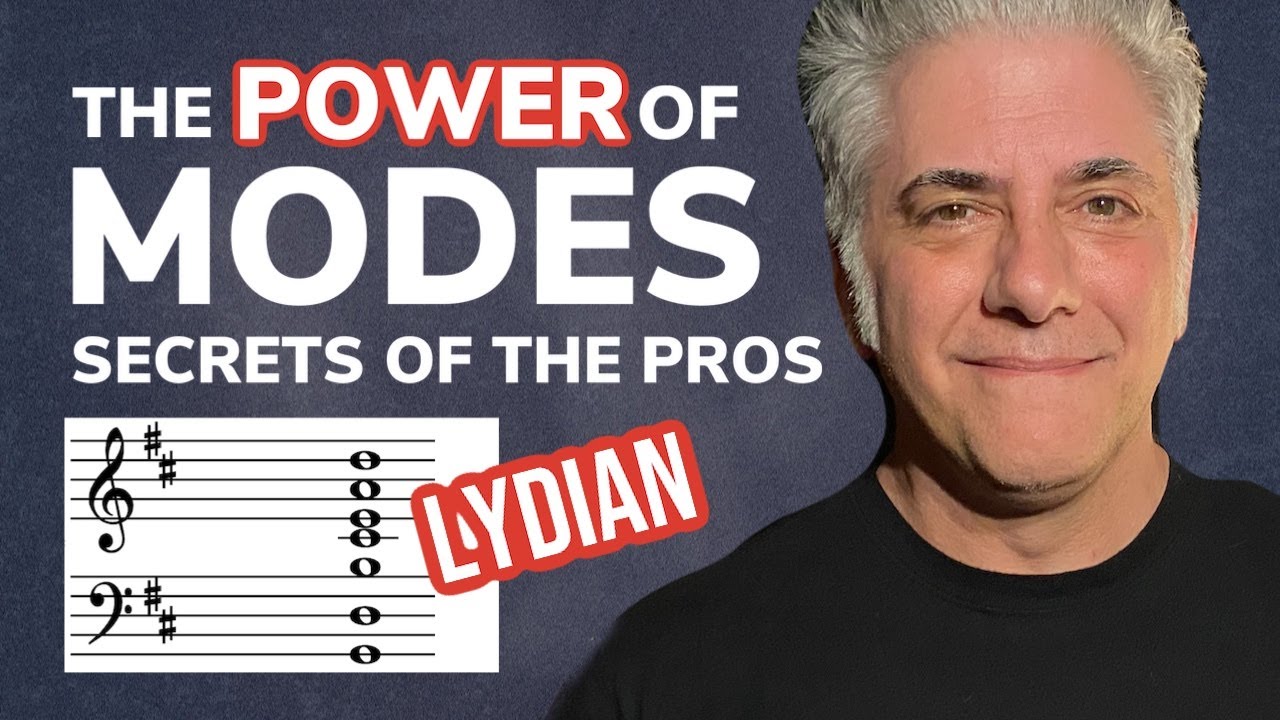
Added:hi everyone I'm Rick Bato in today's episode of Everything music I'd like to talk about how to incorporate sophisticated harmonic devices into your writing things like poly chords or modal voicings that's next on Everything [Music] music all right I'm going to play an example of a little 10 bar or so thing that I just wrote to demonstrate how to use poly chords in a composition okay [Music] okay so what am I doing here let me talk about some of the uh types of voicings I'm using I start out the piece with a not really a poly chord but it's um it is two different chords played together if you were to separate it I have a c Shar sus4 with an a sus two played against it but it's more like an F sh minor 11 sound if I I'm sure minor in the base it would give you that sound it's kind of a Roots chord I have the root in there but just a different voicing to give a a um some mid-range intensity to the to the chord without having a big heavy bass note so my melody goes so that's my first voicing and then so it's a Melody that closes in on itself listen again and then so what is this chord I'm playing an F major over F major and that then resolves to a d flat major over C major to an F uh what would you you'd call it an F minor 119 sound and then I go to uh a flat Ling augmented essentially but it's really a C major over a flat 5 so it's a flat E [Music] flat then I go to D over B flat and then a C major 6 sound but I'm making a c lyan augmented sound and then to a b AOL land sound and then C major over F 5 meaning FP and C sharp I don't have the full Triad down there cuz it's too muddy then G over E flat 5 and then I go to a d sus 4 over D [Music] major and then I ended [Music] on a D sus4 major 7 sound here's the whole whole [Music] voicing so how am I deciding on what to do well I'm basically going off a melodic idea the melodic idea is the first idea of the song which is and then the second one is and then so I'm going D flat major over C major and what I like about that is I love the transition from that chord sound to this it has this resolution there or it could be if you wanted to make it AOL and it could be more of a sound like this which is a a little different sound this would be more of a could be a Dorian sound but this would be a definite AOL and F aolan sound so I could have [Music] gone then I'm going to a flant lan augmented essentially but I have the fifth in the base so it's really more like a poly chord sound uh an a flet leading augmented would not have the fifth in there so I'm mixing these two different sounds I have the tonality of C major and the tonality of a flat major put together I do have a full a flat major chord right there but I'm not using the full voicing in my left hand once again because it's not only is it muddy but it's redundant since since I have the a flat major spread Triad right there so I actually have both both sounds represented and then I've got a B flat lyan augmented sound where I'm going and then I'm going to C Ling augmented to B AOL land to C major over F sharp polytonal I don't have the a sharp in there it's too uh it's a little bit too muddy then G major over E flat major and then to my d d sus4 over D major why does that sound really powerful because has a very low flat n interval in it and then to end I give it that beautiful Cadence there so you hear that whole complete chord upper structure sound with a major 7th way up in the top I have a d [Applause] sus I've got this major 7eventh interval here but it all works [Music] together to create this kind of sense of finale um so how do you decide what types of poly chords to use well a lot of this is personal preference what I like to do is to practice voice leading between poly chords okay I'll give you a great example here if I take the common note C take C major chord and I play an A flat major chord in first inversion I still have the tonic or the um bass note C is common between the two and then F major I got the C in so C is represented in all three of those major Triads it's the only Triads well if I were to put a a d flat major in the other hand and then a major where it becomes C sharp and then F Shar major where it becomes C Shar so I've gone it's the same movement same chromatic movement there as I had as I have if I put them together though now all those three chords have the same relationship to one another those three sets of poly chords okay the first one is C major over d flat major okay so that's a major Triad with a major Triad a half Step Above at the bottom right and then when I invert it to two first inversion chords they have the same relationship except this time it's a flat major over a major and then the third chord it's the same relationship again which is F major over F major so this is really smooth voice leading and I'm taking the same three relationships of a major Triad with the major Triad a half step above it in the bottom of the chord so and then transposing it keeping common tones in both hands I know it's a little bit sophisticated but it's really it's beautiful sound in this little 10 bar piece I Incorporated one of these Concepts except I reversed it where I did d flat major over C major which gives same notes but has a really different flavor because the interval spacing is different in it [Music] um it's got three sets of flat n intervals so it has a different sound than which has three sets of Major Seventh intervals cuz it's inverted so I'm using a combination of modal modulation which we're going to talk about soon here where I'm going from Dorian to lydian augmented I'm going from lydian augmented to aolian I'm going from aolan to alter dominant the aolan to alter dominant would be that to this which could be either alter dominant or dominant diminished and then I'm going to basically a Lyon augmented sound to a ionian sound so when you look at the notation for this you will notice how the melody and the voice leading all work together now I'm going to demonstrate it for you with a string sound okay let me give you an idea of what this sounds like with strings now I can't do the exact same Melody because this particular sound doesn't have the quick enough articulation to do it but I'll give you idea of what these type voicings would sound like in strings [Music] I had a little lydian sound at the end so I took some Liberties on it that time uh just to give you an idea though of what these uh how powerful these poly chords are the spacing of it's really [Music] beautiful then we get our first real polycord this F major over F major both in inversion so you get your second inversion first inversion F sh major second inversion F major [Music] and then so we're going from F Shar over F or g flat over F to d flat over C resolving to F minor which could be Dorian or AOL if I add the d flat which I did and then to a flat Lan augmented sound to A A B flat Lan augmented sound I'm calling them modal sounds because there's too many different notes in them I'm not playing a straight BF flat leading augmented chord meaning a B flat major 7 sharp 5 I'm playing a B flat Ling augmented sound I have that and I have that then do a [Music] letting augmented sound to a b aolan sound that's a downward [Music] modulation so I'm doing a um and then to polytonal chord not completely polytonal C major over F 5 meaning FP and C sharp and then G major over E flat 5 and then here I did a different voicing here I did a a D major 7 voicing but I have a kind of a different spread on it to give it a more open sound that flat n interval if I had voiced it like this that is interesting more [Music] interesting and I turned it into a lydian sound there by adding adding the G sharp and a at the top really cool sounds that's all for now please subscribe here and at My Everything music Facebook page if you haven't already also please check us out on patreon so you can get the PDFs of these episodes at the link provided below I'm Rick Bato [Music]
Up Next
Polychords and Polytonality in Film Scoring: A Guide
@AnneKathrinDernComposer
82.1K views•2022-11-03

Mozart's Musical Dice Game Explained: History, Rules, & Fun
@webpianoacademy
5K views•2023-03-13
Unlocking Phrygian Dominant: Scales, Chords & Film Scoring
@RickBeato
360.6K views•2022-09-01
Understanding John Coltrane's Giant Steps: A Music Theory Analysis
@Vox
10.4M views•2018-11-12
Related Study Plans & Knowledge Roadmaps
Structured learning paths in Music Theory