










![[피아노코드] 매일 1분씩 이것만 연습하세요 럭셔리 7코드를 눈감고도 척척 칩니다😌](https://i.ytimg.com/vi/sf7DdTxHKTo/hqdefault.jpg)
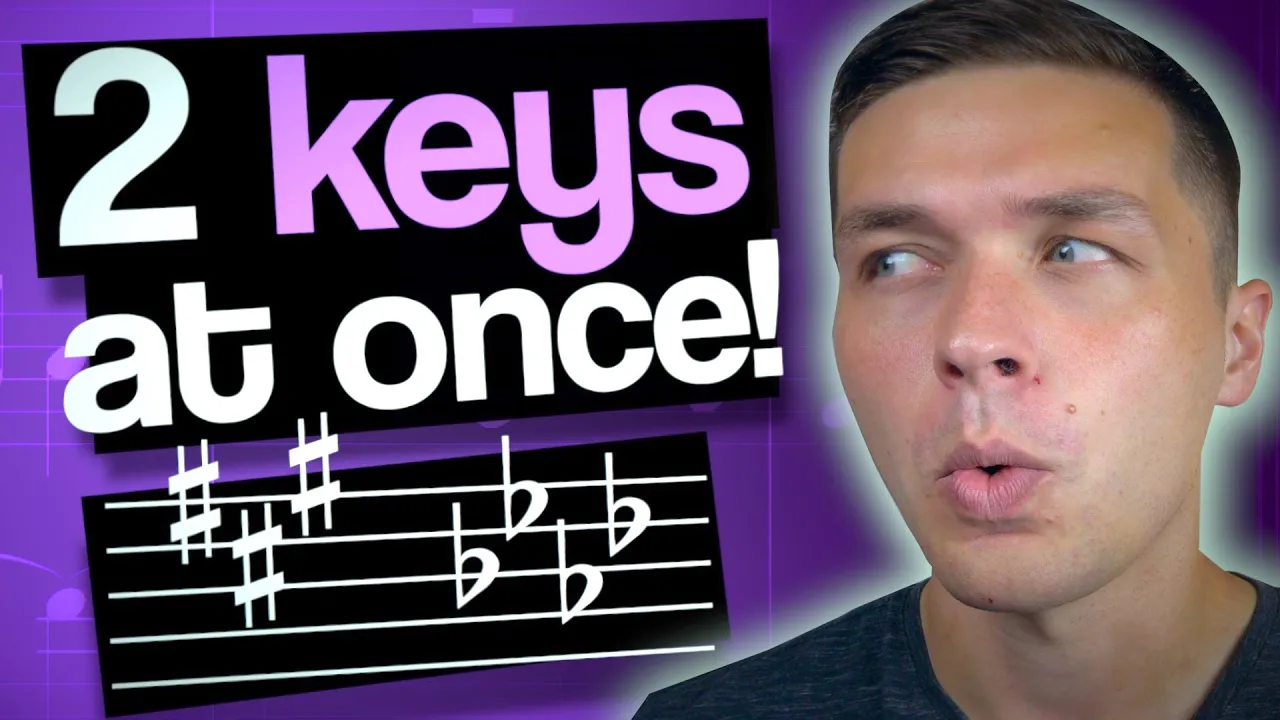







Polychords are two or more unrelated chords stacked on top of each other, creating bi-tonality or poly-tonality where multiple keys play simultaneously; the tension and dissonance of polychords depends on how many chord tones they share (fewer shared tones create more tension), and their effectiveness in film music relies heavily on orchestration choices such as register separation, color separation, and voicing (close voicing creates more tension while wide voicing reduces it), making them particularly useful for science fiction and mystery genres where they create otherworldly or unsettling atmospheres.
Polychords and Polytonality in Film Scoring: A Guide
Added:Understanding of diatonic harmony, including triad and seventh chord construction, chord extensions (9ths, 11ths, 13ths), and Roman numeral analysis.
Familiarity with the concept of tonality, key signatures, and how traditional modulation functions within Western classical music.
Basic knowledge of orchestration and instrument ranges, particularly how to voice standard chords across brass, woodwind, and string sections.
An introductory grasp of film scoring principles, such as how harmonic tension is used to support visual narratives and evoke specific emotions.
Advanced orchestral voicing techniques to prevent acoustic mud and maintain clarity when combining dissonant, multi-tonal chord structures.
Analysis of 20th-century classical repertoire that pioneered polytonality, focusing on works by Igor Stravinsky, Béla Bartók, and Charles Ives.
Practical application of polytonality in composition to depict specific cinematic atmospheres, such as cosmic sci-fi environments, psychological horror, or military conflict.
Exploration of further post-tonal techniques in film scoring, including pitch-class set theory, serialism, and aleatoric orchestration.
82.1K views3.8Klikes31:11Original Release: 2022-11-03
welcome back everyone to another part of the composition Series today we're going to talk about poly chords again all the media I'm going to be showing will be up on buy me a coffee I also recently added a composer contract template with explanations on there as well so go check it out now let's dive right into it what are poly chords well it's two or more unrelated chords stacked on top of each other that's it it's that simple it can be done with simple Triads it can be done with extended chords that have more than three different notes it works in any inversion of the chords with major minor diminished augmented doesn't matter poly chords are part of what we call bi-tonality or poly tonality which is basically when a whole piece or portion of a piece is played in more than one key simultaneously be careful about the notation poly chords are notated with a horizontal line so um you have the top chord written chord symbol written on the top then a horizontal line and the bottom chord symbol written below it it's not a slash like a sideways slash that just indicates that the top chord symbol is the chord and then the bottom symbol is just the bass note it's not a separate chord so be mindful of that now the colors that those chords produce is very dependent on how related the chords are because technically you can keep stacking chords in thirds and just keep them in the same tonality in which case you don't necessarily have to interpret it as bi-tonality you could also just say they are extended chords of the same root so if they're very related you might even interpret them as one chord with jazz chord extensions basically on top then there are poly chords that share some chord tones we're going to see some examples of that one of them is for example C major on a major they share an e and then you have poly chords that share absolutely no notes in common we're going to see some examples of that as well it's you know actually the first one we're going to show is C major on the flat major they have nothing in common they're literally a half step apart generally you can keep in mind that the fewer chord tones they have in common uh the more tense it's going to sound because you get a lot more dissonances and you know you're getting closer and closer to really just have clusters and not tonality anymore but then again how dissonant it sounds is also determined by voicing and orchestration a close voicing is gonna create a lot more tension and a lot more dissonance a lot more um you know clashing notes whereas a pulled apart voicing is going to sound much less dissonant and it's gonna you know in most contexts make more sense so it really depends on where you place the dissonances and the clashing notes if they're far enough apart it's it it doesn't sound as clashing and it also kind of depends on you know what the top line is what the bottom line is are those clashing are they not clashing um so voicing is very important in this technique and it also greatly matters how you orchestrate it usually if you separate the different harmonies by register or by colors orchestral colors you can get away with a lot of things poly chords usually sound a lot harsher if they're kept in the same color like just on the piano but the moment you pull them apart and adjust the voicing and then also start to use the orchestral colors as textures it's starting to make a lot more sense in a way and it usually also sounds a little more interesting it also depends on you know whether one of the chords is arpeggiated or both of them arpeggiated or if it's just sustains you know it just creates very different Vibes depending on how you voice it how you orchestrate it what colors you're using and how you're using those colors like again something that might sound incredibly dissonant on the piano might sound fantastic in the orchestra using different colors or something that sounds really harsh in close voicing on the piano might sound really great in the brass for example so yeah it really depends like here are some examples um of different voicings like I'm gonna go from close to wide voicings just in the piano just so you can see what I mean so this one is going to be C major on d flat major so this is the closest voicing where you can see you have basically the chords right next to each other and they're just clashing in minor seconds and then with every iteration I pull it apart further so you can see what that does and what that sounds like let's play it [Music] foreign [Music] it's a very different vibe from here to here so let's look at a couple of orchestral examples from film music because the question of course was all of these is I'm a film composer so how is this useful to me when I actually write a film score where can I use this in my job the most common uses you'll find are either in jazz or mystery science fiction and you'll you'll see in a second why that is um so let's get into it so this first example is from Star Wars let's listen to it so you know exactly which one I mean this is the these are the chords that play right after the um main title card is done and it's basically the transition into the actual movie so let's take a listen to that [Music] [Applause] foreign science fiction feel partially because we all know Star Wars and Star Wars is based on the planets which were written before John Williams was born by the way a lot of people whenever they hear this kind of thing they're like oh it's John Williams this technique was popular um I think it was at Peak popularity before he was born um obviously he grew up with this kind of music but he didn't invent this this this was a thing before he entered this planet so um if you want to see more of this kind of stuff I'd urge you to listen to the planets actually by Holst uh where you will find a lot of this stuff because it was just popular at the time but so if you look at the markers this is C major on d flat major C major on a major C major on E major um let's see how this is orchestrated it's basically separated by registers so if you look at the strings you can see that the upper strings the violins are playing the c major chord and then the lower strings um the bass cello and uh violas are playing the lower chord in arpeggios [Music] disregard the mock-up it's the best I could do quickly this is doubled by harp and by Celeste as far as I could see or hear um but then you have the high Woodwinds play it's the same separation except these are actually playing sustains so it's basically a separation of textures here as well but so the Highwood winds are playing C major and then the low Woodwinds are playing the the lower chord also the high court as you can see is staying static here it's all the the top stays C major all throughout whereas the lower chords are changing [Music] so at no point do the chords overlap each other and they're always at least a third apart in the middle and then we have the brass this is where some overlaps are happening I believe in the trumpets but you can see still that there's space in between foreign there you go that's the whole Magic of it you can also see that he starts out the most dissonance C on d flat is they have nothing in common then C on a um those are mediant related chords uh and they have a chord tone in common namely the E and then C on E also median chord relation this could almost be one chord if you're looking at it from a jazz perspective because the B is actually a major seven in C major and the G sharp from the e if you interpret that as an A flat would be a flat 13 in C so this is almost so related that it could be one chord so he basically goes from incredibly dissonant to sort of related by one note to very related and then separates the colors with textures and by register now let's look at another example this one is from one of my scores from four Enchanted sisters this is the library queue um it's a mystery cue basically so let's listen to that one [Music] foreign so the way this was orchestrated is you can see in the markers again what the chords are it's a minor on d flat minor d flat major on D Minor E minor and F minor C major on F minor and then some planing here that I just wanted to point out so the top three notes played by the violins are the top chord and the bottom notes are the bottom chord this played by um bass Chely and violas and also some little perk that I put in here is the top is moving down the bottom is moving up which you can freely do because it's poly tonality so nothing has to be related to anything um but that was kind of the idea the top moves down the bottom moves up in a way this is all planing these are basically planing up as far as I can see these are planing down so you can also combine poly tonality with planing with pedal tones with pretty much anything that I've already talked about but so this is what the strings sound like by themselves [Music] thank you [Music] and the interesting thing is if you put it this far apart it really doesn't sound that dissonant even though a lot of these chords have nothing in common but it just strangely sounds very consonant even though it's different Keys going on at the same time I mean just looking at this first chord for example the only thing they have in common is the e but you have an A and an A flat that's a minor second that's clashing technically and you have a c and a C sharp or d flat which is also a minor second that should be clashing but since it's so far apart it kind of works so this is something really fun to play around with especially when using orchestral colors I have a cue coming up that is literally the opposite where I did really close voicing and you're going to be able to hear the difference and then I just doubled this with choir partially harp Celeste vibraphone and triangles [Music] thank you foreign [Music] s and the woodwinds are just doing their planing thing at the end this kind of has nothing to do with poly tonality it was just something that I thought would be fun to Showcase as well considering we've already talked about planing [Music] this queue obviously goes further you can hear it on the soundtrack album it's I think it's called at the library or something um but that's that now the next bit is something I've used in the Jade pendant but I think I've also used something very similar in uh help me shrunk my parents question mark um it's again kind of a mysterious creepy cue but this time um it's much more confusing because it's not entirely clear what the harmonies are and also it's much closer voicing so it's much more dissonant to the point where it's almost more like clusters I don't fully remember what I did because this was like in 2017 so whatever I was thinking I do remember it was poly tonality that I was thinking so here we go this is what that sounds like [Music] foreign [Music] do I fully know what's going on here no I do not but it's okay so we got strings Celeste and Woodwinds going on and so this is where it gets a little confusing so the way I constructed this that part I remember is I always start on one chord first for two beats and then the poly tonality happens so it feels more rooted but as you can see there's a lot of close voicing I didn't pull this one apart this one was supposed to be tense and you know uncomfortable and so I chose these intervals um but so what we have here is we start with C Major seven so we start with C major with a major seven on it and then we have that same chord continuing uh on E flat you can see the E flat down here and the g we got up here right so that's the first one and somehow I felt this needed to resolve to this one but I don't even know what this one is because this could be interpreted as G major on E flat right we have these notes d be and G that would be G major and we have all the notes for E flat major as well E flat G and B flat but that doesn't quite make sense with what's in the base because we have the b in the bass so what makes a lot more sense is to think maybe at the top we have G minor so G B flat D on an augmented B chord but I don't know I don't know I mean it's almost a cluster basically so no idea maybe there's a different way to interpret this as well but um who knows if there was an F sharp in here I would have said it's uh B major but there is none so I don't know what I was thinking but so this is that chord [Music] then we do the same thing again where we start with a minor just plain a minor and then the poly chord comes in and this one is another one that you could interpret in so many different ways it could be a major on a flat major or a minor on E flat seven sus4 or d flat minor on a diminished I'm sure there's even more ways to interpret this but there's so many chords you could build out of this and I mean considering the base note is a flat a major on a flat kind of makes the most sense but it makes less sense because I'm starting out with a minor so who knows anyway this is what that sounds like [Music] and so this one is not a pulley chord anymore um this is just F sharp major with a flat 13 or an add sharp five if you want to see it that way Harmony and then the flat 13 resolves though into just a regular F sharp and then since we already talked about medians I wanted to Showcase this as well because we go from F sharp major to D minor which is immediant to F sharp and then we go from D Minor to B flat minor which is also a median to the previous one B flat minor is a median to D Minor so you can actually see this in action as well here foreign [Music] [Music] this one is just very confusing to me because I don't really remember what my thought process was but this is what it is uh you can find that I think both on the Jade pendant soundtrack at some point but also on help I shrunk my uh parents and then I have two more cues that are from Fearless um because science fiction and this always works with science fiction so this is let's start with this one [Music] so for this one I have these High um alternating notes going on which are the top chord in this case it's just a static a flat major and then it turns into a flat augmented so that's what this sounds like [Music] sounds like a song by Abba doesn't it I don't remember which one I used to listen to a lot of ABBA when I was young this is doubled by harmonics [Music] right so we have the top chord in the high register and so you have the brass and the strings play the chords you again I did the John Williams technique where I have the high strings um and the higher brass play the top um Harmony and then the low brass and those strings play the lower Harmony sounds like this foreign foreign [Music] S I made some different choices that John Williams didn't make in the example that I showed before which is I put this clashing note here in the horns because I think it works pretty well generally in brass um a lot of things work that wouldn't work in other instruments and I also have this clashing note right here where basically the low cord and the higher Harmony are meeting in the middle um also a choice that you know I thought it worked so I did it but that would warrant some consideration uh that could also very well not have worked and then I have the chillest uh actually just play out the chords like this [Music] right it's a flat a a flat a flat F A flat and then the augmented but that's the whole secret to this one and then I used poly chords again in Fearless this time it sounds like this [Music] right also very science fictiony this is when they like exit the spaceship and kind of a similar technique where let's look at the strings you have a consistent High chord going on namely C major which is just sustained by the violins and then the lower strings are playing the lower chords in this case d flat major a major a flat major so it sounds like this [Music] and then we have the brass and the brass is only playing the lower chords so in this queue I actually did a color separation where only the high strings are playing the you know poly tonality and everyone else is playing the lower chords that are moving under that sustained um poly chord petal I guess you could call it [Music] and this by the way is also planing where the lower court goes from a to a flat uh it's it's all over the place I mean planing lends itself really nicely to poly tonality or vice versa so that's also Happening Here we got some extra like vibraphone and choir and stuff going on but they're just playing they're just doubling up on those harmonies but the interesting thing happens here in the woodwinds so when they come in later they play first the C chord that is only in the high strings at this point but they're also um then jumping into D major again planing but more importantly this now creates I guess it would be called tri-tonality because now we have C major and the high strings a flat major in low strings and Brass but then we have D major in the woodwinds so we now have three different uh harmonies going on at the same time foreign it's right here [Music] so let's play through this one last time [Music] so in this example you can see pretty well how we're separating by colors uh and then apparently you can even have three different harmonies and it's fine it doesn't sound off-putting at all um but yeah you do get that science fictiony feel to it now as I've already pointed out you can combine this with planing you can combine this with median chords you can combine this with petal tones anything we've already talked about and I feel like this is maybe where you can start to see why it's so hard to talk about composition techniques because most of them aren't isolated they are combinations of multiple things going on and just imagine knowing even just 20 different composition techniques just how many combinations there are like if you have 20 techniques that can all be combined in numerous ways um you already have like one million possibilities or something so very difficult topic to talk about and also that's why it's very difficult for anyone to write books about this because usually techniques are not isolated little things they're a combination of a variety of things it's just not as simple as oh hey can you make a quick list of composition techniques or you know why is there Book listing all of them it's not really possible mathematically to do that if you want to look at other examples I've already mentioned the planets you can also look at Stravinsky specifically The Rite of Spring uses a lot of poly tonality you got John Williams I mean Star Wars obviously but um I think he also uses a lot of this in Close Encounters of the Third Kind E.T basically every time when there's aliens I bet I don't I haven't listened to the soundtrack in a while but I bet you can also find this in War of the Worlds it would be surprising if not but so this is maybe also where you understand why I think understanding musical language is important or where um knowing technique is important it doesn't matter where you get that information from but having that knowledge is important because just with the four videos that I've done so far you could pretty much score a lot of film scenes without having to be inspired and that's really the point of knowing technique to know the craftsmanship of something so that you can still do it even when you're not feeling inspired or when your creative energy is drained especially at the end of a project this is where I just tap into this kind of stuff and I'm like okay well I can still do this and not be inspired at all and still get the job done because when you make this your job you're not going to be inspired every day you're gonna have to still deliver on a deadline and it is what it is um and technique is then what helps you get through it you can still fall back on this and then just get the job done in a crafty professional manner which is you know what we do 90 of the time anyway I hope this was helpful again the media is on buy me a coffee and um have fun and you know practice
Up Next
6:39
Dissonance Reduction Techniques in Music Composition
@TableTopComposer
1.1K views•2025-02-21

10:20
Mozart's Musical Dice Game Explained: History, Rules, & Fun
@webpianoacademy
5K views•2023-03-13

47:36
Understanding Diatonic 7th Chords in Major Keys | Music Theory Tutorial
@GracieTerzian
54.7K views•2022-03-02
10:49
Understanding John Coltrane's Giant Steps: A Music Theory Analysis
@Vox
10.4M views•2018-11-12
Related Study Plans & Knowledge Roadmaps
Structured learning paths in Music Theory
music-theory
Composing Galant Music: Partimento & Schemata
01Foundations of Figured Bass and Keyboard Harmony
02The Rule of the Octave (Regola dell'Ottava)
03Galant Schemata: The Building Blocks of Form
+ 2 more learning modules
30h5 modules
Explore Roadmap
music-theory
Decoding Overtone Series: Tuning & Drone Music
01Acoustic Foundations: The Physics of the Overtone Series
02Tuning Systems: Equal Temperament vs. Just Intonation
03Microtonality and Spectralism: Beyond Standard Pitches
+ 2 more learning modules
24h5 modules
Explore Roadmap
music-theory
Impressionist Harmony: Scales, Planing & RPGs
01Foundational Music Theory: Keys, Intervals, and Seventh Chords
02Impressionist Color: Chord Planing and Parallel Harmony
03Whimsical Textures: Pentatonic Cascades and Whole-Tone Scales
+ 1 more learning modules
14h4 modules
Explore Roadmap
music-theory
Negative Harmony: Axis Reflection in Indie Pop
01Music Theory Foundations: Scales, Intervals, and Triads
02Functional Harmony and the Circle of Fifths
03Demystifying the Negative Harmony Axis Reflection
+ 2 more learning modules
16h5 modules
Explore Roadmap