
















![[Music Theory in 5m #7] Cadences, the BEST tool for good chord progressions (VOSTFR)](https://i.ytimg.com/vi_webp/EpOdV3di7DY/maxresdefault.webp)








Triads are three-note chords formed by stacking two intervals of a third (a third and a fifth) above a root note, creating four fundamental qualities: major (major third + perfect fifth), minor (minor third + perfect fifth), diminished (minor third + diminished fifth), and augmented (major third + augmented fifth); these chords can be constructed from major or minor scales by taking the first, third, and fifth notes, and they can exist in different inversions (root position, first inversion with third in bass, second inversion with fifth in bass) to improve voice leading and harmonic flow.
Understanding Triads in Music Theory: A Complete Guide
Added:Understanding of basic intervals, specifically major and minor thirds, as they are the building blocks of triads.
Familiarity with major and minor scales and how they are constructed using whole and half steps.
Ability to read music notation on treble and bass clefs and understand the concept of key signatures.
Knowledge of basic accidentals (sharps, flats, and naturals) and their effect on pitch.
Introduction to seventh chords (major, minor, dominant, half-diminished, and fully diminished) and their respective inversions.
Principles of voice leading and four-part harmony (SATB) to smoothly connect triads within a chord progression.
Study of common harmonic progressions and cadences (such as authentic, plagal, and deceptive cadences) using Roman numeral analysis.
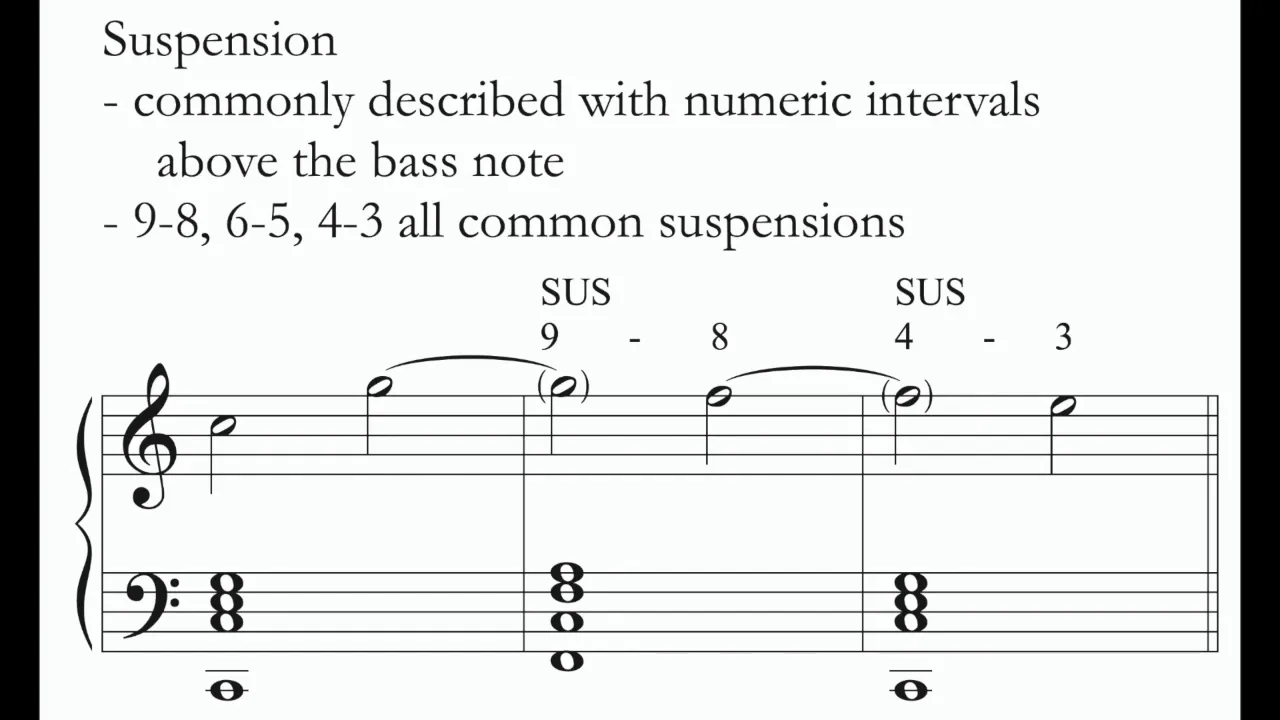
Exploration of non-chord tones (such as passing tones, neighbor tones, and suspensions) and how they embellish basic triadic harmony.
Introduction to chromatic harmony, including secondary dominants, modulation, and borrowed chords.
340.3K views10.7Klikes9:16Original Release: 2021-09-14
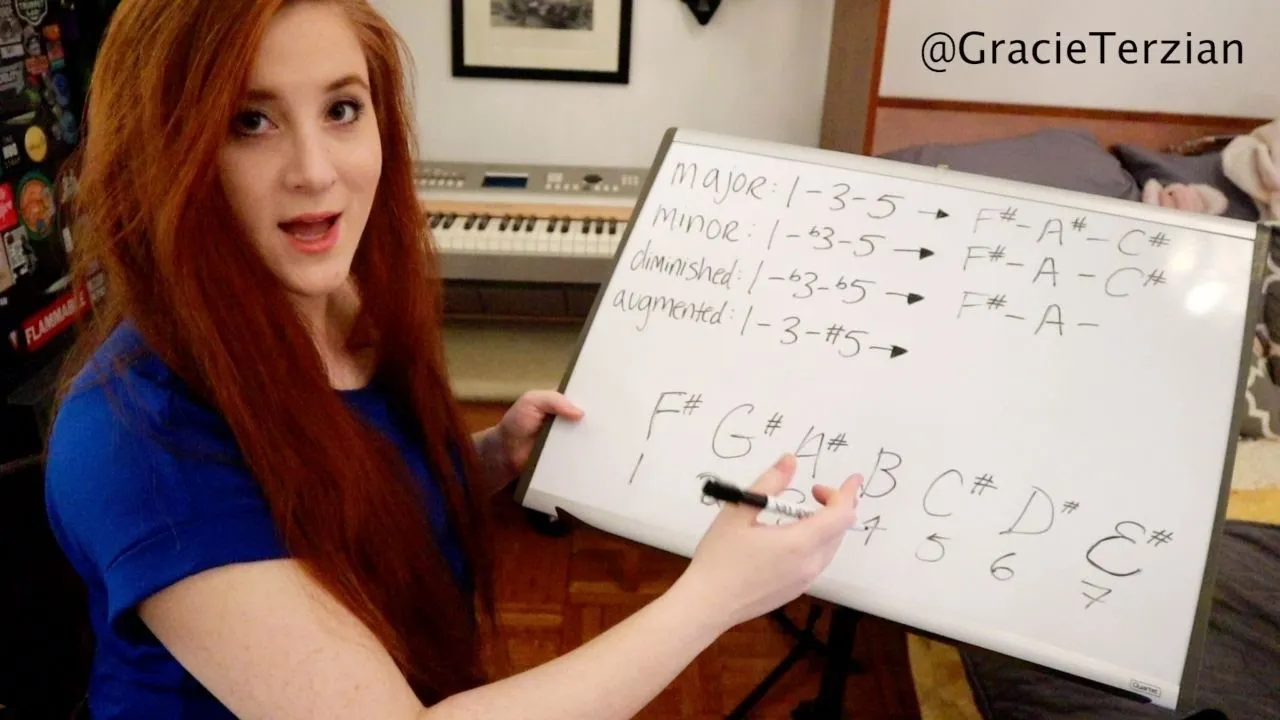
triads everything you need to know so you don't fail music class in nine minutes a triad is a three note chord that can be written in this specific shape of two stacked thirds most people think of them as a snowman shape but whether you think of them as a snow guy snow gal or snow non-binary pal the shape is key before we get started you should know that like so many things in music familiarity with major and minor scales key signatures and intervals are fundamental to tackling triads check the links in the description if you need to brush up on any of those concepts we generally think of triads as being derived from scales like c major for instance a major triad is the first third and fifth notes of the major scale stacked on top of each other and if we think of each note of the scale as the bottom or root note of a triad and then add notes a third and fifth above them then you'll have all the triads from the c major scale these chords are fundamental to a wide variety of genres and music traditions as are the triads derived from the harmonic minor scale triads are often referred to numerically by the relationship to the home key if c is 1 d is 2 e is three and so on they're also named for the bottom note and one of four qualities these are major these are minor these are diminished and this one is augmented chord quality is determined by the specific intervals between the notes of the triads to make it a bit easier to see the differences between chord qualities let's look at four triads that all have the same root here's c major c minor and here's c diminished and c augmented a major triad is characterized by the intervals of a major third and a perfect fifth a minor triad is just one note different it has the same perfect fifth but a minor third instead the diminished triad has the same minor third as the minor triad but the fifth is diminished finally the augmented triad has a major third but the fifth is augmented to visualize this on the piano here's the c major triad to make it a minor triad we just lower the third by a semitone to make it a diminished triad we also lower the fifth by a semitone finally the augmented triad is just like the major except the fifth has been raised by a semitone to write a triad it's common to start with a major version and then modify it as necessary if you're writing a d triad of some kind write the root note build the snowman and then apply the key signature in d major f and c are sharp there's no c in this triad but there is an f so we add the sharp there and there we have the d major triad now we can modify it to make other triads if we want to make it minor we lower the third semitone from f sharp to f natural if we want to make it diminish we also lower the fifth from a to a flat and if we want to make it augmented we start with the major version but raise the fifth by a semitone from a to a sharp and those are the four options for triads built on d let's try another example in a flat write the root a flat and then build the snowman then apply the key signature a flat has four flats b e a and d we've already got a flat and there's no b or d in this chord but there is an e so we'll make that flat and there's the a flat major triad if we want to make it minor we lower the third from c to c flat diminished means the fifth e actually lowers to e double flat and an a augmented triad would start with the major triad but raise the fifth e flat by a semitone to e natural and those are the four options for triads built on a flat so these are the four traditional qualities of triads and they're made with these specific combinations of intervals but you might be wondering what happens if we use other combinations of thirds and fifths since we've only defined a few of the possible options here's a grid with all the options of raised and lowered thirds and fifths let's take a look at the others the major third and lowered fifth is an interesting sound but a bit dissonant but it's nothing compared to the raised third and lowered fifth it's very crunchy sounding and you can see why when you compare the two chords on the keyboard the first chord has only a tone between the third and the fifth but the second one has the third and fifth even closer only a semitone away these don't seem to be commonly used chords but if you happen to like the sound of them write some music with them but i'm going to claim the naming rights with the chordal cruncher and the chord crunch supreme next up the perfect fifth with a raised third it's an interesting sound too but it's actually just a weird spelling of another chord the suspended fourth or sus4 it's not traditionally thought of as a triad because of the shape nor is its close cousin the suspended ii chord both are commonly used and often precede a major triad which helps explain the name because the middle note feels like it's suspended and wants to move to the third [Music] and combining both suspended chords is a nice sound too [Music] there's just two left the raised fifth with either a lowered or raised third you'll find they don't sound quite as odd as you might expect it might not seem obvious at first but these are actually not triads built on c if we respell the g sharps as a flat and the e sharp as f and then arrange the notes into a snowman we see that they're actually more familiar than they first appear the first one is just an a flat major chord and the second one is an f minor chord the original versions were just spelled oddly and the shape was different which brings us to what happens when the triad isn't in a snowman shape these are called inversions inversions occur when the bottom note of the chord is something other than the root note these three chords all have c e and g just in different shapes or in versions the snowman shape is called root position if the third is on the bottom that's known as first inversion and if the fifth is on the bottom that's known as second inversion it's sort of like if the parts the snowman got messed up but all the original parts are still there when identifying chords you'll want to figure out what the root of the chord is by rearranging into a traditional snowman shape and then analyze the other notes to identify the chord one of the most common uses of inversions is to improve voice leading which is related to how notes in chords or melodies move as harmonies progress let's say a piece of music moves from c major to f major to g major and then back to c major in root position these chords have a lot of parallel motion which means all the notes are moving in the same direction at the same time which is considered to be undesirable in some genres and if we split the bottom middle and top notes of the chords into individual voices as if performed by three different people we can see that there are several large jumps which can be a bit difficult to perform however if we instead use inversions for the f and g triads we can get this it has all the same notes as the previous example so we'll still have the same basic sense of harmony but there's way less motion between the voices which is generally easier to perform and sound smoother neither is inherently better or worse but one version might be more useful depending on context style and personal preference finally roman numeral notation as we said earlier triads are often referred to by the relationship to the home key and one of the most common ways to notate this is using roman numerals usually uppercase for major and augmented chords and lowercase for minor and diminished chords you can also indicate inversions in the roman numeral system root position is just the roman numeral but first inversion and second version are written this way it's a bit of a weird relic from the baroque era called figured bass the user figured bass is pretty rare these days yet this particular notation endures thinking of chord progressions and numbers is very useful not only for analysis and ear training but to easily transpose into other keys because major scales are all built using the same pattern chords from different keys like c major and a major will sound basically the same just higher or lower a very common chord progression in pop music is 1 five six four repeated over and over this is what it looks like in c but if you know your scales and keys well you can easily transpose into another key very quickly without describing the chords individually this can be very useful if a song is too high or too low for a singer so to summarize triads are three note chords that can be written as a third and fifth above a root note and come in four qualities which are defined by their specific intervals they are derived from major and minor scales and can be described by their position in a given major or minor key sometimes with notation to indicate their inversion and that's just about everything you need to know about triads remember to like comment share and subscribe and check the description for links for more videos thanks for watching you
Up Next
16:54
Understanding Polytonality: Music Theory Explained
@AdamNeely
798.3K views•2019-07-01

51:08
Simon Rattle on Early 20th-Century Music: Tonality's Decline
@theclandestinum
18.3K views•2012-06-16

11:38
Key Signatures Explained: 3 Methods to Master Them
@BradHarrison
377K views•2021-08-31
10:49
Understanding John Coltrane's Giant Steps: A Music Theory Analysis
@Vox
10.4M views•2018-11-12
Related Study Plans & Knowledge Roadmaps
Structured learning paths in Music Theory
music-theory
Tintinnabuli: Pärt's Counterpoint & Composition
01Music Theory Foundations: Intervals and Triads
02Fundamentals of Counterpoint and Voice Leading
03Arvo Pärt and the Spirit of Holy Minimalism
+ 2 more learning modules
16h5 modules
Explore Roadmap
music-theory
Composing Galant Music: Partimento & Schemata
01Foundations of Figured Bass and Keyboard Harmony
02The Rule of the Octave (Regola dell'Ottava)
03Galant Schemata: The Building Blocks of Form
+ 2 more learning modules
30h5 modules
Explore Roadmap
music-theory
Decoding Overtone Series: Tuning & Drone Music
01Acoustic Foundations: The Physics of the Overtone Series
02Tuning Systems: Equal Temperament vs. Just Intonation
03Microtonality and Spectralism: Beyond Standard Pitches
+ 2 more learning modules
24h5 modules
Explore Roadmap
music-theory
Impressionist Harmony: Scales, Planing & RPGs
01Foundational Music Theory: Keys, Intervals, and Seventh Chords
02Impressionist Color: Chord Planing and Parallel Harmony
03Whimsical Textures: Pentatonic Cascades and Whole-Tone Scales
+ 1 more learning modules
14h4 modules
Explore Roadmap