














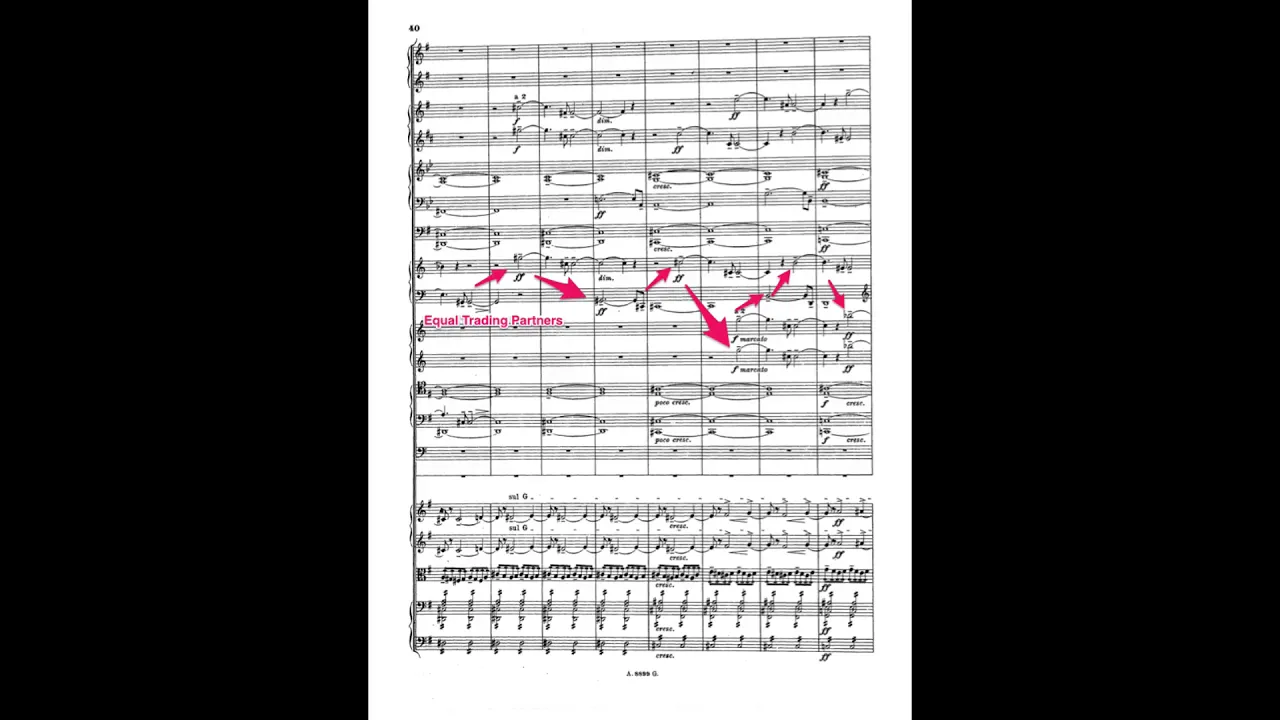


Effective string section orchestration requires understanding the distinct roles of each instrument (violins for high melodies, violas as middle harmonic bridge, cellos for expressive lower melodies, and basses for low-end reinforcement) and applying techniques such as dividing harmony across sections, using contrary motion, maintaining appropriate note spacing in low registers, and strategically resting instruments to enhance musical impact.
Master String Orchestration Techniques for Composers
Added:Familiarity with basic music theory, including chord construction, diatonic scales, and functional harmony.
Ability to read standard sheet music notation in treble, alto, and bass clefs.
Basic knowledge of the string instrument family (Violin, Viola, Cello, and Double Bass) and their general roles in an ensemble.
Understanding of foundational voice-leading and part-writing principles (such as standard four-part SATB writing).
Advanced string articulations and extended techniques, including sul ponticello, col legno, harmonics, and complex divisi writing.
MIDI mockups and virtual orchestration, translating acoustic string arrangement concepts into Digital Audio Workstations (DAWs) using sample libraries.
Full symphonic orchestration, learning how to blend the string section with woodwinds, brass, and percussion.
Score analysis of masterworks from classical and modern composers to study diverse string textures and historic arranging styles.
71.6K views3.5Klikes13:46Original Release: 2021-07-14
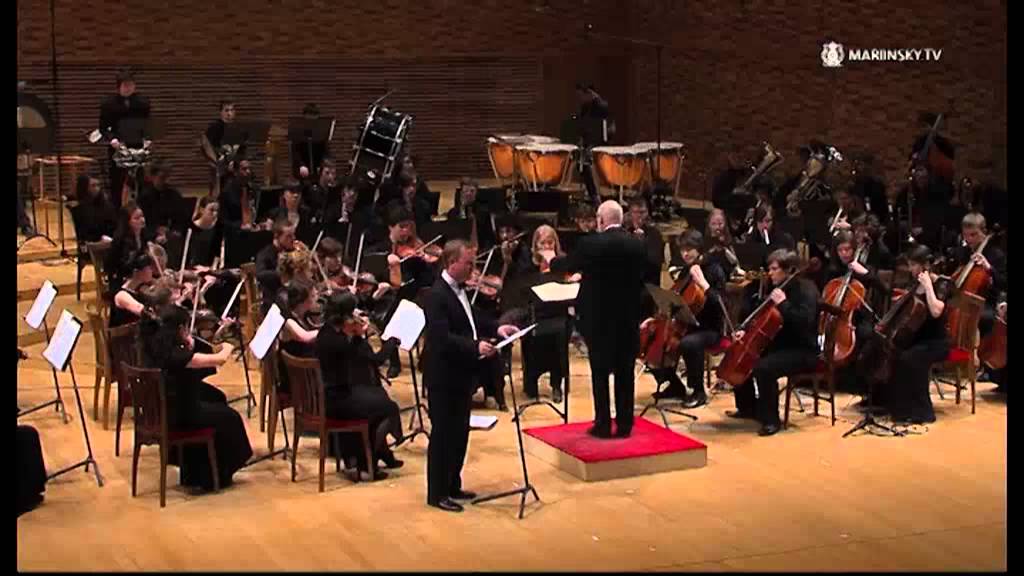
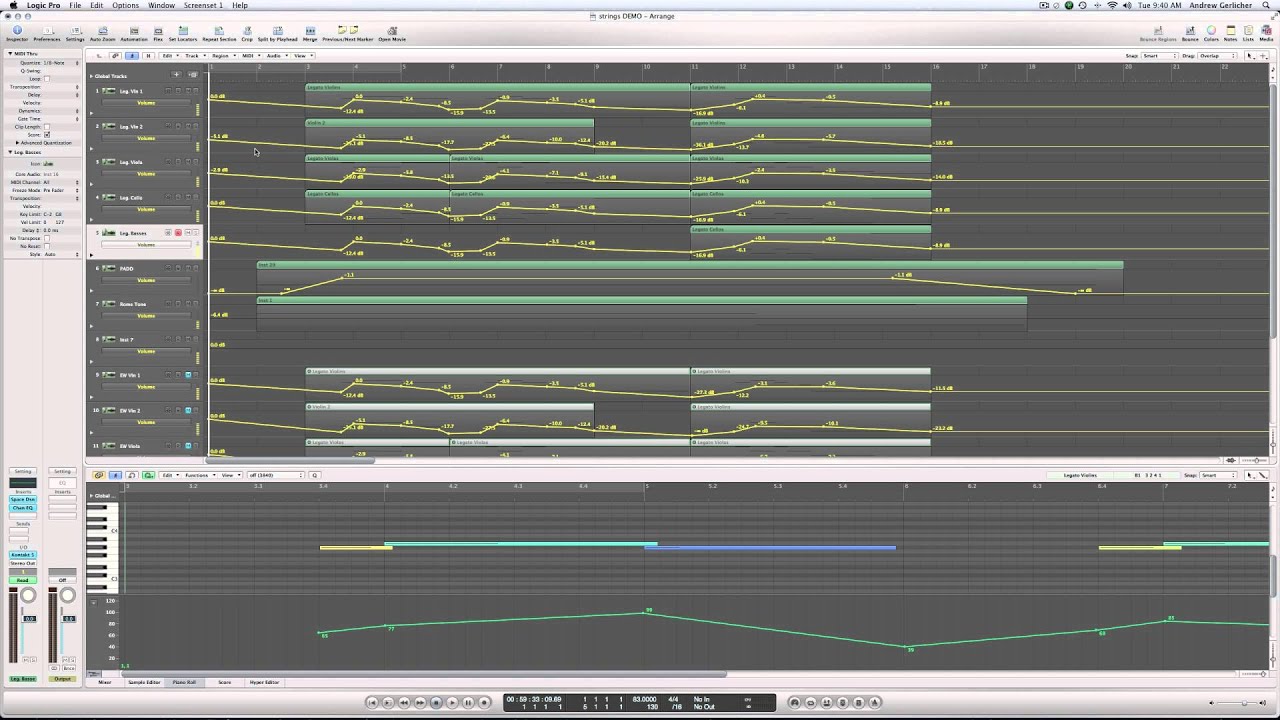
as a composed just starting out do you struggle to write effectively for the string section hi today I'm going to walk you through step-by-step how to write and orchestrate for a string section such as [Music] this so today I'll concentrate more on the actual orchestration techniques used rather than the composing process check out my recent video five beginner tips for Melody writing which details how I wrote the main Melody of the piece I'm showing you today whether you're composing using samples or eventually plan to make a recording with players such as a strink or tet the techniques I'll show you will work well for any situation involving strings let's start by looking at the individual instruments which make up a typical string section the strings are the largest family in the orchestra and are comprised of four different instruments the violins Vias cellos and bases it's an incredibly versatile family of instruments being able to play long to stay note quietly and expressively write up to loud and short staccato aggressive notes like the repeating tinat from The Batman Trilogy soundtrack or the strings from the shower scene in Psycho the violins are the highest pitched notes of the string section with their lowest note being G2 which is the G below middle CA right up to roughly around E7 in an orchestra as well as chamber ensembles such as the string oret we'll have two sections of violins the first and seconds an orchestra will have more violins than any other of the stringed instruments with the typical Orchestra having around 30 violins split between the first and seconds next we have the violas these are slightly larger than the violins and are typically used to bridge the gap between the violins and the cellos the Vias can go down an extra five notes to the SE below middle CA or C2 right up to the A5 area and are also the only instrument in the orchestra which makes use of the alto clef they have a slightly warmer and richer sound and a typical Orchestra would normally have around 12 folas next we have the cellos which operate around the lower end of the strings register a cello can go as low as C1 which is two octaves below middle C right up to the A5 region they're often used to play baselines but can also sound extremely expressive when used to play melodies particularly in the upper register of the instrument again a typical Orchestra would have around 10 cellos finally we have the bases which are used to reinforce the low end adding might and power to the sound the double base can play as low as e0 which is three octaves below middle C and can go up to B flat 3 which is the B flat above middle C youd normally expect to see around eight bases in an orchestra in addition to the violins violas jell and bases a typical Orchestra would also have one or two Harps while it's not technically part of the normal string section A Harp's sound is generated by plucking strings so I've included it in this piece the harp has an extremely large range from a C flat Zer which is three octaves below middle C right up to G6 so here I have a piece which was written to accompany a video of a love scene I'll walk you through each section of the piece detailing the orchestration techniques used I was lucky enough to have the piece recorded by real string section so that's what you'll hear in this video there are two main musical components which the orchestration is focused around the melody or foreground and then the accompaniment or supporting harmonies which is the background let's take a listen to the first 10 bars [Music] okay so the opening here is designed to set the mood for the peace delicate and hopefully romantic in this instruction the first violins have a simple complement of one sustained High pedal note whilst the second violins and violas are playing the melodic part in octaves these first three bars are like a question bars four and five are like the response or answer for the answering phrase the melody is passed to the violins to give it more weight whilst the harmony is covered by the vas and cellos this repeats for the next five bars with the question and then answer again the two four bar or half bar was added so that the melody which comes in at bar 11 would hit a cut or edit in the love scene the next section is the main Melody of the piece and I cover how I came up with the tune extensively in my previous video five beginner tips for writing a Melody here there is a very clear division in the roles of each string inment the violins have a tune or Melody as part of the foreground and the violas cellos and bases who are bringing for the first time for extra weight are playing the accompaniment as the background the harmony is relatively simple making use of Triads with a Note split between the vas cellos and bases you can see that I've divided both the vas and cellos into two in order to get a spread of four notes giving a richer sound the bases are playing the root note of each chord at the same pitch as the lowest Jello note bases are what we call a transposing instrument and so sound an octave lower than written so although this first e is written higher than the low E on the cello line it's actually the same pitch let's take a listen [Music] for the whole Melody the first and second violins are playing the same pitches in unison in order to achieve a thicker sound and giving the melody more weight you can see that in bar 16 the Vias are also playing a rhythm similar to the main Melody but instead of rising like the violins are they're descending having two musical lines moving in opposite directions like this is called contrary motion and is an extremely effective composing and orchestration technique when voicing and orchestrating string hords make sure you don't have notes which are too close together in the low register otherwise the music could start to sound muddy for the low end of the cello range try to keep notes at least five notes apart from each other notes which are higher in Pitch such as the cello notes in bar 13 are okay to have closer together in this case the D and F are a third part dividing Harmony in violas can also be effective when playing in thirds such as part 18 here from bars 19 to 27 I've included a contrasting section or B section here the melody falls back to just the first file Lins for the first four bars with the seconds FAS and ch hellow again playing a simple harmonic accompaniment notice how the bases are not playing for three bars remember you don't have to use all of the string instruments all of the time by having an instrument resting it can help to add more impact when they are reintroduced such as in bar 22 here [Music] whilst the vins normally get their fair share in playing Melodies In This section I've given the chellow the tune when playing in the upper half of the register the cellos can be extremely expressive and intense for Melody writing here you can see the first violins have an extremely high pedal note sustaining throughout the harmonic changes below it this leaves the job of setting out the main Harmony to the second violins Vos and bases which helped to set out the C major 7 chord the melody is then passed back to the second violins and violas who are playing in unison before the first and second violins then take over the melody in Parts 34 and 35 [Music] for the last section of the piece the high sustaining pedal note in the violins returns with the tune split between the second violins and violas playing in unison this leads the cows and bases to underpin the harmony the music gradually starts increasing in intensity from bar 41 onwards I wanted to achieve a rich and warm sound as much as possible so it was time to give the melody back to the violins and then dividing both the violas and Chell into two along with the bass notes to give as large as sound as possible the high point of the piece being B 44 where the violins are in octaves and the violas cellos and bases are all divided spelling out the chord of B minor the music then resolves to the c major chord from bar 45 before slowly dying away [Music] [Applause] [Music] [Applause] now let's take a listen to the whole piece in one go [Music] h [Music] h [Music] [Music] [Applause] [Music] [Applause] so that's a brief introduction into the world of string arranging and orchestrating remember to think clearly in terms of Melody or foreground and compliment or background traditionally the violin's job is to play the melody and the VAS jellies and bases concentrate on the accompaniment of course these designations can be broken have got experimenting with the melody and the bases with the violins playing the supporting Harmony if you found this video useful make sure you subscribe to the channel for more composing and music theory tips and tricks also if you have any questions feel free to ask in the comments section below [Music]
Up Next

7:20
Minimal Music Composition: A Step-by-Step Guide (50-60 chars)
@wisupiano
30.5K views•2022-11-06
178:38
Whole Brain Architecture: First International Workshop 2024
@thewholebrainarchitecturei9784
640 views•2024-07-22

9:49
FastAPI vs Flask vs Django: Choosing the Right Python Web Framework
@TechWithTim
302.5K views•2024-05-26

1:42
Game of Thrones Opening Credits: A Cinematic Analysis
@gameofthrones
46.3M views•2011-04-18
Related Study Plans & Knowledge Roadmaps
Structured learning paths in General & Interdisciplinary Studies
general-studies
Artificial Light: History, Tech & Human Impact
01The Pre-Electric Era: Fire, Oil, and Gas Lighting
02The Incandescent Revolution and Grid Electrification
03Gas Discharge and Fluorescent Illumination
+ 3 more learning modules
14h6 modules
Explore Roadmap
general-studies
Elevator Engineering: History, Physics & Cities
01From Hoists to Safety Brakes: The Dawn of Vertical Lift
02Hydraulic vs. Traction: The Engineering Physics of Elevators
03Modern Speed, Safety, and Algorithms
+ 2 more learning modules
12h5 modules
Explore Roadmap
general-studies
Rubber: Material Science, History & Geopolitics
01Origins of Natural Rubber & Mesoamerican History
02The Chemistry of Natural Rubber & Vulcanization
03The Geopolitics of the Rubber Boom & Colonization
+ 2 more learning modules
12h5 modules
Explore Roadmap
general-studies
Containerization: Evolution, Logistics & Trade
01Ancient Trade & Bulk Cargo: Amphorae to Barrels
02The Industrial Revolution & Cardboard Packaging
03The Containerization Revolution: Malcom McLean
+ 2 more learning modules
12h5 modules
Explore Roadmap