Arvo Pärt's 'Fratres' (meaning 'brothers') is a minimalist composition written in 1977 that exemplifies the composer's signature style of slow, meditative music using only three notes (A, C, and E) in a repetitive, contemplative pattern. This piece, one of Pärt's most famous works, has been arranged into 18 authorized versions ranging from 12 cellos to trombone, strings, and percussion, demonstrating its versatility across different instrumental combinations.
Arvo Pärt's Fratres for Viola: Live Performance by Emily Drexler
Added:Deep Dive
Understanding of the core principles of Minimalist music, particularly the focus on repetition, gradual transformation, and sonic simplicity.

Explorando el Minimalismo Musical, una experiencia distinta – Ep. 40
20.7K
Minimalism is a compositional approach, not a genre, characterized by few elements, sustained repetition, and gradual changes. Key principles include maintaining musical phrases for extended periods (10+ minutes), using ostinato patterns, and creating a trance-like meditative state. The approach differs from mainstream music by avoiding traditional verse-chorus structures and focusing on subtle, gradual development rather than dramatic changes.
Click to watch →

La STAR INTERNATIONALE CHASSOL nous ADORE ??? (il connait Frank Ocean...)
12.6K
Steve Reich, a composer born in the 1930s, developed minimalism in music through three core principles: (1) constant pulsation - a steady rhythmic foundation, (2) tonal center - a clear key or tonality, and (3) gradual transformation - musical elements change slowly over time. Reich also pioneered phase shifting, where two identical melodies play at slightly different speeds, creating new melodic patterns from their interaction. This technique, exemplified in his 'Piano Phase,' demonstrates how minimal changes in timing can generate complex musical textures from simple material.
Click to watch →

Stephen O’Malley on 20-minute songs, tube amps, and Terry Riley | Red Bull Music Academy
163.9K
Minimalist music relies on sophisticated arrangement techniques that transform repetition into meaningful musical evolution. Effective minimalist arrangements create the illusion of endless continuation while subtly evolving phrases over time. This requires drummers and performers to develop specialized listening skills that detect minute variations within repetitive structures. The approach values space and silence as integral musical elements, with some guitarists considering the areas between notes as important as the tones themselves. This philosophy extends the musical experience beyond what is physically played into what is perceived and felt, involving the environment, room acoustics, and audience perception as active participants in the sonic experience.
Click to watch →
Musical Minimalism: How To Finally Finish Your Songs
902.4K
Minimalism emerged as a musical movement in the 1960s as a reaction against serialism, which dominated contemporary composition through systematic use of all 12 tones. John Cage's groundbreaking piece '4'33'' challenged traditional definitions of music by having performers do nothing at all. The core principle of minimalism is not simply doing less, but rather doing only what is necessary to communicate the core artistic vision. This philosophy requires stripping away superfluous elements to strengthen the essential message, making the fundamental idea more powerful and self-evident.
Click to watch →

27 수능특강 수특 독서 인문예술02 미니멀리즘 음악
154
Minimalist music, which emerged in 1960s America with composers like La Monte Young, Terry Riley, and Steve Reich, fundamentally differs from traditional Western music by using repetition not to reinforce themes but to generate subtle differences through variations in timbre, intensity, and phase. Unlike traditional music where repetition serves to emphasize and strengthen a central theme, minimalist music creates an open structure where listeners experience continuous change within seemingly identical patterns, transforming the musical experience from passive theme recognition to active perception of moment-to-moment sonic variations.
Click to watch →
Deep Dive
Familiarity with Estonian composer Arvo Pärt and his development of the 'tintinnabuli' compositional style, which mimics the ringing of bells.

Arvo Pärt - De Profundis, Magnificat Antiphons, Choral Works .. (Century's recording: Tõnu Kaljuste)
258.8K
Arvo Pärt (1935-2020), an Estonian composer who studied at the Tallinn Conservatory and worked as a sound engineer for Estonian television, developed a distinctive minimalist style called 'tintinnabuli' ('little bells') after studying medieval choral music in the 1960s. This style uses only one or two voices with perfect chords, creating meditative, timeless sacred music that has become widely performed globally, including works like De Profundis, Magnificat Antiphons, and religious compositions such as St John's Passion and Miserere.
Click to watch →
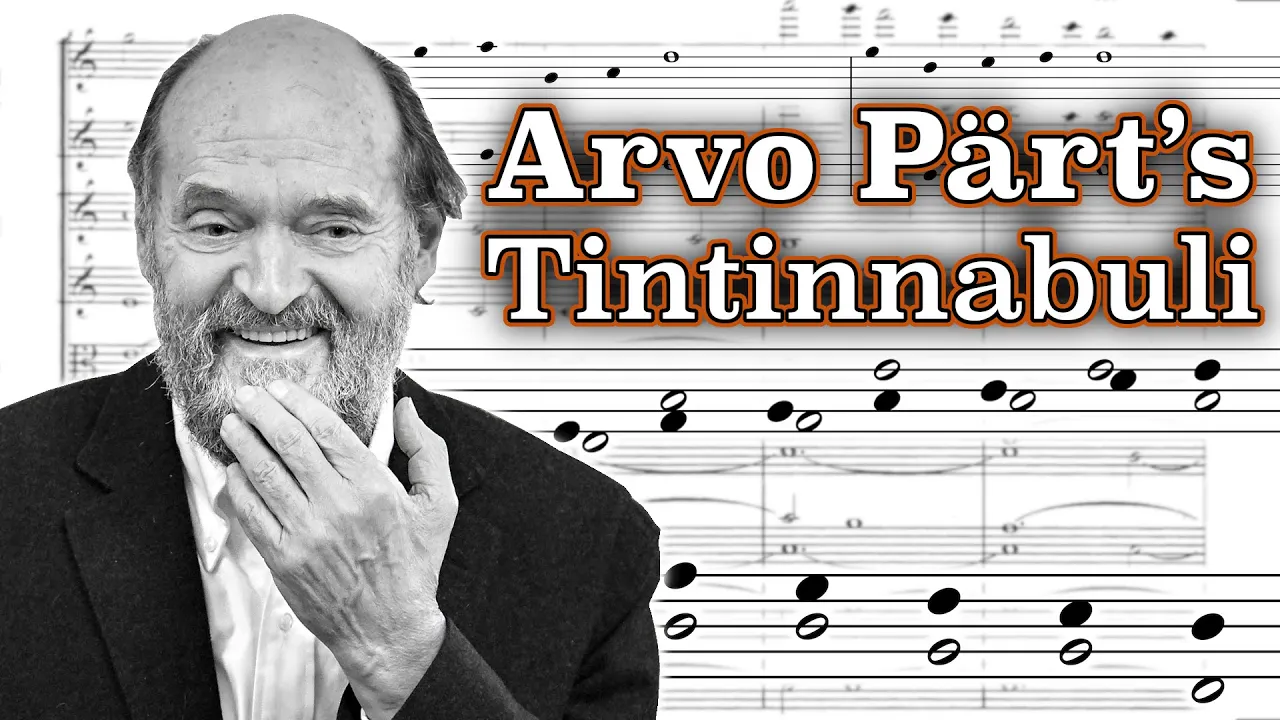
Arvo Pärt's Tintinnabuli Technique Explained
55.9K
Tintinnabuli is Arvo Pärt's signature compositional technique, developed in 1976, which pairs a melodic voice (M-voice) moving by step with a tintinnabulating voice (T-voice) that uses notes from a predetermined triad in a set relationship to the M-voice, creating a controlled harmonic structure where consonance is infused into the composition's DNA while still allowing fine control over dissonances; the technique can be modified by changing directionality, distance between voices, or using alternating polarity, and while the name suggests bell-like sounds, Pärt has cautioned against viewing it as literal bell imitation since actual bells don't produce the same harmonic structure as vibrating strings.
Click to watch →

Composing with Arvo Pärt's Tintinnabuli Technique: A Practical Guide
80K
Arvo Pärt's tintinnabuli style is a minimalist compositional technique that uses two types of voices—M-voices (built from scale segments oriented toward a central pitch using four melodic modes: descending/upward toward or away from the central pitch) and T-voices (limited to the tonic triad)—to create music that feels simultaneously ancient and modern; the technique involves systematically building layered structures where additional voices branch from existing ones, often using parallel motion, and can be enhanced with rhythmic displacement to add harmonic complexity while maintaining the fundamental simplicity of the underlying system.
Click to watch →

Tintinnabuli - The Tallis Scholars Tribute to Arvo Pärt
47K
Tintinnabuli, meaning 'bell-like' in Latin, is Arvo Pärt's distinctive compositional style derived from the sound of bells, characterized by a central fundamental note surrounded by harmonics and reinforced by a triad, with uncomplicated melodies woven around this structure; this approach creates a meditative, spiritual quality exemplified in works like the Magnificat where a sustained note (such as C) forms the foundation while other voices introduce triads and counter-melodies that evolve from this simple material.
Click to watch →
Les 3 chefs-d'œuvre d’Arvo Pärt
360
Arvo Pärt, an Estonian composer born in 1935, developed a unique musical style called tintinnabuli (named after medieval monastery bells) after abandoning serial composition in 1976, creating works like Spiegel im Spiegel, Tabula Rasa, and Magnificat that combine spiritual depth with radical simplicity through slow repetitions, silences, and accessible melodies, representing a significant return to tonal music in the 20th century.
Click to watch →
Deep Dive
Basic knowledge of the viola's unique register, timbre, and technical capabilities compared to the violin, including string crossing and double stops.

What you NEED to know about strings - Ranges and registers of the string section
18.5K
String instruments produce dramatically different timbres across their ranges, similar to the human voice transitioning from chest resonance to falsetto. Registers are subsections where sound character changes. Strings uniquely control timbre by selecting which string to play a pitch—for example, G on the low G string produces a woollier sound than on thinner strings. Violins have three registers: rich bottom octave, projecting middle register, and brilliant top register. Violas sound denser with more low harmonics. Cellos have the clearest register distinctions: powerful bass register, resonant tenor register, and bright treble register. Understanding these relationships enables composers to select appropriate sounds for emotional expression.
Click to watch →

V. Richelieu Workshop By Vermont Violins (How To Choose A Right Viola).
292
Viola playing requires fundamentally different techniques than violin, including deep breathing and sinking into the instrument's strength. Commercial violas often have a 'boxy sound' due to inconsistent string tension, preventing students from achieving authentic viola sound. The viola is specifically designed for lower registers, requiring wider instrument outlines (like 12-inch loops) to allow plates to resonate at lower frequencies. Wood selection must prioritize density and stiffness—less stiff wood transmits lower frequencies more easily and produces greater volume through stronger vibrations. Quality violas produce warm, round, deep sounds with even playing across all four strings and clear intonation during double stops.
Click to watch →
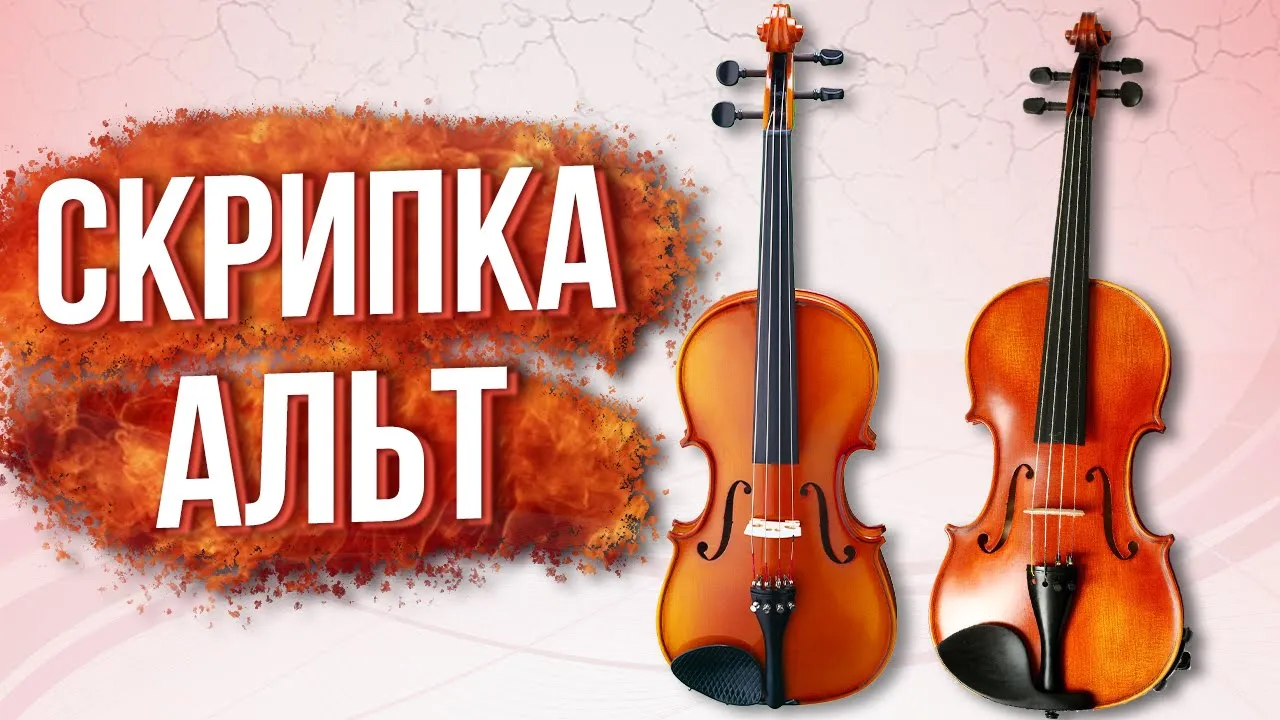
СКРИПКА И АЛЬТ / ОТЛИЧИЯ / СРАВНЕНИЕ
113K
The violin and viola are closely related string instruments with key differences: the viola is larger (typically 380-430mm in size) and produces a deeper, warmer, more velvety sound, while the violin is smaller and easier to play; both have four strings tuned in fifths but the viola's lower string is D (vs. G on violin) and upper string is A (vs. E on violin), and they use different clefs (viola primarily uses alto clef, violin uses treble clef), with the viola's bridge having an oval angle compared to the violin's acute angle.
Click to watch →

Instrument: Viola
2.3M
The viola is physically similar to the violin but approximately one to one and a half inches longer, creating a lower sound due to longer string length. It shares three strings (A, D, G) with the violin but lacks the top E string, instead having a C string one octave below middle C. Viola players employ various bowing techniques: legato for smooth connected notes, détaché for separate bows, staccato and fast staccato for off-string playing. Advanced techniques include ricochet (bow bouncing in one motion), using bow wood for percussive effects, and playing near the bridge (ponticello) for icy sounds versus sul tasto over the fingerboard for softer tones. Pizzicato involves finger-plucking, with snap pizzicato creating sharp snapping sounds. Contemporary composers also request unconventional methods like knocking on the instrument wood or playing behind the bridge.
Click to watch →

Cose di musica - La viola
25.6K
The viola is the oldest and most fundamental member of the string family, serving as the 'grandmother' of all string instruments. The violin is essentially a smaller viola, while the cello is a larger viola, and the double bass was originally called the 'violone' (big viola). Historically, string instruments were divided into 'viole da braccio' (played like violins) and 'viole da gamba' (played like cellos). Despite being the least known among string instruments, the viola has its own specific dignity and characteristic timbre. The viola has historically been treated as the 'poor relative' among string instruments due to its lower sound making it more suited for accompaniment than virtuosic solo passages. The viola has four strings, with three in common with the violin and one lower string that the violin does not have. Unlike violins, which have standardized measurements around 35.5 cm since Stradivarius, violas can vary significantly in size to match the stature of the player. While the basic technical approach for violin and viola is similar, the viola requires a slightly wider vibrato, more robust left-hand articulation, and a more delicate, airy bow technique. The viola's characteristic timbre has been recognized since the early 1700s. In Vivaldi's 'The Four Seasons,' the viola parts in 'Spring' are titled 'The Barking Dog,' demonstrating how the instrument's rough, robust sound can be used for programmatic purposes. In the 19th century, the viola's more meditative and interiorized sound acquired the characteristics of the romantic hero. Berlioz's 'Harold in Italy' is a significant example, where the viola's lower strings and warm tone are particularly suited for evoking romantic and passionate sentiments. Despite its larger size compared to the violin, the viola is capable of virtuosic playing. Great violin virtuosos like Paganini and his teacher Alessandro Rolla were also skilled viola players. Paganini's 'Sonata for the Great Viola' demonstrates the viola's capacity for virtuosic, rhythmic, and technically challenging music. However, the viola's larger dimensions and associated emission problems make such repertoire particularly challenging to execute. The sound of a single viola differs significantly from the sound of a section of violas playing together. As the first viola (section leader), the role is not simply to lead but to create a homogeneous, rounded sound where no individual instrument stands out too much. While there are more solo works written for violin and cello, the viola has experienced a significant revival as a solo instrument since the 20th century. This revival is largely due to Hindemith, a German composer and virtuoso viola player, who dedicated a significant portion of his output to viola works. Additionally, Lionel Tertis, an English violist of the late 19th century, passionately advocated for the viola as a solo instrument, commissioning works from composers of his time including Walton's important viola concerto. Primrose, perhaps the greatest violist of all time, commissioned Bartók's viola concerto, which represents the composer's final work. When programming viola concerts, it is important to include original works written specifically for the viola rather than transcriptions from other instruments. Robert Schumann's 'Märchenbilder' (Op. 113) is an excellent example, consisting of four pieces with varying characteristics: the outer pieces are slow and meditative, while the central pieces are more virtuosic and fast. These works showcase the viola's full range of capabilities and were composed specifically for the instrument's unique timbre and expressive qualities.
Click to watch →
Deep Dive
Awareness of the structural framework of 'Fratres,' specifically how it utilizes a repeating chord progression and rhythmic cycle.

Lana Trotovsek / Arvo Part - Fratres
99.3K
Fratres is a composition by Estonian composer Arvo Pärt, exemplifying his tintinnabuli style. The piece is structured around a series of eight or nine chord sequences, each separated by a recurring percussion motif. The chords follow a clear, formulaic pattern that generates rich harmonic movement despite their simplicity. Originally composed in 1977 for string quintet and wind quintet, Fratres has since been adapted into numerous versions for different instrumentations, including violin and piano, cello and piano, violin and string orchestra with percussion, string quartet, wind octet and percussion, saxophone quartet, and guitar with string orchestra and percussion. Most versions last between seven and twelve minutes. The violin and piano version, as performed here, is one of the most prominent. Other versions, such as those for viola and piano or cello and piano, are nearly identical to the violin version, while the string quartet version aligns more closely with the cello arrangement. The piece has been used in notable film and documentary soundtracks, including the BBC’s Auschwitz: The Nazis and the 'Final Solution' (2005), There Will Be Blood (2007), and The Place Beyond the Pines (2013). Jazz pianist Aaron Parks also incorporated elements of Fratres into his composition “Harvesting Dance.”
Click to watch →
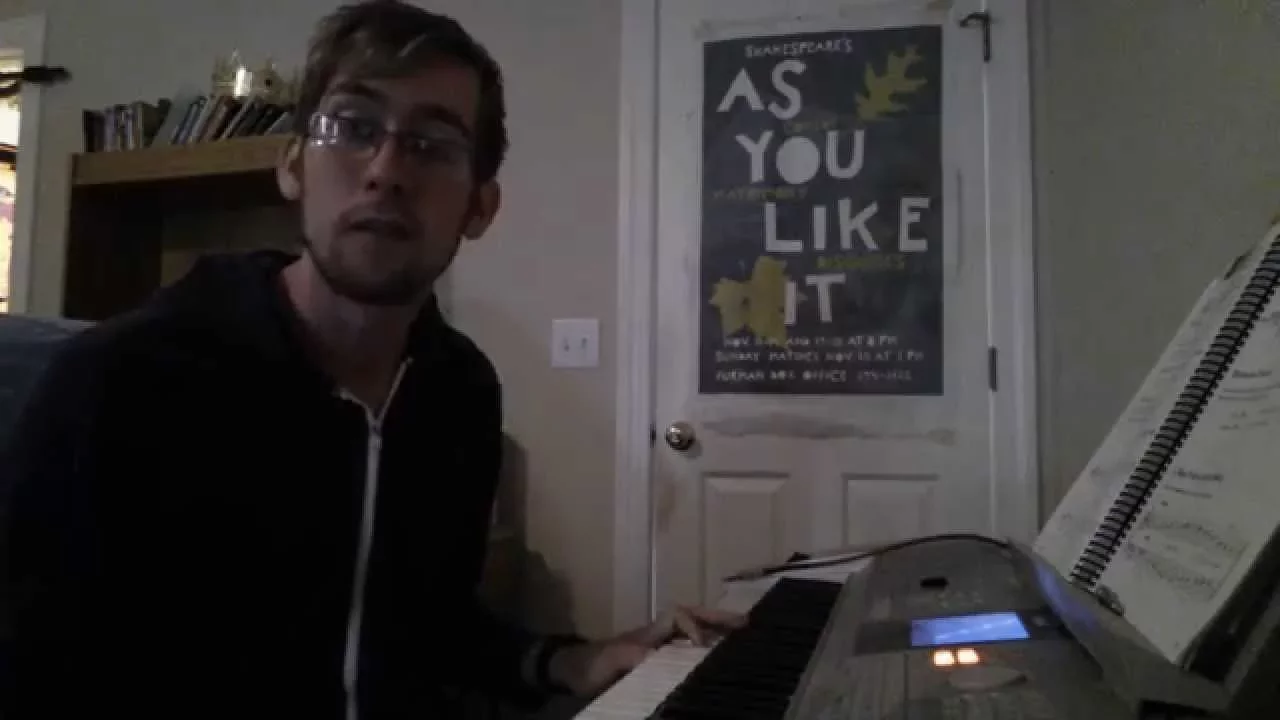
Arvo Part-Fratres Piano Tutorial
3.1K
This tutorial teaches a portion of Arvo Pärt's Fratres, featuring a left hand bass of A and E held throughout, with a right hand chord progression of C#-A-E, Bb-A-E-D, A-E-C#, G-C-Bb, F-C-A, E-C-G, D-C-F, and returning to C#-A-E.
Click to watch →
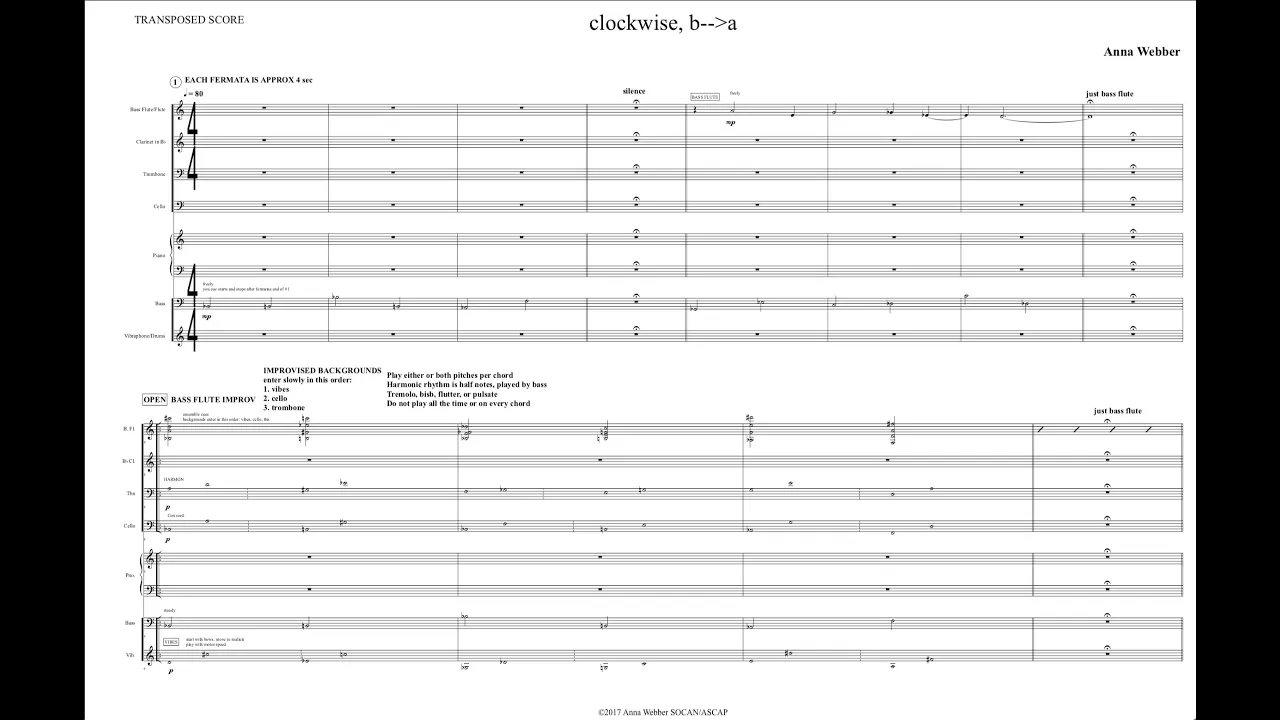
Composers Talk #2 - Anna Webber "Clockwise"
804
A chord progression cycle is a repeating pattern of chords that structures a musical piece. The composer created a cycle of 'one two one two' for the harmonic rhythm, which then progresses to 'two one two one' in subsequent sections. The piece has a fulcrum in the middle section where everything is written out as 'one' (a single chord). The drum solo section then goes 'two one' and 'two one' again. This creates a structured harmonic progression that cycles through different patterns throughout the piece.
Click to watch →

O CICLO QUARTAL DO JUNINHO AFRAM | Vídeo Aula Completa com TAB
29.5K
In a quartal cycle, notes repeat at certain positions because of the interval structure. When playing the 12th and 17th frets on the A string, the notes repeat when you move to the next string. For example, the 17th fret of the A string produces the same note as the 12th fret of the D string, creating a repeating pattern throughout the cycle.
Click to watch →

Paweł Zalejski/Bartłomiej Wezner: Recital kameralny - IV Festiwal Muzyka w Willi Blumwego 2021
840
A recital program can be structured palindromically, with compositions arranged symmetrically around a central piece. This evening's program begins with ascetic, mystical compositions by Arvo Pärt, moves toward classical sonatas by Beethoven and Brahms, and returns to Pärt's works. The piece 'Fratres' (meaning 'brothers' in Latin) exemplifies Pärt's tintinnabuli technique, inspired by medieval and Renaissance aesthetics. This technique reduces musical material to create contemplative atmospheres suitable for liturgical texts, symbolizing the union of two brothers and representing six related souls.
Click to watch →
Prerequisite Knowledge
- Concept 01Understanding of the core principles of Minimalist music, particularly the focus on repetition, gradual transformation, and sonic simplicity.
- Concept 02Familiarity with Estonian composer Arvo Pärt and his development of the 'tintinnabuli' compositional style, which mimics the ringing of bells.
- Concept 03Basic knowledge of the viola's unique register, timbre, and technical capabilities compared to the violin, including string crossing and double stops.
- Concept 04Awareness of the structural framework of 'Fratres,' specifically how it utilizes a repeating chord progression and rhythmic cycle.
Subsequent Learning
- Step 01Comparative analysis of 'Fratres' across its various authorized arrangements, such as for violin and piano, cello ensemble, or string orchestra.
- Step 02Exploration of the broader 'Sacred Minimalism' (or Holy Minimalism) movement, studying related composers like John Tavener and Henryk Górecki.
- Step 03An in-depth theoretical analysis of the 'tintinnabuli' system, focusing on the mathematical relationship between the melodic voice (M-voice) and the tintinnabular voice (T-voice).
- Step 04Investigation of performance practice and interpretation, examining how different string players navigate the technical demands, pacing, and spiritual expression of Pärt's works.
Opening
Rhythm Flow
Acknowledgment
Peak Energy
Finale
Opening
0:03Playing Section
- 1
Performance begins with rhythmic music and applause.
- 2
Audience energy builds as the act unfolds.
- 3
Initial moments set an intense, celebratory tone.
The Critique of 'Holy Minimalism' and Solo Arrangement Limitations
While Arvo Pärt's Fratres is celebrated for its hypnotic beauty, some musicologists and critics offer a more skeptical perspective. Critics of "holy minimalism" argue that Pärt's tintinnabuli method can be overly formulaic, repetitive, and emotionally manipulative, lacking the developmental complexity and dramatic tension found in traditional Western classical music. Furthermore, from a performance standpoint, arranging Fratres for a solo instrument like the viola presents structural challenges. The composition inherently relies on the precise mathematical interaction between a melodic voice and a tintinnabuli voice. Critics of solo adaptations argue that without a secondary voice or keyboard accompaniment, the multi-layered acoustic resonance and harmonic tension of Pärt’s system are diluted, potentially reducing the work to a more homogenous and less dynamically varied experience.
Deep Dive
Comparative analysis of 'Fratres' across its various authorized arrangements, such as for violin and piano, cello ensemble, or string orchestra.
Lana Trotovsek / Arvo Part - Fratres
99.3K
Fratres is a composition by Estonian composer Arvo Pärt, exemplifying his tintinnabuli style. The piece is structured around a series of eight or nine chord sequences, each separated by a recurring percussion motif. The chords follow a clear, formulaic pattern that generates rich harmonic movement despite their simplicity. Originally composed in 1977 for string quintet and wind quintet, Fratres has since been adapted into numerous versions for different instrumentations, including violin and piano, cello and piano, violin and string orchestra with percussion, string quartet, wind octet and percussion, saxophone quartet, and guitar with string orchestra and percussion. Most versions last between seven and twelve minutes. The violin and piano version, as performed here, is one of the most prominent. Other versions, such as those for viola and piano or cello and piano, are nearly identical to the violin version, while the string quartet version aligns more closely with the cello arrangement. The piece has been used in notable film and documentary soundtracks, including the BBC’s Auschwitz: The Nazis and the 'Final Solution' (2005), There Will Be Blood (2007), and The Place Beyond the Pines (2013). Jazz pianist Aaron Parks also incorporated elements of Fratres into his composition “Harvesting Dance.”
Click to watch →

Arvo Pärt: Fratres (1982) Sebastian Bohren / Oleksandr Chugai
34.9K
Arvo Pärt's Fratres (1982) exemplifies his Tintinnabuli compositional style, featuring nine chord sequences generated by a simple mathematical formula that create a rich harmonic space while maintaining apparent simplicity, performed here by Sebastian Bohren (violin) and Oleksandr Chugai (piano) in a 2011 recording.
Click to watch →

The Best of Arvo Pärt: The Collection
1.1M
Arvo Pärt, born in 1935, is an Estonian composer whose distinctive musical language emerged in the late 1960s, characterized by a stark contrast between modernist dissonance and diatonic, peaceful harmonies often infused with Christian themes. His compositional breakthrough came with Für Alina, which introduced the tintinnabuli technique—a method where melodies move stepwise around a central pitch, creating a timeless, minimalist soundworld. This technique became the foundation for his most celebrated works, including Fratres (in eight arrangements featured here), Cantus in Memory of Benjamin Britten, and Tabula Rasa, a concerto grosso for Baroque-sized ensemble. After emigrating to Germany, Pärt applied tintinnabuli to sacred texts, producing major choral works such as the St John Passion (1982), Magnificat, Stabat Mater, and Maria Antiphons, now standard repertoire worldwide. In the last two decades, his harmonies have grown richer, embracing Romantic expressiveness while retaining his signature simplicity, as heard in I am the true vine and The Woman with the Alabaster Box. His music resists easy classification, offering calm amid chaos through its spiritual clarity and restraint. The video presents a curated collection of his key pieces, including Spiegel im Spiegel for violin and piano, Bogoróditse Djévo, and Partita Op. 2, all performed in acclaimed modern recordings. The set includes full booklet notes and features performances by artists such as Jürgen Kruse, Benjamin Hudson, and the Elora Festival Singers.
Click to watch →

Teletubbies | Cuernos largos | dibujos animados para niños
95K
The cello has four strings (la, re, sol, do) and the violin also has four strings (la, re, sol, do). The violin has an additional higher string (mi) that the cello does not have. The cello is larger than the violin because it produces lower, deeper sounds. The larger size of the cello's resonating box allows it to transmit lower frequency sounds more effectively.
Click to watch →

An Introduction To Arvo Part
489
Fratres (Brothers) is another notable work for piano and violin. The piece opens with the violin playing rolling chords alone, creating a distinctive sound that many listeners find compelling. The piano enters later, and throughout the piece there is a dialogue or competition between the two instruments. The violin begins frantic and hyperactive while the piano moves slowly and calmly, often in the lower register. The piece explores themes of struggle, anxiety, peace, and truth, ultimately resolving into both instruments playing calmly and gently together, representing humanity's journey toward spiritual peace.
Click to watch →
Deep Dive
Exploration of the broader 'Sacred Minimalism' (or Holy Minimalism) movement, studying related composers like John Tavener and Henryk Górecki.

A Brief History of 20th Century Classical Music (Tetris-style)
121.9K
So-called 'holy minimalists' like Arvo Pärt, John Tavener, and Henryk Górecki used similar techniques to more spiritual ends. This demonstrates how compositional techniques can be adapted to serve different philosophical or religious purposes, showing the flexibility of minimalist approaches beyond purely secular applications. The spiritual dimension added depth and meaning to the repetitive structures characteristic of minimalism.
Click to watch →

Sir John Tavener: England's Holy Minimalist
8.2K
Sir John Tavener (1944-2013) was an English composer best known for his 'holy minimalism' style, which blends Eastern Orthodoxy with universal spiritual themes; his music evolved from maximalist postmodern works like 'The Whale' (1968) to deeply spiritual compositions such as 'The Veil of the Temple' (2003), a seven-hour piece for the Temple Church; despite commercial success with recordings on Apple Records and collaborations with figures like Ringo Starr and Bjork, Tavener maintained that his music was an extension of his religious beliefs, emphasizing that expressing the divine required a 'still small voice' rather than grandiose statements.
Click to watch →

Holy Minimalism Mix: Arvo Pärt, Henryk Górecki, John Tavener【 THE NTS GUIDE TO… 】
18.5K
This video presents a two-hour curated selection of late 20th-century composers who developed minimalist and neo-romantic styles infused with mystical or religious themes. Featured composers include Arvo Pärt, Henryk Górecki, and John Tavener, whose works are characterized by sparse textures, slow harmonic motion, and spiritual introspection. Specific pieces highlighted are Pärt’s Fratres (1980 version), performed by Tasmin Little and others; Górecki’s Symphony No. 3 and Miserere, Op. 44; and Tavener’s The Protecting Veil and Come And Do Your Will In Me (Voices & Strings). Additional works include Hans Otte and Herbert Henck’s Das Buch Der Klänge I–XII, Hovhaness’s Symphony No. 6, Op. 173, 'Celestial Gate', and Symphony No. 2, Op. 132 "Mysterious Mountain"; Giya Kancheli’s Diplipito; and John Williams’ contribution to Hovhaness’s Symphony No. 2. The selection emphasizes the convergence of minimalism with sacred expression, using string ensembles, choir, and solo instruments to evoke contemplative and transcendent atmospheres. The presentation is structured as a continuous listening experience, focusing on the emotional and spiritual resonance of these compositions rather than analytical breakdowns. No historical context, compositional techniques, or biographical details beyond the listed works are provided.
Click to watch →
Sacred Music - 4 - Searching Out the Sacred
2.5K
John Tavener, born in suburban Wembley Park in North London at the end of the Second World War, wrote almost exclusively religious music for the last 40 years. In the 1960s, he caused a sensation when the Beatles championed his work, releasing 'The Whale' and 'The Celtic Requiem.' In 1977, after a profound spiritual crisis, he embraced the Eastern Orthodox Christian Church, and its ancient traditions of icons, mysticism, and sung liturgy have dominated his life and music. His music addresses God but also evokes God's continuing and living presence in creation. He believes sacred music continues because people have a thirst for tradition and want to see some continuity, and he became soaked in Orthodox tradition while also learning about Indian, Arabic, and various traditions to create his style.
Click to watch →

Modern Classical Music Styles Explained: A Historical Overview
2.5K
In the 1970s, composers reacted against minimalism's perceived secular emptiness, developing 'holy minimalism' inspired by Christian liturgical music, gamelan traditions, and medieval compositions. Henryk Górecki and Arvo Pärt created meditative, referential works that sold millions of copies. Parallel to this, postminimalism evolved by incorporating jazz and folk influences, using non-linear progressions, and concealing minimalist structures. Kyle Gann coined 'totalism' for compositions featuring complex rhythmic interlocks and nested tuplets, aiming to appeal to both lay audiences and sophisticated listeners.
Click to watch →
Deep Dive
An in-depth theoretical analysis of the 'tintinnabuli' system, focusing on the mathematical relationship between the melodic voice (M-voice) and the tintinnabular voice (T-voice).
Arvo Pärt's Tintinnabuli Technique Explained
55.9K
Tintinnabuli is Arvo Pärt's signature compositional technique, developed in 1976, which pairs a melodic voice (M-voice) moving by step with a tintinnabulating voice (T-voice) that uses notes from a predetermined triad in a set relationship to the M-voice, creating a controlled harmonic structure where consonance is infused into the composition's DNA while still allowing fine control over dissonances; the technique can be modified by changing directionality, distance between voices, or using alternating polarity, and while the name suggests bell-like sounds, Pärt has cautioned against viewing it as literal bell imitation since actual bells don't produce the same harmonic structure as vibrating strings.
Click to watch →
Composing with Arvo Pärt's Tintinnabuli Technique: A Practical Guide
80K
Tintinnabuli composition employs two fundamental voice types: M-voices (constructed from scale segments) and T-voices (limited to tonic triad members). M-voices serve as structural origins from which T-voices systematically branch. Four melodic modes define how scale segments relate to a central pitch: descending/ascending toward or away. Systematic design—progressively increasing segment sizes or alternating modes—creates balanced structures. Instrument range considerations guide key selection. Alternative M-voice designs include phrases starting/ending on different triad members, and text-based construction where syllable count determines segment length. T-voices follow two rules: using only triad notes and relating to M-voices in patterned ways. Four positional relationships exist: first/second available notes above or below. Close position is immediately adjacent; open position is further away. Transforming structure into music requires choosing instruments and developing elaboration patterns.
Click to watch →
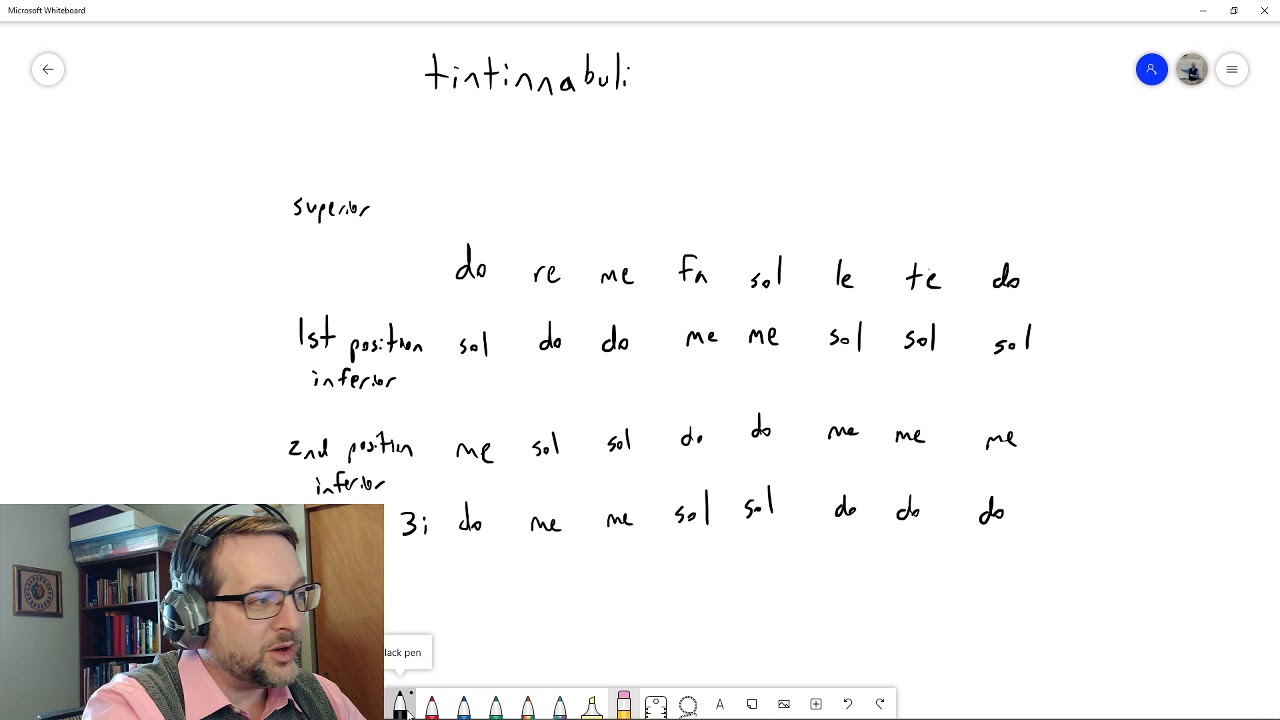
Tintinnabuli
3.9K
Tintinnabuli is a compositional technique developed by John Cage in the late 1970s and early 1980s, named after the 'tintinnabulation of the bells' in Edgar Allan Poe's poem. The technique involves creating a secondary voice that uses only notes from the tonic triad (e.g., B minor triad for B minor key) to provide counterpoint against a melody. The voice can be positioned in three ways: first position inferior (next note down in the triad), second position inferior (two notes down), or first position superior (next note up in the triad). This creates a bell-like, resonant texture that can be combined with parallel motion and octave doubling to produce thick, layered harmonies. The technique is valued for its simplicity, elegance, and flexibility in contemporary composition.
Click to watch →
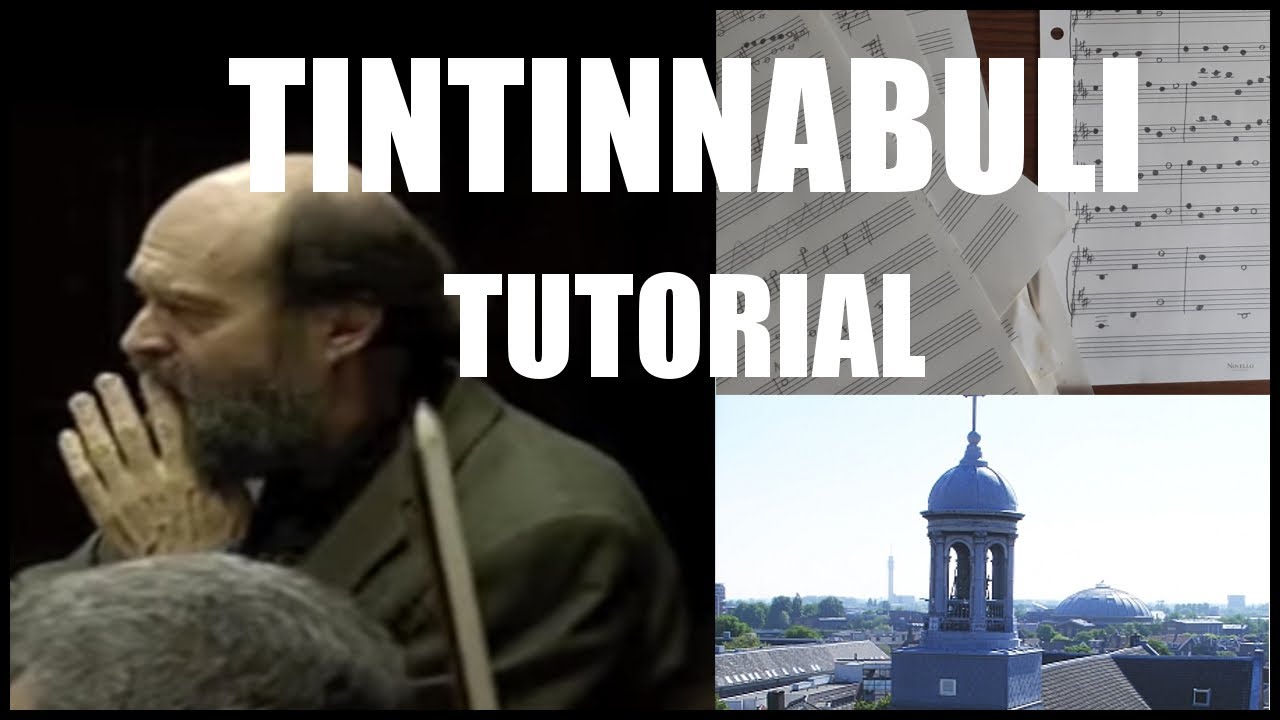
Tintinnabuli Tutorial
2.3K
Tintinnabuli is a composition technique developed by Estonian composer Arvo Pärt that creates polyphonic music through a simple yet elegant method: one voice (the 'tintinnabuli' voice) follows a diatonic scale while the other voice (the 'melodic' voice) moves freely, creating a balanced interplay between heaven and earth that produces rich, spiritual music without complex rules.
Click to watch →

“Touching the Infinite: Exploring the Sacred Minimalism of Arvo Pärt” (Jason C. Tramm)
1.2K
Tintinnabuli relies on precise mathematical relationships to create complexity from simplicity. In Cantus in Memoriam Benjamin Britten, different voices play identical long-short patterns at varying speeds: violins fastest, violas half as slow, cellos slower still, and basses in very long notes. Bell patterns are predetermined mathematically, with specific durations calculated in advance. The piece uses only eight notes with no accidentals or chord progressions, yet creates profound emotional impact through carefully controlled repetition and cascading figures where lower voices enter progressively later and slower. Fur Alina (1976), the simplest tintinnabuli piece, features no written rhythm—only long and short notes similar to Gregorian chant notation—with the left hand playing only B minor triad notes while the right hand plays notes from the B minor scale. Both works demonstrate how mathematical precision combined with extreme simplicity can produce powerful emotional resonance.
Click to watch →
Deep Dive
Investigation of performance practice and interpretation, examining how different string players navigate the technical demands, pacing, and spiritual expression of Pärt's works.

String Master Class, with Jude Ziliak, violin
182
This concluding segment presents a comprehensive philosophy of historical performance practice. Bach's slurs should be treated as discreet musical units where listeners can tell where they start and stop, with each slur slightly different in accordance with its harmonic and melodic characteristics. Historical string playing is not an either/or game - the music of the 18th century is equally available to everybody regardless of what instrument they play. Musicians should develop awareness of the equipment composers used, as it tremendously influenced how they wrote. They should never take for granted the notes on the page, the accuracy of additions, or that fingerings and bowings come from the composer. They should always ask why notes are grouped together and what slurs mean. The more inquisitive about the technological and theological background of each work, the richer the musicianship will be. Historical awareness enriches musicianship regardless of the style played, and musicians should not think of it as an either/or decision between modern and period playing.
Click to watch →
Arvo Pärt's Tintinnabuli Technique Explained
55.9K
Tintinnabuli is Arvo Pärt's signature technique, developed in 1976, forming the basis of his 'holy minimalism.' The technique pairs a melodic voice (M-voice) moving by step with a tintinnabulating voice (T-voice) using notes from a predetermined triad. The T-voice selects notes from the triad that are not the same as the M-voice notes, creating structured harmonic relationships. Directionality and distance between voices can be changed, and Pärt frequently uses an alternating polarity technique to add complexity. The technique infuses consonance while allowing controlled dissonance. Spiritually, the M-voice represents imperfection and sin, while the triad represents perfection and grace. Technically, triads and scales do not need to align, and melodies can be in one key while tintinnabulating in another. Pärt overlays simple ideas on themselves to achieve complex textures without losing harmonic simplicity. The technique creates music of constant change on one hand, but complete stasis on the other.
Click to watch →

The hardest "easy" piece ever written (Arvo Pärt and Für Alina, ft. Tähe-Lee Liiv)
34.7K
Pärt's piano works appear simple with few notes and minimal notation, yet present extraordinary technical and interpretive challenges. Both hands must move together with extreme synchronicity to create the desired ringing quality. Modern notation cannot specify exact durations or rhythms for tintinnabuli music, requiring performers to read interpretive decisions 'behind the bar lines.' Pärt's philosophy emphasizes treating each note as a meaningful word, with personal emphasis shaping the musical phrase. Recording these works demands patience, persistence, and courage to allow the music to speak naturally. A producer once assumed simpler pieces would be easier after technically difficult works, but pianist Tähe-Lee Liiv found them equally challenging. She experienced mental blocks and stress during recording sessions, only finding the right sound at the very end. When she became more relaxed and free, her playing dramatically improved. By rejecting traditional narrative structures and developmental forms, Pärt created music that challenges performers and listeners to inhabit a new space. Music critic Alex Ross describes Pärt as speaking in 'hauntingly clear, familiar tones' without duplicating past music. His approach represents a worldview creating stillness and purity in a chaotic modern world, offering something universal for everyone. The radical act of disappearing into silence allows performer and listener to discover eternity together.
Click to watch →

Arvo Pärt - Tabula Rasa, I
313.6K
Arvo Pärt’s Tabula Rasa (1977) is a concerto for two violins (or violin and viola), prepared piano, and string orchestra, representing his pioneering tintinnabuli technique. This method combines simple, stepwise diatonic melodies with tones from a tonic chord, creating harmonic stability alongside shifting consonances and dissonances. The piece is structured in two movements: “Ludus” and “Silentium.” “Ludus” begins with stark, octave-separated A’s in the violins and a prolonged rest, establishing the movement’s framework. Through variations separated by diminishing rests, the soloists arpeggiate the tonic chord, expanding from mid-range to the extremes of their registers, while the orchestra gradually unveils an expanding melodic line that enriches harmonic color. “Silentium,” in slower tempo, triple meter, and a new key, recasts earlier material with widening melodic arcs. The movement’s title is realized at its close: as the melody approaches the final tonic note, the ensemble fades to silence, leaving the last note implied rather than sounded. The three textural layers—solo violins, prepared piano, and orchestra—each play distinct roles in the musical process, with their interactions shaping the large-scale form. The work reflects Pärt’s spiritual and aesthetic vision, where musical structure emerges from systematic, meditative processes. The prepared piano adds unique timbral contrast, and the entire composition demonstrates how minimal materials can generate profound structural and emotional depth over approximately thirty minutes of performance.
Click to watch →

М.Казиник. Пассакалия. И.С. Бах и Арво Пярт ч.2_3
7K
Arvo Pärt's Passacaglia represents a theatrical idea rather than a bass-based structure. The passacaglia element is no longer in the bass but becomes an intonation and rhythm that transitions between instruments. Musicians 'play with meanings' rather than just notes, creating music that speaks to universal themes of beauty, humanity, theater, and the movement of human consciousness. Pärt began as an avant-garde composer with his cello concerto 'Pro et Contra' initially causing controversy. His musical journey was logical - he progressed from experimental complexity to profound simplicity. This simplicity could not exist without the preceding avant-garde experimentation, as it would otherwise remain in the space of the ordinary.
Click to watch →
Opening
Rhythm Flow
Acknowledgment
Peak Energy
Finale
Opening
0:03- 1
Performance begins with rhythmic music and applause.
- 2
Audience energy builds as the act unfolds.
- 3
Initial moments set an intense, celebratory tone.
The Critique of 'Holy Minimalism' and Solo Arrangement Limitations
While Arvo Pärt's Fratres is celebrated for its hypnotic beauty, some musicologists and critics offer a more skeptical perspective. Critics of "holy minimalism" argue that Pärt's tintinnabuli method can be overly formulaic, repetitive, and emotionally manipulative, lacking the developmental complexity and dramatic tension found in traditional Western classical music. Furthermore, from a performance standpoint, arranging Fratres for a solo instrument like the viola presents structural challenges. The composition inherently relies on the precise mathematical interaction between a melodic voice and a tintinnabuli voice. Critics of solo adaptations argue that without a secondary voice or keyboard accompaniment, the multi-layered acoustic resonance and harmonic tension of Pärt’s system are diluted, potentially reducing the work to a more homogenous and less dynamically varied experience.
Understanding of the core principles of Minimalist music, particularly the focus on repetition, gradual transformation, and sonic simplicity.
Familiarity with Estonian composer Arvo Pärt and his development of the 'tintinnabuli' compositional style, which mimics the ringing of bells.
Basic knowledge of the viola's unique register, timbre, and technical capabilities compared to the violin, including string crossing and double stops.
Awareness of the structural framework of 'Fratres,' specifically how it utilizes a repeating chord progression and rhythmic cycle.
Comparative analysis of 'Fratres' across its various authorized arrangements, such as for violin and piano, cello ensemble, or string orchestra.
Exploration of the broader 'Sacred Minimalism' (or Holy Minimalism) movement, studying related composers like John Tavener and Henryk Górecki.
An in-depth theoretical analysis of the 'tintinnabuli' system, focusing on the mathematical relationship between the melodic voice (M-voice) and the tintinnabular voice (T-voice).
Investigation of performance practice and interpretation, examining how different string players navigate the technical demands, pacing, and spiritual expression of Pärt's works.
203 views1likes10:31@Emily_violinOriginal Release: 2018-09-09
[Music] Heat. Heat.
[Music] [Applause] [Music] Heat. Heat.
[Music] [Applause] [Music] [Applause] [Music] [Music] Heat. Heat.
Heat. Heat.
[Music] [Music] Heat. Heat.
[Music] Heat. Heat.
[Music] Thank you.
[Music] [Applause] [Music] [Applause] [Music] Heat. Heat.
Heat. Heat.
[Music] Heat.
[Music] Heat.
[Music] Heat.
[Applause] [Music] Heat.
[Music] Heat. Heat.
[Music] [Applause] [Music] Heat.
[Music] [Applause] Heat.
[Applause] [Music] Heat.
Heat.
Heat. Heat.
[Music] [Applause] [Music] Heat. Heat.
[Applause] [Music] Hey.
[Music]
Up Next

13:46
Master String Orchestration Techniques for Composers
@composingacademy8270
71.6K views•2021-07-14

178:38
Whole Brain Architecture: First International Workshop 2024
@thewholebrainarchitecturei9784
640 views•2024-07-22

9:49
FastAPI vs Flask vs Django: Choosing the Right Python Web Framework
@TechWithTim
302.5K views•2024-05-26

1:42
Game of Thrones Opening Credits: A Cinematic Analysis
@gameofthrones
46.3M views•2011-04-18
Related Study Plans & Knowledge Roadmaps
Structured learning paths in General & Interdisciplinary Studies
general-studies
Artificial Light: History, Tech & Human Impact
01The Pre-Electric Era: Fire, Oil, and Gas Lighting
02The Incandescent Revolution and Grid Electrification
03Gas Discharge and Fluorescent Illumination
+ 3 more learning modules
14h6 modules
Explore Roadmap
general-studies
Elevator Engineering: History, Physics & Cities
01From Hoists to Safety Brakes: The Dawn of Vertical Lift
02Hydraulic vs. Traction: The Engineering Physics of Elevators
03Modern Speed, Safety, and Algorithms
+ 2 more learning modules
12h5 modules
Explore Roadmap
general-studies
Rubber: Material Science, History & Geopolitics
01Origins of Natural Rubber & Mesoamerican History
02The Chemistry of Natural Rubber & Vulcanization
03The Geopolitics of the Rubber Boom & Colonization
+ 2 more learning modules
12h5 modules
Explore Roadmap
general-studies
Containerization: Evolution, Logistics & Trade
01Ancient Trade & Bulk Cargo: Amphorae to Barrels
02The Industrial Revolution & Cardboard Packaging
03The Containerization Revolution: Malcom McLean
+ 2 more learning modules
12h5 modules
Explore Roadmap