











![Shortcuts & Secrets of Negative Harmony | [using INTERVAL THEORY]](https://i.ytimg.com/vi/M9FY7OrxGdQ/maxresdefault.jpg)


![Guitar Teacher REACTS: Tommy Emmanuel "Classical Gas" [Mason Williams]](https://i.ytimg.com/vi_webp/GwyXNZZei6E/maxresdefault.webp)


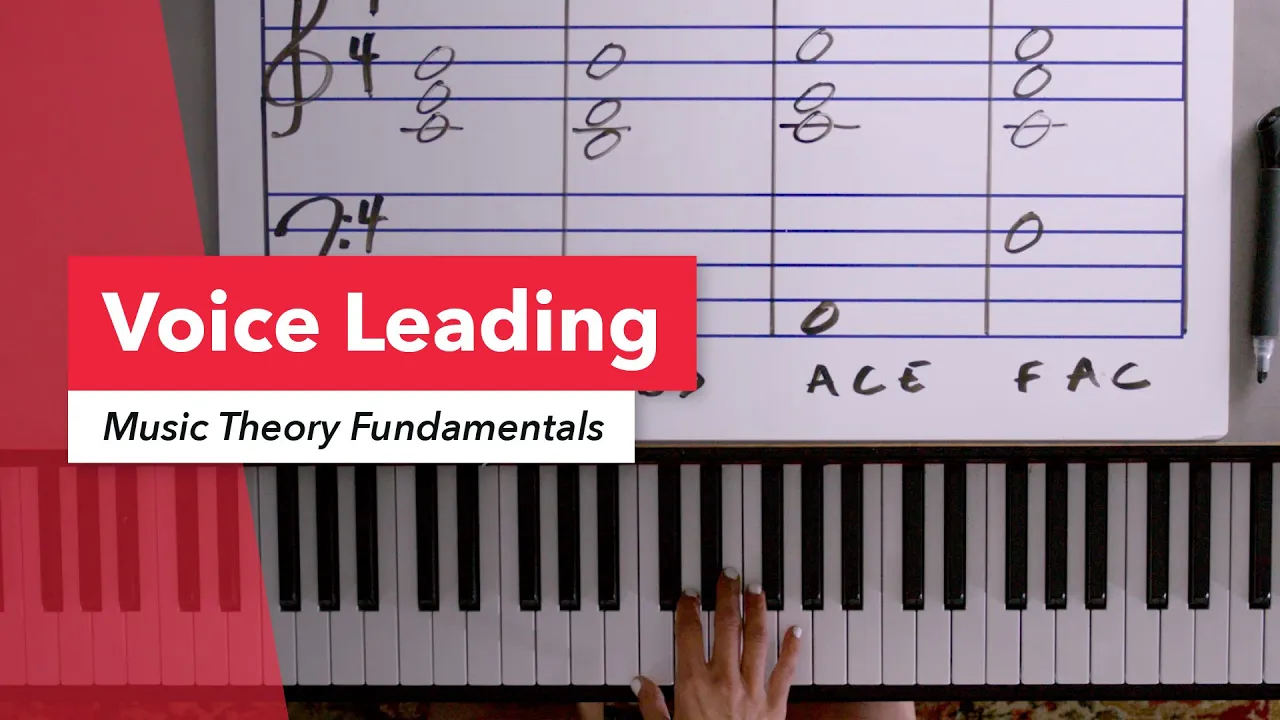



In negative harmony, to translate a chord structure: (1) keep the tonal center unchanged, (2) measure the distance from each note to the tonal center, (3) flip that distance in the opposite direction to find the negative root tone, and (4) apply the shortcut that major triads become minor triads over the negative root and vice versa, while the outer interval (the 'magic number' of 7) remains unchanged.
Negative Harmony Shortcut: Major-Minor Triad Translation Guide
Added:Understanding of major and minor triad construction (intervals of roots, thirds, and fifths).
Familiarity with the chromatic scale and measuring intervals in semitones.
Basic knowledge of key signatures, scales, and the concept of a tonal center (tonic).
An introductory conceptual awareness of Ernst Levy's theory of negative harmony and the axis of reflection.
Translating advanced chord structures (seventh chords, extended chords, and suspensions) into negative harmony.
Applying negative harmony to functional chord progressions (e.g., transforming a standard ii-V-I progression).
Exploring voice leading implications and smooth step-wise motion using negative chords.
Practical application of negative harmony in jazz improvisation, songwriting, and modern arrangement.
256 views13likes7:06Original Release: 2023-02-14
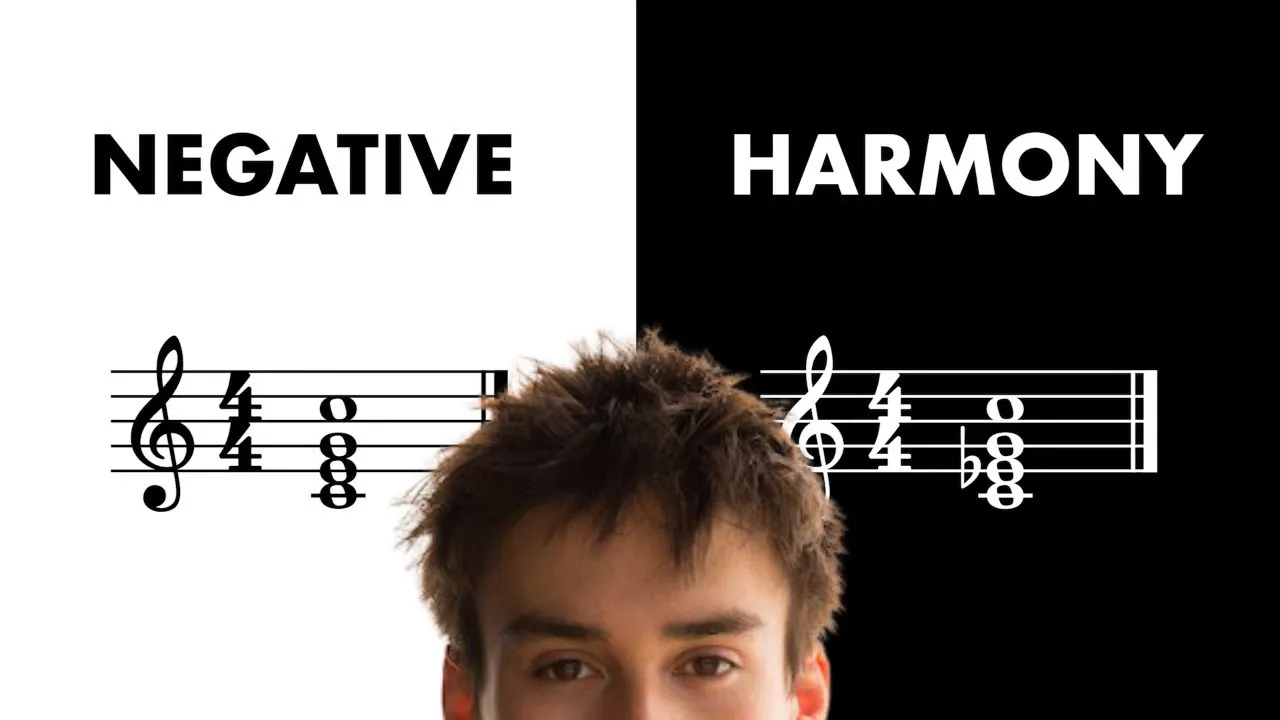
since many of you have requested some more materials about negative Harmony here is another portion of one of our courses on negative Harmony how to translate major and minor chord structures into the negative world and vice versa so I hope you find this very useful and I hope that it will help you get to Fantastic musical results let's jump right into this when we want to talk about negative Harmony really we have to have a tonal center that is our point of reference and we have to Define that point of reference first in this line right here example 1A we just want to talk about Triads over the tonal Center so we've picked the note c as our tonic and for no real reason really we've just picked the c major Triad I want to give you a shortcut and that is whenever you see a major Triad it becomes a minor try it over the respective negative root tone that is what you have to have in mind so when we have a structure over our tonal Center which is the node C then you have to now actually the Triad only flips from major to minor when we go to negative Harmony or the other way around our total Center the root tone which is our tonal Center does not change one thing that I want to point out there is no shift between the treble structure against the root tone when we look at this structure at this Triad here and if we looked at the what we call the o i the outside interval okay that is the bottom note and the top note then we see that this o i creates a distance of seven seven is a very powerful number that is why we refer to this number as the magic number and funnily enough this o i doesn't change when we flip to the negative side okay that is one of the advantages really of staying in the position of the fifth if we had other positions we can still translate these structures into negative Harmony but there is no shortcut anymore let me go to this example 1B down here and this is still using the tonal Center of c and on top we just built some basic major and minor Triads I know that this guy here it's not really a major or A Minor triad but it's a diminished Riot and this is treated a bit special so I don't want to go into equivalence right now okay let's stick to major minor Triads now when we take this first line here at bar five and let's translate the whole thing into negative Harmony so we've already learned that our tonal Center doesn't change okay so the C the note C right here this stays the node C okay so that is quite easy then let's do the root tones first the only thing that changes is the direction so for example right here take this starting point okay the node C that's our autonomous Center we have defined this already and this doesn't change so the next scale step that we are picking right here is the scale step number two that's in the node D in the base so in order to get to the negative condo we have to get to the B flat because the B flat is two chromatic steps apart from the node C but in the opposite direction so this was our starting point the distance to the tonal Center is 2 up so in order to get to the negative root tone the distance has to be two down the same is true for all of the notes here so this node e this is 4 above the total Center so in order to get to our respective negative Pawn Dom we have to go down by four and this leads us to a flat so this is how we get to the negative tones they all share the same gravitation to the root tone but from the opposite direction now let's just look at the travel structures here for a second and having this shortcut here in mind that every major Triad becomes minor over the respective root tone every Minor triad becomes major so let's see this little C major right here this is the example from buff obviously this becomes a C Minor triad so the D root tone this has a D Minor triad above so we have already determined the negative root tone to D and that is B flat so what we have to do now is simply flipping the Triad over this negative root tone from minor to Major that is why we have a B flat major Triad right here so on the E our original Triad is minor which means on the respective negative root tone it becomes major this one is Major so guess what on the negative side it becomes a Minor triad and so on it's really just a complementary thing of major nine and this is how you get to these structures for this demonstration here we have picked the key of C major but in fact we could have used any notes any Triads it's usually just about counting the distance and then flipping that distance over so that we get to the negative room tone so it's a very handy shortcut if you want to get a full understanding of how negative Harmony works using interval Theory then please check out music intervaltheory dot Academy and please don't forget to grab your free composers toolkit all the info and the link in the description below so this was Frank have a wonderful day bye [Music]
Up Next
27:03
Negative Harmony Lesson 2: Voice Leading and Harmonic Analysis
@MarcoFiorini
43.9K views•2017-05-25

10:20
Mozart's Musical Dice Game Explained: History, Rules, & Fun
@webpianoacademy
5K views•2023-03-13

47:36
Understanding Diatonic 7th Chords in Major Keys | Music Theory Tutorial
@GracieTerzian
54.7K views•2022-03-02
10:49
Understanding John Coltrane's Giant Steps: A Music Theory Analysis
@Vox
10.4M views•2018-11-12
Related Study Plans & Knowledge Roadmaps
Structured learning paths in Music Theory
music-theory
Composing Galant Music: Partimento & Schemata
01Foundations of Figured Bass and Keyboard Harmony
02The Rule of the Octave (Regola dell'Ottava)
03Galant Schemata: The Building Blocks of Form
+ 2 more learning modules
30h5 modules
Explore Roadmap
music-theory
Decoding Overtone Series: Tuning & Drone Music
01Acoustic Foundations: The Physics of the Overtone Series
02Tuning Systems: Equal Temperament vs. Just Intonation
03Microtonality and Spectralism: Beyond Standard Pitches
+ 2 more learning modules
24h5 modules
Explore Roadmap
music-theory
Impressionist Harmony: Scales, Planing & RPGs
01Foundational Music Theory: Keys, Intervals, and Seventh Chords
02Impressionist Color: Chord Planing and Parallel Harmony
03Whimsical Textures: Pentatonic Cascades and Whole-Tone Scales
+ 1 more learning modules
14h4 modules
Explore Roadmap
music-theory
Negative Harmony: Axis Reflection in Indie Pop
01Music Theory Foundations: Scales, Intervals, and Triads
02Functional Harmony and the Circle of Fifths
03Demystifying the Negative Harmony Axis Reflection
+ 2 more learning modules
16h5 modules
Explore Roadmap