









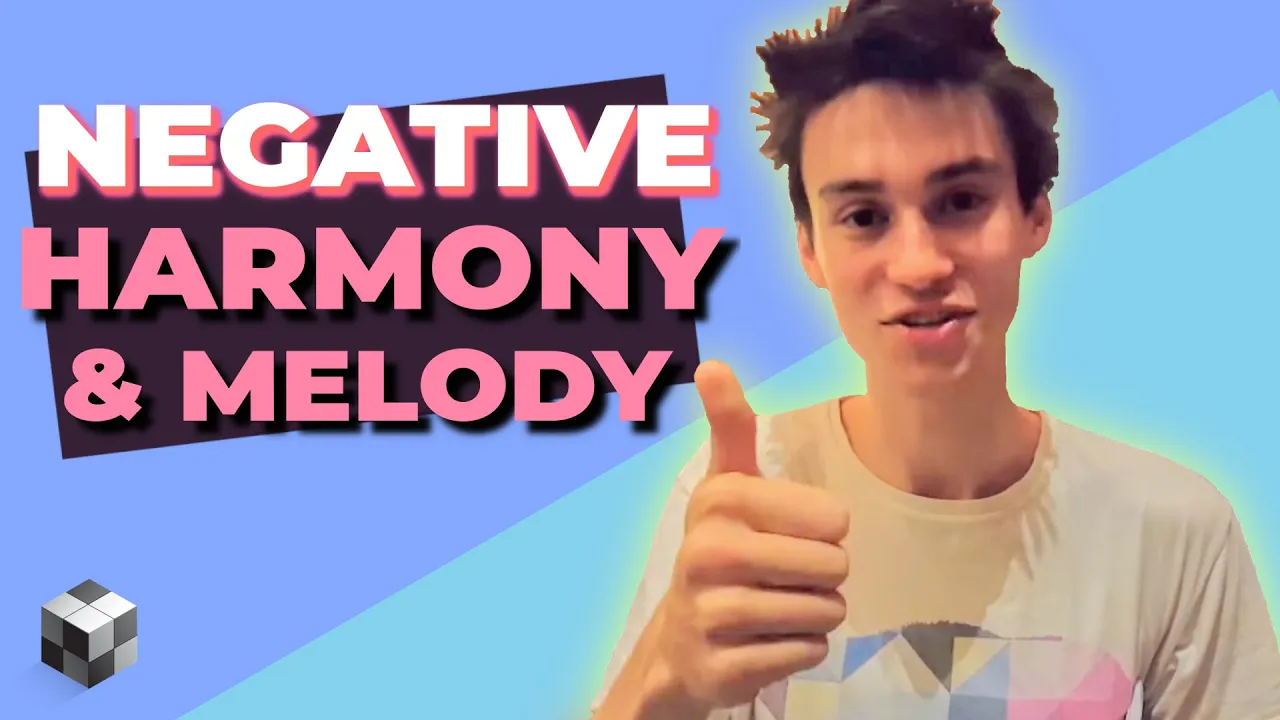





Jacob Collier explains that the circle of fifths creates a vivid understanding of music's bright and dark sides, where major chords are built on fifths (brightening) and minor chords are built on fourths (darkening). He introduces the concept of 'Super-Ultra-Hyper-Mega-Meta Lydian' as a sound representing optimum brightness, and 'Super Locrian' as its opposite wrapping around the darker side. Collier also discusses negative harmony, where every chord has a polar opposite reflection within the key center based on rotating notes around the axis, creating equivalent voice-leading gravity but from the opposite side of the circle of fifths.
Jacob Collier Interview: Advanced Music Theory & Harmony Explained
Added:A strong foundation in diatonic modes, particularly the construction and bright tonal characteristics of the Lydian mode.
An understanding of basic functional harmony, chord construction, and the relationships within the Circle of Fifths.
Familiarity with traditional voice leading principles and standard Western tuning (12-tone equal temperament).
The concept of harmonic symmetry, axis inversion, and basic chord substitution techniques.
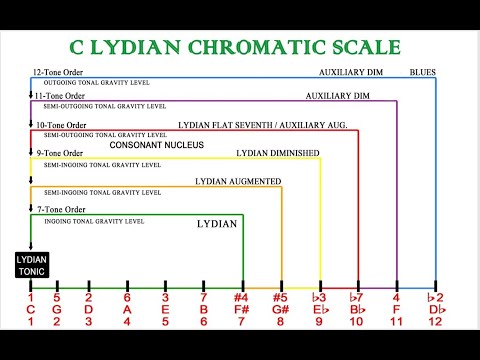
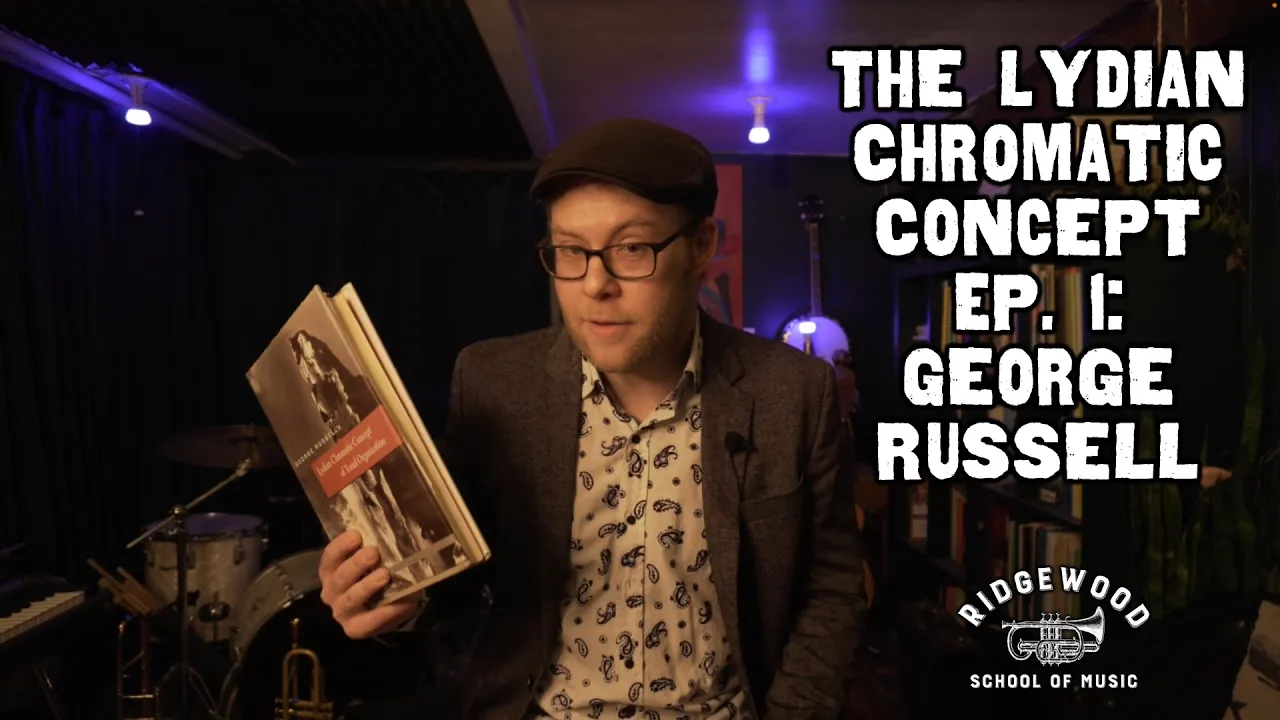
Exploring George Russell's 'Lydian Chromatic Concept of Tonal Organization' to understand the academic roots of extended Lydian systems.
Applying negative harmony principles to physically reharmonize standard jazz charts and pop melodies.
Studying microtonality, just intonation, and non-octave repeating scales using xenharmonic music theory.
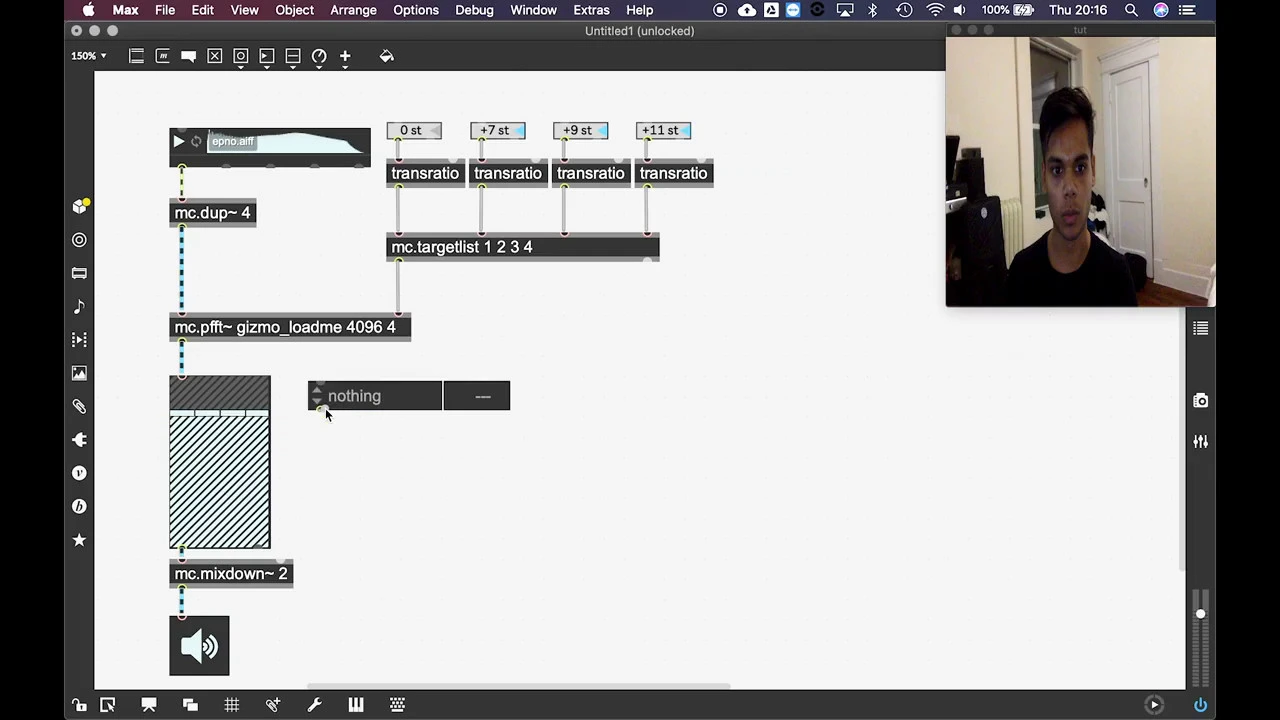
Developing and programming custom vocal harmonizer patches using digital signal processing tools like Max/MSP.
2M views57.7Klikes12:42Original Release: 2017-04-14
Are we rolling?
Hit me, hit me, hit me So, number one: Can you tell us more about The Super-Ultra-Hyper-Mega-Meta Lydian Scale, And how you would use it to-- In your-- in your improvisation?
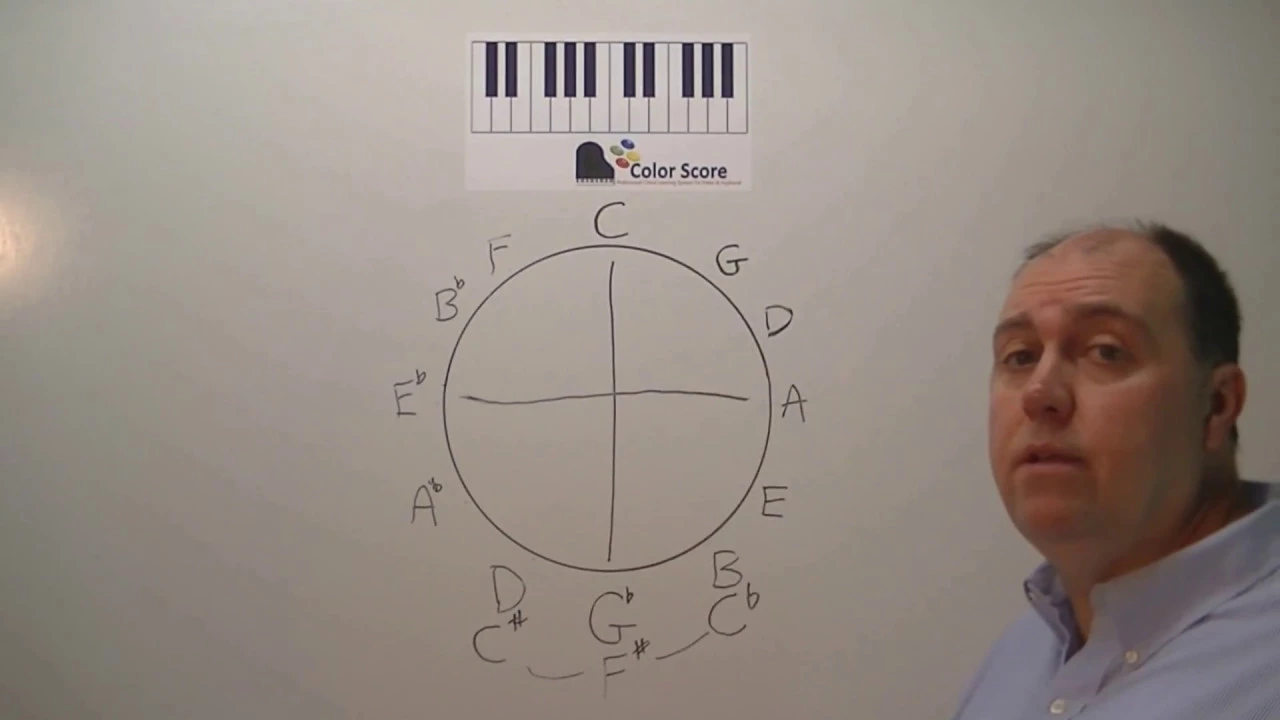
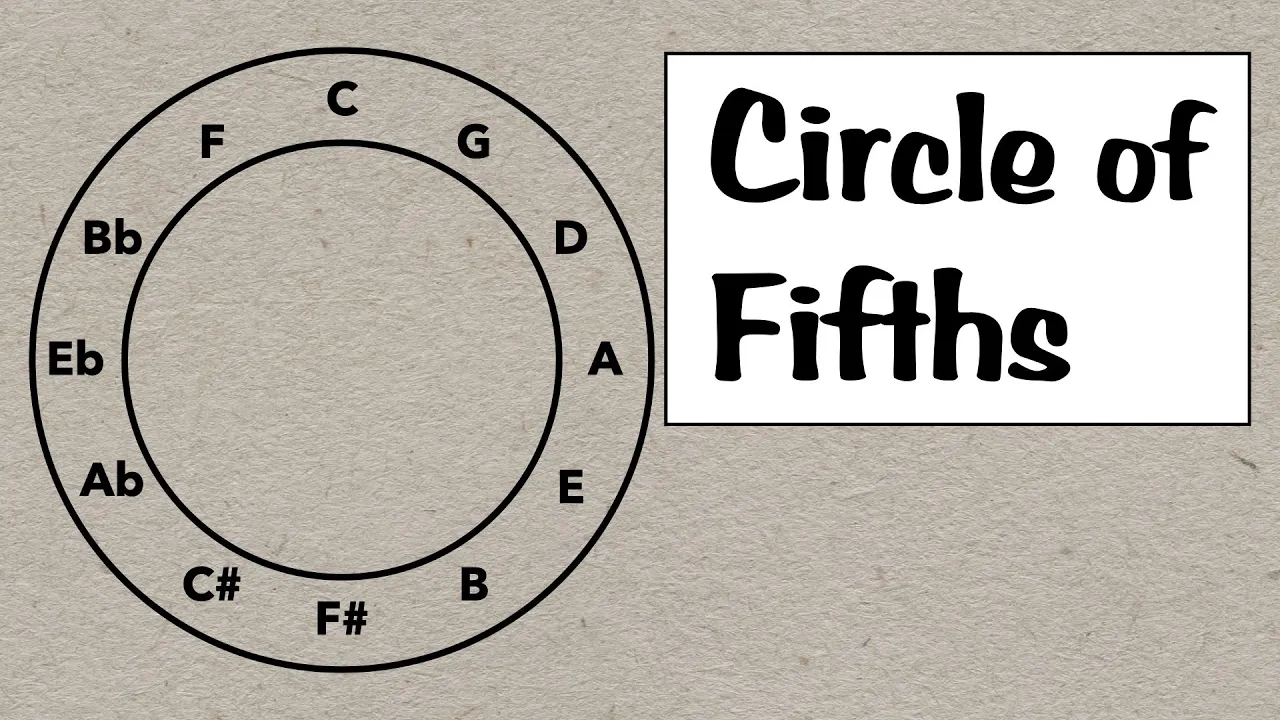
Uhm, Well, Let me tell you right now, Uhm, The-- The way that the-- The way that the Circle of fifths, um, *sigh* kind of, Yeah, I guess the circle of fifths makes music, Very vivid to me in terms of understanding The bright and the dark side.
So the, the bright side being; You start on C, and you go C, G, D, A, E You know, that's like the, that's brightening And then C, F, Bb, Eb, Ab That's darkening And you can approach a key center From either side, Like a plagal cadence, is very reassuring It's like hugging the key And then a perfect cadence is like Arriving at the key Uhm, and so there are different ways of feeling About the brightness and the darkness of things But, yeah the Super-Ultra-Hyper-Mega-Meta Lydian Uhm, I don't know if I'd call it a scale, But it's like a sound, The idea of Lydian not stopping at At the root when you rise, like: *Super-Ultra-Hyper-Mega-Meta Lydian Sound* You know? Yeah.
This thing, for me it's just h-- like s- That's how Lydian sounds, that's like That's Lydian at it's most comfortable-- I'm not sure George Russel would agree with me, By the way.
But, Uhm I think that, yeah, that As a sound, that's like, optimum brightness.
And then if you go, If you go *Super Locrian...?* That's like the opposite kind of scale Because that's, I don't if I'd call it super Locrian, But it like continuously wraps itself Around the darker side of the circle of fifths Cadences to-- F cadences to Bb, Eb, Ab And yeah, that way of thinking It's really informed me a lot about first of all navigation But also like, coloring in chords.
Wow.
I saw the post of you Discussing negative harmony with Herbie Hancock Yeah. So what is that?
Oh, shit.
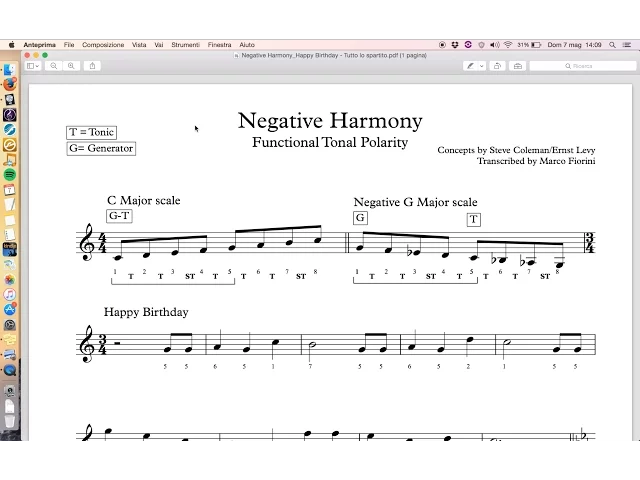
Um, so, yeah so this, it's funny that's actually kind of linked to the last question But this guy, Ernst Levy, um He wrote a book, a few years ago, Like a few decades ago Called A Theory of Harmony, and He is from Europe or something and this book, it's like a classical composition book from quite, yeah I guess long enough ago that jazz education wasn't a thing, so he thinks very classicly about things but his idea is that harmony can exist any-- any chord in any key has like a has a has a reflection, a polar opposite chord within that key center based on rotating every single note around the axis of the Key center.
so for example if you're in C, between C and G that's your that's your axis so if I have the chord of G7 that has a negative "version" and what I do is I reflect every note of that um, of that chord, G7, over the axis of C and G which actually is like between E and E flat.
so G becomes C and then B becomes Ab D becomes F and F becomes D so it's like D half-diminished?
so it's like Fm6, yeah, D half-diminished, Fm6 but that is like, we all know that sound like Fm6 to CM, that's like ahh you know like a minor plagal cadence. Yeah.
it has the same amount of gravity than G7 does because the voice leading is equivalent all of the notes have the same amount of gravity to the thing but you know like the Ab in Fm6 wants to sink to the G in the same way that the B wants to rise so what what Ernst talks about is this idea of that that polarity like the gravity is as strong but it's, well it's kind of like it converts everything perfect to plagal, and then if you think about that kind of thing you know A7. D7, G7, C becomes Ebm6, Bbm6, Fm6, to C.
and that's really epic it sounds like really warm and wonderful but it doesn't sound like really familiar it just sounds like it's coming from the other side of the circle of fifths, basially which is like very in touch with what I feel about the circle of fifths. Wow.
You said you have a theory that all major chords are built on fifths and all minor chords are built of fourths. Yeah. can you tell us more about this theory? yeah oh this is fun um, so yeah kind of as I was saying before this is brightening and this is darkening and if you think about music in the gestural sense that most people think about it or don't think about it which is just experiencing it as oh, dissonance and consonance or the beginning to the end, something fast something slow, something loud something quiet like these are the primal like primary colors of how people consume music and with that in mind if I hear a chord like like C minor, "13" or whatever yeah that feels like a major chord to me more than a minor chord because it's like you know it's the relative minor of Eb major do you ever use Dorian mode on minor chords yeah I do like that I guess that's Dorian that's C Dorian yeah and yeah I think it I think it's good but if you want to make something more minor then instead of using more minor scales I think going further around the flat side side of the circle of fifths is what, is how you do it like if you go and compare that to like that's Super Lydian versus Phrygian or Locrian and that is the most profound difference between major and minor that I've ever come across way more than like Cm, CM you know what I mean so that way of thinking about things I just had a philosophy that fourths is more minor than like inverting a major scale to a minor key your usage of minor 9th the interval minor 9th is different from every other musician this kind of voicing, like, like you said Yeah like where I put that semitone you mean yeah it's funny it's super important and it's quite a distinctive thing to use and also you can space that out make it like a minor 9th interval as well if yeah like that's Am11 but, it's got the minor 9th in it, that's like an emotional choice yeah you know think I want it to feel a bit more longing than than just being like then it's like normal fifths, you know but, swapping notes around and making choices about like where to distribute the tension that's like a lot of that you know a lot of arranging is about that as opposed to what notes you choose to put in chords you know in some ways you can make a list of all the notes of the chord and that doesn't mean anything until you decide how to use those notes and where to put them and that's that's a lot of it and that's even before you decide how to sing them, you know or whether I record this note 2 times or three times or four times whether I pan them all over the place or pan them in the center and whether those notes go and all those choices like you know once you have an arrangement that's the very beginning of the process in your arrangement of you and I which won the grammy award two days ago so I guess so yeah, thank you at exactly three minute and 20 second mark you sing a B major pentatonic scale over a C major 13 chord. How does that make sense to you?
Um, what's the context what where is it in the tune?
*Vocalizes B major pentatonic scale* Oh yeah *You and I plays, same vocalization* *In my mind...* *Fades out* yeah yeah yeah um well it in some ways is like it's the foresight of of the F major, F sharp major or G flat major tonality which is which is implied by Bsus Bsus is like a plagal on plagal cadence to F# major it's like A major 7, which is like A, E, B, F# plagal plagal plagal yeah so that is like if I go *Vocalizes cadences* Right? *Vocalizes* yeah I guess yeah that what that pentatonic means is i'm going to F#, thats one thing it means and the other thing is i think it fits over the c chord that i cant remember what it is, it's probably like C, G, E, A, B, D#, F# or something like that I love that chord It's like major seven sharp nine but with a sixth in it Yeah. But anyway that, like yeah that pentatonic i did- To be honest I really didn't think too much about it I just sang it in, um but if I- if you asked me to explain it I could say yeah it shows what's to come the f-sharp major tonality which is the key that the whole song is in and also that your ear just hears it going sharp and like the sharpness of f-sharp pentatonic the most sharp possible pentatonic resolving to Bsus like AM7 over B That's so rich you know because you hear the, you hear A sharp flat into A and you hear the D sharp flat into, well, uh, you uh, you feel like, do you know what I mean? like everything goes It like goes from like Major to *tonic* and like, maybe the more changes the more like textural changes from sharp to flat you have when a chord change happens the more you have the ability to feel that change and be affected by it So if you compare A pentatonic to F sharp pentatonic yeah that's those are the two sounds you're hearing you're hearing F sharp pentatonic And then you're hearing A pentatonic because it's Bsus um, the difference between those two pentatonics is a minor third which is like the second most different pentatonic you could find besides the tritone like and so that is a very that's like there's there's a difference in that that's satisfying because you hear like *Vocalizes pentatonic scales a third apart* And that's like *EXPLOSION*, y'know?
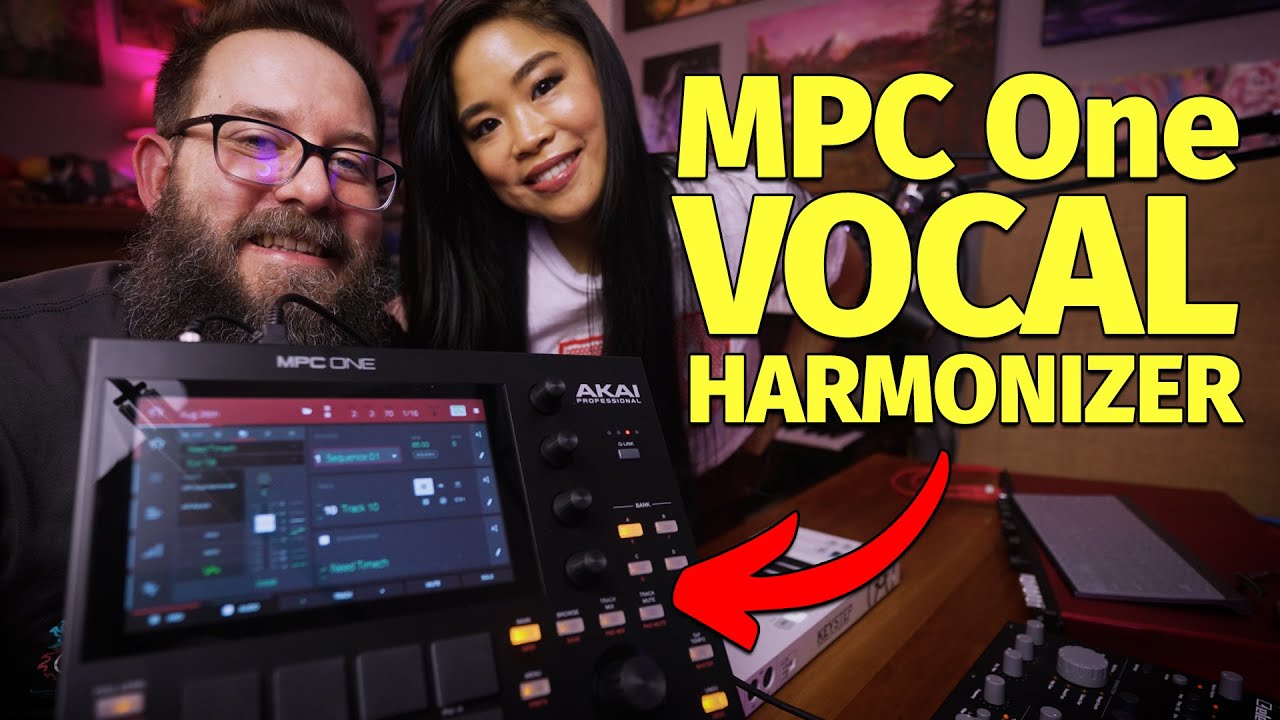
how is playing the Harmonizer different from playing the piano in terms of voice leading interesting yeah and note choice well first of all it sounds very it sounds very different and what like one of the most notable differences just when I got to playing it is that that this *hits his hands down* doesn't do anything that doesn't attack *do do* that attacks so all the voices have to come from my mouth and if i play it on its own it doesnt make any sound so if i go like *oh-oh-oh-oh-oh* like i can lead the voices only with my own voice when i when i record at home obviously I never record with the harmonizer I only record with voices and you have so many more choices about kind of as I was saying on how to approach things how to approach a note in the chord and you know if I'm, if in that Bsus chord if it's *B A C# E G# B* That *ba(A)*, like, the *ba(G#)*needs to be able to lean on the *ba(A)* 'cause the *ba(A)* is really important so I wanna sing that, like you know maybe one and a half times louder than the *ba(G#)* and I might sing it three times instead of 2 and put it here here and here and then the *ba(G#)* is here in here and all those choices like you can't do that with a harmonizer, you just have to play the harmony so it's like it's a kind of a shallower version of doing it but it's in its own right it's a very dynamic and fully-fledged instrument and it made me get voice leading together a lot.
Because with the piano you can just go, "bundle bundle bundle" and they all sound great. For the Harmonizer, to get the motion of voices you need to be thoughtful about you understand how things are moving and how all work so yeah it was like a workout for me for a long time. Man: uh, the venue say they are closed so- Jacob: oh, really? Man: one more question before we need to close up.
okay okay we can do that okay I have to June: Ah, I need to choose one... You recently mentioned microtonal voice leading in an interview with the New York Times.
What in the world is that?
Jacob: Um well the basic idea is that I what I was saying before, the human ear just hears things moving, and then things arriving.
So, whether I go -... *exhale* Actually, there's a good example - there's a good example I can give so - you know Rudolph the red-nosed reindeer?
*laughter* "They never let poor Rudolph" "Join in any reindeer games" That. One part could go and - you know, cuz, what you're hearing is "join in any" "reindeer games" *vocalizes sheet music onscreen* You hear that? Well, what you could do is "join in any reindeer games" *Gradually descends from G to E in 4 equally divided notes* June: So you put a - put something in between F# and... Jacob:Well, it's less that you put... it's not like you put G and then the chords between F# and G divide it equally up or into more than like five you know and you can if you can do that all that matters is that you're aiming the place all the matters is you're arriving in a place it doesn matter how you get there that's actually why harmony works because it's like I'm here and then I've just somehow i arrived at the place and all you need is someone do something satisfying that's not like duh-duh-duh ah that's not an arrival you know but anything chromatic as I'm so you know it's like very it's very important this automatically singing is the best and sometimes you know unknown oat what I want to go derp derp derp derp derp derp derp derp derp maybe because of the voice thing so it's about thinking about boise more more gestural in thinking i have this many chords and there's theres another one in facet you with them you I think you pick this up but i think you did but I think you wrote it like one quarter tone instead of the whole thing being it goes like four more keys was like "Oh how I long to be the man that I used to be" like ba yeap oh how how I long "Oh how I long to be the man that I used" like thats not "man that I used" its "man that I used" They are all divided equally yeah yeah i don't know how you write that down I like luckily you need to think about that and I don't but yeah I guess I guess that's how I think about it and yeah the idea is that you start somewhere and you end somewhere wow thank so much Jacob dude absolutely man yeah thanks for asking all these questions
Up Next

7:06
Negative Harmony Shortcut: Major-Minor Triad Translation Guide
@MusicIntervalTheoryAcademy
256 views•2023-02-14

10:20
Mozart's Musical Dice Game Explained: History, Rules, & Fun
@webpianoacademy
5K views•2023-03-13

47:36
Understanding Diatonic 7th Chords in Major Keys | Music Theory Tutorial
@GracieTerzian
54.7K views•2022-03-02
10:49
Understanding John Coltrane's Giant Steps: A Music Theory Analysis
@Vox
10.4M views•2018-11-12
Related Study Plans & Knowledge Roadmaps
Structured learning paths in Music Theory
music-theory
Composing Galant Music: Partimento & Schemata
01Foundations of Figured Bass and Keyboard Harmony
02The Rule of the Octave (Regola dell'Ottava)
03Galant Schemata: The Building Blocks of Form
+ 2 more learning modules
30h5 modules
Explore Roadmap
music-theory
Decoding Overtone Series: Tuning & Drone Music
01Acoustic Foundations: The Physics of the Overtone Series
02Tuning Systems: Equal Temperament vs. Just Intonation
03Microtonality and Spectralism: Beyond Standard Pitches
+ 2 more learning modules
24h5 modules
Explore Roadmap
music-theory
Impressionist Harmony: Scales, Planing & RPGs
01Foundational Music Theory: Keys, Intervals, and Seventh Chords
02Impressionist Color: Chord Planing and Parallel Harmony
03Whimsical Textures: Pentatonic Cascades and Whole-Tone Scales
+ 1 more learning modules
14h4 modules
Explore Roadmap
music-theory
Negative Harmony: Axis Reflection in Indie Pop
01Music Theory Foundations: Scales, Intervals, and Triads
02Functional Harmony and the Circle of Fifths
03Demystifying the Negative Harmony Axis Reflection
+ 2 more learning modules
16h5 modules
Explore Roadmap