This video demonstrates how a pop song can be reharmonized using jazz chords and orchestration, transforming a familiar melody into a sophisticated jazz arrangement while maintaining its core emotional essence.
Reharmonization of Run Away with Me: Jazz Theory Arrangement
Added:Deep Dive
Fundamental understanding of diatonic harmony, including major/minor scales and standard seventh chord construction (maj7, min7, dom7, m7b5).

Understanding The Chord/Scale Relationship
567.6K
This concluding section covers practical applications of harmonic theory including scale construction, seventh chord types, and industry-standard numbering systems. To build any major scale, write letter names and apply the key signature (e.g., G major with F#). Apply the diatonic chord pattern to derive all diatonic chords. In major keys, seventh chords follow specific types: I, IV, V are major seventh (maj7); II, III, VI are minor seventh (m7); V is dominant seventh (7 or dom7); VII is minor seventh flat five (m7b5 or half-diminished). The Nashville Numbering System uses numbers instead of Roman numerals for chord identification, enabling musicians to transpose progressions across keys. These fundamental concepts form the nuts and bolts of all music theory, essential for composition, improvisation, and professional musicianship regardless of genre.
Click to watch →

Understanding Diatonic 7th Chords in Major Keys | Music Theory Tutorial
54.7K
Diatonic chords are built exclusively from notes in a key's scale. To build diatonic seventh chords, start on each scale note and move up in thirds (hopping over every other note). In G major: G-B-D-F# forms G major 7, A-C-E-G forms A minor 7, B-D-F#-A forms B minor 7, C-E-G-B forms C major 7, D-F#-A-C forms D dominant 7, E-G-B-D forms E minor 7, F#-A-C-E forms F# half diminished 7. The third degree note determines chord quality - if it's a major third from the root, the chord is major; if minor, the chord is minor. Triads have three notes, seventh chords have four notes, and you convert triads to seventh chords by adding one extra note.
Click to watch →
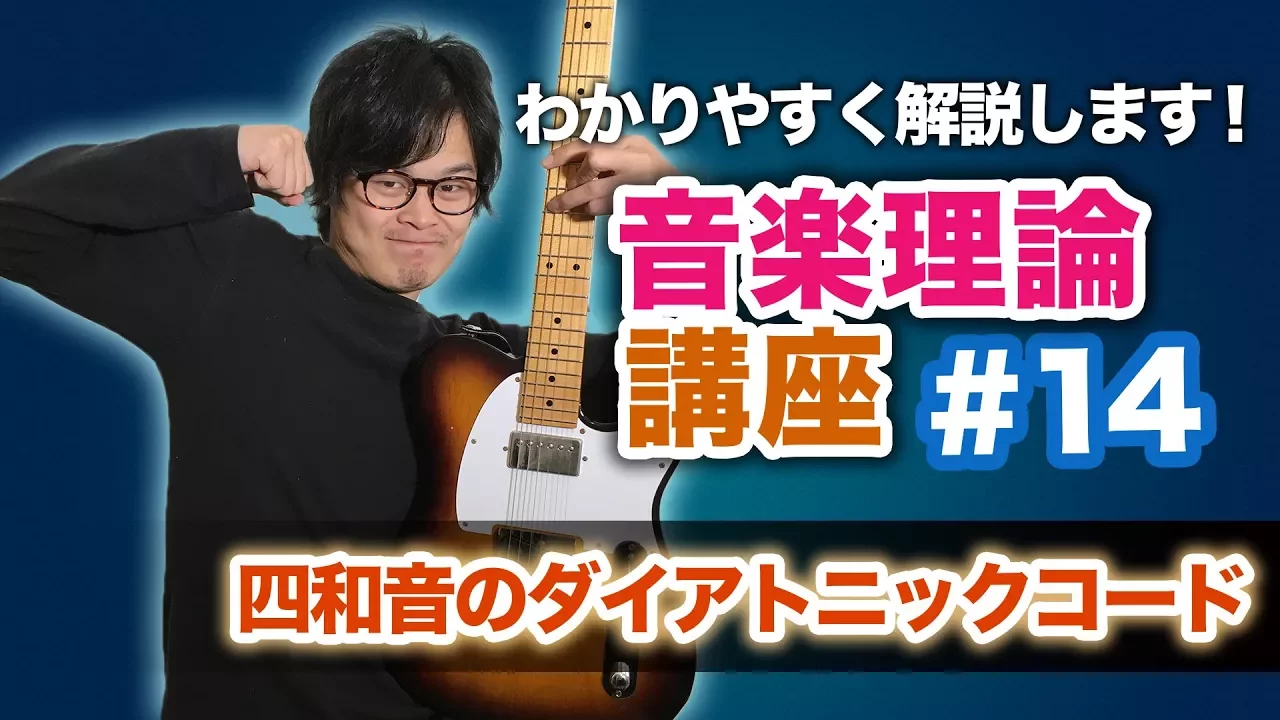
すぐ分かる音楽理論#14『お洒落な曲によく使われる四和音ダイアトニックコードの基本』
108.9K
Diatonic seventh chords are built by stacking thirds from a major scale, following specific rules: the 1st, 4th, and 5th degree chords are major seventh chords (Maj7), the 2nd, 3rd, and 6th degree chords are minor seventh chords (m7), and the 7th degree chord is a half-diminished seventh chord (m7b5). These chords create sophisticated, 'fashionable' musical progressions when used in sequence, as they are all derived from the same scale and provide natural harmonic resolution.
Click to watch →
If you practice only ONE exercise every day, practice THIS.
602.2K
Diatonic seventh chords form the harmonic foundation of jazz music. They are constructed by building seventh chords on each degree of a major scale, skipping every other note. In C major, this produces Cmaj7 (I), Dm7 (ii), Em7 (iii), Fmaj7 (IV), G7 (V), Am7 (vi), and Bm7♭5 (vii°). These seven chords appear in virtually every jazz standard, including 'Autumn Leaves,' 'Fly Me to the Moon,' and 'Misty.' Understanding these chords enables pianists to recognize and play any jazz tune from fake books, as most chord progressions use only these diatonic relationships.
Click to watch →
【ダイアトニックコード編】今まで音楽理論でつまずいた人、これから音楽理論を学びたい人必見です!【宇宙一わかりやすい音楽理論】#4【ダイアトニックコード】について詳しく解説しています。
54K
Diatonic chords are sets of 7 chords created exclusively from the notes of a specific musical key, serving as the foundation of pop music. To create diatonic chords: write the key's scale, use each note as a root, and stack notes by skipping one at a time (third intervals). Chord quality is determined by the third: 4 semitones from root = major (no symbol), 3 semitones = minor (lowercase letter). The seventh note creates diminished chords when it's 6 semitones from root (flat five). Seventh chord versions are created by adding a seventh note: Major 7 (maj7), Minor 7 (m7), Minor 7 flat 5 (m7b5). For C major: Cmaj7, Dm7, Em7, Fmaj7, Gmaj7, Am7, Bm7b5. The same principles apply to any key, such as F major diatonic seventh chords: Fmaj7, Gm7, Am7, Bbm7, Cmaj7, Dm7, Em7b5.
Click to watch →
Deep Dive
Familiarity with standard jazz progression frameworks, specifically the ii-V-I progression and basic functional analysis.
Master ii-V-I Chord Progressions In 5 Steps
113K
ii-V-I chord progressions are the most common harmonic structures in jazz standards, and mastering them requires a systematic five-step process: (1) Understand the theoretical foundation by recognizing that a major ii-V-I derives from harmonizing the major scale (e.g., Dm7-G7-Cmaj7 in C major), (2) Practice voice leading by connecting chord tones between successive chords using the nearest available note, (3) Identify guide tones (the third and seventh of each chord) as the essential reference points for improvisation, (4) Learn jazz language by transcribing and internalizing licks from recordings of great jazz musicians, and (5) Apply these progressions to actual jazz standards to understand their context and frequency in real musical compositions.
Click to watch →

Jazz guitar ii-V-I (two-five-one) Jazz Pattern explained.wmv
192.4K
The ii-V-I (two-five-one) jazz progression is a fundamental three-chord sequence used throughout jazz and standard songs, consisting of a two chord, five chord, and one chord that can be played anywhere on the guitar neck using specific finger shapes; the two chord is played by muting certain strings and playing specific frets, the five chord is reached by rotating the top two fingers, and the one chord is played by moving down two frets from the starting position, allowing guitarists to create the classic jazz sound by practicing these shapes and recognizing them in songs.
Click to watch →
A Beginner's Guide To Jazz Piano (Get Started Here)
30.8K
The ii-V-I progression is the foundational harmonic structure of jazz music, consisting of a minor 7 chord (ii), dominant 7 chord (V), and major 7 chord (I) that resolves smoothly. In the key of C, this translates to Dm7 - G7 - Cmaj7. This three-chord sequence appears throughout all jazz standards, making it essential for jazz pianists to master. When learning jazz standards from lead sheets (melody with chord symbols), identify ii-V-I patterns by recognizing minor 7 chords followed by dominant 7 chords resolving to major 7 chords. Practice left-hand accompaniment using chord inversions while maintaining swing feel by playing with metronome on beats two and four, developing authentic jazz groove and timing.
Click to watch →

🐞La progresión de acordes SECRETA! 👻
37K
The ii-V-I progression (second-fifth-one) is a fundamental harmonic sequence in jazz, gospel, soul, and pop music, consisting of the subdominant (IV), dominant (V), and tonic (I) chords, which creates a versatile and stable cadence that can be extended indefinitely through techniques like the 'infinite cadence' where the resolution is deliberately delayed.
Click to watch →

II V I : Comment et pourquoi les analyser ? TUTO COMPLET
28.8K
II V I is a fundamental three-chord progression in jazz music consisting of the second degree (II), fifth degree (V), and first degree (I) of a scale. In C major, this would be Dm7 (II), G7 (V), and Cmaj7 (I). The progression creates a sense of tension and resolution, with the dominant chord (V) containing a tritone interval that naturally resolves to the tonic (I). There are two main types: major II V I (Dm7-G7-Cmaj7) and minor II V I (Bm7b5-E7b5-Am7), which uses the harmonic minor scale. Understanding these progressions is essential for analyzing chord charts, improvising, and playing jazz guitar, as they form the harmonic foundation of most jazz standards.
Click to watch →
Deep Dive
Basic chord extension and alteration theory, including 9ths, 11ths, 13ths, and altered dominants.

EXTENDED (9 11 13) And ALTERED (#11, b9, etc) CHORDS Explained
69K
Extended chords are built by adding specific notes beyond the basic triad. The ninth is two frets above the root, the eleventh is one fret above the major third, and the thirteenth is two frets above the fifth. When a chord symbol contains only an odd number (like C9 or C11), you must include all odd-numbered scale degrees up to that number. For example, C9 includes 1, 3, 5, 7, and 9. Minor chords follow the same pattern but use the minor third. Alterations like flat 9 or sharp 9 modify specific extensions by raising or lowering notes by half steps.
Click to watch →
How Does That Work? Altered Extensions - Adam Maness | You'll Hear It S5E1
18.2K
Altered dominant chords are seventh chords built on the fifth degree of the Ionian scale with altered extensions (ninth, eleventh, and thirteenth) that create tension and resolve to the tonic; common alterations include sharp 9, flat 9, sharp 11, and flat 13, with the most common voicings being C7#11, C7b9#11, C7#9b13, and C7alt (containing all four alterations), which are typically based on the half-whole diminished scale or the altered scale derived from melodic minor.
Click to watch →

Altered Chords | What, Why, How.
83.8K
Altered chords add chromatic extensions—notes a semitone away from diatonic extensions—to dominant 7 chords. For G7, these include flat 9, sharp 9, sharp 11, and flat 13 (called sharp 5). The altered scale (super locrian/diminished whole tone) is the seventh mode of melodic minor, containing root, flat 2, sharp 2 (flat 9), third, sharp 4 (sharp 11), sharp 5 (flat 13), and flat 7. Altered chords typically include third, seventh, sharp 9, and sharp 5, though interpretations vary. This scale provides the harmonic foundation for altered chord voicings.
Click to watch →
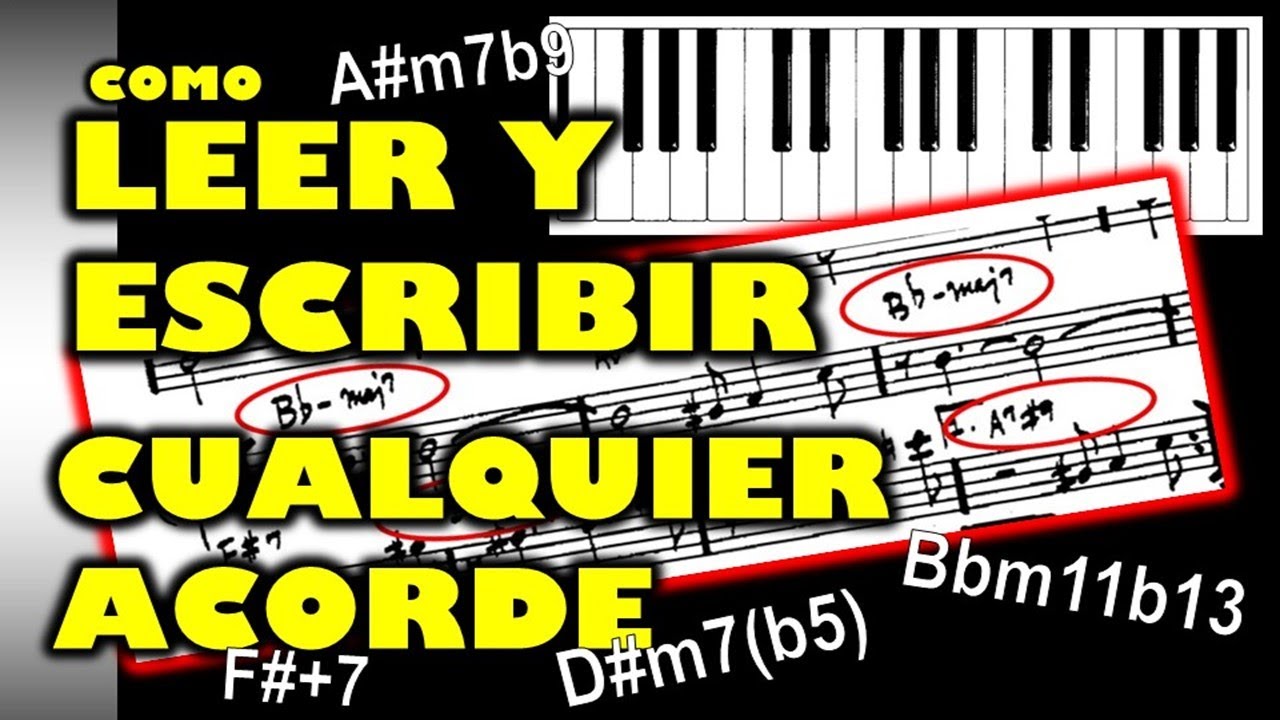
Cifrado De Acordes - La Guía Completa - Bien Explicada
40.4K
Chord extensions add notes beyond the seventh: 9th (second degree), 11th (fourth degree), and 13th (sixth degree). A 9th chord implies dominant seventh. Major ninth (maj9 or +9) has major seventh. Minor ninth (m9) combines minor third with dominant seventh. Altered extensions like b9 require specifying the seventh type first. The 11th implies dominant seventh, while major eleventh (maj11 or +11) has major seventh. Minor eleventh (m11) combines minor third with dominant seventh. Thirteenth chords (13) are the largest common chords, containing all scale notes, with dominant seventh implied. Minor thirteenth (m13) combines minor third with dominant seventh. The fifth degree is often optional as it appears naturally in root harmonics.
Click to watch →

Understanding Chord Extensions (9th, 11th, 13th)
42.9K
Chord extensions (9th, 11th, 13th) are simply the 2nd, 4th, and 6th degrees of the scale played one octave higher than the root, continuing the pattern of thirds used to build triads (1-3-5) and 7th chords (1-3-5-7). When extending chords, the 11th (4th degree) creates dissonance with the major 3rd, so it must be used by omitting the 3rd (creating a sus4 chord). Dominant 7th chords work well with 9th and 13th extensions, major 7th chords can extend to 9th and 13th but not 11th, and minor 7th chords can use 9th and 11th but generally avoid 13th extensions.
Click to watch →
Deep Dive
Introductory substitution concepts, such as diatonic substitution and basic tritone substitution.
Understanding Tritone Substitution in Music Theory
81.2K
A tritone substitution is a non-diatonic chord that replaces a dominant 7th chord by using the same tritone interval but inverted; for example, in the key of C major, the G7 chord (V7) can be substituted with a D♭7 chord, which shares the same tritone (B-F) but inverted as F-B, creating a powerful chromatic effect that adds color and variety to harmonic progressions.
Click to watch →

Sustitución Tritonal - Bien Explicado
33.2K
Tritone substitution is a harmonic technique where a dominant seventh chord is replaced by another chord containing the same tritone interval. The substitution chord is always located one semitone ahead of the original dominant. A tritone is an interval of three whole tones (six semitones) that creates tension in seventh chords. In C major, G7 (G-B-D-F) contains the tritone between B and F, which resolves to C major. The substitution chord Ab7 contains the same tritone (Bb and F) and resolves identically to C major. This technique works in both major and minor keys, adding harmonic variety while maintaining the fundamental tension-resolution relationship.
Click to watch →

Why Should I Care About Tritone Subs?
317.7K
Tritone substitution replaces a dominant 7 chord with another dominant 7 chord a tritone away. For G7 to C major, substitute D-flat7. A practical method is to play a dominant 7 chord a half step above your target. There are two main approaches: completely substituting the 5 chord, or including both the original dominant and its tritone in the same phrase. Tritone subs can be added to any chord progression, not just diatonic 5-1 situations. The lydian dominant scale (dominant 7 with raised fourth/sharp 11) is the recommended scale for improvising over tritone subs because it creates ambiguity and tension without locking into a specific key.
Click to watch →
Tritones substitutions - how they work & examples you can use
29K
Tritone substitution is a jazz technique where a dominant chord replaces another by being three whole tones (six semitones) apart, sharing the same tritone interval; for example, G7 can substitute for D♭7 because they share the tritone interval between B and F. This works because both chords resolve to the same target chord (Cmaj7), with the substitution chord resolving down a half step instead of a perfect fifth. To find tritone substitutions quickly, focus on your destination chord and play a dominant chord a half step above it, which gives you the tritone substitution of the chord that would normally lead to that destination.
Click to watch →

How to write interesting chord progressions
46.9K
Tritone substitution replaces any dominant seventh chord with another dominant seventh chord a tritone (three whole tones) away, as they share the same third and seventh intervals. In C major, G7 can be substituted with Db7. This creates half-step movements toward the target chord. For example, instead of A7 leading to Dm, use Bb7; instead of C7 leading to F, use Eb7. The substitution works because both chords contain the same resolving notes (the third and seventh of the target chord).
Click to watch →
Prerequisite Knowledge
- Concept 01Fundamental understanding of diatonic harmony, including major/minor scales and standard seventh chord construction (maj7, min7, dom7, m7b5).
- Concept 02Familiarity with standard jazz progression frameworks, specifically the ii-V-I progression and basic functional analysis.
- Concept 03Basic chord extension and alteration theory, including 9ths, 11ths, 13ths, and altered dominants.
- Concept 04Introductory substitution concepts, such as diatonic substitution and basic tritone substitution.
Subsequent Learning
- Step 01Advanced orchestration techniques, translating keyboard-based reharmonizations into multi-instrument arrangements for big bands or small ensembles.
- Step 02Exploration of chromatic mediants, modal interchange, and non-functional harmonic systems to further expand reharmonization choices.
- Step 03Study of voice-leading principles, such as guide tones and linear basslines, to connect complex chord substitutions smoothly.
- Step 04Application of Coltrane changes (three-tonic systems) and other symmetrical harmonic frameworks to popular melodies.
Escape
World
Upcoming
Escape
0:00Playing Section
- 1
Expresses a desire to escape a dull party
- 2
Focuses on a wish to be with a special person
- 3
Ambiguous about destination, highlight connection over place
The Case Against Academic Over-Reharmonization of Pop Music
While jazz reharmonization showcases advanced harmonic sophistication, a prominent counterpoint within musicology and pop production defends the inherent value of pop minimalism and diatonic simplicity. Critics of 'jazzification' argue that complex chord substitutions often dilute the emotional immediacy, driving energy, and hook-centric power of the original track. In a pop anthem like Carly Rae Jepsen’s 'Run Away with Me,' the emotional payoff is intimately tied to its driving synthesizer drones, simple pedal points, and straightforward chord progressions. Over-complicating these structures with extensions, secondary dominants, and tritone substitutions can strip the song of its characteristic tension-and-release, transforming an urgent, visceral dance-pop track into an academic exercise. This perspective asserts that maintaining harmonic restraint is not a limitation, but a deliberate and powerful artistic choice that respects the functional integrity and emotional clarity of the pop genre.
Deep Dive
Advanced orchestration techniques, translating keyboard-based reharmonizations into multi-instrument arrangements for big bands or small ensembles.

8 Técnicas Avanzadas de Orquestación que Usan los Compositores PRO 🎻🚀
6.9K
Advanced orchestration techniques transform simple musical ideas into emotionally rich experiences by distributing melodic, rhythmic, and harmonic materials across instruments in homogeneous and technically executable ways. The eight key techniques include: (1) Cascades (chain of timbres) - moving musical ideas through progressive instrument transitions to create evolving colors; (2) Internal divisions and polyphonic textures - dividing instruments into independent voices for contrapuntal layers; (3) Orchestral undulation - maintaining static chords with internal movement through arpeggios and glissandos; (4) Orchestral polyphony - dividing the orchestra into groups that answer each other like a choir; (5) Harmonic color by instrumentation - assigning different chord notes to different families for unique colors; (6) Orchestral inertia - allowing instruments to sustain sounds while others take over for seamless transitions; (7) Prepared resonance - creating anticipation by maintaining notes or patterns before full appearance; (8) Continuous resonance - using long notes in pianissimo to veil or accompany melody presentations.
Click to watch →

How to Turn any Song into a Jazz song - incl. Reharmonization
222.7K
In advanced reharmonization, you can change the melody to fit the chord rather than changing the chord to fit the melody. This allows almost limitless possibilities. If a melody note doesn't work over a chosen chord, you can sharpen it, flatten it, omit it, or play something different. This technique is used when favoring chord progression structure over melody, such as creating Coltrane changes or 2-5 cycles. Example: If G doesn't work over F#m7 (creates b9), sharpen it to G# (natural 9).
Click to watch →
Cómo rearmonizar una canción paso a paso - Con ejemplos reales
71.7K
Three fundamental reharmonization techniques are demonstrated. First, harmonic complement rules: before any fifth degree chord, place the second degree chord (e.g., F#m7b5 before Mi Menor); before the second degree, place the sixth degree chord (e.g., Do before Mi Menor). Second, diatonic substitution replaces chords with functionally equivalent ones (e.g., substituting Do with La Menor when approaching Do Mayor). Third, modal interchange allows using chords from different modes that don't belong to the original key but create interesting colors (e.g., using Fa7 from Sol Menor in a Sol Mayor context). These techniques enable arrangers to enrich existing harmonic structures while maintaining logical progression.
Click to watch →
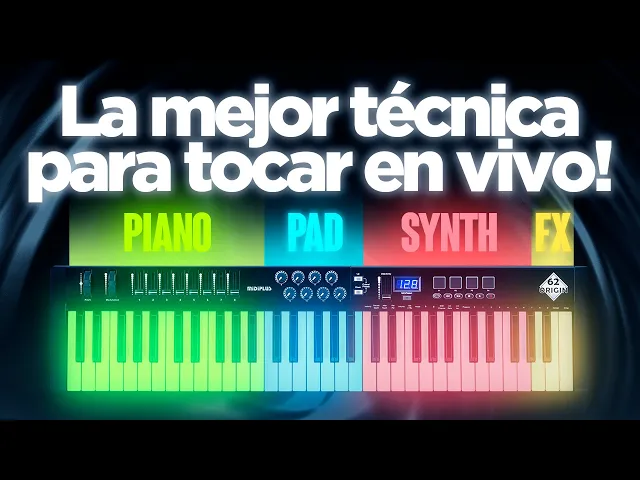
Cómo COMBINAR distintos VSTs para TOCAR en VIVO 🎹🔥 ¡Función SPLIT Ableton Live!
67.2K
This segment covers the advanced technique of dividing a MIDI keyboard into distinct zones, where each zone triggers different instruments. The instructor demonstrates how to access the key zone settings through the track's group options, then shows how to position the green zone bar to assign specific key ranges to different instruments. For example, the left half of the keyboard can be assigned to piano and pad sounds, while the right half triggers a synthesizer. This enables practical applications like using the left hand for accompaniment and the right hand for solos, creating full layered sounds with a single keyboard.
Click to watch →

Jazz Reharmonization - BEST EXPLANATION
279K
Advanced reharmonization uses half-diminished chords (F sharp half-diminished resolving to F minor) and tritone substitution (replacing the five chord with a chord a tritone away). For example, in D Minor to G7 to C Major, G7 can be replaced with D flat 7 sharp 9. D flat is a tritone from G. Musicians should focus on learning core progressions they gravitate toward, understanding why they work, and applying them to simple songs. This builds a repertoire of harmony, enabling faster reharmonization of own and others' songs.
Click to watch →
Deep Dive
Exploration of chromatic mediants, modal interchange, and non-functional harmonic systems to further expand reharmonization choices.
Cómo rearmonizar una canción paso a paso - Con ejemplos reales
71.7K
Three fundamental reharmonization techniques are demonstrated. First, harmonic complement rules: before any fifth degree chord, place the second degree chord (e.g., F#m7b5 before Mi Menor); before the second degree, place the sixth degree chord (e.g., Do before Mi Menor). Second, diatonic substitution replaces chords with functionally equivalent ones (e.g., substituting Do with La Menor when approaching Do Mayor). Third, modal interchange allows using chords from different modes that don't belong to the original key but create interesting colors (e.g., using Fa7 from Sol Menor in a Sol Mayor context). These techniques enable arrangers to enrich existing harmonic structures while maintaining logical progression.
Click to watch →
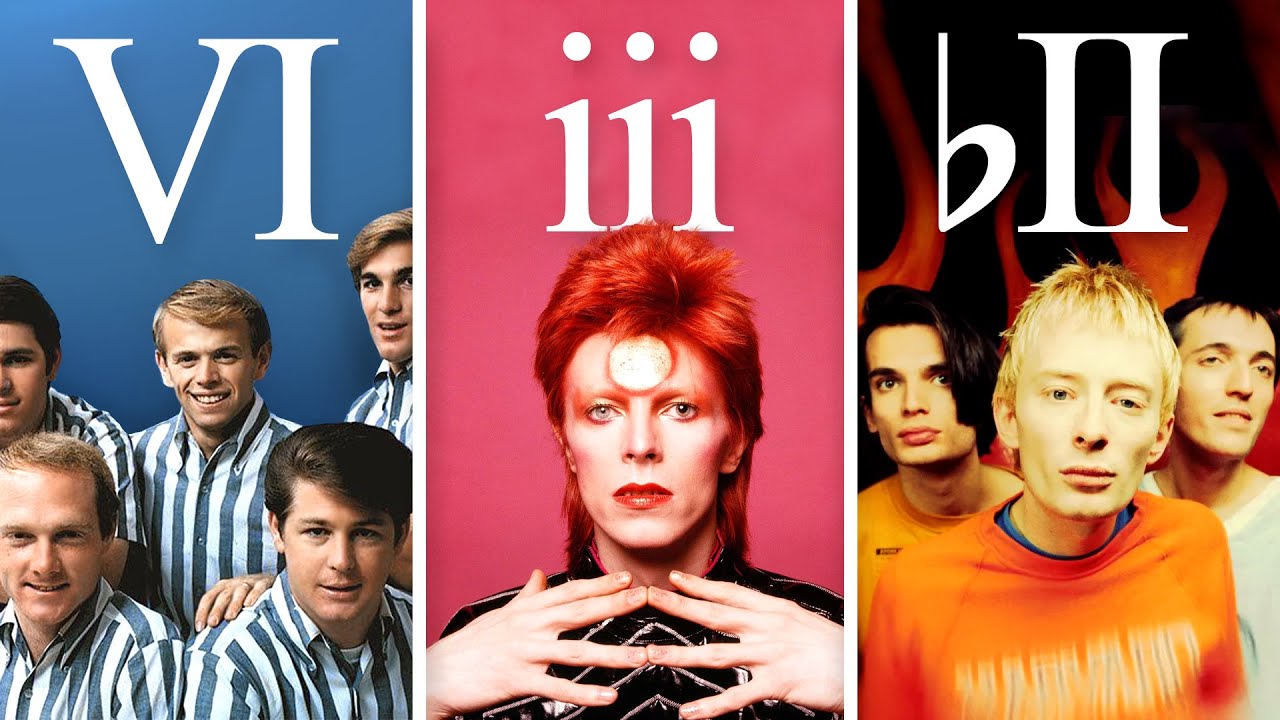
How to recognise chord progressions by ear
780.8K
Beyond diatonic chords, songs commonly use chromatic chords from outside the key. The flat seven (♭VII) creates an open, epic sound. The flat three (♭III) adds bluesy edge by mixing major and minor elements. The flat six (♭VI) moves to new tonal spaces. The flat two (♭II) produces exotic, Arabesque qualities. The sharp four/flat five (♯iv/♭V) is rare with cinematic sound. These modal interchange chords expand harmonic possibilities and create dramatic color changes within compositions.
Click to watch →

Advanced Reharmonization Techniques: 7 Beato Basics Explained
74.7K
Coltrane changes transform a basic 2-5-1 progression (D minor 7-G7-C major 7) by moving up a half step to Ab major 7, then up a minor third to B7, then up a minor third to E7, and finally up a minor third to G7-C major 7. This creates a series of 5-1 progressions connected by thirds, adding significant harmonic interest. Modal interchange involves exchanging regular modes for more exotic modes over the same chords—using D Phrygian instead of D Dorian, or G altered dominant instead of G Mixolydian. Both techniques create more interesting and exotic harmonic colors while maintaining the same chord progression.
Click to watch →
Chromatic Mediants Explained: Film Composer's Guide to Tension
36.2K
Chromatic medians are chords built a major or minor third away from the tonic that contain non-diatonic tones, creating tension commonly used in film and TV scores; they can be used by pinging between the tonic and a chromatic median, alternating between different chromatic medians, or mixing chord qualities to enhance dramatic effect.
Click to watch →
Why is there so little MELODY in New Classical Music? || Q&A No.3
138.2K
When writing non-functional or atonal harmonies, composers face the challenge that purely atonal music without a tonal center is almost impossible to achieve. Two main approaches exist: vertical harmony (thinking in terms of chords and their relationships) and horizontal harmony (thinking in terms of individual note movements). Vertical harmony includes functional harmony (tonic, dominant, subdominant relationships) and non-functional approaches. Horizontal harmony focuses on modal harmony where all notes come from one particular collection of notes (mode). The ear can detect connections between harmonies that move by step, by a fifth (due to the overtone series), or where something stays the same while something else changes. Ligeti's second piano etude demonstrates how harmonic movement can be guided through fifths or stepwise movement without relying on functional harmony. Modal harmony is a horizontal approach where individual chords are less important than the collection of notes used. However, composers can create more nuanced approaches where vertical chords and horizontal modes interact even when they somewhat contradict each other, creating uncertainty that composers explore in contemporary music.
Click to watch →
Deep Dive
Study of voice-leading principles, such as guide tones and linear basslines, to connect complex chord substitutions smoothly.
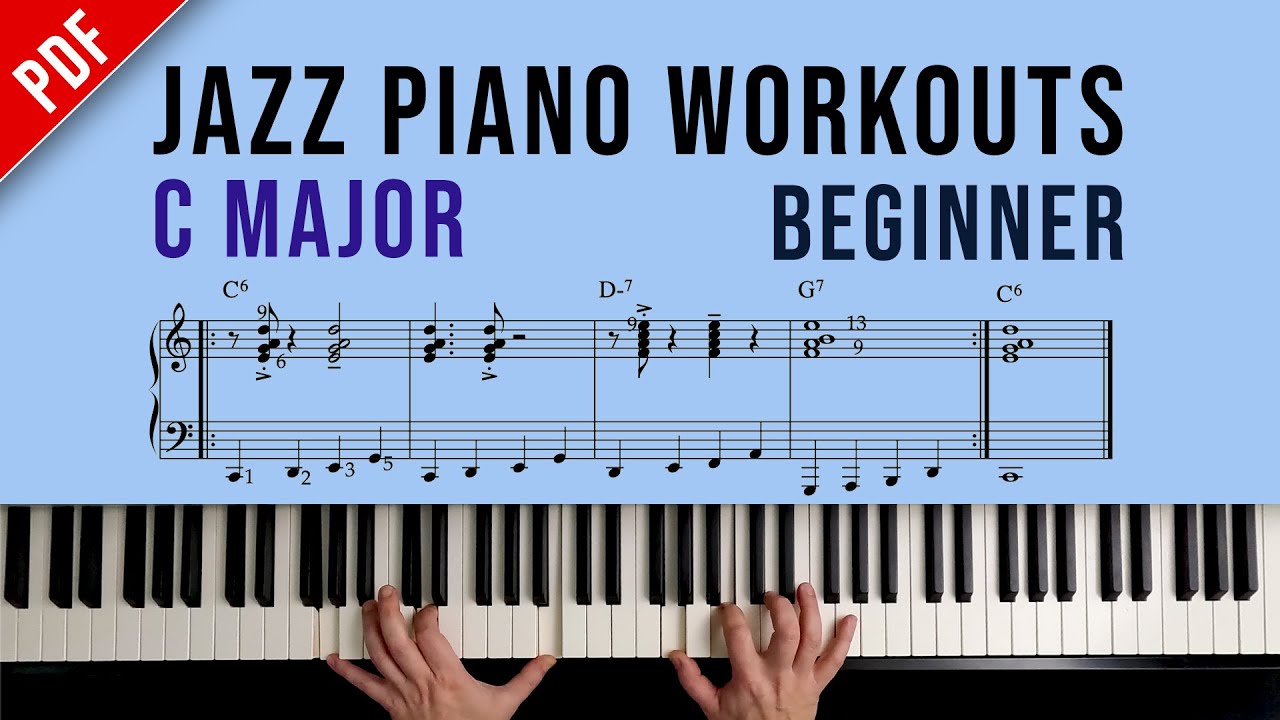
Jazz Piano Workouts (Beginner) Lesson 1: C Major (Diatonic 7ths, 2-5-1, Walking Bass)
126.1K
Guide tones are the third and seventh of a chord, which define its color and function. When connected smoothly from chord to chord, they create a melodic line that outlines the harmony—this is called voice leading. In consecutive 2-5 progressions, common tones stay fixed while other notes move chromatically downward. Doubling guide tones is acceptable for training purposes but not typically recommended in performance.
Click to watch →
Dreiklänge & Stimmführung (inkl. Songbeispiele von Blues über Sultans Of Swing bis Kashmir)
5K
Voice leading is the technique of moving between chords using the shortest possible paths. The ear prefers when harmonies stay relatively close together rather than making large leaps. The instructor explains that when chord positions jump too far apart (like from the 7th to 9th fret), it creates awkward sound packets. The key principles are: (1) Always find the closest inversion available, (2) When the bass goes up, move the chord down, and vice versa, (3) When a note stays the same, keep it stationary for stability. This principle has been valued since Bach's time and creates more pleasant-sounding chord progressions.
Click to watch →

Bài 43: Các bước để tạo ra một đoạn Intro cho một ca khúc.
666
Guide tones are the essential notes that define each chord's character. For Am (i), the guide tone is E (the 5th). For Dm (iv), it's F# (the 3rd). For G7 (V7), it's B (the 3rd). For Em7 (iii7), it's C (the 5th). Voice leading involves smoothly connecting these guide tones between chords: E resolves to D, F# resolves to E, and B resolves to C. This creates natural and pleasing transitions. Understanding these principles allows musicians to create smooth, professional-sounding chord progressions.
Click to watch →

Il "Voice Leading" - Come collegare gli accordi al pianoforte
6.4K
Voice leading is a technique for connecting chords fluidly and melodically, derived from choral music where voices are distributed among choir members. Harmony must be viewed on two dimensions: vertical (notes composing each chord) and horizontal (melody formed by each voice). Without voice leading, chord progressions create uncomfortable jumps with little melodic sense. The three core rules are: (1) Each voice should move no more than one tone or semitone between chords; (2) Maintain common notes between chords and only move changing notes; (3) Avoid repeating the same inversion between consecutive chords. These principles create linear, easy-to-sing melodies that are more pleasant to listen to and play.
Click to watch →
voice leading basics :)
213
Voice leading creates smooth chord transitions through minimal note movement. Key principles include: keeping common notes stationary, moving voices in step-wise motion (avoiding intervals larger than thirds), and changing register only at phrase endings. When chords share common notes, keep them constant while moving other voices stepwise. For example, in C to F progression, hold C while moving E→F and G→A. This creates smoother transitions than root-position playing. The goal is conjunct, seamless melodies in each voice.
Click to watch →
Deep Dive
Application of Coltrane changes (three-tonic systems) and other symmetrical harmonic frameworks to popular melodies.

Coltrane Changes and the three tonic System
1K
Coltrane changes, also known as the three-tonic system, is a harmonic approach developed by John Coltrane that involves modulating between key centers a major third apart. This system creates striking harmonic associations by always traveling as far as possible between key centers on the circle of fourths and fifths. Coltrane applied this system in his famous composition 'Giant Steps' using two approaches: traveling to each new key center every measure with its relative five chord, and traveling upwards in major thirds every two measures with its relative 25 chord. This system became central to Coltrane's career from 1959 onwards and represents a fundamental advancement in jazz harmonic language.
Click to watch →

Theory of Jazz: Coltrane changes/Three Tonic System
40.5K
Coltrane changes, also known as the three tonic system, is a jazz harmony concept based on dividing the octave into three equal major thirds, creating a progression that cycles through three related keys (e.g., C, E, G#) using an alternating pattern of perfect fifths and minor thirds; this system can be analyzed through interlocking augmented triads forming the augmented scale, and improvisers can navigate it using either the augmented scale, whole tone scale, or by treating each ii-V-I progression as its own key.
Click to watch →
Coltrane Changes | Fabio Zeppetella
22.9K
Coltrane Changes is a harmonic substitution technique developed by John Coltrane, characterized by three modulations separated by major thirds (such as C major, F major, and Bb major), which create a distinctive 'triangle of Coltrane' that divides the circle of fifths into an equilateral triangle; this technique can be applied to jazz standards by substituting traditional ii-V-I progressions with these three-tone modulations, requiring musicians to adapt the melody to match the new harmonic structure, as demonstrated in Coltrane's reinterpretations of 'Body and Soul' and 'Countdown' (a variation of 'Tune Up').
Click to watch →
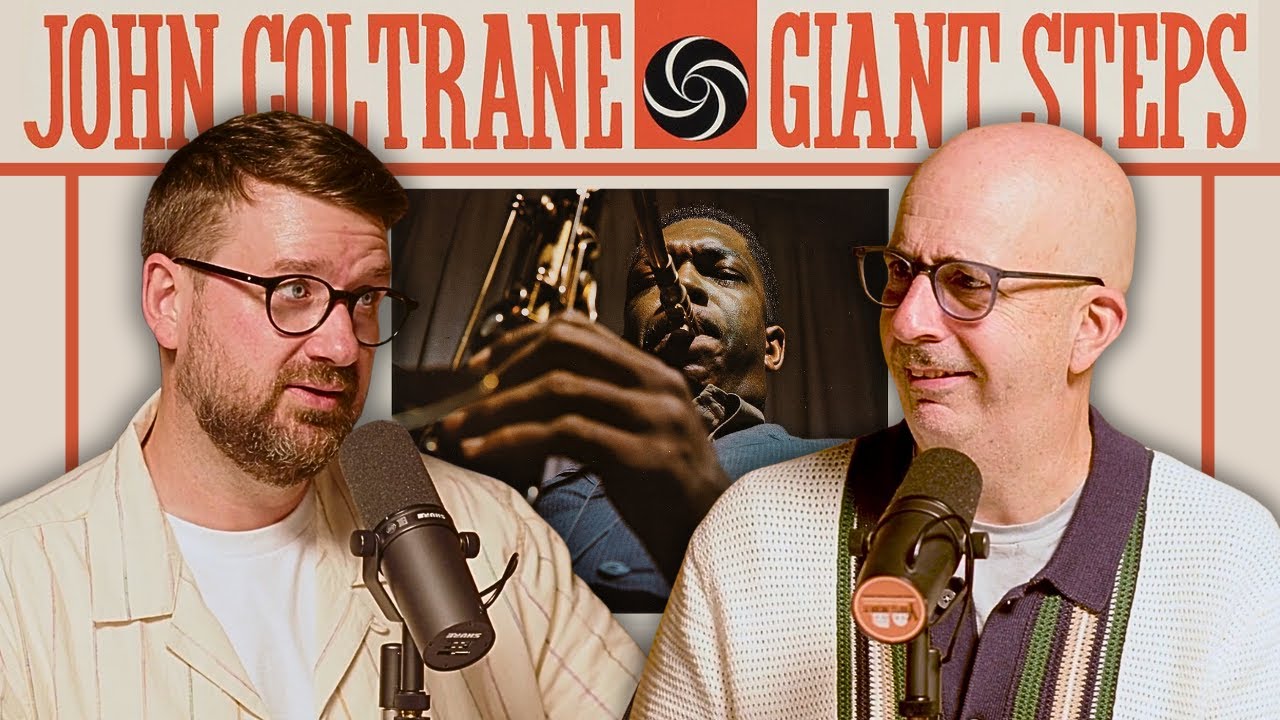
The Best Thing To Ever Happen In 1960: John Coltrane's Giant Steps
28.9K
Giant Steps is considered one of the most iconic jazz albums, with its opening track containing one of the most famous solos in jazz history. The album was released in 1959, a significant year for jazz releases, and has become iconic for its technical innovations and musical energy. The three-tonic system and rapid chord changes have become a right of passage for young players. Giant Steps uses a three-tonic system where the song rapidly moves through three different key centers: B major, G major, and E flat major, all exactly a major third apart. This creates a symmetrical harmonic structure that is extremely difficult to execute. The chord changes happen every two beats, except for only three or four places where a chord is held for a full two beats. The entire tune contains 26 chords, requiring significant mental gymnastics and athletic ability to execute. Countdown is a reharmonization of 'Tune Up' from Miles Davis's Cooking with the Miles Davis Quintet, applying what became known as 'Coltrane changes' to it. This reharmonization is similar in root movement to Giant Steps but is actually even more difficult and faster. The track is only 2 minutes and 25 seconds long but contains approximately 75 chords. Art Taylor's drumming on Giant Steps represents pure mastery of jazz percussion, with precise high hat patterns on beats two and four, the ride cymbal providing a steady pulse, and the bass drum and snare drum working together with remarkable coordination.
Click to watch →
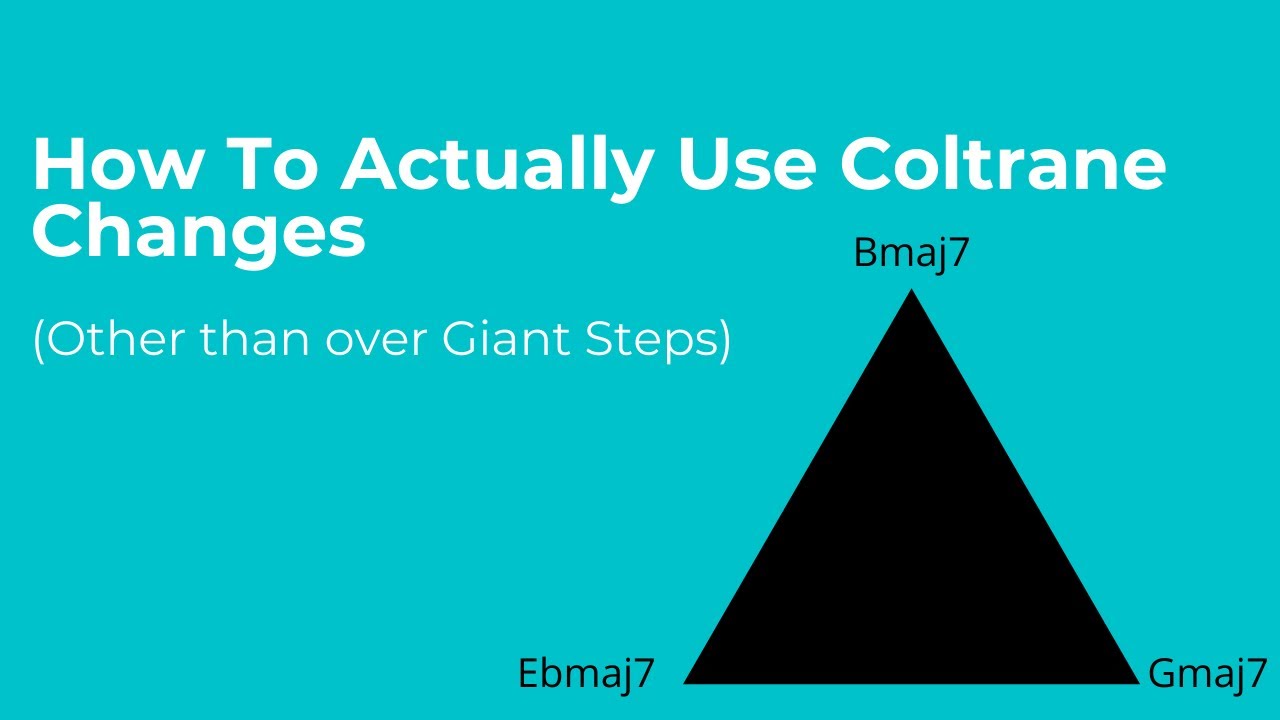
Applying Coltrane Changes to Jazz Standards: A Practical Guide
34.4K
Coltrane changes use three key centers a major third apart (B-G-Eb) with dominant chords prepending each modulation. To apply this to jazz standards, superimpose the Coltrane cycle over a three-measure 251 progression. Starting from E flat, replace Fm7-Bb7-EbMaj7 with Bmaj7-D7-Gmaj7-Bb7-EbMaj7. This creates tension that releases at resolution, transforming standard progressions into complex harmonic landscapes while maintaining functional harmony.
Click to watch →
Escape
World
Upcoming
Escape
0:00- 1
Expresses a desire to escape a dull party
- 2
Focuses on a wish to be with a special person
- 3
Ambiguous about destination, highlight connection over place
The Case Against Academic Over-Reharmonization of Pop Music
While jazz reharmonization showcases advanced harmonic sophistication, a prominent counterpoint within musicology and pop production defends the inherent value of pop minimalism and diatonic simplicity. Critics of 'jazzification' argue that complex chord substitutions often dilute the emotional immediacy, driving energy, and hook-centric power of the original track. In a pop anthem like Carly Rae Jepsen’s 'Run Away with Me,' the emotional payoff is intimately tied to its driving synthesizer drones, simple pedal points, and straightforward chord progressions. Over-complicating these structures with extensions, secondary dominants, and tritone substitutions can strip the song of its characteristic tension-and-release, transforming an urgent, visceral dance-pop track into an academic exercise. This perspective asserts that maintaining harmonic restraint is not a limitation, but a deliberate and powerful artistic choice that respects the functional integrity and emotional clarity of the pop genre.
Fundamental understanding of diatonic harmony, including major/minor scales and standard seventh chord construction (maj7, min7, dom7, m7b5).
Familiarity with standard jazz progression frameworks, specifically the ii-V-I progression and basic functional analysis.
Basic chord extension and alteration theory, including 9ths, 11ths, 13ths, and altered dominants.
Introductory substitution concepts, such as diatonic substitution and basic tritone substitution.
Advanced orchestration techniques, translating keyboard-based reharmonizations into multi-instrument arrangements for big bands or small ensembles.
Exploration of chromatic mediants, modal interchange, and non-functional harmonic systems to further expand reharmonization choices.
Study of voice-leading principles, such as guide tones and linear basslines, to connect complex chord substitutions smoothly.
Application of Coltrane changes (three-tonic systems) and other symmetrical harmonic frameworks to popular melodies.
799.4K views32.2Klikes4:45@AdamNeelyOriginal Release: 2020-01-10
[Music] [Music] [Music] stuck on my head stuck on my heart stuck on my body body I wanna go get out of here sick at the party party I've run away I don't know where hey with you [Music] but you gotta say we would sleep in sleeping [Music] [Music] [Applause] [Music] [Music] Oh [Music] Oh [Music] Oh [Music] [Music] over the weekend we can turn the world to call [Music] [Music] [Music] [Music] hey come to our show yeah I'm Brian from a birdie I'm Adam from Adam Neely's jazz school I definitely go in a circle but hey my Sarah for the New York show her mom we have a show coming up on February 4th you should be there Poisson Rouge 4 p.m. 7 p.m.
what's my winning smile oh you should definitely be there at 7 p.m.
16 plus so if you're 16 or more you get to come a lot of notes there'll be a lot of notes a lot yeah Aberdeen doesn't actually have that many notes
Up Next

53:07
NIH Stroke Scale Training Part 2: Basic Instruction & Scoring
@PublicResourceOrg
333.3K views•2010-06-10

12:54
Triumph of Orthodoxy Icon: Byzantine Art & History Explained
@BenCallan
2.1K views•2024-08-06
9:34
5 Essential Music Theory and Composition Books for Musicians
@AdamNeely
648.4K views•2018-06-04

1:42
Game of Thrones Opening Credits: A Cinematic Analysis
@gameofthrones
46.3M views•2011-04-18
Related Study Plans & Knowledge Roadmaps
Structured learning paths in General & Interdisciplinary Studies
general-studies
Elevator Engineering: History, Physics & Cities
01From Hoists to Safety Brakes: The Dawn of Vertical Lift
02Hydraulic vs. Traction: The Engineering Physics of Elevators
03Modern Speed, Safety, and Algorithms
+ 2 more learning modules
12h5 modules
Explore Roadmap
general-studies
Rubber: Material Science, History & Geopolitics
01Origins of Natural Rubber & Mesoamerican History
02The Chemistry of Natural Rubber & Vulcanization
03The Geopolitics of the Rubber Boom & Colonization
+ 2 more learning modules
12h5 modules
Explore Roadmap
general-studies
Containerization: Evolution, Logistics & Trade
01Ancient Trade & Bulk Cargo: Amphorae to Barrels
02The Industrial Revolution & Cardboard Packaging
03The Containerization Revolution: Malcom McLean
+ 2 more learning modules
12h5 modules
Explore Roadmap
general-studies
Textile Tech: Evolution, Labor & Global Impact
01Pre-Industrial Textiles: Handloom & Cottage Industry
02Mechanization: The Spinning Jenny to the Power Loom
03The Factory System & Global Labor Transformation
+ 2 more learning modules
10h5 modules
Explore Roadmap