






![[컨템포러리 재즈화성학] Chapter 9. 멀티토닉 시스템 본문 요약 설명합니다~](https://i.ytimg.com/vi/JPD38jc85Yw/maxresdefault.jpg)





![The SECRET Formula To Writing STUNNING Ultra-Modern Chord Progressions [Harmony]](https://i.ytimg.com/vi/6N1KRVJXh80/hqdefault.jpg)


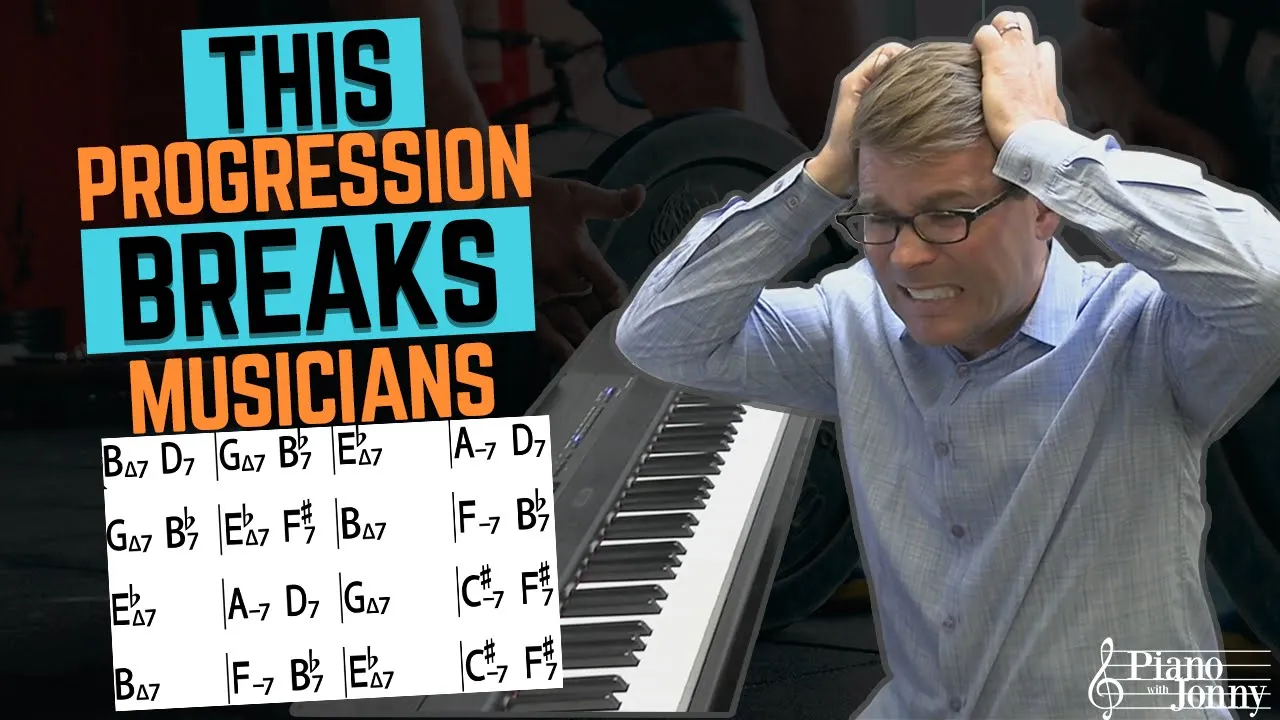

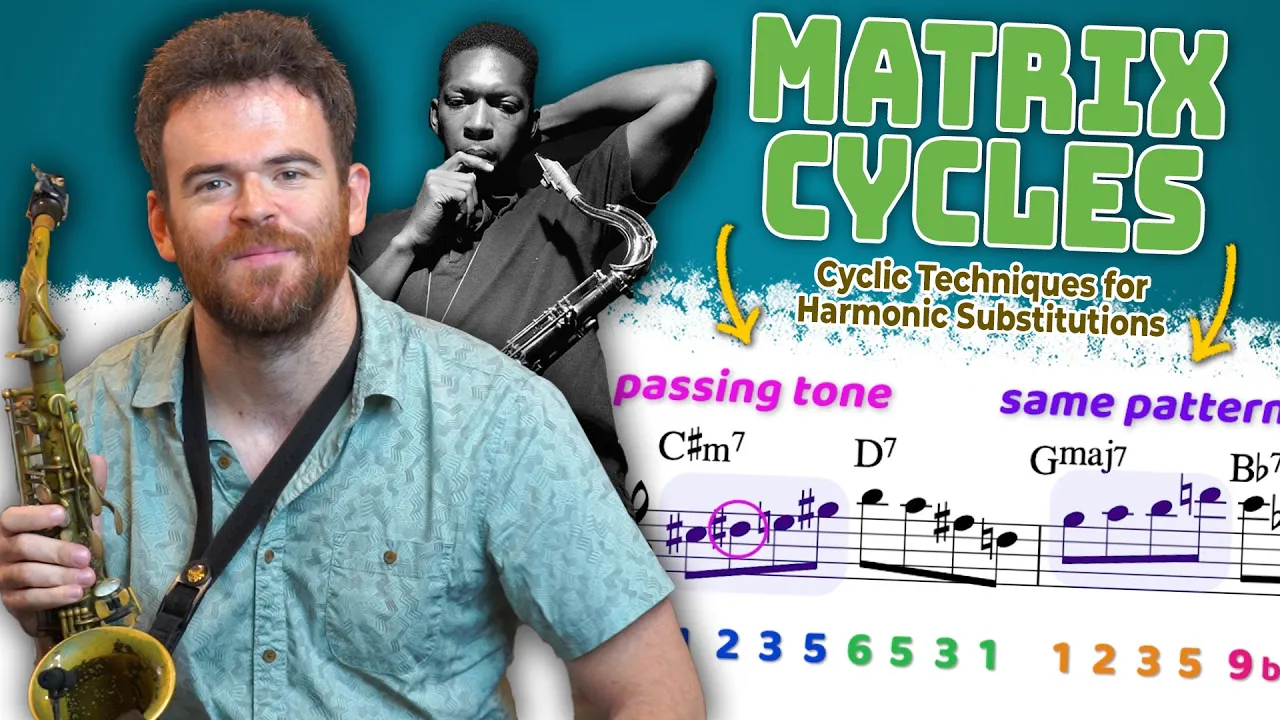



Coltrane changes, originally used over Giant Steps, can be applied to regular jazz standards by superimposing the three-key-center cycle (Bmaj7-Gmaj7-Ebmaj7 with dominant chords in between) over a standard 251 progression, creating tension that resolves at the end; effective playing techniques include using major triads over each chord or the 1-2-3-5 pattern with creative permutations.
Applying Coltrane Changes to Jazz Standards: A Practical Guide
Added:Understanding of standard major ii-V-I chord progressions and their harmonic functions in jazz.
Familiarity with triad construction (major, minor, diminished) and basic voice leading.
Knowledge of the 1-2-3-5 digital pattern and its application over major and dominant chords.
Basic awareness of the 'three-tonic system' or major thirds cycle (the foundation of Coltrane changes).
Reharmonizing complete jazz standards (e.g., converting 'Tune Up' into 'Countdown').
Developing fluid voice-leading techniques to smoothly connect fast-moving key centers modulating by major thirds.
Applying Coltrane changes over minor ii-V-i progressions and modal tunes.
Advanced improvisational vocabulary, including pentatonic scale substitutions and chromatic approach notes over the matrix.
34.4K views1.7Klikes11:08Original Release: 2021-03-29
hey everybody welcome back into another video today we're going to be talking about the ever elusive and difficult coal train changes and how you can actually use them outside of just playing over giant steps so as most of you probably already know as jazz students and fans of the music coltrane came up with an incredible set of chord changes that he originally used over giant steps now a lot of my students also have a lot of trouble figuring out where to use these chord changes outside of just the giant steps progression but i'm here to tell you that there's a whole world of places that you can use this harmony over regular old jazz standards and that's what we're going to be talking about today how do we actually take this harmony some of the innovations that coltrane used and actually use them over other tunes okay so the first thing that we need to do is we need to go over quickly what coltrane changes actually are and how they work so the short of it is that coltrane use three different key centers a major third apart from each other so let's take a look at three keys starting in the key of b major just like he does in giant steps and moving down by minor thirds until we get to e flat major so if we take b major and we go down a major third we get to g major now if we move down a major third from g major we get to e flat major [Music] [Applause] [Music] now what makes the classic coltrane cycle sound is that he preps each key change with a dominant chord so what we're going to do is in between the b major and the g major we are going to put the 5 of g major which is a d7 chord now after we land in g major we're going to put the five of e flat major which is a b flat seven chord now all of a sudden it sounds like this [Music] [Applause] [Music] and that's giant steps right there that is the sound of the giant steps progression that should be pretty familiar to you if you've ever listened to that recording okay so now how do we use this over a regular jazz standard that is not giant steps well we're going to use it over a 251 progression because most jazz standards have 251 progressions in them and we're going to use a three measure 251 progression or what people would call a long two-five-one so what we want to start by doing is choosing a 2-5-1 in the key of e-flat because we know that this progression ends in the key of e-flat and we want to do the same thing we want that resolution point to the e flat to stay the same so normally r25 would be f minor seven two chord to b flat seven five chord to e flat major seven one chord now you'll notice that the length of a three measure two five one is the same as the length of the coltrane cycle so literally all we are going to do is superimpose our coltrane cycle over the top of this so instead of playing an f minor seven chord we're going to superimpose b major seven to d seven over that first measure of the two five one now what we're gonna do over the b flat seven chord is we're gonna superimpose g major to b flat seven and then of course we're going to land in the same place which is right on e flat major seven at the end of this so now we have the ability to use this coltrane cycle over any two five one that we play and it's going to provide for a really distinct sound with a lot of tension in it and that's the key here is the tension and release the first measure is going to be the most tense because b major over f minor 7 is a really really interesting sound then as we move through the progression we build that tension and we release it right at the very end with our b flat 7 to e flat major 7. so great now we know how to superimpose these chord changes over the top of a regular 251 but what do we play this is a lot of information coming at us very very quickly and this is where most people get hung up well i know what the changes are but what the heck do i play over them so here's going to be a couple of options for you the first one is going to be to use literally just major triads over each chord and this is my favorite option because there are lots of interesting things we can play just using triads and the beauty of triads as i've said in many other videos is that it's the simplest and quickest and clearest way to outline a tonality so if over b major seven we simply play b d sharp and f sharp that is going to tell the listeners ears this musician is playing in the key of b there's no doubt about it at that point so let's look at a simple example where over each one of these coltrane chords we are just going to play a major triad let's check out example number one [Music] now can you hear how nicely that sits and how well that conveys that particular coltrane chord progression to you also notice the tension that happens especially in measure one at first you go wow this is way out there because the notes are clashing with the chords so much but then as the the line moves through the measures it becomes clearer to the ear that okay this person is following a certain pattern here and that pattern is the coltrane cycle all right let's check out one more line using just triads so this one is actually a little bit more simple a little bit more straightforward we are just simply playing descending triads in some different inversions over this so hopefully you're starting to get that sound in your ear this might take a little while for you to get used to the sound of these chords superimposed over the top of a regular 251 but if you keep practicing it you will get more used to it as you keep playing [Music] all right the second way that we are going to use this in a clear and consistent manner is by using the pattern one two three five of each chord now you might be thinking to yourself wow the one two three five is just so overplayed this is what everybody plays over coltrane changes and you're right but the reason that it doesn't sound as good as you want it to is simply because you're not being creative enough with your permutations of that one two three five so the key here is to play them in a bunch of different orders in an interesting way to make this one two three five sound like something that's much more advanced so let's check out this pattern that i have written over the 251 using exclusively the one two three five language [Music] okay so now we've gone over triads and one two three five patterns i think this is the best way to start of course there's a bunch of other things that you can do but if you can harness these two ways of playing over the coultering changes and superimposing them over the two five ones you're gonna be in good shape you'll be ready to reach for some of those other things it's quite a learning curve to do this it's a very complicated progression we all know that so you've got to work on it for a while and you've really got to get the basics of it down before you reach for something that's way more complicated okay so to end the video let's look at a real life example of how i would use this so let's take the jazz standard how high the moon which involves a lot of two five ones these long three measure two five ones and what i'm gonna do is over each one of them i'm going to work backward from the one chord go up by major thirds and insert this coltrane cycle in each of these keys and i'm only going to use triads and one two three five patterns and you're gonna see that i can get some pretty cool results using this i'm also going to show you that coltrane cycle superimposed over the top of where the regular old 251 should be so you will have a real life example that you can jump into almost right away and start playing this stuff [Music] do [Music] okay so now you know how the coltrane cycle works you know how to superimpose it over a 251 progression and you know where to start with the triads and the one two three five patterns so now all that's left is to get out your instrument and start working on this stuff i really hope you enjoyed this video thank you so much for watching if you feel like you got something out of this please consider liking and subscribing to the channel we will be coming out with a lot more videos just like this thanks for watching and we'll talk to you soon with another new video bye everybody
Up Next

29:06
Musical Reharmonization: 7 Levels of Harmonic Analysis
@8bitMusicTheory
467.2K views•2020-07-08

10:20
Mozart's Musical Dice Game Explained: History, Rules, & Fun
@webpianoacademy
5K views•2023-03-13

47:36
Understanding Diatonic 7th Chords in Major Keys | Music Theory Tutorial
@GracieTerzian
54.7K views•2022-03-02
10:49
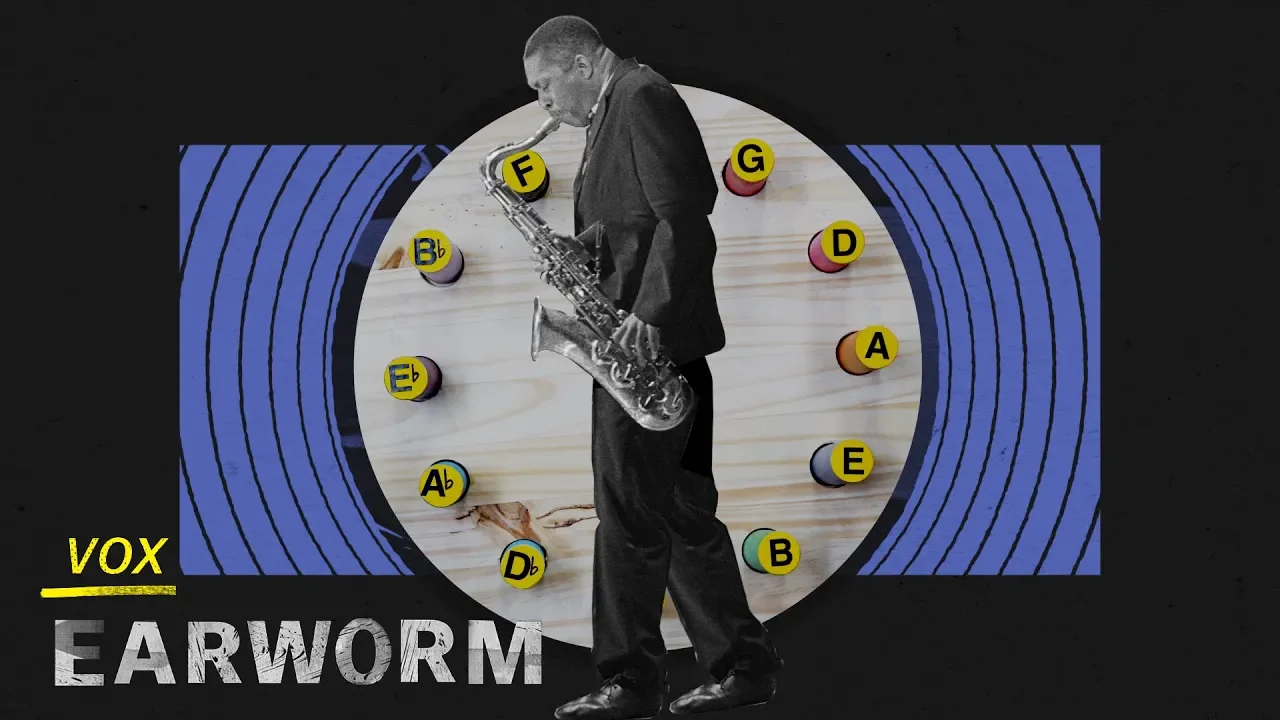
Understanding John Coltrane's Giant Steps: A Music Theory Analysis
@Vox
10.4M views•2018-11-12
Related Study Plans & Knowledge Roadmaps
Structured learning paths in Music Theory
music-theory
Composing Galant Music: Partimento & Schemata
01Foundations of Figured Bass and Keyboard Harmony
02The Rule of the Octave (Regola dell'Ottava)
03Galant Schemata: The Building Blocks of Form
+ 2 more learning modules
30h5 modules
Explore Roadmap
music-theory
Decoding Overtone Series: Tuning & Drone Music
01Acoustic Foundations: The Physics of the Overtone Series
02Tuning Systems: Equal Temperament vs. Just Intonation
03Microtonality and Spectralism: Beyond Standard Pitches
+ 2 more learning modules
24h5 modules
Explore Roadmap
music-theory
Impressionist Harmony: Scales, Planing & RPGs
01Foundational Music Theory: Keys, Intervals, and Seventh Chords
02Impressionist Color: Chord Planing and Parallel Harmony
03Whimsical Textures: Pentatonic Cascades and Whole-Tone Scales
+ 1 more learning modules
14h4 modules
Explore Roadmap
music-theory
Negative Harmony: Axis Reflection in Indie Pop
01Music Theory Foundations: Scales, Intervals, and Triads
02Functional Harmony and the Circle of Fifths
03Demystifying the Negative Harmony Axis Reflection
+ 2 more learning modules
16h5 modules
Explore Roadmap