
















The NIH Stroke Scale is a standardized neurological assessment tool that evaluates stroke severity through 11 items measuring consciousness level, orientation, comprehension, gaze, visual fields, facial palsy, motor function, ataxia, sensation, language, and neglect/inattention; reliable administration requires strict adherence to specific scoring rules including testing each item independently, recording first efforts, avoiding coaching, and using only validated forms to ensure consistent results across different examiners and facilities.
NIH Stroke Scale Training Part 2: Basic Instruction & Scoring
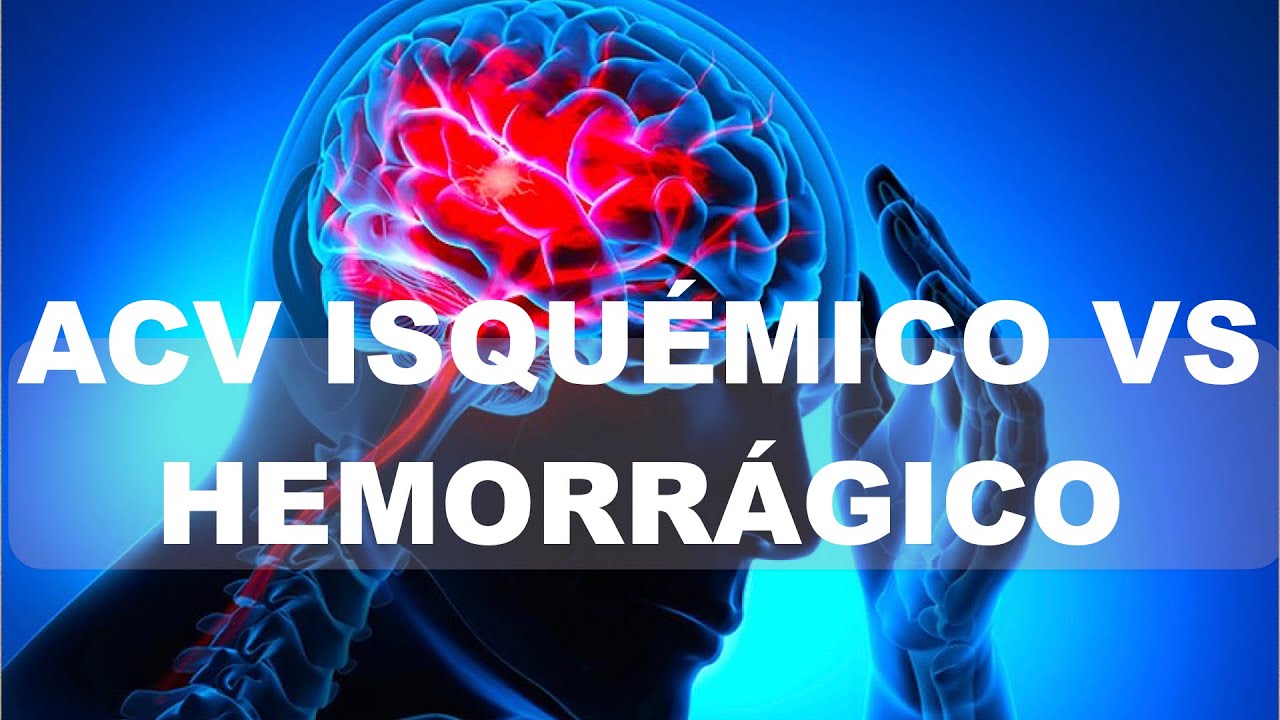
Added:Basic neuroanatomy and stroke pathophysiology, including the clinical differences between ischemic and hemorrhagic strokes.
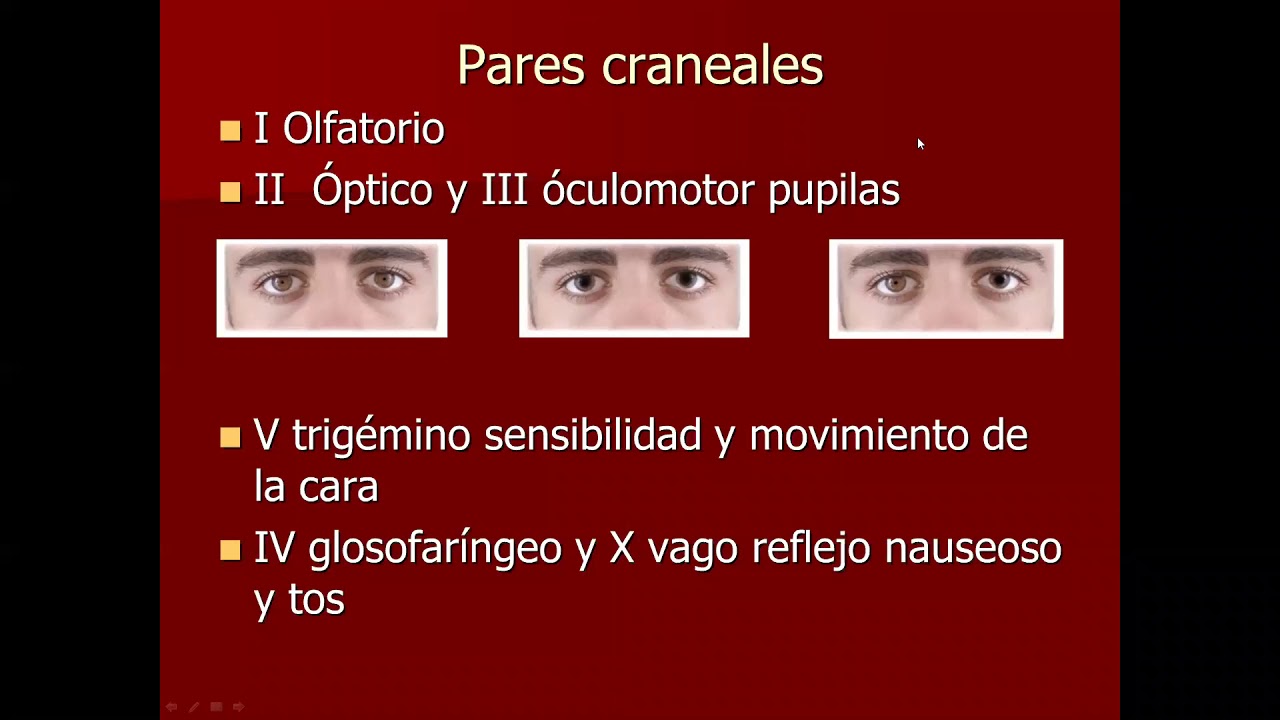
Fundamentals of a standard bedside neurological examination, such as assessing cranial nerves, motor function, and sensory responses.
Common clinical terminology associated with neurological deficits (e.g., aphasia, ataxia, hemiparesis, dysarthria, and hemianopia).
The overarching purpose and clinical significance of the NIH Stroke Scale (NIHSS) in triage and acute stroke management.
Interactive practice and official NIHSS certification through standardized clinical case studies to ensure inter-rater scoring reliability.
Clinical decision-making pathways based on NIHSS scores, including eligibility criteria for thrombolytic therapy (tPA) and mechanical thrombectomy.
Recognizing the limitations of the NIHSS, particularly its lower sensitivity to posterior circulation strokes.
Implementation protocols for serial neurological assessments to monitor patients for acute deterioration or improvement in stroke units.
333.3K views1.4Klikes53:07Original Release: 2010-06-10
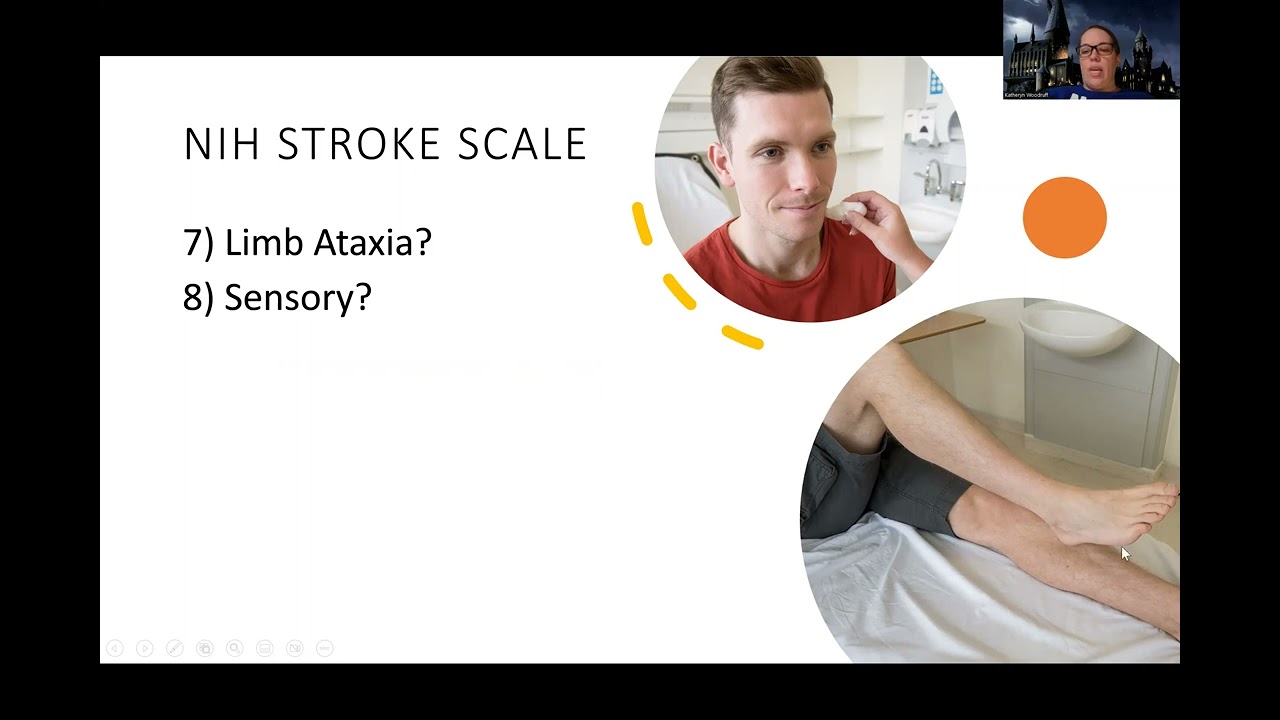
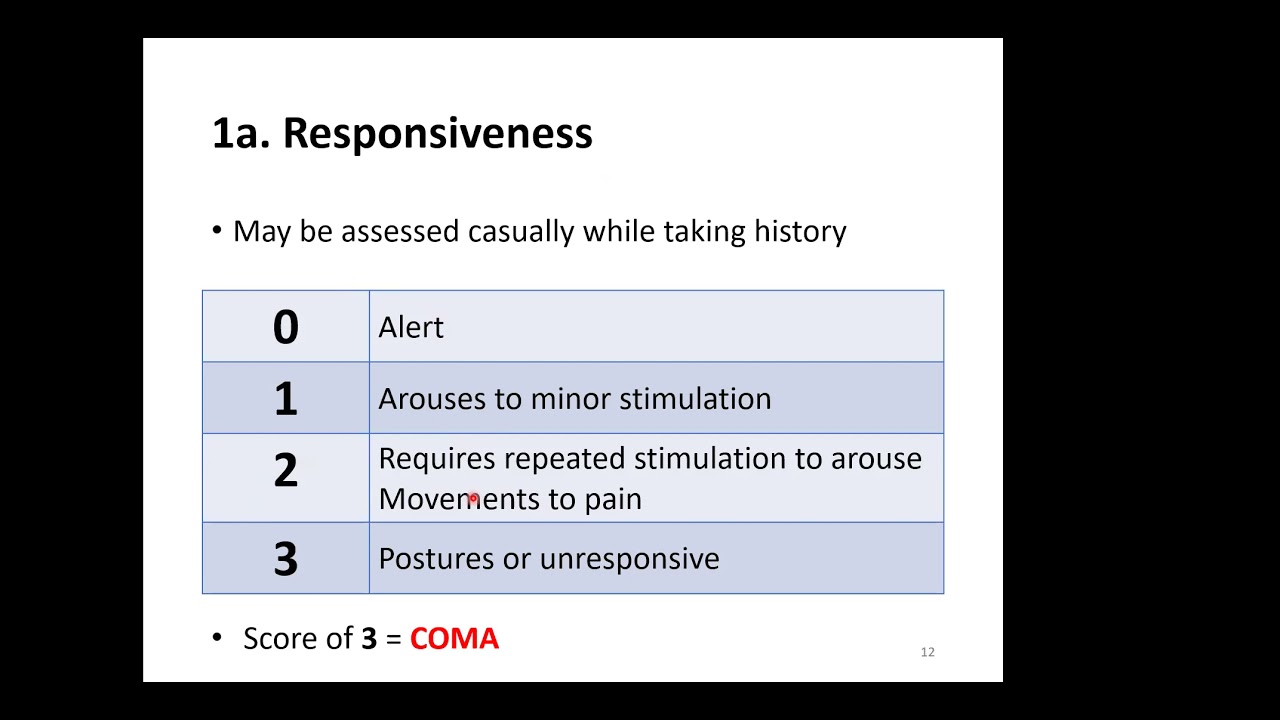
hello I am Dr Patrick Leiden professor of neuroscience at the University of California San Diego Medical Center and staff physician at the VA Medical Center I'll be giving you basic instruction in examining and scoring patients using the ninds NIH Stroke Scale after each set of demonstration and scoring instructions I will guide you through some subtleties we've learned over the years if that's helpful to you feel free to click on the special features section of the menu page they are excerpts from interviews with other Stroke Scale experts who provide excellent tips on scoring various items first let's discuss important General guidelines and ideal conditions for giving the exam the value of Stroke Scale assessments depends on uniform examiner patient interactions anyone who gives the exam needs to stick closely to the testing and scoring methods to ensure reliability and reproducibility of the results Remember The Stroke Scale is designed to measure measure the deficits seen in a group of patients so some of the scoring rules may seem odd to you as experienced clinicians if you follow these scoring rules then the reliability of scores obtained in varying places by different examiners will be very comparable all scale items must be scored record a score for each scale item before going on to the next one if any item is left untested a detailed explanation must be clearly written on your Stroke Scale form it is important to use only the Val validated form available from the NIH in the package you received with this dis several websites are listed where you may download the correct version of the scale generally we record the patients's first effort even if follow-up efforts are better to optimize the reproducibility of the scoring don't go back and change scores the most reproducible score will be your first impression work methodically and quickly an experienced examiner will be able to complete the NIH Stroke Scale evaluation in about 5 minutes for uncomplicated cases though a difficult patient may require a bit more time each scale item is judged independently from the previous items there are some exceptions and we'll highlight those as we go now here are some important conventions used to assure the excellent reproducibility of the NIH Stroke Scale administer the scale items in their exact order avoid coaching the patient even though this may be counter to usual clinical practice of trying to elicit the the best performance accept the patient's first effort score only what the patient does not what you think they can do during the course of testing you may develop an impression of level of function or lesion those Impressions must not influence your scoring again score only observed performance sometimes these rules don't make sense but if all examiners do the scale the same way the scores will be consistent be sure to include all deficits in your scoring including those deficits that may result from previous Strokes not all decisions are simple when you're having trouble deciding on a score try ruling out the extreme score and then weigh the midscale scores you should keep The Stroke Scale reference material such as the scoring guide nearby when you administer and score the NIH Stroke Scale however at the bedside in a critical situation all you need is the proper scoring sheet the naming sheets and a pin these are the overall inventions now let's focus on each item of the scale I will describe and perform each item of the scale for you and then go over scoring item 1A is the examiner's overall impression of patient alertness normally you'll get enough information when taking the patient's history to make this assessment ask the patient two or three questions about the circumstances of the admission stimulate the patient by padding or tapping the patient or on occasion more noxious stimuli such as pinching may be needed to check the level of Consciousness good morning good morning are you having any pain today uh little pain little pain are you comfortable now no yes okay for scale item 1 a this patient scored a zero let's look at how this scale item is scored score a zero if the patient is alert and keenly responsive score a one when the patient is not alert but can be aroused with minor verbal stimulation score a two for the patient who is not alert and requires repeated stimulation to attend or who requires strong painful or noxious stimulation to make movements score a three if the patient makes only reflexive posturing movements in response to repeated painful stimuli a patient with a three on this scale item is generally considered to be in a coma a patient suspected to be in a coma should be stimulated by rubbing on the chest or by using a painful stimulus a three is scored only if the patient makes no movement other than reflexive posturing in respon respon to noxious stimulation if it's difficult to choose between a score of one or two continue with medical history questions until you're confident in assigning a score this is the only time you are allowed to go back and change a score a score of three requires particular attention because it has an impact on how you'll score other scale items in patients who appear to be in a coma and who score less than three you must attempt all items but realistically you will likely fall back on the predefined default values for coma patients I will discuss these default values as we go along they're also summarized in the scoring manual you must choose a score even if confronted with obstacles for example endotracheal tube language barrier orotracheal trauma or bandages level of Consciousness item 1B is based on the patient's answers to two specific questions the month of the year and the patient's age we would you please tell me your age how old are you 53 okay and tell me what month it is right now uh feu February okay for scale item 1B this patient scored to zero let's look at how this scale item is scored score a zero if both questions are answered correctly score a one if only one question is answered correctly by definition patients unable to communicate because of endot tral intubation orot tral trauma severe disar from any cause a language barrier or any other problem not secondary to Aphasia are scor to one scor a two if neither question is answered correctly a patient who scores a three on level of Consciousness 1A must be scored a two on this scale item AP fasic and stuporous patients who do not comprehend the questions will score a two if the patient is in a coma a score of two would be assigned because this is a standardized test and to ensure reproducibility of results other measures of orientation such as time of day day location Etc are not asked as part of this examination but a patient who cannot speak may be allowed to write the answer if the patient has a phasia you need to judge his responses to questions in light of the language impairment like always only score the initial answer if the patient first gives an incorrect answer and then corrects himself it is nevertheless scored as an incorrect answer many patients will give you their date of birth when you ask for their age this is scored as a wrong answer there's no partial credit for answers that are closed like being off by a month for the third part of item one or 1 C you ask the patient to perform two tasks before beginning this assessment be sure to position the eyes and hands in a testable position then ask the patient to do these actions Close Your Eyes For Me Now open now make a fist with your hand you may repeat the command once but do not coach or courage to improve reproducibility score what the patient does not what you think they are capable of doing in general you should try to pantomime the command so the patient receives your verbal as well as visual input close your eyes and open them up that's terrific take your left hand and make a fist and now open it up that's great for scale item 1C this patient scored a zero let's look at how this scale item is scored score a zero if both tasks are performed correctly score a one if one task is performed correctly if the patient does not speak English a friend or family member can be asked to translate now ask her to close her eyes ask her to take this hand and make a fist this hand this hand make a fist make a fist score a two if if neither task is performed correctly now I want you to take your hand and I want you to make a fist I want you to make a fist I want you to close your eyes close your eyes a two is scored for patients with a comprehension deficit and who perform incorrectly some subtleties here give credit if a real attempt is made but not completed simply due to weakness only score the first attempt again do not coach or teach each by the time this scale item is tested you will have already interacted sufficiently with the patient to judge whether or not the patient will actually comprehend your verbal commands if you're dealing with patients with trauma amputation or other physical impediments you'll need to substitute other one-step commands the best gaze item number two on the NIH Stroke Scale tests voluntary horizontal eye movements disorders of vertical gaze nagus and skew deviation are not measured first look at the position of the eyes at rest make sure to note any spontaneous eye movements to the left or right the next test is to move your finger or other Target horizontally asking the patient to track your finger from side to side by moving the eyes only make sure to keep asking the patient to follow the target if the patient does not accurately follow your finger a stronger test is needed use the oculos falic maneuver eye fixation or tracking of the exam Miner's face this is an exception to the rules of using the first observable response for scoring and not coaching the patient in patients with poor attention spans establish eye contact and move your face around the patient from side to side this may clarify the presence of a partial gaze py now I'm going to test your gaze I'd like you to look at my finger and follow it all the way over this way and all the way over that way for scale item two this patient scored a zero let's look at how this scale item is scored score a zero if the tasks are performed correctly if a patient has ocular rotary problems such as a strabismus but leaves the midline and attempts to look both right and left the patient should be considered to have a normal response score a one for partial gaze paly I want you to look at me look at me look here now I want you to look over over here look over here all right going to help you out here a little bit so we can see your eyes I want you to look over here now look over there okay if there is a conjugate deviation of the eyes that can be overcome by voluntary or reflexive activity also score a one if the patient has an isolated cranial nerve parasys such as an ocular motor or abducent paly also score a one score a two when there is force deviation or total gaze parisis not overcome by by the oculos falic maneuver I'm going to test your eye movements now I want you to look at my hand can you look all the way over to your right look at my hand and they look all the way over at me look here at me all the way here at my hand good if there is a conjugate lateral deviation that is not overcome with reflexive movements the score should be a two the easiest way to score this item is to consider whether the eye movements are normal if so score is zero if not consider whether there is iic deviation such that the eyes cannot be moved if so score a two everything else would be scored a one patients who score a three on level of Consciousness item 1 a are in a coma and may have gaze paly that can be overcome by moving the head so in these cases you should use the oculos falic maneuver and score the result to keep the testing conditions standard do not do caloric testing with a phasic patients gaze is testable just like with confused patients it helps to establish eye contact and move about the bed and finally patients with ocular trauma bandages pre-existing blindness or other disorders of visual Acuity or Fields should be tested with reflexive movements and scored this may mean removing the bandages the third item in The ni8 Stroke Scale tests the visual fields of both eyes in the visual Fields item each eye is tested independently upper and lower quadrants are tested by confrontation this means using finger movement finger counting or visual threat as appropriate if a patient is unable to respond verbally The Examiner should check attention to responses to visual stimuli in all quadrants or have the patient hold up the number of fingers seen make sure the patient is looking directly into your eyes during the testing tell the patient you will be testing peripheral vision and that you may move a finger to the right or a finger to the left or both then you test by asking the patient to count fingers in all four quadrants patients who scored a three on the level of Consciousness 1A are tested using bilateral threat now the next thing I'm going to do is I want to test your vision all right so I'm going to help you cover your right eye okay how many fingers do you see two okay how many fingers do you see five good how many fingers do you see one and how many up there uh one or two huh now look at me how many fingers down there one I five one one for scale item number three this patient scored to zero let's look at how this scale item is scored score the item zero if the upper and lower visual fields are normal if the confused or language impaired patient looks at the correct cor side of the moving finger this is scored as normal if a patient has severe monocular visual loss due to Intrinsic eye disease and the visual fields in the other eye are normal The Examiner should score the visual Fields as normal score a one only if you find a clear-cut asymmetry including quadrantanopia or partial hemianopia if there is an Extinction score the patient a one and I want you to look at my nose and tell me how many fingers do you see out of the corner of your eye two one okay look right at my nose look at me how many up there two okay look right at my nose look at me one okay two the whole hand look at me look at me look at me three look right at my nose two all right now switch hands and cover your left eye for me all right again look at my nose one the whole hand one two look like three or four okay how about now one look at my nose score a two for a complete hemianopia cover your right eye for me when you see a finger you tell me how many fingers you see one good one one one all right now I want you to switch eyes and we'll try the same thing again one five good five good score three for blindness of any cause including cortical blindness which requires a positive diagnosis and double simultaneous stimulation testing all right do you see my hand moving yes how about now yes okay do you see my hand moving now yes I do how about now yes I do all right as soon as my hand moves you say now okay one last thing I want you to look right here at me look right here at me very good if there is unilateral blindness or enucleation visual fields in the remaining eye are scored the result of this item will have an impact on the last scale item Extinction and inattention and many of us check double simultaneous stimulation to visual input at this point there is an arbitrary rule that if they extinguish the visual field item is scored a one even if the fields are intact to confrontation this rule helps even out the variations that occur when inexperienced examiners encounter neglect so severe that the patient appears to have a visual field cut the next item on the scale is an assessment of facial py to assess facial py you ask or use pantomime to encourage the patient to show me your teeth if the teeth aren't in ask them show me your gums open and close the eyes you can say squeeze your eyes shut as hard as you can raise the eyebrows or lift up your eyebrows as high as you can the patient needs to look directly at you while performing the requested tasks for the aphasic poorly responsive or going to examine your face so I want you to show me your teeth good and now relax close your eyes real tight tighter tighter very good now open your eyes and raise your eyebrows up that's great for scale item four this patient scored a one let's look at how this scale item is scored score the patient a zero for normal symmetrical movement normal function must be clearly demonstrated or orbital and forehead musculature movements are normal score a one for minor paralysis such as a flattened nasal labial fold or mild asymmetry while smiling this is the proper score if function is less than clearly normal score a two if there is paralysis of the lower face this is the appropriate score for clear-cut upper motor neuron facial paly decreased spontaneous and forced facial movements are most prominent at the mouth open your eyes look at me thank you can can you show me your teeth there we go score a three when there is complete paralysis of the upper and lower face this is the appropriate score for the obtunded or comos patient or one with unilateral lower motor neuron facial weakness now ask her to do what I do to show me her teeth show me your gums good now close your eyes tightly tight tight tight good and now raise the eyebrows up and raise the eyebrows good good the easiest way to score this challenging item is to First decide if the face is normal if so score zero if the face is not normal ask yourself if there's a clear-cut asymmetry of the smile if so score it two all other findings including subtle asymmetries of the nasolabial fold are scored to one the score of three is reserved for the very unusual complete facial paralysis seen with some brain stem Strokes remember to include using noxious stimuli to score the symmetry of Grimace in poorly responsive or non-c comprehending patients also in the event of facial trauma remove the bandages tape or other physical barriers that might obscure the face scale items five and six assess arm motor movement and leg motor movement for motor arm and leg scoring make sure to appropriately position the limb extend the arms 90° if the patient is sitting or 45° if the patient is supine always test the leg in the Supine position by extending the leg 30° you score drift if the arm Falls before 10 seconds as you count down out loud or if the leg Falls before 5 Seconds begin counting immediately at the release of the limb you should also count down with your fingers in full view of the patient as you count out loud so that the patient receives verbal and visual input you can help the patient in this item by placing the limb in the desired start position watch for an initial dip of the limb when you release it only score abnormal if there's a downward drift after the dip each limb is tested in turn beginning with the non-p peric arm when testing the arms The Palms must be down do not test limb simultaneously do not coach the patient only in the case of amputation or joint Fusion at the shoulder or hip is this scale item not scored but you need to make a written note of this on some printed copies of the NIH Stroke Scale you may be advised to score amputation as a nine when scoring motor arm motor leg or a taxia but don't use the Nines in calculating the total score you'll have to use urgency in your voice or pantomime to encourage the aphasic patient these patients May understand better what you are testing if you use the non-paretic limb first if the patient has restricted limb function due to arthritis or non-stroke related limitations you still need to give a score use your best judgment to differentiate between the effect of the stroke and any other cause I'm going to ask you to hold this arm up right here spright out for 10 seconds 1 2 3 4 five 6 7 8 9 10 that's terrific now let's try the other side I'll hold it up and when I let go you keep it up for 10 seconds can we get it to there okay I don't know let's see one 2 3 4 five 6 7 8 9 10 okay for scale item 5 a this patient scored a zero for scale item 5B the patient scored a one let's look at how this scale item is scored score a zero if there is no drift and the arm remains in position for a full 10 seconds after any initial dip score a one if the arm jerks or drifts down to an intermediate position without encountering support such as a bed before a full 10 seconds want you to hold your arm up for 10 seconds you ready one 2 3 four five 6 7 8 9 10 that's terrific score a two when there is some effort Against Gravity but the arm cannot get to or maintain the proper position and drifts down to some support 1 2 3 4 5 6 7 8 9 10 score a three when there is no effort against gravity and the arm Falls see if you can hold it up at all okay and shrug that shoulder for me show me that shoulder move there we go all right score a four if the patient is unable to make voluntary movements I'll hold it up for you right there now you hold it up one two 3 four and it's hit the bed now so what I'd like to know is can you move it at all to differenti a score of three from four you have to encourage the patient and wait a second or two to observe movement in the paretic arm any movement at all including small proximal movements such as shoulder shrug or hip flexion is enough to lower the score from four to three a patient who scores three on level of Consciousness 1A is scored four on this item scale items five and six assess arm motor movement and leg motor movement for motor arm and leg scoring make sure to appropriately position the limb extend the arms 90° if the patient is sitting or 45° if the patient is supine always test the leg in the Supine position by extending the leg 30° you score drift if the arm Falls before 10 seconds as you count down out loud or if the leg Falls before 5 Seconds begin counting immediately at the release of the limb you should also count down with your fingers in full full view of the patient as you count out loud so that the patient receives verbal and visual input you can help the patient in this item by placing the limb in the desired start position watch for an initial dip of the limb when you release it only score abnormal if there's a downward drift after the dip each limb is tested in turn beginning with the non-p peric arm when testing the arms The Palms must be down do not test limbs simultaneously do not coach the patient only in the case of amputation or joint Fusion at the shoulder or hip is this scale item not scored but you need to make a written note of this on some printed copies of The ni8 Stroke Scale you may be advised to score amputation as a nine when scoring motor arm motor leg or a taxia but don't use the Nines in calculating the total score you'll have to use urgency in your voice or pantomime to encourage the aphasic patient these patients May understand better what you are testing if you use the non-tic limb first if the patient has restricted limb function due to arthritis or non-stroke related limitations you still need to give a score use your best judgment to differentiate between the effect of the stroke and any other cause now let's lift this one up and when I let go you hold it up for one 2 3 4 five perfect go ahead and relax now we'll try the other side I'll lift it and you keep it up after I let go right there okay 1 2 3 4 five it's great for scale item 6A this patient scored a zero for scale item 6B the patient also scored a zero let's look at how this scale item is scored score a zero if there is no drift and the leg holds the 30° position for a full 5 Seconds score a one if there is drift and the leg Falls by the end of the 5-second period but does not hit a support such as a bed and you hold it for one 2 3 4 five great score a two when there is some effort Against Gravity but the leg falls to the support within 5 Seconds tell her to hold it up up one 2 3 four five score three when there is no effort Against Gravity and the leg falls to the support immediately but the patient makes small movements such as hip flexion or adduction now we hold this one up right there for one okay let's try it let's see you move it all right let's see you move that leg okay score a four if the patient is unable to make voluntary movements hold that leg up hold your leg up hold the leg up one two can you move it at all can you move that leg try moving that leg for me items five and six are the most reproducible of the scale and carry the most Import in determining ultimate outcome please watch the limb very carefully and compare to a marker behind the patient to gauge whether the limb is drifting slightly if it is not possible to test the patient on this scale item because of an amputation or hip or shoulder joint Fusion or any other reason the item is not scored we discourage you from doing this in any but the most extreme cases and the reason must be recorded on the form clearly patients scoring a three on level of Consciousness 1A are scored four the test for limb Axia item seven is an assessment for evidence of a unilateral cerebella lesion this test attempts to distinguish a clinically significant incoordination from General weakness perform the finger noose finger and heal Shin tests on both the right and left sides ask the patient to touch your finger with his index finger then back to his nose then repeat enough times to thoroughly test for a taxia then perform the test on the other side then test coordination in the leg instruct the patient to move one heel down and up the shin of the opposite leg give the same test on both the right and left sides of the body test the normal side first make sure the patient's eyes are open in the event of a visual field defect try to perform the test in the intact visual field the next thing I'd like to do is check your coordination take your finger here and touch my finger now touch your nose now my finger now your nose now my finger now your nose good now on the other side I don't know what we'll be able to do but see if you can lift it and touch my um finger I can't can't get up that high okay let's see what happens with the legs all right I'm going to take your right leg I want you to put your heel on your knee and run it down your shin let's see what happens can you bend the knee put your heel right there and run it all the way down your shin and back up again that's great now relax now let me try the right leg I'll lift it up and you put the heel on your knee and slide it all the way down and can you slide it back up I can do okay put it down and slide it down one last time very good good okay for scale item 7 this patient score to zero let's look at how this scale item is scored score is zero if there is normal coordination the movements should be well performed smooth accurate and not clumsy if there is significant weakness assume a taxia is zero a taxia is scored only if present and out of proportion to weakness of the limb a taxia is absent in the patient who cannot understand or is paralyzed and so is scored a zero on this item score a one if Axia dysmetria or dis energia is present in one limb I want you to take the heel put it on your knee and run it down your shin just take that heel and put it right there run it down your shin and back up and now do the same thing on the other side put the heel on the knee and run it all the way down and back up and run it all the way down to the end this time and back up and that's terrific relax score a two if a taxia is present in two limbs both arms both legs or an arm and a leg on the same side of the body also score a two If You observe dysmetria or dis energia in both the arm and the leg on one side or if there are bilateral signs so take this finger right here and touch my finger now touch your nose now my finger now your nose now my finger good let's try the on the other side touch my finger as quick as you can and now your nose back and forth back and forth back and forth back and forth yeah there we go okay I want you to take your um right leg put the heel on your knee so lift this heel up put it on your knee there and just run it straight down your shin straight down the shin and back up up good good now switch sides and put the left heel on the knee there run it all the way down and back up that's good it's important to remember that this item is scored a one or a two only if a taxia is present and out of proportion to weakness in the case of amputation or joint Fusion you may Mark the item untestable but make sure to write the reason on the form patients scoring a three on level of Consciousness 1A are scored only if a taxi is present otherwise give a zero you test sensory perception with a series of pin Pricks withdrawal from noxious stimulus is used in the obtunded OR aphasic patient do not use any object other than a safety or seamstress pin no paper clips broken sticks or ballpoint pens examine the patient with a pin in the proximal portions of all four Limbs and ask if the patient feels the stimulus the patient's eyes do not need to be closed ask the patient if there is any asymmetry between the right and left sides asking if the patient feels sharp or dull only begs for confusion and misinterpretation to optimize reproducibility ask the patient only to compare the two sides and tell you if there is a difference in confused aphasic or obtunded patients observe her symmetry of grim in response to the noxious stimulus only sensation loss attributed to stroke is scored test as many body areas arms legs trunk and face as needed to accurately assess for hemisensory loss do not test limb extremities like hands or feet when testing sensation since the response may be confounded by an unrelated neuropathy unless absolutely necessary do not test through clothing I'll touch you on the right or the left and you tell me if they're the same or if side sharper starting with your face right left which one's sharper or are they the same about the same about the same all right let's try your hands right left which one sharper or they the same dollar dollar on the right okay right right let's try your legs which one's sharper or are they the same uh one dollar on the right for scale item number eight this patient scored a one let's look at how this scale item is scored score a zero when there is no evidence of sensory loss score a one for mild or moderate loss I'm going to test how well you feel this pin now I want you to tell me if the right side is sharper the left side or if they're the same okay starting with your face which side is sharper left which side is sharp left left arms Swit side about the same about the same okay we'll go to the legs the left side is Shar left side is sharper score a two when evidence confirms severe loss only give a two when a severe or total loss of sensation can be clearly demonstrated patients with brain stem stroke demonstrating bilateral loss of sensation also score a two now I'd like to see if you can feel any sensation going to touch you with this pin can you tell me anything about that can you feel that and I can't tell so I'm going to try something else I'd like you to tell me if you uh if you feel this if you feel that squeeze all right and now how about on this side Can You Feel The Squeeze on this side okay and I can see you pulling back on that one this item is never marked not testable you should test stuporous or aphasic patients with vigorous noxious stimuli such as nail bed pressure and then decide between a one or zero based on whether any response appears patients who score three on level of Consciousness 1A will automatically score a two on the sensory item for item nine best language we score the patient language skills listen for this item as you perform the entire Stroke Scale examination by this time you'll know a lot about the patient's ability to comprehend language and you may be able to score the item however it's almost always wise to confirm your impressions developed to this point in the exam using the formal testing tools provided this scale item is an exception to the rule of scoring only the first impressions we encourage but do not coach or stimulate the patient's best performance the patient's language is tested by having the patient exam examine the cookie jar picture and the standard naming card and by reading a series of sentences the objects and sentences are provided with The Stroke Scale exam always determine if the patient wears glasses if so they will be needed for the exam give the patient adequate time to identify the objects on the object card ask the patient to name each item on the card ask the patient to describe the meaning and action depicted on the cookie jar picture encourage but do not coach the patient to be as complete as possible ask the patient to read all the phrases on the sentence card the assessment is based on your overall sense of the patient's language as well as on their responses on these tests I'd like you to put on your reading glasses here okay all right I'm going to show you a card I want you to tell me what you see in that picture uh um socket mhm F and going out side mhm uh just washing and uh falling down falling down good now I have some pictures can you tell me what that is right there glove okay and that right there feather good and this one um hammock good and this one J mhm and this one G uhhuh yeah and this one key good that's great can you read these sentences for me you know how down to earth I got home from work MH near the table in the dining room mhm they heard him speak on the radio last night for scale item 9ine this patient scored a one let's look at how this scale item is scored score a zero if there is no Aphasia score a one for mild to moderate Aphasia evidenced by some obvious loss of fluency or facility of comprehension but no significant limitation on ideas expressed or form of reductions a limited reduction will still allow you as the examiner to identify the picture or naming card content from the patient's responses what I'm going to do is give you this picture here and I'd like you to tell me what you see in that picture describe to me what you see there well Bo has a getting cook mhm MH now he's falling on this tool mhmh very good do you see anything else SL people mhm okay like that what else do you see the L has uh uh want dises and overflow the the thing excellent okay now what I'd like you to do I have another picture and I'd like you to take a look at this and tell me what that object is right there what is that right there can you tell me the name of that object glob excellent how about this one key cut cut cut cut mhm I cannot pronounce mhm okay about cat C good all right how about this one here FEA and this one here have okay score a two for severe Aphasia when all the patients expressions are fragmentary or when you cannot identify card content from the patient's response ask her if there's anything in that picture she can tell us [Music] tell you what let's try a different one and see what I'd like her to do is look at the card and tell us if she can point to the chair okay score a three if mute for any reason or for Global Aphasia or if no usable speech or auditory comprehension is demonstrated The Examiner must choose a score of three for the patient with a stuper or limited cooperation would you um take a look at this card as there anything that you can tell me about it I'll hold it where you can see it can you speak at all about that card let me try one more thing I have a few pictures here can you tell me what what this object is on the picture card the the intubated patient should be asked to write down responses to the examiner's questions if a patient's visual loss interferes with testing this item you may ask the patient to identify objects placed in the hand you'll also need to elicit samples of speech on the naming card test it is very common for visually impaired patients to identify the feather as a leaf and the glove as a hand also in some parts of the country the cactus picture will be identified as animals in profile such as squirrels I usually score these responses as correct hammocks are not common outside of the Americas so patients from other cultural groups may not know the term patients scoring a three on level of Consciousness 1A are scored three on this scale item mute patients may have some cause other than aasia for not speaking but to optimize scoring reliability you always give the mute patient a three remember score what you see not what you think the patient can do in item 10 dysarthria we test the patient's articulation and Clarity of speech it's important that you don't explain the purpose of this exam ask the patient to read or repeat the words from the word card provided with The Stroke Scale so I'd like you to pronounce these words for me MAA tiptop 5050 SS uberry baseball player okay okay for scale item number 10 this patient scored a one let's look at how this scale item is scored score a zero for patients with normal speech who read all words without slurring score a one for patients with mild to moderate speech defects and some slurring but who can be understood would you read those words for me please mama Tip Top mhm 50 50 mhm thank mhm h b good basball player all right very good a score of two is reserved for the patient who cannot be understood in any meaningful way or who is mute would you ask her to say mama ask her to say mama the mama [Music] M ma ma okay an unresponsive patient receives a score of two on this item patients scoring a three on level of Consciousness 1A are scored two on this scale item the item is untestable only if the patient is intubated or has other physical barriers to producing speech remember to clearly document and explain this problem on the form EP phasic patients and patients who do not read may be scored based on listening to the speech they do produce or by asking them to repeat the words after you read them out loud in some cases the speech may be hard to understand due to dental or other non-neurological causes nevertheless score the item a one to optimize reliability among examiners that might have varying degrees of experience we come now to the last scale item which tests for neglect or inattention you may have enough information by the time you reach this point in the exam to make a judgment but if abnormalities are not clear the presence of neglect is examined by the patient's response to double simultaneous stimulation unless there is obvious neglect or anas agnosia it is wise to double check first ask the patient to close their eyes alternately touch the patient's left or right side and ask the patient which side is being touched after the patient responds consistently then touch the patient on both sides at once the patient without neglect will identify sensation on both sides patients with cortical impairment May extend distinguish one side that is they will only perceive sensation on one side since neglect is scored only if present the item is never untestable now the last thing I'd like to do is tap you on the right left or both you tell me which it is all right close your eyes we'll start with your face right left or both okay can you say if it was left right or both okay right you know what might be easier for you is if you take your finger and point to the side that I'm touching okay point to the side that I'm touching good all right left good both excellent now you're able to pronounce it now so let me try the hands what you tell me if this is right left or both right good okay left wait for me to touch it both both Left Right both beautiful keep your eyes closed and I'm going to tap your legs right left both uh left both I'd like to do the same thing now in Your Vision um you can point to the finger that Wiggles it'll either be right left or both right left right both both good for scale item number 11 this patient scored a zero let's look at how this scale item is scored score a zero for the absence of neglect if the patient has a severe visual loss preventing visual double simultaneous stimulation and the cutaneous stimuli are normal the score is normal if the patient has Aphasia and cutaneous stimuli are normal the score is normal score a one for inattention to only one modality visual tactile auditory or spatial if the patient does not extinguish but shows other well-developed evidence of neglect score a one I want you to tell me if you see a finger wiggling on the right side left side or both sides where's that that's left right right right right left right right okay a two is scored for profound Hemi inattention or Extinction to more than one modality score a two if one side extinguishes to both Visual and tactile stimuli using double simultaneous stimulation score a two if there is in attention to more than one category atory visual tactile auditory or spatial in attention a patient with a score of three on level of Consciousness 1A is automatically scored a two as soon as you finish add up the scores from each item to derive the total it is always wise to be sure that you have entered the scores correctly especially on items 1 B and 1 C many people have a tendency to write a two when the patient scores both items correctly we have completed basic instruction in the use of the NIH Stroke Scale as you have seen the scoring rules are rigid and arbitrary and in some cases counter to typical neurological practice however if the scoring rules are followed the scale scores will be highly reliable and reproducible to help you master the art of scoring the NIH Stroke Scale we have placed guided interactive patient assessments on this dis using these patient assessments you will have the opportunity to observe again how each test is given and how patients respond and to practice scoring performance on each item of the scale with the opportunity to compare your scoring judgments to those of experienced clinicians
Up Next

2:42
The Maya Underworld: Xibalba and the Hero Twins Myth
@adoStory
733 views•2025-12-29

12:54
Triumph of Orthodoxy Icon: Byzantine Art & History Explained
@BenCallan
2.1K views•2024-08-06

9:49
FastAPI vs Flask vs Django: Choosing the Right Python Web Framework
@TechWithTim
302.5K views•2024-05-26

1:42
Game of Thrones Opening Credits: A Cinematic Analysis
@gameofthrones
46.3M views•2011-04-18
Related Study Plans & Knowledge Roadmaps
Structured learning paths in General & Interdisciplinary Studies
general-studies
Elevator Engineering: History, Physics & Cities
01From Hoists to Safety Brakes: The Dawn of Vertical Lift
02Hydraulic vs. Traction: The Engineering Physics of Elevators
03Modern Speed, Safety, and Algorithms
+ 2 more learning modules
12h5 modules
Explore Roadmap
general-studies
Rubber: Material Science, History & Geopolitics
01Origins of Natural Rubber & Mesoamerican History
02The Chemistry of Natural Rubber & Vulcanization
03The Geopolitics of the Rubber Boom & Colonization
+ 2 more learning modules
12h5 modules
Explore Roadmap
general-studies
Containerization: Evolution, Logistics & Trade
01Ancient Trade & Bulk Cargo: Amphorae to Barrels
02The Industrial Revolution & Cardboard Packaging
03The Containerization Revolution: Malcom McLean
+ 2 more learning modules
12h5 modules
Explore Roadmap
general-studies
Textile Tech: Evolution, Labor & Global Impact
01Pre-Industrial Textiles: Handloom & Cottage Industry
02Mechanization: The Spinning Jenny to the Power Loom
03The Factory System & Global Labor Transformation
+ 2 more learning modules
10h5 modules
Explore Roadmap