Flamenco Harmony: Phrygian Dominant & Cadence
Learning Goal: Learn to leverage the dramatic harmonic structures of Spanish music. By mastering the step-by-step mechanics of the Andalusian Cadence, dissecting Phrygian and Phrygian Dominant modes, exploring Flamenco chord extensions (b9, add9), and understanding the traditional rhythmic framework of Compás, you will acquire the exact creative toolkit needed to compose and arrange highly dramatic instrumental Spanish and Latin-style compositions inside a modern DAW environment.
- Prerequisites: None (starts from foundational music theory)
- Estimated Total Study Time: 18 Hours
Module 1: Foundational Music Theory: Keys, Scales, and Chords
Before diving into complex Spanish scales and advanced modes, you must establish a solid grasp of fundamental Western music theory. This module covers the musical alphabet, interval relationships, natural minor keys, and how triads are systematically constructed.

Why this video
This video is a gentle, jargon-free introduction to the absolute basics. It introduces the 12 total notes of the musical alphabet, sharps and flats, octaves, and the fundamental structure of the C major scale. This forms the canvas on which all modal alterations and harmonic concepts will later be drawn.
Knowledge Checkpoint
- Name all 12 notes of the chromatic musical alphabet starting from A.
- Explain the difference between a natural note and an accidental (sharp or flat).
- Identify which pair of adjacent letters do not have an accidental between them (e.g., B-C and E-F).

Why this video
Flamenco music and the Andalusian Cadence are fundamentally rooted in minor tonalities. This guide teaches you how to construct natural minor scales, identify minor key signatures by navigating minor thirds down from major keys, and read foundational chord maps.
Knowledge Checkpoint
- Determine the relative minor key of Bb major by stepping down a minor third (three half steps).
- Describe the intervallic formula of steps that build a natural minor scale.
- Confirm how to use a key signature to verify whether a written piece of music is in a major or minor key.

Why this video
Understanding how to group chords within a single key is crucial for building logical progressions. This lesson explains how triads (three-note chords) are naturally constructed by harmonizing scale degrees, demonstrating which chords become major, minor, or diminished within a given key signature.
Knowledge Checkpoint
- Define what a triad is and how it is built using alternating scale degrees (root, third, fifth).
- Explain why chord types (major, minor, diminished) naturally differ as you move from scale degree 1 through 7.
- Determine how to construct the basic triads belonging exclusively to the C major and A minor keys.
Module 2: The Andalusian Cadence Demystified
With a firm foundation in keys and triads, you are ready to explore the cornerstone of Spanish music: the Andalusian Cadence. You will learn its historical significance, trace its distinct descending movement, and see why altering the final chord is the secret to its highly dramatic energy.

Why this video
This video is a masterclass on the application and sonic structure of the Andalusian Cadence. It breaks down the descending Roman numeral pattern (), provides cross-genre musical examples, and traces its origin from historical choral works to classical and modern pop.
Knowledge Checkpoint
- Write down the Roman numeral formula for the Andalusian Cadence and transpose it to the key of A minor.
- Explain how the descending bass line () creates a perpetual-motion effect.
- Identify at least two non-flamenco pop or rock songs that utilize this progression as their foundation.
![The Awesome Power of the Andalusian Cadence - Making Music in 5 Styles [SONGWRITING + ARRANGEMENT]](https://i.ytimg.com/vi_webp/qbeRVJMT5CY/maxresdefault.webp)
Why this video
This video bridges the gap between raw theory and creative arrangement. It demonstrates how to apply the Andalusian Cadence across five completely distinct musical styles, illustrating how rhythmic phrasing, instrumentation, and tone selection manipulate the emotional weight of the progression.
Knowledge Checkpoint
- Describe how different tempos and rhythms alter the mood of the Andalusian Cadence.
- Identify which scale is used to compose melodies over this specific progression to capture its classic historical vibe.
- Explain how you can alter a standard natural minor progression (such as changing a minor to a major) to inject immediate tension.

Why this video
This concise guide isolates the absolute core of the Andalusian Cadence's harmonic tension. It explains the critical shift from a minor chord to a major chord (raising the third degree) to resolve dramatically back to the tonic chord ().
Knowledge Checkpoint
- Transpose the progression into the key of E minor (E - D - C - B).
- Explain why changing the minor chord into a major chord (e.g., B minor to B major) dramatically boosts harmonic resolution.
- Define the interval relationship of the raised "leading tone" in the major five chord.
Module 3: Entering the Phrygian and Phrygian Dominant Modes
The "Spanish sound" relies heavily on specific modal choices. Here, you will step out of basic major/minor keys and study the Phrygian mode and its even more exotic cousin, the Phrygian Dominant mode. You will learn the exact interval changes that make these modes sound dark, dramatic, and uniquely Iberian.
![PHRYGIAN - Understanding and Using the Third Mode of Major [MODAL MUSIC THEORY]](https://i.ytimg.com/vi_webp/ZnoKgWnMEq8/maxresdefault.webp)
Why this video
To master Phrygian Dominant, you must first understand the natural Phrygian mode. This video breaks down Phrygian as the third mode of the major scale, focusing heavily on its defining interval: the highly tense minor second ().
Knowledge Checkpoint
- Locate the minor second () interval in a Phrygian scale and explain why it creates an immediate sense of dark tension.
- Describe how to build the Phrygian mode starting from a natural minor scale.
- Identify the primary chord changes that emphasize the unique modal color of the Phrygian scale.
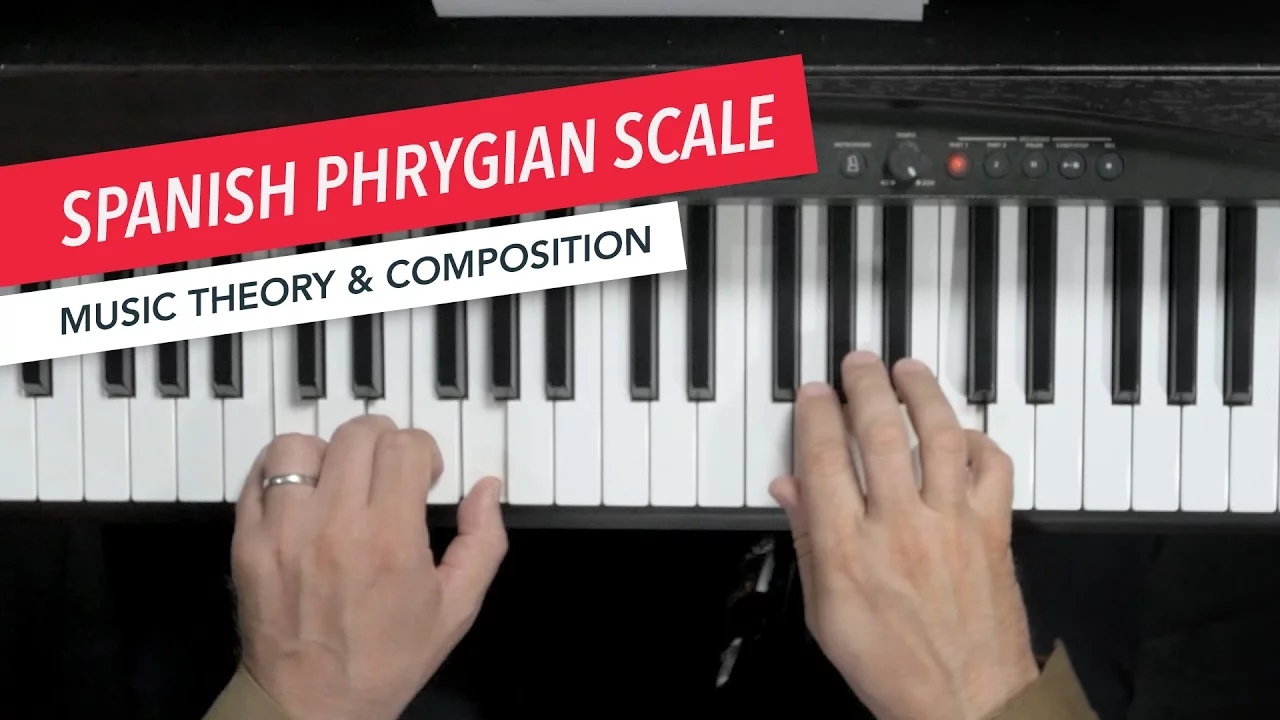
Why this video
This academic breakdown from Berklee Online introduces the "Spanish Phrygian" scale (also known as the Phrygian major or dominant scale). It highlights how having both a flat third and a natural major third available allows composers to alternate between dark tension and soaring energy.
Knowledge Checkpoint
- Explain the structural difference between the natural Phrygian scale and the Spanish Phrygian scale.
- Explain how having two melodic options (a and a natural ) adds expressive versatility to your melodic phrases.
- Identify the scale degrees used in Spanish Phrygian to construct the primary chords in a Spanish composition.
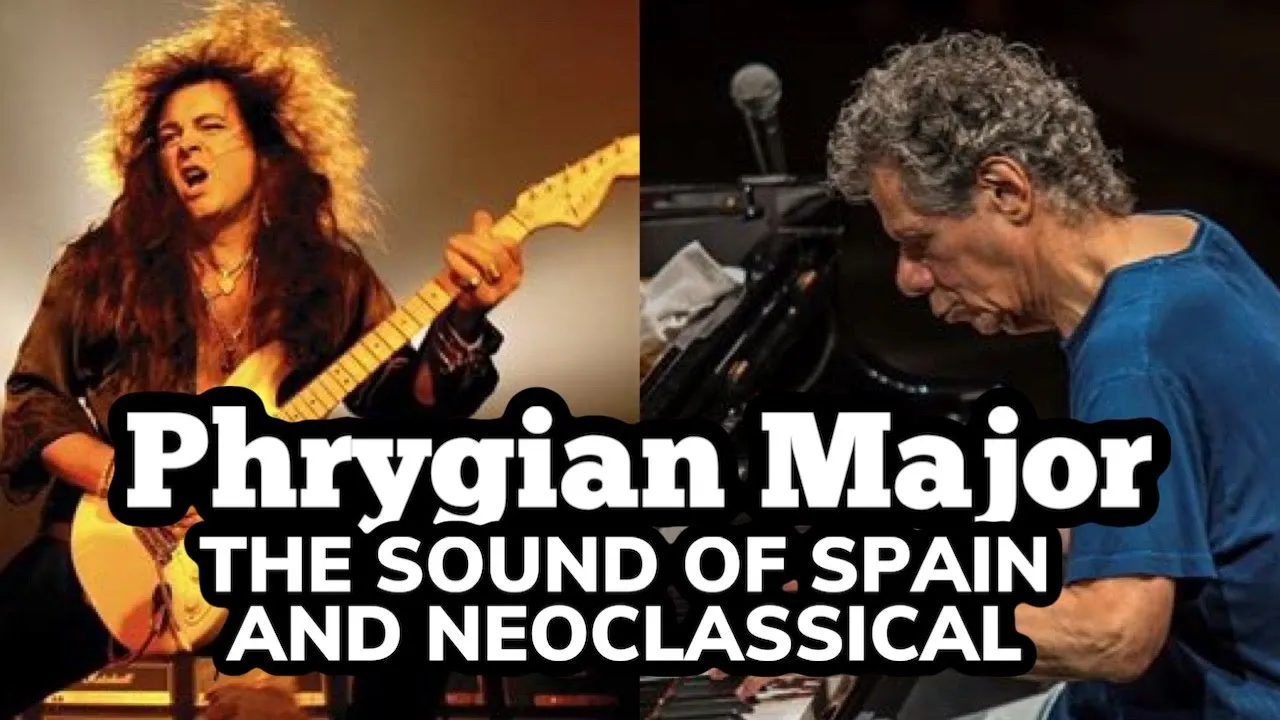
Why this video
Rick Beato provides an in-depth exploration of the Phrygian Major (Phrygian Dominant) mode. He dissects the exact intervals () and demonstrates how the massive step-and-a-half leap between the flat second () and the major third () gives this scale its signature exotic sound.
Knowledge Checkpoint
- List the interval spelling of the Phrygian Dominant scale.
- Identify where the half-steps occur in the Phrygian Dominant scale.
- Explain the relationship between the Phrygian Dominant scale and the 5th mode of the Harmonic Minor scale.
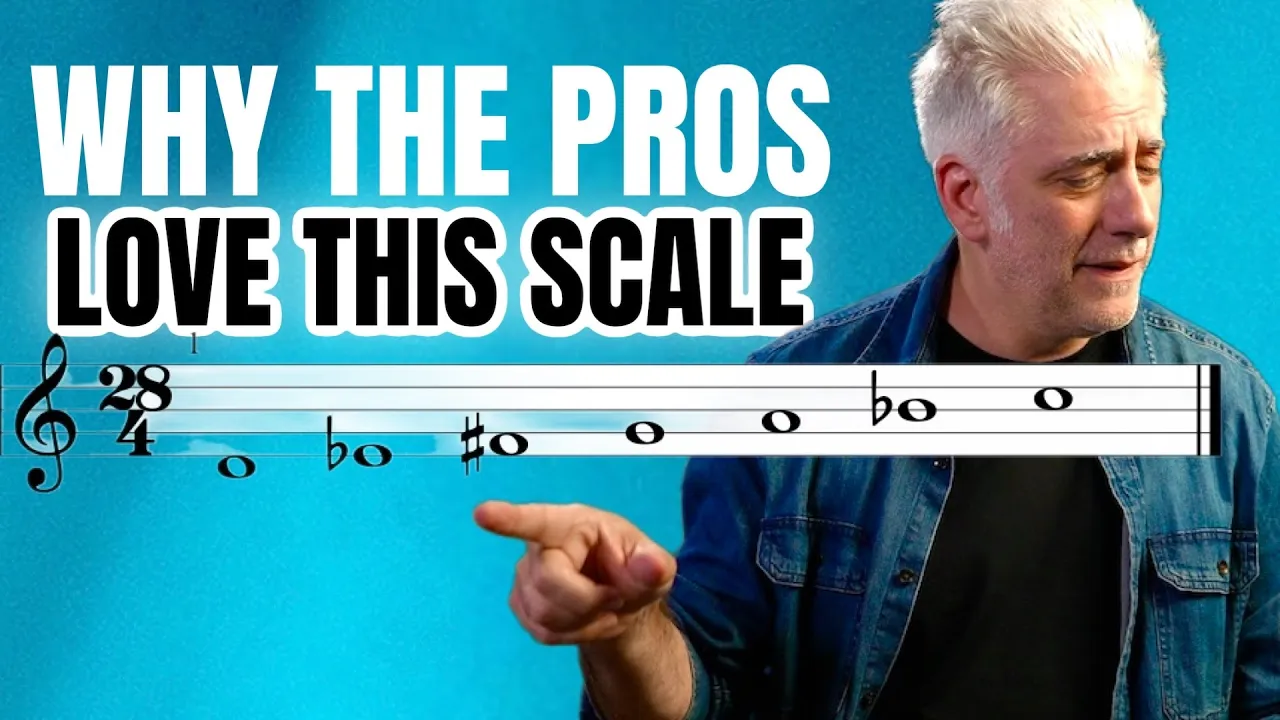
Why this video
This practical lesson demonstrates how to compose melodies and manage chord structures over a Phrygian Dominant foundation. You will observe how the mode blends both major and minor properties, giving you the theoretical toolset to write compelling hooks.
Knowledge Checkpoint
- Build a melody that utilizes the to interval leap over a major chord.
- Explain why the tonic chord in a Phrygian Dominant progression is major, despite the overall scale sounding dark and minor-adjacent.
- Determine how to write a simple chord progression that clearly establishes Phrygian Dominant as the key center.
Module 4: Flamenco Harmony and Chord Voicings
To make your compositions sound authentically Spanish rather than generic, you must move beyond standard major and minor triads. This module explores traditional Flamenco rhythm (Compás), characteristic guitar chord voicings, and the theory of extended chord tones like flat-ninths () and added-ninths ().
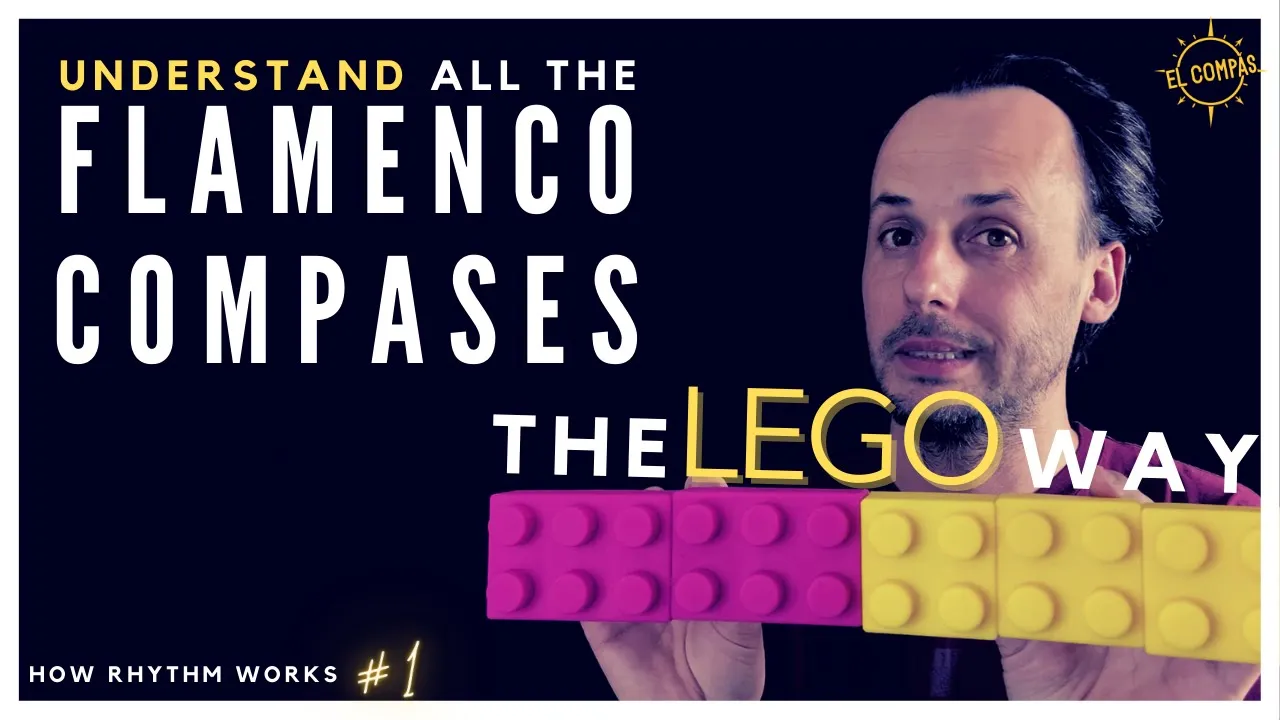
Why this video
No Flamenco harmonic progression works without the correct rhythmic structure. This video provides a highly visual, theory-free breakdown of "Compás" (the underlying rhythm system in Flamenco), introducing concepts of pulsation, cyclical loops, and rhythmic accents.
Knowledge Checkpoint
- Define the term "Compás" in the context of Flamenco music.
- Describe the difference between the constant pulse (the underlying beat) and a rhythmic cycle (grouped accents).
- Identify how shifting accents within a rhythm cycle can signal a change in musical section or intensity.

Why this video
This guitar-focused tutorial demonstrates how simple chord alterations instantly yield an authentic Spanish flavor. By introducing open strings, sliding shapes, and modifying standard major chords into dominant seventh chords, it teaches you the physical shapes that carry Spanish energy.
Knowledge Checkpoint
- Modify a standard G major and F major chord into chord variations that fit the Spanish sound.
- Explain how leaving open strings ringing on a guitar creates drone-like harmonic tension.
- Identify the slide technique used to transition between the and chords in a Spanish chord progression.
Why this video
To move past basic three-note triads, you must master chord extensions. This video explains how to cleanly calculate scale degrees beyond the octave (like the 9th, 11th, and 13th) to add beautiful, complex colors to your compositions.
Knowledge Checkpoint
- Explain how to locate the 9th and 13th degrees of a scale to expand a standard major or minor seventh chord.
- Describe the mathematical process of calculating an extended scale degree (e.g., , ).
- List the notes required to build a C major 9th chord on a keyboard.
Why this video
While framed around jazz, this deep dive into keyboard voicings teaches you how to construct, stack, and balance extended notes (including and voicings) on the piano. This is highly useful for translating complex Flamenco guitar harmony into clean MIDI arrangements inside your DAW.
Knowledge Checkpoint
- Define what a "chord voicing" is and how it differs from a simple chord in root position.
- Explain how to voice a dominant chord on a keyboard using rootless or open-spaced voicings.
- Describe the difference between a closed-position chord voicing and an open-position chord voicing.
💡 Addressing the Gap: Keyboard Voicings for Flamenco Tensions
Because most Flamenco-specific educational resources are designed exclusively for guitarists, finding deep theoretical breakdowns of these exotic voicings on keys or notation can be challenging. To master the art of writing lush, keyboard-friendly Spanish extensions (such as or ), we recommend searching YouTube for: "Flamenco chord voicings and extensions piano theory"
Module 5: Composing and Arranging Dramatic Instrumental Pieces
Now, you will synthesize everything you have learned. Using a modern DAW workflow, you will combine the Andalusian Cadence, Phrygian Dominant scale runs, and dramatic orchestration techniques to write, sequence, and arrange a powerful instrumental piece.

Why this video
Before building an orchestral masterwork, you must understand how MIDI works. This beginner-friendly production guide explains the MIDI protocol, showing you how velocity, pitch, timing data, and virtual instruments (VSTs) work together in a DAW to create highly expressive performances.
Knowledge Checkpoint
- Explain what MIDI is and clarify why it does not actually transmit real audio.
- Describe how adjusting MIDI velocity parameters can make a quantized virtual instrument sound like a passionate, human performance.
- Explain how MIDI routing connects physical controller keyboards to virtual orchestral instruments within a DAW.
Why this video
This video provides a practical workflow for setting up a DAW template, working with compound time signatures, and building rich, multi-layered string sections. Recreating orchestral patterns inside Cubase shows you how to translate chord progressions into moving, dramatic instrumental arrangements.
Knowledge Checkpoint
- Explain how to split a basic chord progression across different orchestral sections (bass, mid-range, high melody) in a DAW.
- Describe how editing the grid or click pattern in your DAW helps you program complex rhythmic phrases.
- Identify the MIDI orchestration techniques used to make virtual string instruments blend realistically.
![How to Write Music for Orchestra [with the FREE BBC SO Discover]](https://i.ytimg.com/vi_webp/EPYnmtylUVM/maxresdefault.webp)
Why this video
This comprehensive lesson shows you how to arrange music for a full orchestra using a free, accessible orchestral library. It breaks down the four main instrument families (Strings, Woodwinds, Brass, Percussion) and explains how to balance their primary musical functions (melody, harmony, rhythm, texture) to create cinematic, dramatic climaxes.
Knowledge Checkpoint
- Name the four primary sections of a symphonic orchestra.
- Explain the four structural functions of orchestration: Melody, Harmony, Rhythm, and Texture.
- Describe how to choose brass, percussion, or string articulations (like staccato vs. legato) to enhance the dramatic tension of a Spanish composition.
Why this video
This serves as your structural reference case study. Analyze this masterfully arranged, highly dramatic instrumental track to observe how a solo classical Spanish guitar can act as the emotional focal point, supported by soaring orchestral violins, robust hand percussion, and a marching bodhrán.
Knowledge Checkpoint
- Identify which instruments provide the driving rhythmic pulse underneath the main guitar melodies in this track.
- Observe how the arrangement transitions from an intimate solo instrument performance to a massive, full-orchestra climax.
- Describe how the composer uses dynamic shifts (loud vs. soft sections) to tell a dramatic story without any lyrical vocals.
💡 Addressing the Gap: DAW-Based Spanish Orchestral Production
While the videos above teach general classical and MIDI orchestration, combining Spanish guitar tracks with virtual cinematic orchestras is a highly specialized skill. To learn specific step-by-step DAW workflows for sequencing dramatic, Latin-flavored tracks, search YouTube for:
- "How to write dramatic Spanish orchestral music DAW"
- "Cinematic flamenco music production MIDI tutorial"
Course Map
Key People Index
- David Bennett (@DavidBennettPiano): A popular British music theorist, pianist, and educator celebrated for breaking down complex songwriting techniques and chord progressions using iconic pop, classical, and film music examples.
- Rick Beato (@RickBeato): An accomplished multi-instrumentalist, music producer, and educator. His masterclasses on modes, scale intervals, and composition are widely regarded as essential resources for intermediate and advanced composers.
- Dom Sigalas (@DomSigalas): A prominent modern music producer and composer who specializes in teaching complex digital orchestration, synthesizers, and workflow optimization inside modern DAWs.
Final Self-Assessment
Test your mastery of the material by completing the checklist below:
- Theory: Can you spell the intervals of a Natural Minor scale versus a Phrygian scale?
- The Cadence: Can you write out or play the Andalusian Cadence in three different keys (, , and )?
- Leading Tone: Do you understand exactly why raising the degree of the chord in a minor key creates a more dramatic resolution to the chord?
- Exotic Scale: Can you play or program the Phrygian Dominant scale and identify its signature interval gap (the minor second to major third leap)?
- Extensions: Can you build a chord and an chord on both a guitar fingerboard and a piano keyboard?
- Rhythm: Can you clap a simple rhythmic cycle, emphasizing dynamic accents to establish a driving "pulse"?
- DAW Basics: Do you know how to import MIDI files, load software instruments, and assign distinct tracks for individual instrument families?
- Velocity & Articulation: Can you manually adjust MIDI velocity curves and select articulations (such as staccato vs. legato) to humanize scheduled string patterns?
- Orchestration: Can you successfully distribute a single four-chord progression across a full virtual ensemble, assigning bass lines to lower strings/brass and lead melodies to solo instruments?
- Dynamic Structure: Can you draft a 3-minute arrangement that starts with an intimate solo instrument, slowly builds tension using the Andalusian Cadence, and peaks in a sweeping, cinematic, modal climax?