This video presents an epic orchestral composition featuring Spanish guitar as the primary instrument, accompanied by wooden spoons, accordion, vocals, bodhrán, and violin, creating a dramatic musical piece with a Spanish thematic feel.
Spanish Guitar Orchestral Epic Music: Castle Soundtrack
Added:Deep Dive
Understanding of traditional Spanish musical characteristics, such as the Phrygian dominant scale, flamenco rhythms, and classical guitar techniques.

Flamenco scale - Phrygian dominant
107.8K
The Phrygian dominant scale, also known as the Spanish Gypsy scale or Spanish Phrygian scale, is a seven-note scale commonly used in Flamenco music that features a distinctive sound created by the flatted second degree (♭2) and an augmented step between the second and third degrees; this scale is demonstrated in the video using the solea form in E-major, where the combination of these characteristic intervals produces the signature exotic sound associated with Flamenco guitar playing.
Click to watch →
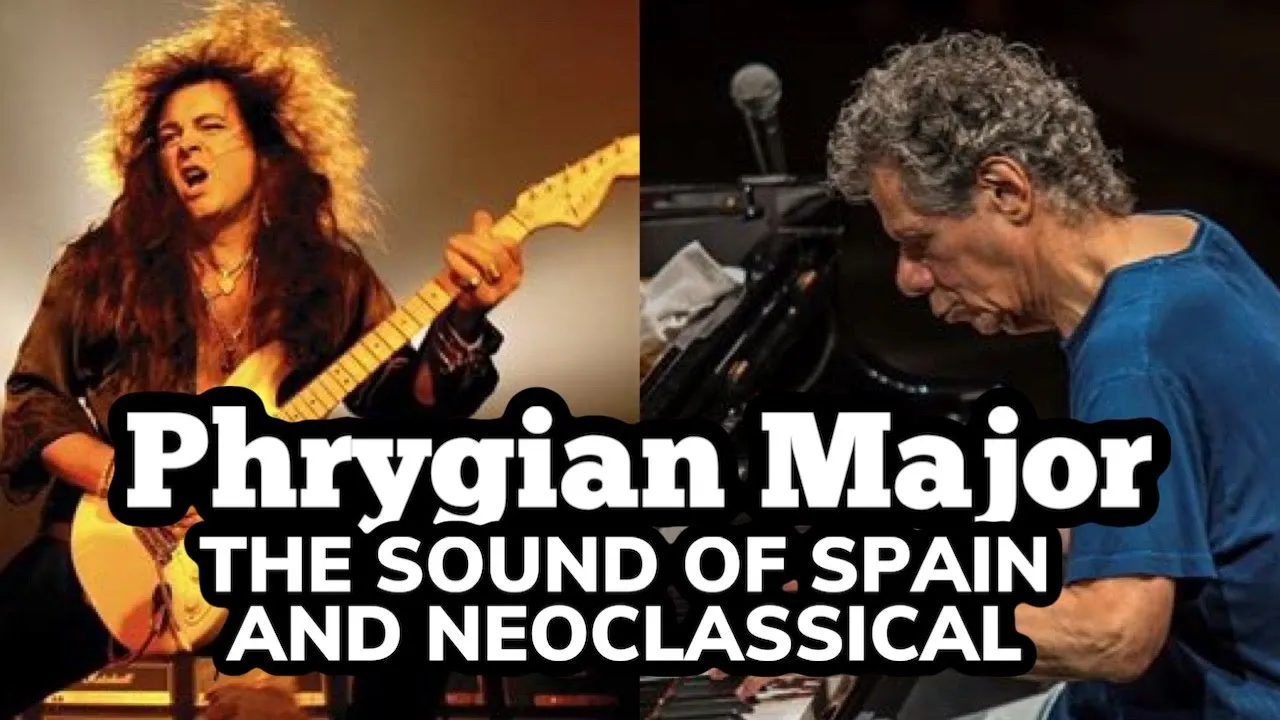
Phrygian Major Scale: Neoclassical, Flamenco, and Jazz Uses
192K
The Phrygian Major scale (also called Phrygian Dominant) is the fifth mode of the harmonic minor scale, constructed with intervals 1, b2, 3, 4, 5, b6, b7, featuring half steps between 1-b2, 3-4, and 5-b6; this scale creates a distinctive Spanish or flamenco sound with a major third and flat seven, making it popular in flamenco guitar, jazz improvisation on dominant chords, neo-classical rock, and metal music, where musicians exploit the diminished seventh chord in the middle of the scale for virtuosic lines and arpeggios.
Click to watch →

Songs that use the Phrygian Dominant scale
240.1K
The Phrygian Dominant scale, also known as the fifth mode of the harmonic minor scale, features a major third instead of the typical minor third found in the regular Phrygian scale, creating an exotic, mysterious sound with an augmented second interval; this scale is commonly used in Arabic/Middle Eastern music (referred to as Maqam Hijaz) and Spanish flamenco music (known as Escala Andalusia), and is characterized by its distinctive chord progressions including a major tonic chord, a major flat 2 chord, and a minor flat 7 chord.
Click to watch →
O que SLASH fez com SWEET CHILD O' MINE??
547.2K
The Phrygian dominant scale has a distinctive characteristic that gives it a musical flavor reminiscent of flamenco and Spanish music. This scale creates a sentimental and somewhat sad emotional quality. Guitarists use this scale to add unique melodic character to their solos, particularly when they want to create a dramatic or exotic musical atmosphere.
Click to watch →

The Most Mysterious Spanish Guitar Scale
932.8K
The harmonic minor scale is a fundamental scale in flamenco guitar that transforms ordinary chords into authentic Spanish sounds; it can be played using the fingering pattern 0-1-4 on the 6th string, 0-2-3 on the 5th string, 0-1-2 on the 4th string, 1-2 on the 3rd string, 0-1-3 on the 2nd string, and 0-1-4 on the 1st string, and when combined with Spanish guitar chords like A Minor, G7, F, and E, it creates a mysterious and exotic flamenco flavor that can be achieved with relatively little practice.
Click to watch →
Deep Dive
Basic knowledge of orchestral instrumentation, specifically the tonal qualities and acoustic roles of the violin, classical guitar, and accordion.
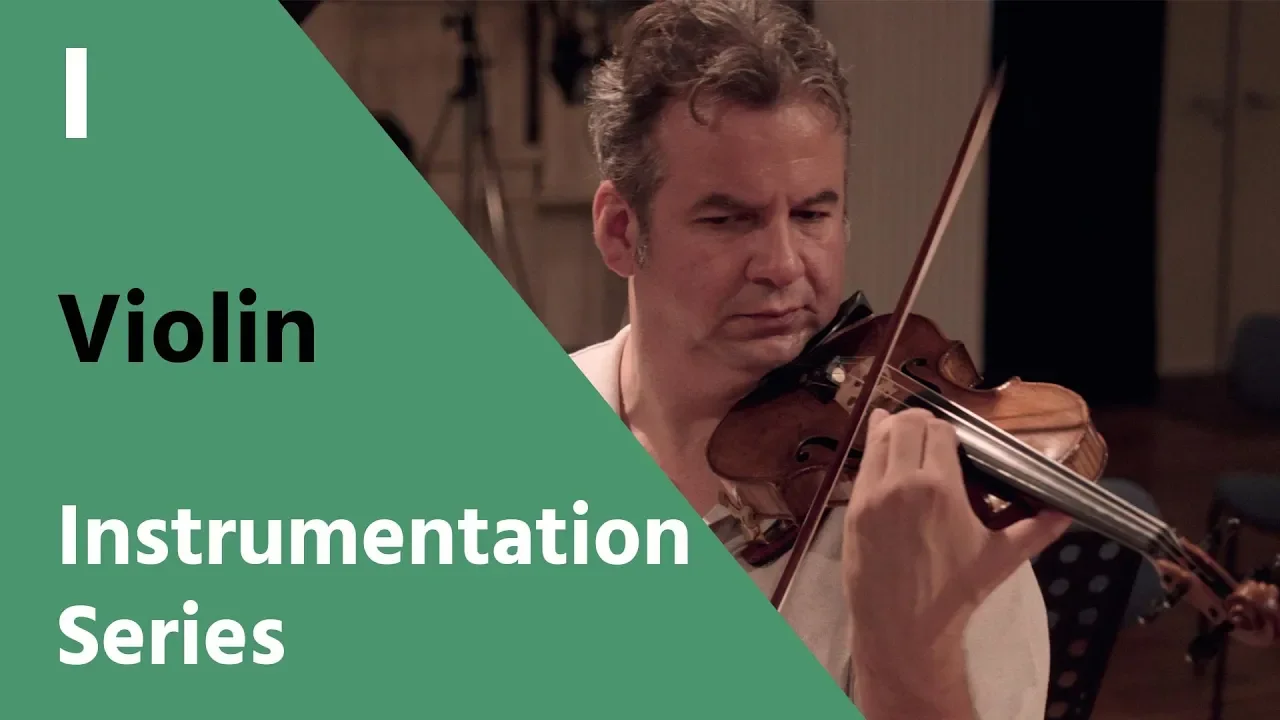
Violin - David Newman Instrumentation Series
12K
The violin is considered the soul of the orchestra due to its large number of instruments (typically 32+ in a normal orchestra). It has been the basis of orchestral music since the Baroque Period. The violin consists of three main parts: the body (made of spruce and maple with F-holes), the neck and head (single piece of maple), and the fingerboard (ebony). Strings are made of gut, steel, or plastic wound with metals and tuned to G3-D4-A4-E5. The bow is made of wood with horsehair and rosin for friction. Tone is produced by bowing (most common) or plucking. The violin serves as both melody and accompaniment instruments, capable of playing rhythmic figures, long chords, and sweeping melodies across multiple positions.
Click to watch →

Âm nhạc 7 Chủ đề 2 Giai điệu quê hương
1.4K
This section introduces four Western musical instruments. The piano (dương cầm) is a keyboard instrument used for solo, ensemble, and accompaniment. The violin (vĩ cầm) is a string instrument with 4 strings played with a bow. The guitar, originating from Spain, has 6 strings and comes in acoustic and electric varieties. The accordion (phong cầm) is a wind instrument using a bellows to control sound, with a piano-like keyboard but fewer keys. Each instrument has a unique timbre and is used for various musical purposes.
Click to watch →

3. Классицизм. Лекция Анны Виленской
88.8K
The classical orchestra (double orchestra) typically includes two flutes, two oboes, two clarinets, two bassoons, two horns, two trumpets, timpani, and a string section with approximately 16 violins divided into first and second violins. The large number of violins is not for volume but for acoustic blending—multiple instruments playing the same notes create a richer, more unified sound. Instruments have specific roles: strings form the foundation, woodwinds double high strings for color and occasionally solo, and brass provide harmonic support and dramatic emphasis. Tutti sections (all instruments playing together) provide full orchestral sound, while solo sections allow for intimate expression. The recapitulation provides the full orchestral statement of main themes, creating a sense of culmination and resolution.
Click to watch →

Podcast | Instrumentos e seus mundos: Violino
768
Violin performance involves articulation types (short and long) that create different musical textures. The corrente demonstrates how a single piece can contain both types of articulation. The sarabanda features slow tempo and linear, singing quality, while the giga offers lighter, shorter articulations with rustic character. The Chacona represents the most elaborate dance form with theatrical complexity. The violin is the most numerous orchestral instrument, uniquely divided into first and second violins. The second violin harmonizes with lower strings and plays melodies with first violins, demonstrating the instrument's versatility in both harmonic and melodic roles.
Click to watch →

Clase 2 Artes Música 1 Grafías no convencionales.
143
The teacher explains how different orchestral instruments produce different sound qualities: Violins produce acute sounds (agudos) that are high-pitched; Contrabasses produce grave sounds (graves) that are low-pitched; Triangles produce very weak sounds (débil) that are barely audible; Tambourines produce long sounds (largos) that sustain; Cymbals produce long sounds (largos) that ring out. The teacher demonstrates how the same orchestra can produce sounds with varying intensities, durations, and pitches.
Click to watch →
Deep Dive
Familiarity with the concept of cinematic music structure, including thematic development, dynamics, and tension-building techniques.

Tchaikovsky & Wagner x Trance Mix | ANCIENT TEMPLE | Deep Energy & Focus Vol. 1
1.1K
This extended segment demonstrates musical form, theme development, and structural organization throughout a musical piece. The content shows how musical tension builds to a peak and then resolves, creating a sense of musical journey and emotional satisfaction. The progression illustrates how composers take a basic musical idea and create variations and transformations to create musical interest and narrative progression. The arrangement of musical sections creates the overall shape and organization of a musical piece. This demonstrates the fundamental musical concepts of creating and resolving musical tension, musical theme development, and how musical form creates the fundamental structure and organization of musical composition.
Click to watch →

Empfindsamer Stil Estilo sentimental: C.Ph.E. Bach- Antonio Soler
187
This extended segment explores core musical concepts including thematic development, dynamics, and structural organization. The video demonstrates how performers develop musical motifs through repetition and variation, creating complex compositions from simple ideas. It illustrates the use of dynamics to express emotional content, creating tension and release. The segment covers musical transitions between sections, showing how performers use cadences and modulations to signal changes in musical direction. Understanding these structural elements helps listeners perceive the organization of musical works and anticipate developments within them.
Click to watch →

Nenevaru Telugu Movie BGM Jukebox | Rajendra Prasad, Sai Kiran, Abhilash Chinni Krishna | MangoMusic
626
This segment demonstrates the complete arc of musical structure from build-up through climax to resolution. The repeated 'Heat' theme serves as the foundation while musical intensity progressively increases, creating tension that eventually resolves. The progression illustrates fundamental musical concepts including musical dynamics, tension and release, and the relationship between lyrical content and musical arrangement. The segment shows how composers use repetition and variation to create emotional impact and maintain listener engagement throughout extended musical passages.
Click to watch →

Mario vs. Donkey Kong 2: March of the Minis - Full Game Walkthrough (All Gold Stars)
521.5K
Music develops themes through variation and transformation techniques, with initial ideas introduced and then modified or expanded upon throughout a performance. Musical segments escalate in intensity through build-up before resolving, demonstrating the fundamental principle of musical structure where anticipation and release create emotional impact. Music concludes with resolution, bringing musical ideas to satisfying closure. Performers use articulation to shape notes and convey emotion through dynamics. This combination of developmental techniques and structural organization guides both performers and listeners through the musical journey, creating coherent forms that provide satisfaction upon completion.
Click to watch →
The Sound of Cinema - Classic Movie Music - 1920s / 1960s.
3.1K
This segment demonstrates musical theme development, showing how themes are introduced, developed, and transformed throughout a musical piece to create narrative and emotional progression. It illustrates musical dynamics and intensity, showing how variations in volume and playing intensity create emotional impact and dramatic effect. The segment covers musical rhythm and groove, demonstrating how rhythmic patterns create movement and danceability. It also demonstrates musical instrumentation and timbre, showing how different instruments and their combinations create varied sonic qualities that define musical character.
Click to watch →
Deep Dive
An introduction to hybrid music genres, specifically how traditional folk elements are integrated into modern orchestral arrangements.
Connected – Konzert des Bundinstrumentenorchesters B.I.O. des HSKD
1.6K
Chris Acquavella, a composer living in Germany since 2014, created 'You Ma' fusing American Minimal Music with traditional Bulgarian folk music. Originally for a folk band with vocals, mandolin, guitar, clarinet, violin, cello, and bass, the piece was adapted for the stringed instrument orchestra for a more powerful sound. Greek composer Herr Avanitakes created 'Dance of Dionysus' for an operetta, incorporating traditional Greek folk music with xylophone. These examples demonstrate how contemporary composers integrate traditional folk elements with orchestral arrangements, creating unique timbral combinations that bridge folk traditions with classical music.
Click to watch →

AURORA & THESE INSTRUMENTS?! Finnish Musician reacting to Nod-Krai Main Theme from GENSHIN IMPACT
53.4K
This video demonstrates how traditional folk instruments from different cultures, such as the Finnish harpe, Irish whistle, and symbolum, can be integrated into modern symphony orchestra arrangements, creating a unique fusion of classical and folk musical traditions.
Click to watch →
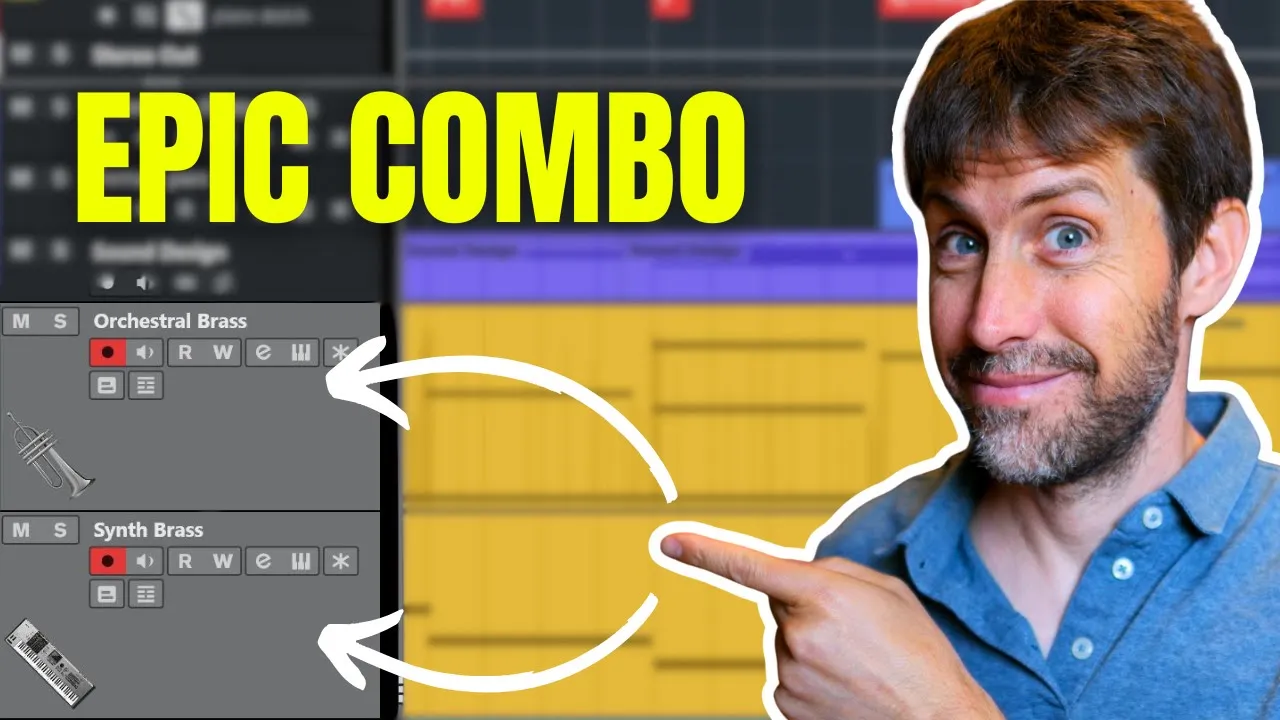
Hybrid Orchestral Music Made Simple: 5-Minute Track Breakdown
1.3K
Hybrid orchestral music combines traditional orchestral instruments (strings and brass) with electronic elements to create epic cinematic sounds. The production involves multiple layers: strings carry lead melody, harmony, and ostinato; brass provides powerful accents; synth brass augments live recordings; and non-orchestral percussion adds rhythmic energy. This fusion of acoustic and electronic elements creates the signature sound of modern cinematic scores.
Click to watch →
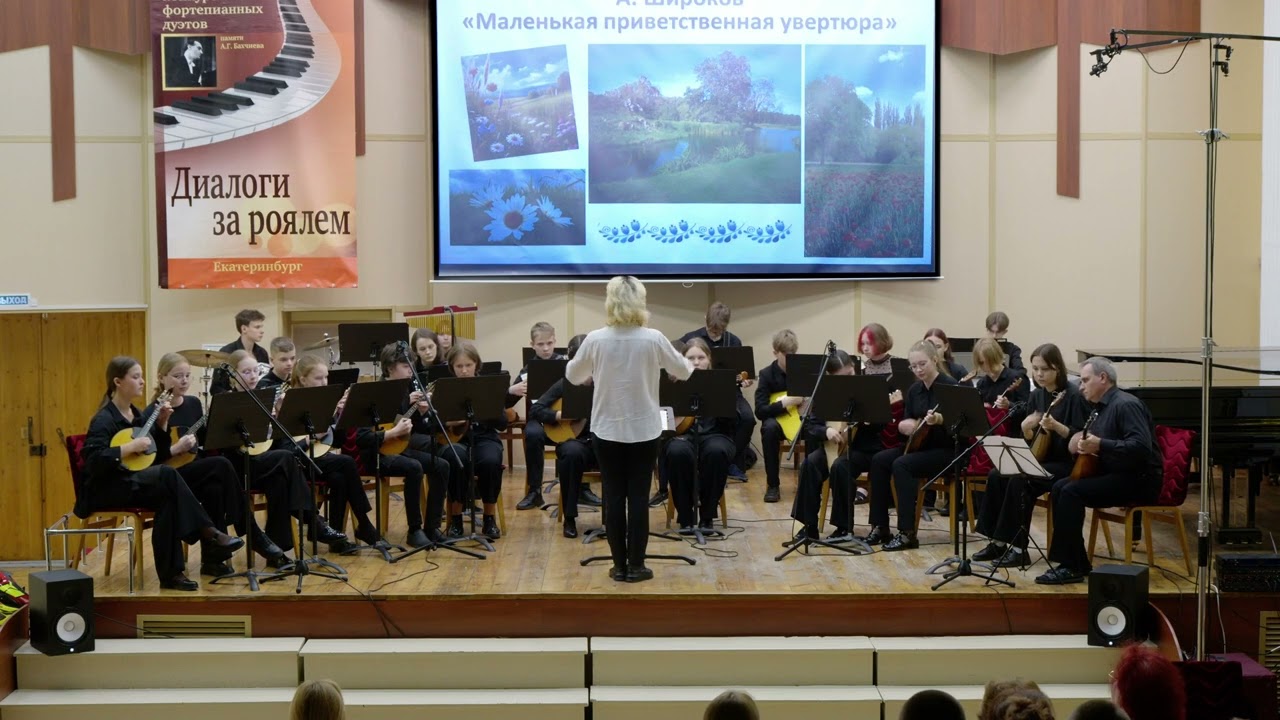
ОНИ САМЫЕ!!!))) Оркестр народных инструментов.
354
This segment explores how traditional folk orchestras incorporate modern instruments. The bayan (Russian button accordion) and accordion (German) are related instruments. Modern folk orchestras integrate bass guitars for rhythmic foundation and symphony instruments like violins and flutes. This fusion allows folk orchestras to perform diverse styles, including rock music, demonstrating the adaptability of traditional musical forms to contemporary contexts.
Click to watch →

1917 - Wayfaring Stranger (Orchestral Version)
55.7K
This video presents an orchestral arrangement of the traditional folk song 'Wayfaring Stranger' from 1917, demonstrating how classical music can be used to reinterpret and elevate traditional folk music through orchestral instrumentation.
Click to watch →
Prerequisite Knowledge
- Concept 01Understanding of traditional Spanish musical characteristics, such as the Phrygian dominant scale, flamenco rhythms, and classical guitar techniques.
- Concept 02Basic knowledge of orchestral instrumentation, specifically the tonal qualities and acoustic roles of the violin, classical guitar, and accordion.
- Concept 03Familiarity with the concept of cinematic music structure, including thematic development, dynamics, and tension-building techniques.
- Concept 04An introduction to hybrid music genres, specifically how traditional folk elements are integrated into modern orchestral arrangements.
Subsequent Learning
- Step 01Deep dive into the works of classical Spanish nationalist composers like Joaquín Rodrigo, Isaac Albéniz, and Manuel de Falla.
- Step 02Advanced study of video game and film scoring techniques, focusing on how environmental themes like a 'Castle Soundtrack' serve narrative and interactive design.
- Step 03Practical application in MIDI orchestration and virtual instrument production to blend acoustic solo instruments with large-scale digital orchestras.
- Step 04Analysis of mixing and mastering techniques required to balance intimate acoustic instruments like the classical guitar against a massive epic orchestral mix.
Opening
Initial cues
Building rhythm
Climax onset
Peak energy
Transition
Finale
Opening
0:47Playing Section
- 1
Video starts with introductory audio and music.
- 2
No verbal content yet, only ambient sounds.
The 'Hollywoodization' and Dilution of Authentic Folk Traditions
While blending Spanish guitar and accordion with epic orchestration creates a thrilling cinematic experience, ethnomusicologists and music purists often criticize this approach as 'Hollywoodization' or musical exoticism. This perspective argues that merging highly distinct, intimate regional instruments into a bombastic, Western-style orchestral framework flattens rich, complex cultural heritages into generic aesthetic tropes. Historically, Spanish classical guitar relies on delicate dynamics, rubato, and acoustic intimacy, which are acoustically incompatible with massive epic orchestration without artificial amplification and mixing. Critics contend that such cinematic hybrids prioritize grandiosity and commercial appeal over cultural authenticity, resulting in a homogenized, standardized representation of Spanish music tailored for mainstream media rather than honoring its genuine historical and structural roots.
Deep Dive
Deep dive into the works of classical Spanish nationalist composers like Joaquín Rodrigo, Isaac Albéniz, and Manuel de Falla.

Carmen Lecture #3: Anna Maria Mendieta: The Music of Spain and its influence across the world
203
Manuel de Falla was a famous Spanish composer who composed 'The Three-Cornered Hat' and 'La Vida', with his music chosen to represent Spain when performing for Pope Benedict XVI and World Youth Day. Joaquín Rodrigo, blind since age three, composed 'Concierto de Aranjuez' (Concerto of Aranjuez), considered one of the most famous guitar concertos in all time. Composed in the 1930s after the Spanish Civil War, he intentionally incorporated snippets of folk music from different Spanish provinces as a way for the country to heal. The piece was originally written using a special machine that typed music like a Braille machine. Enrique Granados was another Spanish composer who helped bring a feeling of nationalism to Spanish music.
Click to watch →
Flamencos: Falla, Granados, Albéniz | Márquez & Torres-Pardo (#MarchVivoCD) · MarchVivo
310
Spanish nationalist composers of the early 20th century, including Manuel de Falla, Enrique Granados, and Isaac Albéniz, drew inspiration from flamenco and popular Spanish music to create their works, viewing these folk traditions as the authentic source of Spanish musical identity and cultural essence.
Click to watch →

Isaac Albéniz: The Spanish Soul in Musical Artistry
510
Isaac Albéniz (1860-1909) was a Spanish composer and virtuoso pianist who revolutionized classical music by infusing Spanish folk traditions into his compositions, creating works like the Suite Española and Iberia that captured the vibrant spirit of his homeland; his innovative fusion of classical sophistication with authentic Spanish folk influences established him as a pioneer of Spanish nationalist music and influenced subsequent composers including Manuel de Falla and Joaquín Rodrigo.
Click to watch →

Descubre la Tumba de Joaquín Rodrigo | Homenaje al Compositor del Concierto de Aranjuez
18.7K
Joaquín Rodrigo (1901-1999) was a renowned Spanish composer best known for his masterpiece 'Concierto de Aranjuez' for guitar and orchestra. Born in Sagunto, Valencia, he nearly lost his sight at age 3.5 due to an epidemic but developed a profound interest in music. After studying at the Valencia Conservatory and later in Paris under Paul Dukas, he returned to Spain in 1939 and became a celebrated composer. He received numerous honors including the Legion of Honor and honorary doctorates, and is buried in the municipal cemetery of Sagunto alongside his wife Victoria.
Click to watch →

Isaac Albeniz, Life and Music - Documentary Spain
604
Spanish nationalist music emerged as a response to the lack of quality Spanish repertoire in conservatories. Albéniz composed works like Granada, Sevilla, and Cádiz that were technically accessible but lacked the challenge he desired. He sought to create more difficult compositions requiring virtuosos, moving beyond simple pieces anyone could play. This approach established a foundation for Spanish art music and influenced subsequent composers like Granados, Falla, and Turina.
Click to watch →
Deep Dive
Advanced study of video game and film scoring techniques, focusing on how environmental themes like a 'Castle Soundtrack' serve narrative and interactive design.

The Legend Of Zelda Twilight Princess - Ep.45 - Castillo de Hyrule
7.5K
Game designers use environmental design to create atmosphere and mood. The player noted that the final castle area has a distinctive soundtrack that creates an immersive atmosphere. This demonstrates how audio and environmental design work together to enhance player immersion and signal important narrative moments.
Click to watch →

CUPHEAD : And THE DELICIOUS LAST COURSE - T'as Cinq Minutes BONUS
80.5K
This segment examines how game environments communicate narrative and setting through visual and auditory design. The content covers how different locations trigger distinct musical themes—medieval castles feature medieval music, 1930s New York uses Charleston jazz, and desert environments employ country music. It also explores how thematic consistency extends to boss design, such as chess piece-themed bosses that use familiar terminology and visual representations. The segment demonstrates how these design choices create immersive experiences that reinforce the game's narrative and setting without explicit exposition.
Click to watch →

This Is The Game Of The Year, And It Costs Less Than AC Shadows (Clair Obscur Expedition 33 Review)
321
Game soundtracks can be designed to perfectly match every location, scenario, and mood. Composers can create music that reflects the thematic elements of each area—for example, French-themed music for Parisian areas, Italian-themed music for Italian paintbrush villages. Sad music should evoke sadness, while epic music should prepare players for battle. This level of environmental audio design can be so effective that it might warrant live orchestral performances in theaters.
Click to watch →

Revisiting Ico: Two Decades Later
372
Ico's soundtrack features memorable tracks that are joyful on occasion but largely somber and haunting, made more impactful by the minimalist approach to sound design. The castle environment combines familiar physical architecture with magical elements, complex mechanisms, caves, and waterways, where nothing remains too similar for long. This demonstrates how sound design and environmental architecture work together to create immersive, memorable game worlds that enhance the player's emotional experience.
Click to watch →

I: サウンド2 (まとめ動画) #08~#14
46.4K
Environmental sounds (環境音) in games serve to create atmosphere and immersion, though they have lower priority than main effect sounds. Environmental sounds should be carefully designed to avoid overwhelming important effect sounds. The quality of environmental sounds depends on the speaker system and listening environment. Realistic environmental sounds work well even in games with comedic or stylized elements. The goal is to create a sense of presence and world-building, making players feel as if they are actually in the game world, particularly important for first-person and third-person perspective games.
Click to watch →
Deep Dive
Practical application in MIDI orchestration and virtual instrument production to blend acoustic solo instruments with large-scale digital orchestras.
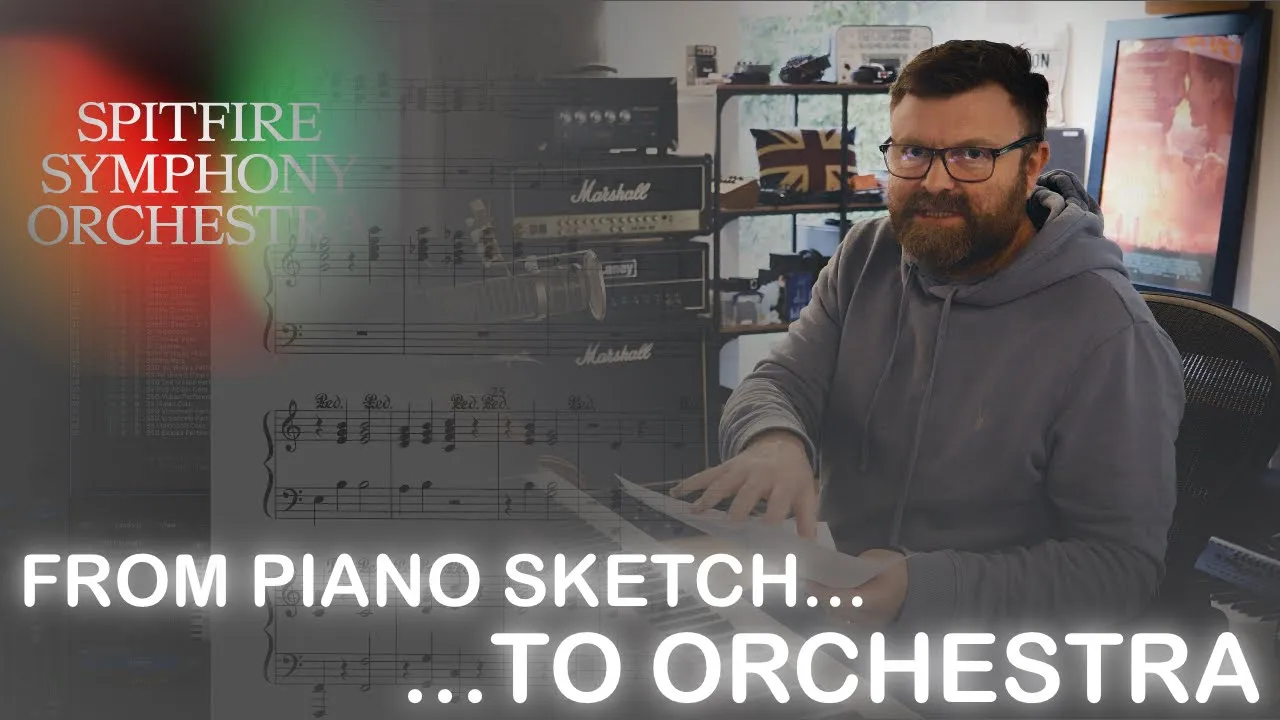
Piano sketch to Orchestra with Spitfire Symphony Orchestra
32.1K
This video demonstrates how to orchestrate a piano sketch into a full orchestral piece using virtual instruments, covering key techniques including string section layering with violas and cellos, woodwind section arrangement with flutes, clarinets, and bassoons, brass section integration with trumpets and horns, and the use of vibrato and tempo variations to enhance musical expression and create emotional transitions throughout the composition.
Click to watch →

Producing Music for the Virtual Orchestra: Computer Setup and Performance
53.3K
Sequencer templates organize tracks by instrument groups with folders for compact viewing. Expression Maps combine multiple articulations on single tracks, replacing multiple tracks per articulation. Vienna Ensemble Pro connects master DAW to slaves via Ethernet, routing MIDI data to appropriate slaves. Each slave runs Vienna Ensemble Pro Server coordinating virtual musicians. All audio processing including EQ and reverb should occur on the master DAW, with pristine audio channels returning from slaves. This provides maximum flexibility and workflow efficiency.
Click to watch →
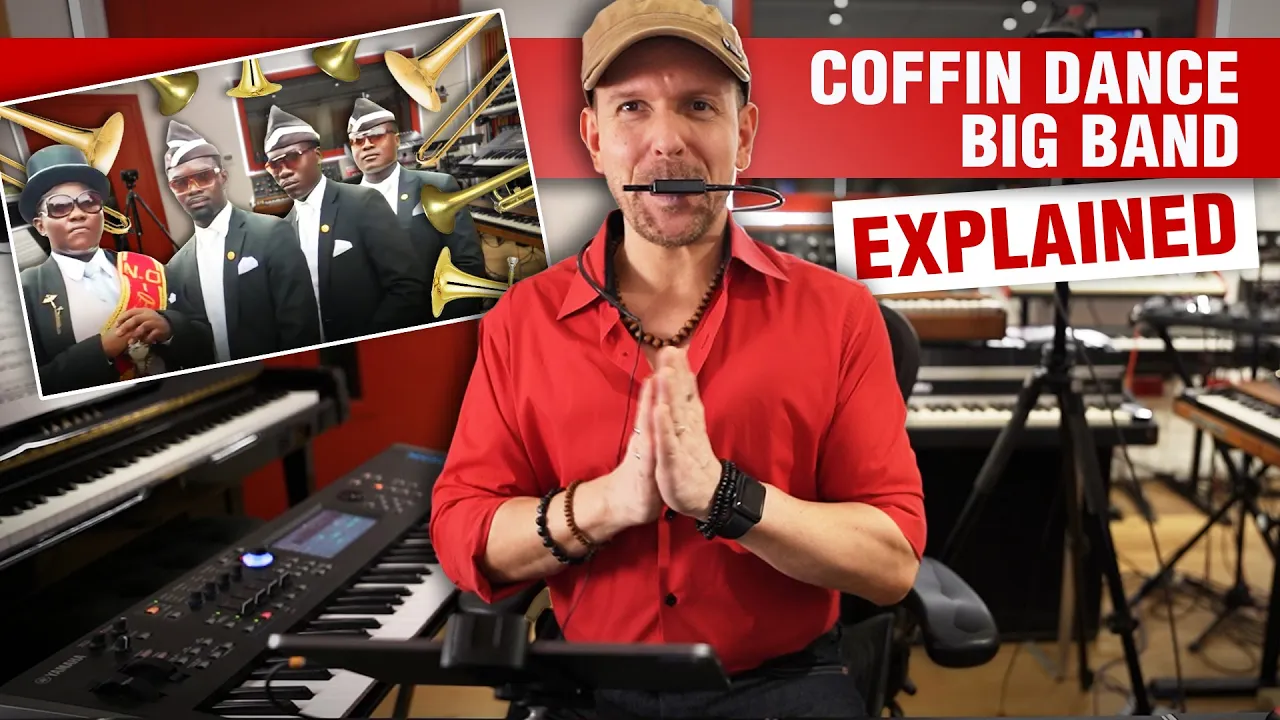
Coffin Dance Big Band: Explained
25.5K
This video demonstrates how to create a full big band arrangement using the SWAM virtual instrument, covering key orchestration techniques including block voicing (placing all chord notes within one octave for a dense, 1940s big band sound), B voicing (dropping the second and fourth notes from block voicing), and rhythmic displacement in drum patterns. The presenter shows how to arrange 13 horns (4 trumpets, 5 saxophones, 4 trombones, 1 bass trombone) with specific voicings for each section, while also explaining drum kit customization for keyboard performance and bass line walking patterns.
Click to watch →
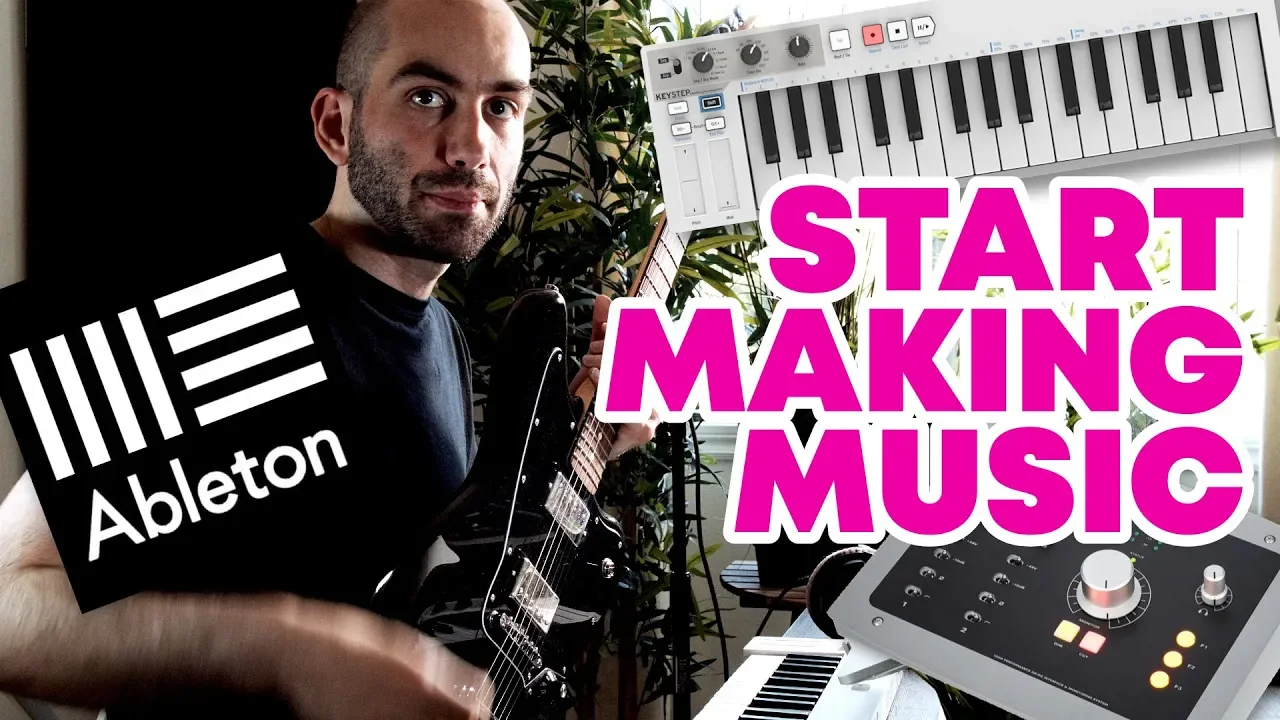
How to start making music with a computer
137.9K
MIDI (Musical Instrument Digital Interface) is a protocol that tells computers what notes to play at specific times—it doesn't produce sound itself. When combined with virtual instruments or VST plugins, MIDI allows computers to play synthesizers, pianos, orchestral instruments, basses, guitars, and synthesizers. This enables creating entire albums using only a computer and DAW software.
Click to watch →
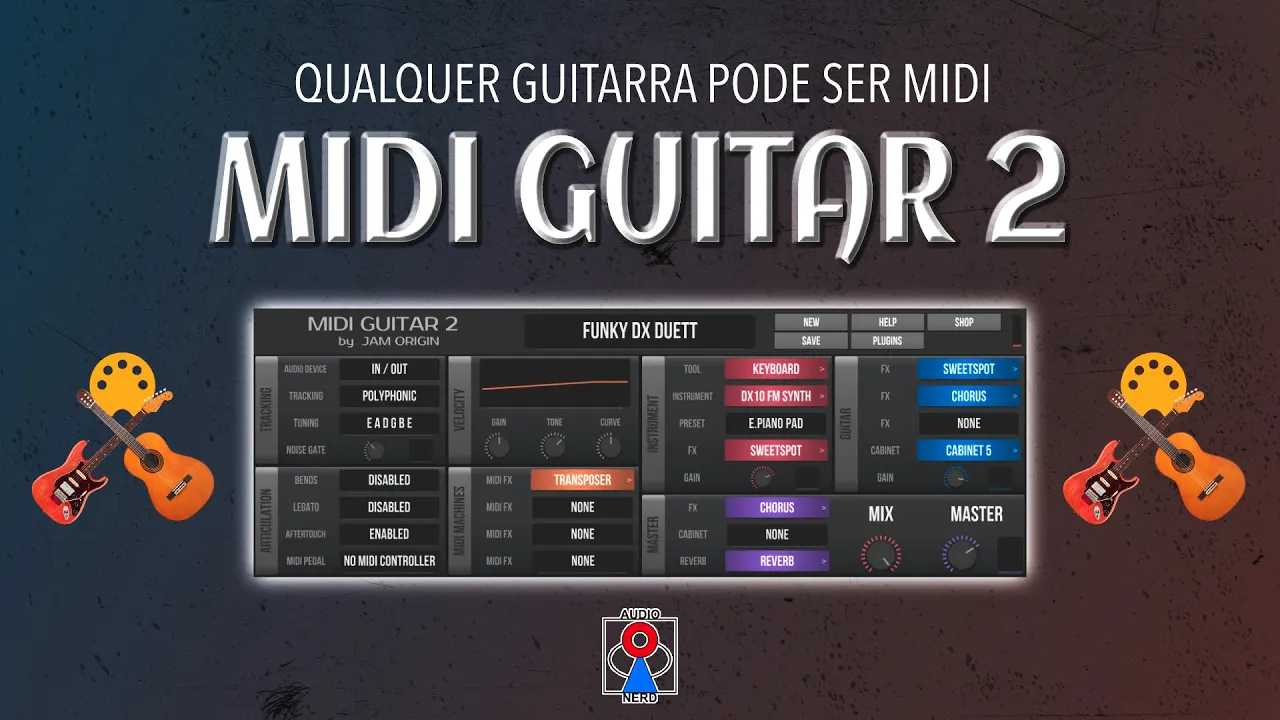
Qualquer Guitarra vira MIDI - MIDI GUITAR 2
29.6K
MIDI Guitar 2 is a software plugin that converts acoustic guitars and other stringed instruments into MIDI controllers by capturing audio input through an audio interface and using advanced algorithms to detect notes, velocity, and playing technique, allowing musicians to play guitar parts that sound like any MIDI instrument (piano, synth, bass) without requiring expensive hardware converters like the Roland GK system.
Click to watch →
Deep Dive
Analysis of mixing and mastering techniques required to balance intimate acoustic instruments like the classical guitar against a massive epic orchestral mix.
![How To Mix And Master Epic/Orchestral Music [Tutorial]](https://i.ytimg.com/vi_webp/d9u7f0Ux0VE/maxresdefault.webp)
How To Mix And Master Epic/Orchestral Music [Tutorial]
67.2K
This tutorial by Lionart Productions demonstrates essential mixing techniques for epic orchestral music, covering string section management (panning, bus routing, compression, and EQ cuts in 300-700 Hz range), brass mid-range buildup control, percussion frequency allocation with sub-bass management, choir and vocal processing with reverb placement based on instrument position, and mastering chain ordering with compressors, EQ, and limiters for transparent enhancement.
Click to watch →

Mixing Classical Guitar: Mastering Tutorial
15.3K
Mastering is the final production step before music release, transforming mixed tracks into a single stereo file optimized for various playback systems. The process ensures music translates consistently across speakers, earbuds, and different sound systems while achieving appropriate loudness. Key principles include: (1) Mastering provides an outside perspective since your room's acoustics may mask problems; (2) Take time between mixing and mastering (ideally different days or weeks) to hear issues you missed; (3) Test on multiple playback systems including headphones, earbuds, car speakers, and home theater systems. Technical techniques involve: (1) Subtle EQ adjustments (1 dB or less) to address problem frequencies and remove low-end rumble; (2) Very subtle stereo imaging to widen the image without creating phase problems; (3) Minimal compression to preserve performance dynamics; (4) Limiter settings with ceilings around 0.5 dB to prevent clipping while maintaining dynamics. For classical guitar, prioritize preserving natural dynamics over loudness. For quick YouTube/streaming masters, subtle EQ moves, minimal stereo imaging, and light limiting are sufficient.
Click to watch →
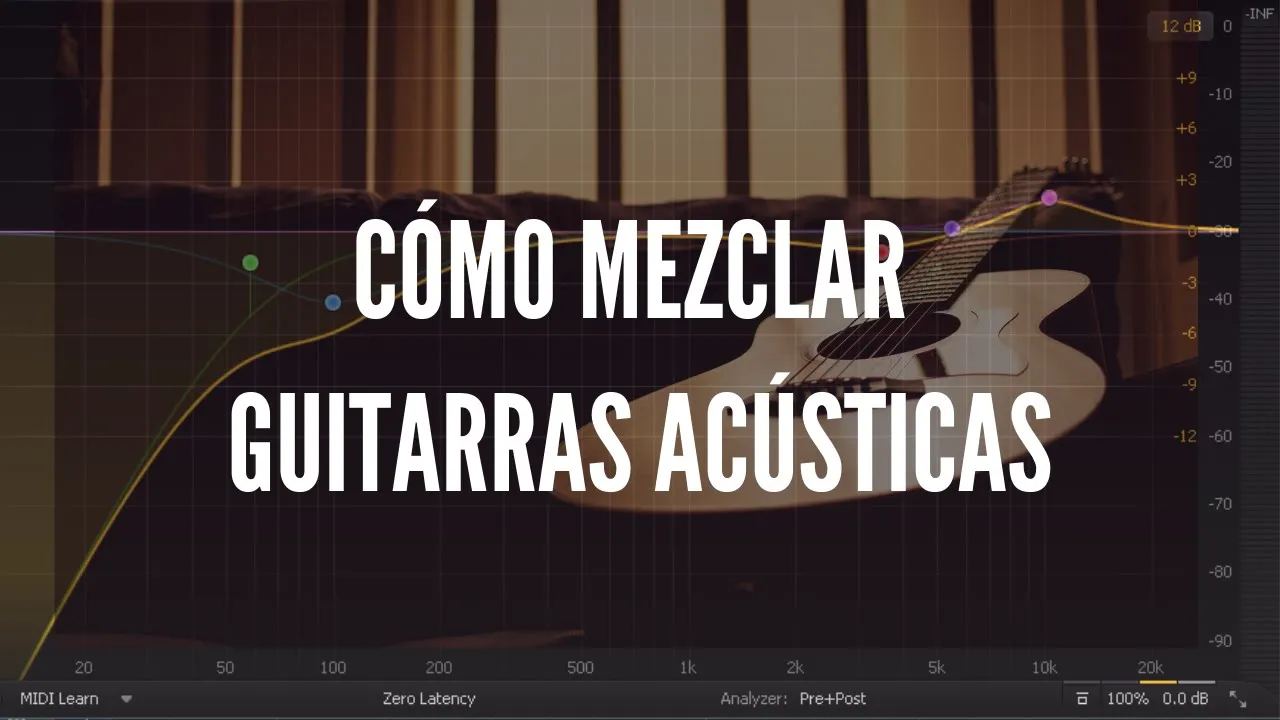
COMO MEZCLAR GUITARRAS ACUSTICAS
14.2K
When mixing acoustic guitars, apply a low cut filter around 60-80 Hz to remove rumble, cut frequencies between 100-400 Hz (the guitar's body range) to prevent muddiness in dense mixes, and boost presence frequencies between 3000-6000 Hz to help the guitar stand out; use compression and limiting to control dynamics and tame aggressive attacks, especially when the guitar competes with drums, and apply de-essing to reduce harsh high frequencies around 10,000 Hz.
Click to watch →

How To Make Orchestral Music (Total Beginner's Guide)
309.8K
Mixing and mastering are the final stages that transform raw recordings into polished productions. Mixing involves balancing instrument volumes, adjusting frequency spectra with EQ, compressing dynamics, and positioning instruments in the stereo field. For orchestral mixes, apply EQ to cut low frequencies (300-500 Hz range) from instruments to prevent muddiness - remove until instruments sound different, then stop. Apply light compression with low ratios to glue instruments together without pumping effects. Mastering is the final adjustment to the complete track without editing individual instruments, ensuring the track sounds polished, loud, and clear for release. Use limiters to prevent clipping (distortion from excessively loud signals). Remember: while mixing can improve clarity by about 20%, a poor arrangement cannot be magically fixed - good composition remains essential.
Click to watch →

Сведение и мастеринг оркестровой музыки
14.5K
Effective orchestral music mixing requires maintaining consistent frequency balance across all instruments regardless of their quantity, using proper monitoring systems (near-field, mid-field, and subwoofer) to ensure accurate sound reproduction, and following a systematic approach that includes grouping tracks, preserving transient peaks, and achieving a cohesive stereo image while respecting the composer's artistic vision.
Click to watch →
Opening
Initial cues
Building rhythm
Climax onset
Peak energy
Transition
Finale
Opening
0:47- 1
Video starts with introductory audio and music.
- 2
No verbal content yet, only ambient sounds.
The 'Hollywoodization' and Dilution of Authentic Folk Traditions
While blending Spanish guitar and accordion with epic orchestration creates a thrilling cinematic experience, ethnomusicologists and music purists often criticize this approach as 'Hollywoodization' or musical exoticism. This perspective argues that merging highly distinct, intimate regional instruments into a bombastic, Western-style orchestral framework flattens rich, complex cultural heritages into generic aesthetic tropes. Historically, Spanish classical guitar relies on delicate dynamics, rubato, and acoustic intimacy, which are acoustically incompatible with massive epic orchestration without artificial amplification and mixing. Critics contend that such cinematic hybrids prioritize grandiosity and commercial appeal over cultural authenticity, resulting in a homogenized, standardized representation of Spanish music tailored for mainstream media rather than honoring its genuine historical and structural roots.
Understanding of traditional Spanish musical characteristics, such as the Phrygian dominant scale, flamenco rhythms, and classical guitar techniques.
Basic knowledge of orchestral instrumentation, specifically the tonal qualities and acoustic roles of the violin, classical guitar, and accordion.
Familiarity with the concept of cinematic music structure, including thematic development, dynamics, and tension-building techniques.
An introduction to hybrid music genres, specifically how traditional folk elements are integrated into modern orchestral arrangements.
Deep dive into the works of classical Spanish nationalist composers like Joaquín Rodrigo, Isaac Albéniz, and Manuel de Falla.
Advanced study of video game and film scoring techniques, focusing on how environmental themes like a 'Castle Soundtrack' serve narrative and interactive design.
Practical application in MIDI orchestration and virtual instrument production to blend acoustic solo instruments with large-scale digital orchestras.
Analysis of mixing and mastering techniques required to balance intimate acoustic instruments like the classical guitar against a massive epic orchestral mix.
433.7K views7.3Klikes4:46@ClaudieMackulaOriginal Release: 2017-01-26
e [Music] [Music] [Music] [Applause] [Music] [Music] oh oh [Music] [Music] oh [Music] oh oh [Music] [Music] oh [Music] [Music] [Music] oh [Music] [Music] [Music]
Up Next
32:35
Orchestral Composition for Beginners: A Free VST Guide
@ThinkSpaceEducation
364.8K views•2022-07-15

12:54
Triumph of Orthodoxy Icon: Byzantine Art & History Explained
@BenCallan
2.1K views•2024-08-06

9:49
FastAPI vs Flask vs Django: Choosing the Right Python Web Framework
@TechWithTim
302.5K views•2024-05-26

1:42
Game of Thrones Opening Credits: A Cinematic Analysis
@gameofthrones
46.3M views•2011-04-18
Related Study Plans & Knowledge Roadmaps
Structured learning paths in General & Interdisciplinary Studies
general-studies
Elevator Engineering: History, Physics & Cities
01From Hoists to Safety Brakes: The Dawn of Vertical Lift
02Hydraulic vs. Traction: The Engineering Physics of Elevators
03Modern Speed, Safety, and Algorithms
+ 2 more learning modules
12h5 modules
Explore Roadmap
general-studies
Rubber: Material Science, History & Geopolitics
01Origins of Natural Rubber & Mesoamerican History
02The Chemistry of Natural Rubber & Vulcanization
03The Geopolitics of the Rubber Boom & Colonization
+ 2 more learning modules
12h5 modules
Explore Roadmap
general-studies
Containerization: Evolution, Logistics & Trade
01Ancient Trade & Bulk Cargo: Amphorae to Barrels
02The Industrial Revolution & Cardboard Packaging
03The Containerization Revolution: Malcom McLean
+ 2 more learning modules
12h5 modules
Explore Roadmap
general-studies
Textile Tech: Evolution, Labor & Global Impact
01Pre-Industrial Textiles: Handloom & Cottage Industry
02Mechanization: The Spinning Jenny to the Power Loom
03The Factory System & Global Labor Transformation
+ 2 more learning modules
10h5 modules
Explore Roadmap