








![Demonstrating The Modes of Harmonic Minor [MUSIC THEORY / SCALES]](https://i.ytimg.com/vi/qk8uobP4uJE/maxresdefault.jpg)







The Phrygian Major scale (also called Phrygian Dominant) is the fifth mode of the harmonic minor scale, constructed with intervals 1, b2, 3, 4, 5, b6, b7, featuring half steps between 1-b2, 3-4, and 5-b6; this scale creates a distinctive Spanish or flamenco sound with a major third and flat seven, making it popular in flamenco guitar, jazz improvisation on dominant chords, neo-classical rock, and metal music, where musicians exploit the diminished seventh chord in the middle of the scale for virtuosic lines and arpeggios.
Phrygian Major Scale: Neoclassical, Flamenco, and Jazz Uses
Added:Understanding of basic interval theory, specifically half steps, whole steps, and the augmented second interval.
Familiarity with the construction of basic triads and dominant seventh chords.
A foundational grasp of the natural minor scale and the standard Phrygian mode.
Basic knowledge of Roman numeral analysis and diatonic chord progressions.
Advanced exploration of the parent Harmonic Minor scale and its other modes (such as Lydian #9 or Altered Dominant bb7).
Application of the Phrygian Dominant scale over V7 chords in minor ii-V-I jazz progressions.
Analysis and composition using the Andalusian Cadence, a cornerstone chord progression in Flamenco music.
Developing neoclassical improvisation techniques, such as sweep-picked arpeggios and linear scale patterns based on Phrygian Major.
192K views9.3Klikes10:12Original Release: 2020-07-13
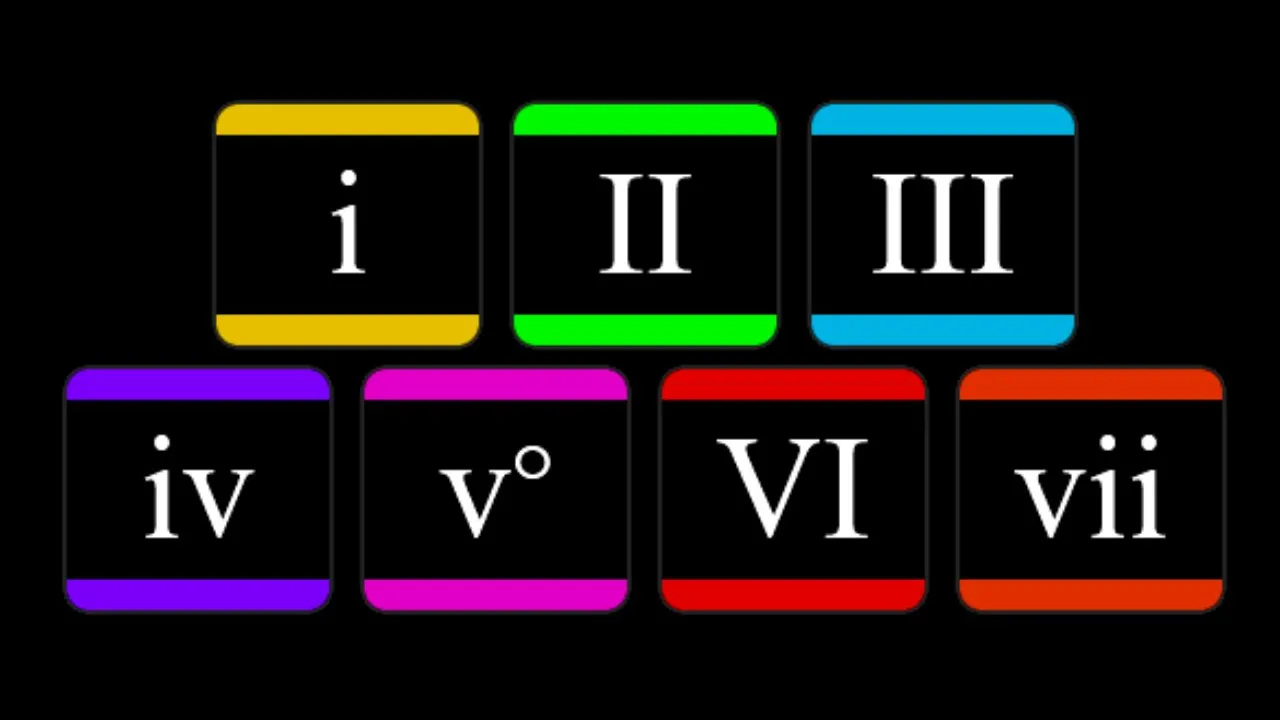
hey everybody i'm rick beato in today's everything music we're going to talk about the phrygian major or phrygian dominant scale the phrygian major scale is the fifth mode of the harmonic minor scale its scale construction is 1 flat 2 3 4 5 flat 6 flat 7. if i have a d7 chord it's going to sound like this so you can hear it has that major third and flat seven in it but it also has the flat nine sus4 and the flat six which functions as a sharp five the scale has a real spanish or flamenco style toy you'll hear a lot of flamenco guitar players using this scale in their improvisations you also hear a lot of jazz players use it because it works really well in minor keys on dominant chords well rock guitarists also like to use this too because as a real neo-classical sound you're a lot of metal players use the scale they'll take advantage of that diminished seventh chord that's found right in the middle of the scale [Music] and play those kind of lines or you hear people like yngwie just whip up and down a diminished seventh arpeggio when i make these videos on modes i like to talk about where the half steps are in the scale so in this scale you have half step between the one and flat two between the three and four and between five and flat six these are the places that you can come up with your really interesting voicings whether you're using minor seconds or major sevenths or minor ninth intervals we'll talk about that in a minute next let's talk about the triads from the phrygian major scale on the tonic we have d major d sus4 and d phrygian on the flat two we have e flat major e flat lydian e flat minor and e flat diminished a lot of them on that on the three we have f sharp diminished we have f sharp augmented and we have f sharp locrian on the four we have g minor we have g sus4 and we have g sus2 on the 5 we have a diminished a sus 4 flat 5 and a locrian on the flat six we have b flat augmented and then on the flat seven we have c minor c lydian and c sus2 next we move to the seventh chords and there's a lot of them on the tonic we have d7 d7 sus4 and d7 sus2 on the flat 2 we have e flat major 7 e flat lydian major seven e flat minor major seven and e flat diminished seven on the three we have f sharp diminished seven on the four we have g minor major seven g major seven sus four and g major seven sus two on the fifth scale degree we have a diminished seventh a diminished seven sus four and a diminished seven flat two on the flat six scale degree we have b flat major seven sharp five and on the flat seven scale degree we have c minor seven c lydian dominant and c seven sus sus2 i'm sure some of you are saying well what can you actually do with all these things you just named all these different triads and seventh chords well take two of the triads i named and just stack them on top of one another let's say i take d sus4 with e flat lydian above that so that would be e flat lydian over d sus4 beautiful sound or you could put a pedal d and a in the bass and i could just play voicings like that or just grab some of the interesting intervals in the scale where there are half steps maybe use some major sevenths or flat nine intervals create some really cool voicings let's say i go uh d a f sharp that'd be a d major spread triad then b flat a then i'll go f sharp g so i took two of the half steps in there i did b flat a use that major seventh interval then i went f sharp to g which is a minor nine interval uh superimposed over that so next i'm going to play you two different pieces the first you're going to hear is a piano piece using only the notes of d phrygian major there are no passing tones there's not one note out of the scale just those seven notes the piece right after there is more of a fully orchestrated piece that uses almost all those notes with a couple exceptions that i made for musical reasons let's check them out [Music] so [Music] so [Music] [Applause] [Music] this next piece i just put together it took me about an hour or so to compose it and mock it up and it's using the same notes as the last d phrygian major there might be a couple notes that are outside the key but not in listening back to it maybe in one or two spots but it'll show you how using the exact same seven notes you can get a completely different mood it's not just the orchestration by having more of a symphonic sound it's the way you put these things together [Music] [Applause] [Music] that's all for now please subscribe here to my everything music youtube channel if you're interested in the biato book go to my website at www.rickbiana.com the new beauto book 4.0 is out check it out check out the new biato ear training program if you go to beyotraining.com watch the introduction video if you want to support the channel even more think about becoming a member of the biato club thank you so much for watching [Music] you
Up Next
7:07
Unlocking Phrygian Dominant: Scales, Chords & Film Scoring
@RickBeato
360.6K views•2022-09-01

10:20
Mozart's Musical Dice Game Explained: History, Rules, & Fun
@webpianoacademy
5K views•2023-03-13
17:27
Polychords and Modal Voicings in Music Composition
@RickBeato
20.4K views•2016-08-08
10:49
Understanding John Coltrane's Giant Steps: A Music Theory Analysis
@Vox
10.4M views•2018-11-12
Related Study Plans & Knowledge Roadmaps
Structured learning paths in Music Theory
music-theory
Composing Galant Music: Partimento & Schemata
01Foundations of Figured Bass and Keyboard Harmony
02The Rule of the Octave (Regola dell'Ottava)
03Galant Schemata: The Building Blocks of Form
+ 2 more learning modules
30h5 modules
Explore Roadmap
music-theory
Decoding Overtone Series: Tuning & Drone Music
01Acoustic Foundations: The Physics of the Overtone Series
02Tuning Systems: Equal Temperament vs. Just Intonation
03Microtonality and Spectralism: Beyond Standard Pitches
+ 2 more learning modules
24h5 modules
Explore Roadmap
music-theory
Impressionist Harmony: Scales, Planing & RPGs
01Foundational Music Theory: Keys, Intervals, and Seventh Chords
02Impressionist Color: Chord Planing and Parallel Harmony
03Whimsical Textures: Pentatonic Cascades and Whole-Tone Scales
+ 1 more learning modules
14h4 modules
Explore Roadmap
music-theory
Negative Harmony: Axis Reflection in Indie Pop
01Music Theory Foundations: Scales, Intervals, and Triads
02Functional Harmony and the Circle of Fifths
03Demystifying the Negative Harmony Axis Reflection
+ 2 more learning modules
16h5 modules
Explore Roadmap